stationery shop compostable mailers unit cost can look like a small number on a quote sheet and still shape the entire margin story. A shop shipping a $12 notebook set, a planner refill, or a bundled pen pack does not have much room for hidden freight, weak seals, or replacement shipments, so the real question is not whether the mailer is compostable. The real question is whether the packaging protects profit while still fitting the brand story that stationery buyers want to tell.
That is why more stationery brands are reworking the shipping side of their packaging. A compostable mailer can reduce plastic use, support cleaner packaging claims, and keep pack-out simple enough for busy fulfillment days. A poor one does the opposite. It adds damage, slows packing, and makes the stationery shop compostable mailers unit cost look attractive only until returns and support tickets begin to stack up. I have seen that play out enough times to know it is not theory.
The strongest buying decisions usually come from three checks made together: durability, print, and minimum order quantity. Better material means little if the price lands above what the retail margin can carry. The sections that follow break down the specs, pricing structure, timelines, and sourcing steps that matter most for stationery shops that want a predictable buying plan instead of a guessing game.
Why stationery shops are switching from plastic mailers
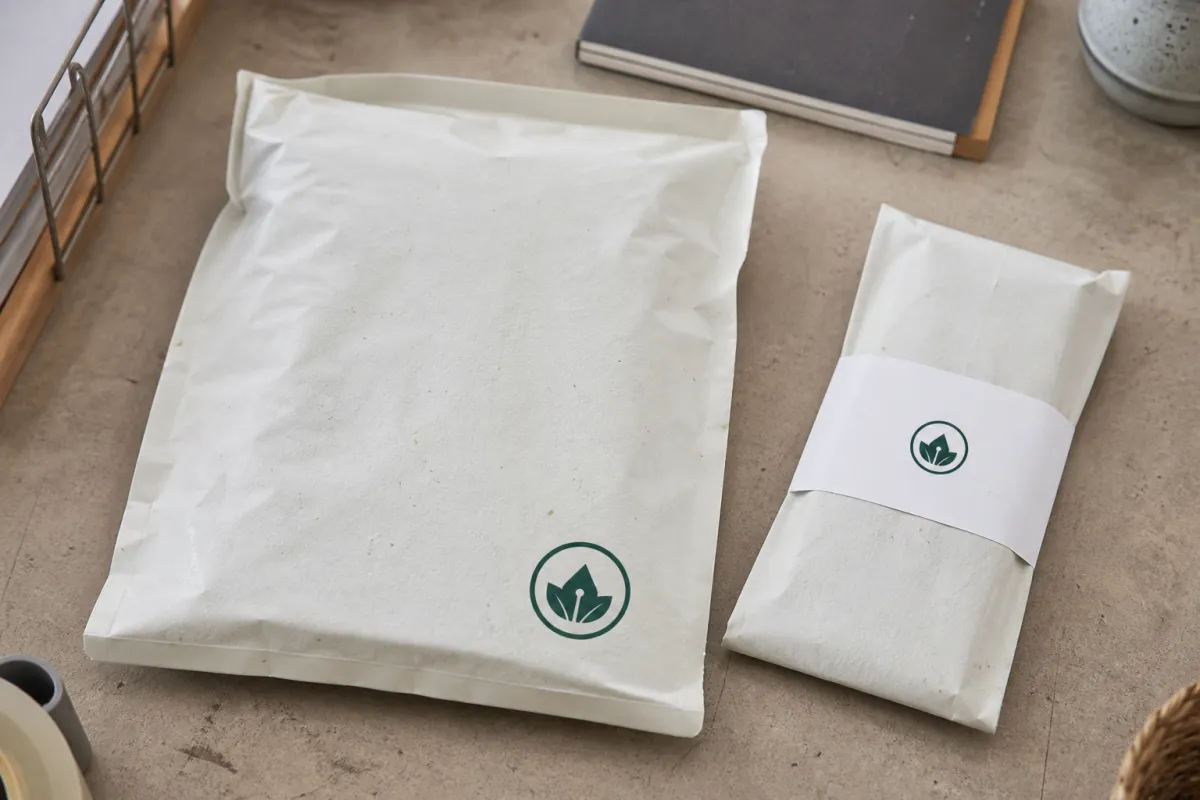
Stationery products are handled, displayed, and remembered in a very visual way. A notebook, journal, planner, or pen set does not sit in the customer mind as a plain commodity; it becomes part of a desk, a routine, and a certain sense of taste. The outer mailer plays into that impression more than many buyers expect. A switch away from plastic often starts with brand positioning, then stays in place only when the stationery shop compostable mailers unit cost still works at real sales volume.
There is a practical side too. Flat stationery items ship efficiently. They do not need oversized cartons, and they rarely need much void fill if the packaging is chosen well. A slim compostable mailer can move through packing faster than a carton-and-dunnage setup, which cuts steps for staff and keeps the line moving even when the order basket is not large. That matters when the order value is only a little above the shipping threshold.
Picture a simple order: a $12 notebook set, a sticker pack, and a pen. If the mailer adds only a few cents in material but forces a higher freight bracket or a reship because the seal fails, the cost climbs quickly. The stationery shop compostable mailers unit cost should be judged as landed cost, not as the bag price sitting alone on a quote sheet.
Brand trust matters as much as the economics. Shoppers buying journals and desk accessories often like packaging that signals care and a lighter material footprint, but they still expect the parcel to look deliberate. A compostable mailer with the right opacity, a clean seal, and restrained branding can feel premium without looking bulky or wasteful.
I have seen buyers focus hard on the sustainability label and overlook how the mailer behaves in the warehouse. A compostable bag can still be the wrong pick if it curls in humidity, scuffs too easily, or arrives with adhesive that does not hold. The stationery shop compostable mailers unit cost only becomes a useful number when the bag survives packing, transit, and delivery with no drama.
A low headline price does not help if the replacement rate rises. For stationery, the cheapest mailer is often the one that creates the most expensive support email.
That is also why the plastic-versus-compostable conversation should stay specific. Stationery shops do not need vague sustainability language. They need a format that fits planners, notebooks, sticker packs, and small bundled kits with enough consistency to keep the packing line steady. The best buying choice usually keeps stationery shop compostable mailers unit cost stable across repeat orders and seasonal spikes.
Compostable mailer product details for retail packing
For stationery retail, a compostable mailer is usually a flat or lightly gusseted pouch made for slim, light products. The structure is often a compostable film blend with a heat-seal closure or a peel-and-seal strip, depending on the supplier and the market. Buyers should always ask what standard the material has been tested against, because the word compostable can mean different things from one region to another. That difference matters more than the marketing copy on the front panel.
The best use case is usually A5 notebooks, journals, pen bundles, sticker sheets, washi tape sets, card packs, and subscription-style stationery kits. These products sit neatly inside the bag and still justify packaging that looks polished. When a shop tries to force bulky mixed orders into the same size, the stationery shop compostable mailers unit cost can rise fast because the mailer has to be oversized just to avoid stress at the corners.
From a workflow view, compostable mailers are attractive because they are quick. They are lighter than cartons, they do not need interior filler, and they reduce the number of packing choices a staff member has to make. That matters more than many buyers expect, especially in a small stationery business where one person may handle picking, packing, and customer service during the same shift. Kinda hard to beat that kind of simplicity on a busy Friday.
Branding options can be useful without being elaborate. A one-color logo print is enough for many retail uses. It keeps setup cleaner and helps the stationery shop compostable mailers unit cost stay inside a range that supports repeat ordering. Add a return address, a barcode, or a small compliance note if needed, but resist crowding the surface unless the product line is built around premium presentation.
Finish matters as well. Matte surfaces usually read as calm and boutique; gloss can look brighter, though it may show scuffs more easily depending on the film. If the mailer will appear on shelves, at pop-up counters, or in subscription photos, the surface finish should match the brand's wider packaging language. A clean mailer usually does more for perception than a clever one.
For broader sourcing decisions, many buyers start by comparing the mailer spec against other packaging options in Custom Packaging Products. That gives a clearer picture of whether one packaging family should cover retail and shipping, or whether the mailer should stay dedicated to dispatch only.
Where compostable mailers tend to fall short is pretty predictable once you have tested enough of them. Thin corners can puncture if the size is too tight. Humid storage can affect handling and crease memory. A weak adhesive strip can lead to returns and re-ships. Stationery buyers should test the mailer with real assortments rather than a single empty sample. The stationery shop compostable mailers unit cost only matters if the bag still works after packing, transit, and unpacking.
For background on waste reduction and material management, the EPA's sustainable materials resources offer a useful reference point: EPA Sustainable Materials Management. It will not replace supplier testing, yet it does help frame the bigger packaging conversation around waste, recovery, and material choice.
Specifications that affect performance, shelf appeal, and fit
Buyers should ask for the specification sheet before they ask for the price. Width, length, gusset, film thickness, seal width, printable area, and closure style all affect performance and stationery shop compostable mailers unit cost. Two bags can look nearly the same in a photo and behave very differently once they are loaded with a hard-backed journal and a set of accessories.
Size selection is the biggest hidden lever. A bag that is too large uses more material, which pushes the unit cost and freight weight up. A bag that is too tight compresses corners and can lead to damaged edges, split seams, or a poor first impression at delivery. The right size is usually the smallest one that fits the best-selling assortment without stretching the material.
A good rule for stationery is to start with the product that ships most often, then check whether the mailer also handles the heaviest regular order. That approach protects the average case instead of designing around the outlier bundle. This kind of packaging planning looks plain on the surface, yet it keeps margins steadier than a flashy spec ever will.
Print specification is another place where cost and presentation meet. One color is usually the easiest path, especially for brands that want a tidy logo and a concise return panel. Full-coverage graphics can be strong visually, but they add setup complexity and can increase the stationery shop compostable mailers unit cost more than buyers expect. If the mailer is not meant to act as the hero surface, restraint often works best.
Testing should be specific rather than generic. Ask for seal integrity checks, scuff resistance, and transit testing under conditions that resemble your normal shipment profile. For many flat retail parcels, a drop or vibration test modeled on ISTA procedures is more useful than a marketing claim. ISTA's published guidance on transit testing is a practical benchmark: ISTA packaging test standards.
Most reputable suppliers can also speak to material standards like ASTM D6400 or EN 13432 for compostability claims, but those claims should always match the market where you sell. A mailer can be certified and still be a poor fit for a specific product profile. Certification matters. Fit matters more.
Specs worth requesting before you quote
- Dimensions: width, length, and gusset depth for the largest standard order.
- Thickness: enough to resist corner puncture without making the bag stiff and awkward.
- Seal type: heat-seal or peel-and-seal strip, depending on your pack-out speed.
- Print area: logo placement, barcode space, and any legal copy.
- Test data: drop, seal, and surface scuff results where available.
For stationery shops, shelf appeal still matters even if the mailer is only seen for a few seconds. Customers remember packaging that looks intentional. A clean, well-sized compostable mailer can do more for perceived value than a loud graphic treatment that adds nothing to the product story. That is one reason the stationery shop compostable mailers unit cost should be reviewed alongside presentation, not separately from it.
Storage deserves attention too. Compostable films should be kept in a controlled environment whenever possible, away from excess heat and moisture. That does not mean warehouse perfection. It means avoiding obvious handling mistakes that shorten material life before the mailer ever reaches the packing table.
stationery shop compostable mailers unit cost: pricing, MOQ, and quotes
This is the part that usually decides the order. The stationery shop compostable mailers unit cost is driven by a few variables that move together: material grade, dimensions, print colors, order quantity, packaging format, and shipping destination. If one of those inputs changes, the quote can move quickly. That is normal, not a warning sign.
MOQ changes the economics more than first-time buyers expect. A lower quantity often carries a higher per-unit price because setup, plate costs, sampling, and production loss are spread across fewer bags. As volume rises, the stationery shop compostable mailers unit cost usually drops in steps rather than smoothly, which is why buyers should ask for pricing at several realistic breakpoints.
Stock mailers and custom mailers solve different problems. Stock options usually move faster and reduce planning pressure. Custom printed options do more for brand consistency, but they require a firmer timeline and a cleaner artwork process. If the stationery brand is still testing assortment or seasonal demand, stock may be the safer first buy. If the packaging already supports the retail identity, custom is often worth the extra coordination.
When you Request a Quote, do not settle for a single headline price. Ask for price per 1,000, MOQ, sample cost, any plate or setup fees, freight estimate, and whether the quote is ex-works, FOB, or landed. That list can sound fussy. It is not. It is the difference between a real landed cost and an initial figure that leaves out the parts that matter.
Standard sizes, one print color, and a repeatable spec usually reduce the stationery shop compostable mailers Unit Cost Faster than chasing decorative extras. That holds true across most packaging categories, and it is especially true for stationery where the mailer format is fairly simple. Every added variable creates another place for time and money to leak out.
| Order scenario | Typical MOQ | Indicative unit cost range | Typical lead time after approval | Best use case |
|---|---|---|---|---|
| Plain stock compostable mailers | 500-1,000 pieces | $0.22-$0.45 each | 5-10 business days | Testing fit, fast replenishment, low artwork risk |
| Custom one-color printed mailers | 2,000-5,000 pieces | $0.18-$0.38 each | 12-18 business days | Retail branding with controlled spend |
| Custom full-coverage printed mailers | 5,000-10,000 pieces | $0.25-$0.60 each | 15-25 business days | Launches, premium presentations, seasonal campaigns |
| High-volume repeat order | 10,000+ pieces | $0.14-$0.30 each | Often 15-20 business days | Stable demand, multi-store or subscription fulfillment |
Those ranges are practical buying brackets, not promises. A smaller mailer, lighter film, simpler print, and easier freight lane can push the price toward the lower end. A larger bag, thicker spec, more complex artwork, or long-distance shipping can move it upward. The point is to stop treating the stationery shop compostable mailers unit cost as if it were one fixed number.
One useful comparison is to ask how much the mailer adds to the selling price of the product inside. If a notebook set sells for $24 and the packaging line adds $0.25-$0.40 landed, the pack is usually workable. If the same mailer adds freight, spoilage, and rework that push the true cost closer to $1.00, the business case gets weaker fast. That is why the stationery shop compostable mailers unit cost has to be treated as landed cost, not just bag price.
For buyers who want to keep the packaging family consistent, it can help to compare compostable options against other mailer formats such as Custom Poly Mailers. That comparison makes the trade-offs easy to see: presentation, sustainability language, freight weight, and unit cost all move in different directions.
Packaging associations also publish useful context around recovery, design, and sourcing. The Packaging School and packaging.org resources are helpful for buyers who want a broader view of material choices and packaging design logic before they commit to a custom run.
What should a stationery buyer request in every quote? The answer is simple:
- Exact dimensions and a printable dieline or spec sheet.
- Sample pricing and whether samples are stock or made to order.
- MOQ by size and by print method.
- Freight terms so landed cost is not a surprise later.
- Artwork limits including color count and file format.
That list may seem basic, but it is exactly where many stationery shop compostable mailers unit cost problems begin. A quote that leaves out freight or artwork fees is not fully quoted. It is only partly useful.
Production steps, lead time, and delivery timeline
The buying process should follow a clear sequence: inquiry, quote, artwork check, sample approval, production, quality inspection, packing, and freight booking. If a supplier cannot describe the process in that order, the stationery shop compostable mailers unit cost may still look fine while the delivery schedule slips out of range.
Artwork proofing usually takes a few business days if the files are clean. Samples can add another step, especially when the bag is custom printed or the specification is still being refined. Production lead time depends on quantity and complexity, but many stationery orders fall somewhere around 12-18 business days after approval, with longer timing for larger or more detailed runs. Freight time sits on top of that.
That difference matters. Buyers often ask for a production lead time when they really need a delivery date. Those are not the same thing. A 15-business-day production window can still miss the launch if freight is not booked early or the destination address is incomplete. The stationery shop compostable mailers unit cost may stay steady, yet the timing can still hurt the plan.
Four bottlenecks show up often. Missing dieline details. Low-resolution artwork. Color changes after proof approval. Unclear delivery information. None of those are exciting. All of them are expensive. The most reliable way to protect margin is to remove friction before production starts.
A practical timeline for a custom run
- Brief and quote: 1-3 business days if the spec is clear.
- Artwork proofing: 2-5 business days, longer if revisions are needed.
- Sample approval: 3-7 business days depending on the sample type.
- Production: often 12-18 business days after final approval.
- Dispatch and transit: varies by route, customs, and carrier.
Stationery retailers also need to plan around seasonality. School-season demand, back-to-office buying, holiday gifting, and subscription restocks all create tighter inventory windows. A delayed pack can force the use of a stopgap mailer, which often pushes the stationery shop compostable mailers unit cost higher than planned because it is bought under pressure instead of on schedule.
Testing before scale-up is still the safest step. Order a sample, pack your real products, close the seal, and leave the bag in transit-like conditions for at least a day or two. If the adhesive fails, the corners scratch, or the bag looks stretched, fix it before the larger run begins. That one test can save a lot of support work later.
From a buying standpoint, the best suppliers are the ones who can tell you what happens next without drama. They know where approvals slow down, they know where freight adds time, and they know which details matter to a stationery order versus a general ecommerce order. That level of process control makes the stationery shop compostable mailers unit cost easier to plan around.
How to keep stationery shop compostable mailers unit cost predictable
Predictability is more valuable than a slightly lower first quote. A cheap bag that triggers a second shipment, a reprint, or a last-minute replacement order is not cheap. The best way to stabilize stationery shop compostable mailers unit cost is to standardize the product line around a small set of sizes and print specs that cover most of the order mix.
That means buying for the average order profile, not the rare oversized bundle. If 80% of your shipments are flat notebooks and sticker packs, build the mailer around that volume. Do not let the occasional bulky order dictate the whole packaging system. Otherwise, the stationery shop compostable mailers unit cost rises for every order just to solve one edge case.
It also helps to set price checkpoints at realistic quantities. A step-up from 1,000 to 3,000 pieces may not look dramatic, yet the per-unit drop can be meaningful if it reduces the number of reorders. The same logic applies at 5,000 and 10,000 pieces. Ask for the pricing curve instead of a single line, because the curve shows you where the buy becomes efficient.
For multi-channel sellers, consistency matters even more. If the brand ships direct-to-consumer, wholesale to retailers, and occasionally packs event kits, the mailer should still feel like one system. Standardization lowers retooling, keeps artwork simple, and makes replenishment easier. That is one reason the stationery shop compostable mailers unit cost is often best controlled through fewer SKUs, not more.
There is a strong temptation to chase the prettiest finish or the lowest quoted number. Both can mislead. A premium-looking bag that takes too much margin can be as harmful as an under-specced bag that fails in transit. The best answer is usually the middle path: enough strength, enough print, enough presentation, and no extra complexity that the retail shelf will never reward.
If the mailer saves two cents but creates one return in every few hundred orders, the math is already broken.
That is why experienced buyers often keep packaging tied to fulfillment data. They watch damage rate, packing time, and reorder predictability instead of treating packaging as a purely creative choice. In a stationery business, packaging is part of the operating model. The stationery shop compostable mailers unit cost should be handled that way from the start.
It is also smart to use packaging language that matches the real claim. If the mailer is compostable under specific conditions, say that plainly. If the brand is building toward zero waste goals, make sure the packaging claim is defensible and backed by supplier documentation. Strong eco-friendly packaging claims help only when they are accurate. That is how trust gets built.
For a broader view of how packaging decisions connect to waste reduction and materials recovery, the EPA's general materials resources are still useful: EPA Sustainable Materials Management. The point is not technical language for its own sake. The point is to make sourcing choices that hold up under scrutiny.
When you compare suppliers, ask whether the quote includes the pieces that actually affect margin: freight, plate fees, sample charges, and the effect of extra print colors. Then compare those numbers against your retail price. If the stationery shop compostable mailers unit cost still leaves room for healthy gross margin after all of that, the spec is likely workable. If it does not, simplifying before ordering is the better move.
For brands building a longer-term packaging system, the quickest path is usually the most disciplined one: lock dimensions, lock print, choose a sensible MOQ, and reorder before stock runs low. That keeps the stationery shop compostable mailers unit cost stable, protects fulfillment speed, and avoids the kind of rushed buying that almost always costs more than it should.
What affects stationery shop compostable mailers unit cost the most?
Material grade, mailer size, print colors, and order quantity usually have the biggest effect on the stationery shop compostable mailers unit cost. Freight, packaging format, and whether you need custom artwork or certification language can also move the final price, so a fully landed quote is the only quote that really matters.
What MOQ should I expect for stationery shop compostable mailers?
Custom printed orders often start at a few thousand pieces, while stock options may be available at lower quantities. The exact MOQ depends on size, print setup, and whether the mailer is made to your specifications, so it is worth asking for pricing at several quantity steps before you commit.
Can I get a sample before placing a bulk order?
Yes, and it is worth doing before you commit to a larger run. A sample lets you test fit, seal strength, print placement, and how the mailer handles real stationery products, which is the fastest way to avoid paying for the wrong spec.
How long does production usually take after artwork approval?
After artwork is approved, production timing depends on order size and print complexity. You should also allow time for proofing, inspection, packing, and freight booking, because the stationery shop compostable mailers unit cost is only part of the planning picture; delivery timing matters just as much.
Are compostable mailers strong enough for notebooks and journal sets?
Yes, if the size and thickness are matched to the product weight and corner profile. Test the mailer with your heaviest regular order to confirm seal strength and transit durability before scaling, because the right stationery shop compostable mailers unit cost only works if the mailer survives the route and protects the order.
The clearest takeaway is simple: lock the size around your most common stationery order, ask for landed pricing at a few quantity breaks, and test the mailer with real products before you place the bulk run. That is the quickest way to keep stationery shop compostable mailers unit cost predictable while still protecting presentation, delivery performance, and margin.


