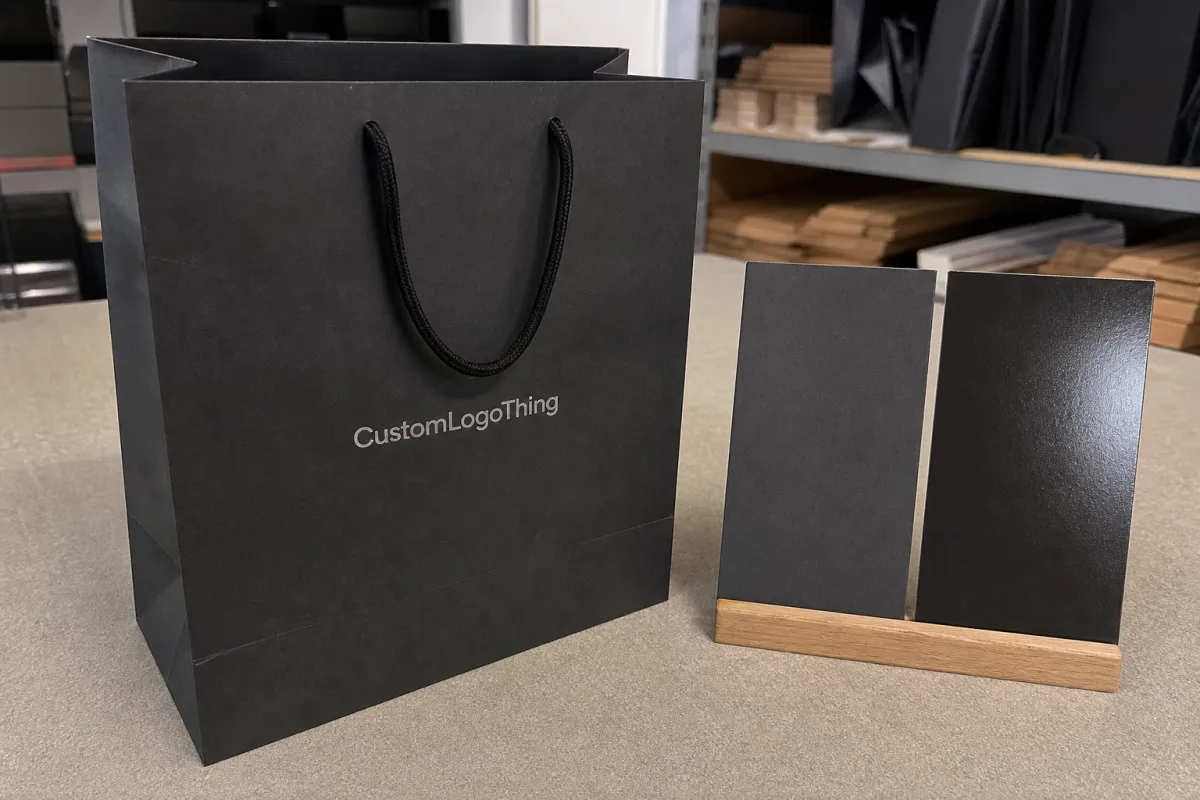
Stationery shop Gift Boxes Bulk orders are not about adding decoration for decoration's sake. They are about giving small-ticket items a clearer retail shape, one that feels ready to buy the moment a shopper spots it. A pen set, notebook, sticker pack, and desk accessory can sit on a shelf as four separate items, each asking for attention on its own; place them into stationery shop gift boxes bulk packaging and they begin to read like a single thoughtful gift with a stronger margin profile and a more complete story.
That shift matters because stationery customers are usually buying for a purpose rather than a lone object. Back-to-school kits, desk refresh bundles, employee appreciation gifts, museum shop souvenirs, campus store presents, and last-minute checkout add-ons all depend on presentation doing part of the selling. Custom Logo Things sees the same pattern across retail packaging requests: once the box feels finished, sturdy, and easy to carry, the sale often moves faster with less explanation from the floor staff. I have watched a plain bundle sit there for days, then move the same afternoon once the packaging looked gift-ready. That is not magic, just buying behavior being pretty predictable.
From a packaging buyer's point of view, the math is often more favorable than it first appears. A well-built box can raise perceived value much faster than it raises unit cost, especially when the bundle contains items that are inexpensive to source but attractive when paired together. That is why stationery shop Gift Boxes Bulk often protects margin instead of putting pressure on it. A shopper who sees a $14 stationery set in a $1.10 box is usually not calculating the box cost. They are judging whether the gift feels complete, polished, and worth handing over as-is.
There is also a quieter benefit that buyers sometimes miss until they start selling. Cleaner presentation cuts down on questions at the counter. Staff do not need to explain what is in the set, whether it needs a bag, or whether the contents will slide around before the customer gets home. That small reduction in friction is kind of a big deal on a busy floor, especially during seasonal rushes.
Why stationery shop gift boxes bulk can lift retail conversion
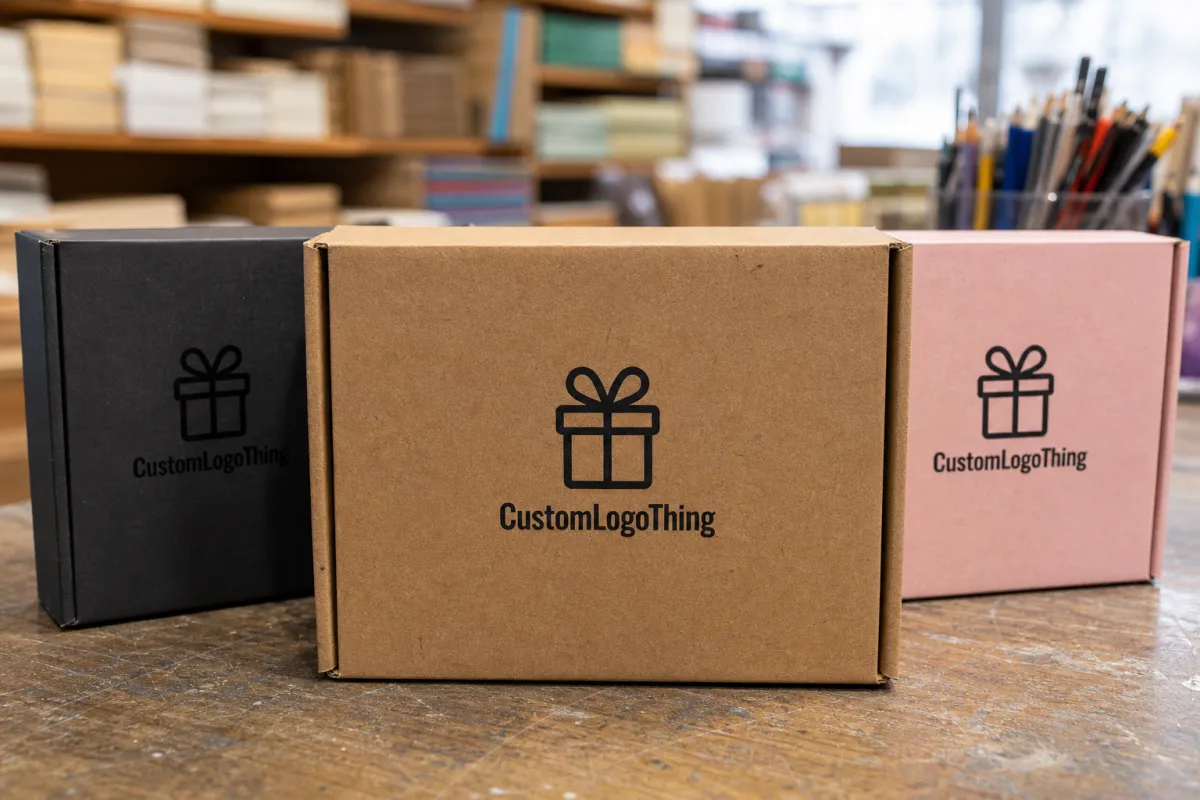
Walk any retail floor carrying notebooks, pens, and small accessories and the pattern shows itself quickly. Loose items invite comparison, hesitation, and a longer decision cycle. Gift-ready bundles invite action. A customer can spend five minutes weighing whether to buy a notebook, a pen, and a sticker pack separately. Put those same items inside stationery shop gift boxes bulk packaging with a clean window, crisp print, or a well-made closure, and the decision becomes simpler. The product now feels curated instead of assembled in the aisle.
That matters for stationery retailers, bookstores, museums, campus shops, and gift boutiques because each channel asks the package to do two jobs at once. The box has to present the product clearly, and it has to help close the sale quickly. Stationery shop gift boxes bulk handles both. It gives the shopper a visual shortcut, and it gives the store a stronger story at the register without needing to overexplain the bundle.
One part of this is easy to miss: bundle packaging can raise the perceived value of low-cost components faster than the packaging cost climbs. A notebook, pen, and washi tape set might only cost a few dollars wholesale, yet a stronger box format can make the set feel like a premium gift. I have seen a simple folding carton do exactly that when the fit was tighter and the print was cleaner. The box did not need fancy tricks. It just had to make the assortment feel intentional. That is why stationery shop gift boxes bulk should be treated as a merchandising tool, not just a production line item.
It also cuts down on friction at the point of sale. A box that is ready to carry saves the shopper from asking for a bag, stacking loose items, or wondering whether the assortment can survive the trip home. That small convenience matters more than people expect. The easier the bundle is to hand over, the more often it leaves the store with the customer.
Retailers running seasonal launches can use stationery shop gift boxes bulk to hold the visual language together across multiple locations or product families. A single box structure can carry different artwork, inserts, or printed sleeves while the underlying format stays consistent. That keeps the shelf presentation steady and still gives the buyer room to adjust by season, theme, or price point.
Revenue note: a good box can be the difference between a single-item sale and a bundled sale. On a busy floor, that difference shows up faster than most people expect.
For buyers comparing packaging programs across categories, it helps to look at box structures alongside other options in Custom Packaging Products. The right format depends on how the set is sold, how it ships, and how much the shelf needs to communicate in a few seconds.
Stationery shop gift boxes bulk: formats, sizes, and finishes
Stationery shop gift boxes bulk programs usually fall into a handful of practical formats. Tuck-end cartons are the everyday workhorse for high-volume retail. Rigid gift boxes fit premium bundles and higher-ticket stationery sets better. Magnetic-close boxes add a stronger unboxing moment. Sleeve-and-tray sets create a controlled reveal with good branding space. Mailer-style boxes work well for e-commerce, store pickup, and mixed-channel fulfillment. Each format solves a different packaging problem, and the wrong one can make even a good product feel awkward in hand.
Size planning matters just as much as style. A single-notebook box is not the same as a multi-item bundle box. A pen set needs less height, but it often needs more restraint inside the cavity. Journals, markers, paper clips, and desk accessories all move differently in transit, so stationery shop gift boxes bulk should be sized around the real assortment rather than the outer dimensions of one item. Too much empty space invites shifting. Too little space creates crush risk and a poor closing fit.
For premium gifting, many buyers choose rigid construction with 1.5mm to 2mm greyboard wrapped in printed art paper or specialty stock. For standard retail volume, folding cartons in 300gsm to 400gsm SBS, C1S, or coated artboard are common because they balance print quality and production efficiency. For mail-ready presentation, E-flute corrugated adds impact resistance without making the package feel oversized or heavy. The right answer depends on whether the box sits on a shelf, is wrapped as a gift, or has to survive parcel transit on its way to the customer.
Finishes are where stationery shop gift boxes bulk starts to communicate visually before anyone reads the copy. Matte lamination gives the box a quieter, modern look. Soft-touch coating adds a velvety feel that works well for premium stationery. Foil stamping catches light and pulls the eye toward logos or small details. Spot UV can emphasize names, patterns, or brand marks. Embossing and debossing add depth without changing the printed palette. Printed interiors matter too, since the inside surface becomes part of the first impression the moment the lid opens.
If the assortment is built around a specific theme, the box can signal the price tier before the shopper studies the contents. A simple kraft box with one-color print makes sense for some lines. A full-Color Rigid Box with foil belongs to others. Stationery shop gift boxes bulk should support the product story rather than compete with it.
For buyers comparing shelf-ready and ship-ready solutions, the decision usually comes down to how much presentation is required before the box leaves the counter. A stationery bundle for a museum shop may need more visual polish. A campus store item may need more durability. Both can be built in stationery shop gift boxes bulk; the structure just changes to match the channel.
One practical way to narrow the options is to build a short list:
- Tuck-end carton for lower unit cost and repeat retail volume.
- Rigid gift box for premium stationery sets and stronger shelf presence.
- Magnetic-close box for gift sets where the opening experience matters.
- Sleeve-and-tray for a controlled reveal and better branding space.
- Mailer-style box for shipping, fulfillment, and direct-to-customer programs.
That list is not theoretical. It is the practical filter most packaging teams use before asking for a sample or a quote.
Stationery shop gift boxes bulk specifications to lock in
Before a quote can mean anything useful, the buyer has to define the specs. Stationery shop gift boxes bulk orders should begin with dimensions, board grade, paper stock, print method, insert style, coating, and closure type. That sounds basic, but a surprising number of delays come from one missing detail. A box that looks perfect on screen can still fail if the notebook spine rubs the side panel or if the pen tray sits loose enough to rattle.
Internal fit matters more than the exterior size alone. Stationery items are light, but they still move. Pens roll. Stickers slide. Journals bow if the cavity is too wide. Inserts and partitions reduce that movement and improve presentation at the same time. In many stationery shop gift boxes bulk projects, a simple paperboard insert or chipboard divider prevents overpacking and keeps the bundle looking deliberate.
Durability deserves the same discipline used for any retail packaging line. Ask how the box performs under stacking pressure, edge crush, and shelf handling. If the product is shipped, test it against transit abuse. For shipping programs, packaging teams often reference ISTA methods for distribution testing, and that is a sensible benchmark because it moves the discussion from opinion to performance. See ISTA testing standards for the kind of language commonly used in transit testing discussions.
Print readiness is another point where stationery shop gift boxes bulk programs stay efficient or become messy. Confirm bleed, dieline approval, Pantone matching, barcode placement, and any special finishes before production starts. If the box needs one-color branding, full-color art, or a specialty ink, that should be clear from the first round of artwork. The same goes for reverse printing, inside printing, and overprint coverage. Clear instructions early on save time later.
There is a practical reason to request a mockup or sample before mass production. A sample reveals the parts that drawings do not fully communicate: how the lid lands, whether the insert grips the product, how the closure feels in the hand, and whether the printed logo reads from three feet away or disappears into the design. Stationery shop gift boxes bulk should be verified against real product samples, not assumptions built from a PDF.
Packaging buyers who support sustainability targets may also ask whether the paper components are sourced responsibly. If that matters for your store or institution, ask about FSC certification and what portion of the board, wrap, or paper stock can be verified. That does not solve every sourcing question, but it does give procurement and store signage a cleaner story.
Use this checklist before approving artwork:
- Confirm product dimensions with the actual stationery items inside the box.
- Define the target quantity for the first run and any reorder assumptions.
- Choose the box style based on shelf use, gifting, or shipping.
- Lock in print method, finish, and insert type.
- Approve a sample or proof against the real products.
That sequence sounds simple because it is. The hard part is resisting the urge to skip steps. In stationery shop gift boxes bulk, skipping one spec usually costs more later.
Cost, pricing, and MOQ for stationery shop gift boxes bulk
Pricing for stationery shop gift boxes bulk is shaped by five variables: box style, material thickness, print complexity, finish selection, and quantity. The same artwork can produce two very different quotes if one version uses a plain folding carton and the other uses a rigid board build with foil and a custom insert. That is why buyers should compare like-for-like specs rather than just the headline number on the first line of a proposal.
MOQ changes the unit-cost curve as well. Larger runs usually lower the price per box because setup is spread across more units, but the right MOQ depends on SKU count, storage space, and how often the design will be reordered. A stationery chain with one seasonal bundle can justify a larger run. A museum store with several rotating gift sets may need a lower starting volume. Stationery shop gift boxes bulk should match the sales plan, not simply the factory minimum.
Here is a practical pricing snapshot for common retail builds. These are realistic working ranges, not fixed prices. Final cost depends on size, region, artwork coverage, and whether inserts or specialty finishes are included.
| Box type | Typical MOQ | Approx. unit price | Best use | Notes |
|---|---|---|---|---|
| Folding carton | 1,000-3,000 | $0.18-$0.42 | Notebook bundles, pen sets, sticker packs | Lowest storage burden; good for higher-volume stationery shop gift boxes bulk programs. |
| Mailer-style box | 500-2,000 | $0.55-$1.40 | E-commerce, store pickup, mixed fulfillment | Better transit protection; often uses E-flute or similar corrugated board. |
| Rigid gift box | 500-1,500 | $1.20-$3.80 | Premium desk sets, corporate gifts, museum retail | Higher perceived value; often chosen for stationery shop gift boxes bulk that need a premium reveal. |
Those ranges point to a simple truth: a quote only tells the story if it shows what is included. Ask for tiered pricing, setup fees, sample charges, freight estimates, and whether tooling or plates are included. A low unit price with hidden setup costs is not actually lower. It is just less visible until the project is already underway.
Quote sanity check: if the proposal does not name board grade, finish, insert count, and shipping assumptions, compare carefully. A transparent quote is more useful than a cheap one that creates revisions later.
For brands that buy across categories, it can also help to review Wholesale Programs early in the process. That lets the procurement team see whether the order fits a repeat-buy structure or a one-time seasonal run. The answer changes how you evaluate MOQ and replenishment.
Stationery shop gift boxes bulk is often a smarter margin move than buyers expect because the packaging helps sell the bundle. A retailer who pays a little more for a stronger structure can still come out ahead if the set closes faster on the shelf or supports a higher ticket. I have seen buyers hesitate over a few cents, then lose the whole upsell because the box looked too plain to feel giftable. That part still surprises people, even though it happens all the time.
"A packaging quote is only useful if it shows the assumptions. If the size, finish, and insert are hidden, the number is just a placeholder."
Process, timeline, and production steps for bulk orders
Stationery shop gift boxes bulk production follows a predictable sequence. The best orders begin with a brief, move into a quote, then proceed to dieline development, artwork setup, sample approval, production, quality check, packing, and shipment. The sequence may sound procedural, and that is a good thing. Packaging runs better when the process is clear enough that everyone knows what comes next.
Delays usually appear in the same places. Artwork arrives late. The buyer has not confirmed dimensions. Insert positions are still changing. The closure style is undecided. None of those issues is dramatic on its own, but each one can add days or weeks to the schedule. For stationery shop gift boxes bulk, the fastest projects are the ones that lock the structure early and leave the artwork to follow the structure, not fight it.
Typical timelines depend on complexity. A simple printed folding carton may move from proof approval to shipment in roughly 10-15 business days, assuming the artwork is ready and the specification stays stable. Rigid boxes, magnetic-close formats, or specialty finishes can take longer, often 15-25 business days or more. The range shifts with factory load, order size, and whether a sample round is needed. The point is not to promise speed. The point is to plan honestly so the retail schedule stays intact.
Proofing protects both sides. It catches the things that are expensive to fix after production starts: trim shifts, logo placement, color mismatch, barcode sizing, and insert fit. A good proof also shows whether the box communicates the right retail tier. Sometimes a design looks premium on a monitor and flat on paper. Sometimes the reverse happens. Stationery shop gift boxes bulk is too visible on the shelf to leave those questions unresolved.
For seasonal launches, build buffer time into the calendar. Holiday bundles, campus openings, spring resets, and back-to-school displays all compress the schedule. A buyer who orders too late ends up choosing from the remaining factory capacity instead of the best structure. That is where rush fees and compromise designs start to appear. A cleaner plan is to schedule production before the store reset becomes urgent.
Quality checks should be concrete rather than vague. Ask whether folds are clean, cut lines are accurate, glue seams hold, print registration stays within tolerance, and the stack packs properly for shipping. Packaging built for retail has to survive more handling than people often assume. The box may pass through warehouse sorting, shelf stocking, gift wrap stations, and customer transport before it is ever opened.
One simple way to keep the schedule under control is to align the commercial decision with the production decision:
- Confirm the product assortment before artwork starts.
- Approve the dieline before the final print file is built.
- Review sample fit before the full order is released.
- Set the delivery window before the seasonal launch is announced.
That sequence saves time because it reduces rework. Stationery shop gift boxes bulk does not reward indecision. It rewards clarity.
Why choose us for stationery shop gift boxes bulk
Buyers compare packaging suppliers on more than price, and they should. Manufacturing consistency matters because retail systems do not tolerate variation very well. If a carton measures one way on the first run and another way on the reorder, the whole display plan begins to wobble. Stationery shop gift boxes bulk needs stable color control, reliable construction, and repeatable fit from batch to batch.
That is where a focused packaging partner helps. A supplier that understands retail merchandising is better equipped to turn a bundle strategy into a box that actually supports the sale. The structure should help the shelf, the print should support the brand, and the finish should support the price point. A pure print vendor may get one piece right. A packaging-focused team can keep all of them aligned.
There is also a practical coordination advantage. One supplier handling structure, print, and finishing reduces the number of handoffs. Fewer handoffs usually mean fewer errors. Fewer errors usually mean a shorter approval cycle. For stationery shop gift boxes bulk, that can be the difference between landing a seasonal display on time and missing the launch window by a week that the store cannot afford.
Quality control is not a slogan. It shows up in the details buyers notice right away: clean folds, accurate cut lines, secure glue seams, square corners, and presentation-ready packing. If a box arrives crushed, scuffed, or out of register, the retailer pays for it twice, first in product confidence and then in labor.
Custom Logo Things is built for buyers who want clarity. That means realistic lead times, transparent assumptions, and a straight answer about which box style fits the use case. It also means we can support brands that need other custom formats through Custom Packaging Products and recurring purchasing through Wholesale Programs. The value is not only in the box. It is in reducing decision fatigue for the team placing the order.
If your team cares about sourcing language, ask for paper and board options that support your procurement standards. If your team cares about transit performance, ask for sample testing before release. If your team cares about shelf impact, ask for a mockup next to the actual stationery assortment. Stationery shop gift boxes bulk should answer those questions before the first pallet ships.
Bottom line: the right packaging partner should help you buy less guesswork. That is the real commercial advantage.
Next steps to order stationery shop gift boxes bulk
The fastest way to get a useful quote is to send three things: product dimensions, target quantity, and the exact finish or print style you want. If the box needs to fit a notebook plus pen set, say that. If the bundle includes markers, washi tape, or a rigid insert, say that too. Stationery shop gift boxes bulk only gets easier to price when the product brief is concrete enough to remove guesswork.
Reference images help more than people expect. If the packaging needs to match an existing stationery line, a seasonal theme, or a retail display system, send a photo or rough sketch. That saves time in the dieline stage and trims back-and-forth on visual direction. If the box has to sit on a shelf, ship direct to customers, or support a gift bundle, confirm that early because the board choice and insert design will change with the use case.
Before approving production, compare two or three structural options. A folding carton may be cheaper, but a rigid box may sell better. A mailer box may cost more, but it may lower damage claims. The right choice depends on how the item moves through the business, not just how it looks in a catalog. That is why stationery shop gift boxes bulk should be evaluated as a sales tool, a protection tool, and a cost tool at the same time.
If the program will be repeated, think beyond the first order. Reorders are easier when the dieline, finish, and artwork are documented cleanly. A good packaging system should make the second run simpler than the first. That is a practical test worth caring about because it tells you whether the structure can support growth without extra friction.
For brands ready to move, the path is straightforward: Request a Quote, approve a sample, and schedule production with enough time for proofing and transit. If you are comparing options for stationery shop gift boxes bulk, this is the moment to choose a structure that protects the product, supports the shelf, and keeps the margin intact. Send the brief, confirm the sample, and let stationery shop gift boxes bulk do what it should do: turn mixed stationery assortments into retail-ready offers that are easier to sell.
What is the usual MOQ for stationery shop gift boxes bulk?
MOQ depends on box style, print complexity, and material choice. Simple folding cartons usually support lower minimums than rigid gift boxes. The best MOQ is the one that matches your SKU count, storage plan, and reorder pattern rather than the lowest headline number.
Can I get stationery shop gift boxes bulk with custom inserts?
Yes. Inserts can be built for notebooks, pens, markers, washi tape, and mixed gift sets. The insert should match product weight, movement during shipping, and the way the set is displayed. A sample is the fastest way to confirm fit before full production.
How do I compare pricing for stationery gift boxes in bulk?
Compare like-for-like specs: size, board grade, print method, finish, and insert count. Ask whether setup fees, plates, tooling, and freight are included in the quote. Lower unit cost only matters if the box still meets your retail, gifting, and shipping requirements.
How long does production usually take for bulk stationery gift boxes?
Timeline depends on artwork approval, sampling, and the complexity of the box structure. Rigid or specialty-finish boxes usually take longer than basic printed cartons. The fastest orders are the ones where dimensions, artwork, and insert choices are confirmed early.
What should I check before placing a stationery shop gift boxes bulk order?
Confirm exact dimensions, quantity, finish, and packaging use case. Review a dieline or sample before mass production. Make sure the box supports shelf display, shipping, or gifting based on how you plan to sell the product.