Supplement Cuffed Knit Beanies look simple until the sample turns into a production run. The cuff controls logo placement, the knit controls stretch and warmth, and the decoration method controls how clean the brand mark looks after packing and wear. For buyers planning a bulk order, the real job is not choosing a hat style. It is locking the spec so the first approved sample, the bulk run, and any reorder all match closely enough to be useful. In practice, that means defining yarn type, gauge, cuff height, fold position, artwork size, tolerance, packaging format, and carton count before anyone starts knitting.
The cheapest quote is not always the best buy. The better order is the one that meets the approved spec, stays within tolerance, and can be reordered without restarting the entire decision process. A usable spec sheet usually includes exact measurements, Pantone references, decoration placement, acceptable variance of +/- 0.25 inch on key dimensions, and the pack-out method.
What buyers miss in supplement cuffed knit beanies bulk order planning
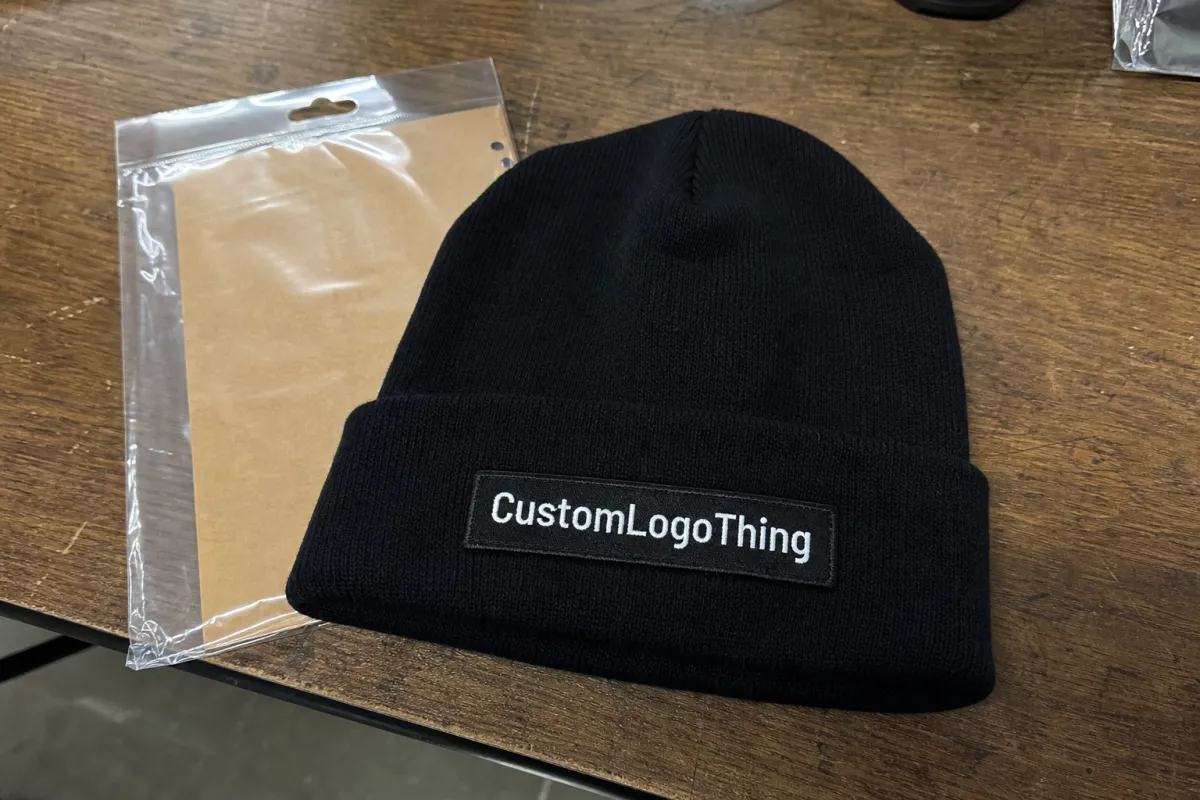
The biggest mistake is treating a cuffed beanie like a generic add-on. It is a soft product, and soft products move. A deeper cuff can push the logo higher than expected. A looser knit can make embroidery sink in or lose definition. Even small changes in yarn tension can shift how the hat fits, how warm it feels, and how the decoration reads once it is folded and packed. Most bulk programs use a 7-gauge or 9-gauge circular knit, a 2.25-3.0 inch cuff, and either 100% acrylic, acrylic-wool blends, or recycled polyester blends depending on cost and hand-feel targets.
This is why buyers need to think in production terms, not merch terms. The order is not just about unit count. It is about repeatable size, repeatable color, repeatable placement, and repeatable presentation. That matters most when the beanies go into retail, distributor packs, event kits, or direct-to-consumer shipments where one carton may be compared with the next. If the brand needs social compliance, factories are often asked to document WRAP or BSCI status, while product-level material claims can require OEKO-TEX Standard 100 for yarns or GRS for recycled content.
Another common miss is assuming one approved sample protects the whole project. It does not if the spec is vague. Reorders drift when the color reference is informal, the logo size is not measured, or the cuff height is not documented. A launch can look clean in sample form and still turn into a mixed inventory problem a few months later. Late changes to color, folding, or packaging usually cost more than the original savings promised by a flexible quote. A good first sample process usually includes a digital mockup, a yarn or color reference, a knit or decoration strike-off, and a pre-production seal sample signed off before bulk starts.
A better approach is to identify what must stay the same across the run: fit, cuff depth, logo dimensions, color, carton count, and packaging format. Once those are written down, the buyer has a practical control list instead of a loose concept.
Product details that affect fit, warmth, and logo clarity
Construction choices matter more than most buyers expect. Cuff width determines how much space the front panel leaves for branding. Knit structure changes drape. Yarn blend changes warmth, stretch recovery, pilling resistance, and how sharp the logo looks after handling. In other words, the material is also part of the branding decision. A tighter knit with a cleaner surface will usually hold embroidery better, while a softer, looser knit often needs a larger logo or a woven patch to stay legible.
Common builds include 100% acrylic for lower cost, acrylic-wool blends for a softer hand and better cold-weather feel, and polyester-acrylic mixes when price stability matters more than fiber content. A heavier double-layer beanie usually feels more substantial and keeps heat better. A lighter single-layer version can be easier on budget, but it may not hold the same premium feel. For premium retail programs, buyers often ask for a brushed acrylic yarn, a folded double-layer body, and a tightly rolled cuff so the front panel stays flat under decoration.
Knit density affects decoration quality. Tighter knits typically support embroidery better because the needle lands on a more stable surface. Looser knits can feel relaxed and comfortable, but they often need larger lettering, simpler art, or a woven patch if the logo needs to stay legible. This is a functional tradeoff, not a style preference. For example, a 60-80 mm wide front logo is usually easier to keep clean than a highly detailed mark with thin strokes or tiny type.
Decoration method changes both cost and appearance. Direct embroidery is the simplest and often the most economical. It works well for bold logos and short text, but fine detail can disappear on a soft knit. Woven patches can carry smaller text more cleanly and often look more retail-ready, though they add thickness and require enough cuff area to sit flat. Sewn labels are subtle and durable when the brand wants a lower-profile finish. Some buyers also specify PVC or silicone badges for a more dimensional look, but those are less flexible on a knit cuff and need careful placement so they do not curl or feel heavy.
| Decoration option | Best use case | Typical price impact | Watch-out |
|---|---|---|---|
| Direct embroidery | Simple logos, bold lettering, front-cuff branding | Usually +$0.45-$1.20 per unit at 500 MOQ, with a $25-$80 setup fee per logo | Fine detail can disappear on looser knits |
| Woven patch | Sharper artwork, small text, premium retail feel | Usually +$0.70-$1.60 per unit at 500 MOQ, depending on patch size and sew-on steps | Patch size must suit cuff width |
| Sewn label | Minimal branding, lifestyle presentation, subtle marks | Usually +$0.35-$0.90 per unit at 500 MOQ | Not ideal for logos that need large front visibility |
Color control matters just as much. Black, navy, charcoal, and cream are easier to repeat across replenishment runs because they are less sensitive to dye lot variation. Custom colors can work well, but they need earlier approval and firmer sample control. If the brand needs an exact shade, a physical swatch or approved lab dip is more reliable than a verbal match. For dyed yarn programs, buyers often request a lab dip against a Pantone or physical standard and allow one round of correction before bulk knitting starts.
Specifications that control sizing, decoration, and reorder consistency
Specs are where most problems are either prevented or created. Before quoting, the buyer should confirm laid-flat width, crown depth, cuff height, stretch range, and whether the fit is meant for adult, youth, or one-size programs. A beanie that measures 8.5 inches laid flat can wear very differently from one that measures 9.25 inches if the yarn and tension are different. For most adult programs, a finished circumference of roughly 19-23 inches and a cuff height of 2.25-3.0 inches are common starting points, but the approved sample should set the final measurement.
Decoration placement should be measured, not guessed. A half-inch can make a logo look too high, too low, or off-center once the cuff is folded and the beanie is on a head. A production mockup with exact placement dimensions is more useful than a polished digital proof alone. The buyer should know where the logo baseline sits relative to the cuff edge and whether that measurement is taken before or after the fold. A practical control sheet often calls out logo width in millimeters, centerline from side seam or back seam, and stitch count if embroidery is used.
Finish details also affect how the order is received and sold. Inside labels, woven brand tags, hang tags, polybags, carton labels, and retail-ready folding instructions change the warehouse experience even when the hat itself is unchanged. A beanie packed loose in a master carton is not the same operating problem as one folded to a fixed dimension, polybagged, and labeled for shelf receipt. Tidy packaging reduces handling time and lowers the chance of mixed counts on arrival. If paper inserts or hang tags are required, FSC-certified paper stock is a common request, and if the run uses recycled fiber content, GRS documentation should match the recycled claim.
Compliance should be handled early. Fiber content disclosure, care labeling, and carton marks should match the purchase order. If the run includes paper hang tags or inserts, FSC-certified stock can help align the paper trail. If the beanie uses organic cotton labels, trims, or a cotton-blend component, GOTS may be relevant. For finished textile safety, OEKO-TEX Standard 100 is the common reference for testing against harmful substances. For factory social audits, WRAP and BSCI are frequently requested. If the shipment needs to survive longer transit lanes or mixed handling, ask about carton testing or packing guidance aligned with ISTA standards. For paper-based packaging, FSC is the relevant reference.
- Measure the cuff, not only the hat body.
- Confirm logo size in inches or millimeters.
- Lock the color reference before bulk production.
- Decide whether the order ships retail-ready or bulk packed.
- Write down acceptable variance for reorder runs.
- Approve the fold, label, and carton count before the bulk line starts.
Those details look small until they are missing. Then they become the reason a reorder takes extra time or a warehouse team has to rebag a shipment by hand.
Pricing, MOQ, and unit cost drivers for bulk orders
Pricing gets easier to interpret once the buyer sees how setup costs are spread across quantity. A 500-piece order carries more overhead per unit than a 5,000-piece run, even if the product is identical. That is why the same beanie can move from expensive to competitive as volume rises. MOQ also changes by construction: stock blank beanies may start at 100-200 pieces, custom color programs often start around 300-500 pieces, and fully custom knit plus custom decoration frequently starts at 500-1,000 pieces per color or design.
Typical unit pricing for a custom embroidered cuffed knit beanie may land around $2.50-$4.00 at 500 pieces, $1.90-$3.20 at 1,000-2,499 pieces, and $1.35-$2.25 at 5,000+ pieces. Those ranges move with yarn blend, stitch density, decoration complexity, label format, and packaging. A stock acrylic body with one-color embroidery will usually be at the lower end, while a recycled yarn blend, woven patch, or retail folding requirement will push the price up. Add-ons like custom woven labels, paper hang tags, barcoded polybags, and individual size stickers can add $0.10-$0.45 per unit depending on the pack-out.
Sample costs are separate from bulk pricing. A basic pre-production sample may cost $25-$60, while a full custom sample with yarn match, embroidery, and branded packaging can run $45-$120. Many suppliers deduct all or part of the sample fee from the bulk invoice once the order is placed. If the buyer changes artwork after the sample is approved, a second sample usually needs to be paid for, especially when a new stitch count or patch die is involved.
To compare quotes fairly, buyers should separate the variables. One quote might include the beanie body only, another might include embroidery, polybagging, and carton labeling, and a third might also include freight to a warehouse dock. The lowest unit price can become the highest landed cost if packaging, inspection, or compliance documents are missing.
Production steps, lead time, and approval checkpoints
A clean production flow usually starts with the tech pack, logo files, and target quantity. The supplier confirms material options, yarn count, decoration method, and MOQ. After that, the team issues a digital mockup or spec sheet for approval, then creates a physical sample or strike-off if the decoration needs to be checked in real life. Most standard sample cycles take 5-10 business days, depending on yarn availability and decoration method.
Once the sample is approved, bulk production usually runs in 18-22 business days for a standard order, with 25-35 business days more common when the order uses custom yarn, multiple colors, woven patches, or special retail packaging. Peak season, color matching delays, and rework can extend that schedule. Buyers should assume that the first approved sample is not the same thing as bulk ready unless the factory has issued a pre-production confirmation.
The machinery and process matter because they control consistency. Circular knitting machines create the beanie tube or body, linking machines close seams, embroidery machines apply thread decoration, and heat or steam finishing helps set shape before folding. If a woven patch is used, it is typically cut, positioned, and sewn with a standard industrial lockstitch machine. The final pack-out often includes folding, polybagging, barcode labeling, carton packing, and master carton seal verification.
Inspection should not wait until the end. A practical control plan usually includes four checkpoints:
- Incoming yarn check for shade, hand feel, and fiber composition confirmation.
- First-piece approval for knit size, cuff height, and logo placement.
- In-line inspection for stitch consistency, embroidery density, loose threads, and patch alignment.
- Final audit for count accuracy, folding accuracy, packaging labels, and carton marks.
Many buyers also ask for AQL inspection at final packing, commonly AQL 2.5 for major defects and AQL 4.0 for minor defects, especially when the order is going into retail or distributor inventory. If the beanie includes a badge, patch, or metal component, a magnet or needle/foreign-object check may be added before cartons are sealed.
The approval checkpoints that save the most money are the simplest ones: confirm the yarn color, approve the placement ruler, sign off on the sample photo next to a tape measure, and verify the packed fold. Those steps reduce the chance that a bulk run looks correct on paper but arrives with visible drift in the warehouse.
Why supplement brands use a tighter sourcing process
Supplement brands tend to be stricter because the item is usually tied to a launch, a promotion, or a retention campaign. The beanie is not just apparel; it is part of a brand story. That means the hand feel, color, and decoration have to support the premium perception the brand is already selling. If the hat feels flimsy or the logo is off-center, the giveaway can weaken the product experience rather than strengthen it.
These buyers also tend to care about repeatability. A promo launch may require 2,000 hats now and another 2,000 later. If the first run used a 100% acrylic 2-ply yarn and the reorder quietly shifts to a different blend or gauge, the color and fit can drift enough to be noticeable. A tighter sourcing process reduces that risk by pinning down the BOM, approved sample, and pack-out instructions before production starts.
There is also a compliance advantage. When the buyer asks for OEKO-TEX Standard 100, WRAP, BSCI, GRS, or GOTS where relevant, the supplier has to document the chain rather than improvising it. That reduces surprises if the order later needs retail paperwork, a customs file, or a replenishment run with the same claim language.
Inputs to confirm before requesting a quote
Before requesting a quote, buyers should have the basics ready: artwork in vector format, target quantity by color, the decoration method, the cuff height, the sizing target, the pack-out style, and the delivery window. If the quote needs to be accurate, the supplier also needs to know whether the beanie is single or double layer, whether the yarn must be recycled or organic, and whether the order needs retail packaging or simple bulk packing.
It helps to provide the following details in one message:
- Artwork file: AI, EPS, PDF, or SVG.
- Preferred yarn: acrylic, acrylic-wool blend, recycled polyester blend, or other approved material.
- Decoration method: embroidery, woven patch, sewn label, or mixed finish.
- Color target: Pantone reference or physical swatch.
- Quantity: total units plus split by color and size.
- Packaging: loose bulk, polybag, hang tag, retail fold, or carton label requirements.
- Compliance: OEKO-TEX Standard 100, GRS, GOTS, WRAP, or BSCI if needed.
- Delivery target: requested ship date and destination type.
The more specific the input, the less likely the quote will change later. A good quote should already reflect the real production path, not just the headline product.
FAQ
What is the usual MOQ for a custom cuffed knit beanie?
Most custom programs start at 300-500 pieces, while fully custom yarn, color, and decoration combinations often start at 500-1,000 pieces. Stock blank options can be lower, sometimes 100-200 pieces.
How long does a sample take?
A basic sample usually takes 5-10 business days. If the order needs custom yarn matching, woven patches, or branded packaging, expect closer to 7-12 business days.
How long does bulk production take?
Typical bulk lead time is 18-22 business days after sample approval. More complex orders can take 25-35 business days, especially when they require special yarns or retail pack-outs.
Which certifications are most relevant?
OEKO-TEX Standard 100 is common for product safety testing, GRS is relevant for recycled content claims, GOTS matters when organic cotton materials are used, and WRAP or BSCI are common social compliance references for the factory. Not every order needs all of them; the right set depends on the material and the buyer's compliance requirement.
What inspection points matter most?
The most important checkpoints are yarn shade approval, first-piece measurement approval, logo placement verification, loose-thread trimming, folding consistency, carton count, and final label accuracy. For retail orders, an AQL final inspection is a good baseline.
What usually changes the price the most?
The biggest drivers are MOQ, yarn blend, decoration type, patch size, packaging requirements, and whether the order needs special certification or custom color matching. Direct embroidery on stock acrylic is usually the most economical combination.


