Buyer Fit Snapshot
| Best fit | Sustainable Display Boxes for Retail projects where brand print, material claims, artwork control, MOQ, and repeat-order consistency need to be specified before quoting. |
|---|---|
| Quote inputs | Share finished size, material target, print colors, finish, packing count, annual reorder estimate, ship-to region, and any compliance wording. |
| Proofing check | Approve dieline scale, logo placement, barcode or warning zones, color tolerance, closure strength, and carton packing before bulk production. |
| Main risk | Vague material claims, crowded artwork, missing packing details, or unclear freight terms can make a low unit price expensive after revisions. |
Fast answer: Sustainable Display Boxes for Retail: Structure, Print Proof, Packing, and Reorder Risk should be specified like a repeatable production item. The safest quote records material, print method, finish, artwork proof, packing count, and reorder notes in one written spec.
Production checks before approval
Compare the actual filled-product size with the drawing, then confirm tolerance on folds, seals, hang holes, label areas, and retail display edges. Reserve space for logos, QR codes, warning copy, and material claims before decorative graphics fill the panel.
Quote comparison points
Review material grade, print process, finish, sampling route, tooling charges, carton quantity, and freight assumptions side by side. A quote is only useful when the supplier can repeat the same color, closure quality, and packing count on the next order.
Sustainable display Boxes for Retail need to do a little of everything, and do it well. They have to hold product securely, carry brand graphics with confidence, survive shipping and handling, and still make sense from a materials standpoint once the promotion has run its course. That is the real standard, because a display that looks polished in a mockup but arrives crushed, scuffed, or impossible to restock never earns its place on the floor.
From a packaging buyer's perspective, the strongest sustainable display boxes for retail are the ones that align fiber content, structure, print quality, and store usability without creating hidden waste somewhere else in the process. A lightweight countertop display may call for recycled paperboard, while a heavier floor unit may need E-flute corrugated with fold-flat shipping and reinforced corners. The goal is not to chase the prettiest sustainability label. The goal is to build a display that works in the warehouse, in the store, and in the hands of the customer.
Custom Logo Things approaches the problem the same way many brand teams do: sustainability has to support merchandising, not get in its way. The best sustainable display boxes for retail reduce secondary packaging, make replenishment easier, and keep the brand message clear enough to stand out in a crowded aisle. If the display is meant to last through the promotion without wasting board, ink, labor, or freight space, the details matter more than the buzz around them. That is usually where the real savings hide, and it is kinda the part that gets missed when teams focus only on the render.
Sustainable display boxes for retail: why they matter
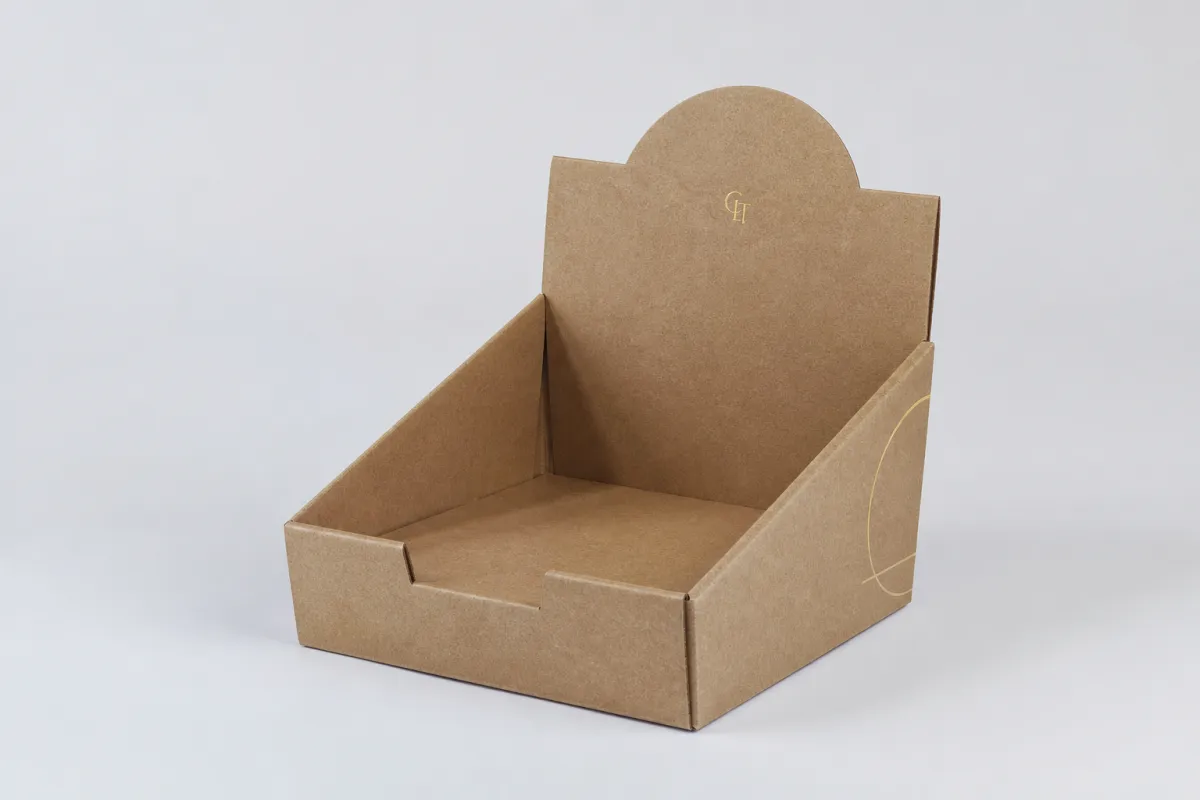
A display box can look refined on a sample table and still be the wrong choice once it enters a store. I have seen programs where the artwork was sharp, the structural sample looked impressive, and the first reaction was excellent, yet the unit failed under corner pressure, rubbed badly after a few rounds of handling, or got pulled early because store staff found it awkward to manage. That is the wrong kind of outcome for sustainable display boxes for retail, because waste shows up not only in the board itself, but in replacements, rushed reprints, damaged inventory, and extra labor.
Real sustainability starts with practical decisions: recycled content where it suits the product, a recyclable structure, dimensions that fit the contents instead of forcing a compromise, and print methods that do not depend on unnecessary plastic or heavy film layers. A display made with virgin fiber is not automatically wasteful, and a display with recycled content is not automatically the best choice. The entire package has to make sense. Oversized cartons, excessive void space, and mixed materials that are hard to recover can weaken the environmental story very quickly. That is why sustainable display boxes for retail should be evaluated as a complete system rather than as a single board spec.
Retailers also want speed and clarity. A display that arrives flat, sets up quickly, and communicates the product without confusion makes life easier at the shelf. Less handling usually means less damage. Less damage usually means fewer replacements. That is a quiet but meaningful sustainability benefit. The most useful sustainable display boxes for retail often save cubic space in transit, cut store labor, and keep product protected enough that the same unit can stay in service for the full promotion window. When a store associate can build it in minutes instead of wrestling with tabs and tears, everybody wins.
There is a commercial side to this as well. Buyers and category managers want to know how packaging reduces waste, whether the fiber is FSC-certified, and whether the structure can be recycled through a standard paper stream. When you can explain your sustainable display boxes for retail in plain language with real material and construction details, the conversation becomes much easier. Broad claims without specifics tend to create more questions than confidence.
The trade-offs usually show up fast: durability against fiber content, print appearance against coatings, and price against shelf life. A thinner board may look cleaner on a spec sheet, but if it fails under load, the replacement waste is worse. A glossy laminate may improve the first impression, yet if it blocks recycling in the target market, the sustainability story becomes harder to defend. The real job of sustainable display boxes for retail is to sit in that middle ground and make the best compromise for the product, the channel, and the schedule.
For reference, organizations such as the ISTA and EPA publish useful guidance on packaging performance, transport damage, and recycling behavior. Those resources will not design the display for you, but they reinforce an important point: sustainability and performance belong together. Good sustainable display boxes for retail protect the product, reduce avoidable waste, and keep the merchandising job straightforward.
How sustainable display boxes for retail work
The strongest displays are often simpler than buyers expect. A well-built unit may use self-locking panels, reinforced bases, fold-flat shipping, and clean tear-away perforations so store teams can assemble it without special tools. That matters in the real world, because a box that takes twenty minutes and several hands to build is far more likely to be bent, misfolded, or rushed than one that follows a clear sequence. Good sustainable display boxes for retail are designed around that assembly reality from the start.
Board choice is usually the first technical decision, and it shapes most of the display's behavior. SBS and similar paperboard grades can work well for lighter countertop programs where the print surface needs to be smooth and the load is modest. Recycled paperboard often fits projects that prioritize fiber recovery and material simplicity. E-flute corrugated tends to be a practical middle ground for shelf-ready or floor-standing units, especially when product weight, shipping distance, or stacking pressure is higher. Chipboard has its place too, but it should be matched to the load and handling pattern, not selected simply because it sounds substantial. For sustainable display boxes for retail, the structure has to fit the product, not fight it.
Print and finishing choices deserve just as much attention. Water-based inks, aqueous coatings, and uncoated or lightly coated stocks often strike the best balance between shelf appearance and recyclability. A display does not need every possible finish to look premium. Too many finishes can muddy the design and create mixed-material issues that complicate recovery. Strong typography, clean color hierarchy, and disciplined spacing often do more for the final result than a stack of decorative effects. That is one reason buyers keep returning to sustainable display boxes for retail that feel clear, restrained, and well made.
The merchandising function matters just as much as the material function. A display needs to hold product, show the brand, and invite pickup. In many categories, the unit replaces outer cartons or extra tray packaging, which reduces clutter around the shelf. Less clutter helps shoppers find the product faster and helps store staff restock without rebuilding the whole display. When a display is engineered well, it supports replenishment rather than forcing replacement. That is one of the most useful traits of sustainable display boxes for retail: they do the job once, then keep doing it.
If you are comparing options, pay close attention to how the structure behaves after the first few refills. Some programs fail because the front edge weakens, the sidewalls bow, or inventory shifts as product is removed. Others fail because the display was never meant to survive a real store environment in the first place. A capable supplier should be able to show how the fold lines, locking tabs, and reinforcement points work together. If that explanation is vague, the sustainable display boxes for retail proposal is probably too thin on engineering.
"A display that saves waste only on paper is not sustainable in the field. It has to survive setup, refill, and customer handling without becoming disposable after one promotion."
Material choices and design factors that affect performance
Material selection is where many buying decisions start, and it is also where the conversation gets overcomplicated. The better question is not, "What board sounds the greenest?" It is, "What board, thickness, and surface are right for this product in this retail setting?" For sustainable display boxes for retail, that means weighing recycled content percentage, fiber source, board thickness, print surface quality, and whether the finished construction can stay recyclable in the stream the retailer actually uses.
Counter displays usually fit small, lightweight products with quick sell-through, such as cosmetics samples, mints, trial-size supplements, or small accessories. Floor displays suit heavier or broader product lines, especially when the brand wants stronger presence at an aisle end or a promotional island. CDU trays and shelf-ready trays work well when the primary packaging is already complete and the display simply needs to present the product cleanly. Hang-tab formats are useful in peg-heavy fixtures. The point is that sustainable display boxes for retail should be chosen based on where they will live, how often they will be touched, and how much inventory they need to support.
Product weight changes the brief immediately. A display holding a handful of lip balms has a different engineering target than one carrying jars, pouches, or small hardware packs. Moisture matters too. Snacks, refrigerated-adjacent promotions, and certain personal care categories may need coatings or board selections that handle humidity more comfortably. Handling frequency matters as well: a store team that restocks twice a day will put more wear on the front edge and corners than a display that gets touched once a week. Practical sustainable display boxes for retail are built for those conditions, not for ideal lab samples.
Branding still has room to work, and it does not have to conflict with sustainability. Strong print, balanced negative space, small window cutouts, selective embossing, and tactile finishes can all support the design if they are used with purpose. The key is avoiding material clutter. A paper window is often easier to recover than a plastic one. A carefully placed emboss can create depth without adding a second material layer. A well-chosen color system can do more for shelf impact than a pile of special effects. The more disciplined the design, the easier it is to keep sustainable display boxes for retail efficient.
One rule I wish more teams followed is simple: do not overbuild the box just because transit makes you nervous. If the board is too heavy, the print package too elaborate, and the structure too rigid, you may end up with a display that is durable but expensive, wasteful, and awkward to handle. In many cases, the most sustainable choice is the one that is right-sized and tuned to the exact use case. Good sustainable display boxes for retail are not overengineered. They are engineered carefully.
For brands that want to show material transparency, FSC-certified fiber can be a useful signal, especially when it is paired with a clear explanation of recyclability and end-of-life handling. You can learn more about that framework directly from the Forest Stewardship Council. Certification does not answer every packaging question, yet it can strengthen a sustainability story when the rest of the structure supports it.
In practice, the material strategy often looks like this:
- Light products: recycled paperboard with a smooth print surface and minimal coating.
- Medium loads: E-flute corrugated or reinforced paperboard with fold-flat shipping.
- Heavier or longer-running promotions: stronger corrugated construction with a base built for repeated refill.
- High-visibility programs: simplified print systems, selective finishes, and a structure that stays recyclable.
That kind of decision tree keeps sustainable display boxes for retail anchored in real usage instead of marketing language.
Cost, pricing, and MOQ factors to compare
Packaging price is rarely just a unit price. It is a blend of board, print, finishing, tooling, setup, freight, and how efficiently the job runs through production and finishing. For sustainable display boxes for retail, the unit cost usually moves with board type, print coverage, structural complexity, special finishes, package size, and how many pieces fit on a sheet or into a run. A compact countertop unit with a single-color print will usually cost far less than a large floor display with multiple cutouts, heavy ink coverage, and specialty coatings.
MOQ, or minimum order quantity, matters more than many buyers expect. Custom dies, specialty board grades, multiple SKUs, and variable artwork can raise the practical order floor quickly. If a supplier must create a new cutting die, build a proof, and run a short quantity, the per-unit cost can climb in a hurry. That does not mean the quote is inflated. It is simply how setup-heavy display manufacturing works. When comparing sustainable display boxes for retail, the real question is not whether the headline number is low. The real question is what is included and how repeatable the program will be.
Here is a simple comparison that helps teams think more clearly about trade-offs:
| Option | Typical Material | Typical Use | Estimated Unit Cost at 5,000 pcs | Notes |
|---|---|---|---|---|
| Counter display | Recycled paperboard | Light products, impulse items | $0.18-$0.35 | Lower board weight, smaller footprint, fast setup |
| Shelf-ready tray | E-flute corrugated | Midweight retail packs | $0.30-$0.60 | Good balance of strength and recyclability |
| Floor display | Reinforced corrugated | Longer promotions, heavier products | $0.85-$2.20 | More structure, more print area, more setup steps |
| Premium branded unit | Paperboard with specialty finish | High-visibility launches | $1.10-$2.80 | Use only when the finish supports sell-through |
Those numbers are directional, not universal, because freight, region, color count, and structural detail can move them up or down. The table does show something important: the cheapest-looking option is not always the least expensive in practice. A slightly pricier display may reduce product damage, lower labor, and avoid emergency replacement orders. That is often where sustainable display boxes for retail become smarter, not just greener.
When you compare quotes, do not stop at the unit cost. Ask whether the estimate includes tooling, prepress, sample runs, freight to one location or multiple, palletization, and any assembly or kitting. A low quote with hidden extras can cost more than a cleaner, more transparent offer. It also helps to ask for a like-for-like breakdown so you can see exactly what changes the price: board grade, print coverage, coating, or structural complexity. That makes it easier to trim cost without weakening the purpose of the display.
Where do savings usually come from? Simplifying the structure helps. Standardizing footprints helps. Using efficient print layouts helps. Avoiding unnecessary embellishments helps too, especially if they do not improve shelf impact or conversion. Buyers sometimes worry that simplifying the box will make it feel less premium, yet that is not always true. Many of the strongest sustainable display boxes for retail rely on restraint: crisp graphics, sturdy geometry, and a finish that feels deliberate rather than crowded.
If your team is planning a larger packaging refresh, you can also compare display formats alongside other branded packaging options through Custom Packaging Products. Keeping that conversation in one place makes it easier to align displays, cartons, and retail-ready packaging around the same material strategy. If you are still shaping the brief, reviewing custom retail packaging solutions can help before the display structure is locked.
Process, timeline, and production steps
The cleanest projects usually begin with a clear brief. Before artwork opens, the supplier should know the product weight, carton size, intended shelf life, retail environment, shipping method, and whether the display needs to arrive flat or partially assembled. From there, the usual production flow is discovery, dieline selection, artwork setup, structural sampling, proofing, manufacturing, packing, and shipment. That sequence sounds straightforward, but each step matters if you want sustainable display boxes for retail to arrive on time and perform properly.
Timeline slips usually come from changes that could have been avoided. Artwork edits after the dieline is approved can add days. Missing barcode files can hold up proofing. Structural revisions can send a project back into sampling. Late sign-off on physical samples is another frequent issue, especially when branding, sustainability language, and retail compliance all need review. The more people involved, the more valuable it becomes to lock specs early. Strong sustainable display boxes for retail programs are rarely saved by a last-minute rush.
Lead time depends on the complexity of the die cut, board availability, print method, quantity, finishing, and whether the order needs assembly or kitting. A straightforward run with existing tooling may move through production in roughly 12-15 business days after proof approval, while a more custom structure, specialty coating, or larger floor display can take longer. If you need a fully custom die and a new structural sample, plan for additional time. That is not a delay problem so much as a planning problem. The earlier the coordination starts, the easier it is to protect the launch date and keep sustainable display boxes for retail aligned with the promotional calendar.
Here is a simple milestone path many teams can follow:
- Brief and product audit: confirm dimensions, weight, display life, and retail location.
- Structural direction: choose one or two display formats for review.
- Artwork setup: build graphics around the real dieline, not a guessed size.
- Sample approval: test with actual product, not empty packaging.
- Production lock: approve final files and quantities.
- Manufacturing and shipment: pack, palletize, and ship to the agreed location.
That kind of sequence keeps expectations realistic. It also makes it easier to compare different versions of sustainable display boxes for retail without losing sight of the deadline.
One detail buyers often overlook is the quality of the assembly instructions. If the display needs to be erected in store, a clear pictorial guide can save a great deal of frustration. A simple one-page sheet, printed on the carton or supplied separately, often reduces mistakes and speeds up rollout. The result is not only better execution. It also means less damage, less waste, and more consistent merchandising across store locations. That is the kind of operational discipline that gives sustainable display boxes for retail a real advantage.
Testing deserves a place in the process too. If the product is heavy, stacked, or likely to face humidity, test a filled display before approving the full run. The useful question is not whether the sample looks good empty. The useful question is whether it behaves well once it is loaded, moved, and handled. A display that survives actual conditions will usually save more waste than one that simply looks eco-friendly in a mockup. That is why experienced teams keep sustainable display boxes for retail in front of real product as early as possible.
Common mistakes when sourcing sustainable retail display boxes
The most common mistake is choosing a recyclable board and then adding so many mixed-material features that recovery becomes harder than expected. A paperboard display can be an excellent choice, but once you introduce unnecessary plastic windows, non-recyclable adhesives, or heavyweight laminated finishes, the end-of-life story gets messy. That does not mean every finish is wrong. It means the total material mix has to be intentional. The best sustainable display boxes for retail avoid surprise complications.
Another frequent mistake is over-specifying the box. Buyers often assume thicker board always means better performance, yet that is only partly true. A box can be too rigid, too expensive, and still poorly suited to the retail environment. Shelf width, staff setup time, refill frequency, and transit handling matter just as much as nominal board strength. If the display cannot fit the planogram or cannot be refilled quickly, the extra board does not help. Sometimes it makes the program less sustainable because it uses more fiber than necessary. Thoughtful sustainable display boxes for retail usually come from right-sizing, not overbuilding.
Retail conditions also get ignored more often than they should. A display may look excellent in a warehouse but fail after forklifts, conveyor movement, and repeated handling start to take their toll. Corners scuff. Front lips get bumped. Heavy items settle toward the base. If the structure was not tested against actual product and actual store conditions, surprises appear quickly. That is why it helps to review not only the CAD drawing, but the whole use case. Strong sustainable display boxes for retail need to survive the way stores really operate.
Artwork and compliance errors create a different kind of failure. Claims about recycled content, recyclability, or compostability should be accurate, supportable, and easy to read. Barcodes need clear placement and enough contrast. Product details cannot disappear into busy graphics. If the sustainability message is buried inside visual noise, the box loses credibility. You want the buyer to understand the value in a few seconds. You also want the store team to grasp setup and refill logic immediately. Clear communication is part of sustainable display boxes for retail, not an afterthought.
The final mistake is skipping product testing. Empty samples are useful for checking fit and appearance, but they do not reveal how the display behaves under load. Product weight, stacking pressure, and handling are usually what trigger failure. Even a small shift in load distribution can change the result, especially on larger floor units. A short test run with the real cartons or filled packs can save a great deal of trouble later. In my experience, that is one of the easiest ways to make sustainable display boxes for retail work the first time instead of the second.
For teams that want a simple standards-based reference point, it helps to think about packaging in terms of performance verification. ISTA transport tests, ASTM material methods, and FSC sourcing claims each cover a different part of the picture. None of them replace practical store testing, but together they create a more defensible packaging brief. That is a good habit for any brand ordering sustainable display boxes for retail.
Expert tips and next steps for sustainable display boxes for retail
Start with a product audit. Measure weight, count facings, note whether the product is moisture-sensitive, and define how long the display needs to remain in service. That one exercise clears up a surprising number of design disputes. Once the usage conditions are visible, it becomes much easier to Choose the Right board, the right finish, and the right structure. Strong sustainable display boxes for retail begin with facts, not assumptions.
Ask for two or three structural options whenever possible. Side-by-side comparison is one of the best ways to see how sustainability, cost, and shelf impact interact. One version may use less board, another may ship flatter, and another may set up faster in store. You do not always need the most elaborate solution. Often, the best answer is the one that gives the brand the clearest shelf message with the least material and the least setup friction. That is exactly where sustainable display boxes for retail can prove their value.
Samples or prototypes are worth the time. Test them for setup speed, refill ease, and shipping durability before you approve the full run. If the display is awkward to assemble on a busy shop floor, the damage will show up later as bent corners, poor presentation, or staff workarounds. A good supplier should welcome that testing step, because it usually prevents avoidable problems. When the prototype passes, the final sustainable display boxes for retail are much more likely to perform as expected.
I also recommend using a short checklist before approval:
- Does the board match the product weight and display duration?
- Are coatings and finishes aligned with recycling goals?
- Is the structure easy to assemble, refill, and break down?
- Are claims, barcodes, and product details readable from normal viewing distance?
- Does the box fit the retailer's shelf or floor space cleanly?
That kind of checklist keeps the conversation practical. It also helps the team avoid the common trap of judging sustainable display boxes for retail only by appearance.
If you need help connecting display packaging with the rest of your branded materials, retail-ready packaging options can be reviewed alongside the display brief so the whole launch feels consistent. You can also explore custom packaging products for retail programs when you want the same visual language across cartons, inserts, and merchandising units. Consistency matters because the shelf display should feel like part of the product story, not an isolated piece.
One more practical point: do not chase sustainability claims that are hard to explain to the retailer. A display that is clearly recyclable, made with a sensible fiber choice, and sized for the real product often lands better than a more complex structure with a vague environmental story. Buyers can usually tell when a concept is grounded. That is why sustainable display boxes for retail work best when they are honest, simple, and engineered around performance first.
For teams building a long-term packaging strategy, the best move is to document what worked after the first rollout. Note the board grade, coating, assembly time, damage rate, and store feedback. That record becomes incredibly useful on the next program, because it turns packaging from guesswork into a repeatable system. Over time, that is how sustainable display boxes for retail become easier to source, easier to approve, and easier to justify.
The most useful takeaway is pretty straightforward: define the product load, choose the simplest structure that can survive real handling, and test it with actual inventory before you place the order. If the display still looks good after refill, transit, and a few days on the floor, you are probably on the right track. That is the standard I would use for any sustainable display boxes for retail program, and it holds up well whether the job is a small counter piece or a full seasonal floor unit.
In the end, the most effective sustainable display boxes for retail do three jobs at once: they present the product well, reduce avoidable waste, and make life easier for the people who have to touch them after production. That combination is hard to beat. If you keep the material mix simple, the structure honest, and the testing real, sustainable display boxes for retail can deliver strong shelf impact without asking the supply chain to carry extra waste.
FAQ
What materials are best for sustainable display boxes for retail?
Recycled paperboard or corrugated board is usually the starting point when the display needs to be sturdy and widely recyclable. The best choice depends on product weight, display duration, and whether the unit must ship flat and be assembled in store. Keep the material mix simple so the finished display is easier to recycle and easier to explain to retail buyers. For many programs, that simplicity is what makes sustainable display boxes for retail practical rather than just well intended.
Can sustainable display boxes still handle heavy retail products?
Yes, if the board grade, flute profile, and base structure are engineered for the actual load instead of an optimistic guess. Reinforced corners, locking tabs, and proper weight distribution usually matter more than simply choosing a thicker sheet. Test the filled display with real product before launch, because stacked weight and handling are what usually cause failure. That is one of the fastest ways to confirm whether sustainable display boxes for retail will hold up in a real store.
How do I estimate pricing for sustainable display boxes for retail?
Compare board type, print coverage, finishing, die-cut complexity, and order quantity because those factors drive most of the cost difference. Ask suppliers for a like-for-like quote so tooling, freight, and sample charges are clearly separated from the unit price. If two versions look similar, check which one uses less board, fewer steps, and simpler assembly before deciding. That usually gives a clearer picture of the true value of sustainable display boxes for retail.
What is a realistic lead time for custom display boxes?
Lead time depends on artwork approval, structural sampling, production capacity, and whether the order needs special finishing or assembly. Simple runs move faster than custom structures, but the most common delays come from late file changes or sample revisions. Build extra time into the schedule if the display must arrive before a retail promotion or seasonal reset. A realistic schedule is often the difference between smooth rollout and rushed sustainable display boxes for retail.
How can I tell if a display box is truly sustainable?
Look for recycled content, recyclable construction, and a design that avoids unnecessary plastic or mixed-material layers. Check whether the box is sized correctly for the product, since excess board and oversized shipping can weaken the sustainability claim. Ask how the box is expected to be disposed of in real retail conditions, not only how it is described in a brochure. That is the most honest way to evaluate sustainable display boxes for retail.