Buyer Fit Snapshot
| Best fit | Sustainable Mailer Envelopes Custom projects where brand print, material claims, artwork control, MOQ, and repeat-order consistency need to be specified before quoting. |
|---|---|
| Quote inputs | Share finished size, material target, print colors, finish, packing count, annual reorder estimate, ship-to region, and any compliance wording. |
| Proofing check | Approve dieline scale, logo placement, barcode or warning zones, color tolerance, closure strength, and carton packing before bulk production. |
| Main risk | Vague material claims, crowded artwork, missing packing details, or unclear freight terms can make a low unit price expensive after revisions. |
Fast answer: Sustainable Mailer Envelopes Custom: Film, Print, MOQ, and Carton Packing should be specified like a repeatable production item. The safest quote records material, print method, finish, artwork proof, packing count, and reorder notes in one written spec.
Production checks before approval
Compare the actual filled-product size with the drawing, then confirm tolerance on folds, seals, hang holes, label areas, and retail display edges. Reserve space for logos, QR codes, warning copy, and material claims before decorative graphics fill the panel.
Quote comparison points
Review material grade, print process, finish, sampling route, tooling charges, carton quantity, and freight assumptions side by side. A quote is only useful when the supplier can repeat the same color, closure quality, and packing count on the next order.
Sustainable Mailer Envelopes Custom: What to Know First
Sustainable mailer envelopes custom sound straightforward until the order is actually sitting in front of you. Then the details start multiplying fast. Size, closure style, ink coverage, recycled content, shipping lane, warehouse speed, and disposal claims all pull in different directions. A buyer can approve a render in ten minutes and still spend weeks untangling the real specification.
Many brands learn the hard way that the envelope is not a minor line item. Oversized mailers increase freight. Loose fills add material that never needed to exist. Damaged shipments trigger replacements, and those replacement shipments can erase the savings from a lower unit price. In a carrier analysis I reviewed last year, the cost of damage and reshipment often outpaced the original packaging spend, which is a blunt reminder that the cheapest option is rarely the least expensive one overall.
From a packaging buyer’s point of view, the better question is not whether the mailer looks eco-friendly in a mockup. It is whether the structure matches the product, survives the route, prints clearly, and gives the customer a disposal path that makes sense in the real world. That is where sustainable mailer envelopes custom become interesting: they sit at the intersection of protection, branding, and end-of-life behavior.
For Custom Logo Things, the practical side matters most. Sustainable mailer envelopes custom can work for apparel, books, cosmetics, sample kits, retail inserts, and small components, but the winning spec depends on more than the substrate. Recycled content, adhesive behavior, closure design, print coverage, and size tolerances all shape the result. Brands that get this right usually treat packaging as a system, not a one-off purchase.
The sustainability vocabulary gets slippery quickly. A mailer may be recyclable in one region and awkward in another. A compostable structure may satisfy a technical definition and still confuse a customer standing at the recycling bin. The goal is not to chase the greenest sounding label. The goal is to identify which version of sustainable mailer envelopes custom is actually fit for the product, the budget, and the fulfillment setup.
That balance is real. Not perfect. Not always the lowest quote. Still, it can mean less waste than a box-heavy format, fewer replacement shipments, and a cleaner presentation than generic stock packaging can deliver.
What Sustainable Mailer Envelopes Custom Actually Mean
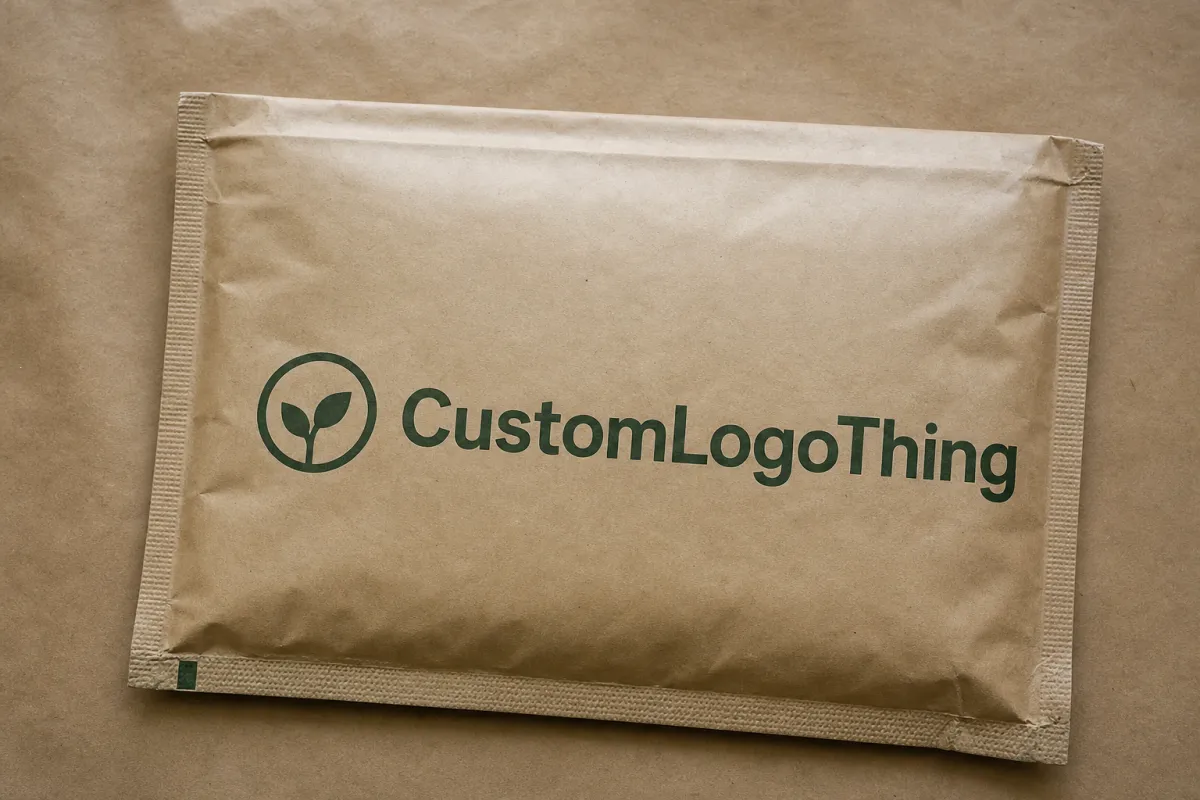
Sustainable mailer envelopes custom are protective shipping envelopes built around a specific product size, closure style, print requirement, and disposal goal. The phrase sounds simple, yet plenty of buyers get nudged off course by stock mailers with a green icon and a vague claim. A custom mailer that is right-sized, matched to the load, and designed with end-of-life in mind is a different animal entirely.
The word sustainable does not point to one material choice. It is a stack of decisions. Substrate comes first: kraft paper, recycled paper, compostable film, mono-material recyclable film, or a mixed construction. Then come the details that often decide the outcome: recycled-content percentage, adhesive chemistry, tear-strip design, ink coverage, coatings, and whether the package can be recycled or composted without separating layers. Miss those details and the sustainability claim weakens fast.
Sustainable mailer envelopes custom can outperform generic packaging for flat, lightweight, or scuff-prone items. Apparel slips, books, stationery, cosmetic refills, sample kits, and small parts all benefit from a slim profile. The package uses less board or film than a box in many cases, and it may also reduce dimensional weight charges. That matters more than many teams expect, especially for lower-margin e-commerce orders.
The envelope format also changes perception in a subtle way. A shipment starts to feel purpose-built rather than improvised. Customers notice that shift. A close fit, cleaner branding, and a clear recycling message can make sustainable mailer envelopes custom feel more deliberate than a generic carton packed with filler.
One caution keeps showing up in real projects. The most sustainable option is not always the one with the highest recycled content or the loudest certification badge. If the mailer tears, opens early, or arrives crushed, the environmental math turns against it because replacement shipments enter the picture. In practice, sustainable mailer envelopes custom work best when they land in the middle ground: enough protection, minimal excess, and an end-of-life path a customer can understand without reading a policy manual.
For buyers comparing broader formats, the envelope should be viewed inside a larger system. Some product lines also need Custom Packaging Products for accessory kits, while moisture-sensitive goods may perform better in Custom Poly Mailers with a more specialized structure. The right answer is usually format-specific, not universal.
Sustainable Mailer Envelopes Custom: How They Work
A mailer envelope looks compact, but the mechanics underneath are worth unpacking. At the simplest level, the structure has front and back panels, a closure, and a shipping seam. Add a gusset and the envelope gains depth for a thicker product. Add a tear strip and opening becomes easier. Add a pressure-sensitive seal and tampering risk drops. Every one of those choices affects how sustainable mailer envelopes custom behave in the warehouse and at the front door.
Paper-based mailers are common because they feel easy to recycle and usually print well with lower-coverage graphics. Recycled kraft often suits brands that want a natural look without heavy ink. Compostable films and plant-based blends can fit specific programs, though the claims need careful checking because compostable does not automatically mean accepted in curbside systems. Mono-material recyclable plastics offer another route, especially where moisture resistance or puncture protection matters. None of the options is flawless. Each trades off strength, appearance, cost, and disposal clarity.
Custom sizing is where the format starts to earn its keep. A mailer built too large invites movement, corner damage, and extra filler. One built too tight slows packing and stresses the seams. The sweet spot sits at the product size plus a practical handling tolerance. That tolerance is often measured in millimeters, not vague “close enough” language. For sustainable mailer envelopes custom, tighter fit usually means less material used and lower dimensional weight, which can add up to real savings across a large run.
Branding plays a role in how the mailer works too. Water-based inks, spot printing, or restrained graphics often align better with sustainability than full-coverage decoration, foil stamping, or heavy lamination. That does not mean the package should feel plain. It means the design should be intentional. Strong branding can come from typography, one or two colors, and a clean layout rather than a pile of decorative effects.
From the customer side, the best sustainable mailer envelopes custom are easy to open, easy to identify, and easy to dispose of. Clear recycling symbols help. So do short instructions printed directly on the package that tell the buyer whether to recycle, compost, or separate a component. That sounds minor until you see how often good materials fail because the customer is left guessing.
For reference on sustainability certifications and transport performance, two useful starting points are the FSC standard for responsibly sourced forest materials and the ISTA family of shipping test methods. A mailer can look polished on a sample table and still fail in transit if it has not been tested against real handling conditions.
Key Factors That Decide Performance and Sustainability
Material choice is the first filter, but it should not be the only one. Sustainable mailer envelopes custom have to do three jobs at once: protect the product, support the brand, and make disposal understandable. If one of those fails, the whole package becomes harder to justify.
Strength and barrier performance matter more than labels. A recycled paper mailer may be a strong fit for dry, lightweight goods and still be a poor choice for sharp corners or humid routes. A mono-material film may offer better tear resistance and moisture protection, yet some customers will read it as less intuitive to recycle. Compostable structures look attractive in theory, but they need validation against the actual disposal infrastructure the customer can access. Sustainable mailer envelopes custom should be specified by use case, not by trend.
Fit is another major variable. If the product shifts inside the envelope, damage rates climb. If the envelope is oversized, material use and shipping weight climb too. Packaging teams often underestimate the cost of “almost right” sizing. Over a run of 10,000 or 50,000 units, that extra slack can become wasted material, higher freight charges, and more customer complaints than the design team expected.
Closure integrity deserves more attention than it gets. Pressure-sensitive adhesives can behave differently in heat, cold, and dusty packing environments. A seal that looks strong in a sample room may fail on a warm warehouse line or after the package sits in a delivery vehicle. If the closure opens early, the environmental benefit disappears behind replacement shipments and damaged goods. Sustainable mailer envelopes custom should never be judged only by how easy they are to peel in a demo.
Print and finish choices influence sustainability too. Heavy ink coverage, soft-touch coatings, foil accents, or multiple laminates can complicate recyclability and raise production cost. A simpler layout is sometimes the smarter commercial choice. That is especially true for branded packaging that already relies on a strong logo, color palette, or material texture to carry the look.
Then there is compliance. Claims like “recycled content,” “recyclable,” or “compostable” should be backed by documentation, not guesswork. Ask for percentages, certifications, and testing references. If the structure is FSC-certified, say so accurately. If it is intended for industrial composting only, do not imply curbside compatibility. Honest language protects both the customer and the brand, and it is far easier to defend when sales or legal teams ask questions later.
If a mailer saves a few grams of material but doubles the chance of damage, it is not a sustainable solution. It is just a lighter failure.
Operational compatibility matters too. Some sustainable mailer envelopes custom are ideal for hand-packing but awkward on automated lines. Others stack neatly, store flat, and speed up fulfillment, which lowers labor cost and keeps the packaging operation smoother. That connection gets missed often. Packaging design is not just a visual decision; it is a production decision.
| Material Option | Best For | Typical Strength | Disposal Path | Indicative Unit Cost at 5,000 |
|---|---|---|---|---|
| Recycled kraft paper | Apparel, books, dry goods | Good tear resistance, moderate moisture resistance | Commonly recyclable where accepted | $0.20-$0.38 |
| Paper with barrier coating | Items needing a bit more scuff protection | Better abrasion resistance, less breathable | Depends on coating and local rules | $0.24-$0.45 |
| Compostable film blend | Special programs with verified compost routes | Flexible, decent puncture resistance | Usually industrial composting only | $0.28-$0.52 |
| Mono-material recyclable plastic | Moisture-sensitive or higher-abuse shipping lanes | Strong seal integrity, excellent moisture resistance | Often recyclable where film streams exist | $0.18-$0.34 |
The table above is not a quote. It is a decision aid. Real pricing shifts with print coverage, dimensions, substrate availability, and freight. Still, the pattern is clear: sustainable mailer envelopes custom can be economical, but only after the spec matches the product and the shipping environment. Otherwise, the cheap-looking option tends to become the expensive one.
Production Process and Timeline for Sustainable Mailer Envelopes Custom
The production path for sustainable mailer envelopes custom looks simple on paper and becomes very specific once the buyer starts making decisions. The process usually begins with a brief: product dimensions, weight, fragility, shipping zone, print goals, and sustainability requirements. If those inputs are fuzzy, the quoting round slows down and the sampling round becomes fragile.
Material selection and structural planning come next. A supplier may recommend a paper-based envelope, a recycled-content film, or a hybrid construction depending on the product. Dielines matter at this stage. A mailer that looks fine in a screenshot may need a different seam allowance, seal area, or gusset depth once the physical product is measured. Sustainable mailer envelopes custom are far easier to get right when measurements are exact and the handling tolerance is realistic.
Artwork follows. This is where many teams lose time. Logo placement, recycling marks, copy length, and ink limits all need to be sorted before production approval. Small revisions are normal. Big late-stage changes are expensive. If the design uses special coatings or high-coverage graphics, the production team may also need to adjust drying time, substrate compatibility, or finishing order.
Sample approval is usually the slowest part, especially when the product is new or the design is heavily branded. A good prototype should be tested by packing the actual item, not a dummy card that only vaguely resembles the load. Push it through the same packing motion the warehouse will use. Drop it. Shake it. Check whether the seal opens, the print scuffs, or the corners rub through. That gives more useful information than admiring a pristine mockup under bright lights.
For simple sustainable mailer envelopes custom built on standard materials, a practical timeline is often measured in a few weeks from approval to delivery, assuming the line is not overloaded. Complex structures, special finishes, or unusual substrate sourcing can stretch that schedule. Buyers should expect the delay risk and build buffer time into launch planning. Packaging delays have a habit of arriving after the product is ready, which turns a supply issue into a fulfillment issue.
A supplier that understands the category should flag risks early: limited material availability, artwork that will not reproduce cleanly, closure adhesive that may be temperature-sensitive, or a structure that might not hold up in a particular shipping lane. That kind of honesty saves time later. It also tells you whether the supplier understands sustainable mailer envelopes custom as a production problem, not just a sales line.
One practical move helps more than it gets credit for: consolidate feedback into a single review cycle whenever possible. If design, operations, and sustainability stakeholders send separate comments over several days, the schedule stretches fast. If everyone agrees on the goal up front, the production path shortens and the final mailer usually comes out cleaner.
Cost, Pricing, MOQ, and Quote Drivers
Pricing for sustainable mailer envelopes custom comes down to a small set of variables, and the biggest one is often not the one buyers expect. Material grade matters. Size matters. Print coverage, closure style, finish, and order volume matter too. Freight distance from the converter or printer can matter as well, especially for heavier paper constructions.
MOQ, or minimum order quantity, usually reflects setup economics. If the press or converting line needs time to calibrate, the cost of that setup gets spread across the order. Smaller runs absorb more of that overhead per piece. That is why a 1,000-unit order can look disproportionately expensive compared with 5,000 or 10,000 units. Sustainable mailer envelopes custom usually make more financial sense once the buyer can forecast steady demand.
Quotes are easier to read when they come in three layers: starter run, mid-volume run, and scale pricing. That gives a clearer picture of how the unit cost changes as volume improves. A quote that looks attractive at 20,000 pieces may not fit a first launch, while a small-run quote may be acceptable for a limited promotion or a pilot SKU. Context matters more than a single number.
One overlooked reality deserves attention. A custom mailer can cost less than a stock solution once hidden costs are included. Less void fill. Lower damage replacement. Faster packing. Fewer complaints about oversized packaging. Sustainable mailer envelopes custom are not just a purchase line; they influence logistics, labor, and brand perception.
To read a quote properly, split the line items apart. Look for unit cost, setup or tooling, sample charges, freight, and any premium tied to specialty substrates or printed sustainability claims. If the supplier bundles everything into one total, ask for a breakdown. Transparent pricing makes comparison much easier and avoids surprises after approval.
Rule of thumb: the cheapest envelope is not necessarily the best value if it increases returns, damages, or confusion about disposal. A slightly higher unit cost can pay back quickly if the package holds up better and reduces operational friction. That is especially true for sustainable mailer envelopes custom in branded packaging programs where the unboxing moment is part of the customer experience.
If you are comparing this format to other product packaging options, remember that Custom Printed Boxes solve a different set of problems. Boxes handle irregular shapes and bulky items better. Mailers win when the product is flat, light, and needs a slimmer footprint. The smartest packaging teams compare formats by function, not by habit.
Common Mistakes When Ordering Sustainable Mailer Envelopes Custom
The most common mistake is starting with the sustainability claim and working backward. That feels responsible, yet it can produce a package that looks good on paper and performs badly in transit. A mailer that breaks, leaks, or opens early creates more waste than a slightly heavier option that protects the product properly.
Another mistake is overdesigning the exterior. Too much ink. Too many coatings. Too many special effects. Each layer can add cost and complicate disposal. For sustainable mailer envelopes custom, restraint often prints better anyway. A strong logo, a disciplined color palette, and clean typography are enough for most branded packaging programs. The package does not need to shout to be memorable.
Oversizing is a quiet problem. A generic envelope that feels close enough in the mockup may be wrong once inserts, sleeves, or protective wraps are added. Then the item rattles, the seal gets stressed, and the fulfillment team compensates with filler or a secondary bag. That is the kind of small mistake that becomes expensive at scale.
Disposal instructions are another weak spot. Customers recycle more reliably when the package tells them what to do in plain language. If the mailer is curbside recyclable only in certain regions, say so. If a compostable structure requires industrial facilities, say that too. Clear messaging builds trust. Confusing messaging does the opposite, and sustainable mailer envelopes custom deserve better than vague green claims.
Supply chain planning gets overlooked as well. Lead times change with seasonal demand. Material availability can shift. Print windows tighten near major retail cycles. A mailer that looked affordable in the quote stage may become expensive when the calendar gets crowded. A little cushion in the timeline is usually cheaper than a rush fee.
Finally, some teams treat samples as optional. That is a mistake. Prototype testing is the least expensive way to catch fit, seal, scuffing, and print issues. Even a short pilot run can reveal whether the packaging survives the actual shipping lane, not just the spec sheet. For sustainable mailer envelopes custom, the sample is not a formality. It is the evidence.
Expert Tips and Next Steps for Sustainable Mailer Envelopes Custom
Start with the product, not the packaging trend. That sounds plain, but it is the cleanest way to get sustainable mailer envelopes custom right. Record the item weight, dimensions, fragility, moisture exposure, and the route it will travel. A direct-to-consumer apparel brand has very different needs from a subscription kit for small parts or a cosmetic refill program.
Ask suppliers for proof, not adjectives. Request substrate specs, recycled-content documentation, print limitations, closure details, and testing information. If a supplier cannot explain what makes the mailer sustainable in plain English, that is a warning sign. A real packaging partner should be able to describe the structure without hiding behind buzzwords.
A decision matrix helps more than a gut feel. Compare each option across protection, unit cost, MOQ, appearance, disposal path, and warehouse speed. Sustainable mailer envelopes custom can score well on four of those and weak on one. That is still useful, as long as the weak point does not collide with your core business need.
Pilot one SKU first if the product line is new. Measure damage rates, packing time, customer feedback, and replacement shipments before scaling. That trial run often reveals details that never show up in a design file. Sometimes the package is strong enough but too hard to open. Sometimes the print is beautiful but scuffs in transit. Sometimes the fit is perfect and the unit cost drops more than expected once labor is factored in.
For larger packaging programs, it helps to view sustainable mailer envelopes custom as part of a broader branded packaging system rather than a single purchase. The same logic that improves mailers can inform product packaging inserts, shipping cartons, and even Custom Packaging Products used across the line. Consistency reduces confusion and gives the brand a more deliberate look.
If you are weighing a paper-based mailer against a film-based option, compare actual shipping conditions. Dry warehouse? Moisture-prone lane? Sharp product edges? Those details decide the outcome more than theory does. If the item truly needs more protection, a different format may be the better answer than forcing the mailer to do a box’s job.
From a practical sourcing standpoint, the shortest path is simple: define the product, narrow the material, request samples, review the sustainability claim language, and confirm the production timeline before you announce a launch date. That sequence reduces surprises and usually produces better packaging design than rushing straight to artwork.
Sustainable mailer envelopes custom are not a silver bullet. They are a smart tool. Used carefully, they can reduce waste, improve package branding, and keep shipping costs under control. Used loosely, they can create the same waste they were supposed to prevent. The difference comes down to fit, structure, and honest specification.
That is the real takeaway. The right sustainable mailer envelopes custom balance protection, price, and disposal logic for the actual product and shipping lane. If you can hit those three points, the packaging starts helping the business instead of merely covering it.
FAQ
What should I look for in sustainable mailer envelopes custom for e-commerce?
Look for a mailer that fits the product closely, protects it in transit, and gives the customer a disposal path that makes sense. Ask for material specs, closure details, and print limits before you approve artwork. If the construction uses fewer mixed materials, recycling or sorting is usually easier for the customer.
Which material is best for sustainable mailer envelopes custom: paper or plastic?
It depends on the product, the shipping conditions, and local recycling access. Paper works well for dry, low-abrasion items. Mono-material recyclable plastic can perform better where moisture or puncture resistance is a concern. The safer rule is simple: choose the material that meets performance first, then simplify the structure as much as possible.
How do I estimate pricing for sustainable mailer envelopes custom?
Start with size, material, print coverage, and quantity, since those drive most of the cost. Ask for separate line items for setup, tooling, sampling, freight, and specialty finishes. Then compare pricing at several order quantities so you can see where the per-unit cost starts to improve.
What affects MOQ for sustainable mailer envelopes custom orders?
MOQ is usually driven by production setup, material availability, and press efficiency. Custom sizes, special coatings, and complex print requirements often push MOQ higher. If you need a small first run, ask whether a standard construction can reduce setup burden without sacrificing the branding you need.
How long does production take for sustainable mailer envelopes custom?
Timeline depends on whether the design is simple or needs new tooling, samples, or specialty substrates. Artwork approval and sample review are often the biggest variables, so fast feedback shortens lead time. Build a buffer into launch plans so packaging does not become the bottleneck for fulfillment.
Can sustainable mailer envelopes custom replace custom printed boxes?
Sometimes, yes. Flat, lightweight, and lower-fragility products often ship better in mailers than in boxes. If the item is bulky, irregular, or highly sensitive to crush force, Custom Printed Boxes may be the better fit. The best choice depends on protection first, then shipping cost, then brand presentation.
For buyers trying to move from concept to sourcing, the path is clear: define the product, request samples, validate the claim language, and compare quotes against the actual shipping environment. That is how sustainable mailer envelopes custom become a business asset instead of another packaging expense.
Custom Logo Things can use that same logic across product packaging, retail packaging, and branded packaging programs. Done well, sustainable mailer envelopes custom reduce waste, protect the shipment, and make the brand look more considered from the first touch to the final disposal step.

