Buyer Fit Snapshot
| Best fit | Sustainable Packaging for Beauty Products Explained projects where brand print, material claims, artwork control, MOQ, and repeat-order consistency need to be specified before quoting. |
|---|---|
| Quote inputs | Share finished size, material target, print colors, finish, packing count, annual reorder estimate, ship-to region, and any compliance wording. |
| Proofing check | Approve dieline scale, logo placement, barcode or warning zones, color tolerance, closure strength, and carton packing before bulk production. |
| Main risk | Vague material claims, crowded artwork, missing packing details, or unclear freight terms can make a low unit price expensive after revisions. |
Fast answer: Sustainable Packaging for Beauty Products Explained should be specified like a repeatable production item. The safest quote records material, print method, finish, artwork proof, packing count, and reorder notes in one written spec.
Production checks before approval
Compare the actual filled-product size with the drawing, then confirm tolerance on folds, seals, hang holes, label areas, and retail display edges. Reserve space for logos, QR codes, warning copy, and material claims before decorative graphics fill the panel.
Quote comparison points
Review material grade, print process, finish, sampling route, tooling charges, carton quantity, and freight assumptions side by side. A quote is only useful when the supplier can repeat the same color, closure quality, and packing count on the next order.
Sustainable Packaging for Beauty products can look deceptively simple on a mood board, but once I have walked a package through a filling line, a warehouse in Shenzhen, a transit lane through Long Beach, and a retail shelf in Chicago, it stops feeling like one object and starts behaving like a chain of linked decisions. That is why sustainable packaging for beauty products has to be treated like a materials brief, a stability project, and a logistics map at the same time. I still remember a recycled-resin bottle that looked flawless in the sample room, then fell apart in the real world because the cap liner swelled against the serum, the pump spring started corroding after a 72-hour humidity test at 40 degrees Celsius, and the label adhesive turned cloudy after a cold-chain shipment at 2 to 8 degrees Celsius. That kind of mess is exactly why sustainable packaging for beauty products is never just a material swap; it is a system problem, and the system gets petty fast.
At Custom Logo Things, I have learned that the strongest brands treat sustainable Packaging for Beauty products as both a production decision and a brand signal. For a brand building sustainable packaging for beauty products, that balance is what separates a nice concept from a package that survives the market without making everyone in operations mutter under their breath. They want lower impact, obviously, but they also need Retail Packaging That looks expensive on a shelf, protects a sensitive formula, and supports package branding through texture, print quality, and structure. A carton specified in 350gsm C1S artboard with a matte aqueous coating can still feel elevated, and a PCR PET bottle with 30% post-consumer content can still carry a luxury finish if the decoration is planned properly. Honestly, that balance is what separates a nice concept from a package that survives the market without making everyone in operations mutter under their breath. I know I just said that twice, but the repetition is deliberate because it is true in the factory every single time.
The best projects usually start with blunt, slightly unglamorous questions: What is inside the formula, and what is the pH after fill at 22 degrees Celsius? What happens to it under heat, light, vibration, and time over a 12-week stability window? Which recycling stream in California, Ontario, or the UK will actually accept the finished pack? Those answers shape everything from custom printed boxes to the tiniest gasket inside a pump, which is exactly why sustainable Packaging for Beauty products has to be engineered from the inside out. I have seen teams spend three weeks obsessing over a foil sample, then discover the liner material was the real problem because the fragrance solvent softened it at 50 degrees Celsius. That is the part of sustainable packaging for beauty products nobody puts on a mood board, but it is the part that decides whether the launch works. And yes, it is a little less glamorous than swatches and renderings, but that is where the launch either holds together or falls apart.
How Do You Choose Sustainable Packaging for Beauty Products?
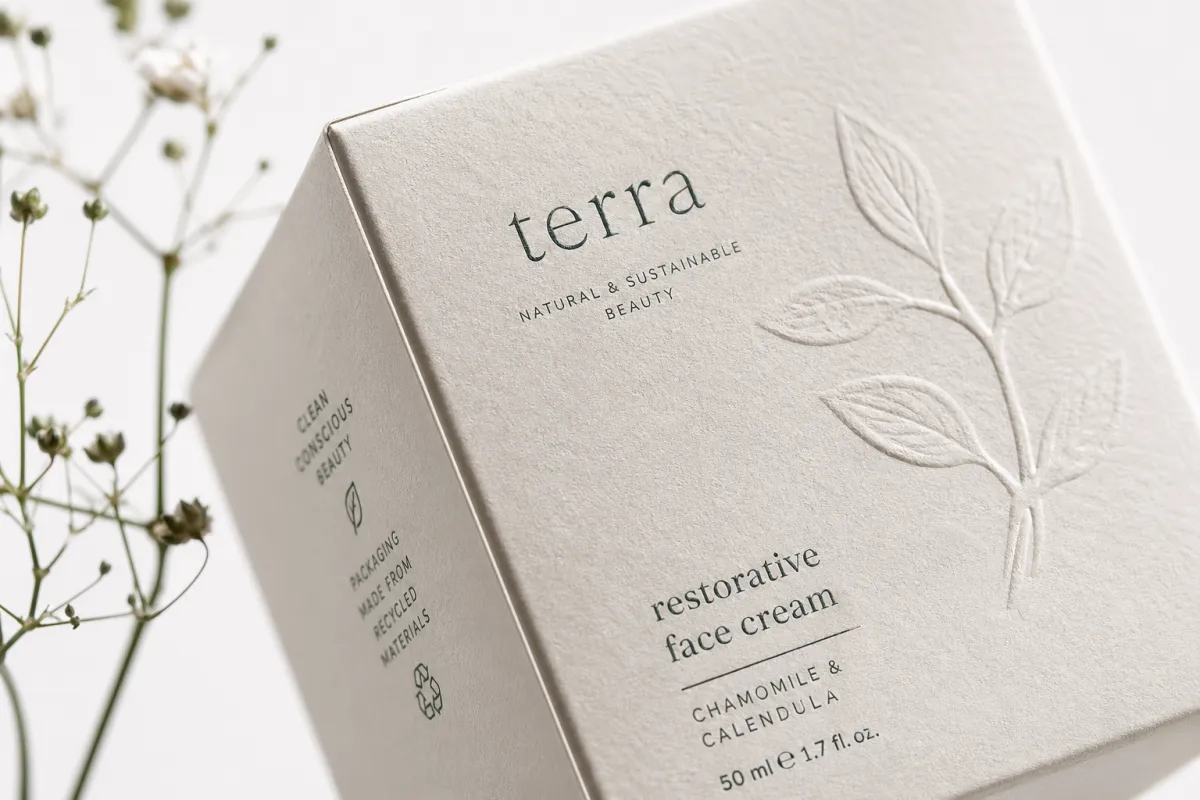
Start with the formula, the filling line, and the end-of-life path. The Best Sustainable Packaging for beauty products is usually the option that protects the formula, runs cleanly in production, and matches the recycling or refill system in your target market. If you are considering refillable packaging or mono-material packaging, design the outer vessel and the inner component together so the customer sees a simple ritual and the factory sees a stable build. If the package cannot protect the formula, run at speed, and support realistic end-of-life handling, it is not the right fit for sustainable Packaging for Beauty products. That sounds plain, but plain is often what keeps a project from turning into a very expensive lesson.
Why Sustainable Packaging for Beauty Products Feels Different Up Close
Spend enough time on a factory floor in Guangzhou, Dongguan, or Eindhoven and one pattern becomes impossible to ignore: the package that looks the greenest in a pitch deck is not always the package that runs cleanly in production. I once stood beside a high-speed lotion line where a brand had switched to a lighter bottle to improve sustainable Packaging for Beauty products, but the neck finish had shifted by just 0.4 mm. That tiny change was enough to send cap torque wandering from 0.35 to 0.62 N·m, slow the fill line by 18 percent, and push rejects to 3.8% before lunch. It was one of those moments where everybody stared at the machine like it had personally betrayed us.
Sustainable packaging for beauty products means packaging That Cuts Waste, uses smarter materials, and still protects the formula and the brand. It is not just paper instead of plastic, and it is not just recycled content printed on a carton. A solid package might use PCR PET for a serum bottle, FSC-certified paperboard from mills in the Pacific Northwest or Sweden for an outer carton, or aluminum from a plant in Northern Italy for a refill shell, then pair those materials with low-waste decoration and a filling process that keeps scrap under control. The goal is to reduce the footprint without weakening performance, which sounds obvious until you start comparing supplier quotes and realize how many hidden decisions are packed into one little jar.
Beauty is trickier than many categories because the formulas vary so much. A water-based toner behaves differently from an oil-rich facial oil, and a whipped cream has very different needs from a loose powder or a fragrance mist. Sustainable Packaging for Beauty products has to respect barrier demands, hygiene expectations, and the reality of consumer handling. A jar for a balm may be a good candidate for glass with a 58 mm neck, while a UV-sensitive serum may need an amber bottle, a tighter closure, or a secondary carton that blocks light in transit for at least 12 hours in an airport cargo hold. One material does not fit every formula, and anyone who claims otherwise has probably not spent enough time around actual production trials. I have seen that kind of overconfidence blow up a project more than once, and it never gets less annoying.
Sustainability and premium presentation are not opposites. I have sat through client meetings where a prestige skincare brand assumed eco-conscious packaging would force the design into something plain and clinical. That fear usually falls apart once the samples arrive from a converter in Milan, Taichung, or Dongguan. With disciplined packaging design, you can use soft-touch coatings with lower ink coverage, debossed logos, molded-in color, or a clean mono-material tube that still feels elevated. Sustainable packaging for beauty products can carry strong branded packaging cues if the structure and finish are planned together instead of tacked on like an afterthought. That is the part that usually surprises people: the cleaner the structure, the more honest the premium feel can become.
"The package should protect the formula first, move through the line without drama second, and tell the brand story third. If you reverse that order, you usually pay for it later in the form of a 2 a.m. rework order, a 6% scrap rate, or a full pallet of rejected caps."
That line came from a buyer I worked with after we had already rejected two cap options and a label stock that looked beautiful but failed wet rub testing after 50 double rubs with IPA. She was not being dramatic; she was being accurate. Sustainable packaging for beauty products has to solve the unglamorous details first, because those details decide whether the launch survives real use, real shipping, and real shelf life. And yes, the glamorous part still matters, but it is rude to build a whole program around glossy hopes and then act surprised when torque values disagree. I have learned, sometimes the hard way, that the factory always has the final vote.
How Sustainable Packaging for Beauty Products Works in Production
To understand sustainable packaging for beauty products, follow the package through the full cycle: raw material sourcing, converting, filling, distribution, consumer use, and end-of-life sorting. A bottle starts as PCR resin, virgin resin, glass, aluminum, or paperboard, then moves through molding, extrusion, printing, laminating, and assembly. After that, it gets filled, capped, packed, palletized, and shipped, often with 1,200 units per pallet and stretch wrap tension set to 18 to 22 psi. If the customer likes it, the package may be reused, refilled, or sorted into recycling. If it is poorly designed, it gets tossed into the wrong bin, contaminated with residue, or buried in a drawer with seven other "I will use this later" items. That is not a technical term, but it should be.
The common material choices each bring different strengths. PCR PET is popular because it is lightweight, clear enough for many formulas, and often easier to convert into bottles and jars at scale in plants in Jiangsu, Ohio, or Catalonia. Glass offers a premium feel and strong chemical resistance, which is why I still see it used for fragrance, serums, and thicker creams in 30 mL, 50 mL, and 100 mL sizes. Aluminum works well for tubes, tins, and refillable shells because it is durable and highly recyclable in many systems, especially when sourced from established lines in Germany or Quebec. FSC paperboard remains one of the most useful options for outer cartons and sleeves, especially when a brand wants sustainable packaging for beauty products to look polished without adding much weight. Mono-material tubes, usually in PE or PP, are gaining ground because they simplify sorting compared with mixed-layer laminates.
Format choices matter just as much as materials. A refill pod only reduces waste if the outer container is durable enough to be reused many times and the inner pod is easy to replace, ideally in under 20 seconds by the consumer. A concentrated formula can reduce bottle size and shipping weight, which is a quiet but meaningful sustainability win across a 10,000-unit order. A simplified closure system, such as a standard screw cap instead of a complex pump with multiple springs, can improve recyclability and lower component count. Sustainable packaging for beauty products usually performs best when the formula and the package are developed together rather than separately, because packaging never really behaves like an isolated object; it behaves like a very opinionated roommate. If the formula is already fixed, then the package has to work harder to adapt without creating new headaches.
Compatibility is where many projects succeed or fail. Oils can creep into seals. Active ingredients like retinol or benzoyl peroxide can stain or soften certain plastics. Fragrances can attack gaskets. UV-sensitive products may degrade under clear packaging after just 48 hours under a 1,000 lux light source. Water-based systems can still fail if the pump is not rated for the right stroke volume or if the liner absorbs moisture. That is why sustainable packaging for beauty products needs technical checks, not just visual approval. I have seen elegant concepts collapse because a botanical serum separated after six weeks in accelerated testing, and I have seen a simple amber bottle pass because the supplier specified the right resin, the right closure, and a clean torque range. The packaging may look quiet and uncomplicated, but under the hood it is basically doing chemistry homework.
Real production checks protect the project. On a practical line in New Jersey, Suzhou, or Monterrey, I want to see barrier testing, drop testing from 1.2 meters, torque checks, compatibility screening, and line-speed trials before mass approval. For some SKUs, we also run vibration tests and transit simulations aligned with ISTA protocols, then compare the results with what the formula actually does in storage at 25 degrees Celsius and 60% relative humidity. ASTM methods matter too, especially for claims testing and material characterization. Sustainable packaging for beauty products should be validated like any other serious product packaging decision, because the customer only sees the final result, not the lab notebook with the coffee stain on page three. If you want confidence in the result, you need numbers, not just a pretty sample and a hopeful nod.
For teams trying to align sustainability with brand assets, I often point them toward Custom Packaging Products that can be adapted for different fill systems, finishes, and retail goals. The reason is simple: it is easier to build sustainable packaging for beauty products around components that already fit your manufacturing reality than to force a beautiful concept into a line that cannot support it. I have watched the latter happen, and it is rarely elegant. It is more often a week of emails, three rushed calls, one very tired operations manager, and a production hold that costs $4,200 in idle line time.
Key Factors That Decide Whether Beauty Packaging Is Truly Sustainable
Not every package that sounds sustainable is truly sustainable in the waste stream. That is the first thing I tell clients, because the gap between a marketing claim and a real-world outcome can be wide enough to drive a pallet through. A mono-material bottle may be recyclable in theory, but if the cap uses a different resin, the label covers too much of the surface, and the adhesive leaves residue that confuses the sorting line, the package becomes much harder to process. In sustainable packaging for beauty products, the full assembly matters more than any single component.
Closures are a classic trap. Pumps often contain several materials in one assembly: PP housing, metal spring, elastomer seal, and sometimes a decorative sleeve. Even if the bottle is recyclable, the pump may not be accepted in the same stream. Labels can create trouble too, especially when a brand uses heavy coverage, metallized films, or aggressive adhesive systems. Inks and coatings matter as well. A glossy varnish may make the jar look premium, but if it impairs sorting or adds unnecessary material, it can work against sustainable packaging for beauty products. I have seen a client spend more on a decorative finish than on the resin itself, only to learn that the finish complicated the recycling claim. That was a fun meeting in the way a root canal is fun, especially after a $1,800 prepress revision invoice arrived the next morning.
Claims and certifications help, but only if they are used carefully. Recycled-content percentages should be verified by the supplier, not guessed from a brochure. FSC paperboard needs chain-of-custody discipline. Compostability claims require the right standard and the right infrastructure, not wishful thinking and a nice font. I am careful with these claims because regional regulations vary, and I am not a lawyer; if a brand wants to use environmental language in marketing, the language needs to match the test data and the market where the product is sold. If you are evaluating sustainable packaging for beauty products, ask for documentation that actually matches the material and market: recycled-content verification, FSC certificates, technical data sheets, and, where relevant, compostability or recyclability guidance tied to a real region. Packaging Association guidance, EPA recycling resources, and local waste rules can help, but they do not replace product-specific testing. For general recycling reference, I also recommend reviewing the EPA guidance at EPA recycling resources.
Regional waste infrastructure changes the answer more than many brands expect. A package that works well in one market may not be collected in another. Some municipalities can sort PET bottles easily; others struggle with dark colors, sleeves, or mixed layers. The same is true for aluminum, glass, and cartons. Sustainable packaging for beauty products is never fully abstract, because it lives inside local collection systems, local consumer habits, and local regulations. I have watched one brand design a beautiful recyclable tube, only to discover that half its key markets had very different sorting rules across France, Texas, and Ontario, which forced a redesign of the label and cap stack. Everyone involved had that glazed look you get when reality walks into the room without knocking.
Shelf appeal still matters. Beauty is emotional, and that is part of the business. A package can be sustainable and still need strong visual codes: matte surfaces, precise embossing, metallic accents in controlled amounts, or a transparent window that shows the formula. The trick is to keep the design disciplined. Sustainable packaging for beauty products should not look cheap if the brand sits in prestige skincare or professional cosmetics. It should feel considered, tactile, and honest. In one client meeting, we cut three decorative steps, kept the premium carton structure, and ended up with a stronger package branding story than the original concept had offered. I still think that was one of the better decisions we made that quarter, especially once the final carton came in at 320gsm instead of the original 410gsm spec.
| Format | Typical unit cost at 5,000 units | Strengths | Tradeoffs |
|---|---|---|---|
| PCR PET bottle with standard cap | $0.18 - $0.32 | Lightweight, familiar to fill lines, widely used in sustainable packaging for beauty products | Clarity variation, resin supply swings, cap compatibility must be checked |
| Glass jar with aluminum lid | $0.42 - $0.78 | Premium feel, strong chemical resistance, strong retail packaging presence | Higher freight cost, breakage risk, heavier ship weight |
| Mono-material PP tube | $0.16 - $0.28 | Good for creams and cleansers, simpler recycling story, clean decoration options | Barrier limits for some formulas, squeeze feel may differ from laminate tubes |
| Refill pouch with simplified fitment | $0.11 - $0.24 | Low material use, useful for refill programs, light freight profile | Consumer adoption varies, puncture resistance and seal integrity are critical |
| Aluminum refill cartridge | $0.29 - $0.55 | Durable, recyclable in many markets, strong premium signaling | Forming and decoration costs are higher, dents can affect presentation |
The table above is the kind of comparison I like to put in front of a buyer before they fall in love with one material and start mentally awarding it a sustainability trophy. Sustainable packaging for beauty products becomes much easier to evaluate once you separate unit cost, performance, and end-of-life behavior. A $0.18 bottle that ships safely can be a better business choice than a $0.45 premium jar if the formula is simple and the brand story supports a lighter format. I have had to say that more than once, and it usually lands better after everyone has had coffee and the freight estimate from Savannah comes back on the same day. Nobody likes to be the person explaining why the "eco" option doubled landed cost because the box grew by 22 millimeters.
What Sustainable Packaging for Beauty Products Costs
Cost is the point where most conversations become real, which is polite language for "the spreadsheet stops lying." I have had brand founders tell me they want sustainable packaging for beauty products, but their first quote comparison only looked at bottle price, not the rest of the chain. That is how budgets get distorted. The full cost picture includes raw material pricing, tooling, decoration, supplier minimums, freight, testing, and quality control. If you skip any of those, the project looks cheaper than it really is, and that usually comes back to bite someone during launch week.
Raw material pricing shifts with market conditions. PCR resin may cost more or less than virgin material depending on supply, color consistency, and food-grade or cosmetics-grade requirements. Glass and aluminum bring different cost structures, especially once freight and breakage are included. Custom tooling adds another layer. A molded bottle or closure can require an upfront investment that makes sense only if the order volume is high enough to amortize it. Sustainable packaging for beauty products often looks more expensive at the quotation stage because the initial tooling and testing are being spread across fewer units. That is normal, even if it is not convenient. The honest answer is that sustainability often changes the cost profile before it improves it, and brands need to plan for that instead of being surprised.
Stock packaging versus custom packaging is a real tradeoff. Stock items can move quickly, keep MOQs lower, and reduce the risk of a long development cycle. Custom packaging, especially if it includes shaped bottles, unique caps, or special decoration, gives more control over branded packaging and retail differentiation. But custom work can add 4 to 10 weeks or more once tooling, sampling, and approval rounds are included. For brands that need a fast launch, stock sustainable packaging for beauty products is often the smarter first move, especially if the formula is stable and the design language is already clear. I know that sounds less glamorous, but my experience says the boring answer is often the one that keeps the launch on the calendar.
There are hidden costs too. Line changeovers can eat labor time if the new neck finish or closure height changes the fill settings. Artwork revisions can add proofs, plates, and color-match checks. Compatibility testing may require several lab rounds, and some formulas need accelerated aging under heat, light, and vibration. I once had a client underestimate the cost of a switch to sustainable packaging for beauty products by almost 19% because they forgot to include a new liner spec, a second round of prototype inserts, and two rounds of torque testing at 0.25 N·m and 0.35 N·m. That is not unusual. It is, unfortunately, pretty standard.
Smart design can lower total cost. Lightweighting reduces freight. A smaller bottle can lower carton size and pallet count. Refills can cut the cost of the outer component over time. Fewer parts mean fewer assembly steps, which helps on the factory floor. A reusable outer pack can also increase perceived value, especially in prestige skincare and fragrance. In one client negotiation, we trimmed 14 grams from a jar, switched to a standard cap, and saved enough in shipping to cover the carton upgrade the brand wanted for shelf impact. That sort of tradeoff feels painfully practical, but practical is usually where the real savings hide.
To budget correctly, separate unit price from total landed cost. Ask for the price of the container, the closure, the decoration, the freight, and the waste rate. Then check whether the tooling cost is one-time, refundable, or amortized across the order. Sustainable packaging for beauty products is easiest to justify when finance and operations look at the same spreadsheet. For brands that need to start with production-ready options, our custom packaging catalog is often a good place to compare stock structures against more tailored formats before committing to a new mold. It saves time, and time is usually the first thing the project starts running short on.
Step-by-Step Timeline for Launching Sustainable Beauty Packaging
The fastest way to miss a launch date is to start with samples instead of strategy. I prefer a packaging audit first. That means looking at the current SKU, the formula, the failure points, the current packaging design, and the end-of-life path. If the product already leaks, delaminates, or dents in transit, sustainable packaging for beauty products has to solve those issues before anything else. There is no point changing materials if the package still breaks on the line. I wish that were more exciting, but the machine does not care about our mood, especially on a Friday afternoon when the filler is set to 120 units per minute.
Next comes the sustainability brief. Set a few non-negotiables and keep them honest. Maybe the goal is 30% PCR content in the bottle, or maybe it is a refillable structure, FSC paperboard, or a 10% reduction in total packaging weight. The clearer the brief, the better the supplier conversation. Sustainable packaging for beauty products works best when the brand can say, for example, "We want a 50 mL serum bottle, at least 35% PCR PET, with a recyclable closure and a carton that uses FSC-certified board." That level of specificity saves time and stops everybody from wandering into vague, expensive territory. It also makes it easier for suppliers to tell you what is actually possible, which is usually more useful than optimism.
After that, request samples and compare them in three ways: visual, mechanical, and economic. Visual means the package looks right under store lighting. Mechanical means the cap seals, the pump dispenses properly, and the bottle survives handling. Economic means the package fits the budget once freight and waste are included. I always tell clients to hold samples next to their current product packaging so they can see if the new sustainable packaging for beauty products feels consistent with the brand line or if it needs a stronger finish. Sometimes the sample that wins on paper looks strangely timid next to the rest of the shelf family, and nobody wants a timid serum bottle.
Testing should happen before production approval, not after. I like to see a sequence such as compatibility screening, drop tests, closure torque checks, fill-line trials, and then a short pilot run. If the package uses a carton, check board compression, print registration, and glue performance under humidity at 75% relative humidity and 30 degrees Celsius. If the formula is sensitive, ask for accelerated stability and transit testing. ISTA test profiles are useful here because they help simulate shipping abuse in a repeatable way. For refill systems, consumer-use testing is also valuable; a beautiful refill concept that frustrates users will not survive the market. More on logistics standards and transit validation can be found through ISTA test resources.
In practical terms, the timeline breaks down like this:
- Stock switch: 3 to 6 weeks if the formula is stable and the dimensions stay close to the current pack.
- Custom decoration only: 4 to 8 weeks once artwork and color approvals are controlled.
- Custom tooling project: 8 to 16 weeks, sometimes longer if closures or pumps need validation.
- Refill program with new components: 12 weeks or more because consumer testing and line trials usually extend the schedule.
That timeline is not meant to scare anyone. It is simply what happens when sustainable packaging for beauty products is handled properly. Suppliers need time to source PCR resin, check tooling tolerances, and lock in quality standards. The brand needs time to review color, finish, and copy. The filler needs time to set line parameters. The more complex the pack, the more the schedule depends on testing rather than design alone. I have seen people treat this like a branding exercise with a calendar attached, and that mindset usually gets corrected by the first sample run.
I still remember a meeting in which a skincare client wanted to announce a refillable system in six weeks. The concept was good, but the tooling alone needed three rounds of samples, and the bottle shoulders were too narrow for a clean refill fitment. We reset the plan, launched one hero SKU first, and avoided a chaotic rollout. That, honestly, is often the difference between sustainable packaging for beauty products that becomes part of the line and packaging that stays trapped in a presentation deck collecting digital dust. A slower launch is often the smarter launch.
Common Mistakes Brands Make With Sustainable Beauty Packaging
The first mistake is chasing a claim before checking the infrastructure. A compostable pouch sounds attractive until you realize the local collection system does not accept it, or the customer has no practical way to dispose of it correctly. Sustainable packaging for beauty products needs a real disposal path, not just a label statement. If the package cannot be sorted, collected, or refilled in a believable way, the claim loses credibility fast. I get why brands want the claim; I just wish the world were a little more cooperative about the back end.
The second mistake is ignoring mixed materials. This happens constantly. A brand picks a recyclable bottle, then adds a metalized label, a multi-part pump, a decorative collar, and a liner that cannot be separated. Individually, each choice seems minor. Together, they Make Sustainable Packaging for beauty products much harder to process. I have watched more than one beautiful concept get sent back to the drawing board because the assembly was too complicated to support the recyclability story. Nobody loves hearing that after the samples have already been photographed under a $12,000 studio light setup, but it is better to hear it then than after production.
The third mistake is switching materials without testing formula stability. A greener package is no help if the formula degrades, absorbs odor, or leaks after two months. I once visited a line where a customer insisted on a lighter tube, but the fragrance-rich cream broke the seal on the shoulder weld during warm storage at 38 degrees Celsius. The packaging looked fine in the meeting room. On the actual shelf, it would have failed within weeks. Sustainable packaging for beauty products must protect the formula first, always, even if that means accepting a less exciting material choice. That is not a compromise. It is a prerequisite.
MOQ and lead-time errors cause plenty of trouble too. Brands sometimes expect custom sustainable packaging for beauty products to behave like off-the-shelf stock. It does not. If the supplier needs 10,000 units minimum, or if the color match requires a special pigment run, the schedule and budget need to account for that from the start. I have seen launch plans delayed by 45 days because a buyer underestimated how long supplier onboarding, dieline changes, and sample approval would take across factories in Ningbo and Valencia. That delay tends to arrive with a very specific flavor of panic.
Another mistake is forgetting that sustainability is not only a marketing message. The package still has to travel through the filling line at the right speed, survive warehouse stacking, and feel acceptable in the hand. A flimsy carton that crushes easily, a cap that cross-threads, or a jar that slips in the customer's grip can damage the brand as much as a recycling issue. Sustainable packaging for beauty products should reduce waste and support product integrity, not trade one problem for another. I know that sounds basic, but basic is where the expensive mistakes love to hide.
One more thing I see often: brands overestimate the customer's willingness to perform extra steps. If a refillable pack requires too much force, too many parts, or confusing instructions, adoption drops. A refill that is elegant in theory may be ignored in practice. That is why I always recommend keeping the user journey short and obvious. Sustainable packaging for beauty products wins when the customer can understand it in 10 seconds and use it in under 30. Anything longer, and people start pretending they will "do it later," which usually means never. Reality is kind of rude like that, but it is still reality.
Expert Tips and Next Steps for Sustainable Packaging for Beauty Products
If you want a cleaner starting point, begin with one hero SKU instead of the entire range. That is the smartest operational move I know. Pick the product with the highest volume, the most stable formula, and the fewest format constraints. A facial cleanser in a straightforward bottle or tube is often easier to convert than a fragrance or a highly active serum. Sustainable packaging for beauty products becomes much easier to validate once the first project teaches you what the factory, the fillers, and the customers will actually tolerate. The first run is rarely perfect, but it teaches more than a dozen polished concept boards ever will.
Then simplify the component stack. Ask whether every piece is necessary. Do you need a pump, a collar, a label, a shrink sleeve, and an outer carton? Or can you reduce the stack to a simpler closure, a cleaner print system, and a better carton design? The fewer materials you combine, the easier sustainable packaging for beauty products becomes to manufacture and sort. Standardizing parts also helps with procurement because it reduces vendor sprawl and makes forecasting less painful. It is not thrilling work, but it saves a lot of unnecessary headaches.
Request documentation from suppliers that goes beyond sales language. Ask for PCR verification, recycled-content declarations, barrier data, torque ranges, and compatibility notes from actual factory trials. If the supplier has line-speed feedback or comments from a similar fill plant in Shenzhen, Barcelona, or New Jersey, that is valuable. I trust a technical note from a converter who has run 50,000 units through the same neck finish more than a polished brochure with vague environmental claims and a stock photo of leaves. Sustainable packaging for beauty products should be supported by data you can use on the floor, not just in a pitch deck.
Design for disassembly from the outset. That means thinking about how the customer will separate the pieces, how the recycler will sort them, and how the filler will assemble them. A snap-fit cap may be better than a glued one. A clear label may be better than a heavy wrap. A mono-material tube may be easier to close the loop on than a layered laminate. These are small choices, but they add up quickly. In my experience, the brands that handle sustainable packaging for beauty products well are the brands that remove friction at every step, from assembly to disposal.
There is also a branding opportunity here. A package that is honest about material choice, clean in its decoration, and disciplined in its structure can strengthen package branding instead of weakening it. I have seen prestige skincare launches use restrained typography, FSC cartons, and lightly tinted PCR bottles to create a modern, trustworthy feel. The point is not to hide the sustainability story. The point is to make it part of the brand language without forcing the customer to do mental gymnastics. If anything, the honesty can make the brand feel more confident, which is something people tend to notice even if they cannot explain why.
If you are ready to move, here is the path I would recommend from the factory side: choose one SKU, request samples in two or three material families, compare quotes on unit price and landed cost, define the test plan, and run a small pilot before you commit to a full production order. That sequence keeps risk manageable and gives you real-world data. For sustainable packaging for beauty products, a pilot usually teaches more than a dozen concept sketches ever will, and it also prevents that awful moment where everybody realizes the "simple" solution is anything but simple.
I have negotiated enough supplier quotes to know that the cleanest decisions are rarely the flashiest ones. The best outcome is usually a package that fills reliably, ships safely, looks premium, and supports the sustainability story without excess parts or unnecessary cost. That is the standard I would set for any brand exploring sustainable packaging for beauty products, and it is the standard that keeps the whole program grounded in reality instead of wishful thinking, especially when production is split between a molding partner in Guangdong and a carton plant in Pennsylvania.
What is the best sustainable packaging for beauty products?
It depends on the formula, but mono-material PET, aluminum, and certain glass formats are often strong starting points. Refillable systems work especially well when the outer component is reused many times and the inner cartridge is simple, such as a 50 mL pod with a 28/410 closure. The best choice is the one that balances protection, recyclability, brand fit, and realistic consumer behavior for sustainable packaging for beauty products. I would rather see a simple pack that works than a flashy one that fails the first time it ships.
Is sustainable packaging for beauty products always more expensive?
Not always, because lightweighting, standard components, and freight savings can offset higher material costs. Unit price can be higher for custom closures or low volumes, but total landed cost may still be competitive once you factor in a $0.18 bottle, a $0.07 cap, a $0.05 carton, and freight from a regional hub. The real cost picture includes testing, tooling, shipping weight, and waste reduction, not just the price of the bottle, especially in sustainable packaging for beauty products. A lot of people forget the freight line until it shows up like an uninvited guest.
How do I know if my beauty package is truly recyclable?
Check the full assembly, not only the bottle or jar, because pumps, springs, labels, and coatings can change the outcome. Ask suppliers for technical guidance and regional recycling compatibility instead of relying on broad marketing claims. If the package cannot be separated or sorted easily, recyclability may be limited even when the base material is recyclable in sustainable packaging for beauty products. I always tell teams to think like a sorter, not a marketer.
How long does it take to switch to sustainable packaging?
A stock-package update can move quickly, while a custom project with tooling and validation usually takes much longer. Testing, artwork approval, and line trials often become the critical path, especially for formulas with barrier or stability needs. A realistic plan should include sample review, pilot production, and enough time for supplier coordination before you launch sustainable packaging for beauty products. Rushing usually costs more than patience does.
What is the easiest first step for a small beauty brand?
Start with one high-volume SKU that has simple chemistry and straightforward packaging requirements. Pick one improvement, such as recycled content, lightweighting, or a refill-ready structure, instead of redesigning everything at once. Use the first pilot to learn what customers notice, what the factory can support, and where the cost tradeoffs really sit for sustainable packaging for beauty products. A small, honest win beats a grand plan that never leaves the slide deck.
For the cleanest next move, pick one SKU, ask for two or three packaging families, and run a short pilot before you approve artwork or commit to volume. That keeps sustainable packaging for beauty products tied to actual manufacturing reality, not just good intentions, and it gives you a decision you can stand behind when the line speed, the freight bill, and the recycling claim all have to agree.


