Buyer Fit Snapshot
| Best fit | Sustainable Packaging Supply Chain Management projects where brand print, material claims, artwork control, MOQ, and repeat-order consistency need to be specified before quoting. |
|---|---|
| Quote inputs | Share finished size, material target, print colors, finish, packing count, annual reorder estimate, ship-to region, and any compliance wording. |
| Proofing check | Approve dieline scale, logo placement, barcode or warning zones, color tolerance, closure strength, and carton packing before bulk production. |
| Main risk | Vague material claims, crowded artwork, missing packing details, or unclear freight terms can make a low unit price expensive after revisions. |
Fast answer: Sustainable Packaging Supply Chain Management: Quote Scope, Sample Proof, MOQ, and Lead Time should be specified like a repeatable production item. The safest quote records material, print method, finish, artwork proof, packing count, and reorder notes in one written spec.
Production checks before approval
Compare the actual filled-product size with the drawing, then confirm tolerance on folds, seals, hang holes, label areas, and retail display edges. Reserve space for logos, QR codes, warning copy, and material claims before decorative graphics fill the panel.
Quote comparison points
Review material grade, print process, finish, sampling route, tooling charges, carton quantity, and freight assumptions side by side. A quote is only useful when the supplier can repeat the same color, closure quality, and packing count on the next order.
Sustainable Packaging Supply Chain Management Basics
When I first watched a plant save $14,800 in one quarter by changing a single pallet pattern, it felt like one of those fixes that should have been obvious years earlier. The load moved from a loose 44-pound stack with corner-crush risk to a tighter 48x40 build that cut void space by 11 percent, reduced stretch film use by 2.4 rolls per 100 pallets, and trimmed breakage on a cross-dock lane from 3.1 percent to 1.6 percent. That was not a grand redesign. It was a practical reminder that sustainable packaging supply chain management is usually won in small decisions, not big slogans.
I used to assume a "green-looking" box was automatically the better choice, until a client in Columbus, Ohio called after launch because the cartons looked great in photos but bounced from a trailer into a return pile on a 190-mile lane. The mismatch was brutal: the visual spec had passed review, but the 18 pt board failed under vibration after 16 stops and two dock transfers. That is the real shape of sustainable packaging supply chain management: it is not a poster on the wall or a sentence on a spec sheet, but a chain of decisions that affects waste, Cost, and Protection from the mill floor to the final delivery dock in places like Dongguan, Guangdong and Dallas, Texas.
For Custom Logo Things, that matters because branded packaging has to do more than look clean. A carton, mailer, insert, or retail-ready sleeve still has to survive 1.5-meter drop tests, 8 hours of humidity exposure at 85 percent RH, pallet compression, and the messy reality of warehouse handling in distribution centers from Fontana, California to Milton Keynes, England. Good sustainable packaging supply chain management keeps all of that in view at once, which is why buyers who want Custom Printed Boxes or package branding should think beyond recycled content alone and look at the whole operating system. A 350gsm C1S artboard may print beautifully, but if it buckles under a 22-kilogram stack, the brand pays for the mistake twice.
Honestly, the biggest mistake is pretending packaging is only about surface finish. A beautiful print can be the loudest part of the package, while the real story is in stack height, panel strength, life cycle assessment, and whether the packing team can handle 900 units an hour without inventing a process of doom at 2 a.m. on a Tuesday in a warehouse outside Atlanta, Georgia. I have seen polished mockups win approval while the actual line operators were already bracing for trouble. That gap is where money leaks out.
What Sustainable Packaging Supply Chain Management Means
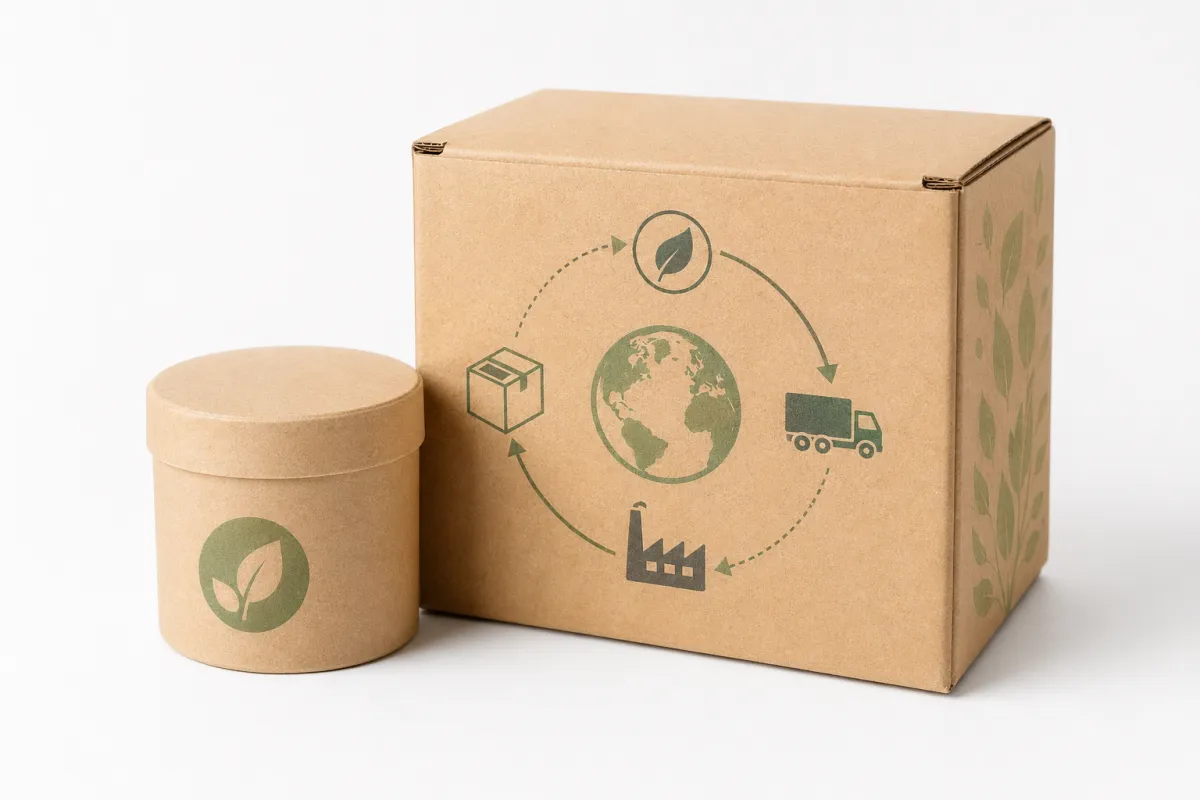
At its core, sustainable packaging supply chain management means aligning sourcing, converting, transportation, warehousing, and end-of-life decisions so the packaging does its job with less waste and fewer surprises. I have watched teams reduce scrap by 8 percent, stabilize lead times from 19 days to 13 days, and lower freight damage simply because they treated the package as part of the supply chain instead of a decorative afterthought. That mindset shift is like switching from improvisation to an orchestra in a 72-piece performance: every instrument matters, and no one part sounds good if the tempo is chaos.
The part many people miss is that sustainable packaging supply chain management is not the same thing as picking a package that looks eco-friendly. A kraft mailer, a recycled board carton, or a compostable film might be a good choice, but only if the mill can supply it consistently, the converter can run it cleanly, and the shipping lane can actually handle it from Suzhou, Jiangsu to Phoenix, Arizona. I have seen a client in beverage accessories choose a lighter board grade, then discover the fulfillment center in Nashville was overstacking pallets by two layers; the material was not the problem, the operating process was. Packaging was the least exciting part of the issue, but still the key cause.
That distinction matters more than most marketing teams realize. "Green packaging" is often treated like a material label, while sustainable packaging supply chain management is an end-to-end operating discipline that includes yield, traceability, transport efficiency, reverse logistics, and recovery pathways. If your branded packaging looks good but creates extra touches, extra dunnage, or extra damage, the environmental story weakens fast. The better question is how each design choice affects the mill, the printer, the dock, and the customer's back room in cities like Monterrey, Mexico, or Rotterdam, Netherlands.
One of the clearest examples I have seen came from a corrugated plant in Grand Rapids, Michigan. The team changed a partition layout by 0.25 inch, and that tiny adjustment allowed 10 more units per pallet, reduced warehouse floor space by 14 pallets, and cut corner bruising on a route that ran through two distribution centers and one consolidation hub in Louisville, Kentucky. That is sustainable packaging supply chain management in the real world: a small structural change that improves material use, freight performance, and storage density all at once.
For buyers of product packaging, the practical takeaway is straightforward. Ask whether the pack protects the item, supports the brand, and moves cleanly through the chain without excess material or unnecessary labor. If you need starting points for formats, finishes, and custom builds, the team at Custom Packaging Products can show how structure and branding work together without drifting away from efficiency. The best programs are rarely flashy; they are consistent, measurable, and built for the lane the product actually travels from the converter in Shenzhen to the warehouse in Dallas, which is where most packaging stories are either redeemed or exposed. That is not a glamorous answer, but it is the honest one.
How Does Sustainable Packaging Supply Chain Management Work?
Sustainable packaging supply chain management starts upstream, long before artwork is approved. A carton may begin with a fiber mill, a resin producer, or a board converter, and every step after that either adds efficiency or adds waste. The most reliable programs I have seen bring procurement, engineering, operations, and customer service into the same room early, because the minute those groups operate from different assumptions, the program starts drifting toward expedient fixes and rush freight. In one program, that meant a Monday meeting with teams from Toronto, Ontario, Seattle, Washington, and a plant in Ho Chi Minh City so everyone could align on the same 12-week launch calendar.
At the input stage, teams evaluate materials such as FSC-certified paper, recycled board, water-based inks, compostable films, and adhesives that do not interfere with recovery. That is not just a sustainability exercise; it is a supply stability exercise. I have negotiated with suppliers who could offer a lower price on a specialty substrate, but the lead time moved from 10 business days to 28 once demand tightened. In sustainable packaging supply chain management, the cheapest quote is rarely the best quote if it increases schedule risk or forces expensive expediting later. Ask me how I know - I did this once and spent two extra planning sessions explaining to a team why "cheaper" was now "more expensive by day 20."
After materials are selected, the plant process matters. Die-cutting, print registration, gluing, packing, and palletizing all create waste if they are not tuned properly. Sheet yield, nesting, and make-ready scrap can quietly erase any benefit a team expected from recycled content. I once watched a folding carton line in Guangzhou lose more board at start-up than the entire monthly savings target a buyer had set, and the job was only 38,000 units. The fix was not a new slogan; it was better lane setup, tighter caliper control, and a shorter approval loop. That is why sustainable packaging supply chain management has to live inside the production method, not outside it.
Downstream, packaging design influences freight cube, pallet density, warehouse touches, and even the shape of reverse logistics. A box that nests well can improve container loading and reduce the number of trailer moves needed to support the same volume. A mailer that folds flat can save 6.5 square meters of storage space at the fulfillment center. A protective insert that keeps a fragile item from shifting can reduce returns, one of the most overlooked sources of avoidable waste. In other words, sustainable packaging supply chain management is not only about what the pack is made from; it is also about how cleanly it travels.
Data sharing is the quiet engine behind all of this. When forecasts, SKU rationalization, lead times, and vendor scorecards are shared before the order hits the floor, planners can avoid rushed production and split shipments. I have seen teams cut emergency freight by 41 percent by telling the converter which SKUs were seasonal, which were core, and which could be consolidated into shared components. That kind of coordination makes sustainable packaging supply chain management look less like a theory and more like a system with actual gears.
Most teams either rise or stall at the cross-functional stage. If sales promises 15,000 units next month but operations only knows about 8,000, somebody is already building an overtime monster. Sustainable packaging supply chain management means no one gets surprised by volume in month-end panic. I want everyone arguing from data, not from fear, especially when a 6 p.m. email can change the whole freight plan for a Friday dispatch. Anyone who has lived through that kind of scramble knows it is not a cute story; it is a waste problem disguised as an urgency problem.
For many brands, the goal is not perfection. The goal is a chain that is predictable enough to support branded packaging, flexible enough to absorb swings, and efficient enough to keep claims honest. That is the point where the work gets practical, and frankly, that is where the savings tend to show up in the first 90 days.
Key Factors That Shape Performance and Compliance
Several factors shape sustainable packaging supply chain management, and material selection is only the first. Recycled, recyclable, reusable, compostable, and lightweight options each have a place, but none should be selected in a vacuum. A molded pulp tray may be an excellent fit for one product and a disaster for another if moisture exposure, stacking pressure, or transit vibration are not considered from the start. The most grounded teams I know match the material to the actual shipping lane, not to a marketing mood board, whether that lane runs from Memphis, Tennessee to Orlando, Florida or from Suzhou, Jiangsu to Munich, Germany.
Supplier transparency is the next layer. Chain-of-custody records, mill certifications, facility audits, and test reports give buyers a way to verify where materials came from and how they were processed. I have sat in supplier meetings where the conversation turned on whether a recycled content claim applied to one component or the entire laminate structure; those details matter because vague claims can come back to hurt a brand later. If you need a benchmark, the FSC standard and testing discipline promoted by organizations like FSC help companies anchor claims to documented sourcing from mills in Oregon, British Columbia, or Kaiping, Guangdong.
Manufacturing efficiency matters just as much. Make-ready waste, sheet yield, print run length, die wear, and adhesive performance all affect the final footprint. I once worked with a cosmetics client who wanted a highly textured finish on a rigid sleeve made from 350gsm C1S artboard, but conversion waste doubled because the emboss and foil combo slowed the line enough to create repeated rework. We changed the texture, kept the premium look, and recovered usable output without sacrificing the brand. That is the kind of trade-off that good sustainable packaging supply chain management asks you to make thoughtfully, not emotionally.
Transportation and storage are equally important. The way a pack fits a pallet can determine whether a truck is loaded to 82 percent cube efficiency or 94 percent, and that difference has real consequences for freight spend and emissions. I have seen a small redesign shave three trailer moves a month from a fulfillment program simply by improving stackability and reducing overhang on 48x40 pallets. That change did more for sustainable packaging supply chain management than some flashy material switch because it solved a physical problem in the lane. Data from three months later showed not just fewer freight costs, but lower handling variance at dock transfer too.
Compliance and claims are where discipline earns trust. If a pack is labeled recyclable, compostable, or responsibly sourced, the language must match the actual certification, the local recovery system, and the customer specification. The standards side is not optional here. Teams that test packaging against ISTA procedures, such as ISTA 3A or ISTA 6-SAM, or compare transit results against ASTM D4169, tend to make reliable claims because they know the pack has been through actual stress rather than a spreadsheet assumption. That is a major advantage in sustainable packaging supply chain management, especially for retail packaging and ecommerce packs that must perform under rough handling from distribution centers in Ontario, California to stores in Chicago, Illinois.
End-of-life planning is often the section people treat like a checkbox. It is not. If your packaging recycles poorly in the markets where it is sold, your sustainability story becomes mostly decorative. I remember a retailer that insisted on a specific compostable film for a pilot in Austin, Texas, only to discover most stores could not separate that stream and the local hauler sent it to landfill. The result was a lot of good intentions and a lot of confused waste management staff. Real world logistics can humble even the best sustainability plans.
For branded packaging, all these factors converge. A design may look elegant, but if it raises defect rates or complicates recovery, the program loses credibility. The strongest programs balance package branding with proof, process, and practical performance, then test those assumptions the moment freight leaves the loading dock in a plant outside Krakow, Poland or Chennai, India. That final test is where a lot of polished language either survives or falls apart.
Cost, Pricing, and ROI in Sustainable Packaging
Pricing in sustainable packaging supply chain management depends on substrate, print complexity, minimum order quantity, tooling, coatings, and any special converting steps. A simple one-color corrugated mailer behaves very differently from a multi-panel Custom Printed Box with foil, embossing, and a specialty insert. If a supplier quotes both as if they were identical jobs, I start asking questions, because hidden complexity tends to show up later as schedule pressure or change-order pain. A supplier in Dongguan may price one job at $0.15 per unit for 5,000 pieces and another at $0.88 per unit for 5,000 pieces because the die, the varnish, and the handwork are not the same animal at all.
To make that concrete, here are some sample price points I have seen on programs that were sized correctly and built with realistic specs. These are not universal quotes, but they show how the market often behaves when the volumes, tooling, and timelines are clear:
| Packaging Option | Typical Specs | Sample Unit Price at 5,000 Pieces | Best Fit | Tradeoff |
|---|---|---|---|---|
| Corrugated mailer with 1-color print | 32 ECT, kraft liner, water-based ink | $0.15 | Ecommerce and subscription product packaging | Limited premium finish options |
| FSC-certified folding carton | 18 pt board, 2-color offset print, aqueous coat | $0.27 | Retail packaging and branded packaging | Needs careful structural testing |
| Molded pulp insert | Recycled fiber, custom cavity, no coating | $0.33 | Fragile goods and protective components | Tooling can add upfront cost |
| Rigid box with specialty wrap | Book-style construction, soft-touch wrap, foil stamp | $1.68 | High-end package branding | More labor and slower conversion |
Some sustainable choices cost more per unit at the start, but the full ROI picture often tells a different story. A lighter board grade can lower freight chargeable weight. A tighter fit can reduce void fill. A better insert can cut damage claims and reshipments. I have watched a beauty brand spend $0.06 more per unit on an engineered insert, then save far more than that because breakage on their retail packaging line dropped from 4.2 percent to 1.1 percent and customer complaints fell by 17 percent. That is the kind of math sustainable packaging supply chain management should surface, especially when people assume "green" always means "more expensive at every point."
It also helps to compare hidden costs, not just unit price. Expedite fees, rework, excess inventory, and obsolete inventory can quietly exceed the savings from a cheap spec. I remember a supplier meeting where the buyer was proud of shaving 2 cents off a carton, but the program ended up with 14,000 obsolete units when the artwork changed after a retailer reset in Minneapolis, Minnesota. The replacement cost wiped out the savings and then some. A cleaner planning process would have helped more than the price reduction. That is why sustainable packaging supply chain management rewards discipline over bargain hunting.
Here are the metrics I recommend tracking if you want a realistic ROI view:
- Cost per ship rather than only cost per unit.
- Damage rate by lane, SKU, and warehouse.
- Storage density measured in pallets per square foot.
- Labor minutes per unit for packing, assembly, and QA.
- Landfill diversion tied to actual material changes.
- Return rate due to shipping damage per carrier and route, because every return is a tiny sustainability leak.
Most buyers find that the lowest unit price is not the best value if sustainability targets and supply continuity are part of the brief. Good sustainable packaging supply chain management respects budget pressure, but it also respects the cost of failure. A package that arrives damaged is not sustainable, no matter how attractive the material story sounds in a presentation deck, especially if the replacement freight adds a $480 bill on a single lane.
Frustratingly, I have seen teams optimize perfectly on unit economics while ignoring return spikes. One quarter of their "good" choice was undone by avoidable transit damage. Maybe that's the most uncomfortable line item to face, but it changes the way teams think about what matters when 10,000 units are at stake. The spreadsheet can look tidy right up until the customer starts calling.
Process and Timeline: From Brief to Production
A realistic project in sustainable packaging supply chain management begins with discovery, not artwork. The team needs to understand the product dimensions, the shipping lane, the handling environment, the brand goals, and the recovery assumptions before a single dieline is finalized. I have seen projects fail because the client approved a beautiful render before anyone asked whether the bottle neck, cap height, or insert cavity would tolerate vibration on a regional route with repeated pallet transfers from Chicago to Indianapolis.
After discovery comes structural design and material selection. This is where the line between packaging design and package performance gets very real. Prototypes should be reviewed before print proofs, because a structural mistake is much more expensive to fix than a color mismatch. In my experience, the cleanest programs set approval milestones in this order: prototype review, print proof, compliance sign-off, and production release. For a straightforward folding carton job, that process can move in 12-15 business days from proof approval to finished cartons; for a rigid box with foil and a custom insert, 25-30 business days is more realistic. Each gate prevents a different kind of expensive rework, which is why sustainable packaging supply chain management depends on a calm, staged process instead of emotional firefighting.
Lead time is shaped by several moving parts: board availability, tool creation, ink curing, converting capacity, and transit time from plant to warehouse. If a die must be built, add time. If the finish requires extra drying, add time. If the job is running through a plant that is already at capacity, add time. That is not pessimism; it is professional planning. I have seen a straightforward 10-day program become a 19-day one because a specialty coating had to be rescheduled around another customer's 60,000-unit run in Suzhou, Jiangsu. Good sustainable packaging supply chain management makes room for realities like that before they become emergencies at end of day.
Custom programs also need testing. For fragile goods, food-adjacent products, or shelf-stable retail kits, you may need drop testing, moisture resistance checks, compression testing, or shelf-life compatibility review. The point is not to overcomplicate the process. The point is to protect the brand from a bad field result. If the package fails after launch, the sustainability story gets buried under replacements and customer frustration, and trust takes longer to rebuild than any 3-week production schedule.
For better planning, I always advise clients to build in buffer time for seasonal spikes, supplier delays, and multi-location distribution. A single warehouse may be simple; three fulfillment nodes with different cut-off times are not. That complexity should be reflected in the schedule, because sustainable packaging supply chain management works best when the timeline is honest about volume, geography, and the number of hands touching the pack, whether the nodes are in Dallas, Toronto, and Guadalajara or in Hamburg, Lyon, and Prague.
One small but important habit is to keep a written change log. If a board grade changes, if an ink supplier swaps a formula, or if the pallet pattern shifts, someone should record it. That record protects the project later and gives operations a way to compare what actually happened against what was approved. I have more than once seen teams blame "random variability" when the root cause was a change that lived in someone's inbox for six weeks and never made it into the release packet.
Early on, I attended a review where three departments debated the "right shade of kraft" while a shipment sat idle because no one had confirmed that the truck could fit the new case size. I still use that story to illustrate that in sustainable packaging supply chain management, aesthetics without logistics is just expensive art, especially when the pallet footprint changed from 40x48 to 42x48 and nobody updated the freight booking. That sort of thing sounds funny later, but in the moment it is a headache with a timer attached.
Common Mistakes That Undercut Sustainability Goals
The first mistake is choosing a material for its eco story without checking whether the local recycling or composting system can actually process it. I have seen teams celebrate a compostable film, only to discover the receiving market had no suitable collection stream in places like Boise, Idaho or Leeds, England. That does not mean compostable materials are bad; it means sustainable packaging supply chain management has to be grounded in local reality, not just product literature.
The second mistake is over-specifying strength. Buyers often assume more board, more filler, or more film equals better protection, but that assumption can backfire. Extra material raises cost, adds weight, and can even make packing slower. A cleaner solution is to test the product honestly, then size the structure to the actual hazard profile. In my experience, most overbuilt packs are trying to solve uncertainty, not engineering need, and a 2.6 mm corrugate can outperform a heavier spec if the cavity and closure are correct.
The third mistake is ignoring supplier coordination. Split shipments, extra pallets, and avoidable warehouse touches all create waste that never shows up in the design deck. I once saw a client order three versions of the same insert from three vendors because nobody coordinated the forecast; the result was extra freight, duplicate setup, and a pile of inconsistent material on the dock in Newark, New Jersey. A tighter supplier plan would have made the whole program cleaner and cheaper.
The fourth mistake is treating sustainability as a one-time design choice instead of a continuous improvement process. Materials change, carriers change, warehouse methods change, and customer expectations change. If the team never measures the pack after launch, the program drifts. That is why sustainable packaging supply chain management needs scorecards, reviews, and revision cycles, not just an initial approval meeting. I usually suggest a 30-day, 60-day, and 90-day review cadence because problems often hide until volume reaches the second or third wave.
The fifth mistake is using vague marketing language that cannot be backed up by records. If the packaging is labeled FSC-certified, recyclable, or made with recycled content, the documents should match the claim. Chain-of-custody records, test data, and factory documentation are the difference between a credible claim and a risky one. In the packaging business, trust is built in audits, not in adjectives, and a 1-page certificate is not enough if the batch codes do not match the purchase order.
One more: teams sometimes try to chase the newest material trend every quarter, as if novelty itself were progress. I once watched a quarter of that trend budget go toward one-at-a-time trials that were dropped before production because no one had compared return data from the first 5,000 units. In sustainable packaging supply chain management, novelty should follow outcomes, not lead them. Otherwise you end up with a stack of interesting samples and no improvement on the dock.
Expert Tips for Building a Stronger Packaging Program
If you want sustainable packaging supply chain management to improve quickly, start with the product and the shipping lane, then engineer the package around actual risk. That sounds simple, but it keeps teams from designing for imagined abuse. A lightweight ecommerce item does not need the same protection as a glass jar moving through a regional distribution center, and a direct-to-consumer shipper does not face the same handling pattern as retail pallets. The lane should tell the design what to do, whether the product is leaving Montreal, Quebec or Penang, Malaysia.
Consolidate SKUs wherever possible. Longer, cleaner runs at the mill and the converter usually mean less setup waste and more consistent quality. I have seen a brand cut its carton family from nine versions to five by rethinking insert dimensions and shared panels, and the result was fewer changeovers, better board utilization, and easier inventory control. That kind of simplification is one of the fastest gains in sustainable packaging supply chain management, especially when one carton family can move 40,000 units a month instead of nine separate micro-runs.
Ask for samples early, especially if the product is fragile, food-adjacent, or part of retail packaging that needs to look right on shelf and hold up in transit. A prototype can reveal a lot that a spec sheet cannot. I still remember a coffee accessory project where the first sample looked perfect in photos but failed edge crush after a temperature swing from 18 degrees C to 32 degrees C in the warehouse. We adjusted the flute profile and the glue pattern, then the next round held up exactly as needed. That saved the launch and probably saved me a long, awkward Friday call with the warehouse team.
Vendor scorecards help turn subjective opinions into usable data. I like to track lead time, defect rate, on-time delivery, and documentation quality in one place. When that data is visible, supplier conversations get more productive and less emotional. In a healthy sustainable packaging supply chain management program, the scorecard is not a punishment tool; it is a map for improvement, and it works best when reviewed every two weeks instead of once a quarter.
Design for end-of-life from day one. Tell customers, distributors, and recycling partners how the pack should be handled, and make sure the materials chosen support that instruction. If a custom printed box combines too many mixed materials, recovery gets harder. If the design can use one substrate, one adhesive, and one print system, the path is clearer. That is good for the environment, but it also helps the brand tell a more credible story from store shelves in Phoenix, Arizona to fulfillment centers in Brampton, Ontario. Clear instructions matter more than a glossy claim in a footer.
Use real-time feedback loops. The best teams review not only weekly production reports but also post-delivery performance after holiday spikes, severe weather events, and carrier substitutions. My rule of thumb is simple: if a tweak is not improving one of your cost per ship, damage rate, or storage density metrics within two cycles, question whether it belongs in your design system. Sustainable packaging supply chain management is as iterative as it is strategic, and two cycles in most plants is enough to show whether a change is doing real work.
"We stopped trying to make the packaging look sustainable and started making the supply chain sustainable. The waste dropped, the damage dropped, and the brand message finally matched the operation."
That quote came from a client who had been through two packaging redesigns before they got the process right. It captures the practical heart of sustainable packaging supply chain management: the best results show up when the supply chain, not just the render, does the work.
And honestly, that one quote became a benchmark in our reviews. I still mention it when teams start to drift into design-only debates. If it does not improve handling, yield, and logistics, I ask, why are we saying it? A 6 percent improvement on a 20,000-unit run matters more than a page of adjectives, and the warehouse will usually tell you the truth quicker than a branding deck ever will.
What to Do Next for Sustainable Packaging Supply Chain Management
If you are ready to improve sustainable packaging supply chain management, begin with an audit of your current packaging list. Flag the highest-volume SKUs, the items with the most damage claims, and the freight lanes that cost the most per shipment. Those three areas usually expose the fastest opportunities because they combine scale, pain, and measurable spend. I have seen more progress from one focused review than from six broad brainstorming meetings, especially when the audit starts with the top 20 SKUs and the three highest-cost lanes.
Next, gather supplier data. Ask for recycled content verification, FSC or similar chain-of-custody records, transit performance data, and production capacity information before you approve a change. That data helps you compare options honestly and keeps package branding from drifting away from operational reality. It also gives purchasing and operations the same facts to work from, which is a huge help in any sustainable packaging supply chain management program, whether the converter is in Taicang, Jiangsu or Tijuana, Baja California.
Then run one controlled pilot with a single product line. Compare waste, cost, damage, and lead time against your baseline, and do not change ten variables at once. The cleanest pilots I have seen usually test one new substrate or one new structure while keeping the rest of the process steady. If the pilot works, you have proof. If it fails, you know where the issue started, which is much easier to fix than a broad rollout with no data. A 30-day pilot with 5,000 units is often enough to show the shape of the problem.
Document the result in a simple scorecard that purchasing, operations, and sales can all understand. Include the unit price, the cost per ship, the damage rate, the storage footprint, and any claim language tied to certification or recovery. That kind of shared record helps the next decision go faster. It also keeps sustainable packaging supply chain management from becoming a personal preference contest, and it makes the next sourcing round easier to defend in a meeting.
At Custom Logo Things, this is the way I would approach a branded packaging refresh: start with the product, test the structure, verify the material, and scale only after the numbers hold up. That process respects the budget, supports the brand, and keeps the packaging moving cleanly through the mill, the converter, the warehouse, and the customer's hands. If there is one lesson I have learned on factory floors and in supplier meetings from Nashville to Ningbo, it is this: sustainable packaging supply chain management improves fastest when teams measure, test, and refine together.
If you want to move with momentum, begin this week by selecting one lane and one SKU family for a 30-day trial, then treat the findings as your north star for the next quarter. It sounds obvious, but most plans collapse between ambition and execution because no one chooses a starting point. I have found a single disciplined pilot is more persuasive than ten PowerPoint promises, especially when the first shipment is due in 15 business days. That first trial is where the whole thing stops being abstract.
Frequently Asked Questions
What is sustainable packaging supply chain management in simple terms?
It is the practice of sourcing, designing, producing, and shipping packaging in a way that reduces waste, improves efficiency, and supports responsible material use. It looks at the whole chain, not just the package itself, so freight, storage, supplier reliability, and end-of-life handling all matter in sustainable packaging supply chain management. If you like analogies, think of it as managing the whole ride from raw material in Guangdong to customer return in Ohio, not just the look of the box. The material is only one piece of the story.
How do I reduce packaging cost without hurting sustainability?
Right-size the pack, reduce unnecessary layers, and test lighter substrates that still protect the product during real shipping conditions. Also look for savings in fewer damages, lower freight cube, and less warehouse handling, because those operational gains often outweigh a slightly higher unit price in sustainable packaging supply chain management. One practical move I often start with is SKU consolidation because fewer structures almost always means fewer hidden costs, and a 5-SKU family is easier to manage than 11 variations. Fewer moving parts usually means fewer surprises too.
What certifications should I ask suppliers for?
Ask for the certifications that match your material and claim, such as FSC, SFI, recycled content verification, or compostability documentation when relevant. Also request chain-of-custody records and test reports so the sustainability story can be backed up in audits and customer reviews. That level of proof strengthens sustainable packaging supply chain management and protects your brand if questions come up later - nothing slows a launch like a credibility gap when the retail buyer asks for paperwork on day 2. I have seen teams lose weeks because the documentation trail was fuzzy.
How long does a sustainable custom packaging project usually take?
A straightforward program can move from brief to approved production in 12-15 business days from proof approval, but custom structures, compliance reviews, and prototype testing can extend that timeline to 25-30 business days. Material availability, print complexity, and approval speed are usually the biggest schedule drivers in sustainable packaging supply chain management. I usually recommend adding a planning buffer from day one, because supply chain reality has a habit of ignoring optimistic timelines by 3 to 7 days. A little cushion is cheaper than a rescue shipment.
Which packaging changes usually deliver the fastest sustainability wins?
Reducing material weight, consolidating SKUs, and improving pallet efficiency often deliver quick improvements with minimal disruption. Switching to better-documented, responsibly sourced substrates can also create fast gains if the supply chain already supports them. Those changes tend to move the needle quickly in sustainable packaging supply chain management because they touch both cost and waste at the same time, and they give you measurable signals before the next budget cycle. A 2 percent cube improvement can be worth more than a full material swap if the lane is expensive enough. That is the sort of math that gets attention fast.