Buyer Fit Snapshot
| Best fit | Sustainable Product Boxes Manufacturer projects where brand print, material claims, artwork control, MOQ, and repeat-order consistency need to be specified before quoting. |
|---|---|
| Quote inputs | Share finished size, material target, print colors, finish, packing count, annual reorder estimate, ship-to region, and any compliance wording. |
| Proofing check | Approve dieline scale, logo placement, barcode or warning zones, color tolerance, closure strength, and carton packing before bulk production. |
| Main risk | Vague material claims, crowded artwork, missing packing details, or unclear freight terms can make a low unit price expensive after revisions. |
Fast answer: Sustainable Product Boxes Manufacturer: How It Works should be specified like a repeatable production item. The safest quote records material, print method, finish, artwork proof, packing count, and reorder notes in one written spec.
Production checks before approval
Compare the actual filled-product size with the drawing, then confirm tolerance on folds, seals, hang holes, label areas, and retail display edges. Reserve space for logos, QR codes, warning copy, and material claims before decorative graphics fill the panel.
Quote comparison points
Review material grade, print process, finish, sampling route, tooling charges, carton quantity, and freight assumptions side by side. A quote is only useful when the supplier can repeat the same color, closure quality, and packing count on the next order.
A Sustainable Product Boxes manufacturer is not just a printer with a recycled paper sticker and a good story. It is the team deciding whether your box uses recycled board, FSC-certified fiber, water-based inks, a smart die-line, and a freight plan that does not waste half the pallet. Sounds dull. It is not. The box is often where product waste, shipping waste, and budget waste all show up at once.
From the buyer side, the job sounds simple and acts annoying: find a sustainable product boxes manufacturer that can protect the product, make the brand look sharp, and avoid turning "eco" into costume jewelry. Custom Logo Things works in that practical zone, where specs, timelines, and budgets matter more than slogans. If you need a starting point, see About Custom Logo Things and Custom Packaging Products.
This article explains how a sustainable product boxes manufacturer actually works, what drives price, where timelines get messy, and how to request quotes that are useful instead of decorative.
What a Sustainable Product Boxes Manufacturer Actually Means
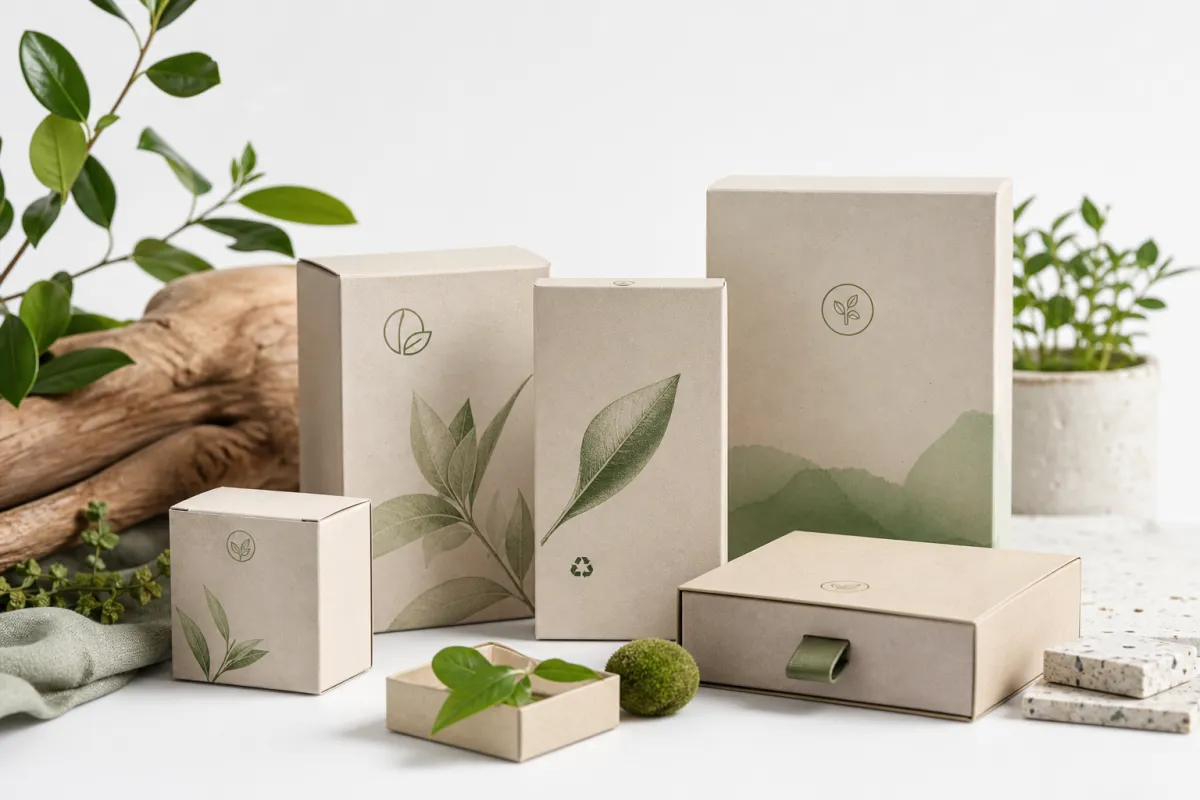
A sustainable product boxes manufacturer is not defined by one material choice. It is defined by the whole build. Fiber sourcing, box style, print method, coating, inserts, and palletization all matter. If one of those pieces is sloppy, the "sustainable" label gets thin fast. The best manufacturers think in systems, not slogans.
The simplest box is often the smartest answer. Fewer layers mean less material. A tighter fit means less empty space. A well-sized mailer can reduce filler, improve carton count per pallet, and cut shipping weight. That is not glamorous. It also tends to save money and waste at the same time. A sustainable product boxes manufacturer should know how to reduce the footprint before reaching for fancy finishes.
Buyers get tripped up on this part all the time: recycled content, FSC-certified fiber, compostable finishes, water-based inks, and recyclability are not the same thing. Recycled content lowers dependence on virgin fiber. FSC certification speaks to responsible sourcing. Compostable coatings deal with end-of-life behavior under specific conditions. Recyclability depends on whether the structure and coatings can re-enter local recovery streams. A real sustainable product boxes manufacturer explains those differences instead of tossing them into one cheerful blur.
The control points run much deeper than most people think. The manufacturer can influence board grade, caliper, crush resistance, die-line efficiency, ink coverage, adhesive choice, and how the cartons are packed for freight. That means sustainability starts in the spec sheet, not in the product description. If the box is oversized by 15%, the waste is already baked in. If the insert is a molded pulp tray when a simple paperboard divider would do the same job, the build is overdone for no good reason.
From a buyer's perspective, the challenge is balancing five things that rarely cooperate: protection, shelf appeal, budget, lead time, and end-of-life disposal. The sustainable product boxes manufacturer that gets this right usually asks uncomfortable questions early. How fragile is the product? Does it stack in a warehouse? Does it need retail hanging? Will it ship direct-to-consumer or sit on shelves? Those answers shape the box structure before anyone starts arguing about print effects.
"The most sustainable box is often the one that uses the least material while still surviving the trip." That sounds too simple until you compare the freight bill and the scrap pile.
If you want packaging that supports both brand and operations, a sustainable product boxes manufacturer should act like a design partner, not a yes-person. The difference shows up quickly in sample quality, quote clarity, and how often the vendor says, "That spec will waste material, let's trim it."
How a Sustainable Product Boxes Manufacturer Builds Boxes
The build process starts with the product, not the artwork. A competent sustainable product boxes manufacturer asks for dimensions, weight, fragility, closure style, shipping method, and compliance rules before deciding what the box should be. That sounds obvious, but plenty of projects fail because someone picked a pretty format before production asked whether it could actually survive the product.
Structure matters more than most buyers expect. A mailer box, tuck-end carton, sleeve, auto-lock bottom, corrugated shipper, and rigid setup box all carry different material loads and different sustainability profiles. A smaller foldable mailer may use less board than a rigid box. A corrugated shipper may protect better with fewer inserts. A sleeve can reduce ink coverage and still look polished. A sustainable product boxes manufacturer should spell out those tradeoffs clearly, because the right format often cuts waste before printing starts.
Good engineering is where the environmental win actually happens. Right-sizing the footprint means less board and lower freight volume. Efficient die nesting reduces trim waste. Clean artwork placement can reduce the need for heavy coatings or full-bleed coverage. Even the glue pattern matters when assembly speed and material use are part of the brief. A strong sustainable product boxes manufacturer treats all of that as part of the job, not a side note.
Then comes the physical proof. Screen mockups are useful. They are also willing liars if the board thickness, product weight, and fold behavior have not been tested. Sample and prototype stages let the manufacturer check fit, compression, opening behavior, and how fast the box goes together. A carton that looks elegant on a PDF can still pinch, bow, or pop open under pressure. That is why a sustainable product boxes manufacturer should move through sample approval before production.
Quality control is not glamorous, but it is where sustainability earns its keep. Burst tests, compression checks, color checks, adhesive inspection, and carton consistency matter because a box that fails in transit is waste. Period. If you want the packaging to align with ISTA transit testing guidance, or with internal drop and compression targets based on ASTM methods, the manufacturer needs to know that early. For more general packaging guidance, the ISTA testing standards are a useful reference point.
Some buyers also want to understand how the build sequence changes for different materials. Here is a simple comparison.
| Box Type | Typical Material | Best For | Common Tradeoff | Relative Cost |
|---|---|---|---|---|
| Mailer box | E-flute or B-flute corrugated | DTC shipping, subscription kits | Less premium feel than rigid structures | Low to medium |
| Tuck-end carton | Paperboard | Light retail goods, cosmetics, small accessories | Less crush protection than corrugated | Low |
| Sleeve with tray | Paperboard or recycled board | Brand-forward retail packaging | More design work to keep the fit tight | Medium |
| Rigid box | Chipboard wrapped with printed stock | Premium presentation, gift sets | More material, more freight, more labor | High |
| Corrugated shipper | Single-wall or double-wall corrugated | Heavier or fragile products | Bulkier footprint in storage and shipping | Low to medium |
The useful lesson is this: a sustainable product boxes manufacturer is not just picking pretty paper. It is deciding how the packaging behaves in the real chain, from warehouse to carrier to customer. That is a much bigger job than most people give it credit for.
Key Factors a Sustainable Product Boxes Manufacturer Prices On
Pricing is where the conversation usually gets honest. A sustainable product boxes manufacturer prices on size, board grade, print coverage, finish, inserts, certifications, and volume. That is the short version. The longer version is that every one of those inputs affects waste, labor, and setup time, so a "green" box does not magically become cheap because the branding sounds nice. Physics still runs the factory.
Small runs almost always cost more per unit. The reason is simple: tooling, plate setup, die cutting, and proofing do not shrink much just because the order is modest. If you need 500 boxes, the setup gets spread across fewer units. If you need 10,000, the overhead gets diluted. A sustainable product boxes manufacturer will usually quote those numbers differently, and that is normal.
Materials matter a lot. Recycled board can be cost-effective, but the exact grade changes the price. Virgin fiber with FSC certification may cost more, though not always by much. Specialty compostable stocks or premium rigid builds sit in higher bands because the material, handling, and finishing steps are heavier. This is the point where buyers need to stop hoping for magic. The material bill is the material bill.
Oversized packaging quietly burns money in two places: freight and storage. A box that is 10% too large can increase shipping volume, reduce pallet efficiency, and create unnecessary air. If the box also needs more filler to keep the product stable, the waste multiplies. A good sustainable product boxes manufacturer will push for tighter dimensions because that helps both cost and sustainability.
If you want apples-to-apples quotes, send the same information to every supplier. One spec sheet. One artwork file. One quantity ladder. One list of required certifications. Otherwise, you are comparing a real quote to a creative guess. A sustainable product boxes manufacturer can only price what you actually specify.
Here is a practical way to think about typical cost bands. These are broad ranges, not promises.
| Specification | Typical Unit Cost Range | What Moves the Price | Best Use Case |
|---|---|---|---|
| Simple tuck box, 5,000 units | $0.18-$0.30 | Board grade, print coverage, finish | Light retail products |
| Corrugated mailer, 5,000 units | $0.45-$0.85 | Flute type, ink coverage, custom insert | DTC shipments |
| Rigid box, 1,000 units | $1.50-$3.50 | Wrap stock, hand assembly, magnets or ribbons | Premium sets and gift boxes |
| Specialty sustainable build | Varies widely | Compostable coating, certifications, custom structure | Brands with specific end-of-life goals |
That table is not there to scare anyone. It is there to stop fantasy budgeting. A sustainable product boxes manufacturer that understands procurement should be able to explain why a smaller run, extra insert, or specialty finish moves the number. If the answer is vague, the quote is probably weak.
Also, do not forget the hidden line items: sampling, plate charges, custom tooling, freight, and sometimes certification paperwork. Those costs can be modest or irritating, depending on the project. The right manufacturer will show them instead of hiding them in the unit price like a magician with a bad habit.
Step-by-Step Process and Timeline for Box Production
A solid sustainable product boxes manufacturer runs the project like a chain of small decisions, not one giant jump from concept to shipment. First comes discovery. The supplier gathers product dimensions, target quantity, shipping method, branding goals, and sustainability requirements. Then the dieline gets built or adapted. Then proofing starts. Then sample units get made. Then revisions happen. Then production runs. Then the boxes get packed and shipped. No mystery. Just steps.
Timing depends on complexity, but buyers need numbers. Samples often take about 5 to 10 business days once specs are locked. Production commonly runs 2 to 5 weeks, depending on order size, print coverage, insert requirements, and finishing. A simple foldable carton may move faster. A rigid box with complex wrap stock and hand assembly will move slower. A sustainable product boxes manufacturer should tell you that upfront instead of pretending every job is identical.
What slows things down? Unclear dimensions. Late artwork. Too many revision rounds. Custom inserts that need separate tooling. Special coatings. Waiting three days for one approval from three departments. The box itself is rarely the problem. Human delay is. If you want the timeline to stay sane, the manufacturer needs one decision-maker and one clean approval path. That is not glamorous, but it is how projects finish on time.
Here is a simple milestone flow that works in real life:
- Brief and product specs collected
- Dieline or structure confirmed
- Artwork applied to proof
- Sample produced and checked
- Revisions approved once, not five times
- Production scheduled and run
- Cartons packed, palletized, and shipped
A sustainable product boxes manufacturer should also confirm whether the box needs additional testing. For fragile goods, drop and vibration checks may be worth doing before a full run. For heavier items, compression testing matters because a weak carton can collapse in transit or warehouse stacking. If your supply chain is strict, you may want the manufacturer to align with EPA recycling guidance as well as internal handling targets.
In practice, the fastest projects are usually the ones with the fewest surprises. Final product dimensions. Final closure style. Final artwork. Final certification needs. A sustainable product boxes manufacturer can move quickly when the brief is stable. If the brief keeps changing, the calendar gets dragged into it.
The cleanest way to think about the process is project management with cardboard attached. The better the communication, the smoother the run. That is not branding. That is just how factories work.
Common Mistakes When Hiring a Sustainable Packaging Partner
The first mistake is treating "eco-friendly" as a complete answer. A sustainable product boxes manufacturer still has to prove the box works. Recycled board is nice. A box that crushes in transit is not. Sustainable packaging is not a slogan contest. It is a performance test.
The second mistake is buying on recycled claims alone. A good carton has to fit the product, survive the supply chain, match the brand, and stay within budget. If one of those fails, the project backfires. I have seen buyers fall in love with a recycled material and ignore the fact that the box was too tall, too loose, or painfully slow to assemble. That is not sustainability. That is expensive self-congratulation.
Skipping samples is another classic problem. A flat proof cannot tell you if the closure tab is awkward, the insert rattles, or the board flexes too much at the corners. A sustainable product boxes manufacturer should encourage sample approval because real boxes reveal real issues. That one step can save a lot of angry emails later.
Freight and storage get ignored far too often. A cheaper unit price means very little if the pallet footprint is inefficient or the boxes sit in inventory longer than expected. Oversized cartons also increase shipping costs in a way that never feels dramatic until the invoice arrives. A proper sustainable product boxes manufacturer should factor this into the conversation, not just the line item.
Over-customizing every surface and every insert is the last common trap. More layers do not automatically mean better branding. They usually mean more waste, more cost, and more lead time. In my experience, the strongest packaging systems are often the cleanest ones. A focused print design, a tighter structure, and one sensible insert can do more than a pile of decorative extras.
If you are comparing suppliers, ask these questions before you sign anything:
- What material proof can you provide?
- What is the realistic MOQ?
- How long do samples and production usually take?
- What happens if the sample needs one revision?
- Can you support FSC or recycled-content documentation?
Those questions tell you whether the sustainable product boxes manufacturer knows packaging, or just knows how to say "green" with confidence.
Expert Tips From a Sustainable Product Boxes Manufacturer
Start with structure, not decoration. That is the easiest sustainability win, and the one most brands leave on the table. A sustainable product boxes manufacturer can often shave material by reducing box height, tightening the fit, or switching to a better closure style. Those changes usually matter more than adding one more design flourish.
Use fewer inks when possible. Cleaner graphics can look more premium than loud, overworked artwork. Natural board texture plus strong typography is often enough. You do not need to bury the box under heavy ink to make it feel expensive. A lot of packaging buyers learn this the hard way after paying for full coverage they did not actually need.
Ask for documentation early. If you need FSC paperwork, recycled-content confirmation, or other material evidence, request it at the quote stage. A sustainable product boxes manufacturer should not make you chase documents after production is already rolling. That is how compliance jobs turn into inbox archaeology.
Build around the product's real behavior. Does it absorb moisture? Does it scratch easily? Will it be stacked, dropped, or handled by retail staff? Sustainable packaging that fails in the warehouse is just expensive trash with a better label. A good manufacturer will ask about humidity, stacking loads, and the shipping lane, not just the logo file.
A pilot run is worth considering, especially for new SKUs or multi-item kits. A small test batch catches dimension errors, print issues, and assembly pain while the fix is still affordable. I would rather see a brand spend a little on a controlled pilot than discover a problem in 12,000 units. A sustainable product boxes manufacturer that pushes for testing is usually protecting your budget, not padding the project.
For brands with strict quality standards, it helps to anchor the packaging brief to known performance targets. That can include compression expectations, transit testing, ink rub resistance, or packaging recovery goals. If the supplier understands standards like FSC sourcing rules and industry handling expectations, the project usually runs cleaner. If not, you end up doing the education for them, which is rarely how the good version of the job works.
A smart packaging partner will tell you what to remove, not just what to add.
That is the real value of a strong sustainable product boxes manufacturer. They reduce noise. They protect the product. They keep the box honest.
What to Do Next Before You Request Quotes
Before you request quotes, gather the basics. Product dimensions. Product weight. Fragility. Quantity. Shipping destination. Branding requirements. Retail display needs. Any certification rules. A sustainable product boxes manufacturer can only price what you make clear, and vague briefs create vague numbers. That helps nobody.
Next, build one clean spec sheet and send the same version to every supplier. One file. One structure. One quantity ladder. One finish list. That keeps the quotes comparable and avoids the usual confusion where each vendor assumes a different box entirely. If you want a clean packaging start, explore Custom Packaging Products and then narrow down the spec before asking for numbers.
Ask each sustainable product boxes manufacturer for sample options, realistic lead times, MOQ, and documentation up front. Ask what happens if you need a revision after sample approval. Ask whether the quote includes tooling, freight, or certification paperwork. Those are not annoying questions. They are the questions that stop a project from drifting.
Then rank suppliers by more than price. Communication matters. Sample quality matters. Timeline confidence matters. So does whether the supplier understands the end-of-life goal for the box. A cheaper quote from a supplier who cannot explain recycled fiber, board grades, or finishing tradeoffs is not a bargain. It is a future headache with a low entry fee.
If you want the shortest path to a useful quote, do this:
- Finalize product measurements and weight
- Choose the box style you think fits best
- State the quantity range you are considering
- List required certifications or material proof
- Share artwork only after the structure is stable
The smartest next step is not chasing the cheapest supplier. It is building a packaging brief that a sustainable product boxes manufacturer can actually use. That is how you get a quote that reflects the real job instead of a guess wrapped in optimism.
Frequently Asked Questions
How do I choose a sustainable product boxes manufacturer?
Verify material claims with documentation, not just marketing language. Ask for sample quality, MOQ, timeline, and certification details before comparing price. The best sustainable product boxes manufacturer is the one that can prove sustainability without sacrificing protection or consistency.
Are sustainable product boxes more expensive?
Sometimes, especially for small runs, specialty coatings, or rigid structures. Simple designs, larger quantities, and efficient sizing can narrow the price gap fast. Freight and storage savings can offset a higher unit price more than people expect, especially when a sustainable product boxes manufacturer helps reduce box volume.
What is the usual production timeline for eco-friendly boxes?
Samples often take about 5 to 10 business days once specs are finalized. Full production usually takes 2 to 5 weeks, depending on quantity and complexity. Delays usually come from artwork changes, unclear specs, or waiting too long to approve samples with a sustainable product boxes manufacturer.
What materials should I ask a sustainable product boxes manufacturer about?
Start with recycled corrugated, recycled paperboard, and FSC-certified fiber. Ask whether the inks and coatings still allow recycling in your target market. If the product is sensitive, make sure the material choice protects it before you worry about labels. A good sustainable product boxes manufacturer will explain the tradeoffs plainly.
What should I send for an accurate quote from a sustainable product boxes manufacturer?
Send product dimensions, weight, quantity, print coverage, and closure style. Include whether the boxes need inserts, coatings, or certifications. The cleaner your spec sheet, the less room there is for ugly surprises in price or timeline when working with a sustainable product boxes manufacturer.
The short version: a sustainable product boxes manufacturer is not selling a green label. It is solving a practical problem with material choices, structural decisions, pricing discipline, and production control. If you want packaging that actually performs, start with the brief, not the buzzwords. Build the spec sheet first: dimensions, weight, shipping path, material target, and proof requirement. That is the cleanest way to get a quote that tells the truth.


