Buyer Fit Snapshot
| Best fit | Sustainable Recycled Packaging Brand Guidelines for Brands projects where brand print, material claims, artwork control, MOQ, and repeat-order consistency need to be specified before quoting. |
|---|---|
| Quote inputs | Share finished size, material target, print colors, finish, packing count, annual reorder estimate, ship-to region, and any compliance wording. |
| Proofing check | Approve dieline scale, logo placement, barcode or warning zones, color tolerance, closure strength, and carton packing before bulk production. |
| Main risk | Vague material claims, crowded artwork, missing packing details, or unclear freight terms can make a low unit price expensive after revisions. |
Fast answer: Sustainable Recycled Packaging Brand Guidelines for Brands should be specified like a repeatable production item. The safest quote records material, print method, finish, artwork proof, packing count, and reorder notes in one written spec.
Production checks before approval
Compare the actual filled-product size with the drawing, then confirm tolerance on folds, seals, hang holes, label areas, and retail display edges. Reserve space for logos, QR codes, warning copy, and material claims before decorative graphics fill the panel.
Quote comparison points
Review material grade, print process, finish, sampling route, tooling charges, carton quantity, and freight assumptions side by side. A quote is only useful when the supplier can repeat the same color, closure quality, and packing count on the next order.
Sustainable Recycled Packaging Brand Guidelines for brands that need consistency, proof, and a little breathing room on press day
A 5,000-unit carton run can leave behind 220 pounds of trim waste before the first customer opens a box. I once watched that exact pile build up beside a flexo line outside Columbus, Ohio at 7:45 a.m. on a Tuesday, and the whole room had that flat, tired look you only see after a proof has gone sideways. The board itself was not the villain. The problem was the absence of sustainable recycled packaging brand guidelines that told the team what to accept, what to reject, and how much natural variation belonged to the material. Recycled packaging is never just a material choice. It is a production system, a brand system, and a supply chain decision all at once, whether the marketing deck admits it or not.
That is why sustainable recycled packaging brand guidelines matter so much for branded packaging, product packaging, and retail packaging. I have watched polished mockups fall apart at press because the fiber mix changed the ink holdout by 8 to 12 percent, and honestly, that is the sort of thing that makes everyone stare at the proof like it just offended their family. I have also seen a one-page rulebook save a brand from another round of dieline edits, a freight delay, and a very uncomfortable Monday call with a converter in Shenzhen. If you are planning a rollout, it helps to review Custom Packaging Products and compare notes with a few Case Studies before the first proof reaches the pressroom, especially if you are spec'ing 350gsm C1S artboard for a retail carton or 32 ECT corrugate for a shipper.
The brands that get this right are rarely the ones with the prettiest mood boards. They are the ones that can explain why a 24pt recycled paperboard carton, a molded fiber insert, and a kraft mailer still feel like one brand even when the shades, textures, and print finishes differ a little from pack to pack. That is the real job of sustainable recycled packaging brand guidelines: turn intent into repeatable production rules that hold up in the factory and on the shelf. And yes, sometimes that means the pack is a little less perfect than the render. That is fine. A package has to live in the real world, not just on a slide.
Sustainable Recycled Packaging Brand Guidelines: What They Are
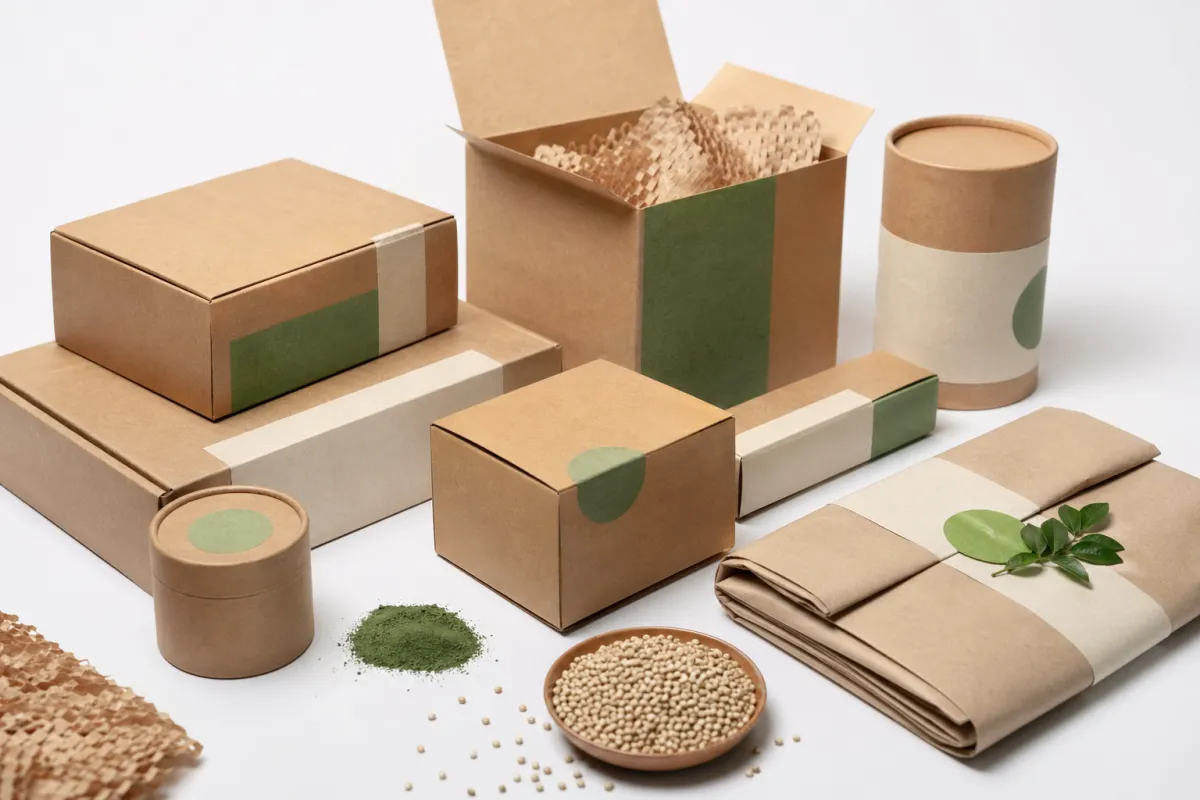
Sustainable recycled packaging brand guidelines are the rules that govern how a brand uses recycled-content materials, graphics, structure, and messaging across every pack. The scope goes far beyond logo placement or a Pantone chip. These guidelines tell a designer whether a recycled grayboard sleeve needs a 12-point minimum font, whether soy-based ink can sit on an uncoated liner, and whether a recycled-content claim belongs on the front panel or should stay on a side flap. That level of detail keeps the system usable after the job leaves the design studio and lands in production, where opinions get replaced by gauges, board calipers, and someone muttering, "Well, that is not what the comp showed," while the press operator checks a 0.45 mm tolerance against a sample board.
I once worked with a snack brand that believed a simple color palette would handle everything. It looked polished on a PDF. On the shelf, the 18pt recycled carton absorbed so much ink that the teal brand panel printed two shades darker on the first 3,000 units. The fix was not a new logo. The fix was sustainable recycled packaging brand guidelines that allowed a second approved color range, a lower ink coverage target, and a tighter prepress proofing step. A mood board cannot solve that. A packaging system can, which is why I trust specs more than vibes every time, especially when the carton is being run on a six-color Heidelberg in Monterrey or a water-based flexo line in Pennsylvania.
The gap between branding claims and actual packaging behavior is where most teams stumble. A brand may want to say its package is recycled, recyclable, or made with post-consumer fiber, but customers only see what the pack looks like, what it feels like in the hand, and whether the recycling instructions make sense in 10 seconds or less. The EPA's recycling basics at epa.gov/recycle are a useful reminder that public guidance and real-world recovery are not the same thing. Sustainable recycled packaging brand guidelines need to account for both the promise and the physical object, because the box has to survive reality, not just the marketing calendar, a warehouse racking system, and a delivery route that may include Chicago, Dallas, and Phoenix in a single week.
Another way to frame it: these guidelines sit at the meeting point of brand identity and manufacturing reality. They are part creative brief, part production spec, and part risk management document. That is why the strongest versions are written with designers, marketers, procurement teams, and converters in the same room. Leave one of those groups out, and the pack may still look good in a render, but it will likely cost more, vary more, or perform worse once the trucks start moving. I have seen that movie too many times, and the ending is always a little sweaty, especially after a last-minute board swap from a mill in Wisconsin to a mill in British Columbia.
Client quote: "The first thing our retailer noticed was not our logo. It was the crushed corner on the insert," a packaging manager told me after a pilot run with 32 ECT corrugate and a recycled paperboard tray that was too light for the product weight, which was 1.8 kilograms per unit and just heavy enough to punish a weak cradle.
How Do Sustainable Recycled Packaging Brand Guidelines Work?
The workflow usually starts with strategy and ends with shelf readiness, but the practical path behaves more like a loop than a straight line. Sustainable recycled packaging brand guidelines begin with material selection, move into visual standards, then pass through print testing, approval, and rollout. If I am sitting with a brand team, I ask them to settle three things first: what recycled content target they want, which pack formats matter most, and how much natural variation they are willing to tolerate. Those three answers shape almost everything that follows, including the budget conversation everyone was hoping to postpone until later, even though the CFO already wants a number by Friday at 4:00 p.m.
From there, the rules translate brand values into repeatable decisions for Custom Printed Boxes, mailers, inserts, labels, and protective packaging. A beauty brand may accept a warm kraft tone for its shipping cartons but require a cleaner white recycled board for retail packaging on the shelf. A subscription brand may allow a visible fiber fleck in the outer mailer, yet insist on a tighter print standard for the unboxing experience inside. Sustainable recycled packaging brand guidelines make those tradeoffs explicit instead of leaving them to chance, which saves a lot of awkward post-launch emails with subject lines like "quick question" and an attached photo from a warehouse in Atlanta.
Recycled substrates change design in ways that are easy to miss on screen. Heavier ink coverage can flatten texture. Soft-touch coatings can hide the very recycled feel a brand wants to signal. Gloss can make a carton look premium, but it can also complicate recyclability in some streams. On a factory floor in Dongguan, I watched a converter stop a run because the liner board showed more speckling than the brand had approved, and the lot had already printed 2,400 sheets. The issue was not defect; it was tolerance. Sustainable recycled packaging brand guidelines should define that tolerance in percentages, swatches, or sample references, not vague adjectives like "natural" or "authentic." If the rule says "slight fiber flecking within approved range," everyone knows what that means. If the rule says "should feel earthy," good luck with that.
Vendors matter here, and they matter early. The strongest versions are written so a designer, a buyer, and a converter can all use the same document without a phone call to decode it. I like to see a simple chain: approved materials, approved finishes, approved artwork rules, approved claims language, and approved test methods. For shipping packs, I often point teams to ISTA testing methods and ASTM D4169-style distribution thinking so the package is judged by what happens in transit, not just by what happens in a presentation deck. The truck does not care how elegant the mockup looked at 9:00 a.m., and the dock crew in Savannah will not adjust the handling because the render was beautiful.
One useful way to picture the system is this: a single brand can look different across SKUs and still feel unmistakable if the rules stay consistent. A 250 ml bottle carton, a 1 liter shipper, and a molded fiber insert may all use different substrates, but they can share the same typography scale, the same recycled-content badge, and the same spacing rules around the logo. That is how these guidelines protect brand identity without forcing every package into the same physical shape. In my opinion, that balance is what separates a smart packaging program from a pile of nice intentions, especially when the 250 ml unit is printed on 350gsm C1S artboard and the shipper is built from 44 lb kraft liner.
Key Factors in Sustainable Recycled Packaging Brand Guidelines
Material performance comes first. Recycled paperboard, corrugate, molded fiber, and post-consumer content all behave differently in production and on the shelf. A 24pt recycled paperboard carton may fold cleanly but show more edge crush than a virgin alternative. A 32 ECT corrugate mailer can protect better in shipping, yet it may raise freight weight slightly if the wall construction is overbuilt. Sustainable recycled packaging brand guidelines need to spell out which substrate is approved for which job, because not every recycled material belongs in every format. I learned that the hard way, and the pressroom did not care one bit about the deadline.
Visual consistency comes next, and brands often underestimate how complicated it gets. Recycled substrates can shift color, absorb ink unevenly, or show fiber flecking that changes with batch and mill source. I have seen the same warm gray board print with a cooler cast on a second production lot simply because the recovered fiber mix changed. These guidelines should define acceptable variation ranges for color drift, texture, and finish so the team knows what counts as a defect and what counts as normal recycled-material character. The goal is not to erase variation. The goal is to control it before it starts a small internal panic, especially in a launch meeting with five people, three coffee cups, and a sample board from a mill in Oregon.
Messaging rules carry equal weight. A pack can be honest and still be badly written. If a carton says "eco-friendly" with no proof point, that is a red flag. If it says "made with 60% post-consumer recycled fiber," that is stronger, but the support needs to live in the file. I prefer claim language that names the material, the percentage, and the certification or test basis where possible. FSC labeling can help with responsible sourcing, but FSC is not the same thing as post-consumer recycled content. Sustainable recycled packaging brand guidelines should make that distinction painfully clear, because greenwashing usually starts with a tiny wording shortcut and somehow ends in a legal review that everyone pretends not to have seen coming, often after a reviewer in London or Toronto asks for backup documentation.
Structure matters too. A premium rigid box with a thick recycled wrap can look elegant, but if the product could ship safely in a lighter folder-style carton, the extra material may undercut the environmental goal. I saw a cosmetics brand cut 14% of its package weight simply by changing the insert geometry from a two-piece cradle to a molded pulp tray. The brand kept the same front-panel graphics and the same unboxing experience, but the structure was simpler. That is the kind of decision the guidelines should encourage: fewer parts, fewer grams, fewer surprises, and fewer moments where operations asks, "Who approved this?" while pointing at a carton that now weighs 38 grams instead of 44.
There is also a compliance layer. Accessibility, legibility, regional recycling instructions, and required labeling all need space in the layout. A 6-point recycling note might fit on a sample, but it may not be readable on a shelf or under retail lighting. If a brand sells across several regions, the package may need different disposal language for different markets, which means version control becomes part of the design system. Sustainable recycled packaging brand guidelines should leave room for those variations rather than pretending every market uses the same rules. I have never once seen that assumption end well, particularly for brands shipping into California, Quebec, and the EU at the same time.
For teams building branded packaging at scale, the smartest move is to write the rules in concrete terms: board grade, ink limits, minimum type size, coating restrictions, and approved claims. I have seen too many product packaging decks rely on words like "clean," "premium," or "earthy." Those words may sound useful in a pitch. They are weak in a production file. These guidelines work best when they read like a spec sheet with a marketing backbone, because in the factory the board grade wins every argument, and the caliper gauge does not care what the brand deck looked like on Monday morning.
Cost and Pricing in Sustainable Recycled Packaging Brand Guidelines
Cost starts with the substrate, but it does not end there. Material grade, print method, finishing, minimum order quantity, tooling, and testing all shape the final number. A recycled folding carton might quote at $0.15 per unit for 5,000 pieces if the artwork is simple, the size is standard, and the board is a common recycled SBS grade. Add a custom window, a specialty aqueous coating, and a tighter color match, and the same job can climb to $0.42 or more per unit. Sustainable recycled packaging brand guidelines help teams sort out which costs are strategic and which are avoidable, which is a nice way of saying they stop people from decorating the budget with surprises, line items, and a fourth proof round no one budgeted for.
Here is the comparison I use in budget meetings.
| Option | Typical Use | Indicative Price at 5,000 Units | Main Tradeoff |
|---|---|---|---|
| Recycled paperboard carton | Retail packaging, sleeves, lightweight product boxes | $0.15-$0.42/unit | Good print quality, but more variation in fiber and tone |
| Recycled corrugate mailer | Shipping packs, subscription kits, e-commerce outer boxes | $0.38-$0.85/unit | Better protection, higher freight weight, larger storage footprint |
| Molded fiber insert | Protective trays, inner supports, bottle or jar cradles | $0.17-$0.33/unit | Strong sustainability story, but tooling and lead time can be higher |
That table leaves out one detail people miss: recycled options can cost more upfront and still save money overall. A lighter corrugate shipper can reduce freight damage by 6 to 9 percent if the old pack was oversized. A simpler recycled insert can reduce rework if the product stops shifting in transit. I have seen brands pay a slightly higher board price, then recover the difference by cutting replacement shipments and reducing void fill. These guidelines should force that wider math onto the page, because the board price alone is a lousy way to judge value, and a warehouse in New Jersey will happily charge you for every damaged return.
The hidden costs are usually the ones that sting. Extra proofs. Color matching across two mills. Structural revisions after a drop test. Legal review of a recycled-content claim. A brand once asked me why its packaging budget had jumped by $7,800 on a 10,000-unit run, and the answer was three proof cycles, two revised dies, and one late-stage claim correction. Sustainable recycled packaging brand guidelines reduce those surprises by locking decisions earlier and documenting what is approved before production starts. I know that sounds dull, but so is explaining why the freight lane got delayed because a font size was too small and the insert collapsed, especially after the plant in Mexico had already scheduled the run.
If the budget is tight, I usually recommend starting with the highest-volume packs or the most visible customer-facing items. That gives the brand the largest return on every design decision. Standard sizes help. So do fewer specialty finishes. If you can keep a carton at a common dieline and avoid a bespoke insert, the cost curve often improves quickly. One supplier in Michigan quoted me a 9 percent reduction simply because we moved from a fully custom tray to a stock-format recycled insert with a minor trim adjustment and a shorter setup time of 90 minutes instead of 140.
There is also a negotiation angle. Suppliers can usually sharpen pricing when the brand commits to multi-SKU runs, annual volume, or shared tooling. In a client meeting last spring, a converter took a quote from $0.31 to $0.25 per unit after we standardized the top flap across three sizes and removed one foil pass. These guidelines support those discussions because they define what can be standardized without harming package branding or the unboxing experience. Honestly, that is one of the least glamorous reasons to write guidelines, and also one of the most useful, especially if the order is being split between a plant in Pennsylvania and a backup line in Vietnam.
Step-by-Step Process and Timeline for Sustainable Recycled Packaging Brand Guidelines
A realistic timeline starts with an audit. I usually budget 3 to 5 business days to review current packaging, brand assets, claims language, and production constraints. That audit should answer practical questions: What substrate is already in use? What recycled-content claims exist today? Which packs sell the most units? Which ones break most often in transit? These guidelines are stronger when they begin with actual data instead of someone's memory of last quarter's launch, because memory has a terrible track record under deadline pressure, especially if the packaging team is juggling three SKUs and a seasonal launch in the same month.
The next stage is decision-making, and that is where many projects slow down. I have seen teams spend two weeks debating a recycled kraft tone that a customer would notice for less than three seconds. Better to settle the non-negotiables early: approved materials, visual rules, copy standards, and claim language. A useful rule is to write the first draft as a working document, not a polished manifesto. That draft should be short enough that a designer can use it without a 40-page scavenger hunt. These guidelines work because they are practical, not because they are ornate or impressively wordy, and the best ones fit cleanly into a spec packet with room for a 2 mm logo margin note.
Then come prototypes, print proofs, and testing. For a standard carton, proof approval to final sample can take 12 to 15 business days if the converter already has the die and the artwork is clean. If the job needs a new tool, special coating, or structural change, add another week. Transit testing should not be skipped. I prefer a mix of drop testing, vibration checks, and stacking tests, and I often ask for ISTA-style distribution evidence plus an ASTM D4169 mindset for parcels that will travel through multiple hubs. Sustainable recycled packaging brand guidelines should name the test methods so the team knows what "approved" actually means, not just what someone hoped would pass, whether the run is being built in Suzhou, Toronto, or Grand Rapids.
On a factory floor in Shenzhen, I once watched a 16-ounce jar pack fail because the recycled paperboard sleeve looked fine but the internal insert compressed by 2 millimeters under load. The brand had signed off on visuals, not performance. We corrected the insert geometry, reran the proof, and the final version shipped three weeks later than planned. That delay was frustrating. The cost of a product return would have been worse, and yes, I still remember the silence in the room when the first stack test went sideways. These guidelines save time in the long run because they expose these failures before the product reaches a warehouse, where a single weak corner can turn into 400 damaged units and a very expensive spreadsheet.
Rollout is the final stage, but it is not the easy part. Supplier handoff, version control, internal training, and update cadence all matter. I like to see a single source file, one claims sheet, and a named owner for every approved pack. If the marketing team changes a logo lockup and procurement does not know about it, the next reorder can drift out of compliance in a single afternoon. Sustainable recycled packaging brand guidelines should include a review cycle, even if it is only twice a year, so the system stays current as materials, regulations, and costs shift. Otherwise the pack slowly drifts into chaos, which is a charming word for a very preventable headache, particularly when a reorder lands at a plant in Arizona with last quarter's artwork.
For brands buying custom printed boxes in multiple sizes, the cleanest workflow is usually audit, approve, prototype, test, launch. Simple enough to say, but not casual in execution. The best projects I have seen had a 10-business-day design window, a 12-to-15-business-day proof cycle, and a hard sign-off date before tooling was ordered. That pace felt disciplined, and it kept everyone honest about what could be done within the budget and the deadline. It also reduced the number of "small tweaks" that somehow turn into seven new revisions, which I suspect is a universal packaging industry disease, second only to the mysterious appearance of one more logo version.
Common Mistakes in Sustainable Recycled Packaging Brand Guidelines
The most common mistake is vague sustainability language. "Eco," "green," and "planet-friendly" may sound nice, but they do not tell a customer what the pack is made of or how to dispose of it. I have watched legal teams strip those words out of a launch deck after a single review. These guidelines should require proof-based language from the start: recycled content percentage, fiber source, and any disposal instruction that can be defended. If a statement cannot survive a fact check, it probably should not be on the pack, especially if the pack is headed to retail shelves in New York, Seattle, and Miami at once.
Overdesign is the second mistake, and it shows up more often than brands admit. A recycled pack can still be burdened with heavy coatings, multi-layer foils, plastic windows, or complicated inserts that weaken the environmental story. I remember a beverage client that spent almost $14,000 on a sculpted insert and soft-touch finish, only to learn that the finish complicated the recycling path and the insert added 18 grams per unit. The brand wanted a premium feel, but the package had become too busy. Sustainable recycled packaging brand guidelines should keep the design honest and simple enough to manufacture well, because elegance and excess are not the same thing even though people often confuse them in meetings, especially after someone orders a sample set from Milan or Portland and falls in love with the sheen.
The third mistake is ignoring supplier realities. Recycled board mills do not all produce the same tone, the same stiffness, or the same absorbency. If a brand demands exact visual sameness from a material that naturally varies, delays are almost guaranteed. I have seen a three-day approval stretch into three weeks because the team kept rejecting samples that were technically within normal tolerance. These guidelines should define the acceptable window clearly so the converter is not guessing at taste. Guessing is expensive, and it tends to happen right after someone says, "It should just look better," which is not a measurable spec in any plant I have visited from Ohio to Guangdong.
Another common error is making the rules too rigid. If the system allows only one shade of kraft or one exact fleck pattern, it can break the moment a mill changes a batch. A good guide leaves room for approved variation. It says what matters most, what can flex, and who makes the call. That hierarchy is useful in packaging design because it protects the brand while acknowledging that recycled materials are not laboratory-perfect. In my experience, the brands that understand this save both time and morale, and their teams do a lot less apologizing to one another after a sample lot arrives 0.5 mm thinner than the previous one.
The final mistake is organizational. Brand, sustainability, and operations teams often sit in separate meetings and only connect after the pack is already in motion. That is expensive. A packaging decision made without procurement can blow up cost. A claim written without legal can trigger a rewrite. A structure approved without operations can fail on a pallet. These guidelines are most effective when the three groups meet early, share the same spec sheet, and sign the same approval path. It sounds obvious. It also gets missed all the time, which is part of why the industry keeps repeating the same avoidable errors, usually right before a hard launch date and a 6:00 p.m. status call.
Factory-floor lesson: The cleanest-looking carton in the sample room is not always the strongest carton in the distribution center. I learned that after a 6,000-unit pilot lost 4.2 percent of its corners in transit because the recycled insert spec was written for appearance first and compression second, and the line was moving through a regional hub in Dallas with heavier-than-usual stacking pressure.
Expert Tips and Next Steps for Sustainable Recycled Packaging Brand Guidelines
My first recommendation is to build a one-page decision hierarchy. Put the priorities in order: safety, regulatory compliance, product protection, brand identity, then decorative finish. If a tradeoff appears, that page tells the team what wins. These guidelines get much easier to use once the priorities are visible. A buyer can make a call in 10 minutes instead of waiting two days for a committee that somehow needs three meetings to decide on a carton liner, a sample from a plant in Ohio, and a backup quote from British Columbia.
Second, create a packaging spec library. Keep approved materials, finish codes, claim language, dielines, and supplier notes in one place. I am not talking about a fancy platform; a well-structured shared folder can work if it stays disciplined. Include a sample photo, the quoted price, the MOQs, and the last approved revision date. These guidelines become more durable when the team can find the exact carton spec from a year ago and reuse it instead of rebuilding from scratch. That alone can save a brand from a lot of late-night file chasing, especially when the old approval came from a printer in Miami and the new job is moving through Tennessee.
Third, pilot before you roll out. A 500-unit test batch can reveal more than a month of debate. You will learn how the recycled substrate prints, how the carton stacks, how the insert fits, and how the claims read in a real warehouse under fluorescent light. If the pilot passes, scale with confidence. If it fails, the fix is cheaper. I have seen pilot launches cut rework by 30 to 40 percent because the team caught issues before full production. Sustainable recycled packaging brand guidelines should encourage that kind of small, controlled risk instead of betting everything on a beautiful slide deck, a sponsor call, and a plant slot that cannot be moved.
If you want a practical checklist, here is the one I use in client reviews:
- Confirm the recycled-content target, such as 30%, 60%, or 100%, and document the source.
- Approve one board grade, one ink system, and one finish set for each pack format.
- Set a minimum type size, a logo clear-space rule, and a color-tolerance window.
- Verify all sustainability claims against paperwork, supplier data, and legal review.
- Run a transport test that reflects the route, whether that is parcel, pallet, or retail distribution.
- Record the approved supplier, quote, MOQ, and lead time in one spec library.
My last piece of advice is simple: do not treat these guidelines like a poster on the wall. Treat them like a working production tool. That shift changes everything. It helps the brand keep its voice, keeps the product protected, and keeps the packaging team from reinventing the wheel on every reorder. For brands that want to reduce waste without losing recognition, sustainable recycled packaging brand guidelines are the practical bridge between values and shelf reality, whether the pack is a 24pt carton on a boutique shelf or a 32 ECT shipper moving through a fulfillment center in Kentucky.
If you are starting from scratch, build around one pack, one claim sheet, and one approval path this week. Then expand from there. The point is not to create a perfect rulebook on day one. The point is to create a system that keeps recycled packaging honest, repeatable, and ready for production without turning every reorder into a rescue mission. That is the real takeaway: document the material, lock the claim language, define the test, and name the owner before the next press slot opens. Otherwise the best intentions just kinda turn into expensive opinions.
FAQ
How do sustainable recycled packaging brand guidelines differ from a standard brand guide?
They add material and production rules, not just visual identity rules. A standard brand guide may cover logo use, color, and typography, while sustainable recycled packaging brand guidelines also define recycled substrates, approved inks, finish restrictions, claim language, and testing requirements. That extra layer matters because recycled materials vary in tone, texture, and print response, and those variations can change the way a pack behaves in a real production run, especially on 350gsm C1S artboard, recycled SBS, or 32 ECT corrugate sourced from different mills.
What materials work best for sustainable recycled packaging brand guidelines?
Recycled paperboard and corrugate are common for cartons, mailers, and shipping packs, while molded fiber is often a strong choice for inserts and protective trays. I would not call any one material universally best. The right pick depends on product weight, shelf presentation, required print quality, and the budget for tooling and testing. For example, a 24pt recycled paperboard carton may suit a beauty kit in Los Angeles, while a molded pulp tray from a plant in Wisconsin may protect glass better for a subscription shipper headed to Seattle.
How much does sustainable recycled packaging usually cost compared with virgin packaging?
Upfront material costs can be higher, especially for premium recycled grades or low-volume runs, but the gap is not the whole story. Standard sizes, simpler finishes, and larger order quantities can bring costs down. I always tell clients to include rework, transit protection, and claim verification in the budget, not just board price. A recycled folding carton can start around $0.15 per unit at 5,000 pieces, while a similar virgin pack might land a little lower or higher depending on coating and size, but the recycled option often wins once freight damage and reprint risk are included.
How long does it take to create sustainable recycled packaging brand guidelines?
A simple version can move from audit to approval in a few weeks if decisions are clear. More complex systems take longer because material testing, supplier reviews, and legal checks add time. In practice, the biggest delay usually comes from proofing and revising claims or finishes, not from writing the document itself. For a straightforward carton program, I usually expect 12 to 15 business days from proof approval to final sample, plus another week if a new die or insert tool is required.
What should be tested before launching recycled packaging brand guidelines?
Test print quality, color consistency, and legibility on the chosen recycled substrate. Test transit durability, stacking strength, and protection for the product inside. Test claim language and recycling instructions as well, because a pack can look beautiful and still fail if the customer cannot read the disposal guidance or the carton collapses in distribution. I would rather catch a bad insert in the sample room than hear about it from a customer service ticket on a Friday afternoon, especially if the failed pack came from a run of 5,000 units and the replacement order would take another 12 business days.

