Buyer Fit Snapshot
| Best fit | Sustainable Soap Boxes Printed projects where brand print, material claims, artwork control, MOQ, and repeat-order consistency need to be specified before quoting. |
|---|---|
| Quote inputs | Share finished size, material target, print colors, finish, packing count, annual reorder estimate, ship-to region, and any compliance wording. |
| Proofing check | Approve dieline scale, logo placement, barcode or warning zones, color tolerance, closure strength, and carton packing before bulk production. |
| Main risk | Vague material claims, crowded artwork, missing packing details, or unclear freight terms can make a low unit price expensive after revisions. |
Fast answer: Sustainable Soap Boxes Printed: What Actually Works should be specified like a repeatable production item. The safest quote records material, print method, finish, artwork proof, packing count, and reorder notes in one written spec.
Production checks before approval
Compare the actual filled-product size with the drawing, then confirm tolerance on folds, seals, hang holes, label areas, and retail display edges. Reserve space for logos, QR codes, warning copy, and material claims before decorative graphics fill the panel.
Quote comparison points
Review material grade, print process, finish, sampling route, tooling charges, carton quantity, and freight assumptions side by side. A quote is only useful when the supplier can repeat the same color, closure quality, and packing count on the next order.
Sustainable Soap Boxes Printed: What Actually Works
The greenest-looking carton is useless if it ships too much air, splits at the seam, or needs a thick coating just to survive a damp storeroom. That is the trap with sustainable soap boxes printed: the box can signal responsibility and still waste material, money, and shelf space. Soap is forgiving until it is not. A bar can absorb moisture, scuff at the corners, stain from oils, or soften in humid storage. The carton has to do real work. Pretty helps. Performance pays.
From a packaging buyer's point of view, sustainability is not one feature. It is a stack of choices: recycled content, responsibly sourced board, right-sized dimensions, lower-impact inks, and fewer unnecessary layers. The best sustainable soap boxes printed balance those choices without turning into a compromise you explain away later. That standard matters. Green theater does not.
If a box looks eco-friendly but ships 30% air, uses a glossy plastic laminate, and falls apart in humid storage, the sustainability story is decorative. Buyers spot that fast.
I have seen this firsthand during press checks: a carton that looked elegant in a mockup became visibly tired after one afternoon in a steamy production room. The artwork was fine. The spec was not. That gap between presentation and reality is where packaging budgets quietly leak away.
Sustainable Soap Boxes Printed: What They Really Mean
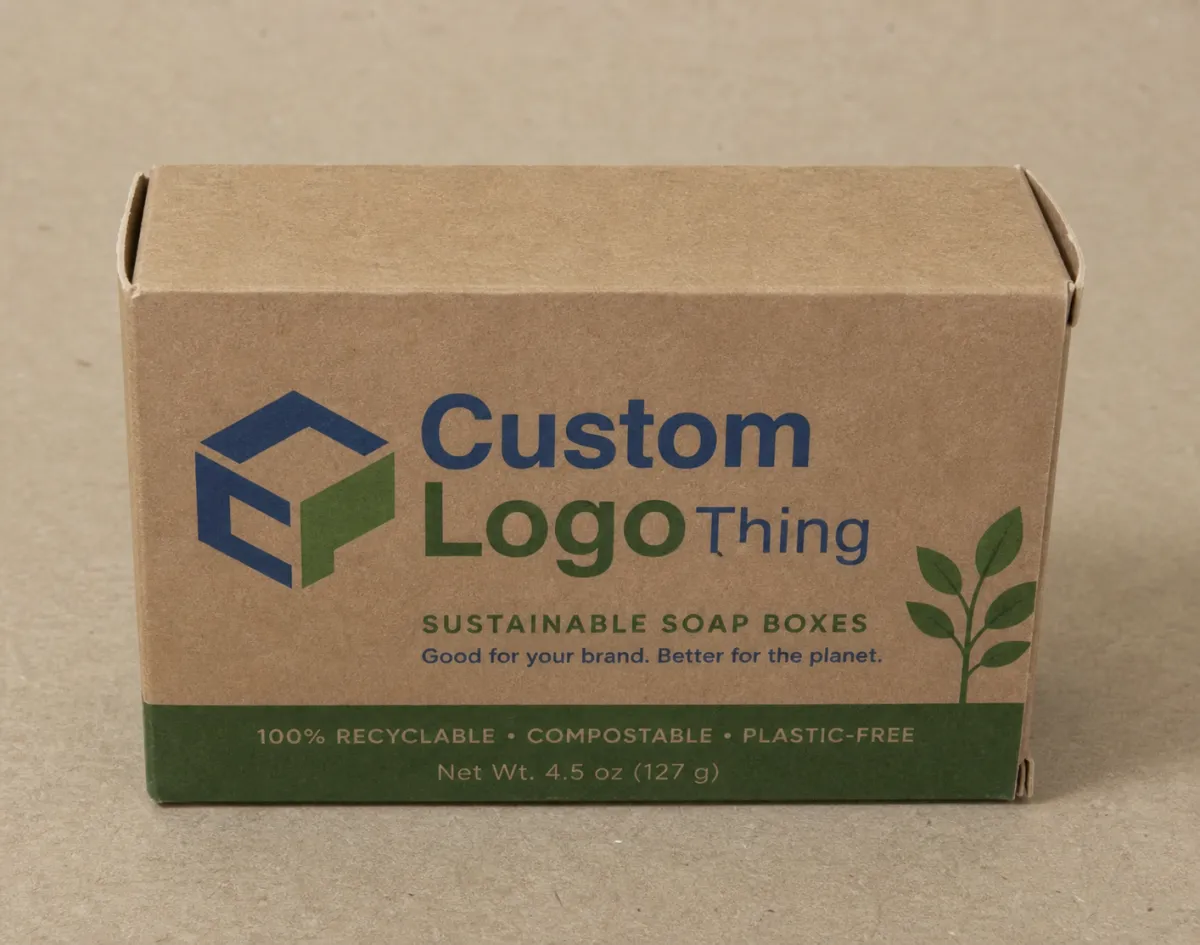
People use the word "sustainable" loosely. That is convenient if you are writing a headline and frustrating if you are buying cartons. In practical terms, sustainable soap boxes printed usually means a package that uses less material, better-sourced material, or lower-impact production choices while still protecting the soap and carrying the brand clearly. FSC-certified board helps. So does recycled paperboard with documented recycled content. Oversized structures, heavy coatings, and hard-to-recycle finishes do not improve the story just because the spec sheet sounds friendly.
For soap, the box is not a billboard alone. It is a small protective system. Bars can warp if they sit too long in heat. Oily formulas can stain thin stock. Rough handling can crush corners. Moisture can wrinkle uncoated board if the material is too light for the environment. So sustainable soap boxes printed have to handle three jobs at once: look good, hold up, and avoid waste. That is why the details matter more than the slogans.
A practical definition looks like this:
- Responsible fiber - recycled paperboard, FSC-certified board, or another documented source with traceability.
- Right sizing - a box that fits the soap bar instead of leaving a cavity of empty air that needs filler or a larger shipper.
- Lower-impact print - soy-based or vegetable-based inks, moderate ink coverage, and no decorative layer that does nothing for performance.
- Less waste overall - fewer reprints, fewer rejected units, and fewer design changes after production starts.
The EPA's waste hierarchy is still the cleanest way to think about it: reduce first, then reuse, then recycle. That sounds obvious, which is usually a sign it gets ignored. For sustainable soap boxes printed, the smartest move is often the least dramatic one. Pick a board that works. Size the carton correctly. Print cleanly. Stop there unless a finish or insert solves a real problem. See the EPA recycling guidance for the broader framework.
The printed part still matters. A soap brand that feels handmade, clinical, botanical, or premium needs the box to carry that mood without piling on extra material. In that sense, sustainable soap boxes printed should feel deliberate, not stripped bare. When the design is weak, teams try to fix it with heavier board and flashy finishes. That usually signals the wrong problem.
A clean carton is not a minimalist accident. It is usually the result of seven decisions made correctly in sequence. The best teams know that the sustainability story starts long before ink touches board.
How Sustainable Soap Boxes Printed Are Made
The production flow is steady whether you order 500 units or 50,000. It starts with the board, not the artwork. If the material is wrong, the rest of the job only makes the wrong choice look more expensive. For sustainable soap boxes printed, the usual path is board selection, design prep, print setup, cutting, folding, finishing, and final packing. Each step can improve or weaken the sustainability story.
Board selection is where most of the decisions begin. Common choices include recycled paperboard, kraft paperboard, and virgin fiber board with FSC certification. Kraft gives a natural look and often works well with a simpler ink palette. Recycled stock can print nicely, though the surface may feel less refined. Virgin board is not automatically the wrong choice, but it should earn its place with a clear reason, not habit. That distinction matters more than people admit.
Print methods matter too. Digital printing makes sense for short runs, seasonal launches, and fast artwork changes. Offset printing is stronger for larger orders when color consistency and lower unit cost matter. Flexographic printing can work well for simpler artwork, especially on kraft or sleeve-style packaging. None of those methods is magical. Each fits a different volume band. Sustainable soap boxes printed can still look premium when the method matches the job instead of forcing the job to suit the machine.
The tension shows up when sustainability and print quality pull in different directions. Brown kraft stock does not behave like bright white SBS. Dark colors absorb differently. Fine hairline type can vanish if contrast is weak. Heavy ink coverage can make recycled board feel muddy instead of rich. Good packaging design uses the material honestly. A quiet palette, strong typography, and one or two well-placed brand cues often beat a crowded layout trying to fake luxury.
Common eco-friendly build choices include:
- Uncoated kraft for a natural, handmade look and reduced finishing complexity.
- Recycled paperboard for cleaner print detail and a smoother presentation.
- Soy- or vegetable-based inks to reduce reliance on harsher ink systems.
- Minimal adhesive use so the box stays easy to fold, assemble, and recycle where facilities support it.
The result does not need to look rough. Some of the best sustainable soap boxes printed rely on restraint: a well-sized tuck end, one or two colors, a matte or uncoated finish, and clear copy hierarchy. That can look more premium than a box buried under coatings and spot effects that do nothing for the product. Packaging people know the difference. Shoppers usually feel it before they can name it.
In practice, the material and the message should reinforce one another. If the soap is botanical, a kraft board with a restrained illustration may feel honest. If the soap is dermatologist-focused, a cleaner white stock with disciplined typography may be a better fit. The wrong surface can make the right copy feel slightly off.
Sustainable Soap Boxes Printed: Cost, Pricing, and MOQ Factors
Pricing is where enthusiasm meets arithmetic. The biggest drivers for sustainable soap boxes printed are board choice, box size, print coverage, number of colors, finishing, and whether you need inserts, windows, or special structural features. A low quote without those details is not a favor. It is an omission. There is a difference.
MOQ changes the math quickly. Lower quantities usually cost more per box because setup is spread over fewer units. Larger runs reduce the unit price, but they also lock in more inventory and more cash. For small brands, that is often the real tradeoff: better unit economics versus more risk sitting on boxes that no longer match the product or label. Sustainable soap boxes printed are not only a procurement choice. They are a cash-flow choice too.
Here is a practical pricing frame for a simple folding carton with standard die cutting and basic print:
| Run Size | Likely Print Method | Typical Unit Price | Best For | Notes |
|---|---|---|---|---|
| 300-1,000 | Digital | $0.85-$1.60 | Test launches, seasonal SKUs, small batch brands | Fast approval cycles, but higher per-unit cost |
| 2,000-5,000 | Digital or offset | $0.35-$0.75 | Growing brands that need better unit economics | Good balance if artwork is stable |
| 5,000-20,000 | Offset | $0.18-$0.48 | Established SKUs and broader retail distribution | Best price advantage if the spec is locked |
| 10,000+ | Offset or flexographic | $0.10-$0.28 | Simple graphics, high volume, repeated replenishment | Lowest unit cost, but higher inventory commitment |
Those ranges are not a quote. They are a practical frame so you can sanity-check what you hear. Final pricing depends on board caliper, box dimensions, color count, coverage, die complexity, and whether the finish adds labor or material. A soft-touch laminate, for example, can make a carton feel nicer, but it also nudges the job away from a cleaner recycle path. Plastic windows do the same thing. Sometimes useful. Often unnecessary.
The fastest way to waste money is to build a box that is too big. Oversized sustainable soap boxes printed need more board, more storage space, more shipping air, and sometimes more filler. That is not sustainability. That is costume design. The second fastest way to waste money is to specify premium effects that do not improve sell-through. If shelf impact comes from shape, hierarchy, and color system, the carton does not need to dress like a nightclub flyer.
If you are comparing suppliers, ask for apples-to-apples quotes using the same dimensions, board grade, print count, and finish. If you are building your first order, browse Custom Packaging Products and compare structures before you decide how much print complexity the box really needs. A cleaner spec almost always gives cleaner pricing.
One honest caveat: supplier estimates vary more than many buyers expect. Two quotes can look close on the surface and still hide different assumptions about board density, waste allowance, or finishing labor. Ask for the spec sheet behind the number, not just the number itself.
Production Process and Timeline for Sustainable Soap Boxes Printed
A realistic timeline keeps people sane. The process for sustainable soap boxes printed usually starts with the brief, then dieline setup, artwork approval, proofing, production, packing, and shipping. If each step moves quickly, a simple digital run can finish in roughly 10-15 business days after final proof approval. Offset jobs, especially larger ones, more often land in the 15-25 business day range. Add special stock, custom coatings, or complex structures, and another week can disappear without much effort.
The delays are rarely mysterious. Artwork revisions eat time. So does late confirmation of dimensions or barcode placement. So does waiting for a specific recycled board grade if the supplier needs to source it. People love calling the box urgent. Then they spend four days deciding whether the logo should move 3 mm left. That is how schedules collapse.
The standard approval sequence should look like this:
- Brief and dimensions - confirm soap size, bar weight, retail channel, and shipping format before anyone touches artwork.
- Dieline review - check the fold lines, glue flaps, barcode zone, legal copy, and recycling language.
- Material sign-off - approve the board grade, recycled content target, and finish before print plates or digital setup begin.
- Proof approval - review color, type size, contrast, and any critical brand elements on the actual chosen stock.
- Production release - lock the file and stop tinkering unless you enjoy rework charges.
Shipping is part of the test, even if nobody likes to talk about it. If cartons move inside master cases, they should survive compression and transport vibration. Depending on channel, I would look at ISTA 3A or another relevant distribution test, and I would not ignore carton compression standards such as ASTM D642 if the shipment stacks in transit. Sustainable soap boxes printed are only sustainable if they arrive intact. A damaged carton is just pulp with branding on it.
There is a myth that fast and sustainable cannot coexist. Bad planning and sustainability do not coexist very well, though. If the dimensions are right, the material is in stock, and the artwork is final, the job can move quickly without creating reprints or scrap. The real enemy is rushed approval. Rushed approval usually creates waste somewhere else.
That is also why a sample matters more than most teams expect. A carton can look excellent in a PDF and still behave badly under pressure. Fold it. Crush it lightly. Check the edge wear. Put it in a warm room. Those tiny checks reveal more than a polished mockup ever will.
Step-by-Step Guide to Ordering Sustainable Soap Boxes Printed
If you want sustainable soap boxes printed to work the first time, do the boring prep work. That is not glamorous, but it is cheaper than explaining a bad fit to finance. Here is the process I would recommend for most soap brands.
-
Define the product first.
Write down soap dimensions, weight, fragrance type, moisture risk, and how the product will be sold. A bar in a humid farmers market setup does not need the same spec as a carton moving through controlled retail shelves. If your formula has a high oil load or a soft surface, the board and finish need to reflect that.
-
Choose the structure before the decoration.
Right-sizing is half the sustainability story. Narrow the carton style to what the soap needs: straight tuck end, reverse tuck, sleeve, or another structure that keeps the box efficient. Sustainable soap boxes printed should be built around the product, not around a mood board.
-
Match the artwork to the stock.
Kraft stock needs stronger contrast and simpler color logic than white board. Recycled paperboard can handle more detail, but it still benefits from discipline. Keep small type readable, keep logos honest to the material, and avoid filling every inch just because empty space makes someone nervous.
-
Request a proof or sample.
Do not approve a job from a screen alone. Check fit, fold behavior, corner strength, and color against the actual board. If the box is going to sit on wet counters, in steam-heavy bathrooms, or near shipment heat, ask for a sample that reflects the real environment. That is how trouble gets caught before it becomes inventory.
-
Lock the spec sheet.
Write down the board grade, dimensions, print colors, finish, quantity, shipping method, and reorder notes. The next run should not depend on memory. Sustainable soap boxes printed get cheaper and less stressful when the second order starts from a clean document instead of a long email chain full of opinions.
One practical trick: make a one-page packaging brief before you ask for quotes. Include soap size, target quantity, retail channel, desired recycled content, and any compliance language. That tiny file saves days. It also helps you compare suppliers without drowning in vague promises. If a supplier cannot quote from a proper spec, the price comparison is not trustworthy anyway.
For brands that are still sorting out the product line, it can help to price the carton and the shipper separately. A clean soap carton can be simple and low-waste, while the outer carton can be optimized for shipping strength. That separation keeps sustainable soap boxes printed focused on the shelf job instead of asking one box to solve every problem in the warehouse.
If there is one habit to keep, it is this: approve the structure before anyone polishes the artwork. Most packaging problems are structural problems wearing a design problem's clothes.
Common Mistakes With Sustainable Soap Boxes Printed
The mistakes are predictable, which is why they are so irritating. The good news is that most of them are avoidable with a little discipline. The bad news is that people keep making them anyway.
- Oversizing the box - using a carton that is too large and calling it sustainable is just shipping empty space with better branding.
- Choosing the wrong finish - a heavy coating can reduce recyclability or add material that the product does not need.
- Ignoring kraft behavior - artwork built for white board often looks flat or muddy on brown stock if contrast is not adjusted.
- Forgetting soap chemistry - oily bars, soft bars, or moisture-prone formulas can stain thin paperboard if the spec is too light.
- Skipping the sample - screen approval feels fast right up until the cartons show up and nothing fits the way you assumed.
Another common mistake is treating print coverage like a free choice. It is not. Heavy ink loads on recycled stock can dull the texture and make the carton feel less natural. That is especially annoying when the whole point of sustainable soap boxes printed is to project a cleaner brand story. Light coverage, smart white space, and tighter color discipline often create a better result than a flood of ink.
The warehouse matters too. A soap box that looks fine on a desk may still fail in stack storage, humid packing rooms, or transit cartons that get compressed. If your packaging gets handled multiple times before it reaches a customer, the structure has to survive more than one gentle glance. Production specs should be written around real handling, not ideal handling.
Stop using "eco" as a substitute for design thinking. A weak carton with a green label is still a weak carton. Sustainable soap boxes printed should be judged on board choice, fit, print quality, and failure rate. If those are good, the sustainability claim has a backbone. If they are not, the claim is decoration.
There is also a quieter mistake that shows up in reorders: no one keeps the approved spec sheet. A month later, a different buyer quotes the wrong board, and the run comes back slightly off. By then the project has lost time, consistency, and a little trust. Paperwork is not glamorous, but it prevents expensive amnesia.
Expert Tips for Better Sustainable Soap Boxes Printed
After enough packaging rounds, a pattern shows up: the best boxes are usually simpler than the bad ones. That is true for sustainable soap boxes printed too. Start with structure. Use the smallest effective carton. Keep the design disciplined. Then let the material do part of the work.
Here is the short version of what works best in practice:
- Keep the structure simple - smart folding and right-sizing beat fancy construction that adds material without improving the customer experience.
- Use print as a brand signal - let typography, spacing, and one strong visual idea carry the carton.
- Choose texture over effects - an uncoated or lightly coated stock can feel more premium than a box covered in special finishes.
- Design for both shelf and shipper - the carton should look good in retail and still behave inside a master case.
- Document everything - the next reorder should not require detective work.
If you want a premium look on eco stock, use contrast carefully. A deep black on kraft, a muted botanical palette on recycled board, or a clean two-color layout can look sharper than a noisy full-bleed print. The expensive-looking part is not always the expensive finish. Often it is the confidence to leave some room in the design. That is hard for some teams to accept, but there it is.
Brand owners also underestimate the power of consistency. If the carton, shipper, insert, and label language all tell the same story, the product feels more credible. If the carton says one thing and the rest of the pack says another, the whole package looks pieced together. Sustainable soap boxes printed work best when they feel like part of a system, not a one-off decoration.
One more practical point: ask your supplier what they see fail most often. That question usually gets better answers than "Can you make it look premium?" The first question is operational. The second is vague. Vague questions produce vague packaging. Nobody needs that.
My own rule of thumb is simple: if a feature cannot justify its weight, its cost, or its recycling downside, it probably does not belong on the box. That test is blunt, but it keeps design honest.
Next Steps for Sustainable Soap Boxes Printed
Start with a one-page brief. Put the soap dimensions, target quantity, board preference, desired finish, and distribution channel in writing. If you already know your sustainability target, say it clearly: recycled content goal, FSC preference, or a material limit such as no plastic windows. That brief is the fastest way to get meaningful quotes for sustainable soap boxes printed.
Then compare three estimates using the same spec. If one supplier is much cheaper, check what they changed. Usually it is board grade, print coverage, finish, or setup quality. Sometimes it is simply the part no one wanted to mention in the first email. If you need a starting point, review Custom Packaging Products and use the structure options to narrow the spec before asking for pricing.
Before you approve anything, test the box with the actual soap. Put it in a humid room for a day if that is where it will live. Slide it in and out of a shipping carton. Check scuffing, fit, and barcode placement. Then review the final file one last time so the next run is not built on guesswork. That is the unglamorous part of sustainable soap boxes printed, and it is also the part that saves the most money.
For brands that want the short version: Choose the Right board, keep the box tight, print with restraint, and verify the spec before release. That is how sustainable soap boxes printed stay useful instead of merely virtuous. Good packaging should reduce waste, support the product, and still sell the soap. Anything less is just a nice story wrapped around a bad carton.
The clearest next move is to lock the structure first, then pressure-test the spec against the soap itself. If the box fits, survives handling, and uses only the finish it actually needs, the sustainability claim becomes credible instead of decorative.
What makes sustainable soap boxes printed actually sustainable?
The box needs responsibly sourced or recycled board, a right-sized structure, and a print setup that avoids unnecessary coatings or material waste. If the carton looks green but uses extra board, a plastic-heavy finish, or a bad fit, the sustainability claim is weak. The best sustainable soap boxes printed reduce waste at the source instead of trying to compensate later.
Which material works best for sustainable soap boxes printed?
Recycled paperboard is a strong default for clean presentation and good print quality. Kraft stock works well when you want a natural look and simpler branding. The right material depends on soap weight, moisture exposure, handling, and whether the box needs to survive shipping or mostly live on a retail shelf.
How much do sustainable soap boxes printed usually cost?
Pricing depends on size, quantity, board type, number of colors, and any finish or insert. Smaller runs cost more per unit, while larger runs lower the unit cost but increase inventory commitment. For simple cartons, you might see roughly $0.85-$1.60 for small digital runs and $0.18-$0.48 in larger offset volumes, but the spec can move that a lot.
What is the usual turnaround for sustainable soap boxes printed?
Simple digital jobs can move in about 10-15 business days after final proof approval if artwork is ready. Larger offset runs often take 15-25 business days, and special materials or revised dielines can add more time. The biggest delays usually come from late approvals, not the press itself.
Can sustainable soap boxes printed still look premium?
Yes. Premium usually comes from strong structure, sharp typography, and disciplined color choices rather than piling on coatings and effects. Natural stock, good contrast, and a clean layout often look better than expensive extras. The box should support the product story, not fight the sustainability goal.

