Buyer Fit Snapshot
| Best fit | Sustainable Void Fill Manufacturer projects where brand print, material claims, artwork control, MOQ, and repeat-order consistency need to be specified before quoting. |
|---|---|
| Quote inputs | Share finished size, material target, print colors, finish, packing count, annual reorder estimate, ship-to region, and any compliance wording. |
| Proofing check | Approve dieline scale, logo placement, barcode or warning zones, color tolerance, closure strength, and carton packing before bulk production. |
| Main risk | Vague material claims, crowded artwork, missing packing details, or unclear freight terms can make a low unit price expensive after revisions. |
Fast answer: Sustainable Void Fill Manufacturer: Material, Print, Proofing, and Reorder Risk should be specified like a repeatable production item. The safest quote records material, print method, finish, artwork proof, packing count, and reorder notes in one written spec.
Production checks before approval
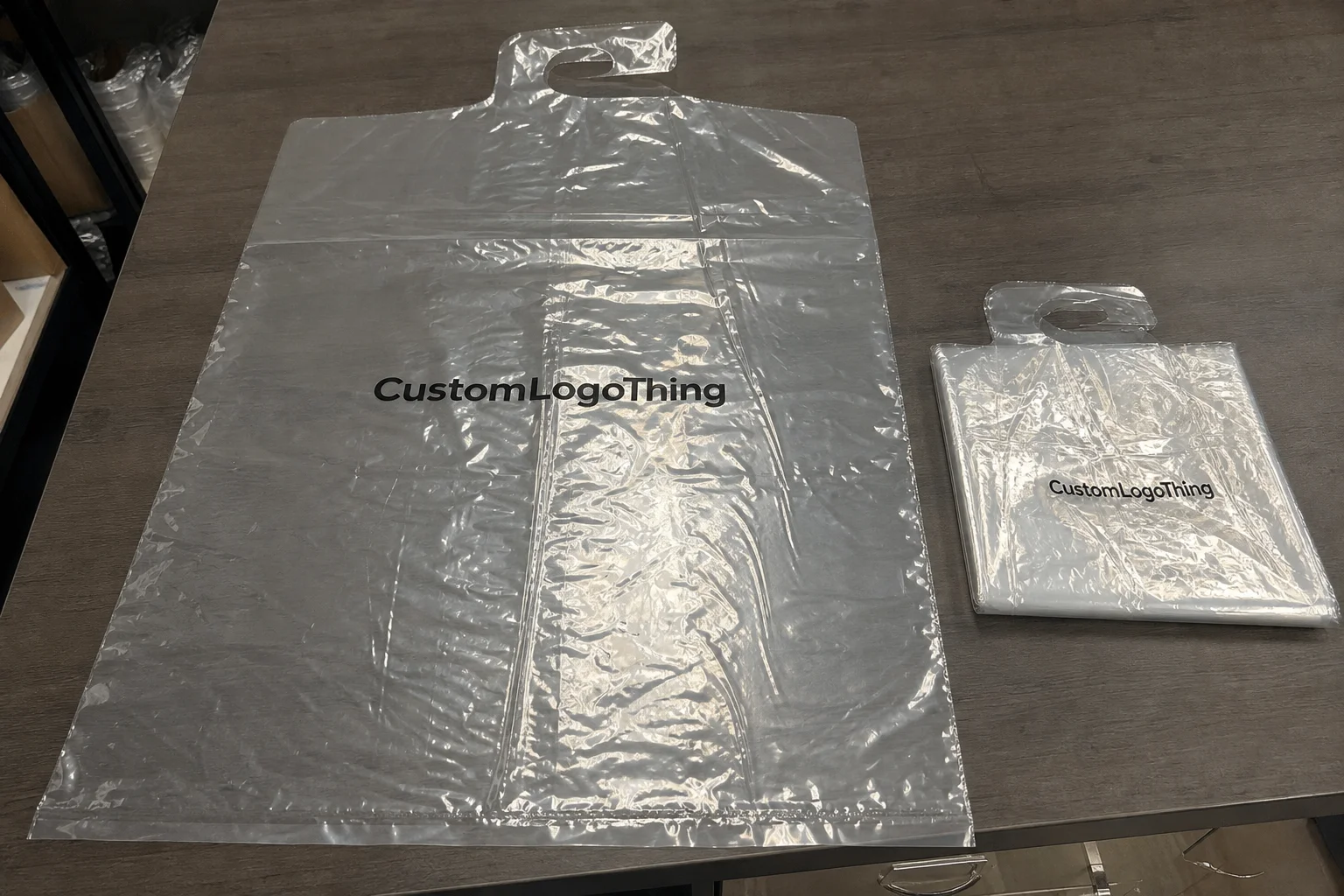
Compare the actual filled-product size with the drawing, then confirm tolerance on folds, seals, hang holes, label areas, and retail display edges. Reserve space for logos, QR codes, warning copy, and material claims before decorative graphics fill the panel.
Quote comparison points
Review material grade, print process, finish, sampling route, tooling charges, carton quantity, and freight assumptions side by side. A quote is only useful when the supplier can repeat the same color, closure quality, and packing count on the next order.
Sustainable Void Fill Manufacturer: How to Choose Well
A carton can look solid on the outside and still be mostly air inside. That empty space is where product movement starts, and movement is what turns a clean shipment into a broken one. A Sustainable Void Fill manufacturer matters because it is not just selling something to stuff in a box. It is helping you control damage, reduce waste, and keep packing work from turning into a daily headache.
Void fill is one of those boring packaging decisions that quietly decides whether your operation feels organized or kinda chaotic. Get it wrong and you pay for it twice: once in material, again in returns, complaints, and labor. Get it right and the box closes faster, ships safer, and gives the customer a package that is easier to handle after opening.
The first question is not, "What is the greenest option?" It is, "What problem are we trying to solve?" Movement? Impact? Abrasion? Crush resistance? All of those change the material choice. A serious sustainable void fill manufacturer should be able to talk through those differences without hiding behind buzzwords or vague claims.
Practical rule: the best void fill is the one that protects the product, fits the pack line, and has a believable end-of-life path for the customer. If it only checks one of those boxes, it is not done yet.
Packaging teams often cross-check supplier claims with resources from packaging.org and package testing guidance from ISTA. Those references will not pick a vendor for you, but they do help separate measurable performance from polished sales copy.
What a Sustainable Void Fill Manufacturer Actually Does
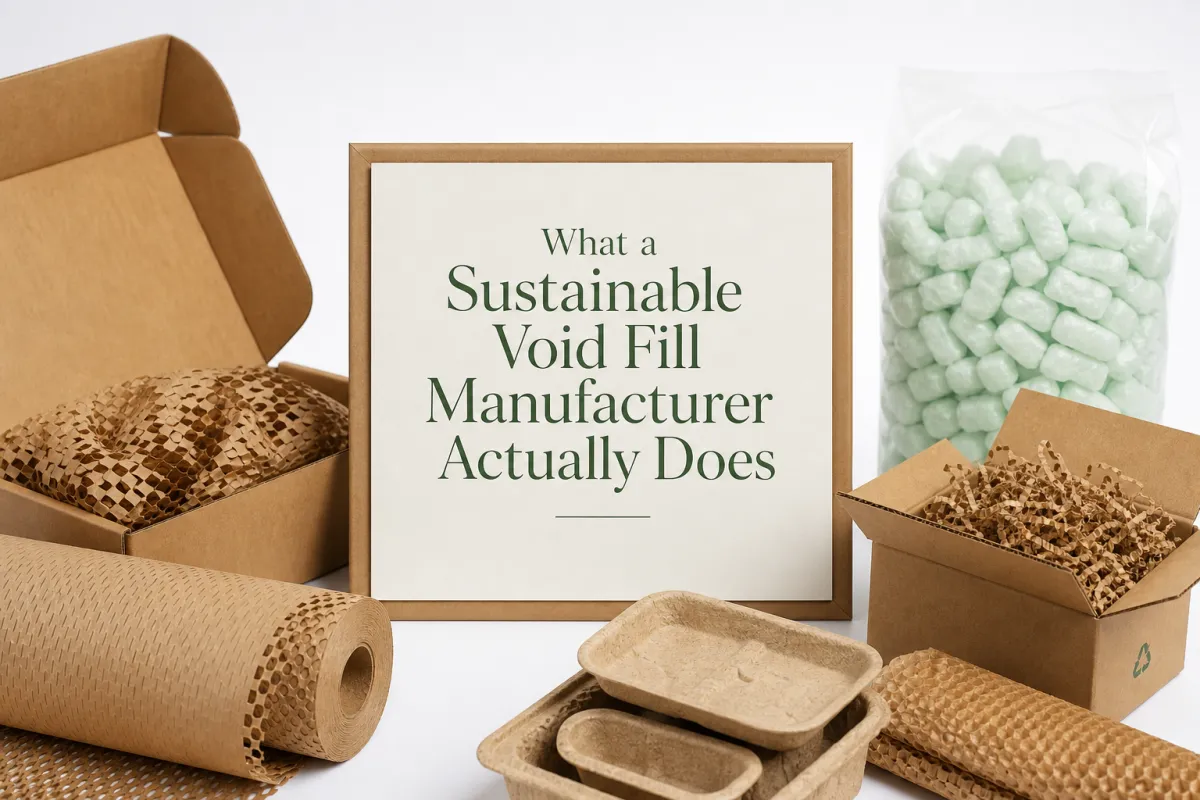
A sustainable void fill manufacturer sits at the intersection of protection design, material sourcing, and warehouse reality. In plain English, that means making cushioning or fill that keeps a product from shifting while reducing unnecessary plastic, excess weight, or waste that is hard to dispose of responsibly. That could be recycled kraft paper, molded fiber inserts, starch-based loose fill, inflatable paper systems, or reusable dunnage. The category is broader than many buyers think, and that is where people get tripped up.
Standard fillers usually win on speed. Sustainability-led options add another filter: what happens after the customer opens the box? Recycled paper may fit local curbside rules in some places. Molded fiber can create a structured barrier that keeps items from rattling around. Starch-based loose fill can work for light goods, but only if the compostability claim is backed by actual documentation and a disposal path that exists where your customer lives. Reusable systems can work very well in closed-loop supply chains, but only when reverse logistics are real and not just a nice idea on a slide deck.
The practical difference is simple. Standard fillers answer one question: how do we fill the gap? A sustainable void fill manufacturer has to answer a longer list: how do we fill the gap, protect the product, keep packing speed acceptable, avoid waste, and make end-of-life behavior realistic for the customer? That is a harder job. It is also why a good supplier adds value instead of just adding material.
Performance and footprint are tied together. A filler that looks efficient in a quote can still cost more overall if it leads to breakage, returns, or overpacking. I have seen teams switch to a lighter material because the number looked better on paper, only to discover that damage rates ate the savings before the first month was over. That is not a small miss. It is the kind of mistake that keeps showing up in monthly reporting.
A sustainable void fill manufacturer should ask about the product before talking about the product line. Glass jars need different protection than cosmetics cartons. Electronics need different restraint than apparel. Heavy items create higher crush loads. Fragile items need tighter immobilization. If a supplier does not ask for carton dimensions, product weight, ship method, and transit distance, that is a red flag. A real recommendation starts with those basics.
- Recycled paper works well for many e-commerce shipments and is familiar to most packers.
- Molded fiber adds structure and is a better fit when the product needs restraint, not just bulk fill.
- Starch-based loose fill can work for light shipments, but disposal claims need proof, not hope.
- Reusable systems can make sense in controlled supply chains with dependable return paths.
A sustainable void fill manufacturer should also know where each option breaks down. Paper may not be ideal for sharp corners or very high void percentages. Loose fill can migrate if the carton is heavy or oddly shaped. Molded fiber often needs more upfront planning, but it can give more consistent results once the spec is set. Those are not flaws. They are tradeoffs. And tradeoffs are what buying packaging is actually about.
How a Sustainable Void Fill Manufacturer Works: Process and Timeline
The process should start with a brief, not a purchase order. A sustainable void fill manufacturer wants to know what is being shipped, how it is being shipped, and what has already gone wrong. That includes carton dimensions, product weight, fragility concerns, shipping zones, average order size, packing speed goals, and whether the operation uses hand pack, semi-automatic equipment, or full automation. The more concrete the inputs, the better the recommendation.
Sampling matters more than most buyers expect. A supplier can make a sample look good in a handoff meeting, but the real test is whether it performs in the actual carton, with the real product, after closure. A few millimeters of extra space can change fill volume, closure quality, and movement inside the box. If the product already has a history of corner damage or scuffing, say so. That kind of context helps the supplier focus on the right material properties instead of guessing.
Lead times vary. Stock paper and stock loose-fill programs can sometimes move in 5 to 10 business days after approval if inventory is already on hand. A custom program can take 3 to 6 weeks once sampling, artwork, or setup is signed off. Molded fiber tooling can take longer if a new die or form is needed. A sustainable void fill manufacturer should be clear about where the time goes: material availability, certification checks, production scheduling, and freight. If the answer is fuzzy, something is being glossed over.
Testing should not be treated like a nice extra. If the shipment moves through parcel networks, ask for package testing that follows ISTA methods such as 3A or 6A, or equivalent protocols that simulate vibration, drop, and compression. That does not mean every filler must be judged on the same test in the same way, because the entire package system matters. It does mean the sustainable void fill manufacturer should be able to talk about measurable performance instead of leaning only on recycled content claims.
- Brief: share carton size, product weight, fragility, and ship method.
- Recommendation: the sustainable void fill manufacturer suggests one or two material formats.
- Samples: pack real products and check movement, closure, and labor effort.
- Validation: test for damage, fill volume, and handling under real warehouse conditions.
- Approval: confirm pricing, lead time, and storage plan before scaling.
A well-run program also fits the packing line instead of forcing the line to bend around the material. A sustainable void fill manufacturer should ask where the material will live, how many packers use it per shift, and whether the operation can handle bulk bags, rolls, or on-demand conversion. That operational fit is not a side note. It is often the reason a technically sound material fails in the real world.
Here is the part people skip too fast: small tests are not proof of scale. In a 50-box trial, almost anything can look fine. In a 500-order day, storage, motion, cleanup, and pack speed start showing their teeth. A supplier that understands that difference is usually worth more than the one with the prettiest sample.
Custom does not always mean slow. If the supplier already runs the format you need and the spec is straightforward, a sustainable void fill manufacturer can sometimes move faster than a buyer expects. Stock programs are convenient, but they are not automatically better. The right choice depends on inventory risk, line speed, and how tightly the material needs to match the product.
What Drives Cost and Pricing in Sustainable Void Fill Manufacturing
Price is never just price. A sustainable void fill manufacturer can quote by unit, by case, by cubic foot, or by system, but the buyer should always translate that number into total landed cost. The cheapest filler on paper is not always the cheapest filler in the building. If a lower-cost material increases pack time, causes more movement, or leads to damage claims, the real cost goes up fast. That matters even more in high-volume operations where a few extra seconds per carton become hours of labor every week.
Raw material choice is usually the biggest driver. Recycled kraft paper, molded fiber, starch-based formats, and reusable systems all require different manufacturing steps and different equipment. Recycled content can strengthen a sustainability story, but it does not erase the cost of converting, cutting, forming, or compressing the material. A sustainable void fill manufacturer also has to account for regional feedstock availability, shipping distance, and whether the product is stock or made to order. Custom sizing, branded print, and specialty finishes can raise the price quickly, especially on smaller runs.
Minimum order quantity matters more than many first-time buyers expect. A low-volume program may pay more per unit simply because setup costs have to be spread across fewer cases. A sustainable void fill manufacturer may quote a better unit price at 10,000 units than at 1,000 units, but the buyer should ask whether the discount is worth the carrying cost. If the filler eats too much warehouse space, the purchase can become more expensive than it looks. Storage footprint, pallet density, and freight class all feed into the math.
There is also a handling cost that rarely shows up in the first quote. If one material is easier to dispense, less messy, and faster to learn, the labor savings can be real. I have seen operations save more on labor than they did on material by switching to a filler that packed faster and cut cleanup. A sustainable void fill manufacturer should be willing to talk about that openly. If the supplier will not discuss how the pack line behaves, the quote is incomplete.
| Void Fill Option | Typical Use | Planning Price Range | Operational Strength | Main Caveat |
|---|---|---|---|---|
| Recycled paper fill | General e-commerce, apparel, accessories | $0.03-$0.10 per packed box | Fast to deploy, easy to store, familiar to packers | May not immobilize heavy or sharp-edged items well |
| Molded fiber | Electronics, cosmetics, premium goods | $0.12-$0.35 per unit | Good structure, strong product restraint, lower mess | Can require more design work or tooling |
| Starch-based loose fill | Light, low-density shipments | $0.08-$0.20 per cubic foot equivalent | Quick bulk fill for simple cartons | Disposal claims need careful verification |
| Reusable or returnable systems | Closed-loop supply chains | Higher setup cost, lower long-run unit cost | Can reduce repeat material use over time | Only works if reverse logistics are dependable |
Those ranges are planning numbers, not a quote. A sustainable void fill manufacturer may be lower or higher depending on print coverage, recycled content, carton size, freight lane, and order size. The pattern still holds: the material with the lowest sticker price is not always the one that lowers the total spend. One broken shipment can wipe out a week of savings. Sometimes it wipes out more.
That is why pricing conversations should include test data. Ask for expected breakage rates, not just unit cost. Ask about damage assumptions on parcels that move through rougher lanes. Ask whether the supplier can help model returns, complaints, and replacement shipments. A sustainable void fill manufacturer that understands those questions is usually more useful than one that only talks about volume discounts.
If you are comparing recycled paper against molded fiber or a starch-based alternative, do not compare only the per-unit number. Compare the full picture: product protection, pack speed, freight weight, storage space, disposal guidance, and claim documentation. The best sustainable void fill manufacturer will welcome that comparison because it shows the actual value of the solution.
How to Choose a Sustainable Void Fill Manufacturer Step by Step
Start with a packaging audit. Before you call a sustainable void fill manufacturer, write down your carton sizes, product weights, current damage rate, average shipping zone, and the fill method you use today. If you know where failures happen, list those too. Is the problem crushed corners, broken closures, movement inside the box, or too much wasted space? A supplier cannot solve what has not been defined. Buyers who skip this step usually end up comparing samples by feel instead of by performance.
Next, short-list vendors by material fit rather than by sustainability slogans. A sustainable void fill manufacturer should be able to explain why one material is better than another for your product class. If the answer is just "our solution is eco-friendly," keep asking. Ask which filler they would not recommend for your product, and why. Honest suppliers usually have a clear answer. Overconfident ones tend to sound the same for every use case, which is not a good sign.
Then request samples and test them inside real cartons. Pack the actual product, close the box, shake it gently, and run a simple drop or vibration check if your warehouse can do that safely. Watch for movement after closure, not just during filling. A sustainable void fill manufacturer should be judged on the packed result, not the sample alone. Track pack speed too. If one sample protects well but adds ten seconds per box, that cost will matter once you scale to thousands of orders.
Operational fit deserves equal attention. Does the pack station need handheld dispensing, on-demand conversion, bulk rolls, or loose-fill bags? How much floor space is available? Is the team trying to reduce lifting, cleanup, or repetitive motion strain? A sustainable void fill manufacturer should know how those details change the recommendation. Packaging is physical work, and the people doing it know which materials slow the line or annoy the team.
Finally, verify the proof behind the sustainability claim. Ask for recycled content percentages, FSC chain-of-custody documentation where relevant, compostability evidence if the product is claimed as compostable, and guidance on what the customer can actually do with the material in their market. Paper-based claims are often easier to substantiate than compostability claims, which vary by region and disposal infrastructure. For paper sourcing and chain-of-custody context, the resources at fsc.org are useful when certification matters to your team.
- Fit the material to the failure mode: impact, immobilization, or void reduction.
- Test real cartons: sample the exact product and ship format, not a generic demo box.
- Compare pack speed: a slower fill method can erase unit-price savings.
- Check end-of-life reality: local recycling and composting rules vary a lot.
- Verify documentation: claim sheets, test data, and chain-of-custody records should be available.
One useful filter is to ask each sustainable void fill manufacturer for the same three things: a material recommendation, a test method, and a disposal statement. If a vendor cannot give you all three, the offer is incomplete. A well-run program should make it easy to compare suppliers on protection, operations, and sustainability at the same time. That is how a buyer avoids overbuying, overpacking, and overpromising to downstream customers.
Common Mistakes When Vetting a Sustainable Void Fill Manufacturer
The first mistake is choosing a material because the label sounds green. Sustainability language is cheap; performance is not. A sustainable void fill manufacturer should be able to show compression behavior, rebound characteristics, and how the fill holds product in place after handling. If the conversation stops at recycled content or compostability, the buyer has not done enough testing. A lighter footprint is only useful if the package still arrives intact.
The second mistake is ignoring labor. A filler that takes longer to dispense, tears too easily, or creates cleanup can quietly increase cost. Multiply an extra 8 seconds by hundreds of orders per day and the number gets ugly fast. A sustainable void fill manufacturer should know this and be willing to talk about it. Packaging is not only a materials issue; it is an operations issue. The pack station tells the truth faster than a brochure does.
The third mistake is assuming end-of-life claims work everywhere. A paper-based product may be recyclable in one region and not in another depending on contamination and local collection rules. Compostable claims are even trickier. If the material needs industrial composting and the customer only has backyard or municipal disposal, the promise is weaker than it sounds. A sustainable void fill manufacturer should help you phrase those claims carefully so they do not overreach. That matters a lot for consumer-facing brands that do not want a sustainability message to turn into a complaint.
The fourth mistake is underestimating volume. Void fill programs are easy to approve in a pilot and hard to maintain if the stock plan is too thin. If you guess low, you may face stockouts, emergency freight, or inconsistent pack quality. A sustainable void fill manufacturer should help you estimate monthly use based on carton counts and fill per carton. Good forecasting is dull, but it prevents expensive surprises. In packaging, dull planning usually beats exciting scrambling.
The fifth mistake is accepting vague claims without documents. A credible supplier should have test reports, material declarations, recycled content evidence, and chain-of-custody detail where relevant. If the wording sounds polished but the paperwork is thin, pause. Buyers often focus on the shiny language and skip the evidence. That is the fastest path to compliance trouble later, especially if a retailer or marketplace asks for proof.
Here is the simple lens I use: if the sustainable void fill manufacturer cannot explain what the material is, how it performs, and what the customer should do with it after opening the box, the proposal is unfinished. That does not mean the supplier is bad. It means the buyer is not ready to choose yet.
Expert Tips for Getting Better Results from Void Fill
Match the filler to the failure mode. That sounds obvious, but it is where many programs drift. If the product is breaking from impact, you need cushioning. If it is shifting inside the box, you need immobilization. If the carton is simply oversized, you may need a denser box size or a different packaging architecture altogether. A sustainable void fill manufacturer can help, but only if the question is framed correctly. Void fill should solve the right problem, not just fill air.
Build a simple test standard and use it every time. Keep the carton, product, and fill target the same when comparing suppliers. Measure drop height, vibration, product movement after closure, and pack speed. If possible, use a small scorecard with four criteria: protection, labor, total landed cost, and end-of-life story. That keeps procurement and operations aligned and stops the loudest opinion from winning the decision. A sustainable void fill manufacturer should appreciate that kind of consistency.
Bring the packers in early. The people on the line will tell you fast whether a material is awkward, messy, or easy to learn. They also catch issues a spec sheet misses, such as how often the filler jams, whether it gets in the way of tape sealing, or whether it strains the wrist. That feedback is gold. A sustainable void fill manufacturer that listens to fulfillment staff usually ends up with a better fit and fewer surprises after launch.
Negotiate around volume and standardization, not just unit cost. Ask for standard sizes, managed inventory, or volume breaks tied to predictable consumption. If the supplier can keep one or two dimensions consistent, the economics often improve. The most practical sustainable void fill manufacturer will usually help you simplify the range rather than complicate it. Do not ignore the sustainability upside of using a little more material if it prevents damage. Fewer returns and fewer replacement shipments can matter more than shaving a gram off each box.
One more point gets missed a lot: the best choice is sometimes the one that looks a little less polished on paper but performs better in the warehouse. That is not a compromise. It is good packaging judgment. A sustainable void fill manufacturer should reward that thinking because it usually leads to the strongest real-world result.
I have watched teams fall in love with the cleanest-looking material sample and then struggle once the warehouse started using it every day. Nice sample. Bad fit. The box does not care about aesthetics, and your customer probably does not either if the item arrives damaged. That is the part people forget when the pitch gets too shiny.
Next Steps After Shortlisting a Sustainable Void Fill Manufacturer
Once you have two or three plausible suppliers, keep the process simple. Create a one-page spec sheet that includes carton size, product weight, product fragility, ship method, expected monthly volume, and current damage rate. Send the same brief to each sustainable void fill manufacturer so the comparison is fair. Then ask for two samples, not ten. A small set is enough to show whether the material fits the job without creating analysis paralysis.
Run a short pilot with one SKU, one warehouse, and one defined time period. Two weeks is often enough to surface practical issues; longer pilots make sense for seasonal operations or custom programs. During the pilot, document the same four things every time: protection, pack speed, total landed cost, and end-of-life story. A sustainable void fill manufacturer that wins across those four metrics is usually the one to trust with a wider rollout.
If you are building branded packaging alongside your void fill program, talk internally about how the fill choice fits the broader unboxing experience. A cleaner internal package can support the exterior branding work you may already be planning through About Custom Logo Things. A cohesive package system is easier for customers to understand than a random mix of materials. That does not mean every piece has to match visually. It means the protection strategy should feel intentional.
Bottom line: choose the sustainable void fill manufacturer that protects the product, keeps the line moving, and gives customers a believable disposal path. If two suppliers are close, pick the one that documents performance better and explains tradeoffs more honestly. That is the kind of decision that pays off in fewer claims, fewer complaints, and fewer reorders of the wrong material.
If you want to pressure-test the decision one last time, ask yourself this: would I still choose this sustainable void fill manufacturer if the sustainability label disappeared? If the answer is yes, you probably have a solid operational fit. If the answer is no, keep testing. The strongest sustainable void fill manufacturer is the one that proves itself in the carton, in the warehouse, and at the customer's doorstep.
Actionable takeaway: build a simple side-by-side scorecard with four columns - protection, labor, total landed cost, and end-of-life guidance - and use the same product, carton, and test method for every supplier. That keeps the decision grounded in reality instead of sales language.
What should I ask a sustainable void fill manufacturer before placing an order?
Ask which products they recommend for your carton size, product fragility, and shipping distance. Request sample specs, test data, certifications, and lead times before you discuss price. Also confirm whether the filler works with your current packing line and storage setup, because a good material can still fail operationally if it is awkward to dispense.
How do I know if a sustainable void fill manufacturer is truly sustainable?
Look for specific material claims, recycled content percentages, and third-party documentation. Check whether the end-of-life guidance matches real local recycling or composting pathways. Be cautious with vague language like eco-friendly or green if there is no test report, chain-of-custody detail, or clear explanation of what happens after the box is opened.
What affects lead time with a sustainable void fill manufacturer?
Lead time usually depends on whether the product is stock or custom, plus how fast sample approval happens. Material availability, print requirements, and order size can all add time. Rush freight may shorten delivery, but it usually raises total cost, so it should be used only when the launch schedule really needs it.
Is paper void fill always the best sustainable choice?
No. The best choice depends on product weight, fragility, and how much immobilization you need. Paper can be excellent for many cartons, but molded fiber or another format may perform better in some use cases. The right option is the one that protects the product with the least waste and the lowest total cost, not the one that sounds best in a pitch deck.
How can I compare pricing from different void fill suppliers?
Compare landed cost, not just unit price, by including freight, storage, and handling time. Use the same test carton and product when evaluating samples so the results are fair. Ask for pricing tied to expected damage reduction as well, because the lowest quote is not the best deal if it drives more claims or replacement shipments.