Buyer Fit Snapshot
| Best fit | Sustainable Void Fill Paper Wholesale for Packaging projects where brand print, material claims, artwork control, MOQ, and repeat-order consistency need to be specified before quoting. |
|---|---|
| Quote inputs | Share finished size, material target, print colors, finish, packing count, annual reorder estimate, ship-to region, and any compliance wording. |
| Proofing check | Approve dieline scale, logo placement, barcode or warning zones, color tolerance, closure strength, and carton packing before bulk production. |
| Main risk | Vague material claims, crowded artwork, missing packing details, or unclear freight terms can make a low unit price expensive after revisions. |
Fast answer: Sustainable Void Fill Paper Wholesale for Packaging should be specified like a repeatable production item. The safest quote records material, print method, finish, artwork proof, packing count, and reorder notes in one written spec.
Production checks before approval
Compare the actual filled-product size with the drawing, then confirm tolerance on folds, seals, hang holes, label areas, and retail display edges. Reserve space for logos, QR codes, warning copy, and material claims before decorative graphics fill the panel.
Quote comparison points
Review material grade, print process, finish, sampling route, tooling charges, carton quantity, and freight assumptions side by side. A quote is only useful when the supplier can repeat the same color, closure quality, and packing count on the next order.
Sustainable Void Fill Paper wholesale looks boring right up until a packing line starts moving fast. Then the empty space inside a carton turns into a real problem. Product shifts. Damage claims creep up. Operators waste time fixing boxes that should have been right the first time. Cheap filler is only cheap on the invoice. After that, it gets creative with your budget.
For packaging buyers who need repeatable results, the appeal of sustainable Void Fill Paper wholesale is pretty straightforward: the material behaves the same way from shift to shift, and from order to order, without dragging plastic-heavy loose fill into the mix. That matters in warehouses shipping fragile items, mixed-size orders, returns, subscription kits, and awkward little products that never seem to fit the same way twice. If your packers are already juggling box sizes and carrier cutoffs, the filler should not add another headache.
Wholesale buying matters because supply interruptions are expensive in ways people rarely calculate upfront. Larger rolls, bundled cases, or palletized orders cut down on reloads and reduce the number of times someone has to stop packing to hunt for another carton of supplies. That kind of dull operational detail is exactly what keeps a filler on the approved list instead of getting swapped out after a messy week.
The smartest way to buy is to start with the warehouse, not the quote. Look at carton mix, daily pack volume, storage room, and how operators actually work. Then match the paper format to that reality. That is the easiest path to sustainable Void Fill Paper wholesale that protects product, keeps labor under control, and avoids a surprise freight bill. If your team already buys through a structured sourcing program, our Wholesale Programs page is a solid starting point before you request pricing.
Why Sustainable Void Fill Paper Wholesale Pays Off Fast
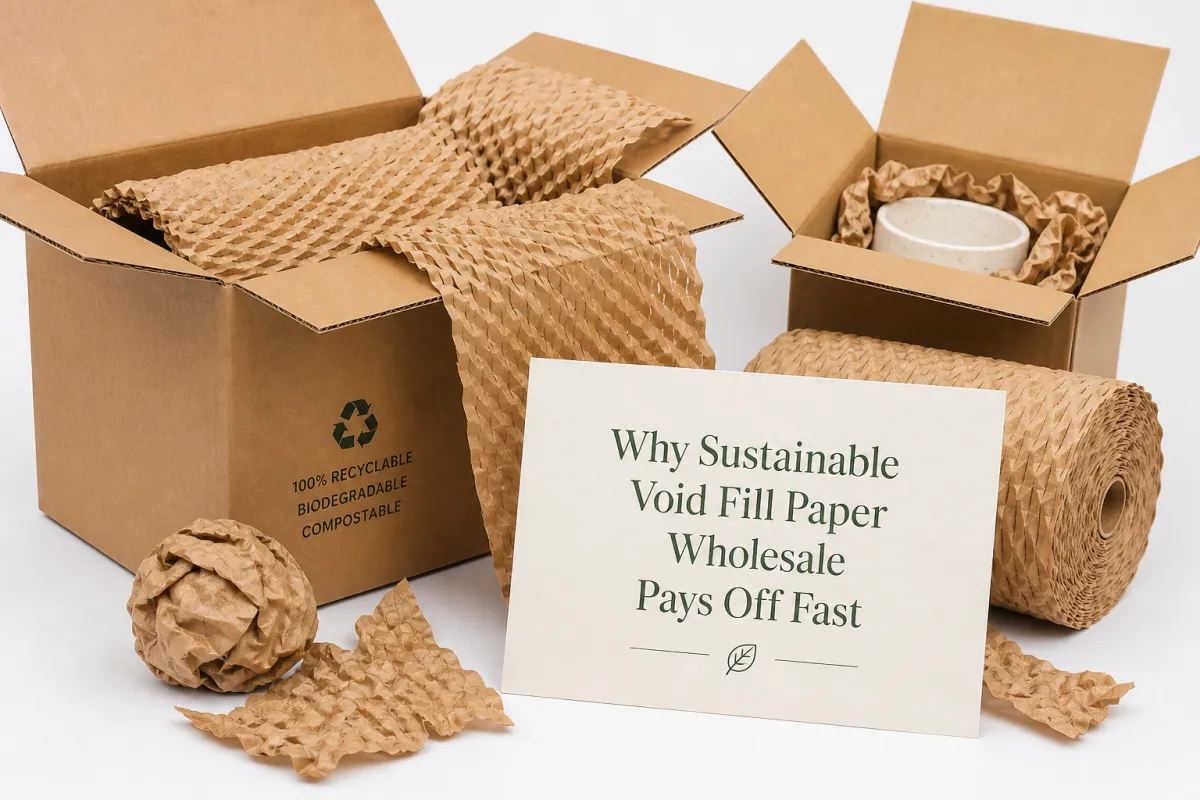
Empty space in a carton is never neutral. The product shifts, the sidewalls take a beating, and every bump in transit starts adding up. A bottle rolls around. A boxed accessory tilts. A fragile item gets a series of small knocks that turn into damage by the time the package lands. Sustainable Void Fill paper wholesale cuts that movement off early by holding the product in place before the carton leaves the bench.
The payoff shows up in more than one place. Sustainable void fill paper wholesale replaces plastic-heavy fillers with paper that is easier to explain to customers and easier to fit into recycling conversations where local programs allow it. It also keeps the packing station cleaner because operators are not fighting with messy, inconsistent filler. And yes, that matters. A filler that behaves badly makes every box feel like a small negotiation.
Buyers usually care about total cost, not the price printed on the quote. A filler that costs a little more per roll can still save money if it lowers claims, cuts re-pack work, and uses less material per carton. Sustainable void fill paper wholesale can also trim labor because the material is easy to dispense, easy to train on, and easy to repeat on the line. That gets more valuable as order volume climbs.
I have watched warehouses chase the lowest unit price and then burn the savings in lost time because the filler tears badly or feeds like it was designed by somebody who has never stood at a packing table. That is not a theory. It is a very normal warehouse problem. Good sustainable void fill paper wholesale is built for the floor, not the spreadsheet.
A filler should do three jobs well: hold the product still, move quickly at the station, and leave the customer with a disposal story that does not need a footnote.
Wholesale format changes the rhythm of the whole operation. A larger roll or pallet-ready bundle does not sound exciting, but it means fewer interruptions and less time spent reloading supplies. That is why sustainable void fill paper wholesale usually pays off quickly in warehouses that ship a mix of carton sizes and keep a steady daily order count.
Paper also fits the sustainability conversation without the usual marketing fog. The EPA keeps public recycling resources at EPA recycling guidance, and that kind of reference helps teams explain material choices to internal stakeholders who want a cleaner materials story. I am not gonna pretend every city treats paper fill the same way. It does not. But when customers want less plastic in the box, sustainable void fill paper wholesale supports that expectation without forcing a carton redesign.
The practical version is simple: less movement means fewer claims, steady replenishment keeps the line moving, and clearer disposal keeps the brand from looking lazy. Sustainable void fill paper wholesale earns its place as a control point in the shipping process, not just another supply line item.
Product Details for Sustainable Void Fill Paper Wholesale
Sustainable void fill paper wholesale comes in a few formats, and each one fits a different packing rhythm. Some buyers want kraft paper rolls they can pull and crumple by hand. Others prefer perforated paper with regular tear points. High-volume operations often look at crumpled paper systems or pre-cut bundles because they want faster dispensing and fewer pauses.
The basic job is simple. Fill the empty space, keep the product from shifting, and add enough cushioning to stop contents from bouncing around in the box. That matters most for irregular items, mixed-size shipments, and cartons that are intentionally larger than the product because the SKU mix changes too often to justify custom box sizing. In those cases, sustainable void fill paper wholesale works more like a stabilizer than a filler.
Paper weight, recycled content, and format dimensions are the first spec lines to inspect. Lighter kraft paper is usually easier to crumple and faster to dispense by hand. Heavier grades tend to hold shape better around denser or sharper products. Buyers comparing sustainable void fill paper wholesale should also check sheet width, roll diameter, core size, and whether the format is built for manual packing or machine-assisted dispensing.
Common uses include e-commerce returns, cosmetics, small electronics, replacement parts, gifts, and subscription boxes. Those categories share the same headache: the product mix changes fast, so the filler has to adapt without making the station slower. That is a big reason sustainable void fill paper wholesale keeps coming up in real purchasing conversations. It is not trying to be fancy. It just needs to work across a lot of different shipments.
The sustainability story should stay honest. Paper-based void fill can often be recycled where local collection programs accept it, and it helps reduce reliance on plastic loose fill or foam-style alternatives. That does not mean every municipality treats it the same way, and it does not mean every paper format belongs in every carton. Even so, sustainable void fill paper wholesale gives buyers a cleaner material option with a familiar packaging substrate.
Many operations like paper because it behaves predictably in the hand. Operators can see how much fill they are using, adjust by feel, and keep moving without waiting for a machine to settle down every time the box changes. For a warehouse manager trying to keep orders flowing, sustainable void fill paper wholesale often lands in the sweet spot between protection, speed, and simplicity.
Specifications Buyers Should Compare Before Ordering
The real differences in sustainable void fill paper wholesale usually hide in the spec sheet. Basis weight is one of the first numbers to check because it affects how the paper feels, how well it crimps, and how much structure it gives the carton. A lighter grade may suit fast manual packing. A heavier grade often makes more sense for products with more weight or sharper edges.
Width matters just as much. A sheet or roll that is too narrow forces too many pulls per carton. A format that is too wide wastes material and slows the pack flow. In a busy line, the right sustainable void fill paper wholesale format should fit the box depth, the station layout, and the way the operator naturally uses both hands.
Perforation spacing is another detail with real consequences. If the tears are too far apart, operators waste time separating sections or overfill the carton. If the tears are too close, the paper can feel flimsy or awkward to handle. With sustainable void fill paper wholesale, the best perforation pattern is the one that matches the carton mix, not the one that looks neat in a catalog photo.
Roll length, core size, and finished bundle count also shape the buying decision. Longer rolls can reduce changeovers, but they are harder to manage if the receiving area is tight or the dispenser setup is compact. Smaller cases are easier to stage near the line. Pallet-ready volume makes more sense for teams with room and a steady reorder rhythm. sustainable void fill paper wholesale should always be reviewed against the whole packing setup, not only the material itself.
Moisture protection deserves attention too. Paper stored in a damp area can lose stiffness or stop feeding cleanly, which is a great way to turn a simple purchase into a warehouse annoyance. Ask how the product is packed for shipping and how it should be stored after arrival. For sustainable void fill paper wholesale, the receiving plan belongs in the buying plan.
Testing is not optional if the material is meant to protect real shipments. Request sample rolls or sheets, run a small pack-out, and measure how many cartons each unit fills, how quickly operators can load the box, and whether the finished package holds up under basic transit stress. Packaging teams often reference distribution testing programs such as ISTA transit testing standards when they want a more formal way to judge package performance. A short trial tells you more about sustainable void fill paper wholesale than a polished spec sheet ever will.
Here is a simple comparison framework buyers can use before placing a bulk order:
| Format | Best For | Typical Bulk Price Range | Operational Notes |
|---|---|---|---|
| Kraft paper rolls | Manual packing, mixed-SKU cartons, general stabilization | $22-$48 per roll | Simple to use, flexible, and easy to replenish without much training |
| Perforated paper | Faster hand packing and repeatable tear lengths | $24-$55 per roll | Helps standardize fill usage and cut waste per carton |
| Crumpled paper bundles | Higher-throughput stations with frequent carton changes | $29-$62 per case | Useful where speed matters more than maximum compression |
| Machine-dispensed paper systems | Large-volume operations with dedicated packing lines | $85-$180 per unit or cartridge setup | Higher upfront cost, but steady output can reduce labor time |
That table is not a quote. It is a map of how the format changes the decision. The same phrase, sustainable void fill paper wholesale, can mean very different things depending on whether the operation wants low-cost manual packing or a more controlled dispenser setup. The spec discussion has to happen before anyone starts comparing unit prices.
For buyers watching fiber sourcing, FSC certification may matter if the paper comes from responsible forest management programs. It does not replace performance testing, and it does not magically make a filler better, but it can matter for companies with internal sourcing rules. Match the specification to the shipping reality first, then narrow the sourcing preferences after the material proves itself.
Sustainable Void Fill Paper Wholesale Pricing & MOQ
Sustainable void fill paper wholesale pricing depends on more than paper thickness. Grade, recycled content, roll length, format type, packaging method, freight distance, and custom labeling all change the landed cost. The cheapest unit price can turn into the most expensive option once shipping and handling show up. Packaging buyers learn that lesson the hard way, usually right after a quote looks too good to be true.
MOQ usually depends on how the product is stocked. Standard items may be available at case-level or pallet-level minimums. Custom widths, printed packaging, or special bundle configurations may need a larger commitment. That is normal in wholesale buying. If the operation is still validating demand, ask whether sustainable void fill paper wholesale can be quoted in tiers so you can see how the economics shift at different volumes.
One of the better habits is to compare cost per filled carton instead of cost per roll. A denser paper, a wider sheet, or a format that packs faster may fill more cartons with less labor even if the upfront purchase price is higher. For sustainable void fill paper wholesale, the real metric is whether the material keeps the product still while using the least time and waste possible.
It also helps to split product cost from logistics cost. Freight can take over a quote if the order travels far from the distribution center, especially when the product is bulky or palletized. Ask for a freight estimate early, and compare delivery methods for standard case counts, partial pallet orders, and full truckload pricing. A clear quote makes sustainable void fill paper wholesale much easier to judge against other packing materials.
Below are the commercial questions that should be answered before you commit to a replenishment plan:
- What is the tiered price at each order level?
- Is the MOQ based on case count, pallet count, or a custom production run?
- Are sample charges credited back on the first order?
- Does the quote include freight or just product cost?
- Are custom widths, dispenser compatibility, or private label packaging available?
Those questions are not busywork. They tell you whether the supplier understands how sustainable void fill paper wholesale fits into a real shipping operation. A decent wholesale quote should make the break points obvious between standard stock, semi-custom runs, and fully custom supply.
Good buying conversations also cover replenishment timing. If you know how many cartons ship per day and how much fill each carton uses, you can estimate whether the order cycle should be monthly, quarterly, or seasonal. That keeps purchasing from scrambling into emergency buys and keeps the back room from filling up with inventory that sits too long. Sustainable void fill paper wholesale works best when the supply rhythm matches the shipping rhythm.
Most buyers do not want the lowest possible quote. They want stable pricing, predictable supply, and a filler that keeps damage low without constant fiddling. That is the practical value of sustainable void fill paper wholesale: it supports a controlled packing process and a clearer cost structure at the same time.
Sustainable Void Fill Paper Wholesale Process & Timeline
The cleanest way to buy sustainable void fill paper wholesale is to start with a short discovery phase. Before quoting, the supplier should know the carton sizes, the most fragile products, the daily pack volume, and whether the team uses manual stuffing, a dispenser, or a mixed workflow. Those details are not extra. They are the whole point of the exercise.
The next step should be sample approval. Send a few formats, run a small pack test, and watch how the paper behaves in the boxes you actually use. Does it fill empty space quickly? Does it tear cleanly? Does it stay put when the carton is shaken lightly? For sustainable void fill paper wholesale, that short trial saves money and headaches later.
Stocked items usually move faster than custom formats. If the paper is already converted to the right width and packed in the right case count, the ship date is often shorter. Custom widths, printed packaging, or private label options can add setup time, and that should be planned before approval. A realistic buying plan for sustainable void fill paper wholesale usually leaves room for proofing and receiving even when the product itself is standard.
Receiving details matter more than many teams expect. Pallet configuration, dock access, transit method, and storage space should all be confirmed before the truck arrives. A shipment that looks efficient on paper can become a handling mess the moment it hits the dock. A good sustainable void fill paper wholesale order plan includes the receiving side, not just the purchase side.
Most avoidable delays show up when approval steps get pushed too late. If artwork, labels, dimensions, or packaging configurations need signoff, set those deadlines early so production can start on time. Reorder thresholds should also be defined before inventory gets low. That keeps the team from switching filler styles in the middle of a shipping push. With sustainable void fill paper wholesale, steady supply matters more than a tiny price difference.
A practical timeline often looks like this:
- Inquiry and spec gathering: 1-2 business days
- Samples and packing test: 3-7 business days depending on shipping distance
- Quote review and approval: 1-3 business days
- Stock fulfillment: often 3-10 business days after approval
- Custom or special-format fulfillment: commonly 10-20 business days after approval
These ranges are not promises, but they are close to how sustainable void fill paper wholesale usually moves through a real purchasing cycle. If peak season is coming, approve samples early and lock the reorder schedule before volume spikes. Nobody enjoys the familiar scramble where the pack line is ready and the filler is still somewhere on a truck.
Good planning also means deciding what success looks like before the order lands. Are you trying to reduce damage claims, cut filler usage per carton, speed up manual packing, or simplify disposal for customers? The answer changes the best format and the way you measure it afterward. Sustainable void fill paper wholesale works better when operations, purchasing, and quality all agree on the goal.
Why Choose Us for Sustainable Void Fill Paper Wholesale
Buyers usually find sustainable void fill paper wholesale after realizing the cheapest filler is not always the one that behaves best in a shipping environment. What they need instead is consistency. Paper weight, roll construction, bundle count, and packaging quality need to stay steady from order to order, especially if multiple facilities or shifts use the same material.
Manufacturing discipline matters here. If a supplier cannot hold dimensions, conversion quality, and packing format steady, the pack team ends up doing the correction work on the floor. A supplier who understands sustainable void fill paper wholesale should be able to speak clearly about spec control, replenishment cadence, and the details that keep bulk supply dependable.
Service matters too. Purchasing teams need quotes that are easy to compare, sample coordination that does not drag, and practical answers when carton profiles change. It should be easy to discuss whether a lighter paper will pack fast enough, whether a wider roll will waste material, or whether a palletized order will fit the receiving space. Those are the conversations that make sustainable void fill paper wholesale feel manageable instead of risky.
Repeat-order stability is another reason buyers stick with a good wholesale source. Once a format has been approved and tested, nobody wants to redesign the fill process every quarter. The right partner keeps the spec consistent, the delivery window clear, and the reordering path simple. That matters even more for businesses that need bulk packaging options tied to a larger sourcing plan through our bulk packaging options page or the main Wholesale Programs page.
No inflated claims needed. The practical value of sustainable void fill paper wholesale is that it helps a shipping team do the same job the same way every day. Consistency protects margin. It also makes the packing floor easier to train, easier to audit, and easier to scale when order volume climbs.
From a buyer's perspective, the ideal supplier answers direct questions without drifting into vague language. How much does a roll fill? How many cartons will a case cover? What is the lead time if freight is heading across the country? Can the width be adjusted if the current box depth is shallow? Those are the real issues behind sustainable void fill paper wholesale, and they deserve straight answers.
If you want an ordering relationship that stays predictable, look for three things: clear specs, honest timelines, and a willingness to test the material in your actual packaging mix. That combination says more than any slogan ever will. It is also the reason sustainable void fill paper wholesale keeps its place in packing operations that care about both protection and process control.
Next Steps for Ordering Sustainable Void Fill Paper Wholesale
The fastest way to move forward with sustainable void fill paper wholesale is to gather a few basics before asking for a quote. Measure your top carton sizes, estimate daily order volume, and identify the products that need the most stabilization. If your team handles both light and heavy goods, note the difference. The best paper weight may not be the same across all lines.
Once that information is in hand, compare two or three paper formats in a short pack test. Use the same box sizes, the same packers, and the same product mix so the results actually mean something. Watch how quickly each option fills, how much material it uses, and whether the carton closes cleanly without pressure on the contents. That kind of side-by-side review says far more about sustainable void fill paper wholesale than a spec sheet by itself.
Your quote request should be specific. Include the target MOQ, the preferred ship date, the delivery location, and whether you need custom width, private label packaging, or standard stock. If you are planning a launch or seasonal push, mention that early so the supplier can work backward from the deadline. Clear input usually leads to cleaner pricing for sustainable void fill paper wholesale and fewer surprises later.
A simple rollout plan often works best. Start with the highest-volume packing line, validate waste reduction and damage results, then expand the approved spec to the rest of the operation. That keeps risk low and gives the team time to learn the material before it becomes the default standard. Once the process settles in, sustainable void fill paper wholesale can be ordered with much more confidence.
If you are ready to move from testing to purchasing, request a sample-based quote for sustainable void fill paper wholesale and confirm the best spec before placing the first bulk order. That is the most practical way to get the right mix of protection, pack speed, and landed cost without guessing.
FAQ
What is sustainable void fill paper wholesale used for in shipping?
It fills empty space inside cartons so products do not shift during transit. That matters most with fragile, mixed-size, or irregular shipments where the carton shape changes from order to order. Wholesale buyers also use it to keep packing standards consistent across multiple lines or locations.
How do I choose the right paper weight for void fill?
Lighter paper is usually better when the team needs fast manual packing and general carton stabilization. Heavier paper is often a better fit when the product has more weight, sharper edges, or needs stronger hold inside the box. The safest move is to test the paper in your actual carton sizes before committing to a large order of sustainable void fill paper wholesale.
What MOQ should I expect for sustainable void fill paper wholesale?
MOQ depends on whether the product is stocked, palletized, or made in a custom format. Some suppliers can support case or pallet minimums for standard items, while custom widths or private label packaging may require higher volumes. Ask for tiered pricing so you can compare the cost at each order level.
How long does a wholesale order usually take to ship?
Stocked items often move faster than custom formats, especially when the paper is already converted in the right size and packed for bulk shipping. Lead time also depends on order size, production queue, and freight destination. Confirm approval deadlines early so the order can move without delay.
Can sustainable void fill paper wholesale reduce shipping damage?
Yes, when the paper is matched to the carton size and the product weight. It helps stop lateral movement and reduces the impact of vibration in transit, which is where many damage issues begin. The best results usually come from testing sustainable void fill paper wholesale with your actual packaging mix and box dimensions.
For buyers who want a cleaner packing floor, simpler disposal, and more controlled bulk purchasing, sustainable void fill paper wholesale is a practical choice that earns its place through performance rather than hype. The right spec, the right MOQ, and the right delivery plan make all the difference. So start with samples, test them in your real cartons, and pick the sustainable void fill paper wholesale option that actually protects product, keeps pack speed steady, and makes the numbers work.