A t shirt private label manufacturer does more than print a logo on a blank. The better ones treat the garment as a brand asset: the fit, fabric, neck label, side label, fold standard, and carton presentation all need to work together. That is why two tees can look similar in a photo and still behave very differently in pricing, returns, and repeat orders.
The real question is rarely whether a supplier can make a shirt. It is whether they can make the same shirt again, at the same standard, without drift in size, handfeel, or finish. That repeatability is where private label earns its keep. It is also where many programs fall apart quietly, one inconsistent batch at a time.
There are three basic levels of involvement. Blank relabeling is the fastest. Private label on a stock fit gives more control over branding and packaging. Cut-and-sew development adds pattern control, fabric choice, and higher minimums. Each model solves a different problem. The mistake is assuming they all sit on the same ladder.
What a t shirt private label manufacturer actually handles
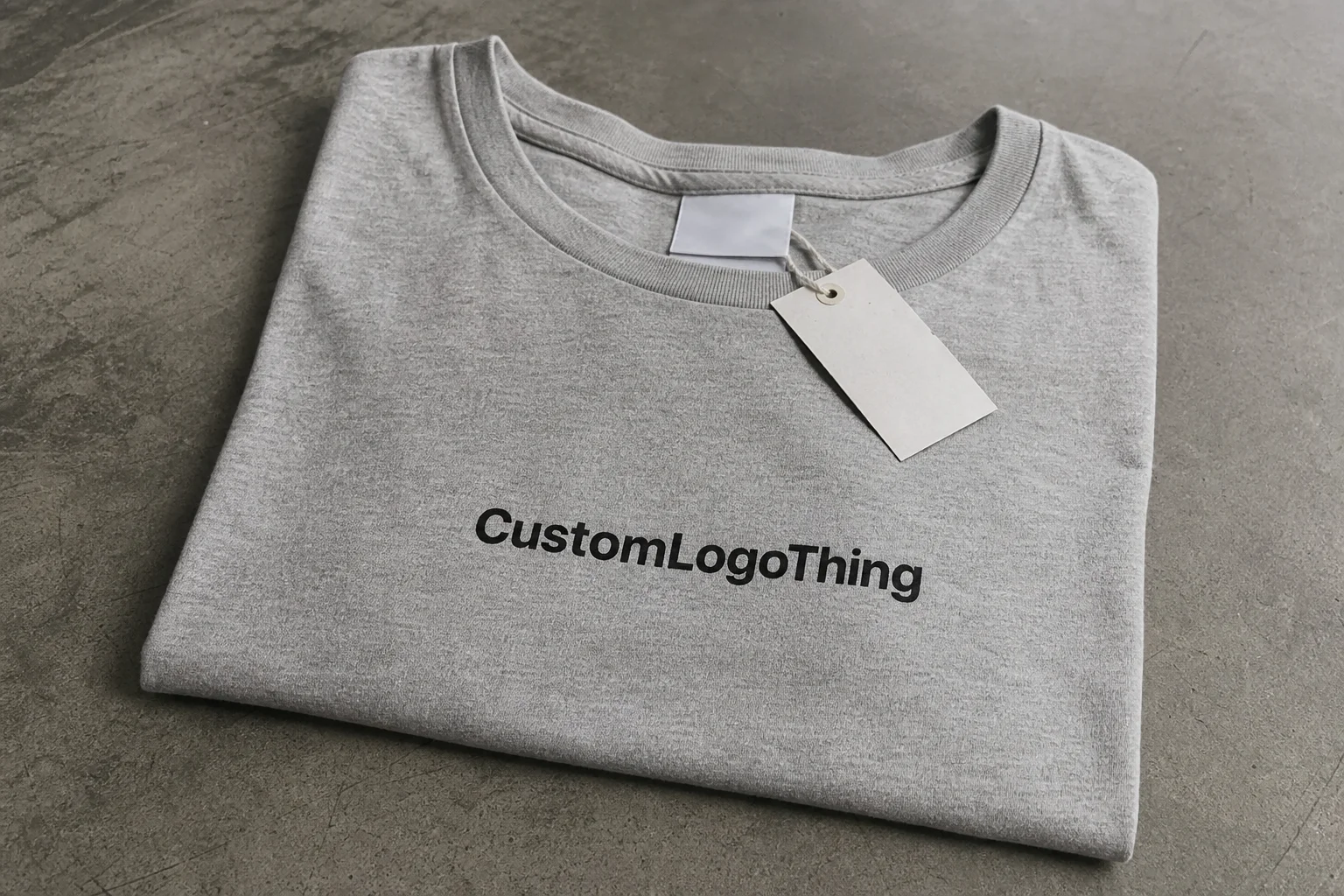
A true t shirt private label manufacturer usually handles a chain of decisions, not a single production step. Fabric sourcing comes first. Then pattern work or blank selection, cut and sew, decoration, labeling, folding, packaging, and inspection. If any one of those stages is weak, the final shirt feels cheaper than the quote suggested.
Fabric weight is one of the fastest ways to change perception. A 160 gsm tee and a 220 gsm tee can be priced closer than buyers expect, but they do not wear the same. The lighter shirt may be better for soft, drapey basics. The heavier one usually hangs cleaner, holds shape better, and feels more substantial in hand. The same logic applies to combed cotton versus open-end cotton, ring-spun versus standard yarn, and pre-shrunk versus untreated fabric.
Construction matters just as much. Neck rib recovery, shoulder taping, stitch density, seam alignment, and hem consistency all influence how the shirt reads after one wash cycle. A good sample can still hide weak stitching if the buyer does not check it under tension. That is a common blind spot. People look at print quality first. They should inspect the collar and shoulder seams first.
Private label makes sense when the brand needs consistency and some level of differentiation. If the shirt is part of the brand identity, not just merchandise, then the factory relationship has to go beyond decoration. That usually means the supplier needs to quote fabric, construction, trims, labeling, and packaging as separate variables instead of one blended number.
There is also a practical difference between a supplier that sources blanks and a factory that truly manages garment production. The former can move quickly, but options are constrained by what already exists. The latter can build a more specific product, but that takes time, approvals, and more disciplined coordination. A buyer who understands that tradeoff usually gets a better result than one chasing the lowest unit price.
One useful way to judge capability is to ask what the supplier controls directly and what they buy from a third party. If they cannot explain the path from fabric roll to packed carton, the program is not really private label yet. It is rework with nicer language.
A shirt that fits the brand is easier to sell than a shirt that only fits the budget.
How the private label tee process works from brief to boxed delivery
The cleanest projects start with a tight brief. Not a long email. A short document that says who the shirt is for, how it should fit, what fabric handfeel is acceptable, what label format is required, what packaging is needed, and what landed cost the buyer is trying to hold. Without that, the sample stage turns into guesswork.
A useful brief usually includes the target customer, silhouette, size range, decoration method, care label text, fold standard, carton count, and launch date. That is enough for two suppliers to quote the same job in a comparable way. Anything less and the quotes will look similar while describing different products.
- Brief and spec alignment.
- Fabric and fit selection.
- Sample development.
- Revisions and approval.
- Bulk material sourcing.
- Production, inspection, and shipment.
The sample stage is where most problems should be caught. Once fabric is cut at scale, even a small mistake becomes expensive. A neckline that is 5 mm too tight may not sound serious in discussion, but in production it can require new pattern work, regrading, and schedule changes. That kind of issue does not stay small.
Blank relabeling is operationally simpler than cut-and-sew, but the difference is not only technical. It changes the minimum order quantity, the lead time, and how much control the buyer has over the final garment. A supplier that calls everything “custom” while offering no detail on what is actually configurable deserves a second look. Clarity beats marketing language every time.
Most friction appears in the same places: late artwork approval, weak Pantone references, missing care label text, or size label changes after bulk sign-off. Those are unglamorous problems. They also cause a large share of delivery delays.
Cost, MOQ, and unit pricing drivers to compare on every quote
Comparing quotes gets messy because suppliers often price different jobs. One factory quotes a 160 gsm shirt with printed neck branding and simple folded packing. Another quotes a 220 gsm combed cotton tee with woven labels, hang tag, and retail-ready bagging. Those are not comparable products, even if the logo treatment sounds similar.
The main price drivers are straightforward: fabric quality, garment construction, decoration complexity, labeling, packaging, and order volume. MOQ matters because fixed costs do not disappear at small scale. Pattern work, screen setup, sampling time, sourcing, and inspection labor are spread across fewer units in a low-volume run. That affects the unit price far more than many first-time buyers expect.
Hidden charges create most of the unpleasant surprises. Sampling fees, screen or plate setup, special folding, individual bagging, hang tags, freight, duties, and rework can all move the total order cost. A quote that looks 10% lower on paper can end up higher once those line items are added back in.
| Option | Typical MOQ | Indicative unit price | Best use | Main trade-off |
|---|---|---|---|---|
| Blank relabeling | 100-300 pcs | $2.10-$4.20 | Fast launches, short merch runs | Least control over fit and fabric |
| Private label on stock fit | 300-800 pcs | $3.20-$6.80 | Brand launches with moderate differentiation | Limited pattern customization |
| Cut-and-sew private label | 500-2,000 pcs | $5.50-$11.00 | Hero product, premium lines, distinct brand identity | Higher setup cost and longer lead time |
Those numbers shift with fabric weight, yarn type, color, decoration method, and country of origin. A ring-spun combed cotton tee usually costs more than a standard open-end blank. Garment washing, enzyme finishing, and specialty trims push pricing higher again. If the spec sheet is not standardized, the quote stack will mislead you.
Packaging can also change margin in a way that is easy to underestimate. Custom tissue, inserts, Printed Hang Tags, and retail folding all add cost across the run. If presentation matters, ask the factory to break out those components separately. That makes it easier to see what you are paying for. For brands building out labels and tags as part of that package, Custom Labels & Tags is the relevant place to define the spec before production starts.
If sustainability claims are part of the brief, ask about recycled-content mailers, FSC-certified paper hang tags, and packaging suppliers that can document the material chain. FSC publishes the chain-of-custody framework, while ISTA testing is useful for packages that need to survive rough handling in transit. Those details matter more once the product leaves the factory.
Process and timeline: realistic lead time from sample to shipment
Lead time is a sequence, not a single number. Sampling, revisions, sourcing, production, inspection, and shipping each take their own window. If one step slips, the rest usually shift with it. Suppliers that promise speed without asking about fabric availability are usually skipping the hard part of the answer.
A reasonable planning range for a straightforward private label tee is often 7-14 business days for first samples, another 3-10 days for revisions if changes are needed, 12-25 business days for bulk production, and then transit on top of that. Ocean freight can add 3-6 weeks depending on origin and route. Air freight is faster, but the cost jump can be large enough to change the economics of the order.
Domestic and overseas programs do not move on the same calendar. A local relabeling order may start from stocked blanks and ship quickly. A cut-and-sew program using imported fabric may spend more time on sourcing before production even begins. Buyers sometimes compare those two options as if they are equal in schedule. They are not.
Most delays come from predictable problems:
- Late artwork approval.
- Shade variation across fabric lots.
- Size grading changes after the first sample.
- Imported trims that arrive after the line is scheduled.
Rush orders can be done, but speed has a cost. Faster work usually means fewer revision cycles, tighter factory capacity, and less room to correct mistakes. If the tee is tied to a launch date, build buffer time into the plan instead of depending on the fastest quote in the inbox.
Inspection should happen before shipment, not after the goods land. A basic AQL check can catch measurement drift, labeling mistakes, packing errors, and carton issues while corrections are still possible. For retail or e-commerce orders, align the packing spec with the distribution channel before bulk approval. A shirt packed for wholesale pallets is not always suitable for direct-to-consumer fulfillment.
Fit, fabric, labels, and finishing details that change sell-through
Fit is not a side note. It is one of the strongest drivers of sell-through, and one of the easiest details to get wrong. A tee that drapes cleanly and keeps its shape across body types will outperform a cheaper shirt with awkward proportions, even when the graphic is the same. Neck opening, body length, shoulder slope, and sleeve width all change how the product reads on-body.
Fabric choice follows the use case. Lightweight tees in the 140-160 gsm range can work for soft basics or warmer climates, but they may feel too fragile for a streetwear customer looking for a thicker hand. Midweight shirts in the 180-220 gsm range are common because they balance structure, comfort, and opacity. If the brief calls for a boxy silhouette, a heavier knit is usually easier to execute.
Labels do more than identify the garment. They shape the first impression and they affect compliance. Woven Neck Labels, printed neck labels, tear-away tags, and heat-transfer labels each solve a different problem. Printed labels can feel softer. Woven labels often read as more premium. Tear-away tags help if the shirt is meant to sit directly against the skin.
Branding and compliance should be planned together. Fiber content, care instructions, country of origin, and size markings need to be correct for the destination market. If the tee will move through retail accounts or marketplace channels with strict labeling rules, weak documentation can become a chargeback issue quickly. That is not a theoretical risk. It is a recurring one.
Finishing details separate disciplined production from sloppy work. Check collar recovery, seam consistency, sleeve hem quality, shrinkage control, and whether the fold survives transit. A tee that arrives wrinkled, off-center, or badly folded sends the wrong signal before the customer tries it on.
Packaging is not decoration. It is a control point. A clean fold, accurate size sticker, and sharp hang tag can raise perceived value more than another 10 grams of fabric. That matters because buyers often compare shirts at the edge of their budget, not in a vacuum.
Common mistakes buyers make when sourcing private label tees
The first mistake is comparing factories on price alone. The lowest number often hides something: lighter fabric, weaker stitching, fewer finishing steps, or packaging stripped down to the minimum. If two quotes are far apart, assume the specs are different until proven otherwise.
Another common error is approving a sample without wash testing. A tee can look right on the rack and still shrink, twist, or lose handfeel after one cycle. That is especially true with lower-grade cotton or poorly controlled knits. Test the sample on more than one body type if possible. Fit feedback from a single person is easy to overread.
Vague branding instructions create another layer of trouble. If the supplier does not receive exact label placement, artwork files, color references, and folding instructions, the final output tends to drift. A small shift on one unit becomes obvious across a thousand.
Compliance cannot be treated as a late-stage detail. Fiber content, care labeling, and country of origin markings need to be correct for the destination market. If the product will pass through a retailer or marketplace with packaging rules, confirm those requirements before bulk approval. That avoids pointless rework.
A written spec sheet solves more disputes than any back-and-forth email chain. Without it, the supplier can argue that the bulk matched the sample within normal tolerance, while the buyer feels the garment changed too much. The document does not need to be long. It just needs to be specific enough to settle arguments before they happen.
A good t shirt private label manufacturer should be willing to document the spec, revision history, and packaging standard in writing. If they avoid that level of clarity, the risk is moving onto the buyer.
How to compare suppliers without getting misled by the first sample
Start with a one-page sourcing brief. Include shirt type, target customer, fit direction, fabric preference, size range, label details, expected quantity, target cost, and launch date. That one page usually improves quotes more than a long thread full of adjectives. The best briefs are plain.
Then request apples-to-apples samples. If one supplier sends a heavyweight boxy tee and another sends a lightweight fitted tee, you are not comparing capability. You are comparing interpretation. Ask each factory to follow the same spec sheet, same artwork, same label format, and same packaging instructions.
Score suppliers on the factors that predict delivery, not just the sample in hand. Communication speed matters. Revision discipline matters. Production capacity matters. So does willingness to confirm changes in writing. A factory that answers quickly but changes details casually is not low-risk. It is simply fast at the wrong part.
- Ask for a pilot order if the program is new.
- Request a breakdown of fabric, labor, trims, packaging, and freight.
- Confirm the inspection method before bulk production starts.
- Get the final spec sheet signed off before payment terms are locked in.
A small first run often reveals the real picture. You see whether the label placement is consistent, whether cartons arrive clean, whether the fold survives transit, and whether the supplier can repeat the sample standard in volume. That is a better test than a polished pitch deck.
If the decision is between speed, cost, and consistency, pick the one that fits the launch risk. A low-volume brand may value flexibility and sample responsiveness. A retail program may need tighter QC and stable lead times. A merch drop may care most about price. The strongest factory partner is the one whose operating style fits the business model, not just the quote target.
That is the final filter for a t shirt private label manufacturer: not whether they can produce one good sample, but whether they can turn that sample into a repeatable product line without turning every order into a fresh negotiation.
What does a t-shirt private label manufacturer do for a brand?
They turn a brand concept into a finished garment by managing fabric, construction, labeling, packaging, and bulk production. The brand usually controls the fit, trims, artwork, and presentation while the factory handles sourcing and manufacturing. That model is useful when the goal is a repeatable branded product rather than a generic blank with a logo added later.
What MOQ should I expect from a private label T-shirt supplier?
MOQ varies by fabric, color, and decoration method, but custom runs usually require more units than simple relabeling. Stock blanks and lighter customization can support lower quantities, while cut-and-sew programs often need higher minimums. Ask whether MOQ changes by size breakdown or colorway, because that affects the way the first order should be planned.
How long does private label T-shirt production usually take?
A realistic timeline includes sampling, revisions, bulk material sourcing, production, inspection, and shipping. Lead time depends on fabric availability, factory capacity, and whether the order moves domestically or through overseas freight. The safer approach is to build buffer time into launch planning so one approval delay does not derail the whole drop.
How do labels and packaging change the cost of private label tees?
Printed neck labels, woven side labels, hang tags, and custom folding all add labor or setup cost. Special packaging can improve perceived value, but it should match the sales channel and margin target. Comparing quotes without standardizing labels and packaging usually produces misleading price differences.
What should I send before requesting a quote from a tee factory?
Send a brief with fit direction, fabric preference, size range, quantity, label details, target delivery date, and any compliance requirements. Include artwork references and brand colors so the quote reflects the real job. The more specific the brief, the easier it is to compare suppliers on cost, quality, and lead time.