tea Brand Drawstring Bags cost can look straightforward at first glance, then shift the moment a buyer starts comparing fabric weight, print coverage, cord style, and order quantity. That is usually where margin gets fuzzy. The bag shape is only one piece of the puzzle, while the quote often changes more because of material grade, finishing detail, and MOQ than because of the pouch itself. If the goal is stronger brand identity without burning through budget, the real question is not just price per bag; it is what that price includes, how repeatable it is, and whether the packaging supports brand consistency on every reorder.
In practice, Tea Brand Drawstring Bags cost is tied to how the bag performs on shelf, in transit, and in the hand. A pouch that looks inexpensive but arrives with loose stitching, poor logo placement, or uneven color can damage customer perception and the unboxing experience far more than it saves in unit cost. I've had more than one buyer bring me a quote that looked tidy on paper until we unpacked the spec and found out key details had been assumed, not confirmed. A quote needs to read like a production plan, not a guess with a number attached.
Tea Brand Drawstring Bags Cost: Why the Lowest Quote Is Not Always Cheapest
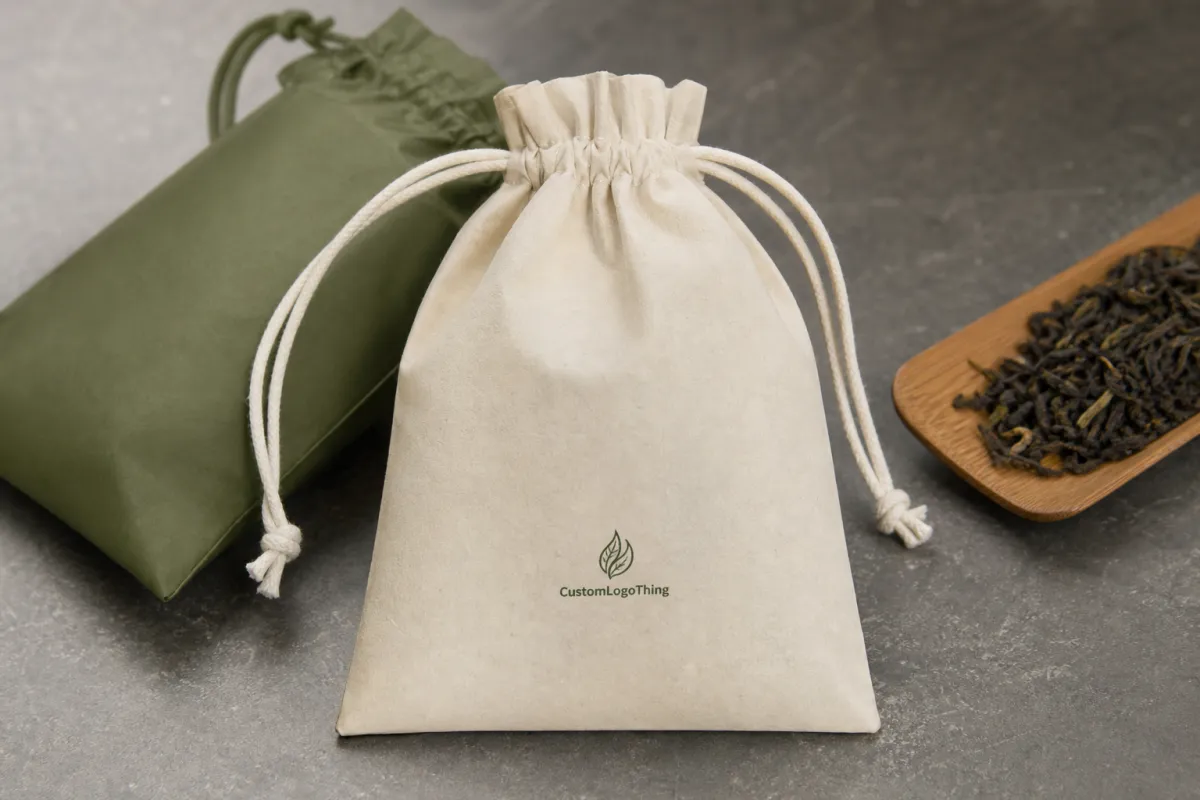
The lowest tea brand drawstring bags cost is not automatically the best value. I keep seeing the same pattern: a brand accepts the cheapest number, then pays again for artwork fixes, a second sample, or a last-minute reprint because the closure feels flimsy or the logo reads too small. A low quote can also hide weak assumptions about print area, thread count, or packaging format. Once the order lands, the savings disappear pretty fast.
Price alone leaves too much out. Tea bags used for retail sets, sampler packs, and subscription inserts are part of visual branding, so the pouch carries the first physical impression of the tea brand. The bag has to protect the product and communicate value at the same time. If the bag looks generic, the brand can lose recognition before the consumer even opens the outer carton. That is an expensive trade, especially for premium loose-leaf lines.
From a packaging buyer's point of view, tea brand drawstring bags cost should be judged against three outcomes: does the bag present well, does it ship cleanly, and can it be reordered without rework? A quote that fails any of those points is not really cheaper. It is just a deferred problem.
Buyer rule: if a supplier cannot explain tea brand drawstring bags cost in terms of fabric, print setup, and quantity, the quote is not detailed enough to approve.
The bag shape itself rarely drives the biggest cost swing. For most tea brands, the higher-impact variables are fabric choice, closure detail, decoration method, and MOQ. A simple drawstring pouch in cotton muslin may be economical, while a linen-like blend with multi-color printing and woven label finishing can push unit cost up quickly. That is normal. What matters is knowing which detail is paying for presentation and which detail is only adding expense.
Another reason tea brand drawstring bags cost can mislead buyers is repeat ordering. A pouch that is only marginally cheaper today may be expensive later if the color drifts between runs or the supplier cannot hold the same spec consistently. Packaging is not a one-off purchase; it is a replenishment system. The cheapest first order is not much help if the second order becomes a headache. And yes, that happens more often than people like to admit.
For brands that want a tighter view of how packaging work is evaluated, the Case Studies page is useful because it shows how spec clarity affects actual production outcomes. For a broader view of what Custom Logo Things handles, the Custom Logo Things packaging range helps connect the quote to the final use case.
Product Details: What Tea Brand Drawstring Bags Are Made For
Tea brand drawstring bags are usually not the primary food barrier. They are the presentation and protection layer around loose-leaf tea pouches, sampler packs, gift sets, subscription inserts, or retail-ready secondary packaging. That distinction matters because it changes the material conversation. If the tea is sealed in an inner pouch already, the drawstring bag can focus on appearance, handling, and shelf appeal. If the bag is doing more of the protective work, then stitching, weave density, and closure strength need more attention.
Most buyers start with cotton, muslin, linen-like blends, or recycled fabrics. Each one changes tea brand drawstring bags cost in a different way. Cotton and muslin usually give the most balanced result for cost, appearance, and printability. They feel natural, photograph well, and suit tea brands that want an honest, artisanal look. Linen-like blends feel a touch more premium and can hold a sharper visual edge, but the material usually adds cost. Recycled fabrics, including rPET blends, can support sustainability positioning, though the final number depends on availability and how the fabric handles print.
Texture matters more than people expect. A rougher weave can make a pouch feel handmade and authentic; a smoother surface can make logo printing look cleaner and more controlled. Both are valid. The right choice depends on brand identity and customer perception. For a tea line that wants rustic credibility, an 80-120 gsm muslin bag may be enough. For a premium gift pack, a denser 140-200 gsm cotton or blended fabric often presents better on shelf.
Closure details also move tea brand drawstring bags cost. A standard cord is one thing. A thicker rope, colored drawcord, metal tip, or double-pull closure adds parts, labor, or both. Print placement matters too. A single front logo is simpler than wraparound artwork, all-over patterning, or multi-panel text. Brands sometimes ask for a subtle logo, then add tag strings, size labels, and care marks later. Those small additions add up. They change setup time, affect the look of the bag, and can alter the quote by more than the base fabric change itself.
Size needs to be matched to fill volume, not just product weight. A bag that is too large looks loose and unfinished. A bag that is too small looks stressed and overstuffed, which weakens the unboxing experience. In tea packaging, a clean fit makes the product feel intentional. That is a quiet but important part of visual branding. A good supplier will ask what goes inside, how the bag closes, and whether the tea pouch needs room for a tag or insert.
Food-contact expectations should be handled carefully. Many brands keep the drawstring bag as secondary packaging and place the tea in a sealed inner pouch, which keeps the outer bag focused on presentation. If the bag touches tea directly, the fabric, inks, and thread all need closer review. That is not an area for vague answers or shrugging it off.
For brands that want a material benchmark, FSC guidance can be useful on any paper components such as hang tags, insert cards, or belly bands. See the standards and certification approach at FSC. Even when the drawstring bag itself is textile-based, the paper add-ons can affect customer perception and sustainability messaging.
So when a buyer asks about tea brand drawstring bags cost, the first real question is not "How cheap can this be?" It is "What is the bag actually doing?" Once that role is clear, the rest of the quote becomes easier to defend.
Specifications That Make Quote Accuracy Better
The fastest way to improve tea brand drawstring bags cost accuracy is to give suppliers a complete spec sheet. Vague requests produce vague prices. A quote for a 3 x 4 inch cotton pouch is not useful unless the supplier also knows the fabric weight, color, print coverage, cord style, and whether the bag needs a liner, tag, or special fold. Missing information becomes hidden cost later, and nobody enjoys sorting that out after artwork is already approved.
Before requesting pricing, buyers should prepare the following:
- Finished size: width, height, and any gusset or depth requirement.
- Fabric type: cotton, muslin, linen-like blend, recycled blend, or another textile.
- Fabric weight: for example, 100 gsm, 140 gsm, or a heavier premium grade.
- Color: natural, dyed, custom Pantone target, or stock shade.
- Print method: screen print, heat transfer, woven label, embroidery, or mixed decoration.
- Print coverage: single-side logo, double-side print, wraparound design, or full-panel artwork.
- Cord detail: flat cord, rope cord, dyed cord, or premium tipped finish.
- Packaging format: bulk packed, poly-bagged, carton count, or retail-ready grouping.
These details sound basic, but they are exactly what separates a meaningful quote from a placeholder number. Tea brand drawstring bags cost is very sensitive to print area and finish choice. A one-color logo on one panel may keep unit cost under control, while a full-bleed design or multi-color artwork can add screens, setup, and inspection time. A supplier cannot price what has not been defined, and a buyer cannot compare quotes fairly without the same inputs on both sides.
Stitch quality is another spec that deserves attention. Buyers often focus on the print and ignore the seam. That is a mistake. If the stitch density is too low, the bag may split at the drawstring channel or distort after filling. If the seam allowance is weak, the pouch can look tired after one handling cycle. Some brands also care about wash resistance, especially for reusable retail bags that may be kept by the customer. Those requirements should be stated upfront because they change the production method and, by extension, tea brand drawstring bags cost.
There is also a packaging detail that gets overlooked: how the bags will be stored and shipped after production. If the order is going into e-commerce kits or club shipments, carton size and master pack count matter. A tidy carton plan reduces crushed corners and helps preserve brand consistency from factory to customer. For distribution testing concepts, the ISTA framework is a useful reference point because it shows how packaged goods are evaluated through transit. Not every order needs formal test validation, but the logic is relevant, and it keeps the discussion grounded in real handling conditions instead of wishful thinking.
Sampling deserves a line item in the conversation. With custom artwork, a pre-production sample is often the cheapest form of insurance. It verifies size, closure, print placement, color balance, and overall feel before hundreds or thousands of units are committed. A few days spent on sample approval can prevent a costly inventory problem later. That is especially true for tea brand drawstring bags cost on first-time runs, where the buyer is still learning how the chosen fabric prints and folds.
Practical rule: the more precise the spec, the more useful the quote. If a supplier has to ask five follow-up questions before pricing, the buyer has not fully defined the job yet.
Tea Brand Drawstring Bags Cost, MOQ, and Unit Cost Explained
This is the section most buyers care about most: tea brand drawstring bags cost, what drives it, and where the price actually moves. The biggest levers are material grade, bag size, stitching complexity, decoration method, and total order quantity. Once those are known, the quote starts to make sense. Without them, the number is only a placeholder, and sometimes a pretty misleading one.
MOQ is the first commercial reality to understand. A larger MOQ usually lowers unit cost because setup, sampling, and print preparation are spread across more bags. That is why small orders can feel expensive even when the material itself is modest. If the supplier needs to create screens, approve artwork, and stage a custom fabric run, those fixed costs must land somewhere. On a 500-piece order, they hit hard. On a 5,000-piece order, they soften.
For tea brand drawstring bags cost, the price often behaves like this: plain stock bags are the lowest entry point, lightly branded bags sit in the middle, and fully custom versions with specialty finish details move to the higher end. That is not a sign of overpricing. It is a function of production steps. Brands sometimes compare offers that are not actually equal. One quote may include the bags only. Another may include setup, artwork prep, and freight. That is how apples-to-oranges comparisons happen.
Here is a practical view of common options for a 5,000-piece run. These ranges are not universal, because exact pricing depends on print coverage, region, and freight, but they are realistic enough to help a buyer frame the conversation:
| Option | Typical Spec | Typical Unit Cost | Cost Signal |
|---|---|---|---|
| Plain cotton muslin | Natural color, standard cord, no print | $0.18-$0.30 | Best for simple inner packaging or low-decoration use |
| Single-color branded cotton | 140 gsm cotton, one-side logo, standard drawcord | $0.24-$0.42 | Strong balance of appearance and value |
| Linen-like blended fabric | Slightly heavier handfeel, cleaner retail finish | $0.30-$0.55 | Better shelf presentation, usually higher textile cost |
| Recycled fabric blend | rPET or recycled blend, custom branding, selected cord | $0.33-$0.62 | Often chosen for sustainability messaging and brand story |
| Premium custom finish | Multi-color print, woven label, tipped cord, specialty packing | $0.45-$0.80+ | Higher presentation value, more production steps |
Notice how the bag shape stays the same while the cost moves. That is the real lesson in tea brand drawstring bags cost. The shape is rarely the main problem. The spec is. A brand can often improve unit cost by simplifying the print, choosing a stock fabric shade, or removing one decorative detail that does not add much brand value. A tiny change in finish can save more money than trimming the bag dimensions by a few millimeters, which is one reason spec reviews matter so much.
Setup fees are another piece buyers should ask for separately. Artwork prep, screen creation, or print plate setup can run from roughly $45-$180, depending on the print method and number of colors. Sample charges may be separate again. Freight is its own line as well, and it should never be hidden inside the bag price if the buyer wants to compare vendors fairly. A transparent quote should show unit cost, setup, sample cost, and shipping in clear rows.
One useful way to think about tea brand drawstring bags cost is to compare it to the value it returns. If the bag is part of a premium tea set, even a modest increase in unit cost may be justified if the pouch improves shelf appeal and lowers customer hesitation. That is especially true for gift assortments, seasonal launches, and subscription packaging where the unboxing experience influences repeat purchase behavior. Packaging can carry more weight than people expect, kinda unfairly so, but that is the reality on the shelf.
Margin discipline still matters. If the tea brand has a tight target, the safest path is often to define a baseline version and a premium version. That lets the buyer see how much extra each design choice costs. It also creates a cleaner commercial conversation, because the team can decide where the brand story deserves more spend and where it does not.
Tea brand drawstring bags cost is much easier to manage when the buyer asks for a quote that isolates the variables. If the quote does not separate bag cost, setup, and freight, there is no clean way to compare it with the next supplier.
Production Process and Timeline for Tea Brand Orders
Tea brand drawstring bags cost is only one part of the buying decision. Timeline matters just as much, because a delayed pouch can delay the product launch, the photo shoot, and the retail ship date. A good supplier should be able to map the process clearly from inquiry to delivery. The main stages are spec review, artwork submission, quote confirmation, sample approval, production, inspection, and shipping.
The slowest step is often not the factory run. It is usually artwork approval or sample sign-off. Buyers sometimes assume the quote stage is the only thing that affects schedule, but that is not how production works. If the art file is incomplete, print colors are not defined, or the sample needs changes, lead time expands immediately. That is why tea brand drawstring bags cost and timeline should be discussed together. One does not stay stable for long without the other.
A typical custom run for a straightforward design may take around 12-15 business days from proof approval to completion, assuming materials are in hand and the order volume is moderate. More complex jobs can take longer. Custom dyeing, specialty cords, heavier weave fabric, or multi-color decoration can add another week or more. If sea freight is involved, transit time is its own layer on top. Buyers who plan a seasonal tea launch should build in buffer time instead of assuming every step will move at the fastest possible pace.
Rush orders are possible in some cases, but they usually come with tradeoffs. The supplier may need to narrow material choices, switch shipping methods, or simplify decoration. That does not always hurt quality, but it does narrow the options. In plain terms, a rush request can lift tea brand drawstring bags cost faster than it shortens lead time. If speed matters more than finish detail, say so early and ask what the tradeoff looks like. Nobody likes hearing that the cheapest option cannot also be the fastest, but that is often the honest answer.
Inspection is worth mentioning here. Packaging buyers often focus on visual approval and forget transit performance. For heavier tea assortments or e-commerce bundles, carton integrity matters. If the bags are traveling with glass jars, tins, or fragile inserts, distribution testing based on ISTA methods can help a brand think more carefully about drop risk, vibration, and compression. That does not mean every drawstring pouch needs formal testing. It does mean the outer pack plan should not be an afterthought.
Tea brand drawstring bags cost becomes a planning question as much as a pricing question. If the order has a tight launch date, the buyer may choose a more available fabric and a simpler print to avoid delays. That is a rational trade. In some categories, getting the bags on time is worth more than squeezing out the last cent per unit.
To keep the process measurable, ask for milestones. A clear supplier should tell you when the artwork is due, when the sample will be ready, when production starts, when inspection is complete, and when the finished goods leave the facility. That makes it much easier to align marketing, warehouse intake, and retail scheduling. It also reduces surprises, which is one of the most expensive things in packaging.
If the buyer wants more examples of order progression and production logic, the Case Studies page is a useful reference because it shows how cleaner specifications lead to cleaner outcomes. That kind of process discipline is often the difference between a smooth launch and a rushed correction.
Why Choose Us for Tea Brand Drawstring Bags
Custom Logo Things is positioned as a packaging partner that understands tea shelf behavior, not just a bag supplier that prints a logo. That matters because tea brand drawstring bags cost is only meaningful if the final bag does its job in the real market. The product has to fit the tea, support the brand story, and arrive with enough consistency that the next order can match the first one.
For tea brands, the practical advantage is clearer quoting. When the spec is reviewed correctly, the buyer sees where the money goes: fabric grade, print method, cord selection, carton packing, and shipping. That level of clarity helps with margin planning and reduces back-and-forth. It also supports brand consistency, because the next reorder can be built from the same working assumptions instead of a fresh guess.
Another advantage is color control. Many brands lose confidence when the pouch color drifts slightly from one production run to the next. That inconsistency can weaken visual branding and hurt customer perception, especially if the pouch is used in gifting or subscription channels. A structured quoting process, paired with sample approval, lowers that risk. It does not eliminate every variable, but it gives the buyer a better control point.
There is also a commercial advantage to custom production over off-the-shelf stock bags. Generic bags may look cheaper at first, but they rarely match the exact size, feel, or finish a tea brand needs. If a product is going to retail beside stronger competitors, the packaging should not look borrowed. The pouch should support brand recognition, not dilute it.
Tea brand drawstring bags cost should always be weighed against the value of fewer production errors. If the supplier is slow to define the spec, unclear on printing limits, or casual about sample approval, the cheapest quote can become the most expensive order on paper. In contrast, a well-managed run may cost a little more upfront but save time, waste, and rework later.
For brands that want to see how this plays out in live packaging work, Case Studies gives a practical window into spec discipline, order planning, and repeatable results. If you are still comparing options, the main site at Custom Logo Things is the simplest place to review packaging directions before asking for a quote.
Honestly, the strongest packaging partner is the one that helps a tea brand protect margin without dulling the presentation. That balance is not flashy, but it is what keeps a packaging program alive beyond the first launch.
Next Steps: Get an Accurate Tea Brand Drawstring Bags Cost
If the goal is a serious quote, the next step is simple: gather the dimensions, quantity, material preference, logo files, target budget, and delivery window before you send the request. That one step saves more time than any follow-up email ever will. Tea brand drawstring bags cost becomes much easier to pin down when the supplier can see the full picture on the first pass.
It also helps to ask for two versions of the same quote. A value version shows the most efficient spec, while a premium version shows what happens if the brand wants heavier fabric, a richer finish, or more detailed branding. That comparison is useful because it exposes the real cost of each choice instead of forcing the buyer to start over every time the direction changes.
If possible, send product photos or reference packaging as well. A picture of the tea line, the outer carton, or a previous pouch can clarify the look and feel much faster than a paragraph of description. This is especially useful for brands that care about retail presentation, gift positioning, or a specific unboxing experience. The supplier can then match the quote to the actual use case instead of guessing at the mood.
The smartest buyers treat tea brand drawstring bags cost as a line item to be managed, not a number to be chased. They compare unit cost, setup cost, sample cost, freight, and MOQ side by side. They also confirm the sample before production. That sequence keeps the process honest and the launch calendar realistic.
So the action is clear: gather the specs, compare quotes line by line, and confirm the sample before the full run starts. If you do that, tea brand drawstring bags cost stops being a moving target and becomes a decision you can actually defend.
How much do tea brand drawstring bags cost per piece?
Unit price depends on fabric, bag size, print method, and order quantity. Small runs usually push tea brand drawstring bags cost higher because setup and prep are spread across fewer pieces. A clean quote should separate bag cost, setup, and freight so the total is easy to read.
What MOQ is typical for tea brand drawstring bags?
MOQ varies by material and customization level, and it can change fast if the order uses special fabric or multi-color print. Plain or lightly branded bags sometimes start lower than fully custom versions, but it is better to ask for MOQ by size and print style rather than accept one blanket number. That is the most reliable way to judge tea brand drawstring bags cost.
Which material gives the best value for custom tea bags?
Cotton and muslin often give the strongest balance of cost, appearance, and printability. Heavier or specialty fabrics can raise unit cost, but they may improve shelf presentation and customer perception. The best value depends on whether the bag is for retail display, gifting, or inner packaging, so tea brand drawstring bags cost should always be tied to the final use.
How long does production usually take for tea brand drawstring bags?
Timeline depends on artwork approval, sampling, material availability, and order size. Custom printing and special materials usually add time compared with stock options. Confirm the lead time before approving artwork so the launch schedule stays realistic, and do not assume the fastest version is the cheapest in tea brand drawstring bags cost terms.
Can I get a sample before placing a larger tea bag order?
Yes, sample approval is the safest way to verify size, feel, print placement, and closure detail. A sample can reduce the risk of costly corrections on the full run, which is why it is often the smartest control point in tea brand drawstring bags cost planning. Use the sample to confirm both appearance and functional fit for the tea product, then approve production only when everything matches the spec.


