Custom Logo Things
Tea Brand Shipping Envelopes Sample Approval Guide
Learn Tea Brand Shipping envelopes sample approval: what to review, how the process works, typical costs, and how to avoid a pricey reprint and delay.
Most teams treat Tea Brand Shipping Envelopes sample approval like a clean little admin task, then get surprised when the sample starts revealing everything the mockup hid. The paper stock, flap tension, adhesive behavior, insert fit, and print placement all have to work together, and paper is pretty unforgiving when the math is off by even a couple millimeters. I have seen projects stall over nothing more dramatic than a flap that kissed the edge of the artwork.
A screen proof can hide a 2 mm shift. A printed sample cannot. That is why tea brand shipping envelopes sample approval protects brand identity, package protection, and the unboxing experience before a full run turns into expensive inventory sitting in a warehouse.
Why Tea Brand Shipping Envelopes Sample Approval Can Save a Launch
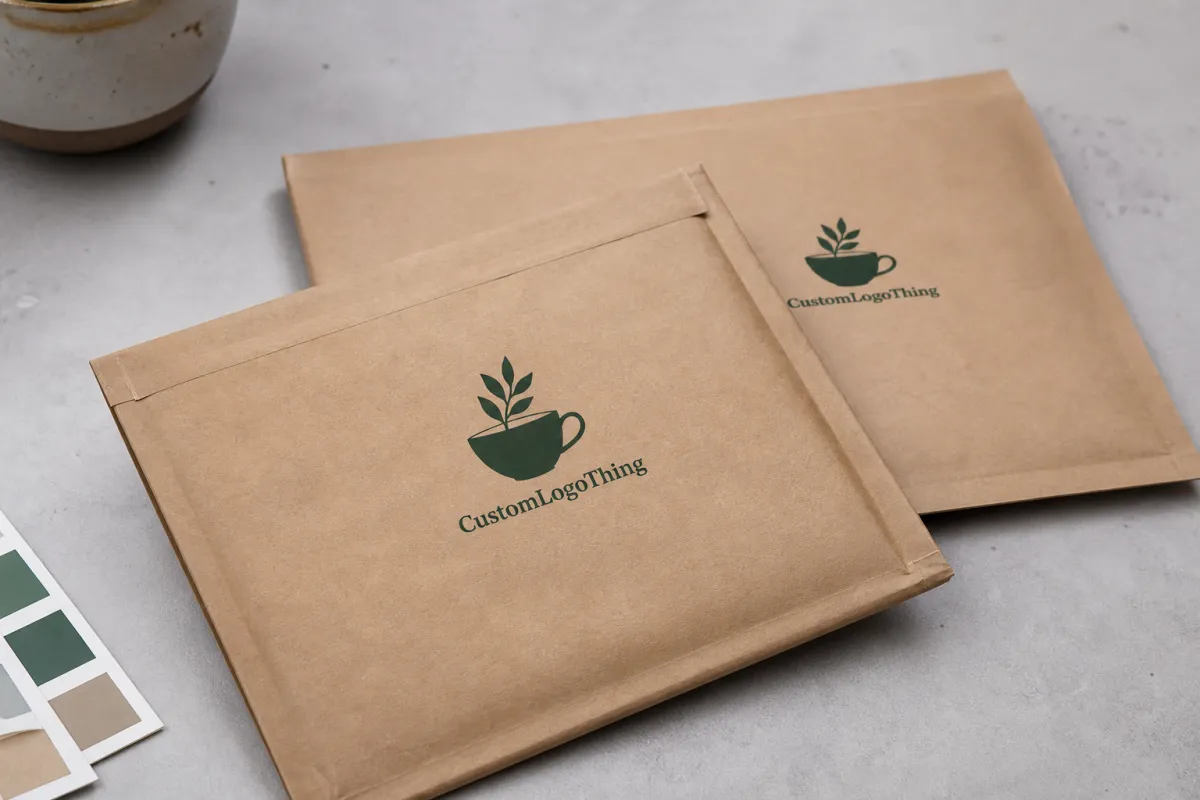
Tea brand shipping envelopes sample approval is not about fussiness. It is the stage where small problems get caught before they become a pallet of envelopes nobody wants to ship. A slight logo drift, weak adhesive, the wrong paper finish, or a flap that opens too easily can derail a launch faster than a bad ad buy.
From a packaging buyer's point of view, the sample acts like insurance. It shows whether the envelope works with the actual tea product, not just the polished version sitting in a design file. If the insert card bows, the pouch slips, or the window sits too high, the issue shows up now instead of after fulfillment starts. That saves real money, and honestly, a lot of back-and-forth that nobody has time for.
Approval costs little. Rework does not. A stack of unusable envelopes is just expensive confetti with your logo on it.
That matters even more for tea brands selling through ecommerce and retail at the same time. The envelope has to survive transit packaging, look good in a photo, and still feel premium in hand. If the first sample feels thin, weak, or overly glossy, customers notice. They may not put a name to the problem, but they feel it immediately.
For a wider look at the packaging mix, the Custom Packaging Products page shows the materials brands often pair with envelopes, while our Case Studies page shows how product fit and print quality can change the outcome of a launch. Tea brand shipping envelopes sample approval sits right in that space between design intent and usable packaging.
The financial risk is straightforward. Approve too early and you may pay twice, once for the first run and again for the corrected run. For a medium tea launch, that can mean a few hundred dollars. For a larger run with custom finishes, it can mean thousands. Tea brand shipping envelopes sample approval is the cheapest place to find the problem, which is why experienced packaging teams do not rush it, even when the calendar is screaming.
What Tea Brand Shipping Envelopes Sample Approval Actually Covers
Tea brand shipping envelopes sample approval covers more than whether the logo looks centered. You are checking structure, size, substrate, finish, print accuracy, closure style, opening strength, and how the envelope behaves once the real tea item is inside. If any one of those pieces is off, the sample is telling you to pause.
Three stages usually show up in the process. A visual proof checks artwork. A pre-production sample checks the build. A final approved production sample comes closest to what will ship in bulk. Teams mix those up constantly, then act surprised when the printed piece does not match the PDF. Paper has no interest in optimism.
Tea-specific concerns deserve their own review. Some brands want a light scent barrier, even if the envelope is not a true foil barrier. Others need the mailer to hold a sachet, a thank-you card, and a promo insert without bulging. Tea brand shipping envelopes sample approval should show whether the envelope still feels crisp after packing, handling, and sealing.
Inside the company, the final sign-off usually involves more than one person. Brand wants the look. Operations wants the pack-out to stay efficient. Marketing wants color accuracy. Fulfillment wants a format that does not jam production. Retail or distribution teams may also need a say if the envelope sits inside a larger shipment or display kit.
Tea brand shipping envelopes sample approval also needs a practical view of materials. A 120-150 gsm specialty paper can look elegant but may scuff faster. A 250-350 gsm board-backed envelope can feel sturdier, yet it may add cost and dimensional weight. That tradeoff matters if the envelope ships inside a larger ecommerce shipping box or mailer. If your package lives on a conveyor belt or in a courier bag, the stock choice stops being a design detail and starts being a performance decision.
Tea Brand Shipping Envelopes Sample Approval Process and Timeline
The usual tea brand shipping envelopes sample approval flow starts with a brief, then a file review, then a sample build, then physical delivery, then notes, revision, and final sign-off. Simple projects move quickly. Messy projects take longer, usually because the first round skipped a dimension, a finish note, or the product weight. That is not a failure so much as a reminder that packaging is built from details, not intention.
A realistic timeline is often 5-10 business days for a sample build after the artwork is settled, plus shipping time. If the sample has to cross the country, add 2-5 business days each way. If the team needs one or two revisions, tea brand shipping envelopes sample approval can stretch to two or three weeks without anyone doing anything wrong. Physical production has its own pace, and it does not care how urgent the launch calendar feels.
Digital approvals help, but they do not tell you everything. A proof can verify typography, barcode placement, and brand color values. It cannot tell you whether the envelope opens cleanly, whether the flap tears, or whether a matte finish fingerprints the moment a fulfillment worker touches it. For that, the sample has to be in hand.
Distance matters more than most brands expect. A sample that has to move from factory to brand team to operations lead to retailer to distributor can lose days before anyone writes feedback. Tea brand shipping envelopes sample approval should have one owner, one review path, and one deadline. Otherwise the sample starts touring the office like a small and expensive mascot.
For functional validation, many brands borrow the logic used in transit testing. The ISTA shipping test standards are useful because they focus on drops, vibration, and handling, not just appearance. A tea envelope does not need every lab test in the book, but it does need to survive real handling, especially if it is part of a heavier pack or a multi-item kit.
Here is a simple approval timeline that works well for tea brands:
- Day 1: Send dimensions, product weight, artwork, and finish preference.
- Day 2-3: Review proof and confirm the dieline, copy, and closures.
- Day 4-8: Build and ship the physical sample.
- Day 9-12: Receive the sample and test fit, color, and pack-out.
- Day 12-15: Send notes or approve the final version.
If the sample needs a structural change, add more time. A corrected flap, new window position, or altered opening style usually adds several business days. Tea brand shipping envelopes sample approval moves faster when the first brief is clean and the team knows what done looks like before the sample lands.
Tea Brand Shipping Envelopes Sample Approval Cost, MOQ, and Quote Factors
Tea brand shipping envelopes sample approval cost depends on whether you are reviewing a one-off prototype, a pre-production sample, or a short production run. A basic printed sample might run $25-$60. A more accurate pre-production sample with finish work can land around $60-$180. If you need multiple revisions or structural changes, the total can climb to $150-$300 or more.
MOQ changes the unit price and the amount of setup work spread across the order. A low sample fee does not mean the final run will be cheap. Some of the lowest sample quotes become the highest production costs once the order moves into a custom coating, custom closure, or specialty paper. That is not a trick. It is just math wearing a smile.
Quote pricing usually shifts when the brand asks for soft-touch coating, foil accents, custom die-cuts, extra inserts, or multiple artwork versions. Tea brand shipping envelopes sample approval can also cost more if the brand wants the sample mailed to several reviewers or tested with different tea formats. One sample, one route, one decision is usually the cheapest path.
A line-item quote makes the buying decision much easier. Ask to see the sample charge, any revision charge, and the final production credit separately. That way you know whether the sample fee rolls into the order or disappears into a black hole of "miscellaneous." Too many buyers accept vague quotes and then wonder why the final invoice reads like a riddle.
| Approval Option | Typical Cost | What It Proves | Best Use |
|---|---|---|---|
| Digital proof | $0-$25 | Artwork, typography, barcode placement | Early layout review |
| Flat physical sample | $25-$60 | Paper feel, print placement, basic structure | Simple tea brand shipping envelopes sample approval |
| Pre-production sample | $60-$180 | Finish, closure, build accuracy, final look | Final sign-off before bulk order |
| Pilot mini-run | $150-$500+ | Pack-out, handling, shipping behavior | Complex launches or multi-item kits |
For tea brands that care about sustainability claims, material source can affect cost too. FSC-certified paper is often worth the small premium if the brand wants a documented sourcing story. If that matters to your audience, check the standards at FSC. Tea brand shipping envelopes sample approval should confirm that the material actually matches the spec you plan to promote, because a claim is only as good as the paper behind it.
What to Check Before You Approve the Sample
Tea brand shipping envelopes sample approval needs a real checklist, not a "looks fine" email. Start with the dimensions. Then check logo placement, copy, color, paper feel, flap alignment, and closure strength. If the envelope opens with a half-tear or the adhesive grabs too early, the packer will hate it and the customer may never reach the pretty part.
Next, test the envelope with the actual tea product inside. A sample that looks perfect empty can behave badly once the sachet, insert, and outer wrap go in. Pack a few units, shake them lightly, press on the corners, and see whether the contents shift or bruise. Tea brand shipping envelopes sample approval only helps if it reflects real use, not showroom conditions. I have watched teams approve a beautiful empty sample, then discover the final pack-out barely fit once the insert stock changed. That kind of miss is annoying, but it is also preventable.
Color needs to be checked under normal lighting. Office LEDs can make a warm beige look gray and a deep green feel dead. Review the sample next to your brand swatches, product photos, and any print reference you already use on Custom Shipping Boxes or Custom Poly Mailers if the envelope is part of a broader package family. Consistency matters more than a perfect one-off print.
Tea brand shipping envelopes sample approval should also include handling tests. Fold the flap open and closed several times. Slide the envelope across a table. Put it in a mailbox slot or an outer carton if that is how it will ship. If the finish scuffs in ten seconds, that is not a minor issue. That is the sample being honest with you.
Materials for tea shipping envelopes often sit in a narrow practical range: lightweight paper for inserts, 157-200 gsm coated stock for premium presentation, and 250 gsm or higher when the envelope has to hold shape during ecommerce shipping. The exact spec depends on the pack-out, but the sample should show whether the selected board and finish protect the contents without making the envelope bulky. If the material feels fancy but turns flimsy once the adhesive line is folded, that is a clue, not a coincidence.
- Fit: The product should sit flat, with no forced bend at the edges.
- Closure: The flap should seal evenly and resist accidental opening.
- Print: Logos, text, and any barcode should be sharp and correctly placed.
- Feel: The finish should match the brand story, whether matte, gloss, or uncoated.
- Transit performance: The envelope should survive packing, handling, and shipping without damage.
One more thing. Tea brand shipping envelopes sample approval is not only about appearance. It is also about dimensional weight. A beautiful envelope that adds unnecessary bulk can raise shipping costs, especially when it rides inside another carton. A brand that sells direct-to-consumer feels that immediately in the freight bill, which is a fancy way of saying someone pays for the extra thickness.
Common Mistakes That Delay Tea Brand Shipping Envelopes Sample Approval
The biggest delay is approving from a digital mockup only. That looks efficient right up until the first physical sample shows a closure problem or the brand color reads wrong on paper. Tea brand shipping envelopes sample approval needs the physical piece because screen color is not a contract and paper never promised to be forgiving.
Another classic mistake is sending unclear artwork files. Low-resolution logos, missing fonts, and vague finish notes create back-and-forth that burns days. If you want tea brand shipping envelopes sample approval to move, send clean vector files, final copy, the exact size, and a clear note on whether you want matte, gloss, soft-touch, or uncoated stock.
Too many reviewers can slow everything down. One person says the logo is too large. Another wants the flap moved. A third wants a new color reference, and now the sample is trapped in committee. Tea brand shipping envelopes sample approval works best with one decision-maker and one backup reviewer. Everyone else can comment, but one person needs to own the call.
Skipping a pack-out test is another expensive habit. If the tea sachet shifts, the insert bends, or the envelope catches on an automatic packing line, you will discover it after production if you skip the sample test. That means delays, revised shipping materials, and possible reprints. If the team is still debating whether to test, the answer is yes. Of course it is yes.
Revision creep deserves its own warning. A small change to the envelope can trigger changes in the dieline, print layout, carton fit, and lead time. Tea brand shipping envelopes sample approval starts as a quick review and ends as a month-long redesign when the team treats every new idea as harmless. Harmless is how budgets die, and packaging teams know that better than most.
If your tea launch also uses other formats, compare the approval workflow against Custom Packaging Products you already know. In many cases, a tea envelope behaves more like a small mailer than a retail sleeve, so the same careful review used for order fulfillment packaging should apply. Different format, same consequence if you get it wrong.
Here is the short version of what slows tea brand shipping envelopes sample approval:
- Approving from screenshots instead of a physical sample
- Sending incomplete artwork or vague finish notes
- Letting too many people rewrite the same feedback
- Ignoring pack-out, shipping, and handling tests
- Making structural changes after the sample is already built
Expert Tips and Next Steps for Faster Approval
Tea brand shipping envelopes sample approval moves faster when the team decides what matters before the sample arrives. Assign one decision-maker, keep one backup reviewer, and define the fail points in advance. If the envelope must hold a 25 g tea sachet, a card, and a seal that survives shipment, say that up front. Vague goals create vague results, and vague results always come back as revisions.
Send complete specs in the first email. Include dimensions, product weight, target finish, brand color references, closure preference, shipping method, and whether the envelope goes into a poly mailer, a box, or direct postal shipping. Tea brand shipping envelopes sample approval gets much cleaner when the supplier does not have to guess the use case.
Keep an approval log. It does not need to be fancy. Version number, sample date, notes, revision date, and final sign-off are enough. This helps when someone joins the thread late and says, "Wait, did we already approve this version?" That sentence has disrupted more packaging timelines than it should have.
For shipping performance, think in terms of the full transit path. A tea envelope may look perfect on a desk and still fail inside a larger pack. If the brand needs a stronger external layer, compare options against Custom Poly Mailers or Custom Shipping Boxes. Tea brand shipping envelopes sample approval should account for the entire journey, not just the shelf or the unboxing shot.
If you want a practical rule, use this one: if the sample looks great but fails in real use, it is not approved. Simple. Tea brand shipping envelopes sample approval exists to protect product presentation, reduce reprints, and keep the launch on schedule. Pretty paper that does not work is only decoration with a lead time.
Brands that value sustainable sourcing can tighten the brief by choosing FSC-certified stocks from the start, especially if the paper story is part of the product story. That avoids a late-stage change that forces another approval cycle. Tea brand shipping envelopes sample approval is smoother when the material spec already supports the brand promise instead of hoping the supplier will guess it correctly.
If your team is moving from prototype to production, the best next step is a clean handoff: final artwork, final dimensions, sample notes, and a single approval owner. Tea brand shipping envelopes sample approval should be the last checkpoint before production, not the first place everyone starts arguing. Get the facts in one place, make the call, and move on.
Closing Thoughts
Tea brand shipping envelopes sample approval is a control point, not a ceremony. It tells you whether the envelope fits the tea, fits the brand, and fits the reality of shipping without turning into a repair job later. A good sample saves time, protects margin, and keeps the launch from wobbling for avoidable reasons.
If you want the simplest possible rule, use this: approve only after the physical sample passes fit, print, finish, and transit checks. That is the difference between a package that supports the brand identity and one that quietly works against it. Tea brand shipping envelopes sample approval is the cheapest way to avoid a messy reprint, and the last thing you want is to discover the issue after inventory is already moving. The honest answer is that no mockup can replace a real sample, so make the sample do the hard work before production locks in.
How long does tea brand shipping envelopes sample approval usually take?
Simple tea brand shipping envelopes sample approval can move quickly if the artwork is final and the sample matches the requested structure. In practice, the timeline is usually 5-10 business days for sample build plus shipping time, then another few days if the team needs to gather notes. Delays usually come from revisions, color changes, or waiting for too many people to weigh in.
What should I check on a tea brand shipping envelopes sample before approving?
Check the size, closure, print quality, and whether the envelope still works with the actual tea product inside. Review colors, logo placement, and any finish under normal lighting, not just on a screen. Tea brand shipping envelopes sample approval should also include a handling test so you know the piece survives packing and shipping, not just a nice photo on a desk.
Do I need a physical sample for tea brand shipping envelopes sample approval?
Yes, if you care about fit, feel, closure strength, or shipping performance, a physical sample is the safest call. A digital proof is useful for artwork, but it cannot verify paper weight, scuff resistance, or how the envelope behaves in order fulfillment. Tea brand shipping envelopes sample approval is much more reliable once someone has the piece in hand.
What affects tea brand shipping envelopes sample approval cost?
The biggest cost drivers are material choice, print complexity, finishing, tooling, and whether a revision is required. MOQ can change the unit price, so a cheap sample does not guarantee a low production cost. Ask for a quote that separates sample fees, revision fees, and final production pricing so tea brand shipping envelopes sample approval does not turn into a vague expense.
Can I approve a digital proof instead of a printed sample?
You can approve artwork on a digital proof, but you should not treat that as full packaging approval. A digital proof cannot verify feel, fit, closure behavior, or how the envelope holds up in shipping. For tea brand shipping envelopes sample approval, the safer workflow is digital proof first, then a physical sample before production.
What is the fastest way to avoid delays?
Send final artwork, exact dimensions, product weight, finish preference, and one decision-maker's contact in the first round. Tea brand shipping envelopes sample approval moves faster when the supplier has no guesswork and no committee fog. Clean inputs usually save more time than pushing for an unrealistically rushed sample.


