For a tea brand, Tea Brand Shipping Envelopes cost is rarely just a print quote. The number that matters shows up across the shipment itself: packaging weight, carrier charges, damage rates, replacement orders, and the quiet drain of putting a small tea item into a box that never needed to exist.
Buyers who get the best results treat Tea Brand Shipping envelopes cost as a landed-cost question, not a decoration question. A well-specified envelope can trim dimensional weight, limit void fill, protect tea pouches or tins, and still give the unboxing a deliberate, branded feel. For ecommerce shipping, that difference starts adding up quickly.
There is also a practical truth that gets missed in a lot of first-round sourcing: the cheapest-looking mailer is not always the cheapest option once it reaches a packing table. If the spec is wrong, the team ends up fighting torn seams, awkward fills, and the occasional re-ship, and then the math gets ugly fast. Nobody wants to spend the afternoon fixing a packaging decision that should have been solved on paper.
Why tea brand shipping envelopes cost stays low when the spec is right
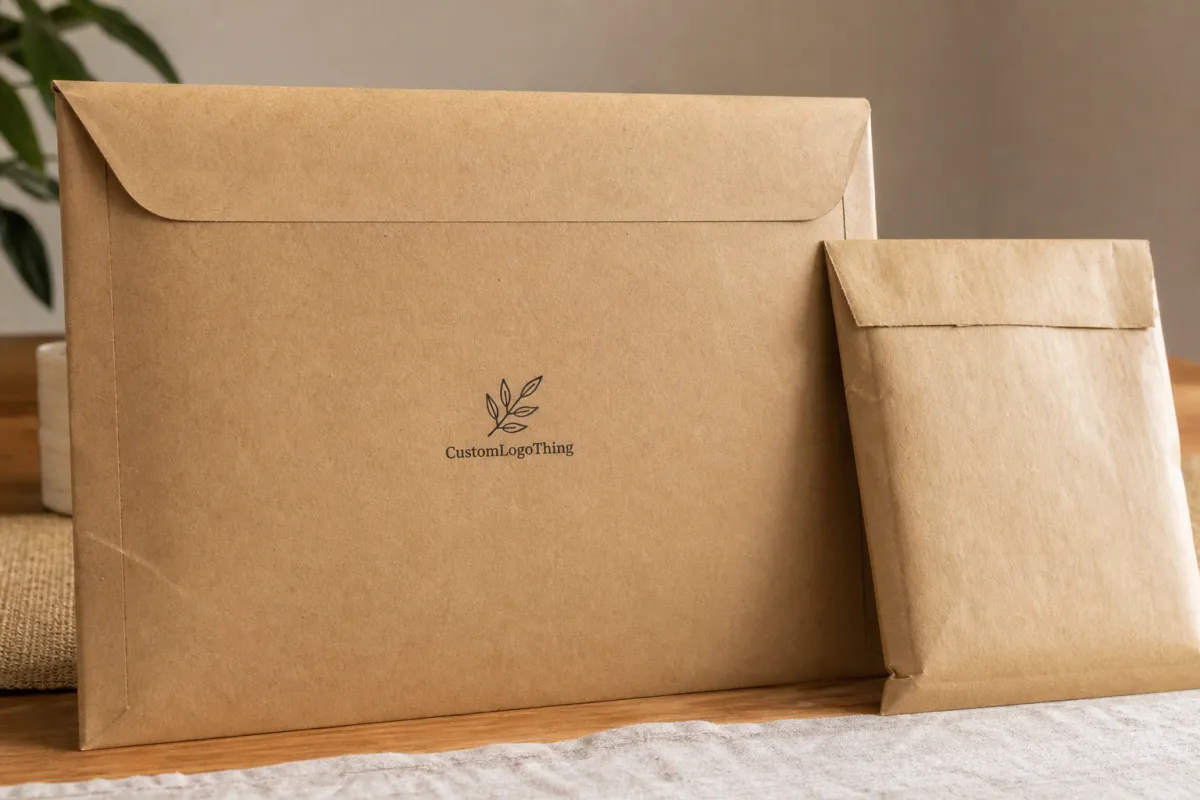
The surprise for many buyers is simple: tea Brand Shipping Envelopes cost is often lower than the cost of the mistakes around it. A lightweight mailer can carry a sampler pack, a refill pouch, or a flat tea set with less freight exposure than a rigid box, especially once dimensional weight enters the calculation. Even a box that is only slightly larger than the product can push the order into a higher shipping band, while the envelope stays close to the actual item weight.
Carriers do not price sentiment. They price space, weight, and handling risk. If a tea brand ships a box plus filler plus an outer shipper for a product that could have moved in a protective envelope, the extra layers can push the order into a higher freight tier. In practice, tea brand shipping envelopes cost may look modest on paper, while the wrong format quietly adds dollars to every order.
There is also the damage side of the equation. A cheap envelope that splits at the seam or opens under pressure is not cheap once re-ships and customer service time enter the picture. The right spec may add a few cents per unit, yet reduce failure rates enough to lower the true tea brand shipping envelopes cost over the full order cycle. That part gets overlooked when the buyer focuses only on the unit quote.
For a packaging buyer, the real question is not “What is the lowest price?” It is “Which package structure gives me the best balance of protection, freight, and brand identity?” That shift changes the conversation. A paper envelope with a strong seal, proper caliper, and accurate sizing can outperform a heavier format that looks more premium but ships worse. tea brand shipping envelopes cost becomes far easier to predict when the format fits the product instead of forcing the product to fit the format.
In our experience, tea brands usually get into trouble when they design for the shelf and forget the trip to the doorstep. A mailer that looks elegant in a mockup can act completely differently once it is stacked, sorted, and tossed through carrier handling, so the spec has to respect the real shipping lane. That is the bit people miss when they are moving fast.
- Lower freight: less dead space, less dimensional weight, fewer oversize surprises.
- Better protection: fit and closure strength reduce transit packaging failures.
- Lower replacement expense: fewer crushed tins, split pouches, and returned orders.
- Cleaner order fulfillment: easier packing speed and fewer SKUs for staff to manage.
For brands comparing shipping materials, the real win is not only saving on the mailer itself. It is avoiding the slow leak of added cost across the order flow. A tea sample that moves in a right-sized envelope, sealed correctly, and packed consistently can keep tea brand shipping envelopes cost stable while also protecting margin. That combination is hard to beat.
What a tea brand shipping envelope is built to do
A tea shipping envelope is a purpose-built transit packaging format designed for flat or low-profile tea items. It serves direct-to-consumer tea orders, subscription refills, launch kits, sampler packets, wholesale promo mailers, and limited-edition inserts. The format can be rigid enough to protect print and shape, yet light enough to keep tea brand shipping envelopes cost under control.
Three common structures show up again and again. A branded shipping envelope is usually a printed paper or paperboard format with a secure closure and a slim profile. A padded mailer adds cushioning for more fragile contents. A pouch-style envelope tends to focus on lightweight presentation and may use barrier liners if aroma protection or moisture resistance matters. Choosing the wrong one is how tea brand shipping envelopes cost climbs without any meaningful gain in performance.
The job is straightforward: keep the tea packaging snug, prevent movement, resist tampering, and survive carrier handling without opening, bending, or tearing. A good envelope does not just hold the product. It controls how the product behaves inside the shipping lane. That influences package protection, product presentation, and the number of complaints a brand has to handle after delivery. If the spec is correct, tea brand shipping envelopes cost stays aligned with the value of the shipment rather than the value of the panic that went into it.
“Most tea brands do not need the heaviest mailer on the market. They need the best-fitting one, with the right closure and enough stiffness to protect the contents without paying for material they never use.”
Envelope-style packaging can still feel premium. Matte kraft finishes, clean white stocks, full-coverage branding, and a tidy opening sequence support a strong brand identity without drifting into box-level pricing. That matters for smaller brands competing in ecommerce shipping, where the package often serves as the first physical proof of quality. The envelope is not the whole story, but it carries a lot of the story.
For teams mapping their packaging stack, it helps to compare formats against the order profile. Tea sachets, tins, and flat refill packs do not behave the same way in transit. A shipping envelope that works well for a 2-ounce sample may be the wrong choice for a heavier retail assortment. That is why tea brand shipping envelopes cost should be evaluated alongside product weight, fragility, and packing speed, not in isolation.
One useful rule of thumb: if the contents need a lot of void fill just to sit still, the envelope is probably the wrong size or the wrong structure. That does not mean the format is bad; it just means the product and the mailer are not speaking the same language yet. Fix that, and the whole pack-out gets easier.
Materials, inserts, and specs that affect performance
The material choice drives a large part of tea brand shipping envelopes cost, but it also changes how the envelope behaves under pressure. Kraft paper is common because it balances weight, appearance, and recyclability. Coated paper can sharpen print and improve brand presentation. Corrugated stock adds stiffness for better package protection. Poly mailer structures tend to be light and moisture-resistant, while barrier-liner options help when scent retention or humidity control matters.
The most useful spec terms are the ones that describe real behavior. Caliper tells you how thick and stiff the stock is. Seal type tells you whether the closure is pressure-sensitive, peel-and-seal, or heat-sealed. A tear strip can make opening cleaner. Gusset depth determines how much volume the envelope can accept before bulging. Closure style affects tamper resistance and packing speed. Each of these changes tea brand shipping envelopes cost in a different way, and the price impact is not always equal.
Inserts are worth paying for only when the product needs them. A loose tea tin, a sampler set with multiple flat packs, or a premium launch bundle may need an insert to prevent movement or abrasion. A simple refill pouch may not. The mistake is adding an insert because it feels safer, then discovering that the insert increased material cost, labor time, and freight weight without actually improving the customer experience. That is the kind of detail that inflates tea brand shipping envelopes cost while delivering little in return.
Good specs start with a basic checklist:
- Product dimensions: length, width, depth, and whether the contents are flexible or rigid.
- Finished outer size: enough room for the product without excessive void space.
- Weight: actual filled weight, not just the empty pack weight.
- Print coverage: one-color mark, full bleed, or branded panels.
- Coating: matte, gloss, soft-touch, or uncoated.
- Protection needs: moisture resistance, aroma barrier, crush resistance, or tamper evidence.
Those details also help buyers compare quotes fairly. A quote for a simple kraft envelope and a quote for a barrier-lined, fully printed mailer are not competing on the same basis. That sounds obvious, yet it is where many procurement conversations go sideways. Once the spec is written clearly, tea brand shipping envelopes cost becomes easier to control because the supplier is pricing the same build every time.
Industry standards can serve as a benchmark for transit testing and material expectations. For example, ISTA test methods are widely used to simulate distribution hazards, and packaging professionals often reference them when checking whether a mailer can survive drops, vibration, and compression. If a tea line is shipping fragile tins or premium gifting packs, that kind of testing is more useful than guessing.
In real packaging work, a paper spec sheet only gets you so far. The meaningful questions are usually tactile ones: does the seal hold when the pack is flexed, does the panel crease at the right point, and does the product slide around once it is inside the envelope? Those answers tell you more about final cost than a clean spreadsheet ever will.
Tea brand shipping envelopes cost: pricing, MOQ, and unit breaks
Tea brand shipping envelopes cost is shaped by a stack of variables, not a single price point. The main pieces are setup, print preparation, material choice, finishing, inspection, packaging, and outbound freight. If a supplier gives only a headline unit price without explaining those components, the quote is incomplete. A buyer needs the total economics, because a low unit rate can be erased quickly by expensive freight or rework.
MOQ matters because setup costs must be spread across the run. A few hundred units will almost always carry a higher per-piece rate than a multi-thousand run, even when the design is identical. That is not a markup trick; it is the math of print preparation, plate setup, material ordering, and finishing labor. As the order size rises, tea brand shipping envelopes cost often falls per unit because those fixed costs are diluted across more pieces.
The variables that move the quote fastest are predictable. Size has a strong effect because larger envelopes use more stock and may change carton packing density. Color count matters because more print passes usually mean more press time. Special coatings, foil accents, windows, and custom closures all add processing steps. Inserts and barrier liners add both material and assembly cost. When a buyer sees tea brand shipping envelopes cost jump sharply, one of those choices usually changed too.
| Spec level | Typical MOQ | Indicative unit cost | Best fit |
|---|---|---|---|
| Plain kraft shipping envelope, single-color print | 500-1,000 units | $0.24-$0.42 | Sampler packs, light refills, test launches |
| Printed paper envelope with matte finish | 1,000-3,000 units | $0.38-$0.68 | DTC tea orders, branded refill mailers, subscription shipments |
| Barrier-lined or padded envelope with custom closure | 2,000-5,000 units | $0.55-$0.95 | Fragile tins, premium kits, higher-value tea bundles |
Those numbers are ranges, not promises. Artwork complexity, finish selection, shipment destination, and order timing can move the final quote. Still, the table shows how tea brand shipping envelopes cost behaves across spec tiers. A more protective build does not have to be a budget breaker, but it should only be used when the product profile justifies it.
The most useful comparison is a practical one. If an envelope saves 20 cents per unit but causes a 3% damage rate, the real cost is worse than a sturdier option that costs a little more upfront. If the product is already protected by retail packaging, the buyer may not need a premium mailer at all. That is why the best quote process compares like with like: same product size, same artwork coverage, same closure type, same shipping lane. Without that discipline, tea brand shipping envelopes cost is easy to misread.
For a broader packaging benchmark, the Packaging Machinery Manufacturers Institute is a useful reference point for industry terminology and package handling context. It is not a price sheet, but it helps buyers speak more clearly about shipping materials, line compatibility, and secondary packaging choices.
Freight from the supplier to the fulfillment center deserves attention too. A run of envelopes that nests efficiently in cartons can cost less to ship than a bulkier structure with the same piece count. That is another reason tea brand shipping envelopes cost should be quoted as a landed figure whenever possible. Freight belongs in the package economics, not off to the side.
Brands comparing options should ask for at least two or three spec scenarios. A lightweight kraft version, a printed premium version, and a padded or barrier-lined version give a useful spread. That side-by-side view shows where tea brand shipping envelopes cost rises because of aesthetics and where it rises because of genuine performance gains. The distinction matters.
Process, timeline, and turnaround from quote to delivery
A good quote process should feel structured, not vague. The cleanest path starts with a discovery brief, then moves to spec confirmation, dieline setup, artwork proofing, sample or mockup approval, production, inspection, and shipment. That sequence protects both the brand and the supplier, and it keeps tea brand shipping envelopes cost from drifting because of avoidable changes halfway through the job.
Timeline depends on a few practical factors. Fast artwork approval helps. So does choosing a standard material rather than a special-order substrate. If tooling is required for a custom closure, window, or unusual size, the timeline stretches. Complex finishing can add days. A rush window may be possible, but it usually narrows material choices and can raise tea brand shipping envelopes cost. Speed is available; it just carries a price.
For planning purposes, many straightforward custom envelope runs can move from proof approval to shipment in roughly 12-18 business days, sometimes faster when the build is simple and stock is available. More complex work can take longer. That is not a problem if the brand plans for it. The bigger risk is trying to align a product launch, subscription cycle, and inventory arrival on the same day without any buffer. A packaging delay then becomes a sales delay, and that is a more expensive issue than tea brand shipping envelopes cost ever will be.
The fastest way to shorten turnaround is to send the right information on the first message. A useful request should include product dimensions, target order quantity, expected ship date, print colors, closure preference, and whether the envelope needs to protect against moisture, odor loss, or crush pressure. When those details are clear, the supplier can price and plan accurately, which keeps tea brand shipping envelopes cost more predictable and reduces back-and-forth.
Quality control also benefits from a documented process. If the envelope is being used for order fulfillment across multiple SKUs, the supplier should verify pack fit against the actual tea container or pouch. That step catches overhang, tight folds, weak seals, or awkward loading before production starts. The small cost of that review is usually lower than the cost of correcting a failed run.
For brands that ship recurring volumes, consistency matters as much as price. A stable spec lets fulfillment teams pack faster, re-order with fewer surprises, and keep the customer experience uniform from month to month. That is why tea brand shipping envelopes cost is best managed as part of a repeatable packaging system rather than an isolated one-time purchase.
There is also a subtle operational benefit here. When the envelope spec is locked, the packing team stops improvising, which means fewer damaged corners, fewer rejected pieces, and fewer awkward conversations with customer service. It is not glamorous, but it is the kind of boring discipline that protects margin.
Why Custom Logo Things keeps tea brand shipping envelopes cost predictable
Custom Logo Things works best for buyers who want the quote to match the real build. A spec-first process reduces drift, because pricing starts after the envelope size, material, closure, print method, and finish are confirmed. That matters. When those details are vague, tea brand shipping envelopes cost tends to change after the conversation has already moved forward, which wastes time and complicates planning.
Consistency is another reason predictable pricing matters. When materials are sourced and checked in a repeatable way, the brand gets fewer surprises in print density, material feel, and assembly behavior. That kind of quality control helps keep replacement risk low and supports better order fulfillment. The result is not only a cleaner quote; it is a cleaner operation. And that is where tea brand shipping envelopes cost starts behaving like a controlled line item instead of a moving target.
The team can also help match the envelope style to the brand's volume stage. A low-MOQ launch may need a different structure than a multi-SKU reorder program, even if the artwork looks the same. If the brand is testing a new tea line, a lightweight option may be enough to validate demand. If the product is already proven, a higher-performance spec may be justified. That flexibility is useful because tea brand shipping envelopes cost should scale with the business, not force the business to fit a single packaging format.
It also helps to think about hidden cost. An envelope that looks inexpensive but creates art corrections, fit problems, or transit failures is not truly affordable. A buyer should expect the supplier to review artwork accuracy, confirm dimensions, and check transit assumptions before production begins. That review can prevent mistakes that are hard to see in a PDF but easy to feel in the warehouse. In other words, the best way to manage tea brand shipping envelopes cost is to reduce the number of decisions made blind.
If a brand needs other packaging formats alongside envelopes, it is often useful to compare them inside a broader packaging plan. Some teams pair mailers with Custom Poly Mailers for lighter subscriptions or with Custom Shipping Boxes for heavier gift sets. Others use a mix of formats drawn from Custom Packaging Products. That kind of portfolio thinking keeps the shipping system aligned with the product mix, which is where real savings usually live.
To judge whether a packaging partner understands transit performance, ask how they think about crush, puncture, seal failure, and cartonization. A supplier that can discuss those factors clearly is more likely to help you control tea brand shipping envelopes cost over time, not just on the first purchase order. The goal is a repeatable spec, not a one-off quote that falls apart on reorder.
Brands that want a fuller view of packaging strategy can also review Case Studies. That can help when comparing how different product types, print choices, and shipping methods change total packaging spend. A tea launch is not the same as a candle launch, and a sample envelope is not the same as a subscription carton. Context matters.
Next steps to lock in tea brand shipping envelopes cost
Before asking for pricing, gather the basics: product dimensions, pack count per envelope, approximate filled weight, desired order quantity, closure preference, and ship-to ZIP code. Those details give the supplier enough information to estimate freight and build the right structure. Without them, tea brand shipping envelopes cost can only be guessed at, and guessing is expensive.
Request two or three spec variations instead of one. Compare a lighter structure, a mid-tier printed envelope, and a more protective premium option. That comparison shows how tea brand shipping envelopes cost moves with material thickness, print coverage, and finish selection. Often the best answer is not the cheapest or the heaviest; it is the one that hits the right balance of protection and carrier efficiency.
If the product is fragile, premium, or irregularly shaped, ask for a sample or prototype. A sample can reveal a too-tight fit, weak closure, awkward insert, or surface scuffing long before a production run is committed. That is especially useful when the tea item is part of a launch kit or gift set, because a poor fit hurts both package protection and the unboxing experience.
When you Request a Quote, be specific about the business goal. Are you trying to cut freight? Improve premium presentation? Lower damage? Speed up packing? The answer changes the recommended structure. A brand trying to reduce dimensional weight may be steered toward a slim envelope. A brand trying to protect glass or tin may need a padded or barrier-lined option. That is why tea brand shipping envelopes cost should be tied to the outcome you actually want, not just to the print file.
One final check: ask whether the envelope will be used for a single SKU or multiple tea products. If the same envelope has to hold different pack sizes, the fit tolerance must be wider, and the quote should reflect that. A common multi-SKU format can simplify inventory, but it can also raise tea brand shipping envelopes cost if the design becomes too generic and uses more material than necessary.
The practical takeaway is pretty simple: lock the dimensions, lock the protection target, and only then compare price. If those three pieces stay fixed, the quote stops wobbling around and starts telling you something useful. That is how you get a number you can actually trust.
Bottom line: a strong quote is the one that makes the tradeoff between protection, lead time, freight, and reordering simplicity easy to see. If those pieces are clear, tea brand shipping envelopes cost becomes manageable, repeatable, and far easier to defend in a margin review.
What drives tea brand shipping envelopes cost the most?
Size and material weight usually have the biggest impact because they affect both manufacturing cost and carrier pricing. Print coverage, coatings, and special closures can raise the unit price quickly if the design uses premium finishes. MOQ matters too, since smaller runs spread setup costs across fewer units, which pushes tea brand shipping envelopes cost higher per piece.
What MOQ should I expect for custom tea shipping envelopes?
Many custom runs start at a few hundred units, but exact MOQ depends on material, print method, and finishing complexity. If you need multiple SKUs or seasonal versions, ask whether the supplier can combine volumes to reduce cost pressure. A higher MOQ often lowers unit cost, but only if the design is stable enough to reuse across multiple reorder cycles. That is one reason tea brand shipping envelopes cost should be reviewed against forecasted volume, not just the first order.
Are tea shipping envelopes cheaper than boxes for direct mail?
Usually yes, because envelopes are lighter, flatter, and less likely to trigger dimensional weight charges. They can also reduce insert and void-fill costs when the tea pack already has its own retail packaging. The tradeoff is protection: if the product is fragile or unusually shaped, a box may still be the better landed-cost choice, even if tea brand shipping envelopes cost looks lower at first glance.
What files do you need to quote tea brand shipping envelopes cost accurately?
Provide product dimensions, desired outer size, approximate weight, and the number of tea packs per envelope. Send artwork files if available, plus any brand colors, finish preferences, and closure requirements. Include the ship-to location and target delivery date so freight and turnaround can be estimated correctly. The more complete the brief, the more precise tea brand shipping envelopes cost will be.
How fast can tea brand shipping envelopes be produced after approval?
Production speed depends on whether the design needs a sample, special tooling, or uncommon materials. After art approval, straightforward orders can move faster than complex builds with inserts or premium finishes. The safest approach is to plan lead time around approval, production, and shipping separately so launch dates stay realistic. That way, tea brand shipping envelopes cost and timing are both measured against the same practical plan.
If you are comparing options for your next tea line, start with the product dimensions and the shipping goal. That single decision usually reveals whether a slim mailer, a padded format, or a more rigid structure is the right fit. From there, tea brand shipping envelopes cost becomes a clear calculation instead of a guessing game, and that is the point where a quote can actually help you buy well.


