Buyer Fit Snapshot
| Best fit | Limited Edition Holiday Sleeves Fast projects where brand print, material claims, artwork control, MOQ, and repeat-order consistency need to be specified before quoting. |
|---|---|
| Quote inputs | Share finished size, material target, print colors, finish, packing count, annual reorder estimate, ship-to region, and any compliance wording. |
| Proofing check | Approve dieline scale, logo placement, barcode or warning zones, color tolerance, closure strength, and carton packing before bulk production. |
| Main risk | Vague material claims, crowded artwork, missing packing details, or unclear freight terms can make a low unit price expensive after revisions. |
Fast answer: Limited Edition Holiday Sleeves Fast: Material, Print, Proofing, and Reorder Risk should be specified like a repeatable production item. The safest quote records material, print method, finish, artwork proof, packing count, and reorder notes in one written spec.
Production checks before approval
Compare the actual filled-product size with the drawing, then confirm tolerance on folds, seals, hang holes, label areas, and retail display edges. Reserve space for logos, QR codes, warning copy, and material claims before decorative graphics fill the panel.
Quote comparison points
Review material grade, print process, finish, sampling route, tooling charges, carton quantity, and freight assumptions side by side. A quote is only useful when the supplier can repeat the same color, closure quality, and packing count on the next order.
Tips for Limited Edition Holiday Sleeves That Sell Fast
I still remember a Tuesday shift on a folding-carton line in New Jersey, about 25 miles from Newark and close enough to the Turnpike that every truck horn felt personal. The air smelled like ink, hot glue, and stale coffee, which is a very specific scent I would not recommend unless somebody is paying you hourly and you are already committed. A plain kraft carton sat in a pallet stack looking painfully ordinary until we slid a metallic gold holiday sleeve around it and rolled it into the mock retail bay. Fifteen minutes later, three people had stopped, picked it up, and started taking photos. That was the day the value of tips for limited edition holiday sleeves stopped being a theory and started looking a lot more like foot traffic.
The spec on that job was almost boring on paper: 350gsm C1S stock, a soft-touch varnish, and one silver foil accent. The client was not paying for a new carton mold or a full print overhaul. They wanted a seasonal outer layer that could move quickly, look expensive, and keep the base product running on the same insert and seal tooling. If you are sorting through tips for limited edition holiday sleeves for cosmetics, confectionery, candles, apparel, beverages, or gift sets, the questions stay stubbornly practical. What stock holds up? Which finish looks premium without blowing the budget? How much lead time is real, not optimistic? And how far can a sleeve carry the brand before the shelf has already made its decision?
Honestly, the brands that win seasonal shelf space treat the sleeve like a sales device first and decoration second. They choose a clear claim, a tight fit, and one visual hook that works under retail lighting at three feet away. That is the lens here: less ornament for ornament's sake, more shop-floor reality, supplier quotes, and production timing that still make sense when the co-packer is already buried under December orders in Chicago, Toronto, or Rotterdam and nobody has extra capacity to spare.
Tips for Limited Edition Holiday Sleeves: What They Are
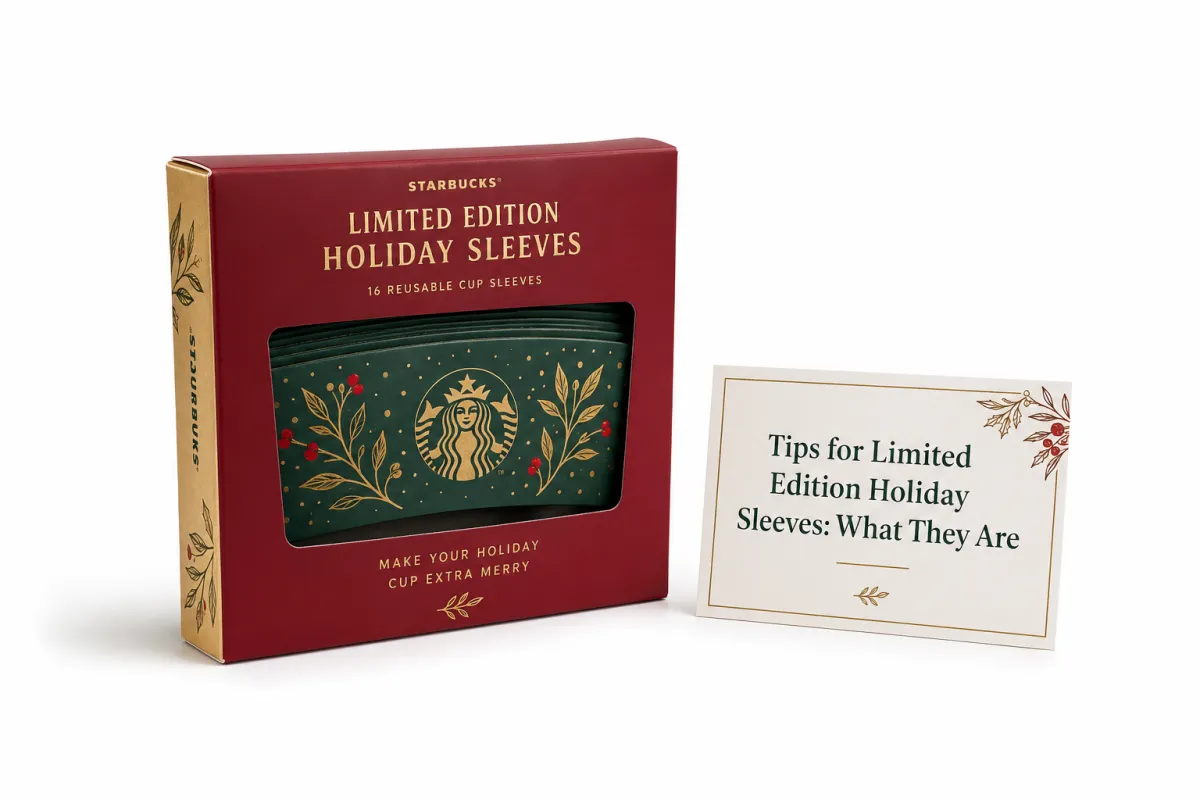
Tips for limited edition holiday sleeves begin with the basic definition. They are printed outer wraps, bands, or paperboard shells that sit over an existing carton, tray, bottle, or gift box to create a seasonal look without changing the primary package. Most sleeves I have handled were die-cut flat, scored for folding, and shipped in bundles of 500 or 1,000 pieces. They were then assembled on the filling line or in a secondary pack-out room, where the holiday message could be added in minutes rather than days.
Sleeves do especially well on cosmetics cartons, chocolate boxes, candle sleeves, sock bundles, coffee gift sets, and beverage cartons that already have strong structural packaging in place. One client in Chicago was selling a winter candle line in a matte black carton, and the shelf test was brutal. The base pack vanished among a dozen similar SKUs until we added a gold-foil sleeve with a 2 mm raised snowflake pattern and a short handwritten-style gift message. The candle did not change. The way shoppers read it did, and that happened in roughly two seconds. Two seconds. I have watched entire season plans get decided in less time than that.
Brands choose sleeves instead of a new carton build for a few plain reasons. Tooling friction is lower because the base carton die, glue points, and insert method stay the same. Artwork changes move faster, which matters when a retailer asks for a holiday refresh six or eight weeks before reset. Base inventory keeps moving while only the seasonal layer changes, which protects cash flow and helps reduce spoilage if the promotion ends early or the product sells faster than forecast. For a 10,000-unit run in Ohio or Michigan, that difference can be the line between a tidy sell-through and a warehouse full of cartons nobody wants to touch in January.
The part people often miss is that tips for limited edition holiday sleeves are not just about making something look festive. They are about using a narrow packaging move to create urgency, giftability, and shelf distinction without a full retool. If the sleeve cannot survive handling, if the logo gets buried under snowflakes, or if the brand team is still debating red versus burgundy the week before production, the launch already feels late. And yes, I have been in that meeting. It is exactly as cheerful as it sounds, especially when the proof is already three business days behind and the retailer wants samples in hand by Friday.
I have always thought the best seasonal sleeves behave like a good sales rep. They do one job quickly, they say the right thing on first glance, and they do not make the product feel clumsy or overworked. That balance is the heart of tips for limited edition holiday sleeves. Emotion matters. So does mechanics. If either one is off, shoppers notice, even if they cannot explain why, and the review usually comes back in the form of a missed reorder or a lower-than-expected scan rate.
How They Work
At the plant level, a sleeve follows a very specific path. The artwork team builds around a dieline, the converter checks fold direction and panel sizes, the printer runs the sheet or web, and then the finishing crew cuts, creases, and cartons the flat sleeves for shipment. If the spec calls for a 6-panel wrap with a 12 mm overlap, the die has to respect that geometry or the seam lands where the brand mark should be. That is one of the fastest ways to ruin a holiday run, and I do not say that lightly because I have seen a near-perfect layout get torpedoed by a seam in the wrong place.
In practice, tips for limited edition holiday sleeves usually start with fit tolerance, not graphics. I have watched a sleeve that looked perfect on screen buckle on a line because the carton was 1.5 mm wider than the sample. That tiny shift turned a tight wrap into a wrinkled corner that nobody caught until the first 800 units were already staged for pack-out. Better teams send a physical sample to the actual line, use calipers on the base package, and confirm exactly where the glue zone, tuck point, or friction fit will land before anyone approves the final render. A fit check in Brooklyn or Leeds is worth more than a dozen comments on a PDF.
The visual job is serious too. In a crowded holiday set, the sleeve needs to communicate seasonal urgency, gifting value, and brand identity within a second or two. I have stood in retail mock rooms where a plain carton lost to a competitor because the competitor used a deep evergreen field, a single foil starburst, and a clean type hierarchy. The weaker pack tried to cram twelve ornaments, three taglines, and a barcode into the front panel. The stronger sleeve won because it made the product easy to read at distance. That is not a poetic mystery. It is just shopper behavior with better lighting.
"We did not need a new box, we needed a holiday signal," a candle client told me after a line review in Boston, and that sentence stayed with me because it captures the core of tips for limited edition holiday sleeves: the sleeve is a signal system first, and decoration second.
That signal can carry more than seasonal art. A good sleeve can hold a QR code that links to a recipe, a collector number, a campaign hashtag, or a short holiday note from the brand owner. I have also seen sleeves support limited-run collaborations, like a 5,000-piece peppermint coffee edition tied to a local bakery in Portland, where the only structural change was the outer band and the story did all the heavy lifting. Tips for limited edition holiday sleeves work best when the story is simple enough to read in the aisle and specific enough to justify the seasonal premium.
If transit testing matters, especially for e-commerce or wholesale distribution, look at the same packaging discipline used by the industry at ISTA. I have had sleeves approved in a lab and then crushed in a distribution center because the pack was never tested for the actual drop height or compression stack. That kind of failure is maddening because it is so preventable. A few extra sample cycles and a real shipping profile can save a launch from a very boring disaster, whether the route runs through Dallas, Hamburg, or Singapore.
Design Factors
Design choices drive the whole experience, and tips for limited edition holiday sleeves are strongest when they start with materials. A 300gsm SBS board gives you a clean, bright surface for crisp reds and deep blues, while a 350gsm C1S stock can feel more substantial in hand and hold folding better on sharper creases. If the pack needs a warmer, more artisan feel, I sometimes prefer an uncoated stock with a controlled ink coverage of 45% to 60%, because the fiber grain reads more human and less synthetic under store lighting. That subtle shift can matter more than people think, especially for products priced between $18 and $42.
Finishes matter just as much as stock. Matte lamination can make a holiday sleeve feel calm and premium, gloss can push the sparkle, soft-touch coating gives a velvety feel that customers notice as soon as they pick the box up, and foil stamping can add that concentrated flash that catches the eye from six feet away. I have seen brands overdo it with foil, embossing, spot UV, and glitter all in one sleeve. The result was not luxurious. It was noisy. Good tips for limited edition holiday sleeves usually point to one hero effect and one supporting effect, not a full carnival of finishes unless the target is a novelty aisle in a discount chain.
Color strategy deserves real thought. Deep red, forest green, black-and-gold, warm ivory, and metallic copper all carry holiday cues, but the palette still needs to respect the category. A premium candle can carry restrained black with a narrow champagne foil line, while a confectionery brand might use brighter red and cream because the shopper expects a sweeter, more playful signal. I once worked with a skincare client who wanted full holiday red, but after mockups under warm 3000K retail lighting, we shifted to muted burgundy and brushed gold because the original red made the jars look like toy packaging. Nobody wanted a luxury serum to look like a novelty lip balm. That would have been a long week.
Readability is the place where many teams lose the shelf battle. The holiday artwork should support the product story, not bury the brand mark, SKU name, net contents, or legal copy. If the brand logo needs to sit within a 24 mm safe zone, keep that safe zone intact and let the seasonal art orbit around it. I have rejected sleeves where the snowflakes cut through the product name or the barcode was hidden behind a fold, and those are not small problems; they are line-stopping mistakes. Nobody wants to discover that in a rushed pack-out while the holiday music is playing overhead like an insult.
Structural fit belongs in design even though many teams treat it like engineering's problem. Wrap length, overlap, crease position, panel alignment, tray depth, and tuck clearances all affect whether a sleeve assembles cleanly. On a holiday run with 10,000 units, a 1 mm error can create visible buckling on 600 to 800 sleeves if the line is moving at 35 packs per minute, and nobody wants to sort that kind of waste by hand in December. I certainly do not want to be the person standing there with a carton knife and a sigh, which is how those afternoons tend to end.
Sustainability comes up in nearly every seasonal conversation now, and that is a good sign. Brands can choose recyclable paper stocks, reduce unnecessary ink coverage, skip plastic laminations where the customer base expects a cleaner footprint, and source fiber through programs supported by FSC. I have had buyers ask for the FSC chain-of-custody number before they would even review a proof. The request was not bureaucratic for the sake of it. It was a signal that the packaging had to align with the brand promise from shelf to disposal, whether the product was moving through California retail or a Toronto distributor.
One of the sharpest tips for limited edition holiday sleeves is to look at the sleeve from three distances: in hand, at three feet on a shelf, and at six feet in a crowded aisle. If the logo disappears at any of those distances, the design still needs work. A holiday sleeve should feel festive, yes, but it should also feel legible, intentional, and tied to the product category in a way that makes sense to a buyer standing there with a basket and twenty seconds to decide. That is not glamorous work, but it is the work that sells, and it usually beats the louder package by a visible margin.
Cost and Pricing
Pricing is where tips for limited edition holiday sleeves become very practical, because the bill changes quickly once you start adding special finishes, narrow tolerances, and low quantities. The biggest drivers are print method, board grade, number of colors, foil coverage, embossing, die complexity, and whether the sleeve is a straight rectangle or a shaped piece with windows, cutouts, or a locking flap. A clean 4-color sleeve on 300gsm SBS can run very differently from a 6-color version with soft-touch lamination and one foil hit, even if the artwork looks only slightly different on screen.
Here is a comparison I often share with buyers who need to make a fast call. The numbers below are realistic planning ranges, not promises, but they help frame the discussion before a quote lands in your inbox.
| Option | Typical Unit Price | Best For | Trade-Offs |
|---|---|---|---|
| Value sleeve, 4-color print on 300gsm SBS | $0.12 to $0.18 at 5,000 units | Fast seasonal refreshes and tight budgets | Less tactile impact, fewer premium cues |
| Mid-tier sleeve, 4-color print plus spot varnish | $0.18 to $0.28 at 5,000 units | Mainstream retail gift sets and candles | Moderate setup complexity, more proofing time |
| Premium sleeve, foil and soft-touch finish | $0.32 to $0.48 at 5,000 units | Luxury skincare, spirits, and high-margin gifting | Higher setup cost, stricter registration control |
| Short-run sleeve, custom shape and specialty board | $0.45 to $0.70 at 1,000 units | Test launches and small regional promotions | Higher per-unit cost, less efficient freight packing |
Shorter runs almost always cost more per unit, but that does not make them a bad decision. I have seen a 1,500-piece holiday sleeve run save a brand from 4,000 units of dead inventory because the retailer trimmed the promotion window by two weeks. That avoided a warehouse problem that would have cost more than the premium print price. If the product is experimental, seasonal, or regional, a small run can be the smarter economic choice. I would rather pay a little more per sleeve than spend January staring at a pallet nobody wants, especially when storage rates in New Jersey or California are already climbing.
There are also places to save without flattening the shelf impact. Keep the base carton unchanged. Use one premium feature instead of three. Simplify the back panel. Avoid full-bleed coverage where the design does not need it. One supplier I negotiated with in Shenzhen quoted a foil-heavy sleeve at $0.39 per unit on 8,000 pieces, then dropped to $0.27 when we removed a second foil pass and tightened the art to one corner treatment. That was not a cheap trick. It was a controlled trade between visual effect and manufacturing time, and the factory in Guangdong could still hit the requested window.
Where brands get burned is cutting the wrong corner. A poor stock choice can crack on a 90-degree fold, an oversized bleed can create visible trim slivers, and weak proofing can trigger a reprint that costs far more than the initial upgrade. I have seen a holiday launch delayed because the sleeve stock was 20 gsm lighter than the approved sample, and that tiny variance caused scuffing in transit when the outer cartons rubbed against each other in a cold truck at 38 degrees Fahrenheit. That is the sort of problem that makes a buyer go very quiet in a meeting, especially when the truck is already parked at the dock in Chicago.
Buyers should always compare total landed cost, not just the print price. Freight, spoilage, line setup time, secondary packing labor, and rework all matter. If a sleeve saves 8% on the quote but slows the line by 6 packs per minute, that savings can disappear across a 20,000-unit campaign. Tips for limited edition holiday sleeves are strongest when the budget discussion includes real operational numbers instead of just a unit price, because a packaging line in Ohio can burn through a labor saving faster than a quote sheet can show it.
Process and Timeline
The best timeline starts backward from the ship date. I usually tell teams to confirm the campaign goal, measure the base pack, request a print-ready dieline, build artwork, review proofs, approve samples, and then schedule production with enough time for transit and line setup. That sounds straightforward, but the holiday calendar adds pressure at every step, because the printer, the co-packer, the freight carrier, and the warehouse all have their own shutdown dates and peak-volume constraints. Holiday production has a way of turning even the calmest spreadsheet into a stress test with a December deadline.
Tips for limited edition holiday sleeves become much easier once everyone is working from the same spec sheet. I want the converter, the brand team, the co-packer, and the fulfillment warehouse to see the same carton dimensions, same fold orientation, same acceptable color tolerance, and same assembly method before anything gets locked. A mismatch between the sample room and the packing line can cost you three days, and three days in seasonal packaging can feel like three weeks. I have seen people lose sleep over less, but not much less, especially when 40 pallets are already committed to a dock schedule.
Approval stages slow projects down more than most brands expect. Missing measurements, late copy changes, and last-minute legal edits are the big ones. I have sat in client meetings where the art was already approved, then someone noticed the net contents line was placed 4 mm too close to the fold. That meant a full rework of the back panel and a revised proof cycle. That is the kind of delay that turns a 12-day project into a 19-day project before anyone realizes the calendar has moved. I wish that were dramatic; it is usually just paperwork wearing a fake mustache.
Timeline planning also changes with finish level. A basic printed sleeve can move faster because the process is mostly print, cut, and ship. Add foil, embossing, or specialty coatings, and the setup becomes more deliberate because registration and drying need tighter control. A clean seasonal sleeve might be turned in 10 to 14 business days from proof approval, while a premium sleeve with two finishing passes may need 15 to 22 business days, plus freight time and line scheduling. Those ranges are exactly why tips for limited edition holiday sleeves should always include a buffer. Holiday deadlines do not care about wishful thinking, and they certainly do not wait for a delayed freight pickup in Memphis.
In factory terms, I like to think about the handoff points. The press crew needs the final art, the die room needs the correct cut geometry, the quality team needs an approved physical sample, and the shipping team needs carton counts that match the actual pallet plan. I once watched a run fall behind because the pallet pattern was based on 800 sleeves per carton in the quote, but the final packed quantity was 750 due to a changed bundle count. That tiny shift affected freight density and added a half-day to loading. Half a day sounds small until the truck is waiting and everyone is pretending not to watch the clock.
For transit confidence, I tell clients to align their sleeve tests with recognized shipping methods and to confirm packaging performance against the right distribution profile. If the pack is going into e-commerce or wholesale, it should survive the handling it will actually see, not just the handling on a clean lab table. That is why I keep returning to tips for limited edition holiday sleeves that include the route to market, not just the artwork calendar. A sleeve that survives a lab bench in Atlanta but fails a parcel route to Denver is not ready.
If you want a source-control mindset for paper selection, keep FSC paperwork, spec sheets, and test samples together in one approval packet. It sounds dull, but it stops the classic holiday mistake where the finance team approves one stock, the designer mocks up another, and the plant orders a third. A clean packet saves hours, and during peak season, hours are often the most expensive material in the room.
Common Mistakes
One of the most common mistakes is designing for the screen instead of the shelf. A mockup with bright snowflakes, glitter particles, and a busy background can look exciting on a laptop, but in a real store it may read as clutter from five feet away. I have watched a team spend three rounds refining a winter pattern only to discover that the brand name was nearly invisible once the pack sat under warm fluorescent retail lighting. That is a painful lesson to learn after proof approval, and I would not recommend it as a team-building exercise.
Another issue is approving artwork before the exact carton dimensions are verified. Tips for limited edition holiday sleeves always begin with measurement because a sleeve with a 0.75 mm mismatch on the wrap length can create a seam offset, a wrinkle, or a flap that refuses to sit flush. If the product is going through a hand-pack line, the insertion method matters too; a top-loaded tray behaves differently than a side-loaded carton, and the sleeve has to respect that movement. Small differences become big headaches once the line starts moving, especially when the pack rate is 28 units per minute and the crew is already behind by the lunch break.
Overcomplicating the finish stack is another budget trap. I have seen teams add foil, emboss, soft-touch, spot UV, and a custom cutout all in one SKU, then wonder why the quote jumped by 40% and the lead time stretched by a week. The sleeve does not need every shiny thing to feel premium. A single strong color field with one tactile hit often sells better than four effects fighting each other. More is not always more, no matter how persuasive the mood board claims to be, and a printer in Montreal or Milan will happily charge for every extra pass.
Late copy changes can wreck a holiday run, especially if the claims, UPC placement, or legal disclaimers shift after proofs are already in motion. If the barcode moves 10 mm because legal wants a new consumer statement, the back panel may need to be rebuilt, the dieline may need to be rechecked, and the proof cycle may reset. That is one reason I push for one internal signoff date that everyone respects. Holiday packaging has no patience for drifting approvals, and the printer has even less patience than I do when the press slot is already booked in Spain or North Carolina.
Inventory planning causes trouble too. Order too many sleeves for a six-week promotion and they become dead stock with no second use; order too few and you miss the sales spike that the holiday artwork was supposed to create. I have seen a confectionery brand under-order by 12% and then rush a second run at a higher freight rate because the first batch sold faster than expected. That second shipment cost more than the original artwork upgrade, and it still arrived after the main promotion in one regional market.
Here is the cleanest rule I can give: tips for limited edition holiday sleeves are not about being flashy; they are about reducing avoidable friction. If the design is clear, the measurements are exact, the finish stack is restrained, and the quantity is tied to a realistic sales window, the sleeve has a real chance to earn its keep.
Expert Next Steps
If you are ready to move, start with the base pack. Measure the carton width, height, depth, fold locations, and any seal or tamper-evident points, then gather the brand assets that matter most: logo files, copy deck, barcode requirements, and one approved seasonal color palette. That simple preparation can shave a full round of back-and-forth off the project, which is exactly the kind of time savings tips for limited edition holiday sleeves are supposed to deliver, especially when a holiday launch window is only 18 business days long.
Next, choose one premium feature and only one hero message. A foil accent, a soft-touch coating, or an embossed snowflake can each work well, but the sleeve should not try to be everything at once. I have seen too many holiday packs become design contests instead of sales tools. The strongest sleeve usually has a clean front panel, a disciplined back panel, and enough breathing room around the logo to feel deliberate. Honestly, that restraint is harder to achieve than people admit, particularly when three people in the room want three different things.
Then order a physical sample and test it on the actual line or with the actual co-packer. Check the fit on the base package, confirm that the sleeve folds flat, and look at it under both cool and warm lighting. I also like to hold the sample at three feet, because that is the distance where a store shopper usually makes the first judgment. If the pack still reads clearly there, you are doing the right work. If not, a small revision now is cheaper than a full reprint later.
Build a season calendar that counts backward from ship date, not forward from design kickoff. For a normal holiday sleeve program, I would set internal deadlines for copy approval, proof signoff, production release, and freight booking, each with at least a few business days of buffer. Peak-season freight congestion and reduced warehouse staffing have a habit of turning a small delay into a very expensive overnight shipment, especially on routes leaving the Northeast in late November.
I also tell buyers to compare two production scenarios before they sign anything: one value-driven and one premium. The value path might be 4-color print on a standard board at $0.15 to $0.20 per unit, while the premium path might include foil and soft-touch at $0.35 to $0.45 per unit. Seeing both side by side helps the team decide whether the extra shelf sparkle truly supports the margin, or whether the smarter move is to save the budget for a larger launch later. That comparison is particularly useful when the run is 3,000 to 7,500 pieces and every cent matters.
If you are working with Custom Logo Things, ask for a spec-first discussion before art starts. That approach keeps the holiday idea grounded in real production limits, and it usually leads to a cleaner quote, a cleaner proof, and fewer unpleasant surprises once the sleeves reach the plant. Tips for limited edition holiday sleeves only pay off when the schedule, the stock, and the line setup are treated as part of the same decision, from the first call to the final pallet count.
My practical takeaway is simple: measure the pack, lock one finish, protect the copy, and test the sleeve in real conditions before you order the full run. If you do those four things well, tips for limited edition holiday sleeves stop being generic advice and become a repeatable launch process that can carry your seasonal product to shelf on time, on budget, and without a last-minute reprint.
How do tips for limited edition holiday sleeves help sales?
Tips for limited edition holiday sleeves help sales by making a product feel seasonal, giftable, and easy to spot without forcing a full packaging redesign. The right sleeve can create urgency, sharpen shelf appeal, and improve first-glance readability, which matters because shoppers often decide in seconds. A well-fitted paperboard sleeve with a clear brand mark, one premium finish, and a tight production timeline gives seasonal packaging a better chance to convert interest into purchase.
What are the best tips for limited edition holiday sleeves on a tight budget?
Keep the base pack unchanged and put the money into one strong visual decision, such as a metallic accent, a spot varnish, or a cleaner, more premium stock. A 300gsm board with one foil hit usually gives better shelf value than a crowded sleeve with three effects that each add cost but do not add much perceived value. I also recommend ordering the smallest realistic quantity, because 2,000 leftover sleeves are not a bargain if the promotion ends in six weeks and the cartons never come back into the line. I have seen that movie, and it is not a fun sequel, especially when the storage bill lands in January.
How early should I start planning holiday sleeve production?
Start as soon as the seasonal concept is approved, because artwork, dielines, proofing, and production all slow down once holiday demand peaks. If your launch depends on a retail reset window, treat final signoff as a hard deadline and build extra time for legal review, sample fit checks, and freight booking. In my experience, a simple sleeve program still needs room for two proof rounds, and a premium one may need an extra week if foil or emboss is involved. I would rather have a cushion than a crisis call at 8:30 p.m., particularly if the plant is in Ohio and the carrier is already short on trailers.
What materials work best for limited edition holiday sleeves?
Choose a board or paper stock that matches the base package weight and can hold clean folds without cracking at the score line. Coated stocks usually give richer color and sharper holiday graphics, while uncoated stocks create a warmer, more handcrafted feel that works well for candles, coffee, and artisan food products. Confirm that the material matches the printing method and any added finish, because foil and soft-touch behave very differently on 300gsm SBS than they do on lighter paperboard. Paper is funny that way; it looks simple until it is under a press in Montreal, Mexico City, or Shenzhen.
How do I make a holiday sleeve feel premium without overdesigning it?
Pick one focal point, such as foil, embossing, or a bold color field, and let that feature carry the premium signal. Leave enough breathing room around the logo and product name so the package feels intentional instead of crowded, and keep the holiday artwork tied to the product category. A premium candle sleeve should not read like candy packaging, and a luxury skincare sleeve should not look like a novelty gift wrap band. I am all for festive, but not at the expense of the brand, and especially not for a product sitting on a $24 shelf tag.
What should I check before approving the final print proof?
Verify every measurement, fold, glue zone, barcode location, and required copy line against the actual base package, not just the mockup. Check the proof under neutral light and again under warm retail lighting, because color shifts can be surprising once the pack is under store fixtures. I also want a final assembly check, because a sleeve that looks perfect on a PDF is useless if the line cannot build it at the speed your co-packer actually runs. A proof is not a victory lap; it is a checkpoint, and a final one can save a 5,000-piece reprint.
Related packaging resources
Use these related guides to compare specs, costs, quality checks, and buyer decisions before making the final call.

