Buyer Fit Snapshot
| Best fit | brands designing minimalist custom boxes with clean print, restrained finishes, cost control, and clear product fit. |
|---|---|
| Quote inputs | Share finished size, material target, print colors, finish, packing count, annual reorder estimate, and delivery region. |
| Proofing check | Approve dieline scale, logo placement, barcode or warning zones, color tolerance, and any recyclable or compostable wording before bulk production. |
| Main risk | Vague material claims, crowded artwork, or missing packing details can create delays even when the unit price looks attractive. |
Fast answer: Minimalist Custom Packaging Boxes: Print, Finish, and Cost Control should be specified like a repeatable production item. The safest quote includes material, print method, finish, artwork proof, carton packing, and reorder notes in one written spec.
What to confirm before approving the packaging proof
Check the product dimensions against the actual filled item, not only the sales mockup. Ask for tolerance on folds, seals, hang holes, label areas, and retail display edges. If the package carries a logo, QR code, warning copy, or legal claim, reserve that space before decorative graphics fill the panel.
How to compare quotes without losing quality
Compare board or film grade, print process, finish, sampling route, tooling charges, carton quantity, and freight assumptions side by side. A lower quote is only useful if the supplier can repeat the same color, closure quality, and packing count on the next order.
The first time I toured a box plant in Dongguan’s Houjie industrial district, the plainest rigid carton on the line was also the one everyone kept touching. No glitter. No foil fireworks. Just 1200gsm greyboard wrapped in 157gsm C2S art paper, tight 90-degree corners, and a dead-simple logo that somehow looked expensive. That’s the real promise behind tips for Minimalist Custom Packaging boxes: the best boxes don’t scream. They whisper with confidence, and in a factory producing 30,000 units a day, that quiet confidence is often the hardest thing to engineer.
People still get this wrong with some regularity. They assume minimalist means “do less” and hope the carton magically looks premium, even when the quote is based on 350gsm C1S artboard, standard 1-color offset printing, and a 12 mm glue flap. It doesn’t work that way. Minimalism in custom printed boxes depends on discipline. Every line, every inch of whitespace, every finish, every board spec has to earn its place. That’s how branded packaging starts acting like a sales asset instead of a cost line, especially when the production run is 5,000 to 20,000 pieces and the difference between a smart decision and a sloppy one shows up in pennies per unit.
In my experience, the smartest packaging projects are rarely the loudest. They’re the ones where the structure is right, the print is clean, and the brand knows exactly what it wants customers to feel in the first five seconds, whether the box is shipping from Shenzhen, sampled in Yiwu, or warehoused in Los Angeles before a launch date on the 18th of the month. I’ve seen brands spend weeks debating a second foil color that nobody asked for, then win back all that time by choosing a cleaner layout and a better board grade. That trade-off is usually worth it, even if it feels a little scary the first time around.
Tips for minimalist custom packaging boxes: why simple wins
Here’s the blunt version of tips for minimalist Custom Packaging Boxes: simple wins because it removes distractions. When a box has fewer colors, fewer effects, and fewer competing elements, the logo and product story become easier to remember. That matters whether you sell skincare, candles, coffee, supplements, or premium accessories, especially if your unit cost needs to stay near $0.28 to $0.65 per box on a 5,000-piece order.
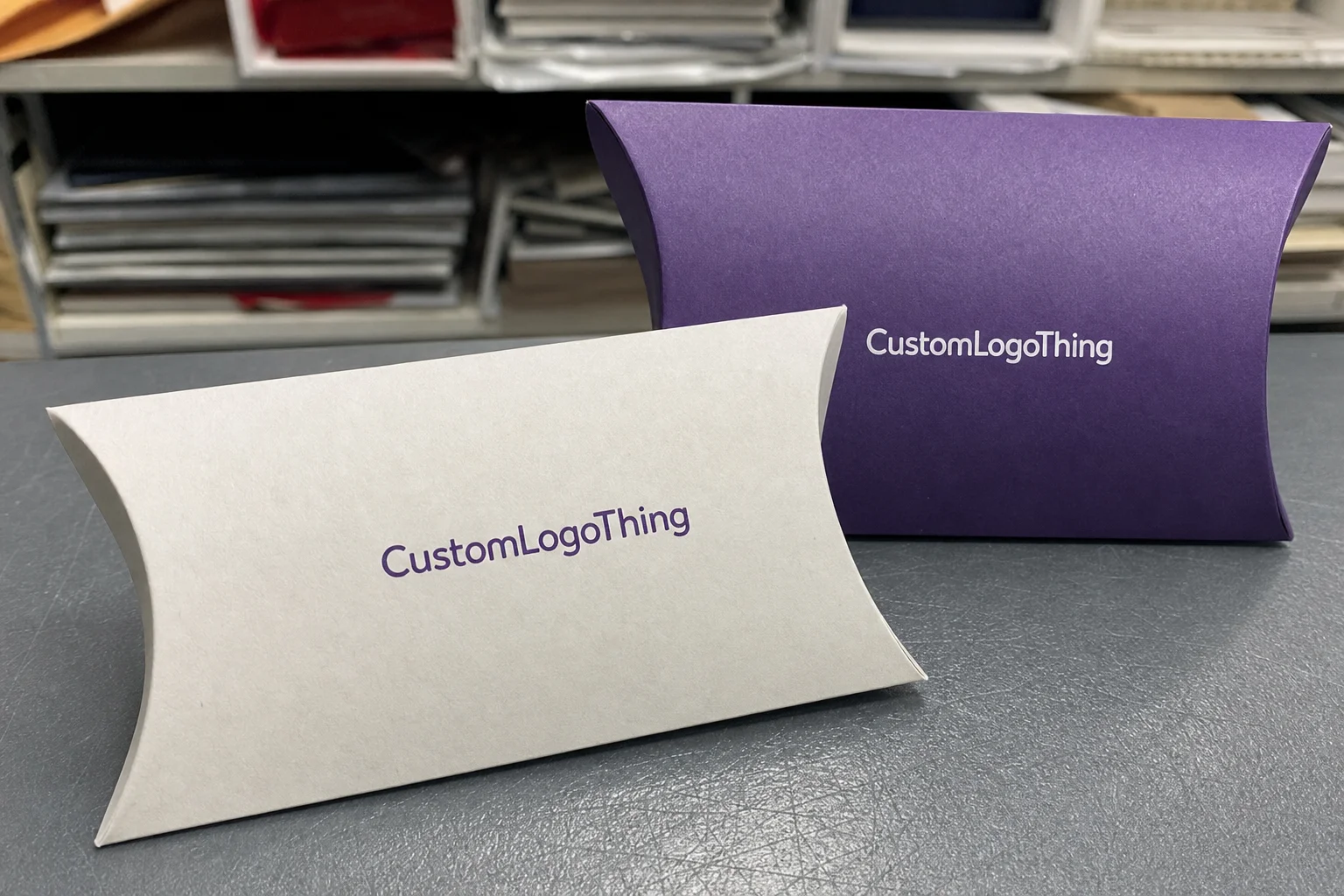
Minimalist Custom Packaging Boxes are not cheap packaging. They are not boring packaging either. They usually rely on cleaner structure, careful typography, intentional whitespace, and a tighter visual system. That’s the difference between “we ran out of budget” and “we knew exactly what we were doing,” whether the board is 300gsm white SBS or a heavier 1500gsm rigid wrap with matte lamination from a printer in Shenzhen or Ningbo. The box still has to work in the hand, in transit, and under bad store lighting, which is where a lot of glossy mockups kinda fall apart.
I once sat in a client meeting in Guangzhou where the founder had a sample box with six inks, two foils, and an embossed pattern that looked like someone sneezed design ideas onto cardboard. I asked her which element she wanted customers to remember. She stared at the table for ten seconds. Then she said, “Honestly, none of it.” We stripped it back to one Pantone color, one logo, and a matte finish. Sales samples looked cleaner, and the brand finally felt like it had some self-control, with the revised prototype approved in under 48 hours and the final sampling cost dropping by about $85 across the first batch.
That’s why Tips for Minimalist custom packaging boxes begin with restraint. Not because restraint is trendy. Because it forces better decisions, and better decisions show up immediately when a 350gsm C1S artboard sleeve is folded, glued, and shipped through a 14-day production schedule. The fewer places you give yourself to hide, the more honest the design becomes.
When a box is simplified on purpose, the product itself gets more attention. The packaging design stops fighting the brand and starts supporting it. That’s especially true in retail packaging, where a shelf view lasts maybe three seconds before someone walks away or reaches for another option in a store aisle in Tokyo, Chicago, or Berlin.
Client note from a shampoo brand I worked with: “We thought premium meant more decoration. Turns out the cleaner prototype sold better in internal reviews, and it cost $0.22 less per unit.” That was for 8,000 mailer boxes produced in Dongguan, and the savings came from skipping one foil pass and one extra ink plate, plus reducing the coating step from two passes to one.
So if you’re building a minimalist box, the mindset is simple: every feature has a job. If it doesn’t improve brand clarity, protection, or shelf appeal, why pay for it? On a 10,000-piece run, even a $0.03 change per unit means $300, which is enough to matter when you’re choosing between a 1-color print layout and a full 4-color setup.
How minimalist custom packaging boxes work from concept to carton
The production flow for tips for minimalist custom packaging boxes follows the same basic path I’ve seen in Shenzhen’s Bao’an district, Dongguan’s Humen township, and a few painfully slow factories on the outskirts of Ningbo: concept, dieline, artwork setup, material selection, sample creation, production, finishing, and shipping. Simple on paper. A little messier in real life, especially when the proof approval arrives on a Friday and the line is already scheduled for a 7,500-unit cosmetics run.
The dieline matters more than most first-time buyers expect. If the dimensions are off by even 2 or 3 mm, a minimalist layout can look awkward fast. A big empty panel feels elegant when proportions are right. It feels lazy when the logo sits too high and the sides look like they were designed by someone guessing in Excel. I’ve seen a beautiful 120 ml serum box lose all its polish because the logo sat 14 mm too close to the top flap and the side panel was 6 mm wider than the artwork anticipated. Tiny mistake. Big difference.
Structure drives the visual tier. A tuck-end carton gives a different signal than a sleeve-and-tray set or a rigid box with a magnetic closure. Mailer boxes feel practical and ecommerce friendly. Rigid boxes feel premium, even before you touch them. Pick a structure that’s too fancy for the product and the budget gets eaten alive. Pick one that’s too weak and the box feels like a compromise, especially when a 2.5 kg product is being shipped in a box designed for a 300 g candle.
Here’s how I think about it in practice:
- Tuck-end boxes work well for lightweight retail and subscription products, especially under 500 g.
- Mailer boxes are ideal for shipping and direct-to-consumer orders from 1,000 to 20,000 units.
- Sleeve-and-tray boxes add a nice reveal without pushing into rigid-box pricing, which often starts around $0.92/unit at 3,000 pieces.
- Rigid boxes are for premium presentation, gifting, and higher perceived value, usually with a 1200gsm to 1500gsm base board.
Fewer colors help simplify print setup, but they also leave you with nowhere to hide. If the spacing is sloppy, you see it. If the typography is weak, you see it. If the board warps, you really see it. That’s why minimalist custom packaging boxes reward clean layout work more than flashy art, and why a factory in Dongguan will often insist on a physical proof before quoting final mass production.
Sampling is not optional. The digital mockup can trick even seasoned teams into thinking the proportions are perfect when the physical sample says otherwise. I’ve had clients approve a render and then reject the real box because the white space looked “too cold” or the font weight vanished under matte lamination on a 157gsm coated sheet. That happens. Often. In one case, we ran three samples in nine business days before the brand accepted the final 1-color version with a 1.5 mm tighter inner fold.
If you want a reference point, industry groups like the ISTA set standards for shipment testing, and the EPA has solid guidance on packaging waste reduction. Those aren’t glamorous reads, but they’re useful if you care about protection and sustainability instead of just pretty renders, especially when freight from Shenzhen to a U.S. warehouse can add $0.08 to $0.15 per unit depending on carton count and mode.
Key factors behind minimalist packaging design, cost, and materials
Material choice is where tips for minimalist custom packaging boxes stop being abstract and start affecting your invoice. SBS paperboard, corrugated mailers, kraft paper, and rigid board all create different looks, different tactile feels, and different cost structures. A minimalist design can look expensive on kraft just as easily as on a coated white board, but the vibe changes completely when you compare 350gsm C1S artboard to 400gsm kraft liner or a 1200gsm rigid wrap from a supplier in Zhejiang.
SBS paperboard is great when you want crisp print and a polished retail finish. Kraft gives you a more natural look, which works nicely for organic food, candles, wellness products, and earthy package branding. Corrugated is the practical one. It protects well and keeps shipping costs sane. Rigid board is the premium beast; it’s heavier, stronger, and more expensive, but customers notice it immediately. A standard E-flute mailer can stay under 2.5 mm thickness, while a premium rigid setup may land closer to 2.8 to 3.5 mm depending on wrap and insert choice.
Now the money talk. Minimalist packaging can save cost on ink coverage and special finishes, but that doesn’t mean every project gets cheaper. A simple layout on a rigid structure can still run high. A basic mailer with one-color print can be very reasonable. I’ve quoted projects where the print was only $0.14/unit, then the client added a custom insert, a thicker board, and a specialty coating. Suddenly the real landed price jumped by $0.31/unit. Packaging math loves surprises, especially on a 5,000-piece order where freight from Foshan or Dongguan can add another $420 to $980 depending on carton volume.
Real pricing drivers usually look like this:
- Order quantity — 1,000 pieces never costs what 10,000 pieces does, and the gap can be $0.18 to $0.40 per unit.
- Box size — larger board area means more material and freight weight, especially above 280 mm in length.
- Print method — offset, digital, and flexo have very different setup economics and plate charges.
- Die-cut complexity — extra windows, locks, and inserts add tooling time and can raise die costs by $60 to $180.
- Coating and finishing — matte lamination, soft-touch, foil, spot UV, embossing, debossing.
- Insert requirements — paperboard, pulp, EVA foam, molded tray, or no insert at all.
Supplier negotiations get interesting here. A factory might quote you $0.38/unit for a clean mailer at 5,000 pieces, then quietly add $120 for plates, $85 for die setup, and $160 for a sample run. None of those line items are scandalous. They just get ignored by people who want to believe the first quote is the final quote. It rarely is, particularly if the supplier is in Shenzhen and the final carton spec changes from 350gsm to 400gsm after proof review.
Here’s a simple comparison I use with clients who are choosing a structure for minimalist custom packaging boxes:
| Option | Typical feel | Common use | Relative cost | Notes |
|---|---|---|---|---|
| Tuck-end SBS box | Clean, lightweight | Retail, cosmetics, supplements | Low to medium | Good for sharp print and compact shipping |
| Corrugated mailer | Practical, sturdy | DTC shipping, subscription kits | Low to medium | Protects product well and stacks neatly |
| Sleeve-and-tray | Refined, tactile | Gift sets, premium launches | Medium | Nice reveal without rigid-box expense |
| Rigid box | Premium, heavy | Luxury, PR kits, high-value items | High | Best for perceived value and unboxing impact |
Sustainability is another practical factor, not a marketing trophy. Right-sized boxes cut filler, reduce freight, and usually improve customer satisfaction because nobody likes receiving a tiny item in a box the size of a toaster. Recycled board, FSC-certified paper, and lower-ink designs can all support cleaner packaging choices. If FSC matters to your brand, the FSC site is the standard reference I’d send to procurement before anybody starts improvising claims, and it helps to confirm whether your supplier in Guangdong or Zhejiang can document the chain of custody before production starts.
Brand consistency matters too. A minimalist box only works if the logo, typeface, color tone, and surface finish feel like they belong to the same brand. I’ve seen a gorgeous matte black box ruined by a cheap-looking silver logo that looked borrowed from a different company. The box wasn’t the issue. The brand system was, and the fix was as specific as switching from a dull foil to a slightly warmer metallic ink on a 157gsm wrap.
Step-by-step process for creating minimalist custom packaging boxes
Here’s the process I use when clients want tips for minimalist custom packaging boxes without the chaos. It’s practical. It saves time. It also keeps design from turning into a group therapy session, which is useful when three departments in two cities all want to change the logo size by 2 mm.
1. Audit the product and the unboxing goal
Start by defining what the box actually has to do. Protect? Display? Ship? Gift? All three? A 120 ml toner bottle needs different support than a candle tin. If the product shifts inside the carton, the packaging design is already failing. I ask clients for the product dimensions, weight, fragility points, and shipping channel before I touch artwork, and I like to have the final size confirmed within 24 hours so the dieline can move into revision one.
2. Choose the simplest structure that still works
Do you need a rigid box for a $12 item? Probably not. Could a mailer box do the job? Maybe. This is where a lot of budgets disappear. Fancy structure when a mailer works? That’s how costs start behaving like a prank, especially once the quote jumps from $0.33/unit to $0.71/unit after insert and wrap upgrades.
The smartest minimalist custom packaging boxes usually begin with the most efficient structure that protects the product and supports the brand story. If your product is sold online and opened at home, a corrugated mailer with a clean one-color print may be enough. If it’s a retail product competing on shelf presence, a neat SBS carton with a strong focal point may be the better play, and that usually means Choosing the Right flute or board thickness from the start rather than revising it after sampling.
3. Build the layout around one focal point
Pick one dominant visual element: the logo, the wordmark, or a single graphic mark. That’s it. Some brand teams want to put a pattern, a tagline, social handles, ingredients, a QR code, and a poetic manifesto on one face of the box. That isn’t minimalist. That’s a brochure in a trench coat, and it usually ends up as a second-round edit after the factory in Dongguan flags it as too dense for clean print.
For minimalist custom packaging boxes, the strongest layouts often use one centered logo, a small product name, and a lot of breathing room. Proportion matters more than decoration. Clean margins can make a $0.40 box look like it belongs to a much more expensive product, especially if the logo sits in a 90 mm-wide safe zone and the side copy is reduced to one discreet line.
4. Select one or two finishes max
Here are the finish choices I recommend most often: matte lamination, soft-touch, spot UV, blind emboss, or no finish at all. You do not need all of them. In fact, if you use all of them, you’ve probably wandered away from minimalist packaging and into design souvenir territory, which can add $0.10 to $0.35 per unit on a 3,000-piece run.
Soft-touch feels luxurious in hand, but it can scuff if you abuse it. Spot UV can highlight a logo nicely, but only if the contrast is intentional. Blind emboss is elegant when the board is thick enough. I once visited a factory in Shenzhen where a client requested blind emboss on thin stock. The sample looked like a tired fingerprint. We fixed it by switching to heavier board, increasing the emboss depth by 0.3 mm, and reducing the logo area so the impression had more definition. Problem solved. Budget survived.
5. Request a physical sample before bulk production
This is where minimalist packaging earns its reputation as unforgiving. On screen, everything looks balanced. On press, the color shifts, the board behaves differently, and the spacing suddenly reveals who actually checked the dieline. Always get a physical sample. Check the corners, the folds, the glue points, and the feel in hand, and if the supplier is in Guangzhou or Foshan, ask for at least one board-up sample before the full production proof.
When I’m reviewing a sample, I look for three things: the print consistency, the structure integrity, and the “does this feel expensive?” test. That last one sounds fuzzy, but clients know it when they touch it. No one has ever said, “Wow, this rigid box feels like a spreadsheet.” What they do say is, “The flap edge is crisp,” or, “The outer wrap feels too slick,” which is exactly why physical samples beat render files every time.
6. Lock the timeline with the supplier
Minimalist packaging can move quickly, but only if everyone signs off on the same version. You need time for artwork approvals, sample revisions, production, and freight. A clean project for 5,000 units can take 12 to 15 business days from proof approval if the supplier already has the board in stock. Add specialty finishing or a custom insert, and the schedule stretches to 18 or even 22 business days. That’s normal, and it’s much better than discovering on day 11 that the spot UV file was exported in the wrong color space.
If you’re ordering through Custom Packaging Products, ask for a clear quote on structure, print, finishing, and sample charges. I’ve seen too many projects start with a “simple” quote and end with three extra revisions, a revised dieline, and one very tired purchasing manager in Chicago trying to reconcile a $0.19 unit increase with a marketing team that approved the wrong proof.
Common mistakes with minimalist packaging boxes and how to avoid them
One of the biggest mistakes with tips for minimalist custom packaging boxes is making the design too empty. White space is powerful. A blank box with a tiny logo shoved into one corner is not power. That’s indecision wearing designer shoes, and it usually means the front panel is carrying less than 15% visual weight when it should be closer to 35% to 45% for shelf balance.
Another common error involves using low-quality board because the design looks simple. Minimalist design exposes weak materials fast. If the board crushes easily, the edges fray, or the surface looks uneven, customers notice. A clean box on cheap stock can look more disappointing than a busier design on good material. Harsh? Sure. True? Also yes, especially when a 300gsm carton comes back with spine cracking after only two folding tests.
Typography is another place people stumble. Thin fonts and tiny print can disappear once they hit ink, coating, and folding. I’ve watched a brand approve a gorgeous ultra-light sans serif at 8 pt, then panic when the sample looked faint. We bumped the weight, increased the size by 15%, and the box instantly felt more stable, with the revised file finally passing print checks in Shenzhen on the second round.
Over-finishing is the classic minimalist mistake. If you pile on foil, spot UV, embossing, and multiple inks, the box stops being minimalist. It just becomes expensive. You can absolutely use one subtle effect, but the whole package has to stay disciplined, and a single blind emboss or matte lamination is usually enough for a box that needs to hold its own without turning into a brochure with a lid.
Here are the mistakes I flag most often:
- Too much empty space with no hierarchy.
- Cheap board that makes the box look flimsy.
- Thin typography that disappears in production.
- Too many finishes fighting for attention.
- Skipping physical proof checks and trusting mockups alone.
- Ignoring fit and shipping durability because the outside looks clean.
Retail packaging is especially unforgiving here. I once worked with a skincare brand that loved the clean look of their outer carton, but their insert was loose by 4 mm and the bottle rattled every time the box was tilted. The outside looked elegant. The inside sounded cheap. Customers notice both, and in a store test in Toronto, that rattle was enough to drop perceived value by a noticeable margin.
If you want packaging that survives real-world handling, test against practical standards. Shipment testing, compression, and vibration matter. That’s why groups like ISTA exist in the first place. Pretty boxes that collapse in transit are expensive little mistakes, especially when the freight bill from Ningbo to a U.S. fulfillment center already pushes the total landed cost close to $1.20 per unit.
Expert tips for minimalist custom packaging boxes that still feel premium
Now we get to the part people usually want first: the good stuff. These are the tips for minimalist custom packaging boxes I use when the goal is premium feel without piling on decoration, and they’re the same notes I’d give a brand team in Dongguan, Seattle, or Singapore if the sample table is already crowded with prototypes.
Use texture as a design element. Uncoated kraft, soft-touch lamination, or natural board grain can carry a box farther than extra graphics. I’ve had plain kraft mailers look beautifully intentional because the paper stock had the right texture and the print was restrained. The box felt honest. That matters, especially when the board is 400gsm kraft and the only ink is a single dark gray logo.
Choose one bold decision and protect everything else. Maybe it’s black-on-black. Maybe it’s a single debossed mark. Maybe it’s one sharp cobalt logo on a white carton. One big decision is enough. The rest should stay quiet. In practice, that often means a 2-color maximum and one finish maximum, which keeps both design and cost under control.
Respect spacing and proportion. A centered logo with proper margins often reads more premium than a crowded layout. I remember a coffee brand that wanted five icon callouts and a paragraph on the front panel. We cut all of it. The final box used a centered wordmark and a tiny recycled-content note on one side panel. The packaging felt twice as expensive, and the factory in Zhejiang printed it in a clean 4,000-piece run without adding a second plate charge.
Ask for a real-stock mockup. I’ve seen brands fall in love with a render and hate the actual board. Screen gloss and paper texture are not the same thing. Print a sample on the actual substrate before signing off. If the supplier says the sample can be ready in 3 business days, get that in writing and confirm whether the wrap paper is the final 157gsm stock or just a temporary substitute.
Build a packaging system, not one isolated box. Keep the same visual rules across shipping boxes, retail cartons, and inserts. That gives you package branding that feels coherent from warehouse to shelf to unboxing. One box can be pretty. A system looks like a real brand, especially when the mailer, product carton, and thank-you card all use the same spacing and logo lockup.
Spend on structure before effects if the budget is tight. If you only have room for one upgrade, I’d rather see better board or a smarter insert than a pile of decorative finishes. Structure is what customers feel first. A $0.09 stronger insert can do more for perceived quality than a $0.14 foil hit on the lid.
For brands selling through ecommerce, minimalist custom packaging boxes can be a huge advantage because they photograph well. The box doesn’t fight product shots. The logo stays readable. The unboxing feels calm instead of chaotic. That makes social content easier, which marketing teams appreciate right up until they ask for ten revisions on the wordmark and a new crop for vertical video at 1080 by 1920.
My honest opinion? The best minimalist boxes are confident enough to leave things out. That confidence usually comes from a strong brand strategy, not from a bigger budget.
If you’re sourcing materials, ask your supplier to compare at least two board types and two finish levels. In one negotiation with a carton supplier in Zhejiang, I cut the unit cost from $0.61 to $0.44 simply by moving from premium coated board to a cleaner SBS option and removing a secondary spot UV layer. Same structure. Better discipline. Less drama, and the sample still passed a 200-unit drop test from 80 cm without corner crush.
Next steps for your minimalist packaging box project
If you’re ready to apply tips for minimalist custom packaging boxes to a real project, start with a one-page brief. Keep it simple. Product size, target feel, budget, quantity, timeline, shipping method, and the one thing the box must absolutely communicate. That one page will save you three bad meetings, especially if your printer in Dongguan needs the dieline before 4:00 p.m. local time to keep the schedule on track.
Then collect three reference boxes. Not twenty. Three. Write down exactly what works in each one: finish, color, structure, logo placement, and whether the box feels premium because of the material or because of the layout. That distinction matters more than people think, and it becomes obvious when you compare a 350gsm carton, a 400gsm mailer, and a 1200gsm rigid box side by side on a table.
Ask your supplier for two or three structure options with pricing. Compare them side by side. A mailer box at $0.36/unit may beat a rigid option at $1.48/unit if the product doesn’t need a luxury reveal. For some brands, that extra dollar is worth it. For others, it’s just an expensive ego exercise, especially when the final order is only 2,500 pieces and freight from Guangzhou adds another $260.
Request a sample or prototype before final approval. Photograph it in natural light, not under office fluorescents that make every carton look like it was assembled in a cave. Check dimensions, print alignment, board quality, and shipping method. If your box will be stacked in retail or warehoused for weeks, test compression and corner strength too. A 48-hour sample review is much cheaper than reworking 8,000 units after launch.
Here’s a checklist I give teams:
- Product dimensions confirmed
- Structure selected
- Board spec approved
- Artwork and dieline matched
- One or two finishes max
- Physical sample approved
- Shipping timeline confirmed
The best tips for minimalist custom packaging boxes are not glamorous. They’re practical. Keep the design simple, control the costs, protect the product, and make sure the box feels intentional from the first glance to the last fold. That’s how minimalist custom packaging boxes actually work. That’s how they sell smarter, whether they’re made in Dongguan, printed in Shenzhen, or packed for export through Yantian Port.
Frequently asked questions
What are the best tips for minimalist custom packaging boxes on a tight budget?
Use a simple structure like a tuck box or mailer instead of a rigid box. Limit printing to one color and skip expensive special finishes. Choose standard board sizes and avoid unusual die-cuts that raise tooling costs. In most projects, those three moves do more for your budget than cutting corners on print quality, and they can keep a 5,000-piece run closer to $0.30 to $0.45 per unit depending on board and freight.
How do I make minimalist packaging boxes look premium without extra decoration?
Focus on material quality, clean typography, and generous spacing. Use texture or a single subtle finish like embossing or soft-touch instead of multiple effects. Keep the logo placement intentional and consistent across the whole box set. A box can look expensive with almost no decoration if the structure and stock are right, and a 157gsm wrap over 1200gsm board often feels far more polished than a busy multi-color design on thin stock.
What is the usual timeline for minimalist custom packaging boxes?
Simple projects can move through design, sampling, and production faster than complex packaging. Sampling usually takes the most back-and-forth because minimalist designs show flaws easily. Build extra time for approvals, corrections, and freight so the project does not slip. A clean run might take 12 to 15 business days after proof approval, but rush work can change that fast, and specialty finishing may stretch the job to 18 to 22 business days.
Which materials work best for minimalist custom packaging boxes?
Kraft gives a natural, earthy look and usually supports a clean minimalist style. SBS paperboard works well when you want sharp print and a polished retail feel. Rigid board is best when premium presentation matters more than low cost. The right choice depends on product weight, shipping method, and how much perceived value you need, with common specs like 350gsm C1S artboard, 400gsm kraft, or 1200gsm rigid board depending on the structure.
How many colors should minimalist packaging boxes use?
One to two colors is usually enough for a strong minimalist look. A single-color design often feels more refined than a crowded multi-color layout. More colors can work, but only if each one has a clear purpose and strong brand alignment. If the colors don’t earn their place, drop them, because every extra ink plate can add cost and visual noise to the final box.
If you want tips for minimalist custom packaging boxes that actually hold up in production, keep the focus on structure, stock, print discipline, and honest budgeting. That’s the formula I’ve used in factory meetings, supplier negotiations, and enough sample reviews to know that clean packaging is harder than it looks. But when it works, it really works, and a well-made box from Shenzhen or Dongguan can carry a brand farther than a page of marketing claims ever will.