Buyer Fit Snapshot
| Best fit | Seasonal Pastel Packaging Palettes projects where brand print, material claims, artwork control, MOQ, and repeat-order consistency need to be specified before quoting. |
|---|---|
| Quote inputs | Share finished size, material target, print colors, finish, packing count, annual reorder estimate, ship-to region, and any compliance wording. |
| Proofing check | Approve dieline scale, logo placement, barcode or warning zones, color tolerance, closure strength, and carton packing before bulk production. |
| Main risk | Vague material claims, crowded artwork, missing packing details, or unclear freight terms can make a low unit price expensive after revisions. |
Fast answer: Seasonal Pastel Packaging Palettes: Material, Print, Proofing, and Reorder Risk should be specified like a repeatable production item. The safest quote records material, print method, finish, artwork proof, packing count, and reorder notes in one written spec.
Production checks before approval
Compare the actual filled-product size with the drawing, then confirm tolerance on folds, seals, hang holes, label areas, and retail display edges. Reserve space for logos, QR codes, warning copy, and material claims before decorative graphics fill the panel.
Quote comparison points
Review material grade, print process, finish, sampling route, tooling charges, carton quantity, and freight assumptions side by side. A quote is only useful when the supplier can repeat the same color, closure quality, and packing count on the next order.
The first time I held a pale peach carton under a warehouse lamp in Dongguan, Guangdong, the Tips for Seasonal pastel packaging palettes I had sketched on paper fell apart in less than ten seconds. The mockup looked airy on a calibrated Eizo monitor at 6500K; the real 350gsm C1S artboard drank the ink, the peach went muddy, and a $9,800 first run started looking like it had been left in direct sun for a week. I still remember standing there with a supplier rep from a box factory near Shenzhen’s Bao'an District, both of us saying the color was "close enough" while knowing full well it was not. That was the day I understood that tips for seasonal pastel packaging palettes are really about discipline, not decoration.
Tips for seasonal pastel packaging palettes: what they are
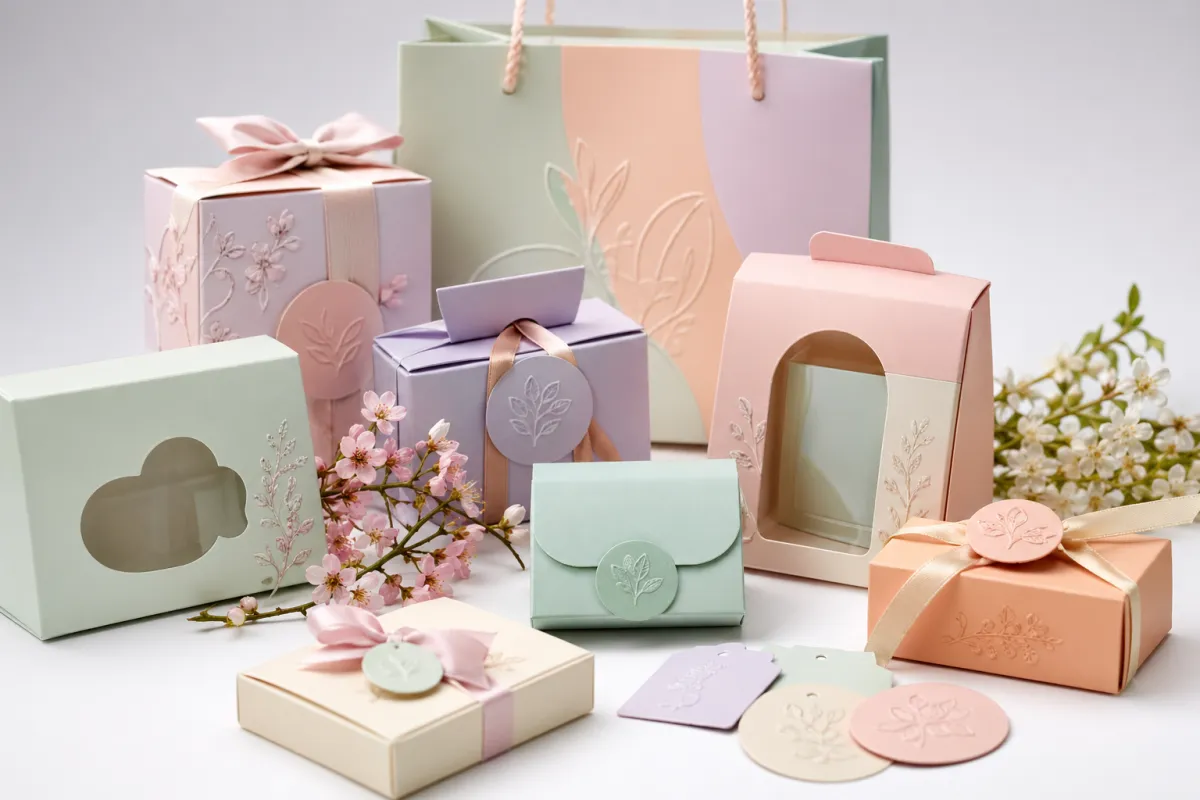
Tips for Seasonal pastel packaging palettes are a color system, not a loose pile of soft shades somebody grabbed because they looked pleasant in a mood board. In packaging work, I treat them like a seasonal wardrobe with rules: spring may lean into mint and cloud blue, summer can open the door to butter yellow and coral, holiday might settle into blush, sage, and champagne, and every one of those moves still has to protect brand recognition while feeling fresh enough to matter. The best systems I have approved usually start with one master swatch deck, one Pantone target, and one substrate note sheet, because a pastel on 300gsm folding carton stock in Suzhou will not behave like the same color on a 16pt SBS carton from a mill in Ontario. Those are the kinds of tips for seasonal pastel packaging palettes that save a launch before it drifts off course.
I learned that lesson the hard way on a skincare line in Los Angeles that wanted a pale peach sleeve for a spring launch. On screen, it looked elegant; on uncoated board, it looked like drywall dust, and the client had already ordered 20,000 sleeves at $0.19 per unit. We had to rebuild the ink formula before the second print date, because Product Packaging That looks "almost right" usually lands as "wrong" the moment it reaches a retail shelf in a store that uses 4100K LED lighting. That was one of those weeks where I drank too much coffee, stared at swatches until they blurred, and wondered why color could be so dramatic about existing on paper. The answer, at least in part, is that tips for seasonal pastel packaging palettes only work when the material is part of the plan.
That is the promise behind tips for seasonal pastel packaging palettes: they let branded packaging feel timely without shouting for attention. Pastels can suggest limited drops, gifting, freshness, softness, and premium restraint all at once. I have watched a candle brand move 18% more units in a spring display at a Chicago concept shop simply because the packaging design felt lighter than the black-box competition beside it. The funny part is that the lighter box did not just look softer, it looked more confident, which is one of those packaging quirks I still love, especially when the carton uses a 1.5 mm greyboard wrap and a matte aqueous finish from a plant in Xiamen. If you are looking for tips for seasonal pastel packaging palettes that actually move product, confidence matters as much as color.
Plenty of people assume pastel means weak. It does not. A disciplined pastel system can look expensive if the structure is strong, the typography is clean, and the print specs are tight down to the 0.25 mm registration tolerance. The real work is deciding which seasonal tones are allowed to shift and which anchor shades stay fixed so the line still reads like one family of Custom Printed Boxes. If the brand wants "fresh" every quarter, fine, but the logo should not behave like it is changing jobs every three months, and the box length should not change from 160 mm to 168 mm just because somebody wanted more pink on a render. Good tips for seasonal pastel packaging palettes protect consistency first and novelty second.
On a humid April afternoon in Shenzhen, a printer showed me three blush swatches on different boards: SBS, kraft, and lightly textured art paper from a mill in Foshan. Same ink formula, three different moods, and each one responded differently to a 12-minute oven cure and a 35% humidity room. That is why tips for seasonal pastel packaging palettes need to start with substrate, not just color theory, because package branding lives on paper first and in the mockup second. I remember tapping the kraft sample and thinking, "Well, there goes the romantic peach story," which was not poetic, but it was accurate. It also reminded me that tips for seasonal pastel packaging palettes are really about matching expectation to material behavior.
How do tips for seasonal pastel packaging palettes work in print?
Tips for seasonal pastel packaging palettes only hold up if you understand how ink behaves on press in a real production plant. CMYK builds can look fine in a digital proof exported from Adobe Illustrator, but soft tones often drift once they hit a 4-color offset line running at 7,500 sheets per hour. A Pantone spot color gives more control, while foil, soft-touch coating, matte lamination, and textured paperboard each change how the eye reads the color. The same blush pink can look like strawberry cream on coated SBS and like old rose on kraft, especially after a 48-hour climate shift in a warehouse near Ningbo. That little shift is exactly why I never trust a screen to tell me the whole story, and why tips for seasonal pastel packaging palettes always need a physical proof.
Warehouse light makes the situation messier. Retail fluorescents and cold LED strips flatten pastels quickly, especially on matte stock with a 7- to 9-gloss finish. I once approved a lip balm carton in a sunny sample room in Guangzhou, then watched it get rejected in a grocery chain's back aisle because the mint looked gray under 5000K store lights. That was a humbling afternoon, and yes, the store manager was right. That is why tips for seasonal pastel packaging palettes need a lighting test, not just a designer's approval, and why I now ask for a daylight booth, a warm LED booth, and a shelf mockup before anything gets signed.
The palette also has to live in more than one place. I usually map it across the outer carton, belly band, insert card, tissue, shipping box, and digital mockup so the full system can survive a launch in both retail and e-commerce. If the outer box is pale lilac but the insert is shouting coral, the system feels confused. If everything shares one anchor pastel and one neutral, the line reads as one piece of product packaging instead of six unrelated prints, even when the insert card is only 120 gsm and the mailer is 32 ECT corrugated board. I like a little tension, but not the kind that makes the unboxing feel like a drawer of mismatched socks. These are the practical tips for seasonal pastel packaging palettes that keep the whole package family coherent.
For teams building custom printed boxes, I usually suggest a structure like this: one primary pastel, one secondary pastel, and one neutral backbone. That backbone might be warm white, mist gray, or a soft kraft tone from a mill in Taiwan, and the print spec should stay fixed across all SKUs. The goal is not visual noise. The goal is repetition. Repetition is what turns seasonal pastel packaging palettes into recognizable package branding instead of one-off decoration, and repetition also keeps the reorder proof from becoming a guessing game at 3 a.m. in a factory office in Dongguan. If you want tips for seasonal pastel packaging palettes that hold up across reprints, repetition is the real anchor.
Before I sign off on a run, I still go back to the basics. Does the carton meet the handling requirements? Is the paper FSC-certified if the brand is making a sustainability claim? Does the box need transit protection that fits ISTA 3A test logic, especially if it is shipping from Vietnam to Dallas? Those questions matter as much as color, and ISTA guidance remains one of the few sanity anchors I trust when a launch depends on a box surviving freight, stacking, and a bored warehouse crew with a pallet jack and a sharp eye for crushed corners. That is also why tips for seasonal pastel packaging palettes are never just aesthetic choices; they are production choices.
For brands that need structure, I often point them to Custom Packaging Products so they can compare paper stocks, finish options, and box styles before they lock the visual direction. A pretty palette that fails in production is expensive decoration, and I have seen more than one team learn that lesson the hard way after paying $1,200 for samples that were never going to pass the fold test. The smartest tips for seasonal pastel packaging palettes always include a hard look at stock, finish, and folding behavior.
"We approved the same pink three times on screen and got three different results on paper. The fix was not more design revisions. It was a better stock, a physical proof on 350gsm C1S artboard, and one clear approval from the factory floor."
If you want a technical reference point behind that thinking, the packaging industry still leans on standards, testing, and material specs more than taste. I keep an eye on resources from the Packaging Institute when clients ask why a pallet-ready outer box needs a different finish than a shelf carton printed in Suzhou or Ho Chi Minh City. The answer usually comes back to the same three things: different job, different print behavior, different pastel outcome, and sometimes a different lead time of 12 to 15 business days from proof approval. That's not glamorous, but neither is a reprint invoice for 8,000 units. The more disciplined tips for seasonal pastel packaging palettes are here, the fewer expensive surprises appear later.
Key factors behind tips for seasonal pastel packaging palettes
Audience comes first. Tips for seasonal pastel packaging palettes for skincare do not behave like palettes for confectionery, candles, baby products, or gift boxes, and a line sold in Los Angeles will often need a cleaner read than one sold in a Tokyo gift store. Skincare buyers often respond to calm, clean tones and restrained typography. Candy brands can get away with brighter sherbet shades. Candle lines usually need a little more depth, because a pastel on a 10 oz jar sleeve can look childish if the typeface is too playful. I have seen a gorgeous color choice get wrecked by a goofy font faster than I can say "please stop using three scripts at once." That is one of the most overlooked tips for seasonal pastel packaging palettes: match the shade to the shelf context.
Seasonal intent matters just as much. Spring wants cool freshness, so mint, pale blue, and airy lavender make sense. Summer can carry more energy, which is where butter yellow, coral, and a light aqua start earning their keep. Fall transition drops often work better with muted rose, sage, and dusty apricot. Holiday does not have to mean red and green; a soft champagne palette with silver foil can sell beautifully when the brand wants a quieter look, especially on a 90 mm x 90 mm gift cube or a rigid setup box wrapped in silk paper. Personally, I like holiday palettes that whisper instead of yell. The shelf is already loud enough, and tips for seasonal pastel packaging palettes should never add unnecessary noise.
I tell clients to build the palette around one anchor pastel, one accent pastel, and one neutral. That is the only reliable way to keep the design from turning into a confetti crime scene. Add a fourth or fifth pastel because somebody in marketing "loves options," and the box usually loses hierarchy while the typography starts fighting the background, especially if the logo sits on a 6 mm bleed margin and the type scale drops below 7.5 pt. I've sat in those meetings, and the phrase "we just want it to feel festive" has caused more trouble than almost anything else in packaging. If you want tips for seasonal pastel packaging palettes that stay readable, keep the palette narrow.
Accessibility is not optional. Pale backgrounds need contrast, especially on retail packaging where the viewer stands three feet away and scans fast under 3000K or 4000K store lighting. If your claim copy sits at 45% gray on a blush carton, you are asking the customer to work too hard. I prefer testing minimum contrast on a printed proof, not just in Figma or Adobe Illustrator, because monitor contrast lies for a living and paper absorbs light in ways a laptop cannot simulate. It has no shame, honestly. Strong tips for seasonal pastel packaging palettes still have to respect legibility.
One of the smartest tips for seasonal pastel packaging palettes is to separate brand identity from seasonal excitement. Keep the logo, font family, and layout discipline stable. Let the accent colors flex from quarter to quarter. That way the customer sees a fresh seasonal drop, but the shelf still reads as the same brand family, whether the cartons ship from a plant in Ningbo or a finishing line in Monterrey. That is package branding doing its job, quietly and without asking for applause. It is also how tips for seasonal pastel packaging palettes protect equity over time.
Here is the mistake I see all the time: a team falls in love with a trend palette and forgets their product category. A pastel ice-cream colorway might work for a birthday gift set and fail completely for a face cream that needs trust, calm, and a hint of clinical credibility. Good packaging design knows the market, not just the Pinterest board. I wish I had a dollar for every time someone said, "But it looked so good in the reference deck," because that would pay for at least one additional proof run from a factory in Dongguan. The best tips for seasonal pastel packaging palettes begin with category fit, not trend chasing.
Three questions I ask before approving a pastel system
Does the palette fit the buying moment, and can someone explain that in 10 seconds without opening a slide deck? Can the box still look premium if it sits under harsh retail lighting for 30 days in a chain store in Phoenix or Atlanta? Will the design still work when the brand scales from 5,000 units to 50,000 without turning into a color management headache or a rush airfreight bill?
Those questions sound simple because they are. The expensive part is ignoring them, then paying for rework at $0.08 to $0.15 per unit because the first proof was approved by guesswork instead of by eye. Good tips for seasonal pastel packaging palettes save that money before the order is placed.
Step-by-step guide to building a seasonal pastel palette
The cleanest tips for seasonal pastel packaging palettes start with a boring audit, which is usually where good packaging work begins anyway. Pull the current brand palette, look at the logo, and decide which colors absolutely must stay stable. If the logo already owns a warm coral, do not replace it every season just because a designer got bored on Tuesday. I have made that mistake once, and the brand spent the next quarter trying to figure out which version of itself it was supposed to be while the first 15,000 cartons were already on a boat from Yantian to Long Beach. The best tips for seasonal pastel packaging palettes begin with restraint, not reinvention.
Step one is choosing the anchor shade. Step two is picking the supporting shade. Step three is selecting the neutral. I like to test that trio on a real dieline because flat screens cannot show how a corner fold, tuck flap, or seam affects color continuity. A pastel that looks balanced on a rectangle may fall apart when folded into a carton with a five-panel structure, a thumb notch, and a 2 mm dust flap. Dielines have a bad habit of exposing every little assumption, which is why tips for seasonal pastel packaging palettes need to respect structure.
Step four is sampling the palette on the actual substrate. That means the board, the coating, the glue line, and the finishing method all need to match production. If a brand is ordering 350gsm C1S artboard with matte lamination, then the sample should be on 350gsm C1S artboard with matte lamination, not "something close" from a sample room with a different mill code. Close is how people end up paying for revisions they should have caught in proofing, and a factory in Guangzhou will not be impressed by optimism, unfortunately. Practical tips for seasonal pastel packaging palettes always start with the right sample stock.
Step five is checking the color in three environments: daylight, store lighting, and warehouse lighting. I once worked with a client who loved a lilac carton in the studio, only to discover the shade looked dusty in a boutique with warm bulbs and almost blue in a chain store with bright LEDs. That is why tips for seasonal pastel packaging palettes are never just about choosing pretty shades; they are about how the shades behave in the real world, from a 9 a.m. unpacking in Chicago to a midnight pallet check in New Jersey. Real world, rude as ever, tends to win.
Step six is locking the print specs. I write down Pantone references, coating type, stock weight, and any special treatments. If the run includes foil, embossing, or spot UV, I note the exact placement in millimeters so the factory can build the plate correctly. That file becomes the production bible. When a factory receives clean instructions, custom printed boxes move faster and fewer corners get cut, whether the line is running in Dongguan, Taizhou, or a finishing shop outside Ho Chi Minh City. I like paperwork that saves money more than paperwork that just feels organized, and I like tips for seasonal pastel packaging palettes that can be repeated without debate.
Step seven is getting a physical approval from someone who will actually hold the box. Not just the brand founder on a Zoom call. Not just the designer. I want the person who knows whether the carton needs to sell from a shelf, ship in an e-commerce mailer, or sit in a gift set display at a holiday market in Brooklyn. That is where many tips for seasonal pastel packaging palettes fail: the design is approved by pixels, not by hands. Hands are rude, but they are honest.
If the launch matters, I like a small proof run before the full order. Even 200 units can expose weak contrast, a sleepy pastel, or a finish that looks too glossy. That tiny expense can save thousands. I have seen a $600 sample run prevent a $14,000 production mistake, and nobody complained about the sample cost after that, especially when the corrected run landed in 13 business days and still made the seasonal ship date. That is exactly the kind of practical tip for seasonal pastel packaging palettes that pays for itself.
For brands that need a faster quoting path, I usually recommend lining up the visual brief and the box structure early through Custom Packaging Products. That way the factory is pricing the real thing, not a fantasy version with impossible board, no setup cost, and an imaginary lead time. Imaginary lead times are my least favorite design trend, right next to asking for soft-touch, foil, and three Pantones on a budget that only fits one press pass. If you want to use tips for seasonal pastel packaging palettes without wrecking your budget, the quote has to be real.
Cost, pricing, and timeline for pastel packaging
Cost is where tips for seasonal pastel packaging palettes turn from taste into math. A single extra spot color can add setup cost. A soft-touch coat can raise the unit price. A premium paper stock from Fedrigoni or Neenah can move the budget more than the design team expects. I have watched a brand move from a basic SBS board at $0.31 per unit to a textured premium stock at $0.57 per unit just because they wanted the pastel to feel "more luxe." The result was beautiful, but the spreadsheet got a little threatening, especially after the finishing quote came back from a plant in Dongguan with a $380 plate charge. Tips for seasonal pastel packaging palettes need to account for those finish upgrades early.
That move was not wrong, but it needed a spreadsheet. For 5,000 units, a pastel carton with one Pantone, matte aqueous coating, and a simple dieline may land around $0.28 to $0.48 per unit depending on size and freight from ports like Shenzhen or Ningbo. Add soft-touch lamination, embossing, or foil, and you can climb toward $0.65 to $1.05 per unit quickly. The palette itself is often cheap; the finishing choices are what eat the margin. That is why I keep telling people the "pretty part" is rarely the expensive part by itself, and why tips for seasonal pastel packaging palettes should include a finish strategy.
The timeline usually runs like this: 2 to 4 business days for concept refinement, 3 to 7 business days for proofing and revisions, 7 to 15 business days for production after approval, then freight time depending on the route. If color matching is sensitive, I tell clients to protect an extra 3 to 5 days for a second proof and another 2 days if the plant is re-inking a pastel on a different paper lot. Seasonal pastel packaging palettes are not worth rushing if the launch date is fixed and the box has to look clean under retail lights. The launch calendar never cares that the printer had a busy week, so tips for seasonal pastel packaging palettes need a buffer.
Here is where smart teams save money without wrecking the palette. First, keep the number of ink changes low. Second, simplify the dieline if the structure allows it. Third, use a neutral board that supports the pastel instead of fighting it. Fourth, reduce SKU sprawl during the first run. I have seen a brand cut 18% from production by trimming from four seasonal variants to two core colors and one limited accent, which took the run from 24,000 cartons to 19,500 and kept the deadline intact. That was a rare moment when everybody in the room looked at the numbers and smiled at the same time. Those are the tips for seasonal pastel packaging palettes that protect both margin and momentum.
For brands comparing options, this table is usually where the conversation gets honest.
| Option | Typical look | Estimated unit impact | Best use | Main risk |
|---|---|---|---|---|
| CMYK on coated SBS | Clean, bright, predictable | $0.28-$0.42 | High-volume retail packaging | Can shift if the pastel is too light |
| 1 Pantone + matte lamination | Controlled, smooth, premium | $0.35-$0.58 | Skincare and gifting boxes | Matte finish can mute delicate tones |
| 2 Pantones + soft-touch + foil accent | Luxurious, tactile, high contrast | $0.62-$1.05 | Holiday drops and hero SKUs | Finishing cost climbs fast |
| Kraft board with restrained pastel print | Earthy, muted, organic | $0.31-$0.54 | Natural brands and eco-led lines | Pastels can look dusty or brown |
Lead time and freight matter just as much as the ink bill. I have seen a pallet of custom printed boxes arrive on time and still miss the promo window because the brand forgot ocean freight buffer, local receiving time, and a two-day holiday closure at the distribution center. If the launch matters, confirm transit method, customs paperwork, and inspection windows before you approve the run. That is not glamorous, but it saves money and stress, which is usually the better trade. Strong tips for seasonal pastel packaging palettes include the boring operational stuff too.
One more point on sourcing: if the palette depends on a very specific stock, ask for alternatives from the start. Fedrigoni may have a beautiful paper that reads perfectly, but your factory might need a backup if minimums or shipping schedules shift. The same logic applies to Neenah and other premium mills. A good supplier negotiation is not about winning a dramatic discount. It is about keeping the whole launch from wobbling because one material went out of stock. I have learned to respect backups almost as much as the hero choice, especially when the backup can still hit a 12 to 15 business day production window. That flexibility is part of the best tips for seasonal pastel packaging palettes.
Common mistakes with seasonal pastel packaging palettes
The biggest mistake is using too many pastels at once. I have watched a team put blush, lilac, mint, peach, and butter yellow on the same carton because everyone wanted "a little of everything." The result looked like a color swatch exploded. One or two well-controlled shades are enough for most seasonal pastel packaging palettes, especially if the logo and typography already carry the visual weight. More is not better here; more is just louder in a bad way, and louder usually means the art director spends another six hours rebuilding the hierarchy. Good tips for seasonal pastel packaging palettes usually start by subtracting color, not adding it.
Low contrast is the second big problem. Pale text on a pale field looks delicate until it becomes unreadable from 2 meters away in a store aisle. That is fatal on retail packaging, where customers scan fast and do not stop to admire your subtleties. If the print includes ingredient claims, QR codes, or legal copy, make sure the contrast still works on a matte finish, not just on a backlit monitor in a studio at 700 nits. I know "minimal" sounds elegant, but a customer squinting at the label is not the brand experience anybody planned. Among the most practical tips for seasonal pastel packaging palettes is to test readability at real distance.
Another mistake is copying trend palettes without checking the product, the audience, or the board. A color trend can be lovely and still be wrong for a brand. I once had a beauty client insist on a washed-out coral because another competitor used it. Their board stock was warmer, the printer had a slightly different ink set, and the final result looked cheap. The palette was not bad. It was just wrong for that package branding system, especially on a short-run carton of 3,000 units produced in a factory outside Guangzhou. The color wasn't the villain; context was, and context is central to tips for seasonal pastel packaging palettes.
Production errors are usually the silent killers. Approving from a laptop screen, skipping the physical proof, ignoring batch variation, or forgetting that every paper lot prints a little differently can wreck a launch that was otherwise well planned. There is a reason I push teams to inspect at least one real sample before signing off on custom printed boxes. Color management is not a vibe. It is a process, and one that gets cranky if you treat it like a mood board exercise instead of a press check at 9:15 a.m. with the factory manager standing next to the pile. Reliable tips for seasonal pastel packaging palettes always include press-side verification.
Then there is the "cute equals childish" trap. Pastels can feel refined, but only if the layout, typeface, and finish are disciplined. A soft palette paired with a playful script font, oversized icons, and too many rounded shapes can slide straight into baby shower territory. I have said this in meetings more than once: the pastel is not the problem. The styling is. Sometimes a client hears that and laughs; sometimes they stare at me like I have just insulted their favorite font. If you want tips for seasonal pastel packaging palettes that look premium, the typography has to pull its weight.
For brands buying branded packaging across multiple SKUs, consistency matters. If the spring carton uses mint at one saturation level and the summer mailer uses a completely different mint, the family stops looking intentional. I prefer a fixed color formula, a documented coating choice, and a single print standard across the range. That keeps the line coherent even when the seasonal story changes, and it keeps the reorders from drifting when they move from 5,000 units to 25,000. It also keeps me from losing sleep over whether the third reorder will match the first one. Consistent reorders are one of the quietest tips for seasonal pastel packaging palettes, but they matter enormously.
Tips for seasonal pastel packaging palettes that work next
Here is the practical version of tips for seasonal pastel packaging palettes. Build one reusable seasonal sheet with approved shades, Pantone references, stock notes, and finish choices. Then decide which shade belongs to which quarter, which SKU, and which channel. That kind of discipline makes your packaging design easier to repeat, easier to quote, and easier to scale from a 2,000-unit test to a 40,000-unit holiday run. It also makes your future self less annoyed, which is a gift I highly recommend. The smartest tips for seasonal pastel packaging palettes are the ones you can reuse without starting over.
I also recommend a small proof kit before the full launch. Put the sample on a store shelf, next to your competitor's pack, under daylight and under warm bulbs. Then take photos. That little exercise reveals whether the pastel feels premium, sleepy, or too sweet. I have had clients change a launch direction after one 10-minute shelf test in a shop in Brooklyn, and they were glad they did. One brand actually said, "Why did we not do this earlier?" and I had to bite my tongue to avoid saying, "Because we all got seduced by the render." Practical tips for seasonal pastel packaging palettes should always include a shelf test.
On the commercial side, write down your pricing logic. Include setup fees, finish upgrades, paper stock minimums, reorder thresholds, and freight assumptions. If the palette only works at 25,000 units but the brand wants a 5,000-unit test, say that upfront. Good tips for seasonal pastel packaging palettes protect the creative idea and the budget at the same time. It is much easier to have the uncomfortable conversation before the purchase order than after the invoices start arriving, especially if the quote from a supplier in Shenzhen includes a $150 plate charge and a $220 export fee. That clarity keeps the project from drifting.
For teams still building their system, I usually suggest starting with one hero SKU and one supporting SKU before expanding. That keeps the first print run manageable and gives you a clean read on the market. If the hero carton lands well, you can carry the same visual logic into sleeves, inserts, mailers, and a second batch of product packaging without rebuilding everything from scratch. In my experience, slow expansion beats scrambling to fix a bad full-line rollout, and a 12-business-day reorder is a lot calmer than a 3-day emergency reprint. Those are the kinds of tips for seasonal pastel packaging palettes that scale with the business.
I will be blunt: pastel does not save weak structure. If the box layout is messy, the type hierarchy is sloppy, or the unboxing sequence feels random, no amount of blush or mint will rescue it. But if the structure is clear, the print is controlled, and the finish is chosen with purpose, seasonal pastel packaging palettes can make a brand feel calm, current, and expensive in the same breath. That is the sweet spot I keep chasing, whether the job is a $0.34 folding carton or a rigid gift box that costs $1.86 per unit before freight. Good tips for seasonal pastel packaging palettes make the structure feel intentional.
That is why I keep coming back to the same advice after all these factory visits and client calls. Respect the substrate. Respect the lighting. Respect the budget. Keep the palette tight enough that the customer remembers the brand, not just the color. If you do that, tips for seasonal pastel packaging palettes stop sounding like design fluff and start working like a sales tool. And if the box happens to make a buyer smile before they even open it, well, that's not a bad bonus. It is one of the best returns you can get from tips for seasonal pastel packaging palettes.
How do I choose tips for seasonal pastel packaging palettes for spring versus summer?
Use cooler, cleaner pastels for spring and warmer, brighter pastels for summer so the packaging feels tied to the season instead of just being soft. Keep one core brand color stable, then shift only one or two accents so customers still recognize the line. Test each palette on the actual carton stock before approving, because spring blue on screen can look dead on 350gsm C1S artboard or uncoated kraft. A physical proof from a plant in Dongguan will tell you more than a whole afternoon of monitor tweaking. That approach sits at the center of tips for seasonal pastel packaging palettes That Actually Convert.
What materials work best for seasonal pastel packaging palettes?
Coated paperboard usually gives the cleanest pastel reproduction because the ink sits on top instead of soaking in. Uncoated kraft can work, but expect muted, earthier results unless you build the palette around that look. If the pastel needs to stay bright, ask for physical proofs on the exact substrate before the final run, and ask for the coating spec in writing. I have seen too many "close enough" material choices wreck a very good color plan in a factory outside Guangzhou. Material choice is one of the most practical tips for seasonal pastel packaging palettes.
How much do seasonal pastel packaging palettes usually add to packaging costs?
Cost increases depend on setup: extra spot colors, custom coatings, and premium paper stocks are the main drivers. A small visual upgrade can be cheap in theory and expensive in production, so get itemized quotes before you fall in love with the mockup. The safest budget move is to keep the palette simple and reserve premium finishes for the hero SKU, especially if your target is under $0.50 per unit at 5,000 pieces. Once you start adding foil or soft-touch, the unit cost can climb faster than the art team expects. That is why tips for seasonal pastel packaging palettes should always include a finish budget.
How long does it take to produce pastel seasonal packaging?
Plan for design, proofing, revisions, and production separately instead of treating everything like one short step. Color approval can add days or weeks if the first proof misses the target, especially when matching a soft pastel exactly. Build in shipping and freight buffer time, because a seasonal launch is useless if the boxes arrive after the promo window. In many factory schedules, 12 to 15 business days from proof approval is realistic for a standard carton, but a foil or embossing change can push that longer. Good tips for seasonal pastel packaging palettes always leave room for reality.
How do I keep pastel packaging from looking childish?
Use strong typography, disciplined spacing, and one or two restrained accent colors so the design feels polished. Pair soft colors with premium finishes like matte lamination or blind embossing to add depth without adding visual noise. Avoid overusing playful illustrations unless the brand voice is actually playful; otherwise the pack starts looking like a baby shower favor. A blush carton with a clean 9 pt serif and a tight grid can feel elegant at 200 mm wide, while a bubbly script on the same box can sink the whole thing in one glance. Those are the styling choices that separate tasteful tips for seasonal pastel packaging palettes from the childish ones.
Strong seasonal launches usually come down to three things: a clear color system, a proof that matches the real board, and enough budget room for the finish that makes the pastel look intentional. I have seen tips for seasonal pastel packaging palettes save brands from sloppy launches, and I have seen them fail when the team skipped the proof and guessed on the stock. If you want the box to sell, keep the palette disciplined, keep the specs honest, and keep the final run close to what you approved. The most useful takeaway is simple: print one real sample on the actual board, check it under daylight and store lighting, then approve only after the pastel still reads like your brand and not like a guess.

