Buyer Fit Snapshot
| Best fit | brand color palette packaging ideas sell better for packaging buyers comparing material specs, print proof, MOQ, unit cost, freight, and repeat-order risk where brand print, material, artwork control, and repeat-order consistency matter. |
|---|---|
| Quote inputs | Share finished size, material target, print colors, finish, packing count, annual reorder estimate, and delivery region. |
| Proofing check | Approve dieline scale, logo placement, barcode or warning zones, color tolerance, and any recyclable or compostable wording before bulk production. |
| Main risk | Vague material claims, crowded artwork, or missing packing details can create delays even when the unit price looks attractive. |
Fast answer: Brand Color Palette Packaging Ideas Sell Better: Dieline, Finish, Proof, and Buyer Review should be specified like a repeatable production item. The safest quote includes material, print method, finish, artwork proof, carton packing, and reorder notes in one written spec.
What to confirm before approving the packaging proof
Check the product dimensions against the actual filled item, not only the sales mockup. Ask for tolerance on folds, seals, hang holes, label areas, and retail display edges. If the package carries a logo, QR code, warning copy, or legal claim, reserve that space before decorative graphics fill the panel.
How to compare quotes without losing quality
Compare board or film grade, print process, finish, sampling route, tooling charges, carton quantity, and freight assumptions side by side. A lower quote is only useful if the supplier can repeat the same color, closure quality, and packing count on the next order.
Quick Answer: Top Brand Color Palette Packaging Ideas
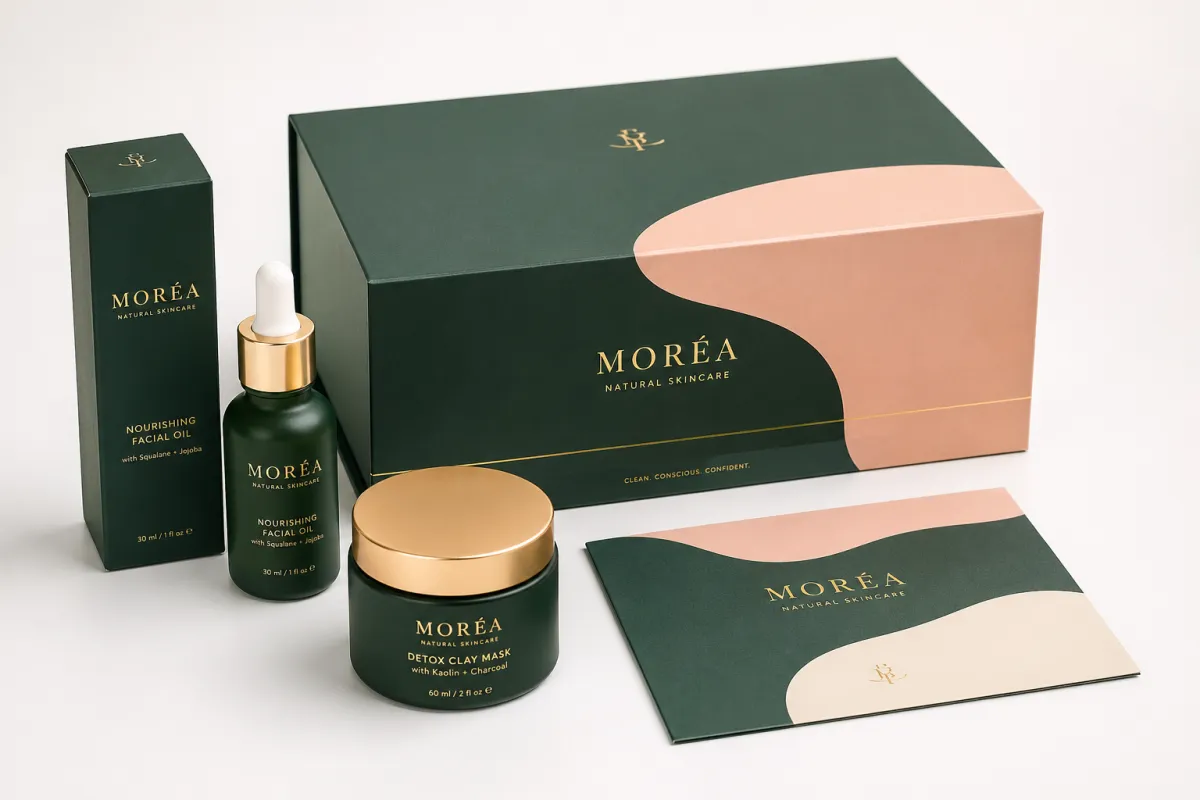
I still remember a freezing afternoon in a carton plant in the Midwest, standing beside a six-color offset line in Grand Rapids, Michigan while a vitamin carton moved from a cool gray panel to a warmer cream panel after a proof adjustment; under 4000K warehouse LEDs and on 350gsm C1S artboard, the first version looked thin at fifteen feet, while the second carried enough body to feel premium before anyone touched it. That tiny shift is the whole argument for top brand color palette packaging ideas. Color changes the read of the package before shape, copy, or finish gets a chance to speak, and a disciplined palette can make even a plain structure look sharper, calmer, or more expensive with nothing more dramatic than ink, board, and a few careful decisions.
The answer, stripped to its bones, is this: the strongest top brand color palette packaging ideas balance brand recognition, substrate behavior, and print method instead of following whatever is currently floating around a mood board. Premium neutrals, high-contrast systems, earthy kraft-inspired tones, modern monochromes, and accent-led palettes keep showing up because they hold up across folding cartons, rigid boxes, corrugated mailers, and label stock without forcing a redesign every time the line expands. On a 5,000-piece reorder in Dongguan, Guangdong, a two-color carton can land near $0.15 per unit, while the same brand in a foil-heavy rigid box in Suzhou can move past $1.50 per unit quickly. That gap matters more than most people want to admit.
If your goal is branded packaging that works in a retail aisle and on a phone screen, palette choice affects perception, category fit, and the unboxing moment all at once. A black-and-cream scheme can read like a $40 serum from six feet away, while olive and sand can make a botanical snack line feel grounded and honest on a 24-pt paperboard sleeve. I have watched teams spend weeks arguing about a logo mark, then gain more shelf presence in one afternoon by changing the background color on the actual product packaging. It is mildly annoying, frankly, how often color does the heavy lifting while everyone else debates kerning.
"The box looked rich on the monitor, but it only became convincing after we saw it under 5000K light on the real stock." A cosmetics buyer told me that in a sample room outside Chicago, and the line still fits most top brand color palette packaging ideas I review. A palette is not really finished until it survives press, lighting, and handling. I have never seen a PDF save a bad coating choice, no matter how optimistic the designer felt that morning.
The rest of this piece breaks the subject into a side-by-side comparison of the most reliable palette directions, a price view that shows where costs rise or fall, and a practical way to choose a color system before you order Custom Packaging Products or lock a retail rollout. The shortest path is usually the smartest one: pick one palette for the hero SKU, keep one backup palette ready for line extensions, and test both on the exact box structure you plan to sell, whether that is a tuck-end carton in 350gsm C1S or a 1200gsm rigid set-up box. If that sounds unglamorous, good. Packaging is supposed to survive forklifts, fulfillment tables, and fluorescent lights, not just make a pretty slide deck.
- Premium neutrals for luxury beauty, fragrance, and specialty food packs that need quiet confidence.
- Bold contrast for youthful, energetic, or disruptive brands that need to stand out at 8 feet on shelf.
- Earthy kraft-inspired tones for natural, artisanal, or sustainability-led product packaging.
- Modern monochromes for clean DTC brands that plan to grow from one SKU to twelve without losing consistency.
- Accent-led systems for fast ecommerce, where one signature color can drive recognition in a 200-pixel thumbnail.
Top Brand Color Palette Packaging Ideas Compared
I compare top brand color palette packaging ideas by looking at three things that matter once the order leaves the design deck and meets the factory floor: how the colors behave on the chosen board, how the pack reads from 3 feet and 18 feet, and how the palette scales from one hero SKU to a family of six. A soft-touch rigid box in black and cream behaves very differently from a kraft mailer carrying a single blue spot color, and anyone who has watched a flexo line in Mexico's Jalisco state pull a muddy olive on uncoated stock knows that the substrate can make or break the final read. I have also seen a beautifully chosen palette lose all its charm because someone approved it on a backlit monitor and never checked it under the actual warehouse lights in an Atlanta fulfillment center. Classic mistake. Expensive one, too.
| Palette family | Visual personality | Best packaging types | Print behavior | My field note |
|---|---|---|---|---|
| Premium neutrals | Cream, charcoal, taupe, black, navy | Rigid boxes, folding cartons, fragrance sleeves | Strong with foil, emboss, matte lamination | Feels expensive on thick board, especially above 18 pt |
| Bold contrast | Black/white, red/white, cobalt/yellow | Retail cartons, promotional mailers, starter kits | High visibility, but registration needs discipline | Wins attention fast, especially in fluorescent aisles |
| Earthy kraft-inspired | Kraft, olive, terracotta, sand, muted brown | Mailer boxes, natural food cartons, wellness packs | Works best with minimal ink coverage | Reads honest and tactile when the board grain stays visible |
| Modern monochrome | One base color plus tonal variation | DTC cartons, apparel packaging, subscription boxes | Easy to scale across SKUs and size codes | Gives a disciplined, editorial brand identity |
| Accent-led | Neutral base with one signature accent | Commerce boxes, sample kits, launch packs | Low ink cost, high recognition when used consistently | Great for thumbnails and social photography |
For shelf competition, premium neutrals and bold contrast tend to be the most legible from 6 to 10 feet away, while accent-led systems often perform better in ecommerce because a single Pantone orange, teal, or green can pop against white page backgrounds. That matters for retail packaging and for subscription brands alike, because a buyer may first meet the box in a store aisle, a social post, or a fulfillment video before the package ever reaches a customer. The most effective top brand color palette packaging ideas do not choose one channel; they support all three. I know that sounds tidy, but it is mostly just hard-won practicality.
At a client meeting in Grand Rapids, I watched a wellness founder move from a three-color turquoise system to a two-color olive-and-sand layout on a 24-pt SBS carton, and the entire line looked steadier on the sample wall. The reason was practical, not poetic: the olive held better against the cream text on press, the sand kept the pack from going too dark under warm store lighting, and the brand finally had room to add new SKUs without changing the core visual language. That kind of difference separates a good palette from a weak one. It also separates a smart budget from a budget that gets eaten by revisions, which is how a lot of "simple" launches turn into slow-motion panic.
Over-designing the hero box is a common mistake, and the cost usually shows up when the second or third SKU arrives. If the palette cannot stretch from a 30 mL serum to a 100 mL refill pouch, or from a single fragrance carton to a holiday set, it is not a system yet. The strongest brand identity often looks simple on paper because the team did the hard work of deciding what not to print, and because the printer in Pune or Barcelona only had to maintain one clean color structure instead of four competing spot colors.
Which top brand color palette packaging ideas work best for your brand?
The best answer depends on where the package will live, how much you can spend on finishing, and whether the brand needs quiet authority or immediate shelf drama. In practice, top brand color palette packaging ideas fall into five useful lanes: premium neutrals, bold contrast, earthy kraft-inspired tones, modern monochromes, and accent-led systems. Each one solves a different business problem. The mistake is trying to make one palette do all five jobs at once, because that is how a clean launch becomes a crowded one.
For premium beauty, fragrance, and giftable goods, neutrals usually win because they create a premium packaging look without demanding much ornament. For natural food, wellness, and low-waste products, kraft-inspired palettes feel believable and tactile, especially on uncoated board and corrugated mailers. For ecommerce and subscription brands, monochrome and accent-led systems are often the smartest because they scale across multiple SKUs and hold up in thumbnail views, where a customer may see the box for less than a second. That is not theory. That is how attention behaves online.
If the brand is entering a crowded retail aisle, bold contrast can be the better tool, but only if the typography stays simple and the color separation is tight. A cobalt panel with white type can outmuscle a more elaborate layout because the eye reads the shape faster. That is one reason top brand color palette packaging ideas should be judged by distance as much as by taste. A design that looks subtle in a studio can disappear under fluorescent light, and a design that seems loud on screen may turn oddly muted on paperboard.
The quickest way to choose is to match the palette to the product promise. If the product promises care, select restraint. If it promises energy, select contrast. If it promises honesty, select earth tones. If it promises scale, select a system with one base and one accent. That rule sounds almost too simple, but the data behind shelf behavior is not subtle. Buyers scan quickly, consumers scroll quickly, and the box has to earn trust before it earns a second glance. That is kinda the whole trick.
Detailed Reviews: Which Palette Fits Each Brand Style?
Top brand color palette packaging ideas usually sort themselves by brand personality, margin pressure, and how much finish work you want to pay for on the press sheet. I have negotiated foil quotes on everything from a 2,500-piece skincare launch in Chicago to a 50,000-piece supplement reorder in Ontario, California, and the pattern stays stubbornly consistent: quieter palettes usually earn more texture, while louder palettes need cleaner typography and tighter registration to stay believable. There is no magic to it, just a lot of expensive ink and a few hard lessons.
Premium neutrals
Premium neutrals are the safest place to start if the target is an elevated read without visual noise. Cream, warm white, charcoal, and black feel expensive on rigid stock, especially once you add a 0.25 mm blind deboss, a matte aqueous coat, or a narrow foil line around the logo. On a fragrance carton I reviewed last quarter in New York, we moved from bright white to a bone shade with a charcoal wordmark on 18 pt C1S, and the buyer said the pack finally belonged beside imported bottles with a wholesale price above $22. For top brand color palette packaging ideas, neutrals are usually the most forgiving because they tolerate tiny shifts in ink density better than saturated colors. I honestly trust them more than most teams do. They are less flashy, yes, but they rarely embarrass you on press.
Bold contrast
Bold contrast is for brands that want immediate shelf recognition and do not mind a little drama. Red on white, black on white, or cobalt on cream can create a sharp retail signal, especially for energy drinks, sports nutrition, youth beauty, or snack launches that need to land in the first 2 seconds. The catch is that strong contrast exposes registration problems fast; a 0.4 mm drift on a fine line can look sloppy, and a dark flood coat can scuff if the coating choice is weak. I use this lane for top brand color palette packaging ideas only when the typography is simple and the finishing budget includes at least one protective coating, usually a 1.2 mil matte laminate or a water-based varnish on a 16 pt board. Otherwise, it turns into a tiny design fight with the pressroom, and nobody wins.
Earthy and kraft-inspired palettes
Earthy palettes are the easiest way to signal honesty, traceability, and low-waste thinking without shouting about it. Kraft, olive, moss, terracotta, and sandstone sit naturally on uncoated board and recycled corrugated stock, which is why I keep seeing them in herbal tea, natural skincare, and artisanal food packaging. When I visited a pouch and carton supplier in Dongguan, Guangdong, the best-performing sample on the line was a muted terracotta print on brown kraft, not the brighter coral the marketing team preferred on their monitor; the earthy version held better under the plant's mixed daylight and 6500K inspection lamps and felt closer to the ingredient story. If your top brand color palette packaging ideas need to support sustainability messaging, this is often the most believable lane. Not the loudest. Not the flashiest. Just believable, which is a rarer quality than people think.
Modern monochrome systems
Monochrome systems are quieter than bold contrast, but they create a disciplined look that can scale across twelve SKUs without getting messy. One base color, one type family, and tonal variation across sizes can make a DTC brand feel organized and editorial, which is useful for apparel accessories, vitamins, or skincare lines that expand in quarterly drops. I like monochrome for Custom Printed Boxes because the system stays coherent even if you switch from a tuck-end carton to a rigid lid-and-base box. Among top brand color palette packaging ideas, this one often wins for teams that care more about long-term catalog consistency than a one-time launch burst. It is the spreadsheet-friendly option, which sounds dull until you are managing six reorder cycles and trying to keep your sanity intact in a warehouse outside Dallas.
Accent-led palettes
Accent-led palettes rely on one signature color, used sparingly, to make a line memorable without turning every panel into a billboard. A clean white carton with one electric green edge, or a kraft mailer with one cobalt band, can feel fresh and modern while keeping print cost controlled. In a supplement line negotiation in Charlotte, we cut almost 9% from the package estimate by moving from three spot colors to a neutral base plus one signature accent and a single foil hit on the logo; the pack still looked branded, but the prepress complexity dropped enough to make the reorder safer. For fast-moving top brand color palette packaging ideas, this is one of the smartest ways to balance impact and cost. And yes, it also saves everyone from staring at a proof sheet that looks like a toddler attacked it with a marker set.
Most brands buy color before they buy consistency. One clear base, one accent, and one finish choice usually outperforms five attractive colors that drift across three factories in Shenzhen, Ohio, and Valencia. I have seen that lesson repeat so many times I could practically invoice it.
Price Comparison: What Each Palette Costs in Print
Pricing for top brand color palette packaging ideas changes quickly once you move from a mockup to a real print run, because each extra ink, coating, and foil pass changes setup time, plate count, proofing, and waste allowance. On a 5,000-unit folding carton order in 350gsm C1S artboard, a simple two-color palette often lands between $0.15 and $0.29 per unit, while a decorative rigid box in 1200gsm chipboard can jump to $1.15 to $2.60 per unit depending on wrap paper, magnets, and metallic work. If that spread feels annoying, it should. Color is lovely; color also has invoices.
| Palette option | Typical structure | Estimated unit cost | Timing impact | Best use case |
|---|---|---|---|---|
| Two-color neutral carton | 350 gsm C1S folding carton | $0.15 to $0.29 at 5,000 pcs | 12 to 15 business days from proof approval | Wellness, supplements, clean beauty |
| Dark full-bleed premium box | Rigid box with soft-touch wrap | $1.15 to $2.60 at 1,000 pcs | 18 to 24 business days | Fragrance, luxury cosmetics, gift sets |
| Kraft mailer with one accent | Corrugated mailer, 32 ECT | $0.24 to $0.58 at 2,000 pcs | 10 to 14 business days | Subscription, ecommerce, sample kits |
| Foil-and-emboss system | Premium carton or rigid lid | +$0.10 to $0.38 over base print | Extra proof round likely | Hero SKUs and holiday editions |
The hidden costs are usually plate charges, extra proof rounds, and reprints caused by color expectations that were never locked down. A fifth spot color can look harmless in a comp, but on press it may mean one more plate, one more setup, and more scrap during registration, especially on textured board. I have seen a brand pay an extra $1,800 on a mid-size run in Juarez, Mexico simply because the team wanted a metallic copper that was never tested on the final paper stock; the sample looked lovely in the studio and slightly muddy on the actual carton. I still think about that one whenever someone says, "Can we just make it a little shinier?"
Simple palettes also tend to hold the budget better across multiple factories. A two-color system in black and cream can often move from an offset house in Pennsylvania to a digital printer in Toronto with only minor tuning, while a saturated teal with white ink and a soft-touch overprint may need more calibration. That flexibility matters if your supply chain includes a domestic filler, an overseas carton supplier in Ho Chi Minh City or Ningbo, and a third-party fulfillment center that wants the same visual read on every shipment.
For brands that care about transit performance, I always remind them that print quality is only part of the price. If the box is going through parcel hubs, ISTA transit testing standards help confirm whether the coating scuffs, and if the board is part of a paper sourcing story, FSC certification guidance matters for claims and audit trails. I have seen excellent color on a pack fail because the gloss coat rubbed during route testing in Newark, and I have seen a simple matte system outperform a richer palette by surviving more drops and corner crush in the same distribution lane. The boring choice can be the smarter one. Packaging loves to remind us of that.
If you need a practical cost rule, this is the one I use on bid sheets: every additional special effect should justify at least one commercial benefit, such as a 5% higher perceived value, a 10% lower risk of shelf confusion, or a clear premium tier that supports the margin. Otherwise, the prettier version of the box is usually the one that gets cut during sourcing. That sounds ruthless because it is ruthless, and sourcing teams in Minneapolis, Dallas, and Rotterdam have no patience for decorative surprises.
How to Choose the Right Palette and Production Timeline
The most practical way to choose among top brand color palette packaging ideas is to work backward from the shelf or screen where the package must earn attention. Start with the emotional goal, then define the substrate, then narrow the field to two or three candidates that can survive the actual print method. I have watched teams get stuck debating coral versus terracotta for three weeks when the real question should have been whether the product was going onto kraft board, coated SBS, or a rigid wrap with laminate sourced in Guangdong. That is not strategy. That is procrastination wearing a nice blazer.
Substrate changes color more than most brand teams expect. On kraft, a bright white can look muted unless you use a strong opaque ink, while on coated paperboard the same white reads crisp and clean. On uncoated board, deep navy may sink slightly, and on a soft-touch laminated box, a saturated red can darken by a noticeable margin under warm retail lighting. That is why I push for real samples on the final material before any palette gets approved for product packaging. I do not care how polished the mockup looked in Figma; if the stock changes the read, the stock has the final vote, especially on 24 pt and 18 pt boards that are being folded, glued, and shipped through multiple hands.
For timing, a straightforward carton can usually move from concept to print-ready art in 5 to 7 business days, then to printed approval samples in another 4 to 6 days, and into production shortly after that. A more complex lane with foil, embossing, or custom inks often stretches to 18 to 24 business days from proof approval, while a rigid box with specialty wrap may need a little more room if the vendor must source board, foam, or inserted trays from Shanghai, Bursa, or northern Italy. The color palette choice itself is part of that timeline because every added finish means another round of checking. The hidden enemy here is not design taste; it is turnaround friction.
One reason top brand color palette packaging ideas fail is that the brand approves the PDF before seeing the pack under real light. I tell clients to review a physical sample under at least three conditions: a store-like 4000K light, daylight near a window, and the lighting used for photography or ecommerce. If the black looks rich in one setting but shifts green in another, you have a production issue rather than a design issue, and it needs to be solved before the order goes live. I have had to say "no" to a lovely palette because it turned swampy under LEDs in a Seattle showroom, which is not exactly the mood any serum brand wants.
From a process standpoint, I like a four-step approval path: 1) define the palette family, 2) print a digital proof on the correct stock, 3) review a physical sample with production and brand in the same room, and 4) approve the final press sheet only after the carton folds cleanly and the barcode scans. That sequence saves money because it catches color drift, lamination haze, and foil registration problems before the run begins, not after 10,000 units have already been packed. It also keeps the conversation honest. Packaging teams can argue about theory forever; a folded carton under a scanner has much less patience.
If your team needs more context, the examples on Case Studies show how different palettes behave across folding cartons, mailers, and display-ready packaging. I keep pointing people to field results because a palette that wins in a mockup may fail once the die lines, glue flaps, and shelf lighting come into play. Real cartons are humbling in the best possible way, especially when they are printed in a 12,000-unit run and shipped out of a plant in Illinois or Catalonia the same week.
Our Recommendation: Best Picks by Brand Goal
After years on press lines, in prepress rooms, and in supplier negotiations where the copper foil sample was the only thing standing between a launch and a delay, my recommendation is straightforward: choose the palette that supports the business model, not just the mood board. The strongest top brand color palette packaging ideas are the ones that make the brand look consistent, photograph well, and stay economical enough to reorder without drama. I have seen too many beautiful concepts crumble under the cost of their own ambition, especially when a 3-SKU launch turns into 11 SKUs and the color system was never built for that load.
For premium positioning: I would choose restrained neutrals first, especially cream, charcoal, black, and navy, then add one refined accent like brass foil, a blind deboss, or a fine edge rule. This is the lane where a rigid box can feel expensive without drowning in decoration, and it is often the easiest route for luxury cosmetics, fragrance, and gifting. A black-and-cream palette on a 1200 gsm rigid board with a 157 gsm wrap paper can feel measured and calm, which is exactly what many higher-end buyers want. It also gives you room to breathe. That matters more than people think when a buyer in Paris or Milan is comparing twelve packages in one sitting.
For natural and sustainable brands: kraft, olive, stone, and muted terracotta usually work best because they align with recycled board, low-ink coverage, and honest ingredient stories. A tea brand I worked with moved from glossy green to kraft with a deep olive mark on 32 ECT corrugated mailers, and the samples looked more grounded, more tactile, and more believable next to compostable inner wraps. That is one of the clearest top brand color palette packaging ideas for eco-conscious product packaging because it supports the claim without feeling preachy. Nobody wants packaging that sounds like it has read three sustainability reports and decided to lecture you.
For fast-growing ecommerce brands: I would pick a monochrome base with one strong accent, then lock the rule across all sizes so every carton, pouch, and shipper feels related. That approach scales well when your catalog goes from three SKUs to nine, and it keeps fulfillment from turning into a visual mess. One line I reviewed used a white base, graphite type, and a single electric blue band across mailers, inserts, and sample kits, and the system held together beautifully across a fulfillment center in Memphis and a 3PL in Calgary. That kind of consistency is more valuable than a flashy launch that falls apart by month four.
For bold retail brands: choose a high-contrast palette only if the typography and photography are simple enough to survive distance viewing. Red and white, black and yellow, or cobalt and cream can shout in a crowded aisle, but they also punish sloppy layout. I have seen a snack brand jump from the bottom row to the eye-level shelf simply by making the lid color brighter and stripping out a busy background pattern on a 24 pt carton. That is not magic; that is disciplined use of retail packaging color, plus a buyer who had the nerve to say yes.
"Pick one direction, then test it on the real box." That advice came from a packaging buyer who had spent twenty years in corrugated and folding carton sourcing, and I still repeat it because it prevents expensive second-guessing once the line is running. I wish more teams would tattoo that onto the conference room table in 12-point black foil.
The editorial rule I come back to is simple: choose one primary palette, one backup palette, and one packaging format to test both on before you roll everything out. If the primary palette wins on a folding carton but loses on a mailer box, the system is not ready. If both versions look strong on the actual structure, you have a good sign that the top brand color palette packaging ideas are built for the real market, not just the presentation deck. That is the kind of boring certainty I trust, especially when the order ship date is 15 business days out and finance wants one clean answer.
My final recommendation is practical, not romantic: print two finalists on the exact board you plan to use, view them under daylight and 4000K light, and choose the one that still reads correctly from six feet away and in a phone thumbnail. If it survives those three checks, you have a palette worth scaling. If it does not, keep editing until it does. That is the move that saves money, avoids rework, and keeps the launch from wobbling later.
Next Steps: Sample, Test, and Approve Your Palette
The fastest path from concept to confidence is a practical sample plan. I tell teams to gather three competitor packs, write down the emotional target in one sentence, and narrow the field to two serious contenders before they ever ask for a quote. That keeps the discussion focused on top brand color palette packaging ideas that can actually be produced, not on colors that only look impressive in a slide deck. I have seen more time wasted on beautiful but impossible colors than I care to remember, including one violet that looked stunning in Brooklyn and unusable on a matte carton in northern New Jersey.
- Pull samples from the shelf: collect at least 3 comparable packs from your category, including one direct competitor and two adjacent brands, so you can see which colors are already crowded.
- Define the job of the palette: decide whether the pack must feel premium, natural, energetic, or clinical, then match that goal to a palette family instead of starting from random inspiration images.
- Request printed proofs on the final substrate: a kraft mailer, a 350 gsm folding carton, and a rigid wrap will never behave the same, and screen color on a monitor is not a substitute for ink on board.
- Test under three lights: warehouse LED, daylight, and retail lighting can change contrast enough to hide a logo edge or flatten a dark flood coat.
- Get approval from every function: brand, production, and fulfillment should sign off together so a palette choice does not get reopened after quoting, die-cutting, or packing begins.
My hands-on checklist is simple: check for rub resistance, corner coverage, barcode contrast, and whether the brand mark still reads at 18 inches and 6 feet. If the carton is a mailer, I also want to see it pass a basic drop sequence that resembles parcel handling, because a beautiful package that scuffs on the first route is not doing its job. For ecommerce teams, that final check matters as much as the color review, because the unboxing experience starts with the exterior, not the tissue paper inside. And yes, I have had to explain that to people who thought the interior insert would somehow rescue a scratched lid. It does not. Scratches are very committed.
Once the physical samples look right, document the palette with Pantone references, CMYK builds, finish notes, and a single approved master sample. That file becomes the production anchor for future reorders, vendor swaps, and seasonal updates, and it keeps package branding from drifting after the first run. The best top brand color palette packaging ideas are not just attractive; they are repeatable, measurable, and easy to approve again when the next SKU or seasonal set shows up. Repeatable is the word I care about most. Pretty is nice. Repeatable keeps the business from wobbling.
If I had to reduce years of sample rounds and press checks to one sentence, it would be this: the right palette is the one that survives the plant floor, the sales meeting, and the customer's kitchen counter all at once. That is why top brand color palette packaging ideas should be treated as a business choice, not a decoration exercise, and why the smartest teams move from concept to sample approval with a real substrate, a real light source, and a real production calendar in front of them, whether the factory is in Ohio, Shenzhen, or Valencia.
FAQ
What are the best top brand color palette packaging ideas for premium products?
Premium products usually benefit from restrained neutrals such as cream, deep black, charcoal, navy, or muted jewel tones, because those colors leave room for foil, embossing, debossing, and tight typography to do the heavy lifting. In my experience, a 2-color neutral system on a rigid box often feels more expensive than a crowded 5-color layout, especially if the board is 1200 gsm chipboard and the finish is matte with a 157 gsm wrap. I would also add that premium buyers tend to notice restraint faster than ornament, particularly in markets like London, Tokyo, and New York where shelf competition is dense.
How do I choose a color palette for packaging that stays consistent across materials?
Start by testing the palette on the actual substrate, because kraft, coated SBS, uncoated paperboard, and rigid wrap all shift color differently. Then lock the approved combination with printed proofs, a master sample, and clear finish notes so the same brand color carries across cartons, mailers, and display packaging without drift. If the palette still looks good after that, you probably have something durable rather than merely attractive, and you have likely reduced the risk of costly reprints by a measurable margin.
Do top brand color palette packaging ideas affect packaging cost?
Yes, and the cost impact shows up quickly when you add more inks, more special coatings, foil, or repeated proof rounds. A simple two-color carton can stay in a lower cost band, while a dark full-bleed rigid box with soft-touch coating and metallic accents can add meaningful setup and finishing expense on every run. I have watched a "small" palette change add $700 to $1,800 on a mid-size order in Ontario, California and then again in Juarez, which is always fun to explain to finance, not fun at all.
How long does it take to finalize a packaging color palette?
A straightforward palette can move from concept to approval in a relatively short window, but you still need time for digital proofing, physical samples, and sign-off from the Brand and Production teams. If the design includes foil, embossing, custom inks, or several SKU variants, the timeline usually stretches because each sample round has to be checked on the final board. For a standard run, I would expect 12 to 15 business days from proof approval to production-ready sign-off, and longer if the carton is being produced in a high-volume plant outside Guangzhou or Monterrey.
Which packaging color palette works best for a new brand launch?
New brands usually do best with one clear base palette and one signature accent so the system feels memorable without becoming hard to manage. If you choose a direction that matches the category, holds up on your final material, and can scale across future SKUs, your top brand color palette packaging ideas will support the launch, the reorder, and the next product drop with the same visual discipline. That combination is not glamorous, but it is the one I would bet on, especially if the first production run is 2,500 to 5,000 pieces and the deadline is 10 to 14 business days out.


