Buyer Fit Snapshot
| Best fit | brands using minimalist packaging design buyer review for packaging buyers comparing material specs, print proof, MOQ, unit cost, freight, and repeat-order risk where brand print, material, artwork control, and repeat-order consistency matter. |
|---|---|
| Quote inputs | Share finished size, material target, print colors, finish, packing count, annual reorder estimate, and delivery region. |
| Proofing check | Approve dieline scale, logo placement, barcode or warning zones, color tolerance, and any recyclable or compostable wording before bulk production. |
| Main risk | Vague material claims, crowded artwork, or missing packing details can create delays even when the unit price looks attractive. |
Fast answer: Brands Using Minimalist Packaging Design Buyer Review: Dieline, Finish, Proof, and Buyer Review should be specified like a repeatable production item. The safest quote includes material, print method, finish, artwork proof, carton packing, and reorder notes in one written spec.
What to confirm before approving the packaging proof
Check the product dimensions against the actual filled item, not only the sales mockup. Ask for tolerance on folds, seals, hang holes, label areas, and retail display edges. If the package carries a logo, QR code, warning copy, or legal claim, reserve that space before decorative graphics fill the panel.
How to compare quotes without losing quality
Compare board or film grade, print process, finish, sampling route, tooling charges, carton quantity, and freight assumptions side by side. A lower quote is only useful if the supplier can repeat the same color, closure quality, and packing count on the next order.
Top Brands Using Minimalist Packaging Design: Best Picks
Top brands using minimalist packaging design can look almost effortless on a shelf, but that clean look usually hides a lot of engineering discipline. A plain carton still has to survive drops, compression, vibration, and the occasional rough conveyor. I have seen a so-called “simple” box fail in transit because the board caliper was a hair too thin and the product had just enough room to rattle. The package looked calm. The product did not.
From a packaging buyer’s angle, minimalist packaging means fewer print colors, tighter tolerances, cleaner labeling, smarter inserts, and less visual noise without giving up protection. That balance matters because top brands using minimalist packaging design often use restraint to signal confidence, premium value, and product discipline, not just to trim ink coverage. It can also support stronger brand identity, a cleaner unboxing experience, and more consistent shelf presentation. Done well, it feels intentional rather than stripped down.
I tend to see this style work best for premium beauty, tech accessories, apparel, and other items where package branding and product presentation carry real weight. It can reduce material use, labor, and freight, but only when the structure is built around the real ship method instead of a showroom shelf. For many teams, the appeal is practical as much as visual: less clutter, clearer communication, and Packaging That Feels controlled instead of fussy.
Practical rule: a minimalist look should never excuse weak protection. If the box gets simpler, the engineering has to get sharper.
That is the lens I use here: protection in transit, cube efficiency, labor impact, print complexity, and customer perception. If you are comparing top brands using minimalist packaging design for your own line, the real question is not whether the pack looks clean. It is whether that clean look still holds up after fulfillment, carrier handling, and customer unboxing. The best minimalist packaging design makes the product feel more deliberate, not less protected.
Quick Answer: Why Top Brands Using Minimalist Packaging Design Stand Out
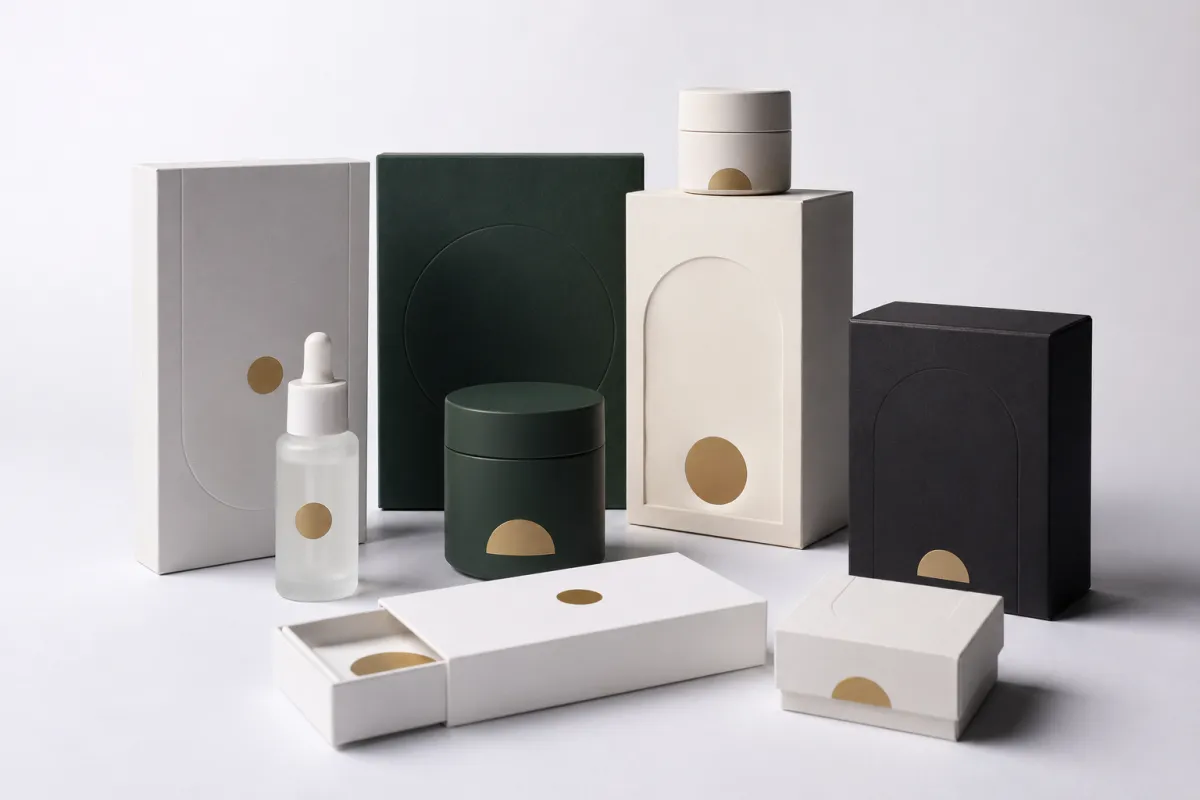
Top brands using minimalist packaging design stand out because they remove anything that does not help the product, the brand, or the shipping process. That sounds simple, but in practice it usually means a more disciplined packaging design: a box that fits the product closely, an insert that stops movement, a label that communicates clearly, and a finish schedule that avoids decoration for decoration’s sake. Plenty of teams mistake “minimal” for “cheap.” It is not. The cleanest packs are often the most controlled.
The style performs especially well in categories where presentation reinforces trust. Apple-style electronics packaging, Muji’s calm retail packaging, Aesop’s restrained bath and body cartons, Glossier’s friendly but quiet product packaging, and COS-like apparel boxes all use a reduced visual language to make the product feel intentional. That same thinking can work in Branded Packaging for Ecommerce, especially when the design has to move through standard parcel carriers and still arrive looking composed.
The tradeoff is clear. Less print and fewer components can reduce material spend and packing labor, but only if the structure is efficient. If a minimalist carton needs a custom insert, premium board, or a tighter die cut to stop product rattle, the unit price may climb. The savings often show up elsewhere: lower void fill, better pallet density, fewer damage claims, and less time spent in pack-out. That is why top brands using minimalist packaging design are usually judged on total system performance, not the carton alone.
For most buyers, top brands using minimalist packaging design are strongest in these situations:
- Premium beauty: rigid cartons, sleeves, and simple inserts create a clean unboxing moment.
- Tech accessories: small, dense items benefit from compact custom printed boxes with precise fit.
- Apparel: folding cartons, mailers, and tissue-based presentations keep the look tidy without heavy structure.
- Subscription and gift sets: restrained design makes the assortment feel curated rather than crowded.
What many teams miss is that the aesthetic alone will not carry the experience. The better approach is to treat top brands using minimalist packaging design as a system: board grade, closure style, insert strategy, print coverage, and freight profile all need to work together. If one piece is off, the whole pack can feel underbuilt. That is where “minimal” starts looking accidental instead of premium.
Why Do Top Brands Using Minimalist Packaging Design Work So Well?
Top brands using minimalist packaging design work so well because they make the product feel clearer, more premium, and easier to trust. The reduction in graphics is not the point by itself; the point is that every visible choice has a job. That creates stronger packaging systems, cleaner shelf recognition, and a more memorable unboxing experience. When the form is disciplined, even a modest carton can read as expensive.
There is also a psychological effect. People tend to associate visual restraint with confidence. A brand that does not crowd the package with claims, colors, and decorative effects often feels more certain of what it is selling. That same logic shows up in luxury goods, high-end retail packaging, and direct-to-consumer shipping boxes. Top brands using minimalist packaging design are often selling order, not emptiness.
I have watched that play out in sampling rooms more than once. Two cartons can have the same product, the same board, and the same cost target, but the one with fewer distractions tends to feel more premium the second it is lifted. Funny thing: the box is doing less, and yet the brand is doing more.
That said, the process only works if structure and supply chain planning support the look. A clean exterior with poor board selection, weak closure logic, or sloppy labeling will undermine the whole experience. The most effective minimalist packaging design is usually the one that appears simplest because the underlying decisions were hardest. Nothing about that is accidental.
Top Brands Using Minimalist Packaging Design Compared
Top brands using minimalist packaging design are not all doing the same thing, even when the final look reads as quiet and refined. Apple relies on rigid control, very tight fit, and a smooth opening sequence that makes the product feel precise. Muji tends to use plain labeling and material honesty, which lets the object feel unforced. Aesop uses subdued graphics and amber-toned restraint to create premium retail packaging that feels calm rather than loud. Glossier leans into soft, friendly minimalism that still photographs well for social sharing. COS keeps its boxes and bags calm, modern, and architectural, which fits the apparel category nicely.
The packaging systems behind those looks vary more than casual buyers realize. Some brands lean on rigid cartons with high-gloss or soft-touch finishing. Others use folding cartons with a simple spot print and a clean inside surface. Kraft mailers and corrugated shippers show up more often in ecommerce because they handle better in transit. The strongest examples of top brands using minimalist packaging design usually combine a restrained exterior with a carefully chosen insert, so the box stays quiet while the product stays locked in place. That mix is also a common marker of premium packaging and well-managed custom packaging programs.
Here is a quick comparison of how the major approaches usually play out in real shipping and fulfillment settings:
| Brand Style | Typical Structure | Best Use | Shipping Strength | Common Weak Point |
|---|---|---|---|---|
| Apple-like precision | Rigid or high-tolerance folding cartons | Electronics and premium accessories | Excellent product fit and polished unboxing | Higher tooling and assembly cost |
| Muji-style restraint | Kraft cartons, sleeves, simple labeling | Retail packaging and home goods | Easy to understand, easy to stack | Can feel too plain without strong brand cues |
| Aesop-style premium minimalism | Folding carton or rigid carton with premium finish | Beauty and personal care | Strong shelf presence with low visual clutter | Finish cost can rise fast |
| Glossier-style social minimalism | Mailer, carton, or pouch-led system | DTC beauty and trial sets | Good for compact ecommerce packs | Needs careful insert design for fragile items |
| COS-style apparel minimalism | Flat folding cartons, sleeves, tissue wrap | Apparel and light accessories | Efficient cube use and low clutter | Less protection for crush-sensitive items |
What translates best to ecommerce is the packaging system that keeps the product centered without wasting air. Top brands using minimalist packaging design often win because they pair visual restraint with compact structures that are friendly to warehouse handling. That matters more than a perfect shelf photo. If a design slows pack-out or creates awkward assembly steps, it stops feeling elegant very quickly.
Detailed Reviews of Top Brands Using Minimalist Packaging Design
Apple is probably the most famous example among top brands using minimalist packaging design, and the reason is not just the white box. The company uses tight tolerances, controlled unboxing friction, and insert geometry that keeps the product centered. That matters. A premium device in a sloppy carton feels less valuable the moment it starts shifting inside the pack. Apple’s system is expensive to execute, but it is very good at making the product feel considered from the first lift of the lid. I still think that is why so many teams copy the look and miss the engineering.
Muji takes the opposite emotional route while staying disciplined. Its look is intentionally plain, but that plainness is structured. Labels are clear, the material language is honest, and the boxes do not try to do too much. For top brands using minimalist packaging design, Muji is a strong reminder that restraint can be a branding decision, not just an aesthetic shortcut. The downside is that pure restraint needs excellent merchandising to avoid looking generic, especially in crowded retail environments.
Aesop’s packaging is a useful study in how a quiet system can still feel luxurious. The bottle and carton together create a controlled, cohesive experience, and the reduced print coverage helps the product sit comfortably in both retail packaging and giftable formats. The hidden cost is that premium finishes can add up. Soft-touch lamination, specialty inks, and tight board specs all raise the bill, especially if the order quantity is not large enough to spread setup cost across many units.
Glossier is interesting because it uses minimalism with a softer voice. The brand’s packaging is clean, friendly, and highly shareable, which is part of why it works so well in direct-to-consumer beauty. The style is lighter than a classic luxury box, but it still feels intentional. The risk is that light, pretty packaging can be fragile if the product line expands into heavier or more crush-sensitive items. In those cases, the shipping carton and insert matter more than the printed exterior.
COS and similar apparel brands prove that top brands using minimalist packaging design can succeed with flat, efficient systems. Apparel does not always need a hard, expensive box. A clean folding carton, a sleeve, or a controlled mailer can deliver a premium feel if the fold quality and print consistency are good. Too many brands overspend here. They choose a complex structure to create luxury, when a simpler and better-finished carton would do the job with less labor. That is a kind of packaging vanity I see a lot.
Here is what I would call out after reviewing these systems side by side:
- Best for luxury perception: Apple and Aesop, because structure and finish do a lot of the heavy lifting.
- Best for simplicity and scalability: Muji and COS, because the pack remains easy to understand and easy to process.
- Best for ecommerce appeal: Glossier, because the package photographs well and still feels approachable.
- Best for lower clutter in fulfillment: any system that uses one outer carton, one insert, and one clear label path.
Top brands using minimalist packaging design also teach an important lesson: the most successful packs usually look calmer because the details are tighter. Registration is cleaner. Glue lines are neater. Tuck flaps close square. The inside is not full of loose void fill. That is the part shoppers rarely name, but they feel it. If you want practical examples of structure-first thinking, compare those systems to the options in Custom Packaging Products and use the same standards during a supplier review. You can also study our Case Studies to see how different packaging formats behave in real programs.
What people miss most: minimalist packaging only looks easy. Good versions usually depend on exact die lines, stable board, and a pack-out process that does not fight the design.
A small but important disclaimer: these brands evolve by market, product line, and region. A launch box for one SKU may not match a refill carton or an e-commerce shipper in another market. That variation is normal, and it is one reason packaging teams should study the system, not just the photographed box.
Price Comparison: What Minimalist Packaging Really Costs
Top brands using minimalist packaging design can be cheaper, but not automatically. Buyers often focus on the printed box price and miss the rest of the stack: board grade, insert style, finishing, assembly labor, and secondary packaging all move the total number. A simple outer box that needs a custom molded pulp insert, a specialty coating, and hand assembly may cost more than a more ordinary pack built from standard materials. That is why pricing needs to be broken down piece by piece.
For small runs, the tooling and setup side matters a lot. A custom die, a print plate, or a molded insert tool can dominate the first order. At mid volumes, the per-unit price improves, but only if the design is stable enough to run without constant adjustment. At higher volumes, top brands using minimalist packaging design usually start to win on labor and freight, not only on the package itself. Smaller outer dimensions reduce dimensional weight, and tighter pack geometry can improve pallet density. That part is not glamorous, but it shows up on the invoice.
Here are realistic ranges I would expect for common minimalist formats, assuming decent quality control and normal commercial print coverage:
| Format | Typical Material | Approx. Unit Cost at 5,000 Units | Notes |
|---|---|---|---|
| Folding carton | 18pt SBS or 24pt C1S | $0.22 - $0.75 | Good for beauty, apparel accessories, and lighter retail packaging |
| Rigid setup box | 1.5 mm to 2.0 mm chipboard | $1.20 - $3.50 | Premium feel, but more expensive to assemble and ship |
| Kraft mailer | E-flute corrugated | $0.35 - $1.10 | Strong fit for ecommerce and lower void fill |
| Mailer with insert | Corrugated plus molded pulp or board insert | $0.60 - $1.80 | Better for fragile products that need controlled movement |
| Sleeve and tray | Paperboard sleeve with paper or pulp tray | $0.30 - $1.40 | Clean look, good for curated product packaging, but fit has to be exact |
Those numbers only matter if you compare landed cost, not box cost alone. A cleaner pack can save money through reduced void fill, faster packing, fewer returns, and better freight density. It can also cost more if the tolerances are too tight or the finish spec is too fancy for the volume. That is the real balancing act with top brands using minimalist packaging design.
One more thing most teams underestimate: damage claims. A package that saves three cents on paper but creates one extra return in a hundred can erase the savings fast. I would rather see a minimalist system that costs a little more per unit but lowers the failure rate. That is smart buying, not overspending. It is also why the cheapest quote is often not the best quote.
If you are requesting supplier quotes, ask every vendor to quote the exact same spec: board grade, print coverage, coating, insert material, assembly method, and ship format. Without that, the numbers are not comparable. Top brands using minimalist packaging design earn their value from consistency, so the quoting process should be just as disciplined.
Process and Timeline for Minimalist Packaging Design
Top brands using minimalist packaging design usually get there through a fairly methodical workflow. The first step is not artwork. It is measurement. You need accurate product dimensions, weight, fragility data, and the actual fulfillment method. A box designed for retail display may be too loose for ecommerce, while a mailer built for parcel shipping may feel too plain for shelf use. Once the product profile is clear, the team can move into dielines, insert planning, and artwork direction at the same time.
I prefer structural engineering and graphics to move in parallel. That keeps the schedule shorter and avoids the common mistake of finishing the art and then discovering the box needs a different closure or a deeper tray. For top brands using minimalist packaging design, the structure is the brand. A small change in tuck depth, board thickness, or insert size can affect both the look and the protection level. That is why a “simple” brief sometimes turns into a more technical project than anyone expected.
Lead times vary, but these are realistic planning ranges for a clean packaging program:
- Simple folding carton: often 10 to 15 business days after proof approval.
- Rigid box or custom insert: often 15 to 25 business days, sometimes longer if tooling is needed.
- Prototype round: usually 3 to 7 business days, depending on complexity and sample queue.
- Pilot run plus transit test: usually another 1 to 2 weeks if you are checking damage rates before launch.
The tests matter. I would always recommend some form of drop testing, vibration testing, compression review, and pallet build verification before full production. The ISTA test methods are a strong reference point for that kind of work, especially if your products will move through parcel carriers rather than a controlled retail supply chain. If the package cannot survive a realistic test lane, it is too soon to lock the design.
Where delays usually happen is not the engineering itself, but late simplification. Someone decides the box should look cleaner after the product dimensions are already fixed, and suddenly the insert no longer fits, the closure changes, or the artwork has to move. That is why top brands using minimalist packaging design benefit from early lock-in. The simpler the design, the sooner the structure should be frozen.
For teams building out a new line, I would also keep a close eye on production slot availability and material sourcing. A minimalist package still depends on stable board caliper, clean print registration, and dependable glue performance. If one of those is inconsistent, the clean look falls apart quickly. Pretty packaging that pops open in the warehouse is not pretty for long.
How to Choose the Right Minimalist Packaging Approach
Top brands using minimalist packaging design are only a good model if the structure matches the product and the channel. Start with fragility. A lightweight serum bottle, a folded shirt, a charging cable, and a ceramic accessory do not need the same solution. Then look at order frequency, warehouse speed, and whether the item ships DTC, retail replenishment, or both. If the operation is already stretched, a minimalist design that needs five extra pack-out steps will create friction instead of savings. Nobody wants elegant packaging that slows the line to a crawl.
For fragile products, rigid boxes or well-fitted corrugated shippers with molded pulp inserts usually make the most sense. For lighter products, folding cartons, sleeves, and mailers can be enough if the fit is disciplined. If you are trying to balance sustainability with presentation, FSC-certified board is a good starting point, and you can see the sourcing standard at FSC. Water-based inks, mono-material construction, and clear recycling labeling also help, but only if the full package remains practical for the customer.
Here is the decision logic I use most often:
- Choose rigid boxes if the product is premium, fragile, or gift-led and the unit economics can support it.
- Choose folding cartons if you need a clean retail look with better efficiency and easier stackability.
- Choose kraft mailers or corrugated shippers if parcel survival and warehouse speed matter more than shelf drama.
- Choose sleeves and trays if the product shape is stable and the customer can still open the pack without confusion.
There are also warning signs. Too many SKUs create confusion in stock control. Inconsistent dimensions make it hard to standardize inserts. A fulfillment team that already struggles with pack-out speed will not thank you for an elegant but fiddly package. That is one reason top brands using minimalist packaging design are not automatically easy to copy. The visual simplicity hides a lot of operational discipline.
Retail packaging needs a slightly different mindset from ecommerce packaging. On shelf, the exterior has to communicate quickly and hold up under handling. In shipping, the exterior has to manage impact and compression. Sometimes the answer is a dual system: a simple retail-facing carton inside a stronger shipper. That may look less dramatic in the warehouse, but it protects the customer experience and can reduce returns.
If your team is still choosing between formats, look at the actual product mix and not just the mood board. I have seen brands spend heavily on package branding while neglecting the thing that matters most: a product that arrives in one piece. The best top brands using minimalist packaging design keep the style restrained and let the materials do the heavy lifting. That is the part that pays off later.
Our Recommendation: Best Uses for Top Brands Using Minimalist Packaging Design
For most shipping programs, the best overall minimalist approach is a folding carton or corrugated mailer with a tightly fitted insert and restrained print. That combination usually balances protection, cost control, and presentation better than a rigid box alone. It is also easier to scale. If you need a premium feel, you can add a soft-touch coating or a subtle deboss. If you need budget discipline, you can reduce finish complexity and keep the structure intact. That flexibility is why top brands using minimalist packaging design often favor paperboard and corrugate over decorative excess.
For premium feel, rigid boxes still have their place. They are excellent for launches, gift sets, and high-margin items where the unboxing moment matters a great deal. For sustainability-led positioning, I would lean toward FSC paperboard, corrugated mailers, molded pulp, and minimal coating coverage. For budget discipline, I would keep the structure simple, standardize sizes across the line, and reduce the number of components. The smartest programs usually use one common outer format and adjust only the insert or the printed sleeve.
Here is the practical next step list I would give a buyer or brand manager:
- Audit current pack-outs and count how much void fill is being used.
- Measure returns, dents, crush marks, and customer complaints by SKU.
- Prototype one cleaner version of the pack before changing the full line.
- Test the sample through the same carriers and warehouse conditions used in production.
- Request supplier quotes with identical specs so the comparison is honest.
If you want a good benchmark, compare the current system to a simpler version and calculate total landed cost, not just the carton price. Include freight, labor, damage risk, and replenishment handling. That is where top brands using minimalist packaging design usually earn their keep. The exterior looks quieter, but the operation often becomes more efficient underneath.
My honest take is this: the brands that do minimalist packaging well are usually not trying to be invisible. They are being selective. They choose one material cue, one strong structural idea, and one clear brand message, then leave everything else out. That restraint gives the product room to look expensive without overdecorating the box. It also makes scaling easier, especially for ecommerce brands that need consistency across thousands of orders.
For that reason, top brands using minimalist packaging design should be studied as systems, not just as looks. The best versions are clean, yes, but they are also practical, durable, and easier to process than they first appear. If your team can copy the discipline rather than just the appearance, the result will be better product packaging and a stronger unboxing experience.
Bottom line: top brands using minimalist packaging design work because they remove clutter, not because they remove effort. If you want the same result, build the structure first, compare costs honestly, and keep testing until the pack protects the product as well as it presents it. That is the part that actually holds up once orders start shipping.
FAQ
Which top brands using minimalist packaging design are easiest to copy for ecommerce?
Start with brands that use simple folding cartons or kraft mailers, because those systems are easier to adapt to standard parcel shipping. Copy the structure first, not the premium finish; a tight fit and a clean insert usually matter more than specialty coatings or heavy decoration. Test one product in real transit before scaling, since the best-looking package on a desk may fail in a rough carrier network.
Is minimalist packaging cheaper than standard packaging?
Not always. It can use less material, but better engineering, tighter tolerances, and cleaner print can raise unit cost. The real savings often show up in freight, damage reduction, and lower packing labor rather than in the box price alone. Compare total landed cost, not just supplier quotes, because a simpler-looking pack can still be the smarter financial choice.
How long does minimalist packaging take to develop?
A straightforward redesign can move quickly, but timelines usually depend on sampling, revisions, and approval speed across the team. Add extra time if you need custom inserts, special printing, or product protection testing before release. The fastest way to avoid delays is to lock the product dimensions early and keep the structure simple from the start.
What materials work best for minimalist packaging in shipping?
Corrugated board, folding carton stock, kraft paper, and molded pulp are common choices because they balance protection and clean presentation. Mono-material solutions are often easier to explain to customers and can simplify recycling claims when the design is handled carefully. Choose the material based on weight, fragility, and warehouse handling, not just on how plain or premium it looks.
How do I know if minimalist packaging will protect my product?
Run drop, vibration, and compression tests before launch, then ship pilot orders through the same carriers you use in production. Inspect returned goods and damage claims after the first run, because real-world handling often reveals issues that prototypes miss. Check whether the product moves inside the pack, whether void fill is controlled, and whether the outer carton can survive stacking.