Buyer Fit Snapshot
| Best fit | custom acetate window box designs planning review for packaging buyers comparing material specs, print proof, MOQ, unit cost, freight, and repeat-order risk where brand print, material, artwork control, and repeat-order consistency matter. |
|---|---|
| Quote inputs | Share finished size, material target, print colors, finish, packing count, annual reorder estimate, and delivery region. |
| Proofing check | Approve dieline scale, logo placement, barcode or warning zones, color tolerance, and any recyclable or compostable wording before bulk production. |
| Main risk | Vague material claims, crowded artwork, or missing packing details can create delays even when the unit price looks attractive. |
Fast answer: Custom Acetate Window Box Designs Planning Review: Dieline, Finish, Proof, and Buyer Review should be specified like a repeatable production item. The safest quote includes material, print method, finish, artwork proof, carton packing, and reorder notes in one written spec.
What to confirm before approving the packaging proof
Check the product dimensions against the actual filled item, not only the sales mockup. Ask for tolerance on folds, seals, hang holes, label areas, and retail display edges. If the package carries a logo, QR code, warning copy, or legal claim, reserve that space before decorative graphics fill the panel.
How to compare quotes without losing quality
Compare board or film grade, print process, finish, sampling route, tooling charges, carton quantity, and freight assumptions side by side. A lower quote is only useful if the supplier can repeat the same color, closure quality, and packing count on the next order.
What Are the Top Custom Acetate Window Box Designs That Convert Best?
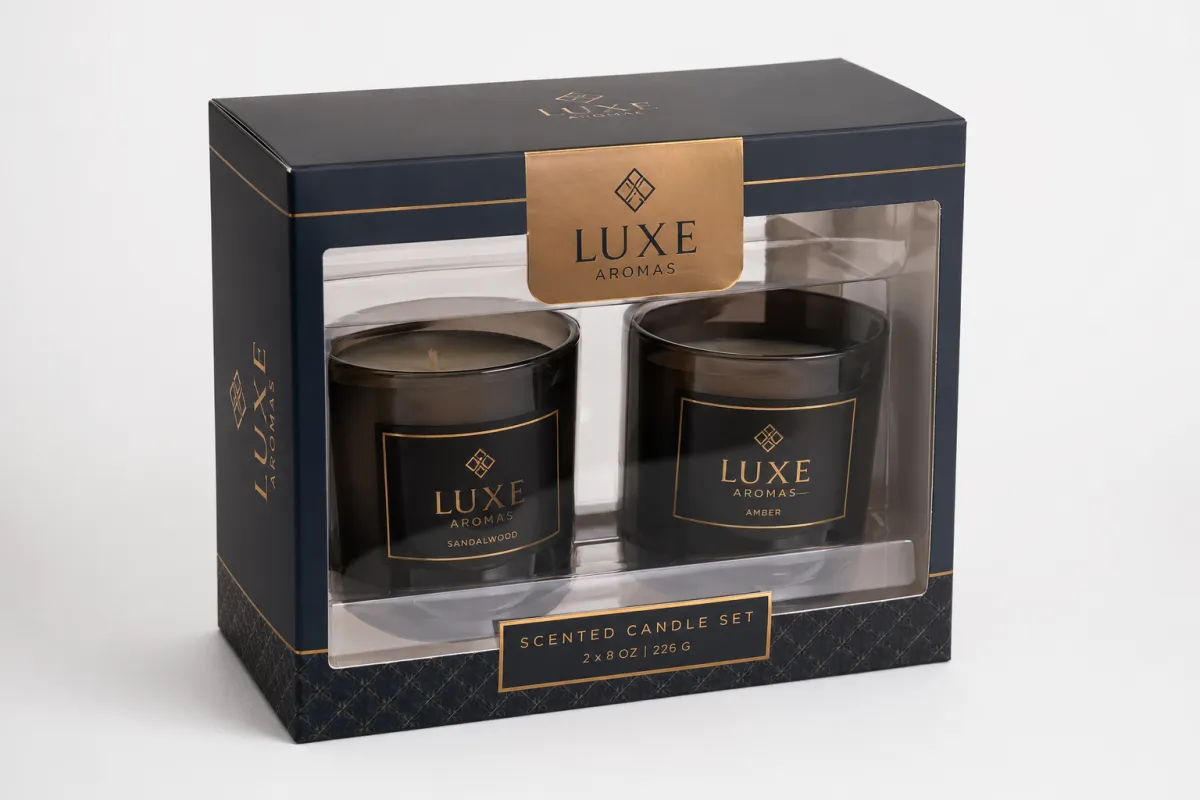
Shoppers judge fast. They do not sit there admiring your packaging strategy. They look, they decide, they move on. That is why top custom acetate window box designs do real work. They show the product, prove it is intact, and make the price feel less random before the box is even opened. In cosmetics, snacks, jewelry, and small launches, that visibility can do more than a fancy finish ever will.
If I had to narrow the field quickly, I would start with a full-window acetate box for premium cosmetics, a half-window carton for snacks and bakery items, a frame-window design for jewelry, and an inset-window style for limited-run launches that need a cleaner print face. Those are the versions I see most often when brands want shelf presence without turning the carton into a fragile prop. The keyword there is usable. A design can look great in a deck and still be annoying as hell on a packing line.
My quick filter before any RFQ is simple: structure, print hold, assembly quality, odor or dust risk, and shipping damage rate. If a sample fails one of those, it is out. No heroic rescue mission. A pretty carton that arrives warped, scuffed, or miserable to fold is still a bad carton. I have watched teams fall in love with a render and then spend two weeks pretending the sample problems are “fixable.” Sometimes they are. Sometimes they are just expensive.
“If the window is doing the selling, the rest of the box had better stay out of the way.”
That is the part people miss. The best versions are not always the loudest ones. The strongest build is often the one with the cleanest edge treatment, the most stable board weight, and the least glare under retail lighting. In practice, that usually means a 350gsm to 400gsm artboard, clear PET or PETG window film in the 0.18mm to 0.30mm range, and adhesive placement that disappears from normal shelf distance. Small disclaimer, because the industry loves muddy wording: most people say “acetate window,” but production usually means clear plastic film rather than literal acetate. The material spec matters more than the label anyway.
You should leave this section knowing which two or three options deserve an RFQ, what to ask a supplier before you sign off on a sample, and where the hidden cost usually shows up. If you are building a new line of Custom Packaging Products, this choice affects sell-through, freight breakage, and how buyers read your retail packaging the second it lands on shelf. That is not hype. It is the difference between a package that helps sell and one that just sits there taking up room.
The last piece is the one that gets ignored. The best window box choices are not picked by style alone. They are picked by how they behave in a real program, where deadlines, handling, and margin matter just as much as the shelf view.
Top Custom Acetate Window Box Designs Compared by Performance
Six window-box archetypes show up again and again in buyer conversations. Each one solves a different problem. The mistake is chasing the trend and ignoring the job. That is where these window cartons earn their keep: they make the product visible without turning the carton fragile or squeezing the print area into a corner.
| Design archetype | Best for | Visual effect | Durability | Main risk |
|---|---|---|---|---|
| Full-window | Premium cosmetics, fashion accessories | Maximum reveal, strongest shelf presence | Medium to high with heavier board | Glare and fingerprint visibility |
| Half-window | Cookies, chocolates, supplements | Balanced print face and product visibility | High | Window can feel too small for hero products |
| Frame-window | Jewelry, fragrance, gift sets | Premium border effect, controlled reveal | High | Window alignment must be precise |
| Side-strip | Minimalist brands, tech accessories | Subtle reveal, modern look | High | Product may not read clearly from 3-4 feet away |
| Corner reveal | Small-batch launches, artisan goods | Interesting angle, less common on shelf | Medium | Can look decorative if the art direction is weak |
| Inset-window | Luxury and limited editions | Depth and dimensionality | Medium to high | Higher tooling precision required |
The frame-window structure usually looks the most premium because the border gives the product a deliberate stage. That works especially well for jewelry and fragrance, where a controlled reveal often feels more expensive than a giant cutout. Full-window cartons are the loud ones. They are one of the strongest options for cosmetics that need to show color, texture, or the silhouette of the package itself. They are also the easiest to mess up, which is a very packaging-industry way of saying “looks simple, behaves finicky.”
Food and snack packaging usually gets the most value from the half-window. It keeps enough printable space for ingredients, claims, and flavor messaging while still letting shoppers see what they are buying. That matters. When someone can see cookies or confectionery, hesitation drops. Less uncertainty means faster movement, especially in chilled cases and busy aisles. You are not just selling taste. You are selling confidence before the lid ever opens.
Window film choice affects performance more than a lot of buyers expect. PET is common because it is clear, stable, and easy to source. PETG can feel a bit more premium and may handle certain folds better, but pricing and availability shift around. Some programs also use coated clear films for improved scratch resistance or anti-fog behavior. Those can help a lot, but they are not a free upgrade. If the product ships through rough channels, a film that looks prettier in the sample room can still haze or scratch too easily in the real world.
Adhesive strategy matters too. Good window boxes hide glue lines from normal viewing distance. Bad ones leave bubbles, corner lift, or a faint seam that tells the buyer the box was rushed. That is not a tiny flaw. Package branding runs on trust, and sloppy edges drag that trust down fast. I have seen buyers reject an otherwise strong carton over one obvious glue bloom. Fair? Maybe not. Real? Absolutely.
The usual mistakes are boring, which is exactly why they keep happening: visible seam lines, trapped bubbles, under-cured adhesive, and over-gloss glare under store lighting. I would add static charge on lighter papers or inserts to that list, because dust attraction becomes very obvious once the box sits on shelf for a few days. These are not cosmetic details. They are the difference between average cartons and high-performing Retail Packaging That earns reorder approval.
For teams that want a clean reference point, the better question is not “window or no window.” It is “which window geometry supports the product, protects the shipment, and keeps the brand face readable from normal shelf distance?” That question does a lot more for packaging quality than chasing another layer of gloss ever will.
Detailed Reviews of Real-World Top Custom Acetate Window Box Designs
This is the part where packaging articles usually start floating away from reality. I do not want that here. A useful review has to talk about how a design behaves in actual use: print registration, batch repeatability, shelf impact, unpacking durability, and whether the box still looks clean after a few hours of handling. That is how I judge window cartons. If a sample only survives gentle fingers and soft lighting, it is not ready. It is just polite.
Full-window carton for premium cosmetics
This design sells quickly, assuming the product itself is photogenic. It works well for lip kits, compact sets, serums, and beauty tools where shape and color matter. The print face gets smaller, so the artwork has to be disciplined. When it is done well, the box reads as branded packaging, not a random carton with a hole in it. Done badly, it looks like the box got into a fight with a die cutter and lost.
Score card: design clarity 9/10, durability 7/10, print fidelity 8/10, production control 7/10, overall value 8/10. Handling damage is the weak point. If the film is too glossy or the board weight is too low, scuffing shows fast. Even with that drawback, this stays a strong choice for premium beauty programs, especially when the product itself is part of the visual story.
What I would change: I would spec a slightly heavier board, tighten corner fold tolerance, and request a test in the exact retail lighting the customer uses. LED lighting can make haze look worse than a supplier sample room ever will. That kind of mismatch is how people end up saying, “the sample looked fine,” while the store team stares at a wall of glare.
Half-window carton for cookies and confectionery
This is the easiest design to defend in front of a buyer because it balances reveal and information space. It is also one of the better options for snack brands that need to keep ingredient messaging visible without losing appetite appeal. The structure often survives stacking better than a full-window version because the board face stays more continuous. That sounds minor until you have a pallet of cartons trying to crush each other in transit.
Score card: design clarity 8/10, durability 8/10, print fidelity 9/10, production control 8/10, overall value 9/10. The win here is predictability. The box is easier to line up, easier to fill, and usually easier to palletize. In food and beverage packaging, that operational ease matters almost as much as the shelf picture.
What I would change: I would ask for a test that simulates cold-to-warm movement if the product is sensitive to condensation. A half-window with bad moisture behavior can fog up, and once that happens, shoppers start trusting it less. Nobody buys a snack while squinting through a tiny greenhouse.
Frame-window box for jewelry
Jewelry buyers like restraint. They want enough visibility to confirm scale, stone color, or piece placement, but they do not want the carton shouting over the product. The frame-window design gives you that balance. It is a strong choice for rings, earrings, pendants, and gift sets where the interior insert is part of the presentation. It is also the kind of box that can feel expensive without being fussy.
Score card: design clarity 9/10, durability 8/10, print fidelity 8/10, production control 9/10, overall value 8/10. This style often looks more expensive than it is because the border creates a controlled reveal. The risk is alignment. If the window sits even slightly off, the whole package looks careless. There is no graceful way around that. Jewelry buyers notice tiny mistakes fast.
What I would change: I would push for tighter first-article approval and a drop test with the inserted product. For this category, even a tiny shift in seat depth can cause movement marks or damaged corners. A box that protects the piece while still looking elegant is doing two jobs at once, which is exactly why it deserves more attention than a standard tuck-end carton.
Inset-window box for limited launches
Inset windows create depth. That depth gives the package a layered, more deliberate feel, which is why they show up so often in seasonal launches and premium gift packaging. Of all the options here, this one probably rewards thoughtful art direction the most. Weak typography and sloppy spacing kill it. Strong design makes it look unusually refined. Kinda the whole point.
Score card: design clarity 8/10, durability 8/10, print fidelity 7/10, production control 7/10, overall value 7/10. The production score drops because the die line and fold sequence usually ask for more precision. That means more chances for the first sample to expose a flaw. It is not a bad design. It is just less forgiving than a simple cutout.
What I would change: I would keep the art simpler than the team thinks it needs to be. Too many visual elements steal attention from the product, and the whole point of a window box is to let the product carry some weight. Limited editions do not need clutter to feel special. They need restraint and a clean finish.
Side-strip window for minimalist brands
This is the sleeper option. It works better than people expect for tech accessories, skincare bars, and other small products where the brand wants a modern look without a giant cutout. Among acetate window packaging formats, this is one of the best for brands that care about restraint and tactile feel. The side-strip keeps the print face dominant while still confirming product shape.
Score card: design clarity 7/10, durability 9/10, print fidelity 9/10, production control 8/10, overall value 8/10. It is not the loudest design, but it ships well and usually looks premium in a quiet way. For some retail packaging programs, that is the smarter win. Not every shelf needs to shout.
What I would change: I would verify that the product still reads clearly at arm’s length. A subtle window can vanish on shelf if lighting is dim or the box sits at an angle. That is especially true for products with dark contents or matte finishes, where the window has to earn its keep.
Corner reveal box for artisan or small-batch products
Corner reveals are niche, but they can work when the brand story leans on craft cues. The visual effect is a little unexpected, which is why some designers like it. The risk is obvious: if the rest of the packaging design is too busy, the corner cutout starts looking decorative instead of intentional. Even so, this can still be a good Fit for Brands launching in short runs.
Score card: design clarity 7/10, durability 7/10, print fidelity 8/10, production control 7/10, overall value 7/10. I would use it sparingly and only when the artwork has a strong hierarchy. The box needs enough breathing room to make the reveal feel considered, not random.
What I would change: I would increase the visual tension around the reveal by making the remaining print space cleaner. Small-batch packaging works better with discipline than with decoration. If the design is trying too hard, the corner window becomes a gimmick instead of a feature.
There is a bigger lesson hiding in plain sight. Two boxes can look almost identical in a render and behave very differently in production. A 0.05mm change in film thickness, a slightly heavier board, or a better adhesive cure can change how the carton feels in hand. That is why I keep treating window carton selection as a performance question, not just a style question. A pretty box that falls apart in the real world is just a costly lie with good lighting.
How Do You Choose Among Top Custom Acetate Window Box Designs?
The fastest way to avoid expensive mistakes is to score every option against the same weighted framework. I would use shelf differentiation at 30%, protection needs at 25%, print fidelity at 20%, production speed at 15%, and total landed cost at 10%. That is not perfect. It does keep the conversation grounded when teams start arguing over mockups instead of sales reality. It also makes the comparison much easier across categories.
Then apply a risk filter. Fragile goods, heat-sensitive goods, sharp-edged products, and anything with anti-theft concerns should change the window size and placement right away. A jewelry set with loose movement needs a deeper insert. A chilled dessert item needs better fog resistance. A supplement bottle needs a carton that holds shape under compression. The strongest designs respond to those constraints instead of pretending they do not exist.
Channel matters too. DTC shipping rewards board strength and impact resistance. Wholesale pallet movement rewards crush resistance and repeatable folds. Premium retail shelving rewards window clarity and brand face legibility. That means the same carton can be a winner in one channel and a dud in another. Brands that sell through more than one channel often end up with separate SKUs or at least separate insert specs.
A simple three-step triage works well:
- Reject any design with an unclear film-to-board seam or poor corner finish.
- Pilot only two finalists, not five.
- Lock artwork tolerances after the first correction pass so production does not drift.
That process is boring. Good. Boring saves money. Most bad outcomes in Custom Printed Boxes come from too many open variables and not enough pressure testing early on. Ask for color tolerance samples, then check the box under both LED and halogen lighting because reflective behavior changes more than most teams expect. If the package still looks good under both conditions, you are much closer to a safe decision.
For proof discipline, I would request a corner fold test, a quick drop test, and a shelf simulation that runs at least 48 hours. Short tests miss too much. The scratches, board warp, or fogging that matter most often show up after handling, not right after assembly. When buyers say a box “looked better in the sample room,” this is usually what they mean. The sample was never pushed hard enough.
One more warning: do not choose the cheapest print vendor for the first prototype just because the quote looks nice. Cheap prototyping can hide real issues, especially with translucent areas or tight registration around the window. In branded packaging, the first sample should tell the truth, not flatter the artwork. I would rather see an honest ugly sample than a perfect one that lies.
Production Process and Timeline for Custom Acetate Window Box Designs
A clean timeline starts with the brief, not the art file. The supplier needs product dimensions, fill weight, shipping method, retail display format, and any legal copy that must appear on the box. Once that brief is complete, the usual path is concept, artwork finalization, dieline validation, sample cut, pilot run, QC, and mass production. For custom acetate window box programs, skipping any of those steps usually costs more later.
Lead time depends on complexity. A basic one-window build with standard board and standard film can move faster than a carton with specialty coatings, embossing, foil, or a more complex die. In practical terms, standard builds often need 2 to 4 weeks for design-to-first-sample and 4 to 8 weeks for production depending on quantity and workload. The more moving parts you add, the more approvals you need. That is not a nuisance. It is part of keeping the box honest.
Delays usually show up in three places: artwork corrections, color matching in translucent areas, and finishing add-ons. Window boxes are touchy because the printable area and the transparent area interact visually. A shade that looks fine on a monitor can feel too dark next to clear film. That is why I prefer a structured review window instead of a long chain of casual comments. Casual feedback creates drift, and drift is how projects start missing ships.
Sample cadence matters too. Rush prototyping helps when a launch date is fixed, but it still needs at least one corrected sample if the first article exposes a problem. Soft tooling can be worth it if the program is large enough, but for smaller brands, digital proofing plus a short pilot run is usually cleaner. The goal is not just to get a box. The goal is to confirm that the top custom acetate window box designs you shortlist can actually survive production.
Before release, I would ask for material traceability, shrinkage or warp tolerance data, and supplier-approved tolerances for board thickness and fold accuracy. Those documents sound dry, but they help when a shipment lands and one lot behaves differently from another. If a supplier cannot explain where the variance comes from, that is a warning sign. If they get defensive about basic specs, that is a bigger warning sign.
Contingency planning is not optional for a tight campaign. Keep a backup supplier pre-qualified, store approved font and logo assets in one place, and stagger internal sign-off windows so one delayed reviewer does not freeze the whole program. If the launch is tied to a retail date, a missed approval can do more damage than a small unit cost bump ever will. The best window carton programs are built with margin in the schedule, not just margin on the spreadsheet.
For standards-minded teams, it also helps to align drop and transport testing with widely recognized methods such as ISTA transport test guidance. If the carton passes a realistic distribution profile, the odds of shelf success go up. That is not theory. It is practical risk control.
How Much Do Top Custom Acetate Window Box Designs Cost?
Price is where a lot of teams get sloppy. They compare carton quotes like material cost is the whole story, then get blindsided by die setup, finishing, freight, and rework charges. A better question is: what is the real landed cost of the top custom acetate window box designs once the box is actually in your warehouse and ready to sell?
Cost usually comes from five things: the base board, the acetate window film grade, the printing method, setup costs, and per-unit economies. Add matte lamination, UV varnish, foil accents, or a tamper-evident insert, and the price moves up. Use non-standard dimensions, and freight can rise too because cartons ship by volume as much as by weight. People hate that part because it feels less creative than a mockup, but it is the part that shows up on the invoice.
| Program type | Typical MOQ | Expected unit range | Common add-ons | Notes |
|---|---|---|---|---|
| Startup pilot | 500 to 1,000 | $0.38-$0.78 | Basic print, standard film, simple fold | Best for testing sell-through before committing |
| Growth run | 2,000 to 5,000 | $0.22-$0.46 | Matte lamination, selective UV, better insert | Good balance of price and presentation |
| Multi-channel scale | 10,000+ | $0.16-$0.33 | Foil accents, embossing, anti-tamper features | Lower unit cost, but more exposure to forecast risk |
Those are usable ranges, not promises. A luxury fragrance box can sit above them, and a plain half-window snack box can sit below them. The important point is that MOQ changes everything. Sometimes splitting two runs is cheaper if one design is still uncertain. That sounds backwards until you compare it with the cost of overbuying the wrong version. A second setup fee can be a bargain if it keeps you from sitting on dead inventory.
Hidden costs deserve their own line. Tooling tweaks, artwork revisions, freight surcharges for odd dimensions, and storage risk for seasonal SKUs are the usual suspects. I also tell teams to budget for at least one correction pass. A supplier that claims zero revisions may sound efficient, but in practice that often means the customer eats the risk later in the process. The most effective box designs are rarely the cheapest on day one; they are the ones that stay economical after the sample cycle.
There is a return-on-investment angle too. Better product visibility can reduce buyer hesitation, improve trial conversion, and lower in-store replacement losses if the package protects the product well enough. For premium retail packaging, that matters. A box that costs 10% more but lifts conversion enough can still be the cheaper choice. That is the kind of math people forget when they get hypnotized by a lower quote.
If you are comparing vendors, ask for pricing at three run levels and compare like for like: same board weight, same film thickness, same finishing, same insert assumption. Without that discipline, one quote may look cheaper simply because it leaves out the details that make the box behave properly. You can also compare broader format options through Custom Packaging Products and see where acetate windows fit inside your wider packaging program.
One final note on economics: the cheapest top custom acetate window box designs are not always the most profitable. If the carton hurts shelf impact or causes breakage, the “savings” disappear fast. Low price is only a win if the box actually does the job.
Our Recommendation and Next Steps for Fast, Safe Rollout
If you want a clean decision, here is the ranking I would use. Best overall: half-window cartons, because they balance visibility, durability, and print space across the widest range of products. Best value: side-strip windows, especially for brands that want a cleaner look and better shipping behavior. Best premium-look winner: frame-window or inset-window styles, depending on how much depth the brand wants to signal. Those are the top custom acetate window box designs I would shortlist first.
The next move should be procedural, not emotional. Lock the final dieline. Ask each supplier to quote the same specification. Build a one-page comparison sheet with board weight, film type, print method, turnaround, MOQ, and rework terms. Then set quality gates before production starts. That is the most reliable way to turn a packaging concept into a usable retail packaging asset. Fancy decks are nice. Usable cartons pay the bills.
Here is the weekly action list I would recommend:
- This week: collect samples, verify window clarity, and compare seam finish under direct light.
- This month: run two finalists through a 48-hour shelf simulation and a simple transit test.
- Before launch: approve the print proof, lock insert dimensions, and confirm freight packaging.
If you are under time pressure, keep the workflow tight: shortlist two vendors, request matched samples, run a shelf simulation, and place a pilot PO with pre-defined rework triggers. That approach keeps the decision practical and cuts the odds that a glossy mockup turns into a production headache. It also gives you a real basis for judging the top custom acetate window box designs instead of relying on renderings alone. I am gonna say it plainly: if the sample does not survive the process, the final run probably won’t either.
That is the part many brands miss. They want the prettiest option, then act surprised when shelf appeal, margin, and risk tolerance do not line up. If you are launching a fragile or premium product, choose the design with stronger structure and tighter control. If you are testing a new line with limited cash, choose the version that gives you the best mix of visibility and manageable MOQ. Either way, the top custom acetate window box designs should earn their place by supporting sales, not just decorating the shelf.
For teams that want to connect packaging choice to sustainability goals, it is also worth reviewing FSC-certified board options and responsible sourcing guidance from FSC. That does not solve every issue, but it helps align brand story, buyer expectations, and material selection in a more defensible way.
The final recommendation is simple. Start with the top custom acetate window box designs that match your shelf strategy, margin target, and risk tolerance. Then test hard, compare honestly, and scale only the version that survives the proof, the pilot, and the first real shipment. That is the actual decision rule. Not the prettiest render. Not the cheapest quote. The box that performs where it counts.
FAQ
Which top custom acetate window box designs are safest for fragile jewelry launches?
Choose a design with tighter tolerances and deeper seat depth so movement stays limited during transit. For jewelry, a frame-window or inset-window carton usually performs better than a wide-open full-window build because the product sits more securely. Ask for anti-static film, reinforced inner corners, and a drop test sample before approving production. That is the safest path for premium window box programs in this category.
How do top custom acetate window box designs hold up in humid climates over long shelf times?
Use humidity-resistant inks and edge-sealed windows to reduce whitening and delamination. Ask the supplier for humidity test data that reflects actual transit and shelf conditions, not showroom averages. If condensation is a real concern, favor anti-fog or coated films. In practice, the best acetate window packaging is the version that still looks clear after exposure changes, not the one that only behaves in a controlled room.
What is a realistic timeline for custom acetate window box designs from prototype to delivery?
For standard builds, plan 2 to 4 weeks for design-to-first-sample and 4 to 8 weeks for production depending on quantity. Most delays come from artwork corrections and approval cycles, so schedule 2 to 3 structured review windows. Add buffer time for customs, peak freight, and any extra finishing such as embossing or metallic effects. That is the practical timeline for these programs.
How much more do top custom acetate window box designs cost than equivalent non-window boxes?
Expect a setup premium for custom dies and die-cutting, and material or finishing can add 10% to 25% depending on film thickness, transparency level, and decorative coating. The exact gap depends on the build and run length. Use per-unit lifecycle costing instead of quote-only comparison, because a stronger box can reduce returns and breakage. That is where acetate window packaging can justify the extra spend.
Can a low-volume brand test top custom acetate window box designs without committing to huge spend?
Yes. Ask for digital prototype sign-off, then run a short pilot before full production. Keep multiple design versions to a minimum so you do not pay repeated tooling charges. Use the pilot window to capture sell-through, damage metrics, and customer feedback, then scale only the winning version. That is usually the smartest way to test a new window carton without overextending the budget.


