Buyer Fit Snapshot
| Best fit | luxury rigid sleeve branding ideas convert for packaging buyers comparing material specs, print proof, MOQ, unit cost, freight, and repeat-order risk where brand print, material, artwork control, and repeat-order consistency matter. |
|---|---|
| Quote inputs | Share finished size, material target, print colors, finish, packing count, annual reorder estimate, and delivery region. |
| Proofing check | Approve dieline scale, logo placement, barcode or warning zones, color tolerance, and any recyclable or compostable wording before bulk production. |
| Main risk | Vague material claims, crowded artwork, or missing packing details can create delays even when the unit price looks attractive. |
Fast answer: Luxury Rigid Sleeve Branding Ideas Convert: Dieline, Finish, Proof, and Buyer Review should be specified like a repeatable production item. The safest quote includes material, print method, finish, artwork proof, carton packing, and reorder notes in one written spec.
What to confirm before approving the packaging proof
Check the product dimensions against the actual filled item, not only the sales mockup. Ask for tolerance on folds, seals, hang holes, label areas, and retail display edges. If the package carries a logo, QR code, warning copy, or legal claim, reserve that space before decorative graphics fill the panel.
How to compare quotes without losing quality
Compare board or film grade, print process, finish, sampling route, tooling charges, carton quantity, and freight assumptions side by side. A lower quote is only useful if the supplier can repeat the same color, closure quality, and packing count on the next order.
Top Luxury Rigid Sleeve Branding Ideas That Convert
Top luxury rigid sleeve branding ideas matter because a sleeve can change shelf perception faster than a full box redesign. Shoppers read edges, texture, contrast, and depth in seconds, then decide whether a package feels premium or merely dressed up. The strongest top luxury rigid sleeve branding ideas usually pair one tactile cue with one visual cue, not five effects fighting for attention. That is the core pattern, and it holds for fragrance, jewelry, premium electronics, and corporate gifting alike.
From a packaging buyer's point of view, the real job is not decoration. It is customer perception. A strong sleeve should raise brand recognition, support brand identity, and still look expensive after shipping, stacking, handling, and a few fingerprints. The best top luxury rigid sleeve branding ideas are the ones that keep their polish under store lighting, photograph cleanly for ecommerce, and avoid a fragile production setup that turns every reorder into a headache.
I have sat through enough sample reviews to see the same thing happen over and over: the most convincing sleeve is rarely the loudest one. In one fragrance project, three people in the room initially favored the most decorated mockup. After five minutes under mixed lighting, the cleaner version won because the logo stayed crisp and the edges did not fight for attention. That kind of shift is common, and it is why restraint is not a lack of ambition. It is a design decision.
Across the packaging programs I have reviewed, one restrained finish usually outperforms three competing effects. That is why this shortlist looks at premium perception, durability, print clarity, production complexity, and total cost side by side. If the sleeve fails any of those checks, it is not a luxury solution. It is an expensive distraction.
Top Luxury Rigid Sleeve Branding Ideas: Quick Answer
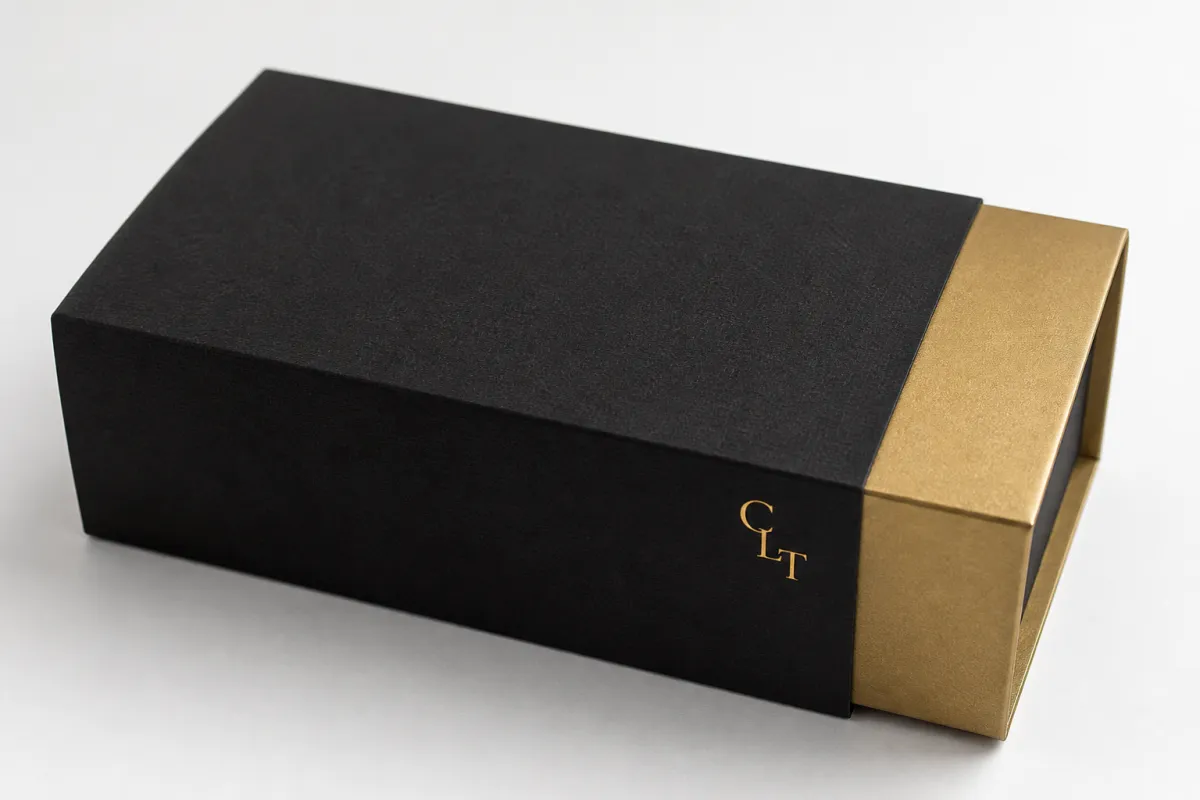
If you need the short version, top luxury rigid sleeve branding ideas work best when they make the structure feel intentional before the buyer even opens it. A sleeve with sharp edges, a carefully chosen wrap, and one controlled finishing effect can improve unboxing experience quality without turning the design into visual noise. In practice, the main tools worth comparing are foil stamping, blind embossing, soft-touch laminate, textured paper wraps, debossing, and selective spot UV.
The real winner is rarely the flashiest option. It is the one that balances brand consistency with tactile richness. A sleeve that flashes under retail LEDs may look impressive for five seconds, then feel heavy-handed. A quieter sleeve with a deep emboss and a clean foil accent can feel more expensive because the hand interaction stays in memory. That is why top luxury rigid sleeve branding ideas should be treated as conversion decisions, not decoration exercises.
A sleeve can look luxurious on a render and then kinda fall flat in the hand. The difference usually comes down to three small things: how the foil catches light, how deep the emboss actually bites into the board, and whether the wrap stock holds a sharp fold without cracking at the corners. Those details sound minor until you are comparing samples under a desk lamp and a retail spotlight. Then they are everything.
Here is the practical verdict:
- Foil stamping delivers the fastest premium signal and photographs well.
- Blind embossing feels understated and high-end when the design is minimal.
- Soft-touch lamination creates a velvet-like surface that improves handling and cuts glare.
- Textured paper wraps add depth and help a sleeve feel custom even before print decoration.
- Spot UV is strongest as an accent, not a full-surface effect.
- Debossing adds a more architectural, modern look, especially on rigid constructions.
For most brands, the smartest path is one tactile cue plus one visual cue. Example: soft-touch plus foil. Or textured paper plus blind emboss. That combination is usually enough to build a premium story without inflating cost, complicating approvals, or making the sleeve look like a sample board from a finishing supplier. The best top luxury rigid sleeve branding ideas are disciplined.
A sleeve is doing two jobs at once: it must protect the box in transit and sell the brand in the hand. If either job gets ignored, the whole package feels cheaper than it should.
Standards and testing matter too. If your sleeve travels through ecommerce, asking for ISTA-style distribution testing is sensible, and FSC-certified papers can support sourcing claims when the program calls for it. For broader packaging machinery and distribution context, the industry reference at PMMI is useful, and ISTA remains a credible reference point for distribution performance. The point is simple: top luxury rigid sleeve branding ideas should look good and survive the route to market.
Top Luxury Rigid Sleeve Branding Ideas Compared
When buyers compare top luxury rigid sleeve branding ideas, they often focus on the finish sample first and the economics second. That order is backward. The right comparison starts with how each option behaves in three situations: under bright retail lighting, in a customer's hand, and after a carton has been stacked, shipped, and opened twice. A sleeve that wins all three moments is rare; a sleeve that wins two is usually enough.
There is also a practical truth that gets buried in spec sheets: packaging finishes behave a bit like camera lenses. Gloss narrows the visual field and pushes the eye toward one focal point. Texture broadens the surface and slows the reader down. That is why the same logo can feel loud on one sleeve and refined on another. The substrate changes the story.
Below is a practical comparison of the most common luxury sleeve finishes. The ranges are planning ranges, not promises. Supplier region, board thickness, tooling complexity, artwork coverage, and freight can move the numbers faster than brand teams expect.
| Finish | Visual Impact | Tactile Feel | Typical Cost Signal | Best Fit |
|---|---|---|---|---|
| Hot foil stamping | High | Medium | $ | Fragrance, jewelry, gift sets |
| Blind embossing | Medium | High | $$ | Heritage brands, understated luxury |
| Soft-touch lamination | Medium | High | $$ | Premium skincare, electronics |
| Textured paper wrap | Medium | High | $$ | Brand storytelling, artisanal products |
| Spot UV accents | High | Low to medium | $ to $$ | Modern retail packaging, ecommerce |
| Debossing plus foil | High | High | $$$ | Limited editions, gifting, premium launches |
For visual branding, foil and spot UV are the most camera-friendly. They create contrast, and contrast sells on a product page. For brand identity, blind embossing and textured wraps tend to feel more mature because they reward close handling instead of shouting across the aisle. That is why the best top luxury rigid sleeve branding ideas often depend on channel. Ecommerce wants visible contrast. Retail wants legibility under mixed light. Gifting wants touch.
There is also a print clarity issue. Metallic surfaces can make small type harder to read. A soft-touch sleeve can mute glare and improve legibility, but only if the color build is stable and the artwork is not too dark. Textured stocks can feel beautiful, though very fine linework may lose crispness if the texture is too aggressive. That tradeoff matters more than many brand teams expect.
Use-case guidance helps narrow the field:
- Fragrance: foil plus emboss usually performs best because the box must read as luxurious from a distance and still feel rich in hand.
- Jewelry: blind emboss or soft-touch with small foil accents tends to feel refined rather than loud.
- Premium electronics: soft-touch plus deboss is strong because it suggests precision and control.
- Corporate gifting: textured wrap plus foil monogram works well when the brand needs elegance and broad appeal.
- Limited edition launches: spot UV and foil can add drama, but only if the design remains disciplined.
If you want more proof of how packaging decisions affect brand perception, review the packaging examples in our Case Studies section. The repeated lesson is consistent: the sleeve should reinforce the product's position, not compete with it.
One more practical note from the production floor: a tiny shift in die registration can change how expensive a sleeve looks. I have seen a 0.3 mm emboss that looked like a custom fashion label and the same motif, moved half a millimeter off, suddenly read as sloppy. The difference was not the concept. It was alignment.
Detailed Reviews of the Best Luxury Sleeve Finishes
Top luxury rigid sleeve branding ideas become clearer when you look at each finish the way a production buyer does: sample in hand, light source overhead, deadline approaching, and budget already approved. The difference between a finish That Feels Premium and one that feels overdesigned is often very small. A 0.3 mm emboss depth can read like craft. A second foil color can tip the whole piece into clutter.
Hot foil stamping
Foil stamping remains one of the strongest top luxury rigid sleeve branding ideas because it gives immediate contrast. Gold, silver, copper, black foil, and holographic variations each create a different mood, but the mechanism is the same: light catches the surface and turns the logo into a focal point. On a rigid sleeve, that can lift brand recognition fast. For ecommerce photography, it is excellent. For shelf presence, it is still excellent if the logo size is generous enough to stay legible at arm's length.
The tradeoff is cost and restraint. Heavy foil coverage raises expense, and the look can turn gaudy if the whole panel is covered. I prefer foil as a punctuation mark: a logo, a border, a seal, or a small pattern line. That is enough. For most premium sleeves, foil used with a matte base feels more expensive than foil used everywhere. If the logo is too tiny, the foil is gonna read like decoration rather than strategy.
Blind embossing
Blind embossing is one of the quietest top luxury rigid sleeve branding ideas, and that is precisely why it works. With no ink and no metallic shine, the design relies on shadow and shape. It feels mature. It feels controlled. Under the right light, it can be the most elegant effect in the room. When a customer runs a thumb over the mark, the unboxing experience changes immediately. That physical moment matters.
It also demands discipline. Fine details can disappear if the emboss dies are too intricate or the paper wrap is too soft. For best results, use a mark with broad shoulders, simple geometry, and enough depth to create a real shadow line. Blind embossing is strongest when the rest of the sleeve is calm. In practice, the cleaner the layout, the more the texture does the selling.
Debossing
Debossing pushes the image into the surface rather than lifting it, and that subtle difference changes the tone. Among top luxury rigid sleeve branding ideas, debossing feels more architectural and modern than embossing. It can make a monogram or wordmark feel embedded into the structure rather than added on top. That is useful for brands that want a cleaner visual branding story.
Where it can fail is on very thick wraps or highly textured stocks, because the impression may soften too much. The effect needs enough depth to survive handling. A shallow deboss looks underdeveloped. A deeper one can look terrific, especially when paired with minimal foil or a high-contrast ink color. The best results usually come from a wrap that has enough body to hold the edge, but not so much grain that the mark collapses into the background.
Soft-touch lamination
Soft-touch is a favorite in premium packaging because it changes the hand feel instantly. A sleeve that would otherwise feel like coated paper suddenly feels velvety and dense. For top luxury rigid sleeve branding ideas, this is one of the most useful upgrades because it improves both grip and perceived value. It also cuts glare, which helps on camera and under fluorescent store lighting.
There are limits. Dark colors can show fingerprints, and poorly managed soft-touch films can scuff in shipping if the pack is rubbed against abrasive surfaces. That is why testing matters. A good supplier should show abrasion behavior, not just a perfect sample. If you want a controlled, modern premium look, soft-touch plus a precise foil logo is hard to beat. The result is restrained, and restrained usually ages better than novelty.
Textured paper wraps
Textured wraps are underrated among top luxury rigid sleeve branding ideas because they do quiet work. Linen-like grains, cotton feels, felted surfaces, and subtle laid textures all create a signal that the package was designed rather than defaulted. They help a sleeve feel premium even before print is applied. That matters in categories where the customer handles the box before reading the copy.
The risk is over-texturing. If the grain is too bold, fine typography suffers and the package starts to feel busy. A tighter texture is usually safer. For luxury lines, I often prefer texture on the sleeve exterior and smoother paper on the inner tray or insert. That contrast creates a more layered presentation without overcomplicating the outside. It is a small trick, but it can make a package feel far more considered.
Spot UV accents
Spot UV is best used as an accent, not the main event. In top luxury rigid sleeve branding ideas, it works because gloss against matte can create a small but powerful contrast. It is effective for patterns, logo outlines, and selective highlights. The challenge is that a gloss effect can look cheap if it is too broad or too decorative. When it is used with precision, it can feel crisp and modern.
One caution: under strong lighting, spot UV can reveal registration issues and edge inconsistencies. That is less visible in mockups than in production. So if you choose this route, ask for a proof that shows the exact placement and monitor the tolerances closely. Spot UV rewards clean artwork and punishes anything that is even slightly off-center.
Pairing effects without clutter
The best top luxury rigid sleeve branding ideas often come from pairing, not stacking. Foil plus emboss is the classic. Soft-touch plus deboss is another. Textured wrap plus a metallic edge can be beautiful if the edge detail is restrained. What you want is contrast in one dimension and calm everywhere else. If every surface is doing something, the sleeve stops feeling premium and starts feeling busy.
One client-style rule of thumb: if the sleeve is already tactile, keep the graphic treatment simple. If the sleeve is visually bold, keep the texture quiet. That balance preserves brand consistency and avoids the "finished for the sake of finishing" problem that shows up in too many launch programs. It also keeps the design from drifting into the same overworked look that shows up in a lot of sample walls.
Cost, Pricing, and MOQ for Luxury Rigid Sleeve Branding
Cost is where top luxury rigid sleeve branding ideas become real. A concept may look elegant on a screen, but the quote decides whether it moves forward. The big drivers are board thickness, paper wrap selection, foil coverage, emboss depth, inserts, hand assembly, and the number of finishing passes. Even a small increase in complexity can change the unit price more than expected.
For practical budgeting, these broad ranges are more useful than vague promises:
- Simple premium sleeve with printed wrap and minimal finishing: often around $0.45-$0.95 per unit at 5,000 pieces.
- Mid-range luxury sleeve with soft-touch or textured wrap plus one decorative effect: often around $0.85-$1.80 per unit at 5,000 pieces.
- Higher-end build with foil, embossing, special inserts, or multi-step assembly: often around $1.60-$3.25 per unit, sometimes more if the run is small.
MOQ changes everything. A 1,000-piece order can push the unit cost into a much higher bracket because tooling and setup charges are spread across fewer units. At 5,000 or 10,000 pieces, those costs start to normalize. That is why smaller brands should compare minimums carefully before choosing top luxury rigid sleeve branding ideas that require multiple dies or hand-applied steps.
| Program Tier | Typical MOQ | Indicative Unit Cost | What It Usually Includes |
|---|---|---|---|
| Entry premium | 1,000-3,000 | $0.95-$2.10 | Printed wrap, basic sleeve structure, limited finishing |
| Core luxury | 3,000-5,000 | $0.75-$1.85 | Better board, soft-touch or texture, one foil or emboss detail |
| Advanced luxury | 5,000-10,000+ | $1.25-$3.25 | Multiple finishes, inserts, closer quality control, more hand work |
There are hidden costs too, and they are easy to miss in a first quote. Plates, dies, sample charges, freight, color correction, and rework if artwork is not final can all show up later. A quote is only comparable if the spec is fixed. That means the same board caliper, the same paper finish, the same foil area, the same insert, the same pack-out assumption, and the same shipping terms. Otherwise you are not comparing top luxury rigid sleeve branding ideas; you are comparing moving targets.
Ask for pricing that separates the following:
- Structure and board
- Paper wrap and print method
- Foil, emboss, deboss, or UV charges
- Assembly and pack-out
- Sampling and tooling
- Freight and delivery timing
If the brief includes custom inserts, labels, or product tags, compare them as separate line items. Our Custom Labels & Tags page is helpful if your sleeve needs matching brand touches inside the pack. Keeping those specs clean is one of the easiest ways to protect budget and maintain brand consistency across a whole launch set.
For sourcing claims or sustainability language, FSC paper can support responsible procurement, but only if the certification chain is documented correctly. That sort of detail matters in premium packaging, where customers notice the story as much as the surface. According to the FSC framework, chain-of-custody requirements are part of the claim, not an afterthought. That is a useful reminder when evaluating top luxury rigid sleeve branding ideas for broader brand identity goals.
For deeper packaging standards and sourcing context, see FSC. The certification is not a design feature, but it can strengthen the package narrative when the material story matters to the buyer.
Process and Timeline for Luxury Rigid Sleeve Branding
Top luxury rigid sleeve branding ideas only work on schedule if the process is controlled. The standard path starts with dielines and artwork, moves through proofing and sampling, and ends with production, quality control, and final pack-out. Skip a checkpoint, and the timeline slips. It happens often. A late finish change is one of the fastest ways to turn a calm launch into a rush order.
Here is the typical flow:
- Dieline and structural review - 1 to 3 business days if the box size is already defined.
- Artwork prep - 2 to 5 business days depending on how many foil layers, spot effects, or panels need alignment.
- Sample build - often 5 to 10 business days after artwork approval.
- Proof review - 1 to 3 rounds if color, placement, or finish needs correction.
- Production - usually 12 to 25 business days for straightforward sleeves, longer for multi-finish builds.
- Final inspection and freight - 3 to 10 business days depending on destination and shipping method.
For complex top luxury rigid sleeve branding ideas, the biggest schedule risk is not printing. It is coordination. When foil, embossing, custom inserts, and hand assembly all need to happen in the same program, a small delay in one area can hold the whole order. That is why approval checkpoints matter. Lock the structural proof first, then color, then finish, then final sign-off. That order is not glamorous, but it protects the launch date.
Lead time can compress if the design is simple and the supplier has the right stock on hand. A clean sleeve with a standard wrap might move in 10 to 15 business days after proof approval. A multi-step luxury piece with more hand work can stretch to 20 to 35 business days, not counting transit. If the packaging is tied to a trade show, seasonal drop, or gifting window, build buffer time before you approve the final spec. Otherwise the sleeve becomes the bottleneck.
Testing is part of the timeline too. Ask for abrasion checks, scuff testing, and shipping simulation where relevant. If the product is going through distribution channels, ISTA-style testing helps identify whether the sleeve decoration survives vibration and compression. That matters more than a perfect sample sitting under a desk lamp. Packaging only wins if it arrives looking like the approval version.
Keep the approval trail clean: structural proof, color proof, finish proof, final sign-off. That sequence protects brand consistency and keeps top luxury rigid sleeve branding ideas from turning into production confusion. It also keeps everyone honest about what is actually being approved, which sounds obvious until a late-stage change adds a week to the schedule.
How to Choose the Right Luxury Sleeve Branding Idea
Top luxury rigid sleeve branding ideas should match the product, the channel, and the emotion you want the buyer to feel. A heritage brand usually benefits from quieter design language: blind embossing, textured wraps, restrained foil, and a finish that suggests trust rather than spectacle. A newer brand trying to create excitement may need more contrast, more shine, and a stronger first read on shelf.
The easiest way to narrow the choice is to ask three questions:
- What should the package communicate in three seconds? Luxury, craftsmanship, innovation, or gift value?
- Where will it be seen most often? Retail shelf, ecommerce tile, social content, or direct mail?
- How will it be handled? One-time gifting, repeated retail touchpoints, or rougher DTC shipping?
Lighting is often underestimated. A sleeve that looks rich in a studio can flatten under cool LEDs. Gloss can suddenly become noisy. Soft-touch can look rich, but in dim light it may read too dark if the typography lacks contrast. This is where samples need to be viewed in real conditions, not only against a white backdrop. That simple test can save a brand from picking top luxury rigid sleeve branding ideas that photograph well but sell poorly.
There is a second trap as well: decorating the sleeve to compensate for weak branding. That does not work. If the logo, color palette, and typography do not support the product position, extra finish only makes the gap more obvious. Strong top luxury rigid sleeve branding ideas should amplify the brand identity already in place. They do not rescue weak basics.
Here is a practical decision matrix:
- Budget-conscious premium: soft-touch with one foil mark or a narrow deboss.
- Quiet luxury: blind emboss on a textured wrap with minimal color contrast.
- High drama: foil plus a dark matte base, used sparingly.
- Modern precision: deboss plus soft-touch, with crisp typography and limited ornament.
- Gift-first packaging: foil monogram, structured sleeve, and a strong interior reveal.
Another mistake is assuming the most expensive finish is automatically the best. A sleeve can be beautifully made and still feel wrong if it clashes with the product or market. A premium electronics line may need restraint. A fragrance launch may need sparkle. A collector's edition may need tactile storytelling. The finish should fit the promise, not just the budget.
Our Recommendation and Next Steps
If the goal is a dependable luxury upgrade, the safest winners among top luxury rigid sleeve branding ideas are usually soft-touch plus foil, or textured wrap plus blind emboss. Those combinations balance visual branding and tactile quality without pushing the design into overstatement. If you need a stronger shelf signal, foil plus emboss is still the classic high-impact pairing. It is not subtle, but it is effective.
For a budget-conscious launch, keep the structure strong and the decoration controlled. A good sleeve with one clean brand mark will outperform a crowded sleeve with too many effects. For a collector-style release, a more complex build can be justified, but only if the timeline and MOQ support it. In other words, choose the finish that fits the story and the volume.
My testing advice is simple:
- Request three sample builds, not one.
- View them under warm light, cool light, and daylight.
- Handle them quickly to check scuffing, fingerprinting, and edge wear.
- Compare the quotes on identical specs.
- Confirm MOQ, lead time, approval rounds, and freight assumptions before you sign off.
If you are shortlisting top luxury rigid sleeve branding ideas for a live launch, the most useful path is usually boring in the best possible way: pick two options, test them in real lighting, and choose the one that still feels expensive after handling and shipping simulation. That process protects the budget and usually improves the final result, because the answer is sitting in the sample rather than in a mood board.
For brands that want proof before scale, our Case Studies section shows how packaging choices translate into real programs. The pattern is consistent: the winning sleeve is the one that makes the product feel more credible, more valuable, and more consistent from quote to shelf. And that is why top luxury rigid sleeve branding ideas deserve careful testing, not just approval by instinct.
Handled correctly, top luxury rigid sleeve branding ideas can strengthen brand recognition, improve unboxing experience quality, and support customer perception without overcomplicating production. The practical takeaway is straightforward: build for the hand, the shelf, and the shipping lane, then choose the finish that still reads as premium after all three tests. That is the sweet spot, and it is usually closer to restraint than spectacle.
FAQ
What are the best top luxury rigid sleeve branding ideas for premium gift boxes?
Foil stamping and blind embossing usually deliver the strongest premium signal for gift packaging. Soft-touch lamination works well when you want a quieter, more modern luxury feel. The best choice depends on whether the box must impress at first glance or reward close handling, because those are not always the same goal.
How much do top luxury rigid sleeve branding ideas cost per unit?
Cost rises with foil coverage, emboss depth, insert complexity, and the amount of hand finishing required. Small MOQ runs can push the unit cost much higher than sample photos suggest. Ask for a quote that separates setup charges, decoration charges, and freight so you can compare vendors fairly and avoid hidden surprises.
What is the typical turnaround for a custom rigid sleeve order?
Simple sleeves move faster than multi-finish builds, especially when no structural changes are needed. Sampling, proof approval, and late artwork changes are the main reasons schedules slip. If the launch date matters, build buffer time into the timeline before you approve the final spec.
Should I choose foil, embossing, or soft-touch for luxury sleeve branding?
Choose foil when you want contrast and visible glamour. Choose embossing when tactility matters more than shine. Choose soft-touch when the goal is a restrained, expensive feel that resists visual clutter and supports a calmer presentation.
What MOQ should I expect for luxury rigid sleeve branding ideas?
MOQ depends on structure, finishing, and how much manual assembly is required. More complex sleeves often require higher minimums because setup costs are harder to absorb on tiny runs. If you need a smaller order, ask whether simpler finishes or standardized sizes can reduce the minimum.