If you are planning a custom trucker Caps Bulk Order, the sample is only the starting point. The real decision is whether the cap keeps its shape in production, the logo reads clearly at a distance, and the finished item matches the intended use. Mesh quality, front-panel structure, decoration method, and packing details all affect that outcome.
Bulk buyers usually get better results when the order is defined early. A crew cap, a trade show giveaway, and a retail cap can share the same silhouette, but they do not need the same fabric weight, logo treatment, or packaging. Clear specs cut revision time and usually improve the quote.
Why custom trucker caps bulk order pricing drops fast
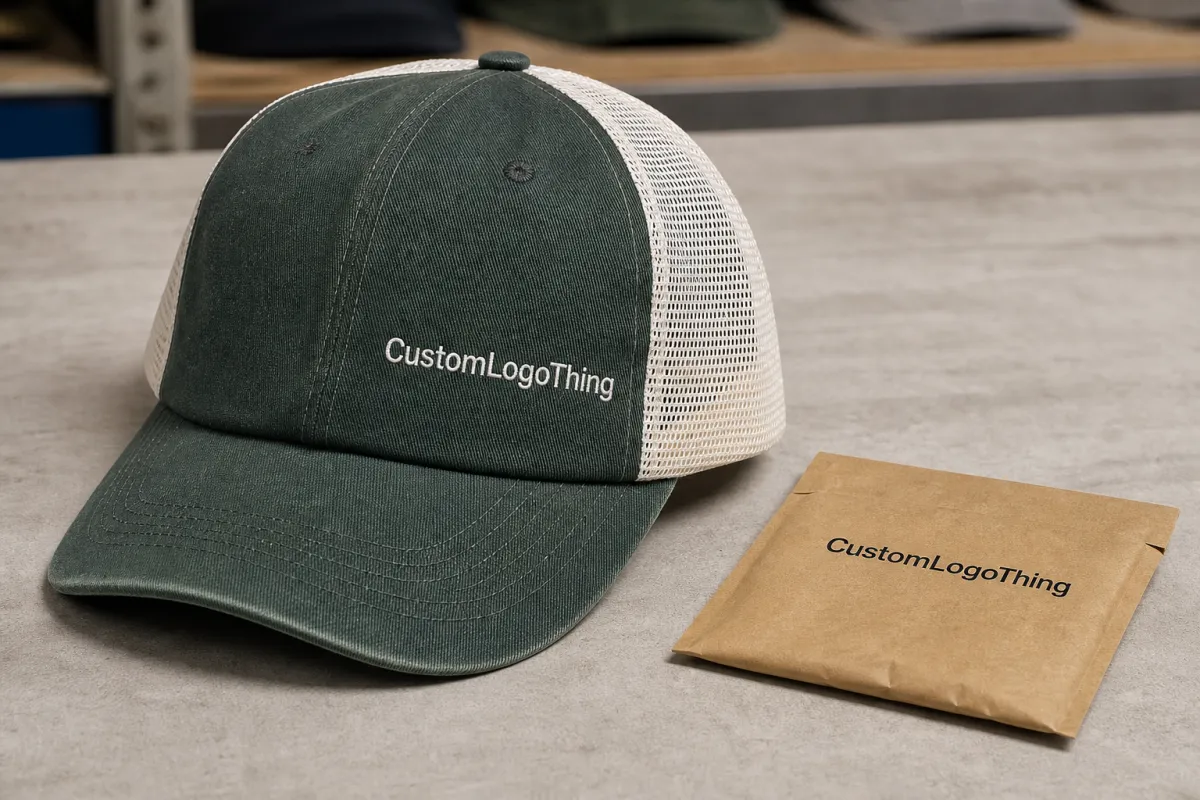
The economics are simple. A standard trucker cap uses less fabric than a closed-back cap, and the mesh back reduces material while improving breathability. Most styles also place the branding on one front panel, so decoration stays concentrated instead of spreading across the full crown.
That structure helps because setup cost gets spread across more units. Digitizing, screen setup, patch production, and proof prep do not increase linearly with quantity. Once the setup is done, a larger run can lower the per-unit cost quickly, especially if the blank cap is stocked and the logo stays within a standard decoration area.
There is also a quality-control benefit. Repeating one cap body, one color, and one decoration method makes inspection more predictable. A warehouse team can count cartons faster, a buyer can spot a mismatch sooner, and the chance of receiving a run with inconsistent panels or trim is lower. That matters for retail packaging, staff programs, and event inventory where the product has to arrive ready to distribute.
The cap should support the brand, not fight it. If the logo is too intricate, the panel too curved, or the trim too busy for the use case, the best price will not save the final result. A workable order is controlled, not crowded.
How trucker cap construction changes comfort and brand feel
The trucker cap works because it is practical. A structured front gives the logo a stable surface, the mesh back keeps the cap lighter, and the adjustable closure makes sizing easier. That is why the style shows up in promotions, staff uniforms, and retail collections alike.
Material choice changes the impression. Foam-front truckers deliver a retro look and give prints strong visual presence. Cotton twill and polyester twill feel more polished and usually handle embroidery well. Structured crowns keep their shape; unstructured crowns wear softer but can make the front logo look less assertive. A flat brim gives a sharper fashion edge, while a pre-curved brim tends to look more familiar for field staff and outdoor events.
Panel layout matters more than many buyers expect. A five-panel trucker gives a wide, uninterrupted front that works well for longer wordmarks and larger graphics. Six-panel construction creates the familiar cap shape many people expect, but seams and crown curvature can slightly change how a logo sits. If the artwork includes fine detail or small type, that choice is worth settling before proof approval.
Crown height affects both fit and appearance. Mid-profile caps are often the safest choice for broad distribution because they fit a wider range of heads and look balanced on most people. High-profile caps create a bolder silhouette, which can suit fashion-led retail programs. Low-profile styles feel more understated but may reduce the visual area available for branding.
Closure choice is another practical lever. Snapbacks are common because they are easy to adjust, inexpensive to produce, and familiar to wearers. Fabric straps or metal buckles can increase perceived value, but they may also raise cost and minimum quantity. For giveaways, the standard snapback usually makes the most sense. For a premium resale program, the closure can become part of the positioning.
That same logic applies to the rest of a branded program. A cap displayed alongside custom printed boxes or other branded collateral should feel like part of one system, not an isolated item. Consistency is what makes the collection look planned.
Specifications to lock before artwork approval
Before approving a proof, lock the spec in writing. Fabric type, mesh color, front structure, brim style, closure, stitch method, and decoration method should all be confirmed before the first production decision is made. Leaving one of those open can lead to a cap that technically matches the artwork but still looks off once it is assembled.
The logo placement deserves close attention. A front panel on a trucker cap is not flat; it curves, bends, and sometimes includes seams that affect how the mark lands. A logo that looks fine on a mockup may need adjustment on the actual cap body. For simple marks, embroidery is usually durable and efficient. For fine detail, woven patches often preserve sharper edges. Heat transfer can work on color-heavy designs, but it is not always the best choice for long wear or frequent handling.
Ask for measured decoration areas. A front embroidery space of 4.5 inches wide is not the same as 5.5 inches wide once a logo contains small text or tight spacing. The same is true for patch size and the distance from the brim to the artwork. These details affect both appearance and readability.
Packaging should be part of the spec, not an afterthought. If the caps need polybags, hangtags, size stickers, insert cards, or carton marks, those should be listed before the order is approved. Buyers who manage shelf presentation should think about how the cap arrives in distribution, because package branding includes the way the goods are folded, bagged, and packed.
For broader merchandise programs, treat the cap the same way you would any other branded item: define the version, the finish, the count, and the delivery format. If you need a reference point before sending artwork, the FAQ page is a practical place to start.
One simple habit saves time later: request a proof against the actual cap style, not a generic hat outline. That keeps the front panel shape, logo scale, and color placement honest before production begins.
Pricing, MOQ, and unit cost factors that move the quote
Pricing for a Custom Trucker Caps bulk order usually turns on five variables: quantity, decoration method, number of colors, setup requirements, and whether the cap is a standard stocked style or a more customized build. Change one of those pieces and the quote can move more than expected, which is why comparisons only make sense when the assumptions match.
As a general buying range, simple embroidered trucker caps often land around $3.10 to $5.25 per unit at 300 to 500 pieces. At 2,000 to 5,000 pieces, the same style may fall to roughly $1.85 to $3.40 per unit, depending on artwork size, color count, packaging, and freight. Digitizing or setup fees often run from about $35 to $125, though some suppliers fold part of that into the unit price. Patch work, mixed decoration, or custom finishing usually pushes the number higher.
MOQ is tied closely to the method. Embroidery usually offers the most flexibility at lower quantities. Woven labels, stitched patches, or custom color-matched components may require more units to justify the setup. If multiple cap colors are involved, ask whether the MOQ applies per colorway or across the total order. That one line on the quote can change the buying decision.
| Decoration option | Typical use | Cost impact | What to watch |
|---|---|---|---|
| Direct embroidery | Most logos, uniforms, giveaways | Usually efficient at scale | Very small text may lose clarity |
| Woven patch | Fine detail, retail presentation | Moderate setup, clean finish | Patch size affects front balance |
| Printed patch or heat transfer | Color-heavy logos, shorter runs | Can be economical for complex art | Durability depends on wear and handling |
| Blank cap with label | Minimal branding, private label | Lower decoration cost, stronger branding control | Needs better packaging and hangtag planning |
If you are collecting multiple quotes, keep the front decoration size, packing format, and shipping method identical across suppliers. Otherwise the numbers may look comparable without actually being comparable. Buyers who already manage broader wholesale assortments can use the Wholesale Programs page to frame the order the same way they would other bulk merchandise purchases.
Savings usually come from simplification: one artwork position, one closure style, one main colorway, and one carton spec. That matters even more for seasonal programs, where inventory timing can become just as costly as the cap itself.
Process and timeline from proof to shipment
The cleanest order usually follows the same path: inquiry, quote, artwork review, proof approval, production, quality check, packing, and shipment. Each step looks routine on paper. In practice, delays usually start when a buyer skips a decision or changes direction after the proof has already been drafted.
Typical lead times vary, but stocked styles with straightforward decoration often ship in 12 to 18 business days after proof approval. Larger runs, custom components, or busy seasonal periods can stretch that window. If a pre-production sample is required, build that into the calendar from the start. Transit time is separate and should be treated as part of the deadline, not a bonus.
Most production delays come from three places: incomplete artwork, late color confirmation, and spec changes after approval. A logo file that is not vector-based slows down the proof process. Choosing between two mesh colors can hold up the entire run. Switching from embroidery to a patch after approval can reset the timeline in a way that catches buyers off guard.
For shipping-sensitive programs, it helps to think the way a packaging team thinks about ISTA testing: anticipate how the goods will be handled, confirm the pack-out, and protect the order before it leaves the dock. That mindset is especially useful if the caps are going into retail distribution or being bundled with other branded items.
If the caps are part of a larger merchandise launch, line up the timing with labels, boxes, inserts, and kitting instructions. A cap that arrives early but sits in storage waiting for the rest of the package still creates a bottleneck. Coordination across branded packaging, freight, and fulfillment saves money and keeps the rollout from getting lumpy.
What a dependable bulk cap supplier should document
A dependable supplier documents the order as carefully as it produces it. Written specs, a clear proof, measured decoration areas, and shipment counts that match the approved order should all be easy to trace. Without that paper trail, any mismatch turns into guesswork.
Repeat-order records matter more than many buyers expect. The best suppliers keep enough detail that a reorder can be produced from a known reference instead of rebuilt from scratch. Cap style code, color, closure, logo file, decoration size, packaging method, and carton configuration should all be retrievable. A buyer managing recurring headwear should not need to sort through old email threads just to get the same result again.
Quality checks should be visible. On headwear, the useful checks are stitch consistency, mesh alignment, color match, crown shape, front-panel placement, and pack-out accuracy. If the supplier also records carton counts and polybagging details, that is even better. Those details matter when caps are being received by a warehouse, a retail buyer, or a field team that needs an exact count on day one.
For programs that extend beyond the cap itself, the discipline should look similar to good packaging design: clear specs, repeatable execution, and controlled formats. That is the same logic behind reliable merchandising, whether the order includes headwear, inserts, or custom printed boxes.
Good suppliers also flag weak spots before production starts. If the embroidery is too detailed, if the patch is too large for the crown, or if the lead time is too tight for the requested finish, that should be said plainly. A supplier that only agrees is not helping.
Documentation matters if the order is tied to compliance, sustainability claims, or retail audits. A simple note on carton counts, label format, and approved packaging can prevent confusion later, especially when multiple teams touch the same shipment.
Next steps to place a clean, accurate reorder
Before asking for a quote, gather the exact quantity by color, the decoration method, the due date, and any packaging or labeling notes. A complete brief tends to produce a tighter number and fewer revisions. That alone can shorten the path to proofing.
Send a vector logo if you have one. If not, send the highest-resolution file available and include placement notes if the artwork needs to sit high, low, centered, or off-center on the crown. If the order needs private labeling, hangtags, carton marks, or shelf-ready bagging, list that up front. Those details affect cost, lead time, and how the final shipment is received.
Then confirm the cap style, MOQ, unit price, and lead time in writing. That is the point where a custom trucker Caps Bulk Order stops being a loose idea and becomes a production plan. If the spec, proof, and ship date are aligned, the order is much easier to manage from there.
For recurring merchandise programs, the most practical move is to approve the spec once, keep it clean, and reorder from the same reference point. That keeps the brand presentation steady across promotions, retail drops, and staff programs. It also protects unit cost by reducing avoidable changes.
FAQ
What is the usual MOQ for a custom trucker caps bulk order?
MOQ depends on the decoration method, the cap style, and whether the blank is stocked or built to spec. Ask for the minimum by colorway and by artwork version, because mixed specs can raise the threshold even when the total quantity looks high enough.
Which decoration method is best for bulk trucker caps?
Embroidery is durable and works well for most logos. Patches and woven labels are better for fine detail or a more finished retail look. The best method depends on logo complexity, budget, and how the cap will be used.
How do mesh back and foam front materials affect price?
Mesh and foam help keep the cap light and efficient to produce, but specific fabric grades, crown construction, and finishing details still change the cost. Front-panel structure and decoration method usually affect the price more than mesh alone.
Can I mix colors in one custom trucker caps bulk order?
Yes, but mixed colors can change pricing, MOQ, and production setup depending on how many versions you want. The best quote shows the unit cost for each color separately so you can see the real impact.
What should I send to get an accurate quote fast?
Send quantity, preferred cap style, logo file, decoration method, color preferences, packaging notes, and the date you need the caps in hand. If you already know the carton format or labeling requirements, include those too so the quote reflects the full job.

