For restaurants, the bag is the last physical touchpoint a guest handles. If it creases, tears, or looks underbuilt, the meal feels less considered than it was. A restaurant luxury paper Bags Bulk Order should therefore be judged as packaging, brand presentation, and carry performance in one purchase.
Restaurant Luxury Paper Bags Bulk Order: Why Premium Bags Pay Off
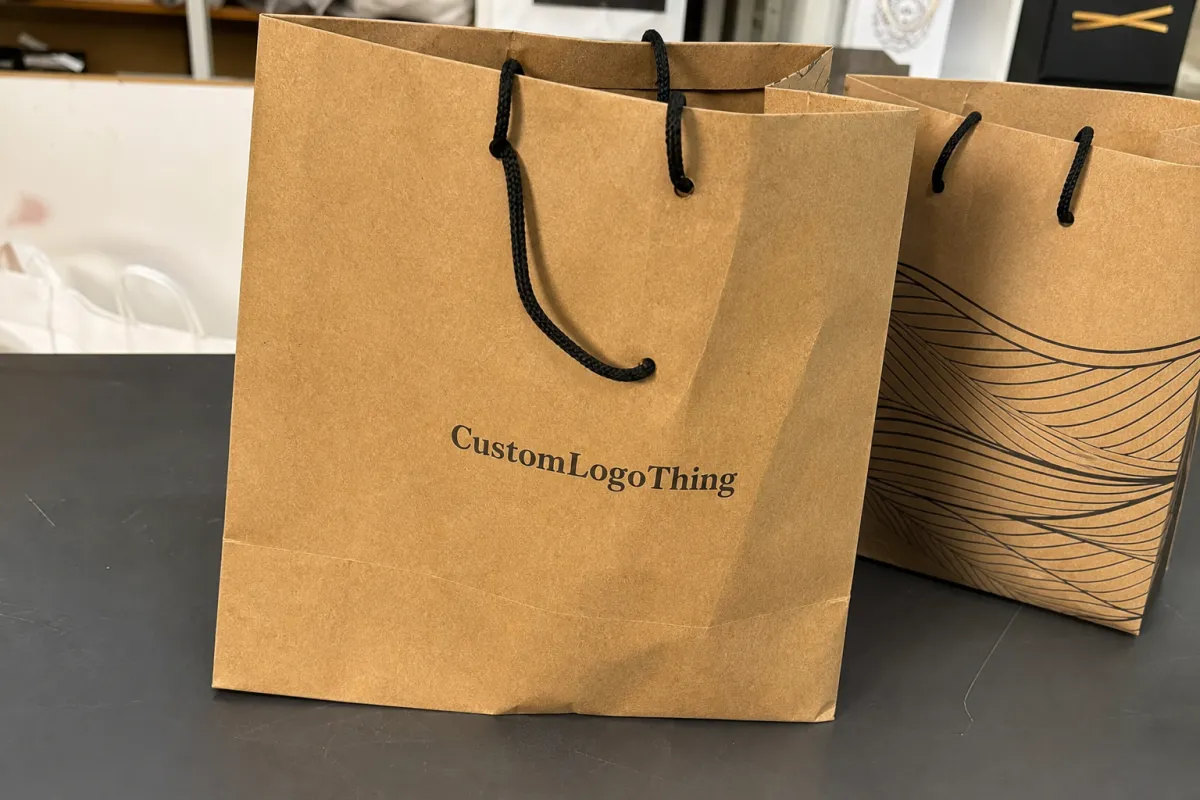
A bag has to do three jobs at once: carry food safely, present the brand cleanly, and keep the order from looking improvised. That matters for pickup, delivery handoff, catering, bottle service, and retail-style takeout.
The problems are usually small, which makes them costly. A damp sidewalk softens the base. Two hot boxes stretch the handle points. A wine order looks polished until the gusset buckles under weight. None of that is dramatic, but guests notice it immediately. For that reason, a restaurant luxury Paper Bags Bulk order should start with structure, then decoration.
Bulk buying is valuable because it locks consistency. Once the size, paper stock, handle, and print spec are set, reorders should match the first run closely. That matters for multi-location restaurants, hotels, caterers, and premium delivery brands where packaging is part of the operating standard.
It also helps buyers decide where the budget belongs. Some restaurants need rope handles because they carry dense meal kits or bottles. Others need a matte finish because the brand reads better without glare. The right question is not what looks expensive. It is what survives service and still looks intentional.
Paper Stock, Handles, and Finishes That Match Restaurant Service
Paper choice affects print clarity, carry strength, moisture resistance, and how the bag feels in hand. A glossy logo cannot rescue a thin wall. Good construction starts with the stock, then the handle, then the finish.
Paper stock
Kraft paper works well for restaurants that want a natural premium look without feeling formal. It handles scuffs reasonably well and suits cafes, bakeries, casual fine dining, and farm-to-table brands. Coated board is better when the artwork depends on sharp edges, deep solids, or foil. If the logo uses small type or a controlled color palette, coated stock usually prints more cleanly. For heavier takeaway, bottle programs, or mixed meal kits, a heavier board or reinforced kraft build is a safer starting point.
| Stock type | Typical use | Print result | Tradeoff |
|---|---|---|---|
| Kraft, 170-250gsm | Casual premium takeout, bakery, cafe, catering add-ons | Warm, natural, lightly textured | Less crisp for tiny text and delicate gradients |
| Coated art paper, 200-300gsm | Fine dining pickup, luxury delivery, gift-style presentation | Sharp logos, cleaner solids, better foil response | Higher cost and more visible scuffs |
| Heavy board with reinforcement | Bottle service, heavier meal kits, multiple containers | Strong, stable structure with a premium feel | More material cost and less flexibility on budget |
The gsm number matters, but it does not tell the whole story. Two bags can both be 200gsm and behave differently if one uses stronger fiber, better glue lines, or a more stable bottom insert. Buyers often focus on the printed spec sheet and miss the construction details that decide whether the bag survives a real service shift.
Handles
Twisted paper handles are cost-effective and fine for moderate loads. Flat paper handles are comfortable and visually restrained. Rope handles give the most premium hand feel and suit upscale delivery, wine programs, and restaurant retail packaging. Cotton handles look softer and more refined, but they usually add cost and time.
If the bag will carry hot boxes, bottles, or multiple containers, comfort matters as much as appearance. Rope or reinforced flat handles distribute pressure better. Twisted paper can still work, but only if the load is realistic and the handle patch is reinforced. A handle that bites into the hand on the walk to the car is not premium.
Finishes
Matte lamination is often the safest premium choice because it reduces glare and hides fingerprints. Soft-touch feels upscale in the hand, though it adds cost and may show wear if the bag gets handled a lot. Spot UV is useful when one logo element should catch the light without covering the whole surface. Foil works when the brand needs a sharper, more formal cue. Embossing adds tactility, but it also adds complexity.
Do not stack finishes just because they sound expensive. A bag with matte lamination, foil, embossing, and a complicated print can look impressive in a sales deck and still be the wrong buy if the restaurant pays for features nobody notices. In a restaurant luxury Paper Bags Bulk order, the best finish supports the brand while still protecting margin.
Reinforcement details
Luxury packaging still needs structure. Folded tops, glued gussets, bottom inserts, and clean side seams hold the bag open, square, and stable during service. For heavier orders, ask whether the factory can reinforce the handle patch or add a thicker board at the base. That small change can determine whether the bag survives the car ride or collapses in the parking lot.
Dimensions, Load Limits, and Print Specs to Lock Before Production
Bag size sounds straightforward until the sample arrives and the box barely fits. Before production, confirm width, gusset, height, handle drop, and base width. Those five numbers decide whether the bag works for boxed meals, dessert sets, bottle service, or a multi-container catering order.
| Common use | Typical size range | Practical note |
|---|---|---|
| Single meal or pastry order | 220-260 mm wide, 120-170 mm gusset | Good for compact carry and lighter loads |
| Two to three boxed meals | 280-350 mm wide, 160-220 mm gusset | Needs stronger handles and a wider base |
| Catering or bottle service | 320-450 mm wide, 180-260 mm gusset | Reinforced bottom and sturdier board are worth it |
Print area depends on the bag geometry. Handles, fold lines, and bottom seams all steal space from the artwork. Keep important text and logos away from edges and folds by at least 10-15 mm, and add bleed where artwork reaches the cut line. If the supplier cannot explain the usable print zone clearly, the proof is not ready.
Load limit is where premium packaging proves itself. Many standard paper carry bags can handle light food orders, but once bottles, dense containers, or multiple hot boxes enter the picture, the build needs to change. For planning, a realistic target is often 2-4 kg for standard runs and about 5-7 kg for reinforced builds, depending on paper weight, handle type, and test results. That is a working estimate, not a promise, and it should be verified by sample testing.
Do not approve from appearance alone. Test the sample with the actual items it will carry: boxed meals, beverage bottles, sauce cups, napkins, dessert boxes, and whatever else the restaurant routinely packs. A bag that looks elegant when empty can still fail at the bottom seam or through handle stretch once loaded. Real-world testing catches those problems before they become inventory.
For transit-sensitive programs, good suppliers should understand drop, compression, and packing discipline. If the bags are being shipped long distances or stored in bulk, that matters. For environmental claims, recycled fiber content, certified sourcing, and chain-of-custody records are stronger than vague "eco-friendly" language on a sales sheet. If you need a benchmark, the ISTA approach is useful for packaging stress thinking, and the FSC standard matters when fiber certification is part of the brief.
Pricing, MOQ, and Unit Cost: What Moves the Numbers
Price is not only paper cost. It is size, board weight, handle type, print count, finish, reinforcement, packing format, and freight. A buyer who compares only the first quote line is missing part of the bill. Landed cost is what matters.
Here is the range most buyers usually need to see:
| Quantity | Simple custom bag | Premium bag with finish | What usually makes sense |
|---|---|---|---|
| 500-1,000 pcs | $0.80-$1.60 each | $1.40-$2.50 each | Launches, pilot locations, short campaigns |
| 3,000-5,000 pcs | $0.35-$0.85 each | $0.75-$1.45 each | Most restaurant luxury paper bags bulk order programs |
| 10,000+ pcs | $0.22-$0.60 each | $0.48-$1.05 each | Chains, recurring reorders, multi-location rollouts |
Those numbers move quickly if one major detail changes. Thicker board, rope handles, foil, embossing, or a custom die-cut shape will all raise the unit cost. Bigger bags also use more material and take more freight space. If the goal is to reduce cost without making the bag look cheap, simplify the print first, then review finish complexity, and only then see whether the size can shrink slightly without hurting usability.
MOQ depends on the build. Simple custom bags may start around 500 or 1,000 pieces, while more finished luxury versions often begin at 1,000-3,000 pieces because setup work is higher. That is not a supplier being difficult. It is the math of printing plates, labor, and QA. Ask for tiered pricing at 1,000, 3,000, 5,000, and 10,000 pieces so the break points are visible instead of guessed.
Carton packing and freight deserve the same attention. A low unit price can stop being low if the cartons are oversized or packed loosely. Dense packing usually lowers shipping cost per bag, but only if the bag edges stay crisp and the handles do not deform in transit. Compare the full quote, not just the first line item. That is where many budgets drift.
Production Steps and Timeline From Artwork to Shipment
A clean production process saves money because it prevents rework. The usual sequence is simple: inquiry, spec confirmation, artwork check, digital proof, sample approval, production, inspection, and packing. If a supplier cannot describe each step clearly, expect surprises later.
Simple one-color bags usually move faster than multi-color luxury builds with foil or embossing. As a rough planning guide, a straightforward run often takes 12-18 business days after proof approval. More complex bags can move into the 18-30 business day range, especially if a physical sample is required or the finish is involved. Freight time sits on top of that. Air is faster. Sea is cheaper. The right choice depends on deadline and margin, not on which option sounds better in a pitch.
Most delays come from a few predictable problems:
- Artwork files are low resolution or not set up to the actual bag size.
- Measurements are unclear and the proof needs to be redone.
- The buyer changes colors or finishes after proof approval.
- Sample approval takes too long because the bag was never tested with real product.
Share the deadline early. If the bags support a new opening, holiday menu, tasting event, or branded delivery launch, say so on day one. A supplier cannot plan production well if the target date appears after the artwork is already moving.
Premium finishes can create hidden timing risk. Foil, embossing, and special lamination often depend on additional tooling or drying time. If the order is urgent, a simpler spec may beat a beautiful spec that lands after the campaign has already started.
What a Supplier Must Deliver for Repeat Restaurant Orders
Repeat business is where packaging suppliers prove whether they understand the category. The second and third reorder should match the first run on color, size, handle strength, and print alignment. "Close enough" is not a quality standard.
For food service, ask about food-safe inks, stable paper sourcing, and lot-based quality checks. A supplier should know how to inspect cartons before packing, catch misprints early, and separate approved samples from production runs. If your brand cares about recycled content or certified fiber, that needs to be documented, not implied.
Buyers who manage multiple locations should also think about inventory planning. The bag may be simple, but it sits inside a larger operating kit with menus, napkins, boxes, and cups. A missing bag creates the same operational drag as a missing sauce cup: staff improvises, service slows, and the guest sees the gap. Suppliers that can forecast reorder timing and flag low stock are worth more than suppliers that only send invoices.
Support matters, too. A good account contact catches errors before they become expensive. They should help with proof corrections, reorder timing, and spec retention so the same bag does not have to be re-explained six months later. For buyers comparing supplier capability, the pages for Wholesale Programs and FAQ should show whether the operation is set up for repeat ordering or just one-off quotes.
Quality control should be practical, not ceremonial. Verify dimensions, compare color against the approved proof, inspect handle attachment points, confirm the bottom insert, and load-test a few samples with actual restaurant items. If a supplier does those things consistently, the rest usually follows.
The best supplier keeps the bag boring in the right ways. It arrives on time. It matches the approved sample. It holds the load. It does not need excuses.
Next Steps for a Fast Bulk Quote and Sample Approval
If you want a fast quote for a restaurant luxury paper bags bulk order, send the full spec in one message. Include the bag width, gusset, height, estimated quantity, artwork files, finish preference, handle type, and delivery target. The more complete the brief, the fewer back-and-forth emails you will need.
Ask for two options if you are comparing budget and presentation. One should match the target spec. The other should show a lower-cost alternative with a simpler finish or handle. That gives a real tradeoff instead of a vague price difference.
Before production, request a sample or mockup. This matters even more if the bag carries dense food, bottles, or a launch design that has to look right in guest-facing photos. Approve the proof only after checking the actual measurements and the true print area. Then lock the timeline and place the order while the numbers still make sense.
The clean path is simple: collect specs, confirm budget, approve the proof, and move ahead only after the sample holds up under load. That is how a restaurant luxury paper bags bulk order ends up supporting the brand instead of quietly working against it.
What is the MOQ for restaurant luxury paper bags in bulk?
MOQ usually depends on size, print complexity, and handle type. Simple custom bags can start around 500-1,000 pieces, while more premium builds often begin at 1,000-3,000 pieces. Ask for tiered pricing so you can see the quantity where the unit cost drops enough to matter.
Which paper stock works best for luxury restaurant bags?
Heavier kraft works well for a natural premium look, while coated stock is better for sharp logos, foil, and tighter color matching. Choose the stock based on carry weight first. The finish should support the structure, not try to rescue it.
Can I add custom handles and finishes to bulk restaurant paper bags?
Yes. Rope, cotton, twisted paper, matte lamination, soft-touch, foil, and embossing are all common options on Custom Bulk Orders. Each add-on changes price and lead time, so pick the details that improve presentation or strength rather than stacking features for no reason.
How long does a bulk order for restaurant luxury paper bags take?
A restaurant luxury paper bags bulk order with simple print usually takes about 12-18 business days after proof approval. More complex builds with multiple colors, foil, or samples can take longer. Artwork approval, sample sign-off, and the production queue are the main timing variables.
How do I lower the unit cost without making the bags look cheap?
Keep the structure strong, but simplify the print, reduce finish complexity, and avoid oversizing the bag. Higher quantity usually cuts unit cost more cleanly than stripping out the features that protect the brand image. Cheap is not a design strategy.

