Order Custom CMYK poly mailers bulk With Full-Color Branding
If you are comparing custom cmyk Poly Mailers Bulk options, the question is not only how the bag looks on a proof. The more useful questions are practical: Does the film hold its seal under parcel abuse? Does the print stay legible after stretching, scuffing, and carton compression? Does the color still feel on-brand once the bag is pulled from a warehouse stack and handled by more than one person?
That is where these mailers earn their place. For apparel, accessories, subscription kits, and light boxed goods, they do two jobs at once: protect the shipment and carry the brand across the last mile. A plain shipping bag can do the first job. A well-specified printed mailer does both, and the difference is visible before the package is even opened.
Why custom CMYK poly mailers bulk orders change first impressions
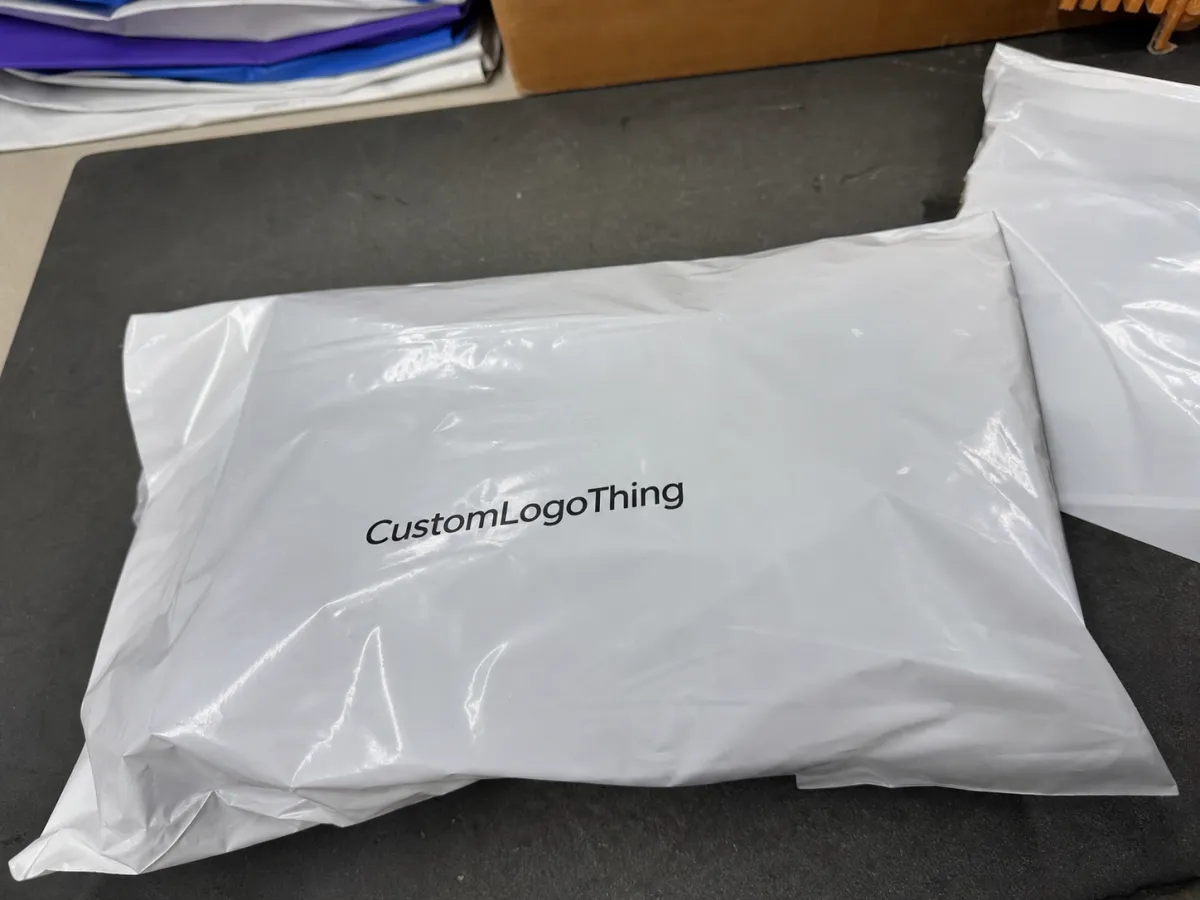
Shipping bags are usually the first branded surface a customer sees. Before the product is unfolded, before tissue paper is removed, and before any insert card gets read, the outer mailer has already set a tone. It can feel premium, stripped down, cheerful, technical, or a little rough around the edges. Customers rarely describe that experience in packaging language, but they notice it.
That is the real appeal of custom cmyk poly mailers bulk buying. Full-color artwork lets a brand do more than stamp a logo in the corner. It can turn the shipping bag into part of the presentation, especially for direct-to-consumer apparel, beauty accessories, club boxes, and lightweight retail shipments that need to look deliberate from the loading dock to the front door.
For many operations, the mailer also helps standardize visual identity across SKUs that ship differently. One order may go in a carton, another in a mailer, and a third in a kit bag. If the artwork system is consistent, the customer sees one brand instead of three packaging styles that feel unrelated.
A plain mailer protects the contents. A well-printed one also does early brand work, before the box is opened.
Finish matters more than many first-time buyers expect. Matte film softens glare and gives text a steadier read under indoor light. Gloss pushes saturation and makes bright colors feel louder, though it can reveal scuffs sooner. Neither is inherently better. The right choice depends on the product, the artwork, and how much handling the bag will take before delivery.
How CMYK printing lands on poly film
CMYK uses cyan, magenta, yellow, and black to build full-color graphics. That process is well suited to gradients, photo-based layouts, layered patterns, and logos with multiple tones. On white poly film, the result can be sharp and vivid if the artwork is set up correctly and the press is calibrated for film rather than paper.
Poly film behaves differently from coated board or paper stock. It does not absorb ink in the same way, and that changes the print result. Film opacity, surface treatment, ink laydown, and drying behavior all affect how the final bag looks. A design that looks clean on screen can print too dark, too soft, or too busy if the substrate is not considered from the start.
Most poly mailers are produced with flexographic or digital printing methods, not offset printing. That difference matters because color behavior, registration, and coverage limits are very different on plastic film than on paper. Buyers who expect offset-like sharpness on a flexible mailer often run into disappointment, especially with fine type or dense background coverage.
Exact brand color matching is possible in many cases, but CMYK is still a process-color system, not a spot-color guarantee. If a logo depends on a precise Pantone tone, ask for a proof and plan for a close visual match rather than a perfectly identical one. That is normal in film printing. The best results usually come from artwork that is designed to work with process color instead of fighting it.
White film is usually the safest base for saturated graphics, small type, and product photography. Dark, clear, or tinted films can work well for certain brands, but they change the way color reads. A fine logo on a black mailer may need more contrast than the mockup suggests. A pale illustration on a translucent film may lose clarity altogether. If the goal is reliable color and strong legibility, white is usually the strongest starting point.
Film thickness, size, and seal specs that fit your product
Size decisions are rarely as obvious as they look on a spec sheet. A mailer can seem correct on paper and still behave poorly once a folded hoodie, boxed accessory, or stacked apparel order is inside it. The useful measurement is the finished packed item, not the flat product before folding, labeling, and insertion. That gap is where most sizing mistakes happen.
Film thickness should be matched to both product shape and fulfillment reality. Light textiles can do fine in thinner film, but items with corners, zippers, dense folds, or repetitive parcel movement often need more body. A thicker bag does not make the shipment indestructible, yet it usually adds enough resistance to reduce punctures and seam stress.
| Film thickness | Typical fit | Strength profile | Common use |
|---|---|---|---|
| 1.5 to 2.0 mil | Lightweight apparel, flat textiles | Lower cost, adequate for low-risk parcels | T-shirts, socks, soft accessories |
| 2.25 to 2.5 mil | Most standard mailer programs | Balanced puncture resistance and cost | Hoodies, folded garments, soft boxed items |
| 3.0 mil and above | Heavier items, sharper edges, higher abuse risk | Better feel, better tear resistance, higher landed cost | Multiple garments, footwear, bulkier kits |
The closure matters almost as much as the film. A pressure-sensitive adhesive strip should seal with enough bite to survive normal parcel handling, stacking, and transit vibration. If the adhesive feels gummy or weak during sample review, that weakness usually becomes more obvious in production. It is much easier to reject a questionable seal at proof stage than to explain failed closures after delivery.
Return shipping changes the spec again. Dual-seal or return-strip mailers are worth discussing before artwork is approved, not after. They alter the construction, and that can affect layout space, seal placement, and the usable print area. If a reverse-flow return process is part of the operation, build it into the bag from the beginning.
A simple sizing rule helps avoid expensive mistakes: measure the packed item in its final folded state, then add enough room for loading and closure without leaving the bag loose. Too small and the seam is stressed. Too large and the mailer wastes freight, looks careless, and can create a flat, unstructured customer impression. For buyers comparing custom poly mailers, the best spec is usually the smallest one that still closes cleanly and fits the product without force.
Cost, pricing, and MOQ: what really changes unit cost
Bulk pricing is shaped by more than print count. Quantity matters, but so do bag size, film thickness, print coverage, cartonization, and the complexity of the artwork. A simple one-color logo on a standard size mailer is cheaper to run than a full-wrap design with dense backgrounds and multiple revisions. Material use and production time tend to drive the price more than the design idea itself.
For planning, smaller runs usually carry a higher per-unit cost because setup, proofing, and handling are spread over fewer pieces. As volume rises, the unit price drops, but inventory risk rises too. A low price only looks attractive if the bags are actually used before a design refresh or product line change. Overbuying can tie up cash and leave a brand with obsolete packaging.
| Order size | Typical unit range | What drives the price | Best for |
|---|---|---|---|
| 500 to 1,000 pieces | $0.55 to $1.20 | Setup spread over a small run, higher handling cost | Testing a design or a seasonal launch |
| 3,000 to 5,000 pieces | $0.24 to $0.48 | Better press efficiency, more predictable freight | Growing DTC programs and repeat shipments |
| 10,000 to 20,000 pieces | $0.12 to $0.28 | Economies of scale, heavier carton counts, lower setup impact | Established brands with steady volume |
The MOQ should be read as an operational decision, not a barrier. A slightly higher minimum can make sense if it reduces unit cost enough to justify storage and gives the team a cleaner reorder rhythm. A lower minimum is safer when demand is still being tested or when seasonal color changes are likely. The wrong answer is usually the one based only on headline unit price.
Freight is another hidden line item that buyers sometimes underestimate. Large cartons, pallet counts, and warehouse receiving charges can change the landed cost enough to erase the savings from a better factory quote. That is why a quote should always be reviewed as a total program, not just a bag price. Buyers comparing broader programs can use Custom Packaging Products to see how mailers sit alongside inserts, labels, and other branded pieces.
Wholesale buying tends to work best when the mailer spec is stable and the usage rate is known. If the product mix changes frequently, the savings from a very large order can disappear under storage cost and dead stock. The cheapest program on paper is not always the cleanest one in a warehouse.
Process and timeline for proofing and production steps
A smooth order usually starts with clear input: finished size, quantity, thickness, artwork files, seal type, and ship-to location. Once those details are in hand, the supplier can build a digital proof that shows placement, color direction, margins, and the limits of the printable area. Proofs are not administrative filler. They are where many production problems show up early enough to fix them.
The usual sequence is straightforward: artwork submission, proof review, revisions if needed, approval, production, packing, and transit. For standard custom cmyk poly mailers bulk runs, production often lands around 12 to 15 business days after proof approval, though the real lead time depends on order size, print coverage, and queue position. Transit adds another layer, and receiving schedules can be tighter than the production calendar suggests.
Most delays come from avoidable issues. Low-resolution art can trigger redraws. Missing dieline measurements can stall the proof. Late changes to color, copy, or bag size often push the job back into another review cycle. Even small adjustments, like moving a barcode or editing a return address, can create a fresh proof and add days. A good buyer locks the structure early and treats late edits as exceptions rather than routine requests.
Seasonal launches need extra cushion. A one-week buffer sounds conservative until a dock appointment shifts or a freight delay appears. The safest project plan separates proofing, production, and transit so each stage has real room to breathe. That is especially true when the mailers support a launch date, subscription window, or retail promo with fixed timing.
Artwork setup that keeps color and logos consistent
Strong mailer artwork is usually simpler than the first design concept. Vector logos stay sharp at scale, embedded fonts prevent substitutions, and clean spacing keeps the bag from looking crowded once the dieline is applied. The more complex the file, the more chances there are for details to soften on film.
Fine type and narrow rules need special care. A line that looks elegant on a monitor can disappear or blur slightly after printing and folding. QR codes should be tested at the actual print size, not assumed from the artwork file. Dark-on-dark combinations are especially risky because they can flatten into a muddy field when the bag is handled under warehouse lighting.
Safe zones matter because seams and folds are not decorative space. A logo pushed too close to the edge can land unevenly once the bag is manufactured. The bag is not a flat sheet in use, so the design has to respect the structure of the film. That is a frequent source of disappointment for teams that are used to rigid packaging like cartons.
Compared with custom printed boxes, poly mailers allow less forgiveness in panel control and less room for dense story-driven layouts. That is not a flaw. It simply means the design needs to work with a flexible substrate. The best mailer files accept that constraint instead of trying to force the bag into a box-like graphic system.
Before approval, check every operational detail that needs to live on the package: barcode, return address, handling text, regulatory copy, or any customer-facing message that has to survive manufacturing. If the mailer will also appear in product photography or social content, confirm that the logo is readable from a few feet away. Visual polish matters less if the brand name is hard to identify quickly.
If the logo cannot be read at a glance, the artwork may still be attractive, but the mailer is not doing its basic job.
One useful quality-control question: ask whether the proof notes film opacity, image sharpness, closure placement, and any known risk areas. A proof that includes those details is more valuable than a vague “approved” response because it tells you what was actually checked.
What to compare before choosing a supplier for bulk poly mailers
Not every supplier evaluates a mailer order the same way. Some focus on price and quantity first, then work backward. Better vendors usually ask about film consistency, seal performance, print clarity, and how the bags will be packed for receiving. Those questions are useful because the cheapest quote can still create the most expensive headaches once the shipment hits the warehouse.
Start with the basics: thickness tolerance, film consistency, adhesive behavior, and what happens if the run arrives with print drift or a seal problem. Then look at proofing policy, revision count, carton counts, and whether packaging is standardized for easy receiving. These details sound small until the team is opening pallets and rework has already started.
For shipping performance context, it helps to know whether the supplier understands parcel testing practices and standards such as those discussed by ISTA. For broader packaging and material information, packaging.org is a useful reference. Neither source replaces a good sample review, but both help separate real performance expectations from generic marketing claims.
- Material consistency: look for steady film gauge and predictable seal behavior from carton to carton.
- Print clarity: review a proof that reflects real coverage, not just a logo floating on white space.
- Communication: fast answers help, but specific answers save more time.
- Packing details: carton count, pallet pattern, and labeling affect receiving labor.
- Issue handling: if there is a defect, you want a clear remake or credit path.
That is the point where a packaging partner earns trust. A supplier should help buyers avoid production surprises, not just quote a bag. If the program includes other branded packaging pieces, the goal is the same across the board: the package should fit the product and the operation instead of forcing the operation to bend around the package.
Next steps for placing a bulk order confidently
The fastest path to a useful quote is to send the basics together: target size, quantity, thickness preference, artwork files, and ship-to location. If the program needs a matte finish, gloss finish, return strip, or heavier film for sharp-edged contents, include that as well. Incomplete requests create avoidable back-and-forth, and that usually slows everything down.
Once the quote is back, review the proof with a production mindset rather than a purely visual one. Check the margins, the brand color, the size of the logo, and the placement of any utility copy. Confirm the MOQ and the lead time before approval, then map those dates against warehouse receiving and launch timing. A good schedule is one that still works if transit is not perfect.
For buyers comparing custom cmyk poly mailers bulk programs against cartons or other branded packaging, the strongest decision usually comes from alignment rather than novelty. Spec, budget, and timing should all point in the same direction. Once they do, the mailer becomes a useful piece of packaging infrastructure instead of an afterthought.
The most effective bulk order is often the one that looks simple from the outside. The size is right, the film is strong enough, the colors are clean, and the warehouse does not have to compensate for a bad spec. That combination is less glamorous than a flashy mockup, but it is what keeps a branded shipment consistent across thousands of units.
What is the minimum order for custom CMYK poly mailers bulk?
MOQ varies by size, thickness, and print coverage, so the minimum follows how the job is set up and how much setup the run requires. If you expect repeat orders, a slightly higher first run can reduce unit cost and cut down on reorders, which is often the better long-term move.
How do I choose the right size for custom CMYK poly mailers bulk orders?
Measure the packed product in its final form, including sleeves, inserts, and folded edges, then add room for loading and closure. The best size is the one that seals cleanly without stretching the film or leaving too much empty space inside the mailer.
Can CMYK printing match my brand colors exactly on poly mailers?
CMYK works very well for full-color graphics, but exact brand matching depends on the artwork, the film color, and the press setup. If color accuracy matters, provide reference values and request a proof so you can review the closest practical result before production starts.
How long does production take after proof approval?
Lead time depends on quantity, print complexity, and production queue, so it should be confirmed before the order is placed. A standard schedule should separate proofing, production, and transit so the receiving date stays realistic.
What information should I send to get a quote faster?
Send size, quantity, thickness preference, artwork files, and the ship-to location so pricing can be calculated accurately. Including your target timeline and any special requirements, such as return strips or barcode placement, helps reduce back-and-forth later.

