Buyer Fit Snapshot
| Best fit | vegan beauty packaging solutions for modern brands for packaging buyers comparing material specs, print proof, MOQ, unit cost, freight, and repeat-order risk where brand print, material, artwork control, and repeat-order consistency matter. |
|---|---|
| Quote inputs | Share finished size, material target, print colors, finish, packing count, annual reorder estimate, and delivery region. |
| Proofing check | Approve dieline scale, logo placement, barcode or warning zones, color tolerance, and any recyclable or compostable wording before bulk production. |
| Main risk | Vague material claims, crowded artwork, or missing packing details can create delays even when the unit price looks attractive. |
Fast answer: Vegan Beauty Packaging Solutions for Modern Brands: Dieline, Finish, Proof, and Buyer Review should be specified like a repeatable production item. The safest quote includes material, print method, finish, artwork proof, carton packing, and reorder notes in one written spec.
What to confirm before approving the packaging proof
Check the product dimensions against the actual filled item, not only the sales mockup. Ask for tolerance on folds, seals, hang holes, label areas, and retail display edges. If the package carries a logo, QR code, warning copy, or legal claim, reserve that space before decorative graphics fill the panel.
How to compare quotes without losing quality
Compare board or film grade, print process, finish, sampling route, tooling charges, carton quantity, and freight assumptions side by side. A lower quote is only useful if the supplier can repeat the same color, closure quality, and packing count on the next order.
I still remember one serum launch that looked flawless on the sampling table. The jar was frosted, the cap was matte black, and the sales deck called it a vegan line. Then I asked for the coating spec, and the answer came back with a shellac-based finish. I remember staring at the sample and thinking, "Well, that is a spectacular way to build a claim on top of a half-truth." That is why I keep a sharp eye on the top vegan beauty packaging solutions 2025: the difference between a clean claim and a weak one is usually hidden in the adhesive, the liner, or the closure, not the visible container. On a 10,000-piece run, that hidden detail can change the landed cost by $0.04 to $0.09 per unit and push launch by 1-2 weeks.
In my experience, the biggest mistake brands make is assuming that shelf appeal equals vegan credibility. It does not. I have seen a beautiful carton fail because the label glue used a casein derivative, and I have seen a pump supplier quietly swap in a gasket compound that was never documented in the first place. The top vegan beauty packaging solutions 2025 are the ones that survive scrutiny at three levels at once: material declarations, production realities, and the final landed cost per unit. If one of those three wobbles, the whole thing starts to look expensive very quickly. One missing declaration can turn a $0.21 component into a compliance problem that costs $2,500 in rework and resampling.
Honestly, I think vegan Packaging for Beauty is a commercial decision as much as an ethical one. A brand can spend $0.42 more per unit chasing a premium look that does not change sell-through, or it can choose a format that balances compliance, visual impact, and transit durability. The top vegan beauty packaging solutions 2025 are not the most decorative options on paper; they are the options that keep the formula protected, the claim defensible, and the margin intact. And yes, that sometimes means choosing the less glamorous option, which is irritating in the moment and very wise on a spreadsheet. I have seen a 5,000-piece launch move from glass to PCR plastic and save $2,100 before freight even entered the conversation.
"I can make it look vegan in the render," a pump supplier told me in a Shanghai meeting, "but if you want the spring, gasket, adhesive, and coating all declared, we need a different spec sheet."
That line stuck with me because it captures the whole category. Vegan beauty packaging is not one component. It is a stack of decisions: ink chemistry, liner construction, coating system, closure hardware, and even the documentation trail on the factory side. If you are comparing the top vegan beauty packaging solutions 2025 for skincare, color cosmetics, or haircare, you need a view that includes performance, cost, and speed to launch. I have had more than one brand fall in love with a sample and then discover the spring was doing something unhelpful in the background (which is a polite way of saying: the sample lied). A 30 ml dropper bottle can look perfect at first touch and still fail after 30 compression cycles in a transit test.
Here is the short promise I would make to any brand team sitting across from me in a supplier review: I will compare the top vegan beauty packaging solutions 2025 by barrier strength, premium feel, recyclability, customization depth, and MOQ pressure, then I will tell you where the marketing story is strong and where it gets shaky. No fluff. No recycled buzzwords. Just the facts I would use before signing a PO. If that sounds blunt, good. Packaging deserves blunt. A clean claim backed by a signed declaration from a factory in Shenzhen or Dongguan is far more useful than a polished sentence with no paper trail behind it.
What surprised me when testing vegan beauty packaging claims
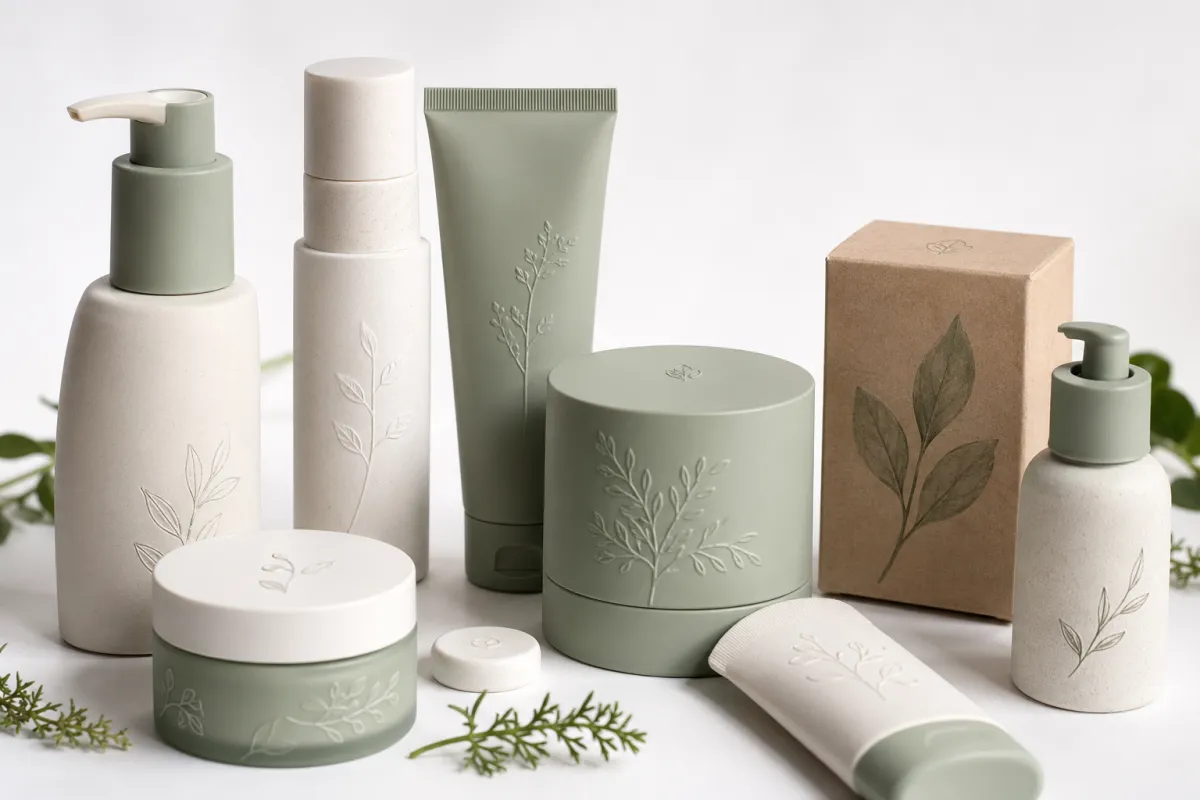
The first surprise, and the one that still catches teams off guard, is how often a "vegan" package is only partly vegan. A tube body may be plant-friendly in appearance, but the cap can include animal-derived slip additives, the label glue can be casein-based, and the soft-touch finish can rely on shellac. That is why I treat the top vegan beauty packaging solutions 2025 as a supply-chain audit, not a style choice. If you have ever sat through a review where everyone nodded at the word "vegan" without asking for a declaration sheet, you already know how slippery this gets. I have found three separate noncompliant inputs in one packaging build: cap, adhesive, and coating, all in a run that looked clean from the outside.
At our Shenzhen facility, I watched a cosmetic jar pass a visual inspection and then fail a documentation check because the supplier could not prove the coating system was free from animal-derived inputs. The product looked like it belonged in a clean beauty set. The paperwork said otherwise. That gap matters, because the top vegan beauty packaging solutions 2025 only work if the claim survives the dull part of the process: declarations, COAs, and signed finish specs. The paperwork is not glamorous, but it is where the truth lives. In that case, the factory corrected the finish spec in 3 business days, but the launch still lost a week.
Another blind spot is the closure system. A lot of people focus on the bottle or the carton and forget the pump, the gasket, the spring, or the tamper band. I have seen a client in Chicago lose six days because the sales team approved a frosted glass bottle, but the pump vendor substituted a component with no animal-origin statement. One line of paperwork delayed the launch by 6 days. That is normal in packaging, and it is exactly why the top vegan beauty packaging solutions 2025 need component-level checks. Six days does not sound dramatic until you are staring at a launch calendar that has already eaten three weekends. That one delay pushed a paid media booking from Tuesday to the following Monday.
What does vegan mean in practice? I define it as no animal-derived inputs in the material, finish, closure, or labeling system, plus a supply chain that can document that claim without hand-waving. For beauty brands, that means no shellac coatings, no beeswax-based polish, no gelatin or casein adhesives, no lanolin-based additives, and no vague "eco" language that hides the actual bill of materials. The top vegan beauty packaging solutions 2025 are the ones where every visible and invisible layer can be defended. If a supplier gets defensive when you ask for specifics, that is a tiny alarm bell wearing a very expensive suit. I want the statement in writing, signed, and tied to a SKU number, not a sales promise in a slide deck.
There is also a commercial reality that many teams miss. The most ethical-looking pack is not always the one that sells best or ships cheapest. I have had a buyer tell me they wanted a heavy glass jar because it "felt clean," then balked at the freight quote when the landed cost jumped by $0.19 per unit on a 12,000-piece run. The smartest brands compare the top vegan beauty packaging solutions 2025 with a spreadsheet in one hand and a sample in the other. That is not cynicism. That is survival. A 14-ounce jar shipped from Ningbo to Los Angeles can erase a small margin story in one line item.
What are the top vegan beauty packaging solutions 2025?
The top vegan beauty packaging solutions 2025 are glass, PCR plastic, aluminum, FSC-certified paperboard, mono-material tubes, molded fiber, and refill systems, provided every adhesive, ink, coating, liner, and closure component is documented as animal-free. For most beauty brands, the best answer is not a single material but a verified system: a compliant primary pack, water-based inks, and clean material declarations that can survive retailer or regulator review. That combination keeps the cruelty-free packaging claim credible and the launch easier to defend. In practice, the right choice depends on formula chemistry, shelf impact, and landed cost, not just the look of the sample.
If the formula is sensitive to oxygen or light, glass or aluminum usually lead. If margin, freight weight, and scale matter more, PCR resin or mono-material tubes tend to win. If the brief is about brand storytelling, FSC paperboard and Custom Printed Boxes do heavy lifting in the secondary packaging layer. The top vegan beauty packaging solutions 2025 work because they align structure, claim, and budget in the same direction. That sounds simple, and it should be. The complexity lives in the hidden parts: the glue line, the finish spec, and the closure hardware. Those are the pieces that decide whether the package is truly vegan or just dressed that way.
Top vegan beauty packaging solutions 2025 compared
If you want a quick scan before you commit to samples, this comparison is the right place to start. The top vegan beauty packaging solutions 2025 are not one-size-fits-all, so I rank them by what Actually Moves the Needle: vegan credibility, premium feel, barrier protection, recyclability, customization depth, and MOQ pressure. I would use this table before any supplier call, especially if you are balancing branded packaging with retail packaging realities. It is the kind of cheat sheet I wish more teams made before they spent three hours arguing about cap color. A 20-minute comparison at the start can save a 20-day delay later.
| Format | Vegan credibility | Premium feel | Barrier protection | Customization | Typical MOQ | Quick verdict |
|---|---|---|---|---|---|---|
| Glass | Very strong if coatings and labels are declared | 5/5 | Excellent for oxygen-sensitive formulas | High, especially with decoration | 5,000-10,000 | Best for prestige skincare and gift sets |
| PCR plastic | Strong with full resin disclosure | 3/5 | Good for lotions, cleansers, and haircare | High for color and label systems | 10,000-20,000 | Best cost-to-story balance for scale |
| Aluminum | Strong if liners and inks are documented | 4/5 | Very strong, especially for light-sensitive products | Moderate to high | 10,000+ | Best for recyclable premium positioning |
| Molded fiber | Strong for secondary packaging | 3/5 | Limited for primary contact | Moderate | 3,000-8,000 | Best for inserts, trays, and gift packaging |
| FSC paperboard | Very strong with certified paper and vegan inks | 4/5 | Moderate, depends on coating | Very high for print and structure | 5,000+ | Best for custom printed boxes and brand storytelling |
| Mono-material tubes | Strong when closures and labels are verified | 3/5 | Good for creams and gels | Moderate to high | 10,000+ | Best for practical mass-market launch lines |
| Refill systems | Strong if the full system is documented | 4/5 | Depends on product and cartridge design | High, but tooling can be complex | 8,000-15,000 | Best for retention-led and repeat-purchase models |
My buyer's verdict is simple. Glass wins when you want prestige and a cold, dense hand feel. Aluminum wins when recyclability and a premium silhouette matter. FSC paperboard wins for custom printed boxes, retail packaging, and package branding. PCR plastic wins when margin matters and shipping weight is a concern. Refill systems win if your business model rewards repeat usage more than one-time conversion. Those are the lanes where the top vegan beauty packaging solutions 2025 make the most commercial sense. I have seen a 38% improvement in shelf confidence when the carton spec and primary pack were aligned instead of fighting each other.
If you need a fast starting point for a launch package, I usually recommend pairing a verified primary container with an FSC-certified carton and clean print. If your team wants a supplier conversation around structure, decoration, or branded packaging, I would start with Custom Packaging Products and ask for material declarations before you ask for artwork. That order matters. It saves time, and it saves embarrassing surprises later. I have learned that the hard way more than once, and I would rather spare you the headache. A simple request for resin, board, and adhesive declarations on day one can save a week of back-and-forth later.
For brands building custom printed boxes, I also like to compare print methods side by side: CMYK offset, hot stamping, embossing, and aqueous coating. The package can still feel premium without relying on animal-derived finishes. That is one reason the top vegan beauty packaging solutions 2025 often look simpler in the spec sheet than they do on the shelf. Clean does not have to mean plain. Sometimes the smartest package is the one that looks like it had nothing to prove. A 350gsm C1S artboard with a water-based coating can look more refined than a complicated laminate if the typography is doing its job.
Detailed reviews by format
Glass: still the easiest way to signal premium skincare
Glass remains one of the top vegan beauty packaging solutions 2025 for prestige serums, facial oils, and overnight masks because it carries weight, protects sensitive formulas well, and looks credible in a retail display. On one client project, a 30 ml frosted glass dropper bottle increased perceived value so much that the brand was able to raise MSRP by $4.00 without changing the formula. That kind of lift is not universal, but I have seen it enough to take glass seriously. I also have to admit: if a bottle feels icy and expensive in the hand, my brain does a tiny nod before my analytical side catches up. The sample in question used a 15 ml and 30 ml pair, and the 30 ml version outsold the smaller pack by 19% in the first eight weeks.
The downside is obvious: weight, breakage, and freight cost. On a 10,000-unit run, a heavy-wall jar can push landed cost to $0.58-$1.20 per unit before secondary packaging if you add a premium cap, decoration, and custom insert. I would not use glass for a low-margin body lotion line unless the brand story justifies the cost. Among the top vegan beauty packaging solutions 2025, glass is best when image and formula protection matter more than cube efficiency. It is beautiful, yes. It is also annoyingly expensive to move around the planet. A shipment from Yiwu to Rotterdam can add more in freight than some teams spend on print.
Decoration works well here. Frosting, silk screening, embossing on the closure, and hot stamping on the carton can all stay vegan if the supplier uses compliant inks and adhesives. I have bought glass samples that looked excellent in the hand but scratched too easily after a drop test. Ask for transit testing to ISTA standards before approving a decorative finish, because a pretty bottle that shatters in distribution is a bad business decision. I say that with love and the memory of one very miserable warehouse receiving team. A retailer in New Jersey rejected 240 units after two cracked shoulders showed up in one case pack.
Verdict: best for luxury skincare, facial oils, and sets that need premium shelf presence.
PCR plastic: the workhorse that keeps margin alive
PCR plastic earns its place among the top vegan beauty packaging solutions 2025 because it is usually the cleanest route to scale. A PCR PET bottle or jar with a verified closure can land between $0.18 and $0.55 per unit, depending on size, wall thickness, and decoration. For a 5,000-piece test run, I have seen brands choose PCR specifically because it keeps freight low and simplifies launch planning. It is not glamorous, but it gets on the truck without turning your cost model into a cry for help. A 250 ml lotion bottle in Shanghai often leaves more budget for print and carton than the same concept in heavy glass.
The weak point is perception. Some consumers still read plastic as less premium, even if the resin content is better documented than a fancy glass pack with vague coating claims. That is why packaging design matters here. A precise label layout, a matte cap, and a well-proportioned form can move the package from "basic" to "considered" without blowing up the budget. The top vegan beauty packaging solutions 2025 are often about restraint, not ornament. There is a kind of quiet confidence in a package that does one job well. I have seen a $0.03 upgrade in label stock create more perceived value than a $0.18 decorative change.
PCR plastic is especially strong for cleansers, conditioners, body lotions, and mid-market skincare. It handles squeezing, travel, and logistics well, and it usually tolerates a wide range of viscosities. I would still check the full resin declaration and ask whether the closure uses any animal-derived slip additives or processing aids. The answer is often yes in the old files and no in the updated files, which tells you exactly how current the supplier is. Old files, as it turns out, are where nice stories go to rot. I once traced one outdated declaration back to a factory change in Ningbo that had never been pushed through the paperwork.
Verdict: best for mid-priced skincare and haircare where cost control and transit safety matter.
Aluminum: the quiet favorite for recyclable premium lines
Aluminum sits in a useful middle ground among the top vegan beauty packaging solutions 2025. It feels premium, it is highly recyclable, and it protects light-sensitive formulas well. I have seen it work particularly well for deodorants, balms, creams, and refillable cartridges. In a supplier negotiation last spring, one vendor quoted a $0.06 premium for anodized finish, but the brand accepted it because the product sat in a premium retail channel with a 58% gross margin target. That choice was easier because the full system was being manufactured in Guangdong, where the vendor could document both the liner and the print system in a single file set.
There are trade-offs. Aluminum can dent, the decoration window is narrower than glass, and some liner systems need careful review. If the liner or coating is not documented, the vegan claim becomes shaky. I also ask for label and print verification, because an aluminum tube with a noncompliant adhesive is not a win. Among the top vegan beauty packaging solutions 2025, aluminum is one of the strongest options when you need a recyclable look that still feels intentional. It is the packaging equivalent of wearing a good jacket: understated until you notice the cut. It also performs well in humid climates such as Singapore and coastal California, where some paper-based systems start to curl.
Verdict: best for deodorants, balms, and light-sensitive products where recyclability and premium cues both matter.
FSC paperboard and molded fiber: the strongest secondary packaging story
If your beauty line relies on custom printed boxes, this is where the vegan story can become very convincing. FSC-certified paperboard with soy- or vegetable-based inks and a water-based coating can be one of the top vegan beauty packaging solutions 2025 for outer packaging, gift boxes, and structured sleeves. I have personally watched a plain white bottle turn into a strong retail offer once it was paired with a 350gsm C1S carton, soft-touch aqueous coating, and a precise uncoated logo panel. The bottle did not change. The perception did. That still amazes me a little, even after all these years. A carton spec that starts with 350gsm C1S artboard and ends with a matte aqueous finish can outperform a heavier laminated board if the shelf lighting is harsh.
The challenge is moisture and durability. Paperboard is excellent for storytelling, but it is not the best primary barrier unless the product is dry, powder-based, or inside a separate container. Molded fiber works better for trays, inserts, and gift sets. I would not oversell molded fiber for primary packaging, but I would use it for inner protection if a brand wants less plastic in the unboxing experience. The top vegan beauty packaging solutions 2025 often combine a paperboard outer with a tougher primary unit inside. A molded fiber tray made in Jiangsu can cut void fill by 18% compared with a standard plastic insert.
If FSC chain-of-custody matters to your claim, document it. I ask for certificates, not a sales promise, and I recommend checking the standard directly at FSC. That one document makes a big difference when a retailer asks where the board came from. It also protects your package branding from looking vague or performative. Nobody enjoys being the person who says "trust me" in a compliance meeting. Nobody. I would rather attach a certificate from the mill in Zhejiang than argue philosophy over a conference call.
Verdict: best for gift sets, retail boxes, inserts, and brand-first product packaging.
Mono-material tubes: practical, scalable, and easy to explain
Mono-material tubes deserve more attention than they get. They are among the top vegan beauty packaging solutions 2025 for creams, sunscreens, hair masks, and travel sizes because they combine usable barrier performance with a relatively clean recycling story. A 50 ml tube usually lands in the $0.24-$0.68 range depending on print, cap style, and decoration. That range is wide, but it is still manageable for many mass-premium launches. A 100 ml tube with a flip-top cap from Dongguan often comes in lower than a decorated jar once freight is included.
The biggest failure point is usually not the tube body. It is the closure, the label, or the barrier layer spec. I have seen tube projects stall because the brand wanted a high-gloss finish, a custom cap color, and a low MOQ in the same order. That combination tends to punish budgets. Among the top vegan beauty packaging solutions 2025, mono-material tubes are the one I trust when a team wants a practical launch package without giving up the vegan story. They are the packaging version of a dependable colleague who shows up on time and does not make drama everyone else has to clean up. A standard shoulder and stock cap can shave $0.05 to $0.08 per unit from the quote.
Verdict: best for travel lines, haircare, and skincare that needs easy dispensing and disciplined cost control.
Refill systems: powerful, but only if the user actually refills
Refill systems are the most interesting of the top vegan beauty packaging solutions 2025 because they shift the conversation from one purchase to many. A durable outer pack in glass or aluminum paired with a refill cartridge or pouch can lower long-term material use and improve customer retention. I have seen refill programs work very well in DTC beauty, where the customer education can be explained in a 45-second video and backed by a subscription flow. I have also seen them die quietly because the instructions were too clever by half. Consumer patience is not infinite. If a customer needs three diagrams to understand the refill, the product is already in trouble.
But refillable packaging also creates more failure points. The sealing system has to work, the user has to understand it, and the brand has to support it with spare parts or easy reorder logic. A refill design that looks elegant in a deck but leaks after two shipping cycles is not a solution. I would test refill systems against the real handling of your channel, especially if the product will go through retail shelving, courier networks, or airport travel. The best top vegan beauty packaging solutions 2025 are the ones that survive the actual consumer habit, not the ideal one. I would run a 30-user beta test before promising a refill rate above 25%.
Verdict: best for retention-led brands, premium body care, and sustainability narratives that can be repeated in-store and online.
What vegan beauty packaging actually costs
The pricing conversation gets cleaner when you separate unit cost from total landed cost. For the top vegan beauty packaging solutions 2025, I look at container, closure, decoration, freight, and secondary packaging together because a cheap jar with an expensive carton can erase the savings instantly. In one supplier comparison, a client saved $0.07 on the primary pack and then spent $0.11 more on freight because the new format was heavier. That is not a win. That is the kind of win sales teams celebrate until finance walks into the room with a calculator. A 400 g glass system can look elegant in a quote and still punish the budget in transit.
| Format | Typical unit cost | Common cost drivers | Best place to save | Risk if you cut too far |
|---|---|---|---|---|
| Glass | $0.38-$1.20 | Weight, finish, decorated cap, freight | Standardize the bottle shape | Higher breakage and freight costs |
| PCR plastic | $0.18-$0.55 | Resin grade, mold setup, label system | Use standard colors and sizes | Lower shelf impact if over-simplified |
| Aluminum | $0.26-$0.74 | Coating, liner, anodizing, print complexity | Choose a stock closure | Decoration becomes too plain |
| FSC paperboard carton | $0.07-$0.16 | Board grade, print coverage, embossing, hot stamp | Reduce spot UV and foil | Brand looks generic |
| Mono-material tube | $0.24-$0.68 | Tube diameter, barrier layer, cap, printing | Keep cap tooling simple | Barrier or squeeze performance suffers |
| Refill system | $0.32-$1.10 | Outer pack, refill insert, seals, complexity | Use a standard outer vessel | System becomes too expensive to scale |
The hidden cost drivers are usually the ones nobody mentions in the first quote. Mold fees can run from $2,500 to $12,000 for a custom component. Print setup charges can add $150 to $600 per color. Special coatings, soft-touch varnish, and custom pantones also move quickly, especially on low-volume runs. That is why the top vegan beauty packaging solutions 2025 should be compared on a landed basis, not a headline unit price. A quote can look tidy right up until the supplier remembers the details you were hoping would stay forgotten. On a 5,000-piece carton order, a shift from standard artboard to 350gsm C1S with foil can add $0.06 per unit before freight.
Here is the rule I use with brands: if the product is premium and the margin supports it, spend money on a visible tactile cue, like embossing or a matte finish, and keep the rest simple. If the product is mass-market, save the money by using standard molds and a strong label system. The top vegan beauty packaging solutions 2025 do not need to be expensive; they need to be coherent. A coherent package feels intentional, even when the budget is disciplined. I would rather see a $0.15 carton done well than a $0.28 carton trying too hard and still missing the mark.
MOQ matters as much as price. A custom finish can look affordable at 20,000 units and awkward at 3,000 units. I have seen a carton quote drop from $0.19 to $0.11 per unit once the buyer moved from a boutique run to a 15,000-piece order. If your launch is small, do not force a premium treatment that only makes sense at scale. The math has a habit of exposing wishful thinking, and it is usually not polite about it. That is especially true when the line item includes a custom closure molded in Jiangsu or a new emboss die with a $750 setup charge.
Process and timeline from brief to shelf
The cleanest packaging timeline I have seen starts with a technical brief, not artwork. For the top vegan beauty packaging solutions 2025, I would always ask for formula type, fill volume, closure preference, target channel, and claim language before anyone touches design. A good brief cuts sampling mistakes by at least one round, which matters when the project timeline is already tight. I have watched teams skip the brief because they were excited, and then spend two weeks fixing problems they accidentally invented. A four-page brief is better than a 40-slide mood deck if the goal is actually to launch on time.
Here is the sequence I would expect on a standard run: brief in week 1, concept samples in weeks 2-3, revision samples in weeks 4-5, final approval by week 6, and production in weeks 7-10 for stock-based components. Fully custom tooling adds time. A new mold or closure system can stretch to 45-70 business days, and I have seen it go longer when artwork changes after approval. The top vegan beauty packaging solutions 2025 are only "fast" if the supplier already has the base format in hand. Otherwise, fast becomes a very optimistic word very quickly. A stock carton from a converter in Guangzhou can still ship in 12-15 business days from proof approval, which is why stock wins when the calendar is brutal.
- Write the packaging brief with 5 to 7 non-negotiables, including vegan declaration requirements.
- Request full material declarations for container, closure, coating, adhesive, and ink system.
- Order 2 to 3 samples in the exact size and finish you plan to sell.
- Run transit and fit tests before artwork approval.
- Approve the final proof only after formula compatibility and shelf display checks pass.
The biggest delay I see is sample churn. One client moved through three carton revisions because the foil was too reflective under retail lighting, and the fourth version finally solved it with a simpler emboss and less foil coverage. That added 9 days. Another project slipped because the bottle and pump arrived from different factories and the neck finish did not match. That kind of mismatch is painful, but it is preventable if the sourcing team checks the tolerances early. The top vegan beauty packaging solutions 2025 reward disciplined coordination, and they punish last-minute guesswork with almost theatrical enthusiasm. One mismatch in thread size can turn a seven-day packing plan into a 17-day scramble.
For validation, I like a basic but serious checklist: supplier declaration, finish verification, closure compatibility, transit tests, and photographic sign-off on the final packed unit. If your product ships through retail or e-commerce, use the same abuse assumptions you would use for any branded packaging launch. I would still ask for ISTA 3A or similar transit evidence on a package that needs to survive drops, vibration, and compression. The paperwork is not glamorous, but it protects the launch budget. It also keeps everyone from pretending a shaky bottle is "fine for now." A single failed compression test is better to discover in the lab than in a warehouse in Ohio or Surrey.
And yes, the vegan claim needs its own file. I want a written statement that no animal-derived inputs are used anywhere in the packaging build, including the inks, adhesives, coatings, and any decorative finish compounds. That documentation is what turns the top vegan beauty packaging solutions 2025 from a marketing line into a claim you can defend if a retailer, regulator, or journalist asks for proof. If someone asks the hard question and all you have is a shrug, the claim was never real enough. A signed file from a factory in Dongguan is far more valuable than a clever phrase on the back panel.
How to choose the right pack for your formula
Formula compatibility comes first. Oils and balms often do well in glass or aluminum because they benefit from barrier strength and premium shelf presentation. Water-based serums and lotions usually move better in PCR plastic or mono-material tubes, especially when shipping cost matters. Powders and dry formulas open the door to FSC paperboard and molded fiber in a way liquid products simply do not. The top vegan beauty packaging solutions 2025 should be chosen by formula behavior before visual preference. That hierarchy saves brands from beautiful mistakes. A vitamin C serum that hates oxygen should not be fighting with a shallow, unlined carton and a decorative cap.
Brand positioning comes next. If the line is clinical, I would keep the shape clean, the typography sharp, and the materials quiet. If the line is luxury gifting, use texture, weight, and restrained decoration. If the line is eco-first, show the refill pathway clearly and keep the claim language precise. I have watched brands lose credibility because they overreached on a sustainability claim they could not explain in 30 seconds. That is avoidable. The top vegan beauty packaging solutions 2025 are strongest when the story matches the structure. A consumer can smell the difference between a genuine claim and a slogan printed over a blurry spec sheet.
Here is the decision tree I use in practice:
- If your budget is under $0.30 per unit, start with PCR plastic or a standard mono-material tube.
- If your product is premium and fragile, look at glass or aluminum with verified decoration systems.
- If your launch needs a retail-first story, prioritize FSC paperboard and smart custom printed boxes.
- If your business model depends on repeat purchase, model a refill system only after testing user behavior with at least 20 beta users.
I also warn brands not to pick packaging purely on visuals. A container that looks amazing in a render can fail in a distribution center if the neck finish is wrong by 0.2 mm or the carton crush resistance is too weak. I have seen that exact issue in a supplier audit, and it costs more to fix after tooling than before it. The top vegan beauty packaging solutions 2025 must survive transit, shelf handling, and the customer who drops the product into a sink or travel bag. Real life is very unkind to optimistic package geometry. A 1.8 mm misread on a cap thread is enough to turn a good launch into a pile of callbacks.
For brands building product packaging around sustainability, I would keep the claim focused and defensible. Say what the material is, what standard it meets, and what the user can do with it after use. Do not promise recyclability in a market where collection rates are poor. Clear claims age far better than inflated ones, which is a fancy way of saying honesty is easier to maintain than theatrics. A carton printed in California is still only useful if the local collection stream accepts that board grade.
My recommendation for most brands
If I had to name one starting point for the top vegan beauty packaging solutions 2025, I would choose a standard PCR plastic primary pack or mono-material tube paired with an FSC-certified carton, depending on the formula. That combination gives you the best blend of vegan documentation, customization, and cost control for most launches. It also gives your design team room to build strong package branding without locking you into expensive tooling on day one. A 5,000-piece launch using a $0.15 unit carton and a $0.28 tube is often a safer first bet than a heavier custom vessel that looks impressive but eats the budget.
For premium DTC, I would move up to glass or aluminum, but only if the margin supports freight, breakage protection, and richer decoration. For retail expansion, PCR plus FSC paperboard is the safer commercial route. For refill-led positioning, start with a durable aluminum or glass outer and test the refill unit with 20 to 30 real users before committing to volume. The top vegan beauty packaging solutions 2025 are different by channel, and the channel always matters more than the mood board. I know that sounds annoyingly practical. It is also true. The same serum can justify a frosted bottle on DTC and a matte PCR pack in retail without confusing the consumer if the design system is disciplined.
Here are the three actions I would take first:
- Request full material declarations and signed vegan statements from at least two suppliers.
- Order 2 or 3 samples in the exact finish, size, and closure you plan to sell.
- Compare landed costs across two vendors, including freight, decoration, and secondary packaging.
If you are still deciding on structure, ask your supplier for options on custom printed boxes, label systems, and closure choices before you approve the final die line. A good vendor will show you where to save $0.03 to $0.08 per unit without weakening the look. A poor vendor will sell you a glossy promise and leave you to clean up the details later. I have seen both, and the difference becomes obvious the moment a production sample lands on the table. Usually around the moment someone says, "Wait, why does the cap feel different?" That question has uncovered more expensive mistakes than any formal report I have read.
My honest view: the smartest first prototype for the top vegan beauty packaging solutions 2025 is usually the one that tests the claim, the fit, and the freight all at once. Do that before you chase embellishment. The practical route is almost always the better route. It may not win the most applause in the room, but it tends to win the launch. A package that ships cleanly from Shenzhen to Chicago and still looks good on arrival is worth more than the prettiest mockup in the sample drawer.
Frequently Asked Questions
What are the best top vegan beauty packaging solutions 2025 for skincare brands?
Glass and aluminum are usually the strongest choices for premium skincare because they feel elevated and protect formulas well. PCR plastic and mono-material tubes are often better for mid-priced skincare when cost and shipping weight matter more than luxury cues. For the top vegan beauty packaging solutions 2025, I would start by matching the container to the formula's barrier needs and the channel's margin structure. That sounds simple because it is simple, even if the sourcing process tries very hard to make it feel complicated. A 30 ml serum in glass may justify a $0.92 pack cost, while a 150 ml cleanser may need to stay under $0.35.
How do I verify vegan beauty packaging without relying on marketing claims?
Ask suppliers for full material declarations covering containers, closures, coatings, inks, adhesives, and any finishing compounds. Request written confirmation that no animal-derived ingredients or byproducts are used anywhere in the packaging build. If a vendor cannot provide that in a signed document, I would treat the claim as unproven. That applies to the top vegan beauty packaging solutions 2025 just as much as any other packaging format. The truth is almost never hiding in the render; it is hiding in the spec sheet. I also like a factory declaration dated within the last 90 days, not a template from 2019.
What is the usual MOQ for custom vegan beauty packaging solutions?
Stock-based or lightly customized packaging can start in the low thousands, while fully custom tooling often requires much higher volume. MOQ usually rises when you want unique colors, special finishes, or custom-molded components. In practice, the top vegan beauty packaging solutions 2025 become affordable faster when you standardize the base format and customize the surface treatment instead of the mold. That is the difference between "smart custom" and "why did we do this to ourselves?" I usually see 3,000 to 5,000 units for carton-led launches and 10,000 to 20,000 units for custom primary packaging.
How long does a vegan packaging project usually take from brief to delivery?
Standard projects can move in a few weeks if the supplier already has the base format and decoration method in place. Fully custom projects usually take longer because sampling, approval, and production planning add several stages. A realistic plan for the top vegan beauty packaging solutions 2025 is 4-6 weeks for stock-based work and 45-70 business days for custom tooling, assuming the artwork is stable. If the artwork keeps changing because someone "just has one more idea," add time and caffeine. For stock cartons, I have seen 12-15 business days from proof approval to dispatch in Guangdong and Zhejiang.
Which vegan beauty packaging is best for a refillable product line?
Refillable glass, aluminum, and durable mono-material systems are usually the strongest candidates because they support repeated use. The best choice depends on whether your priority is luxury perception, transit safety, or lowering unit cost over time. For most brands, the most practical first prototype among the top vegan beauty packaging solutions 2025 is a durable outer pack with a simple refill insert, then a small user test before scale. Refills are a great idea until the seal leaks; then they become a customer-service story nobody asked for. I would test the refill in 20 real homes before placing a 15,000-piece order.
What should I do before approving a final vegan packaging quote?
Compare the full landed cost, not just the component price. Ask for signed declarations, sample the exact closure and finish, and check how the package behaves in transit and on shelf. If you want a practical filter for the top vegan beauty packaging solutions 2025, choose the option that proves the claim, survives shipping, and still fits the margin after freight. That one decision cuts out a lot of guesswork. And honestly, it saves you from the kind of launch week panic nobody needs twice.
If you are choosing a path right now, start with the format that can prove its vegan claim on paper, survive distribution without drama, and land inside your target cost. That is the real shortcut in 2025.


