Buyer Fit Snapshot
| Best fit | Custom Shoulder Box Packaging projects where brand print, material claims, artwork control, MOQ, and repeat-order consistency need to be specified before quoting. |
|---|---|
| Quote inputs | Share finished size, material target, print colors, finish, packing count, annual reorder estimate, ship-to region, and any compliance wording. |
| Proofing check | Approve dieline scale, logo placement, barcode or warning zones, color tolerance, closure strength, and carton packing before bulk production. |
| Main risk | Vague material claims, crowded artwork, missing packing details, or unclear freight terms can make a low unit price expensive after revisions. |
Fast answer: Custom Shoulder Box Packaging: Design, Cost, and Fit should be specified like a repeatable production item. The safest quote records material, print method, finish, artwork proof, packing count, and reorder notes in one written spec.
Production checks before approval
Compare the actual filled-product size with the drawing, then confirm tolerance on folds, seals, hang holes, label areas, and retail display edges. Reserve space for logos, QR codes, warning copy, and material claims before decorative graphics fill the panel.
Quote comparison points
Review material grade, print process, finish, sampling route, tooling charges, carton quantity, and freight assumptions side by side. A quote is only useful when the supplier can repeat the same color, closure quality, and packing count on the next order.
Custom Shoulder Box packaging can look almost modest from the outside, yet the hidden shoulder is what gives the box its precise lift and the kind of reveal people remember. I have watched buyers at trade shows pick up a sample box, open it once, and instantly change their tone. That pause matters. A well-made shoulder box protects the item, frames the opening, and makes branded packaging feel intentional rather than generic. Premium retail packaging, cosmetics, gift sets, and limited-edition products use this structure for a reason: the box adds ceremony without shouting for attention.
There is a practical reason buyers keep returning to custom shoulder box packaging. The structure holds its shape well, creates a tighter fit than many ordinary rigid boxes, and supports items that are heavy, fragile, or visually important on a shelf. A buyer looking at the bottom line usually asks one simple question: does the packaging add value, or does it only add cost? With shoulder boxes, the answer often depends on presentation. The box looks refined, the product sits securely, and the package becomes part of the item’s perceived value.
Rigid packaging choices work best when they match the product rather than overpower it. The right branding decision should support size, shape, fragility, and price point at the same time. That standard guides the sections below, along with the production details that separate polished custom shoulder box packaging from a sample that looks strong on a screen and disappointing in hand. For many brands, this is where luxury packaging starts to feel credible rather than decorative.
I have also seen the opposite happen. A brand spends heavily on exterior print, then skips the fit check, and the box feels off by just enough to annoy the buyer. That kind of miss is small on paper and obvious in hand. Packaging is funny that way.
What Is Custom Shoulder Box Packaging?
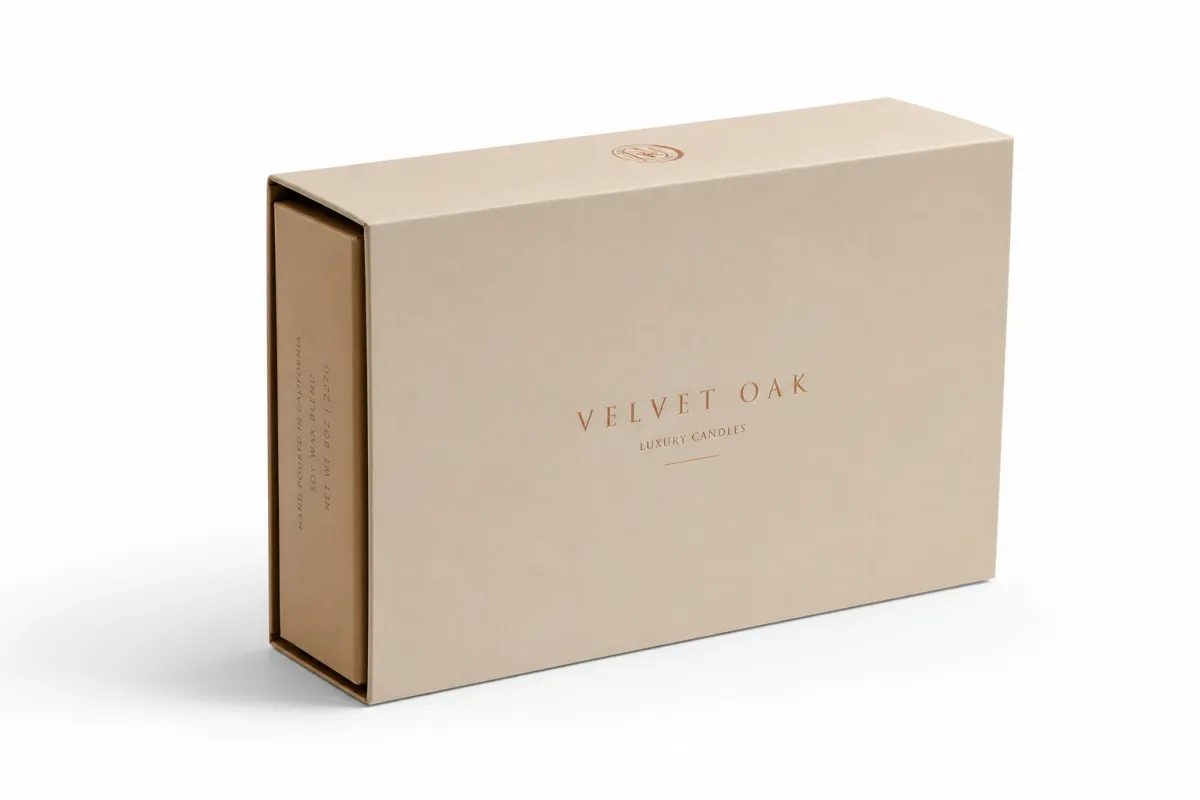
Custom shoulder box packaging is a rigid box style built from three main parts: the lid, the shoulder or neck, and the base. The shoulder is the hidden middle section, wrapped and fitted so it sits between the lid and the base with very tight tolerances. From the outside, the box can appear quiet and minimal. Open it, though, and the layered depth creates a clean reveal that feels more premium than a standard rigid setup.
The hidden construction is what gives the format its character. In this rigid box style, the shoulder controls the reveal line, the alignment of the lid, and the amount of product that becomes visible during opening. A taller shoulder creates more lift and a stronger break between lid and base. A lower shoulder produces a slimmer silhouette and a quicker opening motion. Either way, the structure creates a more deliberate presentation than a basic two-piece rigid box.
Standard rigid boxes can work well for many items, but this format puts more weight on presentation, precision, and feel. That difference matters for cosmetics, apparel accessories, luxury gifts, watches, scented products, premium stationery, and specialty retail items that need a first impression with some theatre. That theatre is not decoration for its own sake. It can make a product feel more valuable before the customer even touches it.
Brands choose custom shoulder box packaging for a few common reasons. Some products need protection and a fixed position during shipping or retail handling. Some brands want the packaging to communicate quality before the product is used. Some rely on the unboxing experience as part of the product story, especially for seasonal gifts, influencer kits, or limited releases. The box becomes part of the journey, which is why the structure often sits between packaging design and retail packaging strategy.
Custom shoulder box packaging is also flexible in its surface treatment. It can use coated art paper, soft-touch laminate, textured specialty stock, or uncoated paper for a more natural, tactile look. That flexibility makes it useful for Custom Printed Boxes projects that need the visual style to match the product category, whether the goal is sleek luxury, earthy restraint, or a bold display-ready finish. If you are comparing formats, it helps to look at Custom Packaging Products that use different rigid or folding structures, because the most elaborate option is not always the best fit.
The appeal comes down to control. Buyers can control the footprint, the reveal, the insert fit, the shelf presence, and the way the box feels in the hand. That level of control explains why custom shoulder box packaging stays relevant for products that need more than a simple carton. It is a presentation box that can behave like a protective shipper when it needs to.
How Does Custom Shoulder Box Packaging Work?
The construction of custom shoulder box packaging usually begins with rigid board assembly. A factory cuts greyboard or chipboard to size, forms the lid, base, and shoulder, then wraps those structures with printed or plain paper. The order matters. Each part has to land with the right tolerance, or the lid may bind, wobble, or sit unevenly. In a good run, the finished box feels solid without feeling heavy, and the lid glides onto the shoulder with a clean stop.
The shoulder is the feature that makes the format stand apart. It sits slightly proud of the base, creating a controlled gap that helps the lid close neatly while still giving the opening action a tactile lift. That offset changes the experience. The box does not simply open; it reveals itself in stages. For premium product packaging, that sequence can matter as much as the graphics on the exterior.
Inside the box, the insert choice affects both protection and presentation. EVA foam works well for dense or Fragile Items That need exact positioning. Molded pulp gives many brands a stronger sustainability story, especially if the goal is a recyclable insert with shaped support. Folded board partitions can be cost-effective for multiple items, samples, or sets. Paperboard trays suit lighter products where the visual finish matters as much as the hold. In custom shoulder box packaging, the insert is part of the build, not a leftover.
Finishing is where this rigid box format often earns its premium feel. Print is usually applied to wrap paper before the board is assembled, or sometimes to outer panels depending on the structure. Lamination, foil stamping, embossing, debossing, and spot UV all belong in the rigid packaging toolkit, but they need restraint. One foil accent on a logo can feel elegant. Three competing effects on one box can make the package look busy, even if the materials are expensive.
Buyers planning custom shoulder box packaging should check technical details early. Ask about paper weight, board thickness, adhesive type, and whether the wrap is machine-assisted or hand-finished. A typical rigid build might use 2.0 mm to 3.0 mm greyboard with 157 gsm art paper or a specialty stock wrap. Those numbers seem small, yet they affect how the box holds its shape, how the corners behave under pressure, and how the lid feels after repeated openings.
Quality testing belongs in the process as well. Packaging teams often refer to ISTA test methods for shipment durability, especially if the box will move through parcel networks or warehouse handling. Even a shoulder box built for retail display still has to survive the trip there. A beautiful box that collapses in transit is not premium; it is waste.
Custom shoulder box packaging works best when the structure, insert, and finish all support the same outcome. If the box is meant to protect one hero product, the insert should cradle that item exactly. If the box is meant to sell a luxury mood, the opening and closing tension should feel deliberate. That is why a sample matters. A flat rendering cannot tell you whether the lid catches on the shoulder, whether the product rattles, or whether the customer can lift the item out without damaging the insert.
“If the lid feels perfect but the product rattles inside, the box is not finished.” That rule saves time in Rigid Box Packaging, because physical fit always matters more than the mockup image.
Custom Shoulder Box Packaging Cost and Pricing Factors
Custom shoulder box packaging pricing depends on a handful of concrete variables, and structure is usually the biggest one. More board pieces, tighter tolerances, hand assembly, and deeper wraps all raise labor. A simple shoulder box with plain wrap and a basic paperboard insert may stay in a fairly efficient range. Add soft-touch lamination, foil, a magnetic closure, or a custom EVA insert, and the budget climbs quickly. That is normal, not a warning sign.
Quantity changes the math just as much. In a short production run, setup work, dieline prep, printing plates or digital setup, sample rounds, and assembly time get spread across the order. A short run can carry a much higher per-box price because the fixed costs are divided among fewer pieces. Larger runs usually reduce unit cost, especially if the design stays stable and the production team can run the order with fewer interruptions.
Paper choice matters too. A textured wrap or specialty uncoated stock can elevate the look of the box, but it can also increase waste, slow finishing, or require more careful handling during wrap-up. Heavier greyboard adds rigidity and a more premium feel, yet it raises raw material cost and can make the box bulkier in freight. If the product is lightweight, overbuilding the box can waste budget. If the product is fragile or expensive, saving money on board quality is usually the wrong trade.
Finishes can change the quote faster than many buyers expect. Soft-touch lamination adds a velvety surface that feels excellent in hand, but it also needs careful print preparation and can show scuffs if handled roughly. Hot foil stamping gives strong contrast and works especially well for logos and borders. Embossing and debossing add depth, but they require extra tooling and setup. In custom shoulder box packaging, each premium detail should earn its place.
Here is a practical way to compare common options for shoulder box packaging:
| Order Type | Typical Unit Price Range | Best For | Cost Drivers |
|---|---|---|---|
| Short-run rigid shoulder box | $2.20-$5.50 each at 500-1,000 units | Launches, samples, small retail drops | Setup spread over fewer boxes, limited automation, more hand work |
| Mid-volume custom shoulder box packaging | $1.10-$3.20 each at 3,000-5,000 units | Ongoing retail programs, gift sets, accessory boxes | Better economy of scale, steady material sourcing, repeatable assembly |
| Premium shoulder box packaging with insert | $2.80-$7.50 each depending on finish | Luxury goods, electronics, high-value presentation | Foil, embossing, EVA or molded inserts, tighter QC, more complex wrap |
Those ranges are not universal, because every vendor prices a little differently, and freight can change the total landing cost. Still, they help when comparing quotes. A box that looks inexpensive on paper can become costly once assembly, proofing, packing, and shipping are added. A careful buyer asks for all-in pricing, not just a printed unit cost.
That point matters enough to repeat: compare the full quote. Look for structural development, sample revisions, plate or tooling charges, packaging assembly, inner packaging, freight, and any surcharge for special papers or hand finishing. If one supplier seems dramatically lower, ask what is missing. Sometimes the lower number is real. Sometimes the scope is narrower than it looks.
Sustainability can affect cost as well. FSC-certified paper and board may carry a small premium, but it supports responsible sourcing claims and can fit a brand’s packaging design story better than unverified materials. For sourcing language and forest stewardship context, many teams review FSC certification standards before choosing wrap stock or board specifications. That is more than a marketing detail; it can shape procurement, labeling, and customer trust.
Custom shoulder box packaging should be priced against the role it plays. If the box supports a giftable product with a high margin, a few extra cents for better wrap or insert quality may be easy to justify. If the box sits inside a value-driven retail program, the specification needs discipline. The best quotes are the ones that match the business model, not just the sample’s appearance.
Design Choices That Shape the Final Box
Good custom shoulder box packaging starts with sizing, not artwork. Measure the product carefully, then add the space needed for insert thickness, clearance, and removal ease. A product that fits too tightly can scrape when pulled out. A box that is too loose can feel hollow and cheap. That small difference in fit changes perception more than most people expect.
Shape matters too. Square formats feel orderly and balanced, while rectangular formats suit apparel accessories, bottles, or long items better. A high shoulder gives a stronger reveal and a more dramatic lift, which can work beautifully for premium gift packaging. A low shoulder keeps the profile compact and may be better for retail shelving or shipping efficiency. In this format, the structure should support the product’s proportions, not fight them.
Branding choices should fit the audience. Minimal layouts with a clean logo, muted color field, and precise typography can feel quiet and luxurious. Bold graphics and stronger contrast can help a retail product stand out on a crowded shelf. An uncoated or textured wrap can suggest craft, natural ingredients, or small-batch positioning. A glossy, high-contrast finish may suit tech accessories or modern beauty products. The goal is not style for its own sake. The goal is to make the packaging design feel believable for the brand.
Custom shoulder box packaging also needs artwork discipline. The dieline should show bleed, safe zones, seam placement, lid overlap, and wrap direction before artwork gets approved. That prevents a logo from landing across a seam or a key detail from disappearing under the shoulder wrap. If the design includes a pattern, check how it behaves at corners. Repeating graphics can shift slightly, and a seam in the wrong place can make an elegant box look awkward.
For many custom printed boxes projects, the wrap carries the artwork, but the interior matters too. A printed inner lid, a tonal interior, or a subtle message on the insert can improve the unboxing without adding much cost. These details work especially well in custom shoulder box packaging because the structure already creates a pause between lid and product. A small message or coordinated color inside the box feels intentional rather than decorative.
Surface finish should support handling. Gloss can make color pop, but it can also show fingerprints and scuffs. Soft-touch feels premium and calm, though some teams dislike the way it marks under heavy use. Matte lamination is a dependable middle ground. For retail packaging that will be touched often, durability matters as much as appearance. A beautiful surface that wears poorly can undercut the whole project.
One detail gets overlooked often: how the box opens in the hand. Custom shoulder box packaging should not require excessive force. The lid should resist just enough to feel precise, then release cleanly. That tactile control is part of the value. If opening the box feels clumsy, the premium feeling drops immediately.
In a sample room, I have seen teams celebrate a perfect exterior and then discover the inner tray pulls up too much with the product attached. That usually means the insert is fighting the hand, not helping it. The box is supposed to make the product feel inevitable, almost obvious, not a small wrestling match.
Custom Shoulder Box Packaging Process and Timeline
The production flow for custom shoulder box packaging usually begins with a brief. The team reviews product dimensions, target quantity, branding files, surface finish preferences, and any insert requirements. From there, a structural concept or dieline gets prepared. That step should not be rushed. A good dieline saves time later by making sure the product sits correctly and the lid closes with the right tension.
Sampling is where many projects succeed or fail. A paper proof can confirm graphics, but a physical mockup tells you whether the box actually works. Check the fit, the opening feel, the insert depth, the lid pull, and the way the product exits the tray. If the box will ship through e-commerce channels, test it again after packing. A structure that feels perfect on a desk may behave differently after vibration, compression, and transit handling.
After sample approval, production moves into material sourcing, printing, wrap cutting, board forming, insert fabrication, and final assembly. A simple shoulder box run with readily available materials can move fairly quickly, but complex finishes or specialty papers may add lead time. If a brand wants foil, embossing, or custom color matching, the schedule needs extra room for setup and proof correction. The earlier those details are locked, the smoother the process. Otherwise, everyone ends up playing calendar chess, which is never fun.
A realistic project timeline often looks like this for custom shoulder box packaging:
- Brief and quote alignment: 1-3 business days.
- Dieline and structural review: 2-5 business days.
- Artwork proofing and revisions: 3-7 business days, sometimes longer if branding is still changing.
- Physical sample or prototype: 5-10 business days, depending on complexity.
- Production and assembly: often 12-20 business days after approval for a standard run.
- Transit and receiving: varies by lane, packaging method, and destination.
Those timeframes are a practical guide, not a promise. Custom shoulder box packaging projects can speed up if specs are final, but they can also slow down if a logo changes, an insert dimension shifts, or a finish decision gets revisited late in the process. Launch dates, seasonal promotions, and gift packaging calendars leave little room for guesswork, so building backward from the release date is the safest way to plan.
Packaging buyers who manage multiple SKUs should also keep file control tight. Version naming, measured drawings, and approval notes prevent expensive confusion. If a sample is approved with a certain insert depth and then the product changes by a few millimeters, the fit can be off enough to affect the whole run. In Rigid Box Packaging, small changes matter because the structure is precise by design.
In larger programs, many teams validate shipping performance before release. That is where reference standards such as ISTA tests become useful, and where the packaging team may check compression, drop, or vibration sensitivity. If the box is part of a subscription set, retail shipper, or fulfillment-friendly system, transit behavior should be part of the approval process, not an afterthought.
At a minimum, good planning for custom shoulder box packaging should include a fallback date, a sample approval deadline, and a clear owner for every sign-off. That sounds administrative, but it prevents delays that often come from uncertainty rather than manufacturing problems.
Common Mistakes With Shoulder Boxes to Avoid
The most common sizing mistake in custom shoulder box packaging is designing only around the product and ignoring the insert, shoulder thickness, and opening clearance. A product may measure perfectly on paper, but the real box needs room for wrap material, tolerances, and movement during removal. Skip those details, and the finished box may bind at the lid or pinch the product inside the tray.
Another mistake is piling on finishes because they look expensive in isolation. Foil, embossing, spot UV, texture, and bright print can each look attractive, but together they can make the box feel crowded. Luxury is often a matter of restraint. One strong logo treatment and one careful paper choice can do more than a box loaded with effects.
Weak sample approval habits create trouble too. Some teams review only the artwork and forget to test the actual physical box. That is risky. A sample should be checked for lid pull, product removal, corner strength, seam alignment, and shipping durability. If the package will be handled repeatedly, the test should include a few open-close cycles. Custom shoulder box packaging is built to feel precise, so that precision has to be verified in hand.
Cutting cost too aggressively on board quality is another problem. Thin or inconsistent board can warp, dent, or close poorly. In a store, that can make the package look tired before it has even been stocked. In a warehouse, it can create headaches during packing. For shoulder box packaging, the structure has to support the visual brand promise. If the board flexes too much, the promise collapses with it.
Overlooking freight is a mistake that catches first-time buyers more often than they admit. Rigid boxes are not flat mailers. They take space, and that means shipping volume can be a real part of the budget. A well-designed custom shoulder box packaging project should account for carton pack-out, master carton size, and warehouse storage before the order is finalized. Beautiful packaging that is expensive to store or move is only half a win.
There is also a sustainability blind spot. If the brand wants recyclable or responsibly sourced materials, the wrap, board, ink system, and insert all need attention. A paper wrap on a plastic-heavy insert may not match the story the brand is telling. For many teams, the better choice is a simplified build with FSC-certified board, a paperboard insert, and minimal lamination. That combination can still look refined while staying closer to environmental goals and a broader product packaging strategy.
Custom shoulder box packaging works best when the team thinks like a packer, not just a designer. The box has to travel, stack, open, protect, and present. Skip any one of those functions and the whole package feels less complete.
Expert Tips and Next Steps for Ordering Custom Shoulder Box Packaging
The smartest starting point for custom shoulder box packaging is not a color palette; it is the customer experience you want to create. Ask what the buyer should feel first: anticipation, reassurance, craftsmanship, or premium simplicity. That answer helps determine whether the box needs a high shoulder, a tight insert, a soft-touch exterior, or a restrained uncoated finish. Good packaging design begins with the feeling, then works backward into structure and materials.
Gather the right inputs before asking for quotes. A clean dimension sheet, product photos, branding files, target quantity, and a few reference images make it easier to compare proposals. If the item is fragile, high-value, or giftable, include that context. A vendor quoting custom shoulder box packaging for a cosmetic jar will think differently than one quoting a boxed accessory set or an electronics item with accessories inside.
It also helps to ask for a structural mockup before production, especially if you want custom inserts or a premium reveal. A mockup can expose issues that are invisible on a screen: the lift of the lid, the friction on the shoulder, the way the product sits in the cavity, and the balance between presentation and protection. Those are the details that decide whether custom shoulder box packaging feels truly premium.
For brands with multiple product lines, a modular approach can keep things manageable. One shoulder box platform can be adapted with different outer wraps, insert shapes, or interior print treatments. That keeps the branding consistent while letting each SKU still feel distinct. It can also reduce the time needed for future reorders because the structural base is already proven.
If you are ready to move forward, use this practical checklist:
- Define the product dimensions and acceptable clearance.
- Choose the insert style based on protection and presentation.
- Set a realistic budget range for custom shoulder box packaging.
- Decide whether the box needs matte, gloss, soft-touch, foil, embossing, or a simpler finish.
- Request a prototype and test the actual fit.
- Confirm the production timeline against your launch or replenishment date.
- Approve the final sample only after checking opening feel, print alignment, and shipping readiness.
If you are still comparing styles, it can help to review a broader range of Custom Packaging Products so the shoulder box can be judged against other formats rather than chosen by habit. Sometimes a different rigid box, a drawer style, or a sleeve-and-tray structure suits the product better. The right decision is the one that balances the product, the budget, and the presentation goal.
From a buyer’s point of view, custom shoulder box packaging is worth the effort when the product deserves a memorable reveal and a controlled fit. From a production point of view, it rewards careful planning, clear files, and honest sample testing. Put those pieces together and the box does more than hold the item. It helps sell the value of the item before the customer even opens it.
That is the real strength of shoulder box packaging: it can look simple, feel precise, and carry a lot of brand meaning without shouting. When the structure, material, and finish all work together, the box becomes part of the product experience, not just a container around it. If you want the strongest result, start with fit, confirm the opening tension, and choose only the Finishes That Actually improve the story. Everything else is just noise.
What products are best for custom shoulder box packaging?
It works well for products that benefit from a premium reveal, including cosmetics, apparel accessories, electronics, gifts, and specialty retail items. The format is especially useful when the packaging needs to protect the product, hold inserts, and create a polished unboxing moment.
How much does shoulder box packaging usually cost?
Pricing depends on size, board thickness, quantity, print coverage, inserts, and finishing details like foil, embossing, or soft-touch lamination. Larger runs usually lower the unit cost because setup is spread across more boxes, while short runs carry a higher per-box Price for Custom shoulder box packaging.
How long does custom shoulder box packaging take to produce?
Timing depends on sampling, artwork approval, material sourcing, and production complexity, so the full schedule can vary widely. A smooth project moves faster when specs are finalized early and proofs are approved quickly, especially for launch-driven or seasonal orders.
What finishes work best on a custom rigid shoulder box?
Popular options include matte or gloss lamination, soft-touch coating, foil stamping, embossing, debossing, and spot UV. The best finish depends on the brand style and product category, but the strongest results usually come from using one or two finishes with restraint.
How do I make sure the shoulder box fits my product correctly?
Measure the product carefully, then account for insert thickness, clearance, and how easily the item needs to be removed by the customer. Request a sample or mockup before full production so you can test fit, lid closure, and overall presentation in real conditions.

