If you are sourcing a tote bag with logo in bulk, the real question is not whether the bag is useful. It is whether people keep using it after the handoff. That is where tote bags separate themselves from flyers, postcards, and a lot of other short-lived print pieces. A flyer gets one glance. A tote can spend months in a car trunk, an office drawer, or by the front door, then show up again at a store or event with your logo still visible.
That matters because bulk tote orders are judged on more than decoration. Buyers need a bag that fits the job, holds up under actual use, and stays within a unit cost that makes sense at scale. The cheapest option is rarely the best one. A weak bag that tears at the handle or prints badly is not a savings. It is a mistake that stays in circulation longer than you want.
The practical side of tote buying is easy to miss if you focus only on branding. Material, stitch quality, print method, gusset depth, and lead time all affect the final result. Get those pieces aligned and the bag becomes useful media. Miss on a few of them and the order may still arrive on time, but it will not do the job you paid for.
Why Bulk Tote Bags Outperform Flyers
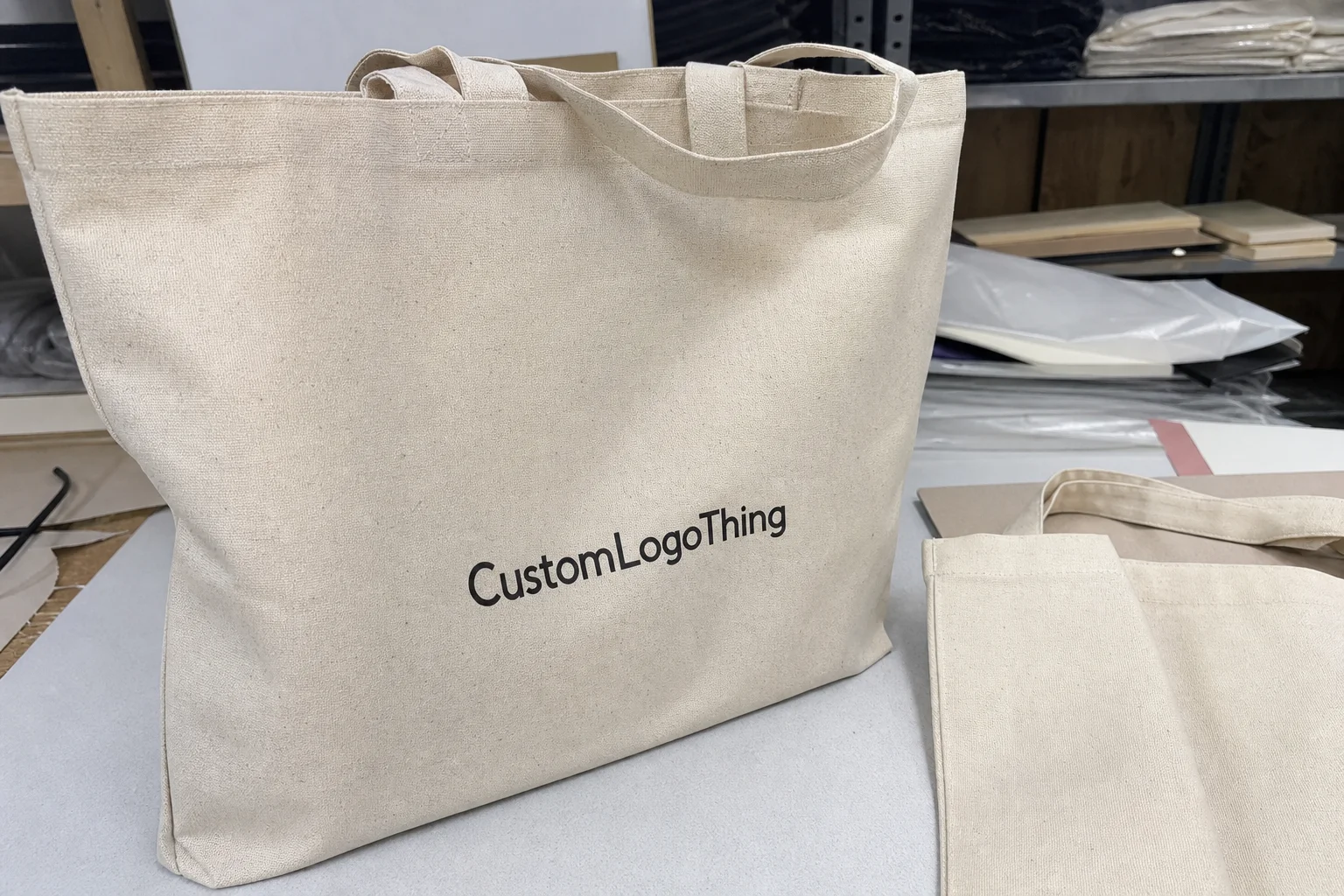
A tote bag with logo in bulk works because it stays in use long after the event ends. That is the basic advantage. A flyer depends on someone remembering it later. A tote carries the memory for you. It sits at checkout counters, on kitchen hooks, in conference halls, and in office supply closets where the brand gets repeated exposure without paying for another placement.
From a buyer’s perspective, the appeal is concrete. You need something affordable enough for thousands of units, but substantial enough that the recipient does not treat it like filler. That balance is where tote bags earn their keep. Even a modest bag can deliver a strong return if it gets reused often. A disposable-looking tote does the opposite. It can make the brand feel cheap before the customer has even opened it.
Different programs put different stress on the bag. Retail bags need clean presentation and decent load capacity. Trade show bags need room for brochures, samples, and small boxed items. Welcome kits often need a middle ground: a bag that looks presentable and holds several pieces without stretching the seams. In each case, the tote has one job that paper pieces cannot do. It carries content and continues to advertise after the content is gone.
“Most bulk tote orders fail for ordinary reasons: poor material choice, weak handles, or artwork that looks fine on screen and collapses on fabric.”
Cost per impression is one reason tote bags keep winning budget conversations. If the bag gets used ten or twenty times, the effective cost drops sharply. If it is used once and discarded, the math falls apart. That is why experienced buyers care as much about durability as they do about print price. The right tote does not need to be premium in every case. It does need to survive normal use without becoming a complaint.
Materials and Build Choices That Shape Everyday Use
Material choice sets the tone for the entire order. Non-woven polypropylene is the low-cost workhorse. It is light, easy to decorate, and common for large giveaways. Cotton feels softer and more retail-friendly. Canvas moves further into premium territory and usually handles heavier loads better, assuming the sewing is consistent. Laminated totes add structure and are easier to wipe clean, which helps for grocery-style use or shelf display.
The practical split is straightforward. Non-woven polypropylene is best when volume and price control matter most. Cotton is a stronger fit for retail programs, brand merch, and customer-facing packaging where the bag needs to feel deliberate. Canvas makes sense when the bag has to carry weight, be reused often, or match a more premium product line. Laminated options work when the visual is supposed to be crisp and the surface should resist dirt and moisture.
Construction details matter just as much as fabric. Handle length changes comfort. Short handles are fine for hand carry. Longer handles are more comfortable on the shoulder and tend to work better for grocery or convention use. Gussets add depth, which becomes important once the bag needs to hold a box, a bundle of inserts, or a bottle-shaped item. Handle reinforcement is not optional if the bag is expected to hold more than light paper materials.
Details Buyers Should Check
- Handle style: short or long, sewn-in or reinforced.
- Gusset depth: 3 to 5 inches is common for everyday carry and boxed inserts.
- Weight capacity: confirm whether the bag is meant for brochures, groceries, or heavier merchandise.
- Finish: matte, natural, coated, or laminated changes appearance and cleaning behavior.
- Stitch quality: especially important at the handle joins and base seams.
For buyers with sustainability requirements, fiber source and certification may matter. Not every order needs that level of documentation, but some retail chains and corporate procurement teams will ask for it. If that is part of the brief, check chain-of-custody details early rather than after the quote lands. Reworking a bag spec late in the process adds cost and can shift lead time.
The best material is the one that matches the actual use case. A light giveaway bag does not need to pretend it is a premium carry tote. A customer-facing retail bag usually should not feel like a throwaway. That judgment call sounds basic, but it is the difference between a bag that gets reused and one that gets shoved in a drawer.
Print Methods, Sizes, and Specs Buyers Should Lock Down
Print method changes the quote, the turnaround, and how the logo looks in hand. Screen printing is still the standard choice for simple logos and solid color graphics. It is durable, efficient, and usually the best fit for one-color or two-color decoration. Heat transfer works better when artwork has fine detail or small type that would break apart in a standard screen print. Full-color print can be effective on some fabrics, especially when the design includes gradients, photos, or a more detailed layout.
The artwork itself needs to be judged in context. A logo that looks sharp on a monitor can lose clarity once it is scaled to a smaller imprint area or placed on textured fabric. Thin lines are especially vulnerable. Dark bags reduce contrast. Busy layouts can become hard to read at a distance. If the bag is doing promotional work, legibility usually matters more than clever design.
Before approving a tote bag with logo in bulk, confirm the bag size, imprint area, number of print colors, and whether the logo should appear on one side or both. Those choices drive both pricing and setup. If brand color matching matters, send a Pantone reference rather than a vague color description. If the only file available is a JPG, send the highest-resolution version and expect the design to be checked or rebuilt into vector form before production.
Specs to Confirm Before Proof Approval
- Finished bag size, including gusset depth.
- Imprint dimensions and placement.
- Artwork format, ideally AI, EPS, or editable PDF.
- Exact color references if brand matching matters.
- Single-sided or double-sided print.
On dark bags, a white underbase or an adjusted ink setup may be needed to keep the logo visible. On textured materials, fine type can soften, so simplifying the layout often improves the result. That is one of the places where a buyer can save money without sacrificing quality. A cleaner design prints better and usually moves through proofing faster.
Clean files also reduce production friction. Messy files invite back-and-forth, and back-and-forth costs time. That is not a creative issue. It is a production issue. The earlier the artwork is finalized, the less likely the job is to get pushed by avoidable revisions.
Pricing, MOQ, and Unit Cost: What Actually Changes the Number
Pricing for a tote bag with logo in bulk usually comes down to five variables: quantity, material, print colors, print locations, and finishing. Larger orders generally bring the unit price down because setup costs are spread across more pieces. That is the basic math. What catches buyers off guard is how quickly small spec changes can move the number.
Real-world pricing varies widely, but some working ranges help. Simple non-woven tote orders can land around $0.50 to $1.20 per unit at higher quantities, depending on size and print coverage. Cotton and canvas usually run higher, often from about $1.20 to $4.50 per unit or more when the bag is thicker, larger, or printed on both sides. Special handles, coatings, lamination, and full-color decoration can push pricing beyond those ranges.
Minimum order quantity exists because setup has a floor. Screens, plates, file prep, and press calibration all take time. If a supplier offers a low unit price at a very small quantity, check what is hidden in setup, freight, or packaging. The cheapest-looking quote is not always the cheapest order. Sometimes it is just the least transparent one.
| Option | Typical Use | Approx. Unit Cost | Best For |
|---|---|---|---|
| Non-woven polypropylene, one-color print | Events, giveaways, large campaigns | $0.50-$1.20 | High volume and lower unit cost |
| Cotton, one- or two-color print | Retail, welcome kits, brand merch | $1.20-$3.00 | Better handfeel and repeat use |
| Canvas or heavier cotton | Premium retail, heavier products | $2.00-$4.50+ | Durability and stronger presentation |
| Laminated tote | Groceries, shelf display, wipe-clean use | $1.50-$4.00+ | Structure and easy cleaning |
A usable quote should break out unit price, setup, freight, and any optional extras. If those costs are blended together, comparison shopping gets messy fast. Ask for pricing at more than one quantity tier. That shows where the break points sit and helps you avoid ordering too little, or too much, just to hit a price threshold.
There is another piece buyers sometimes forget: storage. A low unit cost does not help if the order size creates a warehouse problem or forces the team to hold inventory longer than planned. The right order size is not always the largest one. It is the one that fits budget, distribution timing, and use rate.
Production Steps, Proofs, and Lead Time Realities
The order flow should be predictable: quote, artwork review, digital proof, approval, production, shipment. That is how a clean run moves. The job slows down when artwork is incomplete or approvals drag. A bulk tote order does not progress on its own, and the schedule only stays tight if the buyer keeps the file side organized.
For standard runs, a realistic lead time is often 12 to 15 business days after proof approval. Simple one-color orders can move faster. Multi-location printing, custom ink matching, special finishes, or unusually large quantities usually add time. Rush work is possible in some cases, but it only works if the files are ready and the approvals are fast. Otherwise the rush fee buys pressure, not certainty.
Quality control should happen before the bags leave production. Check print alignment, color consistency, handle attachment, seam strength, and quantity count. On a large run, that is not overkill. It is basic risk control. If the bags are tied to a dated event, retail launch, or kit rollout, a box of crooked prints arriving late is not a minor issue.
What Slows Production Down
- Late artwork changes.
- Missing Pantone references.
- Unclear print placement.
- Repeated proof corrections.
- Rush timelines with incomplete files.
Packing and distribution also deserve attention. If bags are being shipped to multiple locations or packed into kits, ask how cartons are labeled and how quantities are counted. That kind of detail saves time at receiving and prevents needless sorting later. It is a small thing on paper and a large thing in a warehouse.
The best bulk orders are usually the most boring ones after approval. The proof matches the spec, the boxes are counted correctly, the shipment arrives where it should, and the customer sees a bag that feels intentional rather than accidental. That is the standard worth aiming at.
What Makes Reorders and Large Runs Go Smoother
Reorders move faster when the supplier keeps clean records. Same bag spec. Same print file. Same color reference. Same carton count. That sounds obvious because it is obvious, yet repeat orders often slow down when someone has to reconstruct old details from memory or from a buried email chain. Good recordkeeping saves real time once the run gets large.
Color consistency matters more as volume rises. A small shift in ink or fabric tone can be hard to detect on one sample and much easier to spot across several pallets. That is one reason large runs need tighter proof approval than a one-off purchase. If the bag is going to stores, events, or branches in multiple locations, carton labeling and SKU separation become worthwhile. The upfront planning is light compared with the cleanup later.
Buyers should also expect a service level that matches the order size. Clear pricing, direct answers on MOQ, realistic lead times, and specific proof notes are not extras. They are the minimum for a bulk order that needs to land on schedule. Vague promises usually become delayed shipments. Precise specs reduce that risk.
For recurring programs, consistency is the main value. A buyer should not have to relearn the process every season. If the supplier can reproduce the same bag, the same print placement, and the same packing format without drama, the order becomes easier to approve and easier to repeat. That is where bulk buying pays off beyond the unit price.
“The most reliable tote program is the one that needs the fewest corrections after approval.”
Large runs also reward discipline on the buyer side. Keep one version of the artwork, one set of specs, and one owner for approvals. The more people involved in the final sign-off, the more likely the order is to drift. That is true for a few hundred bags and even more true when the count climbs into the thousands.
What to Send Before You Request a Quote
If you are ready to price a tote bag with logo in bulk, send the key details in one message: target quantity, bag size, material preference, print method, logo file, color count, and deadline. If you know how the bag will be used, include that too. Retail carry, event giveaway, grocery-style use, and welcome kits all point toward different materials and construction.
Ask for a quote that separates unit cost, setup, freight, and any add-ons. That keeps comparisons honest and makes hidden costs easier to spot. A cheap headline number means little if shipping erases the savings or if the setup fee gets buried until the invoice stage. Procurement mistakes usually start with incomplete line items, not bad intentions.
Before placing the order, run one internal check. Confirm the budget ceiling. Confirm whether the bag needs to fit inserts, samples, or merchandise. Confirm whether the bag should feel premium or simply functional. Those three answers narrow the choice fast and keep the spec from drifting.
The bag should do two jobs well. It should carry the load, and it should carry the logo. Everything else is secondary. If the construction is right, the print is clean, and the schedule is realistic, the tote keeps working long after the boxes leave receiving.
What is the minimum order for a tote bag with logo in bulk?
Minimums depend on the Material and Print method. Simple one-color non-woven bags usually allow lower MOQs than premium cotton or canvas, because setup is cheaper and faster. If you need a smaller test run, ask whether a stock bag and a single-color print can reduce the threshold.
Which material is best for retail use?
Cotton and canvas usually feel Better for Retail because they look more substantial and are more likely to be reused. Non-woven polypropylene is the lower-cost option for wider distribution. If the bag will carry heavier items, check handle reinforcement and seam quality before focusing on extra print colors.
How long does a bulk tote order usually take?
Standard lead times often run about 12 to 15 business days after proof approval, though simple jobs can move faster and complex jobs can take longer. Artwork completeness and print complexity have a direct effect on timing. A tight deadline should be shared before the quote is issued.
Can I mix colors or print locations in one order?
Often yes, but mixed colors or multiple print locations can change pricing and production setup. Some suppliers require a higher quantity to split colors efficiently. Ask for separate pricing if you want one version for retail and another for events.
What file do you need for a quote?
A vector file such as AI, EPS, or editable PDF is usually best. If you only have a JPG or PNG, send the highest-resolution version available and expect a proof review. Include quantity, size, deadline, and preferred print colors so the quote is based on actual production requirements.