A towing warning sticker usually gets attention after something has already gone wrong: a driver ignores it, a tenant disputes it, or a property manager realizes the warning was printed so small it reads like medication fine print. Tow away zone warning stickers custom orders are not decorative labels. They are functional warning tools for parking lots, private drives, loading areas, apartment complexes, warehouses, schools, retail centers, and any place where “please don’t park here” needs more force than a polite suggestion.
A custom tow away warning sticker is an adhesive sign printed with restricted-access rules, private property notices, towing terms, permit requirements, enforcement hours, contact numbers, or location-specific instructions. Good ones are blunt. Good ones are readable. Good ones survive sun, rain, cleaning, handling, and the occasional person who decides peeling the notice off is a legal strategy.
What Tow Away Zone Warning Stickers Custom Orders Are Really For
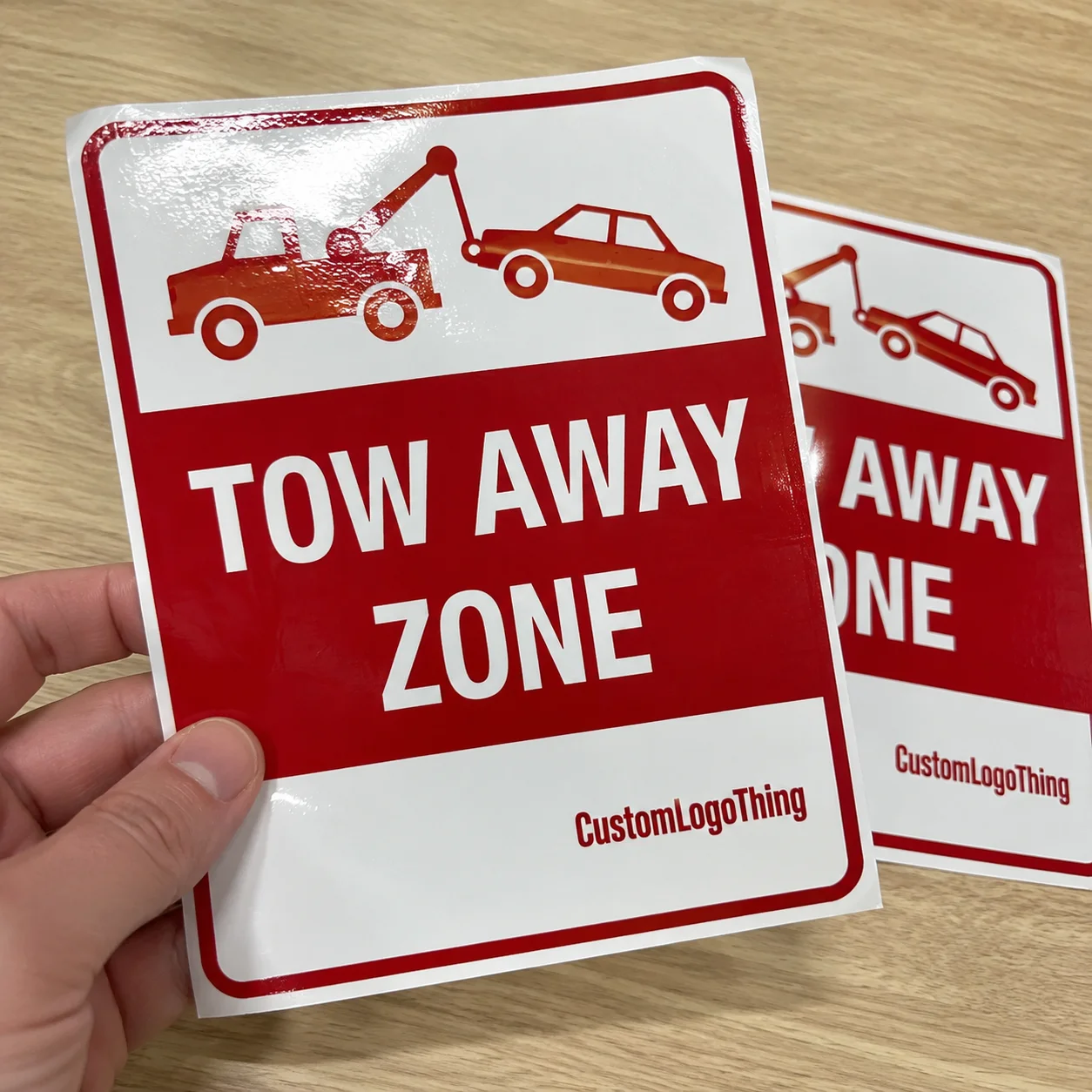
The first job is notice. Not decoration. Not branding theater. A parking warning sticker should help a driver understand the consequence before leaving the vehicle, because a message discovered after towing is not much of a warning.
Stickers, decals, and rigid signs often get treated as interchangeable, but they solve different problems. Stickers are usually faster and less expensive for short runs, windows, gates, kiosks, posts, and equipment. Decals typically use tougher vinyl, stronger adhesive, and protective films for outdoor exposure. Rigid signs work better when drivers need to read a warning from a moving vehicle or from farther away, such as at a lot entrance or driveway approach.
That distinction matters because tow away zone warning stickers custom projects tend to live in awkward locations: glass doors, parking kiosks, bollards, gate arms, metal posts, temporary barriers, pay stations, storage yard equipment, loading dock cabinets, and inside-window placements where a metal sign would be excessive. In those spots, a sticker repeats the rule exactly where the bad decision happens.
Custom warning stickers also help standardize a property. One lot may need “Permit Parking Only,” another may need “Loading Zone — 30 Minutes,” and a third may need “Private Property — Unauthorized Vehicles Towed.” Same visual system. Different message. It is packaging logic applied to property communication: clear hierarchy, consistent layout, controlled variation, fewer surprises.
Practical rule: if the sticker cannot be read before someone parks, blocks, unloads, or enters the restricted area, it is too small, too low-contrast, or placed in the wrong spot. Possibly all three. A tidy little failure.
From a buyer’s point of view, the goal is straightforward: visible, durable, legally sensible, and not designed like a yard sale flyer. People ignore weak signage and then act astonished. Build the sticker like you expect that argument.
How Custom Tow Warning Stickers Work on Real Surfaces
Sticker performance starts with the surface, not the artwork. Smooth glass, painted metal, powder-coated posts, plastic barriers, sealed concrete, and older painted doors all behave differently. A decal that grips clean glass for years may fail early on chalky paint or textured plastic.
Adhesive choice should match the surface and the expected life span. Standard permanent adhesive works for clean indoor or protected surfaces. Aggressive outdoor adhesive is better for metal posts, plastic barriers, gate arms, and equipment cabinets. Removable adhesive makes sense for temporary enforcement, leased spaces, or seasonal controls, but it is not built for rough treatment. Static cling can work for inside-window placement, though it needs clean glass and is easier to remove.
Window stickers add a separate production choice: front adhesive or back adhesive. An outside-facing sticker sticks to the exterior side of the glass and puts the print directly in the weather. An inside-window sticker applies from inside the glass so the message reads outward. That protects the print from rain, tampering, pressure washing, and bored fingers. For retail doors, apartment offices, and leasing centers, inside-window placement is often the cleaner option.
Weather is where cheap materials confess. UV light fades bargain ink. Rain attacks exposed edges. Heat softens adhesive. Freeze-thaw cycles stress vinyl and adhesive layers. If the warning faces southern sun, daily sprinklers, snow removal, or pressure washing, do not price it like an indoor file-folder label.
Protective finishes help, but they are not all the same. Gloss lamination adds shine and scuff resistance. Matte lamination reduces glare and gives a flatter look. UV coating adds some print protection, though it is usually less protective than a true overlaminate film. A 2 to 3 mil clear overlaminate over outdoor vinyl is a common, sensible spec for parking decals expected to last longer than one season.
Typical durability ranges are planning numbers, not guarantees. Paper labels may last weeks indoors. Basic unlaminated vinyl may last 6 to 18 months outdoors, depending on sun and abrasion. Laminated outdoor vinyl can often last 2 to 5 years, especially on clean glass or painted metal with good surface prep. Reflective vinyl, tamper-evident film, and specialty adhesive constructions vary more, so ask for a material datasheet if the placement is harsh.
Installation matters more than buyers want to admit. Dust, oil, wax, moisture, cold temperatures, peeling paint, and tight curves can make a good decal fail early. Apply most pressure-sensitive vinyl above roughly 50°F unless the material says otherwise, clean with isopropyl alcohol where appropriate, and let the surface dry fully. Adhesive needs firm pressure, not a polite little pat.
Key Specs That Make a Towing Sticker Visible and Enforceable
Size is the first visibility spec. Small 3 x 5 inch labels work for doors, kiosks, cabinets, and point-of-use reminders. A 4 x 6 or 5 x 7 inch sticker suits posts, gates, pay stations, and small restricted zones. Larger 8 x 10 inch decals make more sense when drivers need to read the warning from several feet away. If someone is viewing it from a moving car, use a larger decal or a rigid sign.
The hierarchy should be obvious from ten feet away. The words “Tow Away Zone,” “No Parking,” “Permit Parking Only,” or “Private Property” should dominate the layout. Phone numbers, permit rules, hours, lot IDs, ordinance references, and manager contacts belong below. Giving every line equal size creates a legally nervous gray rectangle that nobody reads.
Color choices should support warning behavior. Red, black, white, and yellow are common because they signal restriction and risk quickly. Low-contrast brand colors can look polished and perform terribly. Very tasteful. Also unreadable. If the property has strict brand standards, keep them in the system, but the towing message still needs high contrast.
Font choice is not the place for personality. Use bold sans-serif typefaces with open letterforms. Thin scripts, condensed decorative fonts, and low-weight modern type can disappear in rain, glare, low light, or dirty glass. For the main headline, a 0.5 inch letter height is a practical minimum for close-range reading; gates and posts usually need more.
Material choice depends on placement. White vinyl is the standard for most warning decals. Reflective vinyl helps near dark entrances, poorly lit lots, and overnight enforcement areas. Clear vinyl can look clean on glass, though contrast suffers unless white ink or a white backing layer is used. Tamper-evident materials are useful where removal is common because they fracture, leave residue, or reveal a pattern when peeled.
Towing language has legal and operational consequences, so do not improvise. Rules vary by city, state, property type, and enforcement provider. Confirm required wording, lettering size, towing company contact details, posting frequency, and posting locations before printing. A sticker can be beautiful and still weak if required local language is missing. That is the expensive kind of pretty.
Leave space for property-specific details: towing company name, lot number, manager contact, permit ID, enforcement hours, or a QR code to parking rules. If you manage multiple properties, build a master layout and swap the variable fields. The same method works in branded packaging, Custom Printed Boxes, and retail labels: one controlled system, many versions, fewer mistakes.
Cost, Pricing, and MOQ for Custom Parking Warning Stickers
Pricing for custom tow away zone warning stickers is driven by size, material, adhesive type, ink coverage, lamination, quantity, shape, reflective stock, tamper-evident features, and whether the artwork needs cleanup. That last item appears more often than buyers expect. A blurry screenshot pasted into a document is not production art, no matter how confidently it was emailed.
Small basic vinyl warning stickers may land around $0.20 to $0.80 each at higher quantities. Mid-size laminated decals often run $0.75 to $2.50 each. Reflective or tamper-evident versions can cost $2 to $6+ each, depending on size, material, print method, and volume. Very small orders cost more per piece because setup, proofing, material waste, and machine time do not disappear just because the order is tiny. Shocking, yes. Also math.
| Option | Typical Use | Estimated Unit Range | Tradeoff |
|---|---|---|---|
| Basic vinyl, unlaminated | Short-term indoor or protected outdoor placement | $0.20-$0.80 at higher quantities | Lower cost, shorter outdoor life |
| Laminated outdoor vinyl | Gates, posts, exterior glass, parking equipment | $0.75-$2.50 for common mid-size decals | Higher cost, better fade and scratch resistance |
| Reflective vinyl | Nighttime lots, dark entrances, low-light zones | $2-$6+ depending on size and quantity | Better visibility, more expensive stock |
| Tamper-evident film | High-removal areas, enforcement disputes, secured spaces | $2-$6+ depending on construction | Removal evidence, harder cleanup |
Minimum order quantity depends on the print method. Digital printing often supports lower minimums, sometimes 50 to 100 pieces. Screen printing, reflective materials, specialty adhesives, and custom die-cut shapes may need higher minimums because setup takes time and material. If you only need 25 pieces, expect the unit price to look rude. It is not personal.
Budget versus durability is a real tradeoff. Unlaminated vinyl is cheaper upfront and fine for temporary use, interior windows, or short construction phases. Laminated outdoor vinyl costs more but usually reduces replacement headaches. If labor costs $40 to $75 per hour and someone has to scrape failed decals off 30 posts, the “cheap” sticker has been promoted to expensive.
Order planning helps. Count current install points, add replacements for damage or vandalism, include future tenant changes, and keep a small reserve for seasonal re-posting. Ask for tiered quotes at 100, 250, 500, and 1,000 pieces because unit cost often drops sharply once setup is spread across more stickers. If you already buy Custom Labels & Tags for other property or product packaging needs, ask whether the same artwork support process can handle warning layouts too.
Process and Timeline: From Artwork to Installed Stickers
A clean order starts before anyone uploads art. Confirm the use case, measure placement areas, choose the material, prepare the wording, submit artwork, review the proof, approve production, print, finish, ship, and install. Skip the measuring step and you get stickers that cover door handles, wrap awkwardly around posts, or block sightlines. Excellent way to irritate everyone.
Vector files are preferred: AI, EPS, or print-ready PDF. High-resolution PNG or PSD files may work if the design is simple and properly sized, but raster files limit scaling. For most custom parking warning decals, use at least 300 dpi at final print size, include bleed if the color runs to the edge, and keep critical type inside a safe margin of roughly 0.125 inch or more.
Proofing is where buyers need to slow down. Check spelling, phone numbers, towing company information, permit language, colors, size, bleed, safe margins, and adhesive side. For inside-window decals, confirm that the printer understands the application direction. A back-adhesive window sticker and a front-adhesive window sticker are not interchangeable after production. The printer cannot fix “reads backward from the parking lot” with optimism.
Simple digital vinyl sticker orders may take 3 to 7 business days after proof approval. Laminated, reflective, contour-cut, or specialty adhesive jobs may take 7 to 12 business days. Larger or highly customized runs can take longer, especially if materials need to be ordered. Shipping time is separate from production time, which sounds obvious until an enforcement date is already on the calendar.
Rush orders can work, but they carry risk. Faster production may reduce proofing time, limit material choices, increase cost, and leave less room to catch mistakes. If enforcement changes go live on Monday, approving stickers Friday afternoon is not a plan. It is a wager.
For broader visual consistency, treat these warnings like part of your property communication system. Custom Logo Things also supports related Custom Packaging Products, so if your team already manages package branding, retail signage, or operational labels, keep the same discipline: approved wording, approved colors, approved files, and one version of the truth.
Common Mistakes That Make Tow Stickers Fail
The most common mistake is making the sticker too small for the viewing distance. If drivers cannot read it before they park, the warning is mostly decorative. A 3 x 5 inch label on a distant fence may satisfy a checklist, but it will not perform like real notice.
Wording overload comes next. Buyers try to pack policy, exceptions, permit rules, towing contact, tenant instructions, liability language, and local references onto one tiny sticker. The result is a gray block. Use hierarchy. Put the primary warning first, then the rule, then contact details or fine print. If the legal copy is long, use a larger decal or pair the sticker with a rigid sign.
Poor surface prep ruins good materials. Dirt, wax, oil, rainwater, peeling paint, cold metal, and textured plastic all reduce adhesion. Clean the surface, let it dry, apply with firm pressure, and avoid installation during extreme heat, freezing weather, or rain. Most vinyl adhesives reach a stronger bond after 24 to 72 hours, so do not pressure wash the area the same afternoon.
Wrong adhesive selection causes the opposite problem depending on the job. Removable adhesive may fail outdoors on rough surfaces, while permanent adhesive can create removal damage on leased windows, temporary barriers, or powder-coated fixtures. If you need short-term enforcement for a construction phase, say that. If the decal must survive three winters on a metal gate, say that too.
Bad contrast is another quiet failure. Red on black, gray on clear, thin white text over reflective glare, or brand-blue type on tinted glass can look clever on a monitor and useless in a parking lot. Ask for a proof at actual size, print it on a desktop printer if needed, tape it near the location, and step back. Primitive test. Very effective.
Skipping legal review is risky because towing is a regulated action. The sticker can look perfect and still be operationally weak if required local language, phone numbers, posting frequency, or placement rules are missing. Check with the property owner, management company, towing provider, or local counsel before printing. For broader compliance thinking around product claims and environmental language, resources from the EPA and responsible sourcing groups like FSC are useful reminders: claims need backup, not vibes.
Placement inconsistency also creates disputes. One sticker buried on a side door will not support a lot-wide enforcement message. Repetition matters at entrances, payment points, restricted zones, loading doors, high-conflict tenant spaces, fire lanes, and visitor parking areas. In practice, the best systems combine primary rigid signs with repeated stickers where people actually make decisions.
Next Steps Before You Request a Sticker Quote
Before asking for pricing, gather the basics. Count install locations. Measure available space. Photograph the surfaces. Decide indoor or outdoor placement. Note whether the sticker goes inside or outside glass. Mention if the surface is curved, textured, painted, powder-coated, plastic, concrete, or exposed to sprinklers and sun.
Write the warning message before asking for a quote. Include the headline, rule, towing company or property contact, enforcement hours, permit requirements, and any required local wording. If different lots or buildings need different details, organize them in a simple table. Variable text is manageable. Random edits scattered across emails are where errors breed.
- Temporary use: 1 to 3 months for events, construction, seasonal parking, or short-term access control.
- Standard use: 6 to 18 months for basic vinyl on protected or moderate outdoor surfaces.
- Long-term outdoor use: 2 to 5 years for laminated outdoor vinyl, depending on sun, abrasion, cleaning, and installation.
Select two or three sizes instead of guessing one universal size. A 3 x 5 inch door sticker, 5 x 7 inch post decal, and 8 x 10 inch gate decal can work together better than forcing one format everywhere. Different entry points, doors, gate arms, bollards, and payment stations deserve different viewing-distance decisions.
Ask the printer for material recommendations instead of defaulting to the cheapest vinyl. Cheap is fine when the use is temporary. Cheap is dumb when replacement labor costs more than the sticker. A capable supplier should ask about surface, exposure, adhesive side, durability target, quantity, and installation conditions before quoting. If they do not ask, volunteer the details.
Before approval, request a digital proof and confirm adhesive side, lamination, quantity breaks, production time, and shipping method. If the decal is reflective, tamper-evident, clear, or inside-window, put that in writing on the proof or order confirmation. The more specific the spec, the fewer “I thought you meant...” moments later.
Before ordering tow away zone warning stickers custom, gather surface photos, wording, sizes, quantity tiers, and timeline so the quote is accurate instead of a back-and-forth guessing game. The right sticker is not complicated, but it does need the right material, message, size, and placement. That is the whole job.
FAQs
What material is best for custom tow away warning stickers outdoors?
Laminated outdoor vinyl is the safest default for most parking lots, gates, posts, and exterior glass because it handles sun, rain, and abrasion better than paper or uncoated vinyl. Reflective vinyl is worth considering when the warning must be visible at night or near poorly lit entrances. For glass, ask whether inside-window adhesive makes sense because it protects the printed side from weather and tampering.
How much do tow away zone warning stickers usually cost?
Basic small vinyl stickers can cost roughly $0.20-$0.80 each at larger quantities, while laminated mid-size outdoor decals often run $0.75-$2.50 each. Reflective, tamper-evident, oversized, or specialty adhesive stickers can reach $2-$6+ each depending on quantity and specs. Ask for tiered pricing at 100, 250, 500, and 1,000 pieces because unit cost usually drops as quantity rises.
Can custom towing stickers replace metal parking signs?
Sometimes, but not always. Stickers work well on windows, gates, kiosks, barriers, posts, and smaller restricted areas. Rigid signs are usually better for long-distance visibility, lot entrances, street-facing warnings, and locations where local rules require specific signage. Many properties use both: rigid signs for primary notice and stickers for repeated reminders at doors, gates, and high-violation spots.
What should I put on a private property tow away sticker?
Include a clear headline such as “Tow Away Zone,” “No Parking,” “Permit Parking Only,” or “Private Property.” Add the rule, enforcement hours, towing company or property contact, permit requirements, and any required local language. Keep the most important warning large and readable; do not bury the actual towing message under a paragraph of fine print.
How long does it take to print custom tow warning decals?
Simple digital vinyl orders often take about 3-7 business days after proof approval. Laminated, reflective, tamper-evident, contour-cut, or high-volume orders may take about 7-12 business days or more. Shipping is separate from production, so confirm both the production lead time and delivery method before setting an enforcement start date.