A drone case can arrive with the shell untouched while the inside tells a different story. The gimbal clamp has shifted. Spare propellers are bowed against the lid. Battery leads are tucked under a charger brick. A filter tin has been tapping a lens ring for 200 miles.
That is the practical reason to order custom foam inserts for drone case protection. The case shell handles the outside impact. The insert controls movement, spacing, vibration, pressure points, and the small collisions that decide whether a UAV kit is ready to fly or needs inspection before launch.
Why Custom Foam Inserts for Drone Case Protection Matter
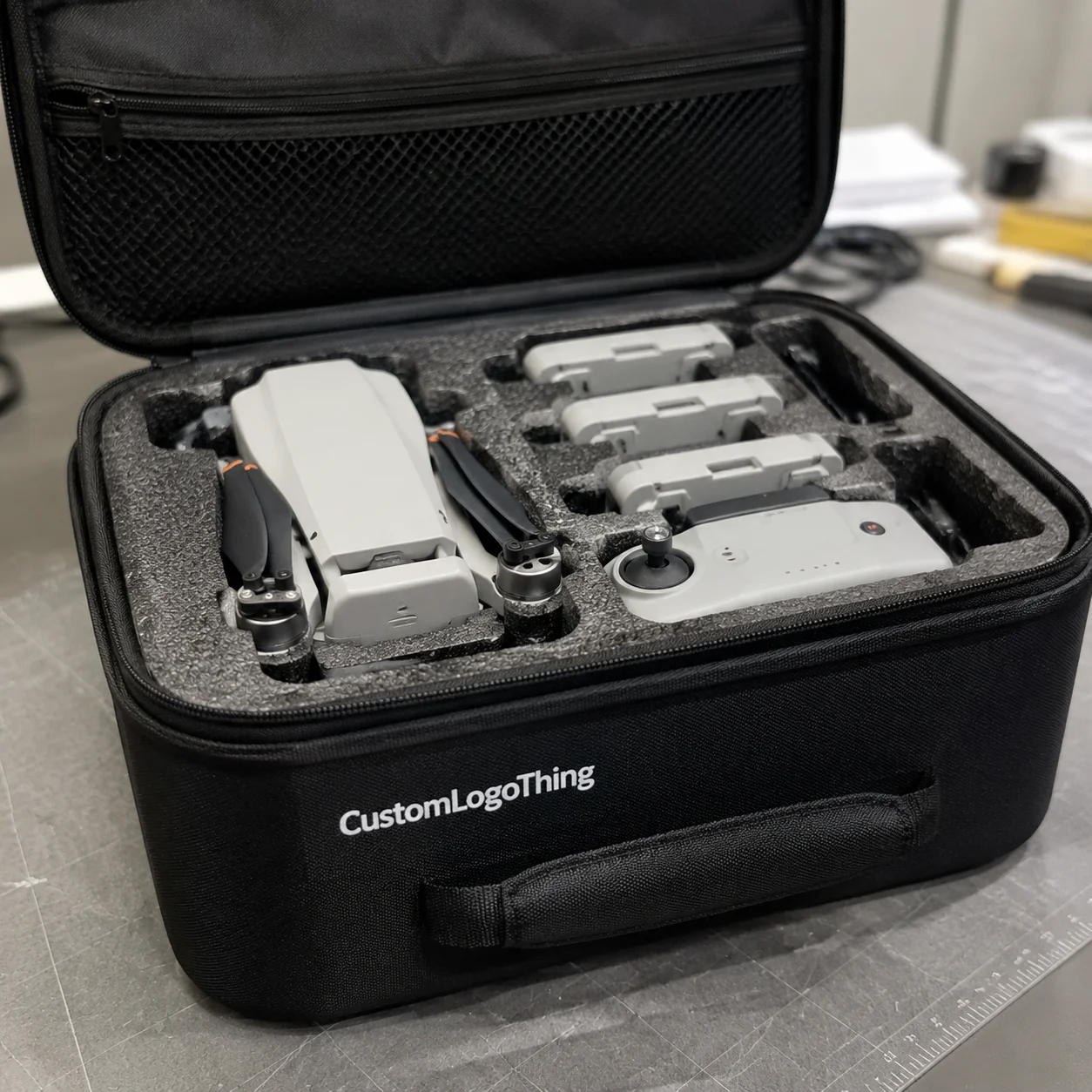
Most case damage is pictured as one dramatic drop from a truck bed, baggage cart, or loading dock. Those events happen. More often, the problem is quieter: a battery shifting a few millimeters, a controller stick rubbing into lid foam, a cable end pressing against a sensor housing, or a charger sliding into the drone body during parcel handling.
A fitted foam insert is not just a tidy organizer. It is an engineered interior that gives every part a known location and enough restraint to survive transport without creating new stress. Good layouts separate hard items from fragile assemblies, keep heavier parts low, leave access for gloved hands, and help the user repack the kit the same way after every job.
That consistency matters for inspection teams, survey crews, emergency response departments, rental fleets, repair programs, training kits, and companies shipping UAV systems between offices. A drone kit with no fixed layout depends on the last person who packed it. A cut insert removes much of that guesswork.
There are several ways to make drone case foam, and each has limits. Pick-and-pluck foam is cheap and quick for a personal case, but the walls can tear after repeated use and the layout often degrades. Die-cut foam works well for repeat quantities once tooling is justified, especially with simpler profiles. CNC-routed foam handles stepped depths, complex shapes, logos, and smaller production runs without hard tooling. Waterjet cutting can produce clean vertical profiles in dense sheet foam. Layered laminated foam stacks multiple sheets to create depth, color contrast, stronger geometry, and a cleaner presentation.
A supplier asking for case dimensions, gear lists, quantities, foam preferences, and deadlines is not creating paperwork for sport. Those inputs determine material yield, cutting method, tolerances, wall thickness, packing sequence, and price. The better the information, the fewer revision rounds.
How Drone Case Foam Inserts Work
Foam protects by spreading load, absorbing vibration, separating components, and preventing hard surfaces from contacting one another. Think of it as controlled restraint. The insert should hold the drone and accessories firmly enough that they do not migrate, but not so tightly that removal requires pressure on antennas, landing gear, gimbal arms, battery latches, or payload mounts.
Cavity shape does much of the work. A rectangular pocket may suit a charger brick. A drone body usually needs a shaped profile with relief around propeller hubs, camera assemblies, landing legs, arms, and sensor housings. Controllers may need clearance for sticks, screens, antennas, or tablet clamps. Batteries need retention, but not so much compression that labels peel or housings wear.
Depth matters just as much as the top profile. If a battery is 38 mm tall and the cavity is 39 mm deep, the lid pad may help hold it in place. If that same battery sits in a 50 mm cavity with no top restraint, it can bounce inside the pocket. A few millimeters can separate a professional insert from a rattle box.
Finger-pull reliefs are not decorative. A 20-30 mm semicircle, side notch, thumb scoop, or fabric pull tab can keep users from dragging parts against foam walls. Frequent-use items such as batteries, controllers, props, filter cases, and tools deserve access planning early in the layout. Delicate optics usually need clearance and retention around the safe zones, not a tight squeeze around the most vulnerable surfaces.
Layered construction is common in UAV kits. A base layer cushions the bottom of the case, middle layers create the pockets, and a top pad or lid foam controls vertical movement. Some inserts use a firmer polyethylene base with a softer lid pad. Others use EVA for sharper edges, color contrast, or a premium demonstration-case finish.
Material choice should match the job. Closed-cell polyethylene foam is a reliable workhorse because it resists moisture, supports heavier parts, and holds its shape better than many soft foams. Polyurethane foam feels softer and can cushion delicate surfaces, though it may compress over time under heavier equipment. EVA foam gives cleaner edges, smooth layers, and a more polished visual result. Anti-static or static-dissipative foam is worth discussing for exposed electronics, sensors, circuit boards, and payload modules.
Packaging truth from the floor: the safest insert is not always the prettiest one. The best layout controls movement, allows clean removal, and still looks right after the fiftieth pack-out.
Specs to Confirm Before Requesting a Quote
A clear quote starts with clear dimensions. Measure the case interior length, width, base depth, and lid depth. Do not rely on exterior case dimensions. Handles, hinges, wheel wells, molded ribs, corner radii, latch hardware, and raised hinge areas can steal usable space.
If the case has molded obstructions, photograph them and measure how far they project into the interior. A case can have generous outside dimensions and still have awkward usable space because of internal ribs or wheel housings.
The gear inventory should be complete before layout work begins. Include the drone body, controller, screen or tablet, tablet mount, battery packs, charger, charging hub, AC cords, cables, propellers, filters, payloads, tools, manuals, SD card cases, cleaning supplies, spare screws, compliance documents, and any field labels or instruction cards. A spreadsheet works well: item name, quantity, length, width, height, weight if known, and notes such as “fragile,” “hot after use,” “removed first,” or “do not compress.”
- Fragile zones: mark the camera, gimbal, sensors, antennas, landing gear, propeller hubs, and payload connection points.
- Heavy parts: identify batteries, chargers, charging hubs, and metal mounts so they can sit low and away from delicate equipment.
- Regulated items: flag lithium-ion batteries, especially if packed kits will ship by air or cross borders.
- Frequent-use items: place controllers, batteries, propellers, inspection tools, and filter cases where field users can reach them quickly.
- Heat concerns: note parts that may be packed shortly after use, since some foams and adhesives do not like heat.
Branding and usability options belong in the early conversation, not after layout approval. A drone case insert can include logo engraving, contrasting foam layers, labeled cavities, pull tabs, printed instruction cards, serialized labels, or color coding for charged and depleted batteries. If the same kit also uses Custom Printed Boxes, accessory cartons, or retail packaging, matching the visual system can make the package feel intentional rather than improvised.
Tolerance is the quiet detail that makes an insert pleasant or irritating. Too tight, and users strain parts during removal. Too loose, and vibration wins. A practical starting point is a snug hold on rectangular accessories and more clearance around delicate or irregular components. Final tolerance depends on foam density, part geometry, weight, surface finish, and how the lid pad interacts with the cavity.
Before approving any layout, lay the full kit on a table and photograph it from directly above. Then rank items by field-use frequency. That one photo often prevents two revision rounds because the packaging team can see what belongs together and what should not be buried under another component.
Cost and Pricing Factors for Drone Case Inserts
Pricing depends on foam type, sheet thickness, number of layers, cutting method, cavity complexity, order quantity, artwork, branding, prototyping needs, inspection requirements, and packing method. A flat insert with six rectangular cavities behaves very differently from a 75 mm laminated block with stepped pockets, logo engraving, color contrast, and tight nesting around a folded drone body.
As a broad market range, simple replacement-style inserts may start in the low tens of dollars per unit at quantity, while complex laminated or EVA drone inserts can run much higher once design time, prototypes, assembly labor, and specialty materials are included. One-off custom work may cost more per insert because programming, layout time, and proofing are spread across a single unit. Larger repeat runs usually improve unit cost, but only after the design is stable.
Hand-built or short-run prototypes can be efficient for early proofing because they answer fit questions before production programming is finalized. CNC and waterjet cutting suit complex low-to-mid volume runs because they avoid hard tooling and allow layout changes more gracefully. Die cutting can become efficient at repeat volume, but the tooling has to make sense against expected order quantity and design stability.
| Insert Method | Best Fit | Typical Cost Behavior | Buyer Notes |
|---|---|---|---|
| Pick-and-pluck foam | One-off personal cases or temporary layouts | Lowest starting cost, shorter working life | Useful for rough setup, not ideal for repeated field programs |
| CNC-routed foam | Complex drone cavities, stepped depths, branded details | Moderate setup, flexible for low-to-mid quantities | Good when the layout may need refinement after proofing |
| Waterjet-cut foam | Clean vertical cuts in dense sheet foam | Efficient for precision profiles and repeatable outlines | Works well for layered inserts with defined shapes |
| Die-cut foam | Repeat production with simpler cavities | Tooling upfront, better unit economics at volume | Best after the design is stable and repeat orders are likely |
| Laminated layered foam | Premium kits, color contrast, deep cavities | Higher material and labor use, stronger presentation | Common for demo cases and higher-value UAV systems |
Minimum order quantity varies by material availability, sheet size, cutting process, and whether the buyer also needs the outer case supplied. Specialty anti-static foam, unusually thick laminated blocks, deep cavities, rush schedules, multiple revision rounds, and tight nesting can all add cost. A realistic quote request should include the case model, interior dimensions, item dimensions, quantity, preferred foam if known, branding needs, timeline, and shipping destination.
Foam yield deserves attention. If a layout leaves narrow bridges or wastes most of a sheet, the part may cost more than expected even if the insert looks simple. Dense foams also ship heavier than many buyers assume, especially in large cases or multi-layer builds. Freight, carton size, and pallet count can become real cost drivers on production orders.
For broader sourcing, compare inserts alongside other Custom Packaging Products if the same drone kit also needs mailer cartons, printed sleeves, instruction cards, accessory boxes, or branded outer packaging. The more complete the pack-out view, the easier it is to avoid mismatched materials and duplicated costs.
Process and Timeline from Layout to Finished Insert
The usual production path is discovery, measurement review, material recommendation, layout drawing, prototype or digital proof, buyer approval, cutting, assembly, inspection, and packing. None of those steps are exotic. Each one guards against a different failure. A clean drawing is not enough if the lid depth is wrong. A good material still fails if the battery count changes after approval.
Timeline depends heavily on how complete the buyer’s information is at the start. Missing dimensions or a changing gear list can add more delay than the cutting process itself. A straightforward repeat order may move quickly because the cutting file, material, and inspection notes already exist. A first-time insert with 20 accessories, two foam colors, logo engraving, and a physical prototype naturally takes longer.
For planning purposes, simple digital layouts are often measured in days rather than weeks once information is complete. Physical prototypes can add several business days or more depending on material, complexity, and freight. Production timing varies by quantity, cutting capacity, foam availability, assembly requirements, and quality-control expectations. Rush work is sometimes possible, but it tends to reduce the margin for careful proofing.
A physical sample is worth considering for expensive drones, sensitive payloads, mixed accessory kits, trade show demo cases, and recurring production programs. It adds time. It can also catch problems a flat proof cannot show: lid pressure, removal angle, wall flex, hand clearance, loaded-case balance, or whether a part rubs during carry.
During proofing, suppliers usually check cavity spacing, wall thickness, material yield, lid clearance, finger access, adhesive needs, and whether heavy items sit low enough for balance. Many will also ask whether the case ships upright, flat, palletized, or by parcel carrier. If compliance-oriented transport testing is needed, standards from groups such as the International Safe Transit Association can help frame drop, vibration, and distribution testing expectations. For paper-based sleeves, cartons, or instruction carriers used around the case, FSC sourcing may also matter; the Forest Stewardship Council is a useful reference for responsible fiber claims.
Lock the drone configuration before production. One different charger, one larger tablet, one alternate payload, or one extra battery can force a new layout. This is one of the most common avoidable costs in custom foam insert work: the foam was right for last week’s kit, but the kit changed before the purchase order arrived.
Quality Checks Before Production
A good pre-production review is part measurement, part packaging logic, and part user-behavior prediction. Start with the basics: confirm the case interior, cavity dimensions, foam thickness, layer order, lid-pad thickness, and quantity. Then check the packed case as a system, not a set of individual pockets.
Wall thickness is a common weak point. Narrow foam bridges between heavy batteries may tear or deform. Thin strips around controller sticks look neat in a rendering but may not survive daily removal. If the insert needs to last, leave enough structure between cavities and avoid creating long, fragile fingers of foam.
Vertical restraint also needs a real check. Close the case slowly with the packed kit inside. Look for raised areas, lid interference, or parts that rely on too much compression. Some compression can be useful; excessive compression can bend propellers, stress controller sticks, mark delicate finishes, or transfer pressure to a gimbal.
For production runs, quality checks should include sample fit, cavity count, layer alignment, adhesive bond where applicable, logo placement, color verification, clean edges, debris removal, and pack-out orientation. If several case models or drone configurations are involved, version control becomes critical. A small label on the insert file, carton, or packing document can prevent the wrong foam from being installed in the right-looking case.
There is also an honest caveat: foam is not a substitute for safe battery handling, regulatory shipping compliance, or proper drone shutdown and cooling. Lithium-ion batteries may require specific labeling, state-of-charge limits, documentation, and transport procedures. Foam can hold them securely. It does not make non-compliant shipping compliant.
Common Mistakes That Make Drone Inserts Fail
The first mistake is designing only around the aircraft. Field crews rarely carry only the drone body. They carry batteries, propellers, controllers, tablets, cables, chargers, mounts, filters, tools, paperwork, and small spares. If those parts do not have dedicated homes, they end up packed on top of sensitive equipment.
The second mistake is making every cavity too tight. Tight can feel secure during a desk review, but real users may be wearing gloves, working in cold weather, or repacking quickly before moving to the next site. If they have to pull against antennas, gimbals, or plastic battery housings, wear appears over time. Good retention should feel controlled, not stubborn.
Lid clearance is another easy miss. A layout can look perfect from above and still press the equipment when the case closes. Raised controller sticks, tablet mounts, folded propeller hubs, camera assemblies, and payload brackets are frequent trouble spots. Check base depth, lid depth, and top foam compression together.
Generic online layouts cause trouble too. A template made for one battery count, controller style, or payload configuration may not fit another. Even a small tablet size change can alter the full layout. Copying the visual arrangement is not the same as designing the insert for the actual kit.
Material mismatch can be just as damaging. Soft open-cell foam can feel protective, yet it may not support heavy rugged equipment for long periods. Overly rigid foam can be harsh around optics if clearance is poor. Other operational misses show up later: no finger notches, no labels, poor weight distribution, no space for charged versus depleted batteries, and no clear home for small tools that disappear easily.
If you want examples of how packaging choices support actual use cases, the Custom Logo Things case studies section shows how structure, branding, and handling needs can work together across different projects.
Prepare Your Drone Insert Project
Start simple. Empty the current case, put every component on a clean table, group items by use, measure each part, and photograph the full kit from directly above. Add a side photo if any item has unusual height, protruding arms, raised controls, or delicate parts that need clearance. A ruler in the photo helps the design team confirm scale.
- Choose the case first, or confirm the exact case already in use.
- Measure interior length, width, base depth, lid depth, and obstructions.
- List every item, including quantities and approximate weights.
- Mark fragile zones such as camera, gimbal, sensors, antennas, and landing gear.
- Rank which items must be accessible first in the field.
- Decide whether labels, color layers, pull tabs, logo engraving, or instruction cards are needed.
- Confirm whether the packed case will ship by parcel, pallet, air, or hand carry.
Ask for material recommendations instead of guessing. A packaging professional can compare durability, appearance, weight, cost, cutting method, and process fit once the kit is visible. Polyethylene may be the sensible workhorse for a rugged inspection kit. EVA may be better for a demo case where presentation carries more weight. Anti-static foam may be unnecessary for a fully enclosed consumer drone, but helpful for exposed electronics or payload modules.
Think beyond the foam, too. If the drone case ships inside a corrugated carton, the outer box, void fill, labels, and documentation still matter. If the kit is sold or presented commercially, package branding can extend from the case insert to printed cards, accessory cartons, and Custom Printed Boxes. That does not mean every surface needs decoration. It means the protective system and the branded experience should not fight each other.
Once the gear list, case dimensions, quantity, and timeline are clear, a custom drone case foam project becomes faster to quote, easier to proof, and more reliable in use. The best insert is not foam cut into a nice shape. It is a practical protection plan that keeps the drone, batteries, controller, payloads, tools, and documents exactly where they belong.
Drone Case Foam Insert FAQs
What foam is best for a custom drone case insert?
Closed-cell polyethylene foam is a strong all-around choice for rugged drone kits because it resists moisture, holds shape well, and supports heavier parts. EVA foam is often selected when the insert needs a cleaner premium appearance, sharper color contrast, or a branded presentation look. Softer polyurethane foam can cushion delicate surfaces, but it may not be ideal for heavy components that need firm long-term support. Anti-static or static-dissipative foam may be worth discussing when the kit includes exposed electronics, sensors, circuit boards, or sensitive payload modules.
How tight should custom foam inserts for drone cases fit?
The fit should stop movement without forcing the user to pry the drone or accessories out of the cavity. Heavy items like batteries usually need firmer retention, while delicate parts such as gimbals, cameras, and antennas need careful clearance. Finger notches, pull reliefs, and layered cavities make a snug insert much easier to use in the field. A good proof should check both horizontal movement and vertical lid pressure before production begins.
Can I order a foam insert if I already own the drone case?
Yes, but the supplier will need accurate interior dimensions, photos, and details about molded ribs, hinges, wheel wells, handle intrusions, and lid depth. The exact case model helps, but measuring the actual interior is still necessary because usable space can differ from published exterior dimensions. If the case has existing foam, remove it and measure the empty shell rather than measuring the old insert only. Photos from the top and side help confirm whether the insert needs stepped edges or relief cuts.
What affects the cost of a custom UAV foam insert?
Major cost factors include foam material, insert thickness, number of layers, cutting method, cavity complexity, quantity, and whether a prototype is needed. Branding details such as engraved logos, contrasting color layers, printed labels, or custom packing can increase the final price. Repeat orders usually become more efficient once the layout is approved and the cutting program or tooling is already established. Rush production, specialty foam, and frequent design revisions can add cost because they increase labor, scheduling pressure, or material waste.
How long does it take to make custom foam inserts for a drone case?
The timeline depends on how quickly the gear list, case dimensions, layout approval, and material choice are finalized. A simple repeat insert can move much faster than a first-time layout with many accessories, deep cavities, or specialty foam requirements. A physical prototype adds time but can be valuable for expensive drones, sensitive payloads, or kits that will be ordered repeatedly. To speed up quoting, provide photos, measurements, quantity, deadline, and shipping details in the first request.