Most buyers think a foil label is just a shiny sticker. The toy retailer Foil Labels Material guide starts with a more practical truth: the face stock, adhesive, liner, and finish decide whether the label still looks right after shipping, stacking, and a few hundred curious hands. A sample that dazzles on a screen can still turn into a weak point on a real package. Pretty is not the same thing as durable.
That is why the toy retailer foil labels material guide should never stop at design. It needs to cover the substrate, adhesive, liner, and the way the metallic effect is created. Each layer behaves differently on corrugated cardboard, Kraft Paper Mailers, recycled materials, glossy cartons, poly bags, and hang tags. A shiny surface can hide a lot until the first carton rub, the first warehouse stack, or the first parent peels back a corner to read warning text.
For toy retailers, foil labels show up on collector-edition seals, logo stickers, age-warning labels, promo bundle seals, barcode labels, and short-run cartons that need to feel premium without blowing up the production schedule. The smartest buyers do not ask, "How shiny is it?" They ask, "How will it survive the trip from pack table to shelf?" That question sits at the center of any useful toy retailer foil labels material guide.
A shiny label that peels after two warehouse shifts is not premium. It is a reprint waiting to happen.
Buying around real abuse, not only aesthetics, saves money. Fingerprints, shipping abrasion, temperature swings, warehouse stacking, and kid handling are the conditions that matter. If the label survives those, it earns its place. If it only survives the mockup stage, it is decoration dressed up as packaging.
Toy retailer foil labels material guide: what it really means
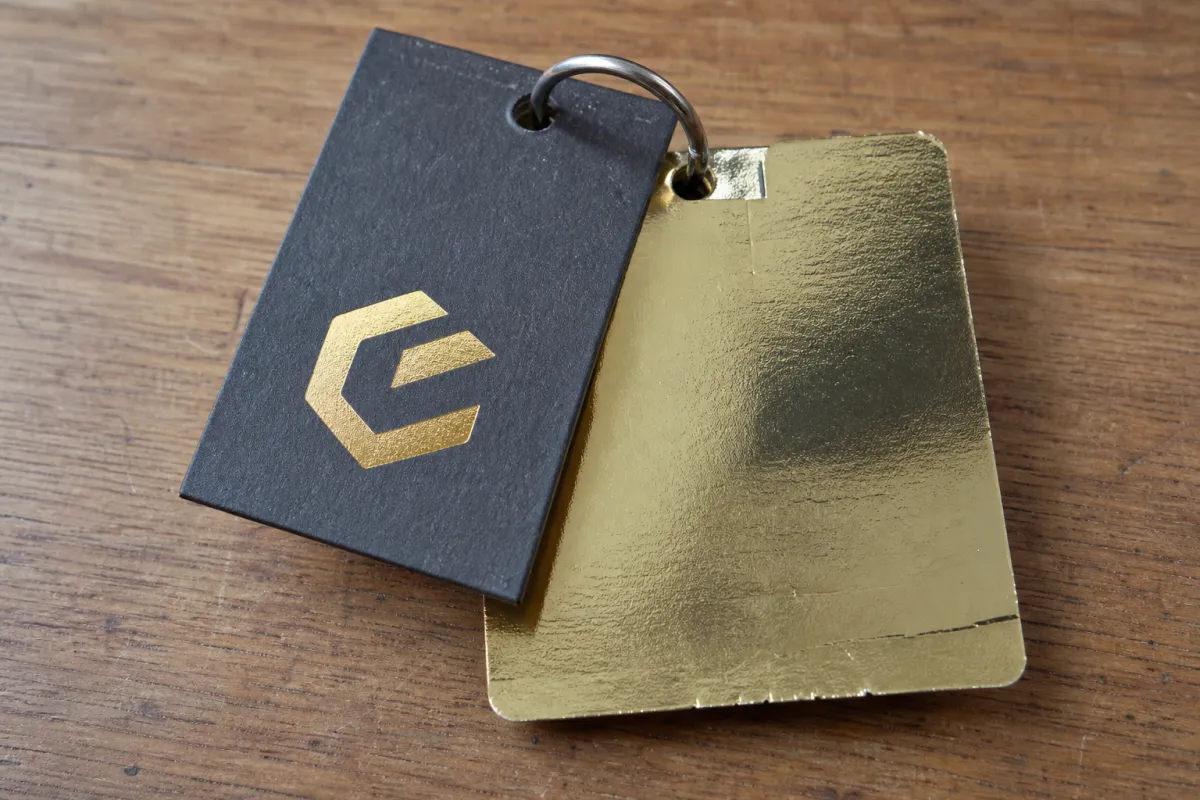
The first surprise in any toy retailer foil labels material guide is that "foil" does not always mean a literal foil layer. Buyers often use the word as shorthand for metallic shine, but the effect can come from hot foil stamping, cold foil, metallic film, or metallic inks. Those are not interchangeable. They differ in cost, detail, turnaround, and the way they behave on real packaging.
Think of the label as a stack. The face stock is the visible layer. The foil effect is the shiny part, which may be transferred, printed, or laminated. The adhesive decides how the label bonds to the package. The liner is the release backing that lets the label come off the roll. Each layer changes the result. A premium-looking label with weak adhesive is still a weak label.
Toy retailers use foil labels for a few very practical reasons. Shelf impact matters. Seasonal packaging needs to feel special without a long redesign cycle. Limited runs need a quick visual cue. A foil seal can say "new," "special," or "collectible" with very little copy. Barcodes, warnings, and product identifiers still need room to breathe, so a good toy retailer foil labels material guide keeps those priorities in order.
The package surface matters just as much as the artwork. Smooth coated cartons accept metallic detail better than rough kraft paper. Films and shrink wrap need adhesives with enough grip to survive flexing. Hang tags need a label that does not crack when folded or stacked. A glossy label on a cheap substrate can still read as cheap. Buyers usually learn that after the sample round, not before it.
The right approach is simple enough: choose the material for the abuse level, then choose the shine. If the packaging lives in a display case, appearance can lead. If it ships through a crowded fulfillment center, the toy retailer foil labels material guide should lean toward scuff resistance, stronger tack, and cleaner die cuts.
Sustainability deserves a straight answer. If you are using FSC certified paper stocks, say so only when the paper component and chain-of-custody support the claim. If you are using recycled materials or post-consumer waste content, confirm the exact percentage. If a package is supposed to be biodegradable packaging, do not assume the label automatically qualifies. Adhesive, coating, and metallic layers can complicate that claim very quickly.
For paper-sourcing claims, FSC is the clearest reference point. For shipping and handling, ISTA testing standards are helpful because they push the conversation away from shelf sparkle and toward real transport stress. I have seen a label pass a design review and fail the minute it hit a stacked carton, so I always prefer a test that reflects how the package actually moves.
One more practical point: a strong toy retailer foil labels material guide should tie the label choice to the packaging structure. Corrugated cardboard cartons need different adhesive behavior than soft-touch cartons. Kraft paper mailers need a different face stock than high-gloss folding cartons. That sounds obvious until someone is staring at a quote that looks cheap and forgetting that the wrong adhesive turns cheap into waste.
How foil labels work on toy packaging and cartons
A solid toy retailer foil labels material guide needs to explain the process, because the process shapes the outcome. Hot foil stamping uses heat and pressure to transfer foil from a carrier to the substrate through a die. Cold foil uses adhesive and UV curing to bond a metallic effect onto the printed surface. Metallic digital printing simulates the look with toner, inks, or special film layers. The final feel changes with each method.
Hot foil is usually the classic premium option. It gives a crisp, reflective finish and a tactile impression when the die is built for it. It works especially well on smooth cartons and coated stocks. The tradeoff is tooling. You need a die, setup time, and a design that respects the process. Tiny lines and overloaded artwork can get muddy. That matters in a toy retailer foil labels material guide because toy labels often carry branding and compliance copy in the same small footprint.
Cold foil tends to fit more complex print workflows and larger coverage areas. It can sit comfortably inside high-volume label production and is useful when the design needs metallic fields without the same heat-based setup. It is not a shortcut, though. If the artwork is overloaded or the substrate is rough, the shine still softens. Some buyers hear "cold foil" and assume they have solved the problem. They have only chosen a different set of tradeoffs.
Metallic digital print is the flexible option. It works well for short runs, prototype work, seasonal launches, and artwork testing. The metallic look can be convincing, even if it does not match the depth of a true foil transfer. That can be enough for internal testing, store promos, or low-volume packaging, especially when speed matters more than luxury. In a toy retailer foil labels material guide, that option belongs on the list because not every project deserves a large setup bill.
The substrate changes how crisp the metallic detail looks. Coated cartons and smooth label facestocks hold edges better. Textured kraft paper can still work, but the finish usually looks softer and less mirror-like. Rough corrugated cardboard is rarely the right place for delicate metallic detail unless the label is mounted on a smooth panel or secondary wrap. The same goes for very fine typography. Thin lines, tiny legal text, and dense QR codes need breathing room.
Use a quick visual check when reviewing proofs:
- Look at the sample under warm store lighting and cooler warehouse light.
- Check the label from arm's length and from a close read distance.
- Rub the surface with a dry cloth to see whether scuffing appears.
- Angle the sample under overhead light to spot dull patches or registration issues.
- Test barcode readability if the label carries inventory data.
A smart toy retailer foil labels material guide treats the sample stage as a test of reality, not a photo shoot. A label that looks elegant on a PDF can go flat, noisy, or scratched under actual retail lights. That is why physical samples matter, and why I never trust a finish until it has been handled at least once.
Key factors that decide the right material
Surface compatibility comes first in any toy retailer foil labels material guide. Cardboard, PET, PP, glassine, corrugate, shrink wrap, and coated cartons all behave differently. Some surfaces are smooth and forgiving. Some are stubborn. Some flex. Some trap dust. The wrong pairing can turn a polished design into a peeling corner, and no one wants to explain that to operations after the order ships.
Adhesive choice is not a footnote. Permanent adhesives are common for retail packaging that needs to stay put through shipping and shelf handling. Removable adhesives make sense for temporary promotions or wraparound applications that should come off cleanly. Freezer-grade or low-temperature adhesives matter if the product sits in cold storage or passes through temperature swings. Tamper-evident builds are useful when a seal needs to show if someone has opened the pack. That is why the toy retailer foil labels material guide should always ask where the product lives before it asks how it looks.
Durability should be judged by the worst day, not the best day. A label can look perfect on a lab table and still fail after carton compression, carton dust, humid storage, and repeated touching. If a toy bundle is packed tightly, scuff resistance matters. If the label rides on a shipping box, abrasion matters. If the product is handled by kids, edge lift matters. The practical buyer tests for the ugly stuff first, because that is where the surprises usually show up.
Branding and compliance belong in the same conversation. Barcodes, age grading, warning labels, safety copy, and legal text must remain readable. Metallic effects can make things harder to scan or harder to read if the artwork is careless. A good toy retailer foil labels material guide keeps metallic coverage away from barcode bars, small legal type, and critical icons. The label should support the product, not create work for the auditor.
The material conversation also reaches sustainability. If the carton is made from recycled materials, post-consumer waste content, or FSC certified paper, the label should not undermine the story. Heavy laminate, oversized metallic film, or a poor adhesive can complicate recyclability. That does not make labels the enemy. It means the buyer should ask how the full system behaves in the recycling stream, not just how it looks in a mockup.
There is one honest caveat here: recyclability claims are local, not universal. A foil effect that is acceptable in one region may be treated differently in another, especially once coatings, adhesives, or film layers are involved. I would rather tell a buyer that upfront than hand them a confident-sounding claim that falls apart during a packaging audit.
| Option | Best use | Typical unit cost | Strengths | Tradeoffs |
|---|---|---|---|---|
| Hot foil stamped label | Premium logo seals, collector editions, shelf-facing cartons | $0.18-$0.40 at 5,000 pcs | Sharp shine, strong premium feel, excellent shelf impact | Tooling, setup time, less forgiving on rough surfaces |
| Cold foil label | Mid-to-high volume retail labels with broad metallic coverage | $0.15-$0.32 at 5,000 pcs | Good coverage, efficient on repeat runs, flexible workflow | Design limits, detail can suffer on textured stock |
| Metallic digital label | Short runs, seasonal launches, artwork tests, limited promos | $0.12-$0.28 at 1,000 pcs | Fast setup, low MOQ, easy revisions | Usually less depth than true foil, coverage limits |
That table is not gospel. It is a useful buying frame. Actual pricing changes with size, coverage, die complexity, and finishing. Even so, it shows the basic logic of any toy retailer foil labels material guide: more metallic coverage, more setup, more cost; more flexibility, less premium depth.
The environmental side deserves a straight answer. Biodegradable packaging is not the same thing as a biodegradable label. If the brand promise depends on compostability or controlled breakdown, the label build needs to be checked against that claim with the supplier and, ideally, with the actual packaging spec. No one gets extra points for vague green language that falls apart under scrutiny.
Cost, pricing, and MOQ for toy retailer foil labels
Pricing in a toy retailer foil labels material guide should start with the cost drivers, not the quote total. Size matters. Foil coverage matters. Substrate matters. Adhesive choice matters. Print colors matter. Die-cut complexity matters. If the label needs lamination, spot varnish, or extra finishing, the price shifts again. Buyers who compare only unit price end up comparing different products. That is a neat trick if you enjoy confusion.
Full-coverage metallic designs usually cost more than foil accents. That is not just because there is more shine on the page. It is because the process needs tighter control, and waste risk rises if registration drifts. A small logo hit or border can look luxurious without pushing the run into a more expensive lane. In a practical toy retailer foil labels material guide, accent foil often gives better value than metallic flooding.
MOQ tradeoffs are real. Short digital runs are useful for artwork tests, launch samples, and seasonal promo sets. They keep risk low when the art is still moving. Larger flexo or stamped runs lower unit cost once the design is locked and reorder volume becomes predictable. If the buyer already knows a reorder is likely, the larger run should be priced. If not, small-batch flexibility is the safer move.
Ask for quotes at multiple quantities. A clean quote should show unit cost at 1,000, 5,000, and 10,000 pieces, plus setup fees, tooling or plate charges, sample costs, and overrun or underrun rules. If the supplier cannot give those numbers, the quote is not ready for a buying decision. The whole point of a toy retailer foil labels material guide is to remove fake surprises.
There are also hidden costs to watch:
- New die or tooling charges for custom shapes
- Rush production fees for compressed timelines
- Extra proof rounds when artwork keeps changing
- Additional lamination or varnish for scuff resistance
- Application waste if the label is hard to place by hand
In the label market, "cheap" often means "barely enough spec." That is fine for a disposable internal label. It is not fine for a retail-facing toy pack. A better toy retailer foil labels material guide focuses on cost per successful application, not cost per thousand rolled labels sitting in a box.
If you are comparing suppliers, ask them to break the price into substrate, print method, finishing, and any one-time setup charges. That conversation shows the real cost much faster than a glossy brochure, and it keeps the purchasing team from getting stuck on the wrong number. A quote that hides the die charge is gonna feel cheaper than it really is.
Toy retailer foil labels material guide: process, timeline, and lead time
Any toy retailer foil labels material guide should treat timeline as part of the spec. A label can be perfect on paper and still miss a launch if approvals drag. The basic starting point is simple: size, quantity, packaging surface, application method, artwork format, adhesive need, and finish level. If those details are fuzzy, the timeline becomes fuzzy too. Printing hates ambiguity. It always collects payment later.
The approval chain matters more than people admit. A strong workflow moves from digital proof to sample panel to material test to final signoff to production release. Skip a step and you usually spend twice as long fixing the same mistake after the run starts. A careful toy retailer foil labels material guide does not only describe the production path; it protects the schedule from shortcuts.
Typical production steps look like this:
- Prepress review of art, size, bleed, and barcode placement
- Material selection and adhesive confirmation
- Tooling or plate prep if the process needs it
- Printing, foil transfer, or metallic application
- Die-cutting and matrix removal
- Rewinding, slitting, and inspection
- Packing, cartonization, and shipment
That sounds orderly because it is. It is also where time disappears. If the label needs a new die, expect extra lead time. If artwork needs another proof, expect more time. If the packaging team wants to compare two materials after the first sample arrives, the schedule moves again. A realistic toy retailer foil labels material guide should warn buyers that approvals often consume more time than printing itself.
Here are practical timeline ranges that buyers can use as a planning baseline, with the usual caveat that complexity changes everything:
- Simple digital metallic labels on stock material: often 5-8 business days after final proof approval
- Foil-accent labels with standard die cuts: often 8-12 business days
- Hot foil stamped labels with tooling: often 12-18 business days, sometimes more if sampling changes
- Rush orders: possible, but usually at a premium and only if the artwork is already locked
Shipping adds its own delay. Domestic freight may take a couple of days. Cross-border moves can take longer, especially if paperwork is incomplete or if the supplier needs to recertify paper claims. That matters if the label stock is tied to recycled materials or FSC certified sourcing. A strong toy retailer foil labels material guide includes the logistics piece because freight does not care about your launch date.
For abuse testing, many teams borrow the logic of shipping standards such as ISTA procedures. You do not need to turn every label job into a lab project, but a quick carton rub, tape pull, and stack test can save a lot of embarrassment. It is far cheaper to tear up one sample than to reprint a thousand labels.
That is why the best toy retailer foil labels material guide always leaves room for one more thing: a buffer. If the launch matters, do not schedule the label arrival for the exact day you need it. That is how people end up paying rush freight and calling it "just a small delay."
Common mistakes toy retailers keep making
The first mistake is buying for shine alone. A label can look fantastic in the artwork review and still peel, scuff, or fail barcode scans after it gets near the packing table. A practical toy retailer foil labels material guide says the label must survive contact with the real workflow, not only the mockup.
The second mistake is using the wrong adhesive on glossy plastic, cold-chain cartons, or textured boxes. This is where budget decisions get expensive. A label that slides on a smooth pack may fail outright on a soft surface. A label that sticks fine in a warm office can lift in a cool warehouse. That is not bad luck. That is a spec mismatch.
The third mistake is overloading a small label with too much metallic coverage, tiny type, and too many messages. Premium packaging does not need to look noisy. It needs to look controlled. A crowded label reads as frantic, not upscale. The better toy retailer foil labels material guide choices use metallic effects to focus attention, not scatter it.
The fourth mistake is ignoring application reality. Hand-applied labels tolerate different tolerances than machine-applied labels. If a packer applies them one by one, the label must be easy to peel, easy to place, and forgiving if the angle is slightly off. If the job runs through equipment, the label has to match the machine's speed and feed behavior. The same design can fail in one method and perform well in another.
Other mistakes show up less often, but they are still expensive:
- Using too little white space around barcodes and warning copy
- Skipping a material test on the actual box or pouch
- Choosing a finish that scratches during carton stacking
- Forgetting that promotional labels may be reordered under time pressure
- Assuming the same label build will work on every packaging surface
Most of these problems are preventable with a decent toy retailer foil labels material guide and a little discipline. Not glamorous. Very effective.
Expert tips for choosing the right foil label build
The cleanest way to save money is to use foil as an accent. A sharp logo hit, border, badge, or seal often feels more premium than flooding the entire label with metallic coverage. In a toy retailer foil labels material guide, this is the move I recommend most often when the budget is tight but the brand still needs shelf pop.
Run small abuse tests before ordering big. A rub test, tape test, temperature swing, carton compression test, and a real application test on the actual toy packaging will reveal more than a polished proof ever will. If the product is going into corrugated cardboard cartons, test on corrugated cardboard. If it is going onto kraft paper wraps, test on kraft paper. The substrate is not a detail. It is the battlefield.
Protect readability by leaving clean space around barcodes, age warnings, and legal text. Metallic effects should support the message. They should not sit directly behind critical copy unless the contrast has been tested. A smart toy retailer foil labels material guide always treats compliance text as more important than the sparkle around it.
Create two versions when the use cases differ. A premium shelf label can carry more shine and more polish. A simpler internal or shipping label can be built for warehouse handling, replenishment, and rougher contact. That split often saves money and reduces damage. It also keeps the retail-facing label from getting treated like a forklift tag.
One more practical rule: if the package includes recycled materials or FSC certified paper, ask how the label build affects the full package story. Not every metallic label is a problem. Not every matte label is automatically better. What matters is the whole system. That is the part a real toy retailer foil labels material guide should keep front and center.
If you are still comparing options, a supplier should be able to show you samples, explain adhesive behavior, and give you a written spec that matches the actual packaging. That is the sort of clarity you want before placing an order through Custom Labels & Tags or any other supplier. Guesswork is expensive. Samples are cheaper.
What to do next with your toy retailer foil labels material guide
The best next step is boring, which is why it works. Build a one-page ordering checklist with surface type, label size, quantity, finish, adhesive, and application environment. That keeps vendors quoting the same thing instead of three different versions of the same job. A good toy retailer foil labels material guide should end in a usable spec, not just a pretty concept board.
Order two or three material samples and compare them under store lighting, warehouse light, and packing-table conditions before locking the design. The differences show up fast. One sample may look beautiful but scuff easily. Another may hold up better but lose some shine. That tradeoff is normal. Real buying is choosing the least annoying compromise, not chasing perfection.
Request quotes at multiple quantities and ask for setup charges, lead time, sample policy, and reprint terms. Then compare real unit cost, not brochure pricing. If a supplier will not spell out the hidden charges, that is the quote telling you to keep walking. You do not need to be rude. You do need to be suspicious.
Approve the final file only after a real application test on the actual toy packaging, then save the approved spec so the next reorder matches the same build. That is how a toy retailer foil labels material guide becomes an operating tool instead of a one-time read. The more you standardize it, the fewer surprises you get later.
And yes, that last part matters. A consistent toy retailer foil labels material guide makes reorders easier, reduces waste, and protects the look of the shelf package. That is the whole point: better labels, fewer headaches, less drama. A rare win.
What material works best for toy retailer foil labels on cardboard boxes?
Smooth coated paper or a coated carton-friendly stock usually gives the cleanest foil detail on cardboard. If the box is corrugated cardboard, try to place the label on the smoothest panel possible. Use a permanent adhesive if the label needs to survive shipping, stacking, and retail handling. Test the finish under store lighting, because a material that looks sharp in proofs can look flat on shelf. That is a classic toy retailer foil labels material guide mistake.
Are foil labels safe for toy packaging that gets handled a lot?
Yes, if the adhesive and face stock are chosen for abrasion and repeated touch instead of just appearance. For high-touch packaging, pick a finish that resists scuffing and does not smear when rubbed. Keep required warning text and barcodes away from heavy metallic coverage so they stay readable. A practical toy retailer foil labels material guide always puts durability ahead of decoration.
What drives toy retailer foil label pricing the most?
The biggest cost drivers are size, foil coverage, substrate, adhesive, and whether the design needs extra finishing or special tooling. Short runs usually cost more per label, while larger runs lower the unit cost once setup is absorbed. Ask for pricing at several quantities so you can see where the break-even point actually lands. That is the cleanest way to use a toy retailer foil labels material guide without getting baited by a single unit price.
How long does a foil label order for a toy retailer usually take?
Simple digital orders can move quickly once artwork is approved, while stamped or multi-step builds need more lead time. Sampling, proofing, and final signoff often add more delay than production itself. If you need a launch date, build in time for material testing and shipping, not just press time. A responsible toy retailer foil labels material guide assumes the calendar will fight back a little.
Should I choose hot foil or cold foil for toy retailer labels?
Hot foil is often chosen for a classic premium look, while cold foil can be better for certain print workflows and details. The right choice depends on artwork complexity, substrate, budget, and how much metallic coverage you need. If you are unsure, compare samples on the actual packaging before committing to a full run. That is the simplest way to use a toy retailer foil labels material guide without gambling on the first production order.
Bottom line: pick the label build from the packaging surface outward, then verify it with an actual sample on the real box, bag, or carton before you approve the run. If the sample passes abrasion, adhesion, and readability checks, lock that spec and reuse it for reorders; if it fails, change the material or adhesive before production starts.


