The trucker caps Unit Cost Breakdown is rarely just the blank cap price. Buyers usually see a single per-piece number first, then discover that setup, decoration, packaging, and freight all affect the real landed cost. That is why a 500-piece order can look more expensive per cap than a 1,000-piece order, even when the style is identical.
For merch drops, retail programs, team uniforms, and event giveaways, the useful question is not “What does one cap cost?” It is “What does the order cost after branding and shipping?” That total is what determines margin, especially when the run includes custom decoration or multiple destination shipments.
A useful quote separates three things clearly: blank cap cost, decoration cost, and the final landed cost after packing and freight.
Why a 500-cap order can cost more per piece than 1,000
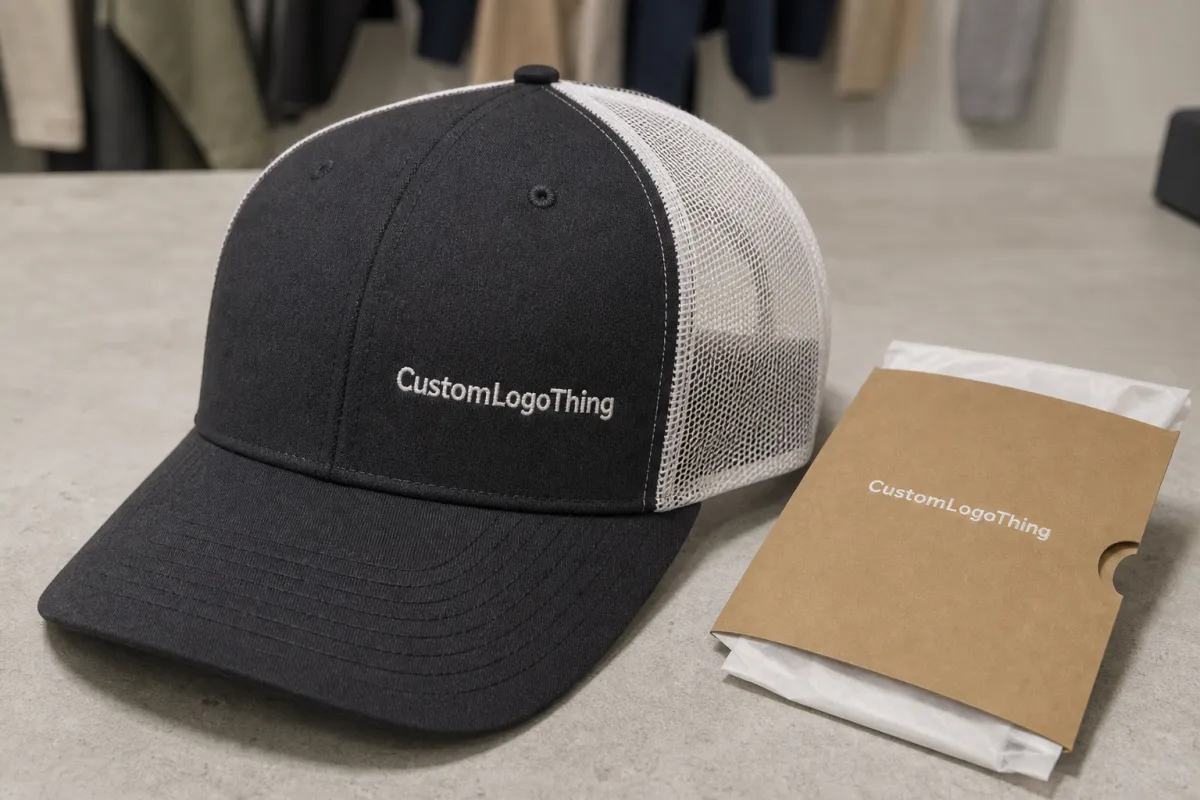
Small runs carry almost the same front-end work as larger ones. Artwork review, digitizing, plate or screen setup, trim selection, carton allocation, and freight minimums do not shrink in proportion just because the order is smaller. That is why a 500-cap quote often has a higher unit cost than a 1,000-cap quote.
The blank cap itself may not be the main driver. Fixed charges sit at the start of production, so they take a bigger bite when fewer units absorb them. If a buyer compares only the headline quote, the smaller order can look safer while actually reducing margin.
There is also a planning angle. A buyer who needs 650 caps may order 500 to limit spend, but that can backfire if the campaign extends or the design becomes a repeat item. Reorders can carry the same setup logic, so a larger first run may cost less overall than a smaller run plus a second order later.
Practical rule: compare landed cost, not just quote cost. Freight minimums, split shipments, and rush handling can move the final number enough to change the decision.
Product details that change the base trucker cap price
Not every trucker cap starts from the same base. Foam-front styles, cotton-twill fronts, structured crowns, and unstructured builds all carry different material and sewing costs. A snapback closure is not the same as a fitted closure, either. These details affect labor and trim before decoration is added.
Mesh quality matters more than many buyers expect. Lightweight mesh is cheaper, but heavier mesh usually holds shape better and feels more substantial. Brim construction, sweatband material, and front-panel density also influence the finished look and durability, which can change how a “cheap” blank performs in the real world.
Decoration method changes the quote as well. Simple embroidery can be efficient for a clean logo. Woven patches, leather patches, rubber patches, and print applications each add a different mix of material cost, attachment labor, and proofing. If the supplier does not know the decoration route, the estimate often comes back padded to protect against rework.
Brand presentation matters too. A cap packed loose in bulk does not carry the same handling cost as one packed individually with a retail hang tag. Presentation affects perception, but it also affects labor time and carton space, so two quotes for the same cap can land far apart.
Buyers get sharper numbers when the build is locked early. Decide whether the cap is foam-front or fabric-front, structured or unstructured, and whether the closure is snapback, adjustable, or fitted. That removes guesswork and makes the quote easier to compare across suppliers.
Specifications buyers should lock before requesting pricing
A clean brief prevents re-quotes. The supplier needs to know cap style, color count, front-panel shape, closure type, decoration method, and packaging requirements before pricing the job. If one of those pieces is missing, the quote usually contains cushion, and that cushion shows up later as a higher unit cost.
Color complexity can add both production work and approval time. PMS matching, multi-panel layouts, contrasting mesh, and specialty thread colors require more coordination than a one-color logo on a stock blank. Even a simple logo can become costly if the buyer wants several brand colors reflected in the same run.
- Artwork: send vector files when possible, plus a reference image for color and placement.
- Quantity tiers: ask for pricing at 300, 500, 1,000, and 2,500 if the project may scale.
- Decoration location: front only, front plus side, or front plus back.
- Packaging: bulk pack, individual polybag, custom hang tag, or retail-ready carton.
- Ship-to: include the destination zip or full address so freight is real, not estimated.
Buyer checklist: style, color count, artwork, quantity, deadline, ship-to location, and packaging. When those are set before pricing, the supplier can quote honestly and the buyer can compare apples to apples.
It also helps to ask about handling standards. Not every cap order needs formal transit testing, but the logic behind packaging standards from ISTA is useful: if the carton fails in transit, the product and the margin both take the hit.
Trucker caps unit cost breakdown: what drives the quote
A practical trucker caps Unit Cost Breakdown separates fixed setup from variable production. The main buckets are blank cap cost, decoration cost, setup cost, packaging cost, and freight or import charges. The balance between those buckets changes with quantity, decoration complexity, and destination.
| Option | Typical 500-piece unit cost | Typical 1,000-piece unit cost | Why it lands there |
|---|---|---|---|
| Blank foam-front trucker | $1.35-$2.10 | $0.95-$1.55 | Low decoration, lower labor, but setup and packing still apply |
| Embroidered structured trucker | $2.10-$3.40 | $1.55-$2.75 | Good fit for simple logos; digitizing and stitch time add cost |
| Woven or leather patch cap | $2.60-$4.20 | $1.95-$3.25 | Patch material plus attachment labor increases the quote |
| Printed transfer with multiple locations | $2.30-$3.80 | $1.70-$3.05 | Flexible branding, but extra placements add proofing and handling |
Those numbers are reference ranges, not promises. Exact pricing depends on cap base, decoration coverage, color count, packaging, and destination. Still, the pattern holds: fixed charges spread more efficiently at larger volume, so the unit cost falls as the order moves into cleaner quantity breaks.
MOQ changes the math in a predictable way. A supplier may quote 300 pieces as a minimum, but that does not always mean 300 is the most efficient tier. If the same setup burden can be distributed across 1,000 caps, the lower per-piece cost may outweigh the larger spend, especially for evergreen designs or ongoing promotions.
Hidden adders deserve direct questions. Sample approval, rush handling, individual polybags, Custom Hang Tags, split shipments, and import duties can all move the final number. A quote that excludes those items is not wrong, but it is incomplete.
Decoration coverage also matters. A small front logo and a full-panel embroidered design are not comparable jobs. Stitch density, backing material, and needle time can change the labor cost faster than the cap style itself. If the logo is dense or oversized, decoration can become a major part of the bill.
Production steps and turnaround from proof to shipment
A reliable supplier should map the job in order: quote confirmation, artwork review, digital proof, sample or pre-production check, bulk run, inspection, packing, and dispatch. If those steps are vague, the buyer usually carries the risk, not the supplier.
Most delays happen before production starts. Low-resolution art, slow approvals, and last-minute color changes are the usual culprits. A buyer who changes placement after proof approval can easily add days to the schedule because stitch files or print layouts need to be rebuilt.
Turnaround depends on quantity tier, decoration type, and packaging complexity. A stock-cap run with simple embroidery moves faster than a retail-ready program with custom labeling and individual packaging. For many bulk orders, 12 to 15 business days after proof approval is a realistic planning range, though inventory and factory load can push that longer.
Good suppliers communicate milestones. They tell the buyer when artwork is due, when the proof will be ready, when production starts, and when dispatch is booked. That makes launch planning easier and reduces the common problem of a marketing deadline arriving before the goods do.
Quality control should also be visible in the schedule. A useful checkpoint is the pre-production sample or first-article review, especially if the order uses a new patch material, a precise PMS match, or a less common mesh color. On bulk cap orders, common QC misses are uneven logo placement, thread tension problems, off-color panels, weak snap closures, and packing damage from over-compression.
How to compare suppliers on repeat orders and margin control
Headline price is only the first screen. For repeat programs, consistency matters more. Color match, stitch density, mesh quality, and logo placement should stay stable across reorders. If a supplier misses those details on the second run, the first quote was cheap only on paper.
In-house decoration or tightly managed production can reduce handoff errors. Fewer transfers between vendors usually means fewer surprises in the final invoice and fewer differences in the finished cap. It does not make every order cheaper, but it often makes the unit cost more predictable over time.
Inventory planning changes the economics too. Buyers who need seasonal replenishment or multi-location fulfillment should ask whether the supplier can reserve materials, track order history, and repeat the same spec without rebuilding the job. That matters when a brand wants the second run to match the first without another round of approvals.
- Pricing transparency: line-by-line quotes are easier to audit than vague totals.
- Proof speed: faster proofs reduce the risk of missing a launch date.
- Quality control: ask how color, stitching, packaging, and carton counts are checked.
- Invoice match: the quote and final bill should use the same assumptions.
A supplier that explains its assumptions clearly usually earns more trust than one that offers only a low number. That difference shows up later, when a reorder needs to match the original without special handling or surprise charges.
Common buyer questions before approving a bulk quote
Buyers usually ask the same questions just before sign-off: What is the minimum quantity? Can I see a sample? How many art revisions are included? Is freight included? Can you match my brand color? Those are the right questions. They separate a real quote from a placeholder.
A quote should be treated as incomplete if it leaves out decoration method, packaging, or destination zip code. Any of those can shift freight, handling, and labor enough to make the original number meaningless. A supplier should be willing to state exactly what is included and what is not.
Price breaks deserve a careful read. Sometimes the next tier adds only a little more spend but lowers cost per piece enough to improve margin. If the buyer can use extra inventory later, moving up a tier may be the smarter financial move. The reverse is true as well, so the math should be checked rather than assumed.
Reliable answers sound specific: “MOQ is 300, embroidery setup is included, custom labels are extra, and freight to your zip is quoted separately.” That kind of answer gives the buyer something workable.
Next steps to request the right quote and place the order
Before sending an RFQ, gather four things: cap style, quantity tiers, logo files, and ship-to location with deadline. That is enough to generate a quote that reflects the real job instead of a rough placeholder. If packaging and decoration placement are also specified, the pricing tightens further.
Ask for at least two decoration options. A simple embroidery version and a patch version, for example, will show how the trucker Caps Unit Cost breakdown changes when the decoration changes. That comparison helps buyers justify the decision internally, especially when finance wants to know why one option costs more.
- Confirm the spec sheet.
- Approve the digital proof.
- Lock the MOQ tier.
- Request the production schedule in writing.
From there, the order becomes easier to manage. The supplier knows the build, the buyer knows the price structure, and there is less room for hidden adjustments. A complete brief usually leads to a cleaner final invoice and fewer surprises once production starts.
The best outcome is not the lowest-looking quote. It is the quote that survives the full order cycle: setup, proofing, production, packing, freight, and delivery.
What is the biggest factor in trucker cap unit cost breakdown for bulk orders?
Decoration setup and labor usually move the number more than the blank cap itself. MOQ matters because fixed costs get spread across more or fewer units. Shipping, packaging, and rush fees can change the final landed cost quickly.
How does embroidery compare to patch decoration on trucker caps unit cost?
Simple embroidery is often the lowest-cost premium decoration when the logo is small. Woven, leather, or rubber patches can cost more because they add material and attachment labor. Oversized or multi-location decoration raises the price regardless of method.
What MOQ should I expect for a custom trucker cap quote?
Most bulk programs quote by tier, and the best unit pricing usually starts once setup costs can be spread across a larger run. A supplier should state the MOQ clearly and show how the unit price changes at each quantity break. If the MOQ seems low, check whether setup, packaging, or freight has been pushed into the per-cap price.
How long does production usually take after I approve the proof?
Turnaround depends on decoration method, quantity, and whether materials are already in stock. Simple stock-cap orders move faster than custom-color or retail-ready runs. A reliable supplier should give a date range, not a guess, once the proof is approved.
Can I lower trucker caps unit cost without lowering quality?
Yes, by simplifying decoration, reducing color changes, and ordering at a better quantity tier. Using one logo location instead of multiple placements often cuts labor without hurting the design. Choosing the right closure, packaging, and ship plan can also reduce landed cost.

