If you need a snapback Caps Unit Cost Breakdown before placing a bulk order, focus on landed cost, not just the factory quote. The cap body is only one piece of the total. Decoration, setup, packing, freight, and any post-production inspection can change the final number enough to affect margin.
Snapbacks are popular in bulk programs because the structured front panel gives logo work a stable surface. That helps with consistency on repeat orders and makes the style easier to evaluate in samples. The silhouette also holds its shape better in transit than softer caps, which reduces the chance of a product looking different on arrival than it did at approval.
Cheap quote, expensive landing. A low unit price does not help if sample charges, labels, freight, or packaging were left out of the comparison.
Why Snapbacks Usually Deliver Better Margin Per Logo
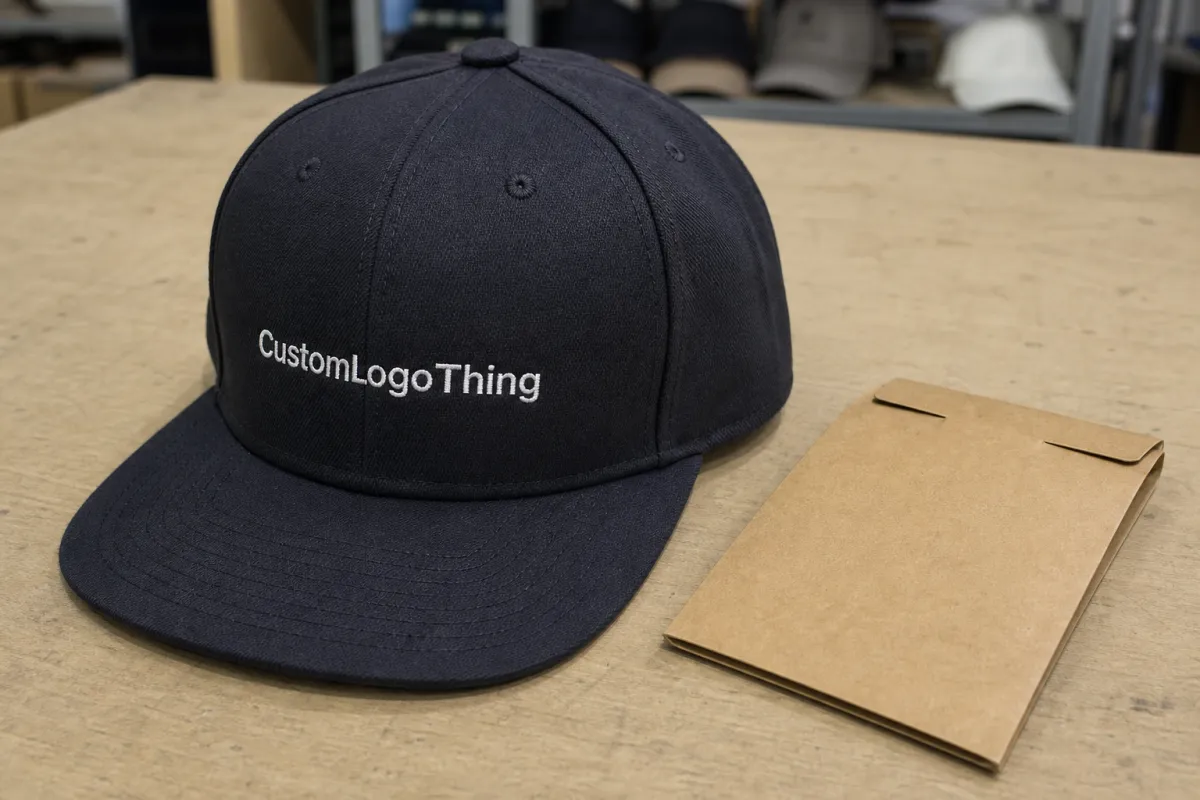
A snapback can deliver strong margin because it sells on shape as much as on branding. The flat or lightly pre-curved brim, structured front, and higher crown create a premium look without requiring complex construction. That matters when the buyer wants a cap that feels retail-ready but still fits a normal sourcing budget.
From a production perspective, snapbacks sit in a useful middle zone. They are more polished than unstructured caps, but they do not need the engineering and labor often associated with more specialized headwear. For buyers, that often means there is room to improve margin without sacrificing appearance.
Reorder stability is another reason the style works well. Once the crown height, panel count, brim shape, and logo placement are set, the same spec can be repeated with fewer surprises. That lowers the risk of back-and-forth revisions and makes future quotes easier to compare.
Decoration also tends to look clean on a snapback. Embroidery stays legible, patches sit well on the flat front panel, and the overall silhouette frames the brand mark clearly. That reduces the chance of a logo looking distorted or crowded, which is important when the cap is being sold as a branded item rather than as a commodity blank.
Product Details Buyers Should Confirm Before Quoting
The fastest way to get a usable quote is to lock the spec before asking for pricing. A 5-panel and a 6-panel cap are not the same build. A 5-panel style often gives a broader front face and a streetwear feel, while a 6-panel version is more traditional and common in structured caps. Neither is better in general; the right choice depends on the brand and the logo layout.
Crown height is the next decision. High crown caps have more presence and often fit retail or promotional programs that want a visible silhouette. Mid crown options are more restrained and can feel easier for a wider range of wearers. Brim style matters too. Flat brims are typical for snapbacks, while lightly pre-curved brims can reduce complaints from buyers who want something closer to ready-to-wear.
Material changes both appearance and cost. Cotton twill is classic and easy to decorate. Polyester can improve color consistency and may reduce cost in some factories. Mesh back panels add ventilation and change the visual profile, which can be useful for sports or outdoor use. Brushed finishes can feel softer, but they may affect how certain decoration methods sit on the surface.
Decoration zones should be confirmed separately from the base cap. Front embroidery is the most common starting point, but side marks, back embroidery, woven labels, inner taping, sweatband prints, and under-brim graphics all add labor or tooling. A front-only order and a multi-location branded order are not close to the same product.
Finish details matter more than many first-time buyers expect. Stitch density, panel symmetry, brim stiffness, and closure quality all affect whether the cap looks retail-ready or merely acceptable. Small differences in these details often drive the final approval decision more than color alone.
Snapback Caps Unit Cost Breakdown: What Moves the Number
A useful snapback caps Unit Cost Breakdown separates fixed charges from variable charges. Fixed costs are usually tied to the design or production run: artwork setup, digitizing, sample development, and sometimes tooling for special patches or badges. Variable costs are the pieces that scale with quantity: the blank cap, decoration labor, packaging, and freight.
The blank cap is the starting point, but it is only one line in the stack. For a basic structured snapback, the cap body may sit around $1.20 to $3.80 depending on fabric, structure, closure, and finish quality. Thicker fabrics, higher-end closures, and more tailored construction push the base cost higher.
Decoration is often where budgets drift. Embroidery pricing usually depends on stitch count, placement, and density. A small front logo with 5,000 to 7,000 stitches is usually straightforward. A dense badge with 12,000 to 18,000 stitches, multiple colors, or multiple placements takes more machine time and may need more adjustment. Patches and print change the equation again: woven patches are often lighter on labor, while molded or leather-style pieces can raise upfront cost through tooling or finishing steps.
Packaging can look minor but still change the budget quickly. A simple polybag may add little per piece, but barcode labels, hangtags, inserts, tissue, or branded boxes can raise the per-unit cost by $0.12 to $0.65 or more. That becomes meaningful when the order grows.
Freight is where small orders usually feel the most expensive. A cap that seems competitive at factory terms can become much less attractive once shipping is added. This is why buyers should always ask whether the quote is ex-factory, FOB, or landed before comparing suppliers.
- Blank cap base: often $1.20-$3.80 depending on fabric, structure, and closure quality.
- Decoration: embroidery, print, or patches usually add $0.35-$2.20 per unit based on complexity.
- Setup charges: digitizing and machine setup often run $25-$85 once per design, sometimes more for multi-location work.
- Packaging: polybag, hangtag, barcode label, insert card, or branded box can add $0.12-$0.65 per cap.
- Freight: small orders feel this most, especially when shipping is billed outside the production quote.
A simple way to read the cost stack is this: a $2.10 blank with $1.40 of decoration, $0.40 of packing, and $1.00 of freight is not the same product as a $2.10 blank quoted without those extras. Comparing the full landed cost is the only fair way to judge value.
For planning, the table below gives a realistic range before sample approval.
| Order Size | Typical Cost Per Piece | Setup Charges | Best Fit |
|---|---|---|---|
| 50 units | $8.50-$13.00 | $35-$120 | Samples, pilot drops, small merch tests |
| 100 units | $6.20-$9.50 | $35-$120 | Early retail runs, team orders, event kits |
| 300 units | $4.10-$6.80 | $25-$95 | Stable bulk pricing with better setup absorption |
| 500+ units | $3.40-$5.90 | $25-$95 | More efficient labor and better freight spread |
These are planning ranges, not promises. Stitch count, decoration method, packaging spec, and destination all move the final quote. Still, the pattern is reliable: higher quantities usually bring the unit price down, while low-volume orders carry the heaviest share of setup and freight.
Pricing, MOQ, and Quote Ladder for Different Order Sizes
MOQ affects price because setup has to be spread across the run. A factory may accept a lower minimum for simple embroidery and a different one for patch work or multi-location decoration. If the order falls below the preferred minimum, the usual result is a surcharge, fewer decoration options, or both.
To compare suppliers accurately, ask what is included in the quote. Samples, labels, outer packaging, freight, and duties may be included or excluded depending on the seller. Ex-factory, FOB, and delivered pricing are not interchangeable, so they should never be mixed in the same comparison.
Sampling should be treated as risk control. On a small order, a paid sample can take a noticeable share of the budget. On a larger run, it becomes easier to justify because it reduces the chance of approving the wrong panel shape, logo size, or decoration method before bulk production starts.
Most buyers move through the same ladder:
- 50 units: high setup pressure and fewer decoration choices.
- 100 units: useful for testing demand and comparing logo placement.
- 300 units: the first tier where bulk pricing starts to settle.
- 500+ units: setup and freight are easier to spread across each piece.
If one supplier quotes production only and another quotes landed cost, the numbers are not comparable. Ask both to restate the offer in the same format. That is the only way the snapback caps Unit Cost Breakdown becomes useful for a buying decision.
Production Steps and Lead Time From Artwork to Shipment
The production flow is usually straightforward: inquiry, artwork review, quote, proof, sample confirmation, bulk production, inspection, and dispatch. The challenge is timing. A basic cap can move quickly, but specialty decoration, tight color matching, or nonstandard packaging usually extend the schedule.
A typical schedule might look like this: artwork review takes 1 to 2 business days, sample approval adds 3 to 7 business days, and bulk production runs about 10 to 18 business days once the spec is locked. Shipping sits outside that window. Air freight is faster and more expensive; sea freight lowers transport cost but adds time.
Delays usually come from a few predictable issues. Missing vector files slow the proof stage. Slow approvals push the order back in the queue. Material substitutions trigger more questions. A late packaging change can require a new packing plan. Small orders may also wait behind larger batches if the same line is fully booked.
If cartons, inserts, or mailer packs are part of the order, they should be checked for transit performance rather than assumed to survive. Standards such as ISTA are useful because they focus on shipping stress, and FSC matters when paper components need certified sourcing. Those checks help reduce damage, rework, and replacement cost.
Production time and shipping time should be quoted separately. Otherwise a buyer can hear “three weeks” and assume the goods are ready to sell when they may still be in transit. Separating those numbers keeps launch planning realistic.
Quality Control, Decoration Methods, and Reorder Stability
Good quality control reduces hidden cost. In-house embroidery, patch application, and final inspection cut down on handoffs. Every additional transfer between teams increases the risk of logo misplacement, thread mismatch, or packing mistakes that become expensive after shipment.
Decoration method also affects both cost and durability. Embroidery is usually the most balanced choice because it is durable, familiar, and stable on reorders. Patches can create a more elevated look, but they may raise labor time and sometimes add tooling costs. Print can be the lowest-cost option for simple graphics, especially when stitch count would make embroidery inefficient.
The main inspection points are usually the same:
- Placement consistency across every cap.
- Color match against approved artwork or Pantone references.
- Stitch density and clean edges on embroidered logos.
- Carton counts and packing photos before shipment.
A good supplier should be able to state tolerance ranges clearly. If the logo shifts between sample and bulk, that needs correction. If the crown shape changes across cartons, the issue is larger. Reorders should use the same spec sheet, the same stitch file, and the same packaging method whenever possible. That is how the snapback Caps Unit Cost Breakdown stays stable when the order repeats.
What to Send for an Accurate Quote and Faster Next Steps
To get a quote that can actually be used, send the full buying picture up front. Quantity, target ship date, destination country, and pricing term all matter. A quote can be ex-factory, FOB, or delivered, but it should not be vague about which one is being used.
Artwork should be vector based if possible, with clear instructions for logo size, placement, and brand color references. If thread color, patch background, or print shading matters, say so early. Revision cycles usually start when a supplier has to guess what “close enough” means.
Before the final quote is approved, confirm the key build points:
- Panel count: 5-panel or 6-panel
- Crown height: mid or high
- Brim style: flat or pre-curved
- Material: cotton twill, polyester, mesh, or blend
- Closure: plastic snap, fabric strap, or other
- Decoration: embroidery, patch, print, or mixed methods
- Packaging: polybag, hangtag, barcode label, master carton setup
The best buying process is simple: compare two or three quotes, verify what each one includes, and decide on landed cost rather than the loudest headline price. That approach prevents paying extra for assumptions that were never spelled out and makes the cost breakdown useful for the actual purchase decision.
FAQ
What is included in a snapback caps unit cost breakdown?
It should include the blank cap, decoration, setup, labels or patches, packaging, and freight. Ask whether samples, duties, and rush fees are included too. A reliable breakdown separates fixed costs from the costs that change with quantity.
How does MOQ affect snapback cap pricing?
Lower quantities usually carry a higher unit price because setup costs are spread across fewer caps. Decoration method changes MOQ as well, especially for embroidery and patches. If the order falls below the factory minimum, a surcharge or fewer decoration choices is common.
Which decoration method gives the best unit cost on snapback caps?
Simple embroidery is often the best balance of cost and durability. Print can be cheaper for low-detail graphics, while patches add texture and can raise labor cost. The right method depends on stitch count, placement, and how premium the final cap needs to feel.
How long does a custom snapback order usually take?
Quote and proofing are usually fast, but delays often happen during artwork approval. Production time depends on decoration complexity, material availability, and current factory load. Shipping time is separate, so ask for production lead time and transit time as two different numbers.
What should I verify before approving the final quote?
Check that the cap spec, decoration method, quantity, and packaging match your request. Confirm whether the price is ex-factory, FOB, or landed so you are comparing the same thing. Review sample photos or proof images before bulk production starts.
If you want a more accurate buying decision, use the snapback caps Unit Cost Breakdown to compare landed cost, not just the sticker price. That is the number that affects margin.

