Buyer Fit Snapshot
| Best fit | Tube Boxes Wholesale projects where brand print, material claims, artwork control, MOQ, and repeat-order consistency need to be specified before quoting. |
|---|---|
| Quote inputs | Share finished size, material target, print colors, finish, packing count, annual reorder estimate, ship-to region, and any compliance wording. |
| Proofing check | Approve dieline scale, logo placement, barcode or warning zones, color tolerance, closure strength, and carton packing before bulk production. |
| Main risk | Vague material claims, crowded artwork, missing packing details, or unclear freight terms can make a low unit price expensive after revisions. |
Fast answer: Tube Boxes Wholesale: Pricing, Specs, and Ordering should be specified like a repeatable production item. The safest quote records material, print method, finish, artwork proof, packing count, and reorder notes in one written spec.
Production checks before approval
Compare the actual filled-product size with the drawing, then confirm tolerance on folds, seals, hang holes, label areas, and retail display edges. Reserve space for logos, QR codes, warning copy, and material claims before decorative graphics fill the panel.
Quote comparison points
Review material grade, print process, finish, sampling route, tooling charges, carton quantity, and freight assumptions side by side. A quote is only useful when the supplier can repeat the same color, closure quality, and packing count on the next order.
Compare Tube Boxes Wholesale quotes long enough and a pattern emerges. The headline number looks tidy, then the real cost starts arriving in pieces. A diameter is off by a few millimeters. The print file needs a new wrap layout. The insert was never mentioned in the brief. A tube that seemed inexpensive on paper turns into the most expensive line in the purchase order.
That is why experienced buyers do not start with the lowest quote. They start with the product, the shipping method, and the shelf expectation. Packaging that protects the item, carries the brand, and survives handling usually costs less over the full order cycle than a cheaper structure that needs rework or replacement.
Tube packaging earns its place because it does several jobs at once. It gives a product a rigid, polished presentation. It stacks neatly on retail shelves. It handles transit better than flimsy cartons. For cosmetics, candles, supplements, apparel, posters, and gift sets, a well-built tube can change how the product feels before the customer even opens it.
The real buying decision sits in the spec, not the quote alone. Material thickness, print method, finish, insert design, and minimum order quantity all shape the final cost. Get those right and the order stays efficient. Get them wrong and the budget starts leaking through reprints, damaged goods, and packaging that looks good in a mockup but fails in the warehouse.
What follows is the practical version: what tube boxes are made of, which specifications move the price, how a wholesale quote usually breaks down, and how to place an order without wasting time. If you want to see how tube packaging fits into a wider lineup, our Custom Packaging Products page shows the range we produce and how different formats support different brand needs.
Tube Boxes Wholesale: Why the Right Spec Saves Money
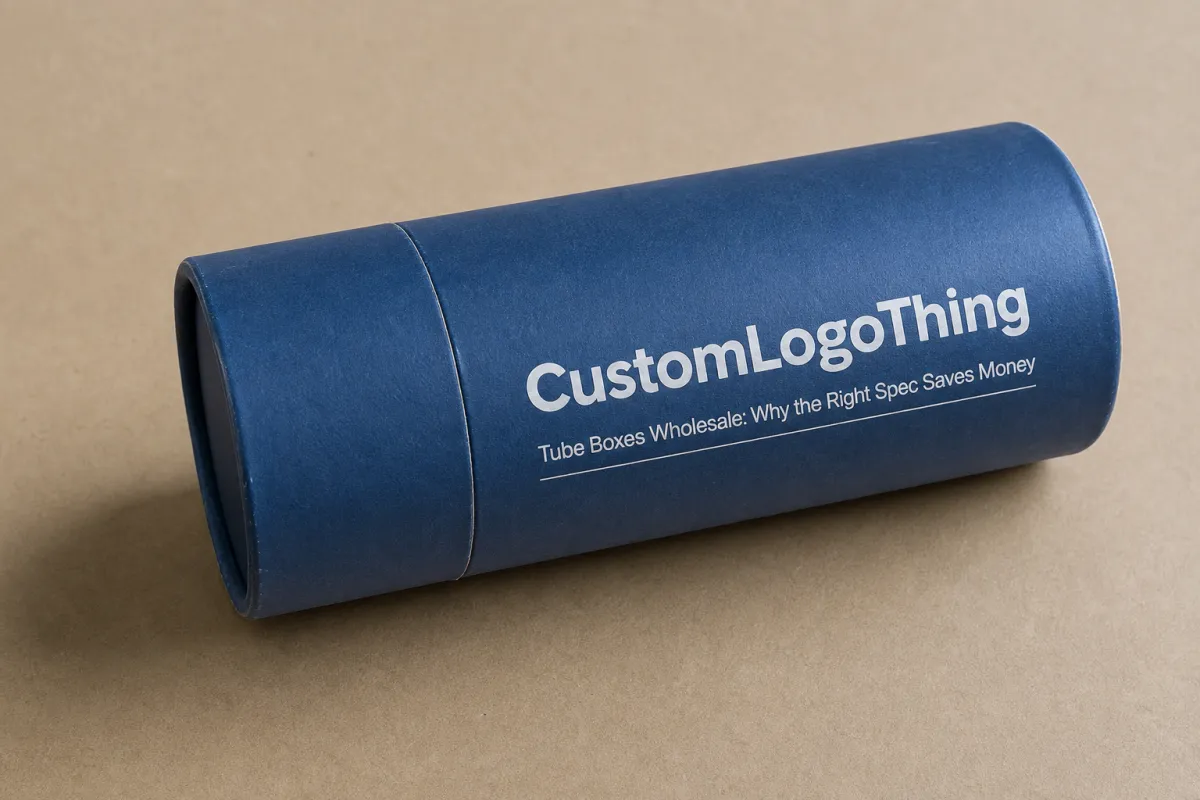
A tube box looks simple until the wrong spec hits the production floor. Then the lid fit feels loose, the seam lands in the wrong place, the insert shifts, or the walls crush in transit. Buyers usually find out after the quote is approved. That is also the moment the cheapest quote becomes the costliest order.
From a packaging buyer's point of view, tube packaging pays for itself in three places: presentation, protection, and logistics. Presentation matters because a round rigid tube has stronger shelf presence than a folding carton. Protection matters because rigid walls absorb handling abuse better than light paperboard. Logistics matter because tubes stack cleanly, travel well in master cartons, and reduce the corner damage that often triggers complaints and returns.
Different categories benefit for different reasons. Cosmetic brands like the premium look and the unboxing moment. Candle sellers want a structure that protects glass jars while keeping the label art visible. Supplement brands use tube packaging for giftable bundles and seasonal kits. Apparel brands use them for socks, scarves, ties, and flat accessories. Poster and print sellers use them for rolled goods that need a clean mailing format. Gift and promotional brands like the shape because it feels intentional instead of generic.
The usual mistake is choosing tube packaging from a mockup alone. A glossy tube with metallic accents may look strong in renderings, but heavy or fragile products need a thicker wall, a better insert, or a different cap structure. The opposite mistake is saving pennies on the tube and paying far more later to fix transit damage. That tradeoff is not clever. It is bad math dressed up as savings.
Practical rule: if the packaging will travel, stack, or hold real weight, the spec matters more than the decoration. A sound structure saves money long after the quote is signed.
That is the real case for tube boxes wholesale: buy the right structure once, then let the packaging do its job. For retail display, e-commerce fulfillment, or premium gifting, the right tube can reduce damage rates, raise perceived value, and keep the brand from looking underbuilt.
Product Details: Tube Styles, Materials, and Finishes
Tube packaging is not a single product. It is a family of structures with different uses, different costs, and different visual effects. The style you choose changes how the box closes, how much weight it can carry, and how premium it feels in hand. That is why two quotes for the same product can land in very different places.
Common tube styles
Rigid paper tubes are the most common premium choice. They use a thick board wall, often wrapped with printed paper, and feel solid enough for retail display or gift packaging. They suit candles, cosmetics, tea, specialty food, and branded sets that need a stronger first impression.
Cardboard paper tubes are lighter and usually more economical. They can still look clean and branded, but they are better for lightweight products, promotional items, and goods that do not need heavy crush resistance. If the product is light and the main goal is presentation, this can be the better fit.
Telescoping tubes use a two-piece structure where the lid slides over the base. That style is popular for gift packaging and premium sets because the opening action feels deliberate. It also leaves more room for inserts and layered presentation, which can matter as much as the outer print.
Two-piece constructions with separate caps work well when the product needs a secure closure and a stronger reveal. They can be built with paper, chipboard, or a hybrid setup depending on budget and handling requirements. The closer the product gets to the premium shelf, the more those details matter.
Material choices that change the result
Chipboard is the usual choice for a rigid feel. It gives the tube its structure and helps the packaging hold shape during shipping and retail handling. Buyers choose it when the package has to feel substantial rather than soft.
Kraft paper suits natural, earthy, or sustainability-led branding. It has a less polished appearance than coated stocks, which is exactly the point for many brands. If the product line leans organic, handmade, or minimal, kraft can support the story without pretending to be something else.
Coated paperboard gives sharper print, richer color, and a cleaner surface for branding. It is a strong choice for artwork that relies on detail, photography, or a polished retail look. It also takes foil stamping and spot UV more cleanly than rougher stock.
Wrapped paper stock is the outer layer on many premium tubes. The wrap affects print fidelity, texture, and finish. A good wrap is not just cosmetic. It affects how straight the seams appear, how well the tube accepts foil, and how consistent the run feels across the whole order.
Finish options buyers actually pay for
Matte lamination gives a softer, more modern look and cuts glare. Gloss lamination sharpens color and makes artwork pop, though fingerprints show more easily. Soft-touch lamination feels more premium, but it adds cost and can clash with brands that want a bright, crisp look rather than a velvety one.
Foil stamping remains one of the quickest ways to signal premium positioning. Gold, silver, black, or colored foil can lift a tube fast, though restraint helps. Too much foil and the package starts to look crowded instead of elevated.
Embossing and debossing add tactile depth. They work especially well on logos, seals, and simple patterns. Spot UV creates contrast on matte finishes and is useful when specific artwork needs to catch the light. Inside printing is less common, but it can turn the opening moment into a stronger reveal for premium sets.
For a buyer, the useful question is not which finish sounds nicest. It is which finish supports the product without wrecking the margin. A candle brand selling at $24 does not need the same finish stack as a luxury serum line or a corporate gift set. If the outer box is part of the product value, spend there. If not, keep the finish disciplined.
How style affects use case
A lightweight paper tube can work well for posters and apparel accessories because the product itself does not need much crush resistance. A rigid chipboard tube is better for glass, powders, or premium gifts. Telescoping styles suit presentation-heavy products. Kraft tubes fit natural or artisan brands. Coated wrapped tubes fit sharper retail artwork and high-color designs.
The short version is simple. The longer version is more useful: the right build is tied to product weight, shipping method, and shelf position. Packaging is never only packaging. It is a mechanical decision with branding attached.
Specifications That Actually Matter for Wholesale Orders
Most quote delays come from incomplete specs. A buyer sends "custom tube box" and expects a meaningful price. The supplier then has to guess the diameter, height, thickness, finish, print coverage, insert style, and whether the product needs protection during shipping. Guessing is where costs drift and timelines slip.
Size specs
The first numbers to lock are diameter and height. Those two dimensions determine material use, structural stability, and artwork layout. Add wall thickness if the packaging needs a rigid feel or if the product is heavy. If the product needs an insert, include that too. A loose insert wastes space. A tight insert damages products. Neither result helps.
For items with accessories, build in the extra room before asking for a quote. A tube for a candle and a matchbox is not the same as a tube for a candle alone. A supplement bundle with a scoop or brochure needs a different layout than a single bottle. Packaging that looks compact on paper can turn awkward once the accessories are added.
Print specs
Quote accuracy improves immediately when the buyer states whether the artwork is CMYK or PMS. If brand color matching matters, that is not a small detail. It is the difference between controlled brand color and a box that reads slightly off on a retail shelf. If the design uses full-wrap artwork, say so. If the seam needs to sit in a hidden area, say that too. If the tube includes white ink on kraft or dark stock, mention it early.
Seam placement is one of those details people forget until production. Then the logo lands exactly where nobody wanted it. The fix is not hard, but it depends on whether the file was built with the wrap layout in mind from the start.
Performance specs
Performance is where the packaging either earns its keep or fails quietly. Ask what the tube needs to survive: crush resistance, moisture exposure, e-commerce shipping, retail shelf handling, or long-distance freight. A box used only for shelf display can be built differently from a box that moves through parcel networks and warehouse stacking.
For shipping-sensitive products, some buyers reference ISTA shipping test methods as a benchmark for transit performance. That does not mean every tube needs formal lab testing. It does mean the packaging should be judged against actual handling conditions, not just how it looks in a photo.
For material and sustainability claims, some brands request FSC-certified paper options. If the brand makes environmental claims on-pack, the paper trail matters. That is part of compliance and trust, not decorative marketing language.
Compliance and labeling
If the tube carries supplements, cosmetics, food, or regulated goods, label space becomes part of the spec. That can include ingredient lists, warnings, batch codes, barcodes, country-of-origin marks, or retailer-specific labeling. If you need a barcode panel, reserve it. If you need a lot number area, say so. Trying to squeeze compliance onto the artwork later is how design files get crowded and expensive.
The same applies to retail requirements. Some chains want specific barcode sizes, panel placement, or print contrast. Others need master carton labeling that matches receiving rules. Include those details before the quote, not after the sample. It saves a round of revisions and avoids the kind of backtracking that slows launch dates.
Send the supplier a spec sheet with the product size, target tube style, material preference, print setup, and performance needs. That kind of brief gets a serious quote back. Vague notes get vague pricing. The difference is immediate.
Cost, Pricing, MOQ, and Quote Breakdown
Tube packaging pricing is not random, but it moves around more than most buyers expect. The final number depends on size, material, print coverage, finish complexity, inserts, and quantity. A small change in one of those inputs can shift unit cost far more than a buyer wants to admit.
| Tube Style | Typical Use | Relative Cost | What Drives the Price |
|---|---|---|---|
| Basic printed paper tube | Posters, apparel accessories, lightweight promos | Lower | Simpler structure, lighter board, limited finishing |
| Rigid chipboard tube | Candles, cosmetics, retail gifts | Mid-range | Thicker walls, stronger build, better presentation |
| Telescoping premium tube | Gift sets, premium retail, branded launches | Higher | Two-piece construction, tighter fit, more handling steps |
| Foil / emboss / soft-touch tube | Luxury, seasonal, presentation-led products | Highest | Extra finishing steps, higher setup, more quality control |
As a practical range, a simple custom printed tube at medium quantity can often land around $0.40-$0.90 per unit, depending on size and print coverage. A rigid tube with better materials and a cleaner print setup may sit closer to $0.85-$1.80 per unit. Premium constructions with foil, embossing, soft-touch lamination, or inserts can run $1.20-$3.50+ per unit. Those ranges are not promises. They are the kind of numbers that usually make sense once size and finishing are known.
Quantity changes everything. At low volume, setup costs and labor are spread across fewer boxes, so the unit price stays higher. At higher volume, the unit cost drops because fixed costs are diluted. Bigger is not automatically better, though. Ordering 20,000 units to save a few cents each can be a mistake if the product, artwork, or market is still shifting.
Minimum order quantity, or MOQ, usually reflects production efficiency rather than supplier mood. Simple builds can start lower. Fully custom rigid tubes with special finishes often need a higher MOQ to stay cost-effective. If you only need a few hundred units, expect a higher per-box price or fewer customization options. If you need several thousand, the economics usually improve.
Watch the hidden parts of the quote:
- Setup/tooling: die setup, print setup, or custom structural tooling.
- Sampling: pre-production samples, physical proofs, or color checks.
- Manufacturing: the actual per-unit cost for the tubes.
- Freight: air, sea, or domestic shipping from the production point.
- Assembly: inserts, special packing, or kitting if required.
A quote that looks low can climb once freight, shipment packaging, and sample approvals are added. A complete landed-cost view matters more than an ex-factory number. Without it, the math stays incomplete, and incomplete math is how budgets get wrecked.
For a useful quote request, send these details together: product dimensions, tube style, target quantity, material preference, finish, print method, shipping destination, and deadline. If you already have artwork or a dieline, include that too. The fewer missing pieces, the less back-and-forth, and the faster you get a number that can support a real buying decision.
If you are comparing packaging options across categories, our Wholesale Programs page is a useful starting point for seeing how volume, customization, and production planning affect pricing.
Process and Timeline: From Artwork to Delivery
A clean order follows a predictable path. The only surprise should be the sample arriving on time. Everything else should be deliberate, visible, and signed off in sequence.
- Inquiry: share product dimensions, tube style, quantity, and branding goals.
- Spec confirmation: lock size, material, finish, insert needs, and print method.
- Quote: review pricing, setup costs, lead time, and shipping options.
- Artwork review: check dieline fit, seam placement, bleed, and color setup.
- Sample approval: verify fit, print quality, finish, and build strength.
- Production: manufacture the approved order and perform quality checks.
- Packing and shipment: carton the order, label it properly, and send it by the chosen method.
Where do delays usually happen? Missing dielines. Low-resolution artwork. Unclear color expectations. Sample changes after approval. Late sign-off from internal stakeholders. None of that is exotic. It is normal friction that shows up when a packaging order starts before the spec is finished.
Lead time depends on complexity. Simple tube runs with standard print and no unusual finishing often move faster than premium builds with inserts, foil, and custom sizing. Larger quantities take longer because they need more production time and packing. Custom structures also take longer because the workflow is less standardized.
Shipping method changes the schedule too. Air freight is faster and costs more. Sea freight is slower but far easier on the budget for larger wholesale orders. If the product launch has a fixed date, backward-plan from the shelf date rather than the factory date. That leaves room for sample approval, freight, receiving, and any last-minute label corrections.
One rule saves a lot of trouble: lock the spec before you lock the deadline. A rushed date paired with an unfinished brief is how buyers end up paying for express shipping, production changes, or emergency rework. Packaging rewards patience more than panic.
Typical planning range: for straightforward custom tube orders, expect roughly 10-15 business days after proof approval for production, then add freight time based on the shipping method. Premium builds, complex artwork, or larger runs can stretch beyond that. If someone promises a custom rigid tube in a couple of days, the word to remember is not "fast." It is "unfinished."
Why Choose Us for Tube Boxes Wholesale
Buyers do not need packaging poetry. They need a supplier who quotes clearly, produces consistently, and does not turn every small issue into a week-long email chain. That is the difference between a workable wholesale relationship and an expensive one.
What matters most in wholesale production is boring, dependable execution. Accurate die cutting. Stable print registration. Consistent color across the run. Clean wrapping. Secure closures. Finishes that do not look great only in the sample and questionable in volume. That kind of consistency keeps product launches on track.
Direct manufacturing support matters because it reduces confusion. Fewer middlemen usually means faster answers on size, structure, and artwork. It also gives the buyer more control over cost and lead time. If the spec needs to change, you want a team that can explain what that change does to the price instead of guessing.
For brands that need customized formats, we can support different tube sizes, branded finishes, insert options, and product-specific structures. That matters whether the order is for candles, cosmetics, tea, gifts, retail accessories, or promotional packaging. Not every product should use the same tube. A supplier who treats every product the same is usually saving their own time, not saving you money.
Some buyers want a lighter structure and a sharp printed surface. Others need something more rigid, with stronger walls and a premium finish. Both are valid. The right answer depends on the product, the channel, and the margin. There is no prize for overbuilding packaging that never needed to be fancy.
Trust also comes from visibility. Clear communication, order tracking, packaging checks, and realistic timelines all matter. If a supplier can tell you what is possible, what is not, and what the tradeoff will be, that is worth more than polished sales language. Packaging projects do not fail because the wording was weak. They fail because the details were fuzzy.
If you want to compare tube packaging with other formats, our Custom Packaging Products page can help you see where tube structures fit versus cartons, sleeves, and other branded formats. That context makes it easier to Choose the Right format before you spend money on sampling.
In practice, a good wholesale partner should do three things well: quote accurately, sample quickly, and deliver consistently. Everything else is decoration.
Next Steps: Lock the Spec Before You Request Samples
Before you ask for samples, finish the fundamentals. Measure the product. Choose the tube style. Decide whether the tube needs an insert. Confirm the print method. Pick the finish only after the structure is clear. That order matters because the packaging has to fit the product before it can flatter it.
Gather the key details in one request: dimensions, quantity, target budget, shipping location, artwork files, and any compliance or retail label needs. That is how you get a quote that can actually be used. If the supplier has to ask five follow-up questions just to understand the project, the first price was never real.
Sample the packaging when the product is fragile, premium, or likely to be judged on shelf presence. A sample checks fit, color, finish, and closure behavior. It also reveals problems that render files do not always show, like lid tightness, seam visibility, or how the tube feels in the hand. For premium packaging, that test is worth the time.
For a buyer comparing tube boxes wholesale options, the most useful sequence is simple: lock the spec, compare the landed cost, approve a sample that matches the product, and only then place the order. Packaging should support the product, not create a new problem for the warehouse.
FAQ
What is the usual MOQ for tube boxes wholesale orders?
MOQ depends on size, print complexity, and whether the tube uses special finishes or inserts. Basic styles often support lower starting quantities, while fully custom premium tubes usually need larger runs to stay cost-effective. If the order has multiple finishes or a custom insert, expect the minimum to rise. In some cases, a supplier can quote a lower MOQ, but the unit price usually climbs fast.
How much do tube boxes wholesale prices usually change by quantity?
Per-unit cost drops as quantity increases because setup and tooling are spread across more boxes. The biggest savings usually come after the first production threshold, not from tiny increases in quantity. A jump from 500 to 1,000 units can matter far more than a jump from 5,000 to 5,500. That is why buyers who know their forecast often save more by planning one solid run than by placing several small ones.
What specs do I need for an accurate tube boxes wholesale quote?
Share product dimensions, tube style, material preference, print method, finish, quantity, and shipping destination. Include artwork files or dielines if you have them, because vague specs create vague pricing. If the product needs an insert, a barcode panel, or a special closure, say so early. The quote is only as accurate as the information you send.
How long does production take for wholesale tube boxes?
Lead time depends on sampling, print complexity, and order volume. Straightforward orders move faster; custom structures, premium finishes, and international shipping add time. If the artwork still needs approval, build that into the schedule before you promise a launch date. Production itself may be quick, but the whole process is rarely just one step.
Can I get a sample before placing a tube boxes wholesale order?
Yes, and for fragile or premium products, you probably should. A sample helps verify fit, color, finish, and overall build before you commit to a full run. If the product has a strict shelf or shipping requirement, a sample is cheaper than a mistake. It also gives internal teams something real to review instead of arguing over a screen image.


