Buyer Fit Snapshot
| Best fit | unboxing experience bulk order for packaging buyers comparing material specs, print proof, MOQ, unit cost, freight, and repeat-order risk where brand print, material, artwork control, and repeat-order consistency matter. |
|---|---|
| Quote inputs | Share finished size, material target, print colors, finish, packing count, annual reorder estimate, and delivery region. |
| Proofing check | Approve dieline scale, logo placement, barcode or warning zones, color tolerance, and any recyclable or compostable wording before bulk production. |
| Main risk | Vague material claims, crowded artwork, or missing packing details can create delays even when the unit price looks attractive. |
Fast answer: Unboxing Experience Bulk Order: MOQ, Samples, Lead Time, and Quote Checks should be specified like a repeatable production item. The safest quote includes material, print method, finish, artwork proof, carton packing, and reorder notes in one written spec.
What to confirm before approving the packaging proof
Check the product dimensions against the actual filled item, not only the sales mockup. Ask for tolerance on folds, seals, hang holes, label areas, and retail display edges. If the package carries a logo, QR code, warning copy, or legal claim, reserve that space before decorative graphics fill the panel.
How to compare quotes without losing quality
Compare board or film grade, print process, finish, sampling route, tooling charges, carton quantity, and freight assumptions side by side. A lower quote is only useful if the supplier can repeat the same color, closure quality, and packing count on the next order.
Unboxing Experience Bulk Order: Packaging That Converts
The box arrives before the product does. That sounds obvious, but the business impact is easy to underestimate. In the first few seconds, customers read the package as a signal: careful or rushed, premium or ordinary, worth keeping or worth tossing. A well-planned unboxing experience bulk order turns that moment into a repeatable brand asset instead of a lucky accident.
Custom Logo Things approaches packaging the same way an operations team approaches shipping damage: by looking for failure points before they become expensive. A polished render is nice, but a polished render does not prove that the lid will stay square after palletization, that the insert will hold under vibration, or that the warehouse crew can pack 2,000 units without cursing the tape gun. A real unboxing experience bulk order has to do all of that and still feel good in the hand.
Bulk production changes the stakes. A small prototype can hide weak corners, sloppy die lines, or a closure that only works if someone folds it gently. A large run exposes everything. If the board is too light, the corners crush. If the print coverage is too heavy, registration drift becomes visible. If the insert is a hair too tight, pack-out slows down and the whole line feels it. That is why the best unboxing experience bulk order is built from specifications, not vibes.
There is a customer side to this too. Industry surveys, including work from Dotcom Distribution, have shown that a meaningful share of shoppers associate premium packaging with higher brand value and repeat purchase intent. That does not mean every brand needs foil and ribbon. It does mean the package is not neutral. It either supports the price point or quietly argues against it. Pretty stark choice, really.
Here is the practical version: Choose the Right structure, define the materials, write the specs clearly, pressure-test the pricing, and plan the timeline with enough slack for sampling. Each decision changes how the package ships, how it opens, and how much labor the order consumes. A strong unboxing experience bulk order should feel deliberate from the first dieline to the last carton loaded for dispatch.
Unboxing Experience Bulk Order: Why the First Box Matters
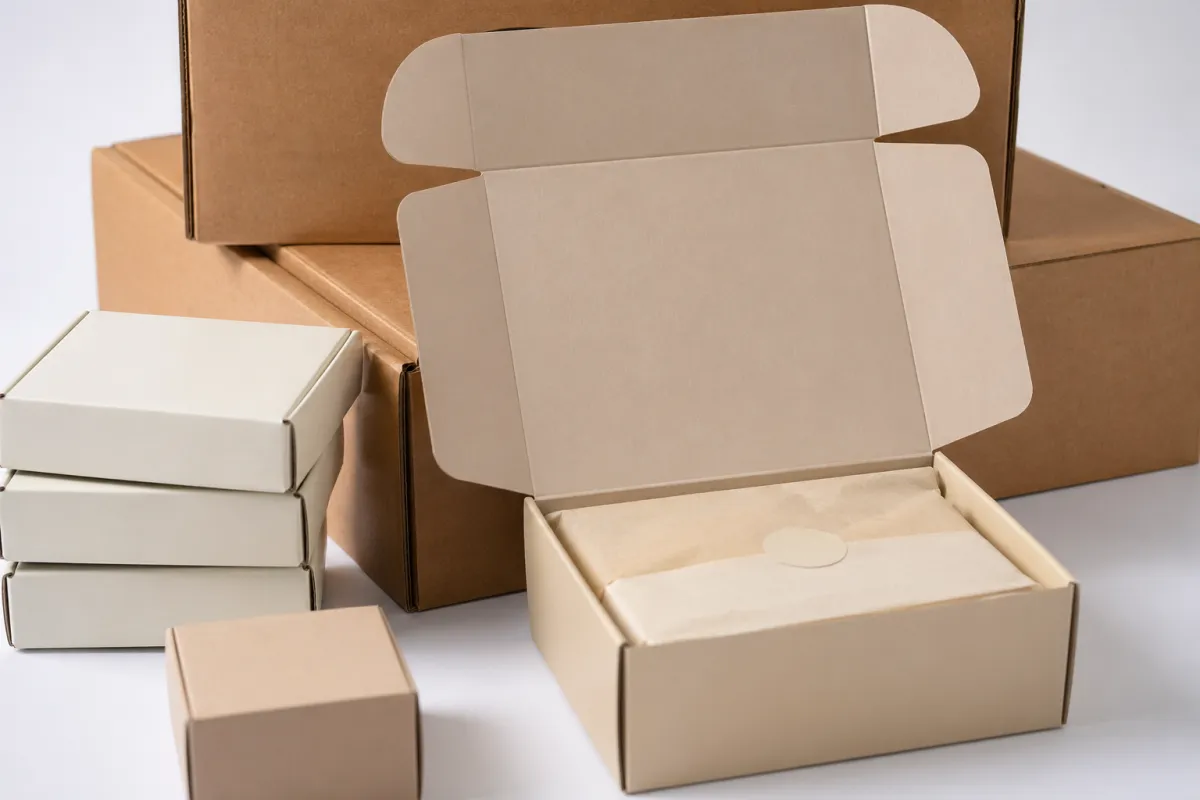
The first box does more than contain a product. It sets the emotional temperature for the rest of the purchase. A clean opening, a snug fit, and a satisfying reveal suggest care before the buyer even touches the item inside. That impression is sticky. People remember friction, and they remember delight. Packaging sits in that narrow band between the two.
Most customers never ask what board grade the box uses. They do notice a crushed edge, a lid that sags, tissue that rips like cheap paper napkins, or a product that slides around like it was packed during a power outage. Those details matter because they happen in silence. No sales rep is there to explain them. No spec sheet is sitting on the kitchen table. The box just speaks for itself, and sometimes it is saying the wrong thing.
We have seen brands spend aggressively on product development and then treat packaging as an afterthought. The irony is that the package is the first thing many customers touch. In a bulk program, that first touch has to survive thousands of repetitions. A good unboxing experience bulk order needs to be visually consistent, physically stable, and operationally easy. If any one of those three breaks down, the whole experience gets wobbly.
There is also a practical upside that tends to get skipped over in marketing meetings. A box that opens cleanly, protects the contents, and fits the packing workflow can help reduce damage claims and customer frustration. It can also reduce labor variance in fulfillment. If the packer has to fight the insert, the project is already bleeding time. If the customer has to fight the box, the brand is the one paying for it later.
Repeatability is the real test. A one-off sample can look gorgeous and still fail in production. Across a larger unboxing experience bulk order, the questions become sharper: does the print stay within tolerance, does the closure behave the same on every unit, does the insert resist compression, and does the opening sequence hold up after shipping? That is the kind of detail work that separates packaging that merely photographs well from packaging that earns its keep.
A package does not need to be ornate to feel premium. It needs to be precise, clean, and repeatable, because consistency is what customers notice and operations can actually maintain.
One useful filter: if a feature improves protection, fit, or brand clarity, keep it. If it only adds decoration, challenge it. Fancy is not the same thing as effective, and a bulk order can punish the difference pretty quickly. A smart package earns its finishes.
If you are comparing buying paths, our Wholesale Programs page helps with order planning, and our FAQ covers common setup questions before you request a quote for a branded delivery project.
Boxes, Inserts, Tissue, and Finish Options
The structure you choose decides how the opening moment feels. Mailer boxes, folding cartons, rigid presentation boxes, inserts, tissue, labels, sleeves, and seals each pull a different weight in the overall experience. The best program does not stack these pieces randomly. It assigns each one a job, then keeps the system clean enough to repeat at scale.
Mailer boxes usually make the most sense for e-commerce shipments because they combine structure with efficient folding behavior. They often run in corrugated board, with E-flute for lighter items and B-flute when more crush resistance is needed. For an unboxing experience bulk order, a mailer can offer a practical middle ground: good protection, decent branding surface, and less drama during packing.
Folding cartons fit well when the product already has a primary package or when the outer carton is doing secondary display work. They are commonly made from paperboard in the 16-24 pt range, including SBS, CCNB, or comparable stocks. They are lighter than rigid boxes and usually friendlier to the budget, which matters once volume climbs. A folding carton can still feel refined if the graphics, fit, and opening method are handled with discipline. Kinda boring on paper, maybe, but the economics are often beautiful.
Rigid presentation boxes are the play when structure and perceived value are the priority. A typical rigid build uses 2-3 mm chipboard wrapped in printed paper or specialty stock. These boxes feel substantial and hold their shape well, which makes the reveal feel slower and more intentional. They cost more to manufacture and ship, so they need a product and price point that can justify the extra weight in the customer journey.
Inserts deserve more respect than they usually get. A simple paperboard cradle may be enough for one item, while a die-cut insert with custom cavities may be needed for a multi-piece kit or fragile set. Inserts stabilize contents, separate components, and center the product so the reveal looks organized instead of improvised. In a bulk run, that can reduce transit damage and speed up pack-out because the logic is already built into the structure.
Tissue, seals, sleeves, and interior print are where the package starts to feel intentional in the hand. Tissue in the 17-28 gsm range gives a soft first layer. A branded seal or belly band helps control the reveal. Interior print can add a premium touch without requiring every exterior panel to carry expensive finishing. In a large order, selective detail usually works better than decorating every surface just because the budget allows it.
| Format | Best Use | Typical Material | Indicative Unit Cost at 5,000 Units | Notes |
|---|---|---|---|---|
| Mailer Box | E-commerce shipping and branded delivery | E-flute or B-flute corrugated | $0.55-$1.40 | Good for protection and print; price rises with coverage and insert work. |
| Folding Carton | Retail-ready product packaging or inner cartons | 16-24 pt paperboard | $0.18-$0.75 | Efficient for smaller goods; strongest when product weight stays moderate. |
| Rigid Box | Premium gift sets, kits, and high-perceived-value items | 2-3 mm chipboard with wrapped paper | $2.25-$6.50 | Excellent presentation, but higher assembly labor and freight impact. |
| Custom Insert Kit | Multi-item sets and fragile products | Paperboard, molded pulp, or EVA depending on use | $0.35-$2.20 | Fit and stability matter more than decoration; tooling can affect lead time. |
The goal is not to choose the most expensive option. It is to choose the structure that delivers the right opening feel, the right protection, and the right unit economics for the business. A thoughtful packaging plan often pairs a strong outer box with a precise insert and restrained finishing rather than trying to make every component “premium” in the same way. That layering is usually where the best results live.
Specifications That Shape an Unboxing Experience Bulk Order
Specifications are the bridge between a pretty concept and a box that can actually be produced. In a bulk packaging program, the board grade, wall construction, dimensions, closure style, artwork limits, and tolerances all shape how the package behaves in shipping and how it feels to the customer. Solid spec work reduces rework, delays, and the kind of surprises that turn a launch into a scramble.
Board grade is one of the first choices to lock in. Corrugated structures may use E-flute or B-flute depending on crush resistance and print needs. Paperboard cartons often sit in the 16-24 pt range, while rigid boxes rely on chipboard measured in millimeters rather than points. If the product is heavy, sharp-edged, or fragile, the spec should reflect that reality instead of chasing the lowest paper weight. An unboxing experience bulk order built on under-specced board tends to fail where it hurts most: at the corner, the fold, or the shelf edge.
Clearance and fit matter just as much. A box that is too tight can scuff the product, compress the insert, or slow packing. A box that is too loose lets the contents shift, which weakens the reveal and increases the odds of damage in transit. The sweet spot sits between protection and restraint. You want the product to feel secure, not trapped, and definitely not rattling around like spare change.
Print specifications should be written in plain production language. One-color artwork on kraft can look deliberate and cost-efficient. Full-color print on coated board gives a sharper visual finish but usually raises cost and can make quality control more sensitive to registration and ink coverage. If the design uses interior print, spot UV, foil stamping, or embossing, the spec sheet should identify exactly which panels carry those effects. Vagueness here tends to come back as a change order later.
Closure style shapes the opening sequence more than many teams expect. Tuck closures, self-locking mailers, magnetic rigid lids, and sleeve-and-tray systems each create a different rhythm in the hand. A magnetic lid can feel elevated, but it also adds assembly time. A self-locking mailer can be fast and sturdy, but it will not create the same reveal. For a large run, the choice should be tied to labor, shipping, and presentation goals, not just aesthetic preference.
Tolerances are where the production truth lives. If the insert must hold several parts, the cavity depth and compression allowance should be defined before artwork is approved. If the box will stack in a warehouse, the compressive strength needs to support that load. If the product is packed by hand, the opening angle and fold sequence should be easy for operators to repeat. Those details are not glamorous, but they are the difference between a nice sample and a dependable bulk program.
It also helps to align specifications with recognized testing and material standards. For shipping performance, many buyers reference ISTA methods and, depending on the program, ASTM distribution testing such as ASTM D4169. For fiber sourcing, FSC certification can support responsible forestry claims where appropriate, though only if the supply chain is actually documented. Packaging claims should match the paperwork, not just the mood board.
The strongest spec sheet removes guesswork. When dimensions, board type, print coverage, finish, and insert tolerances are written clearly, the design team and the manufacturer work from the same target. That matters even more when the project spans several SKUs or multiple fulfillment locations. It also makes the order easier to scale without re-engineering the box later.
How Do You Price an Unboxing Experience Bulk Order?
Price in packaging is never just price. It is material cost, setup cost, finishing cost, assembly labor, sampling, freight, waste allowance, and the hidden cost of mistakes. A smart buyer compares quotes on the landed total, not just the cheapest line item. That matters especially for an unboxing experience bulk order, where a small shift in material or finish can move the final number more than expected.
Material choice is usually the biggest cost driver. Corrugated mailers are generally more economical than rigid boxes, while coated and specialty papers add cost quickly. A finish like soft-touch lamination, foil stamping, or embossing can improve perceived value, but each step adds labor and increases waste sensitivity. In a branded packaging program, the more layers of customization you stack on top of each other, the more the quote tends to climb.
Quantity changes the math directly. Setup costs get spread over more units as volume rises, so the per-piece price usually drops at higher MOQs. Smaller runs often carry a premium because prepress, proofing, and tooling are spread across fewer boxes. That is why an unboxing experience bulk order can look pricey at 500 units and much more efficient at 5,000 or 10,000, depending on the format and finishing choices.
Insert complexity matters more than people expect. A simple paperboard divider is easier to produce than a multi-cavity insert with tight die-cut tolerances. Molded pulp may reduce plastic use and support a sustainability story, but tooling and lead time can differ from paperboard. A buyer planning an unboxing experience bulk order should ask whether the insert is doing a structural job, a visual job, or both. If it is only decorative, there is usually a leaner way to get the same effect.
Freight and assembly are often underestimated. A rigid box that ships flat but assembles by hand can create labor cost in fulfillment. A heavier package can also raise inbound freight and dimensional weight charges. When comparing suppliers, ask whether the quote includes folding, kitting, assembly, and destination delivery. Those line items can move the economics more than a small print upgrade ever will.
Here is a practical way to think about budget tradeoffs:
- Use a simpler outer structure and keep the insert precise if product fit is the main concern.
- Choose one premium moment, such as foil on the lid or interior print, instead of stacking several expensive effects.
- Standardize box sizes across SKUs where possible to reduce tooling and simplify inventory.
- Keep the opening sequence simple so labor time stays predictable in a bulk setting.
Those choices keep the project focused on what customers actually notice. Buyers see the reveal, the fit, the print quality, and the protection. They do not see the spreadsheet that decides whether the program is profitable, but the spreadsheet is what keeps the pretty package in circulation.
Before approving any quote, ask these questions:
- Does the price include dieline setup, proofing, and revisions?
- Is sampling included, or billed separately?
- Does the unit price assume finished and assembled packaging, or flat sheets and components?
- What quantity break lowers the price meaningfully for this unboxing experience bulk order?
- What freight terms apply, and who handles final-mile delivery?
Buyers who ask those questions usually avoid the ugly surprises. They also get a clearer read on how the package supports brand identity without overcommitting budget to details that do not move the customer.
Process and Timeline for an Unboxing Experience Bulk Order
A good production schedule depends on sequence. An unboxing experience bulk order usually moves through discovery, dimensions, dieline development, artwork setup, proof review, sample approval, production, and dispatch. Each stage matters, and the project moves more smoothly when the buyer has product details ready before the first quote request. Starting late and hoping for miracles is, frankly, how packaging jobs get spicy.
Discovery starts with the product itself. Weight, dimensions, fragility, SKU count, shipping method, and storage conditions all influence the right packaging format. If the item is going into a parcel network, the structure needs different strength than a box going to a shelf or a display table. That is why a bulk packaging project should begin with how the box will actually be used, not just how it will look in a mockup.
Dieline development turns those measurements into a manufacturing file. This is the stage where opening panels, inserts, glue areas, fold lines, and locks are mapped out. The more precise the starting information, the faster the process. If the buyer already knows the preferred format, artwork dimensions, and target quantity, the order can move through design without unnecessary back-and-forth.
Artwork setup and proofing are where consistency can either be protected or weakened. Color shifts, image resolution problems, and text placement issues are easier to catch here than after production begins. For full-color packaging, slight variation from run to run is normal, especially across different substrates and finishes. What matters is keeping variation within a controlled range so the finished packaging still feels cohesive on arrival.
Sampling is one of the most useful stages in a bulk project. A prototype verifies whether the product fits, whether the insert holds its shape, and whether the opening sequence feels elegant or awkward. It also shows whether the print, finish, and closure behave the way the buyer expected. Skipping sampling can look cheaper on a spreadsheet and turn out more expensive in the warehouse, which is a trade nobody enjoys.
Production and dispatch should include contingency time for revisions, material lead times, and freight booking. Specialty finishes and custom inserts often extend the schedule. Multiple SKUs extend it too, because each variation has to be checked for consistency. When planning this type of order, build in enough time for approvals so nobody has to rush a decision that affects a full run.
Typical lead times vary by structure and finish, but a simple printed mailer generally moves faster than a rigid box with custom inserts. In many cases, a project runs most smoothly when the brief, measurements, and artwork are complete before the first proof is issued. That reduces lag and usually lowers the risk of rework. It also protects the customer experience the packaging is supposed to create.
Why Choose Us for Branding & Design Packaging
At Custom Logo Things, the goal is practical packaging that behaves correctly in production and still presents the brand with clarity. That combination matters for any bulk packaging project, because the buyer needs more than a nice-looking mockup. They need a box that ships well, assembles predictably, and supports the product without wasting materials or labor.
The design support should start with structure, not decoration. A well-chosen box format can solve more problems than an expensive finish ever will. If a package needs better crush resistance, the answer may be a stronger corrugated wall or a different insert. If the brand wants more perceived value, the answer may be a crisp lid reveal, selective interior print, or a cleaner closing mechanism. A solid packaging program benefits from those choices because they improve function and presentation together.
One of the most useful things a packaging partner can do is help buyers avoid unnecessary upgrades. Not every brand needs foil. Not every item needs a rigid box. Not every project needs a full-wrap printed interior. The right recommendation depends on product weight, the route to the customer, and the margin available for packaging. That kind of practical guidance keeps the project aligned with real unit economics instead of whatever looks flashiest on a render.
Consistency is another area that deserves attention. In bulk work, small shifts in color, cut quality, and assembly behavior can become visible very quickly. Good packaging support should account for repeatable print output, clean die cuts, stable inserts, and a look that remains steady across the full run. That is how brand consistency turns into brand recognition over time. A strong delivery program helps the customer feel the same promise every time the box arrives.
Packaging also has to survive handling outside the design studio. Warehouse teams, parcel carriers, and retail staff all interact with it. If the closure is awkward, if the insert jams, or if the lid scuffs too easily, the package stops doing its job. Clear quoting, clear timelines, and clear expectations matter because they give the buyer confidence before the first production commitment is made. In that sense, a reliable packaging partner is as much about communication as it is about print and board.
For brands comparing vendors, the best partner is often the one that talks about tolerances, fit, and fulfillment behavior instead of only talking about visual effects. That approach keeps the packaging grounded. It also makes it easier to scale a design from test run to full production without rebuilding the project from scratch.
Next Steps for an Unboxing Experience Bulk Order
The fastest way to move a project forward is to gather the right basics before asking for a quote. Product dimensions, product weight, SKU count, artwork files, target quantity, shipping method, and any special handling requirements all help define the right unboxing experience bulk order. If those details are missing, the estimate will be broader, and the design may need more revisions later.
It also helps to decide what the packaging must do best. Does it need to protect fragile parts, elevate shelf presence, speed up packing, or create a premium reveal? A package can do several of those things, but one requirement should usually lead the design. A focused unboxing experience bulk order is easier to price, easier to produce, and easier to approve.
When possible, ask for one preferred format and one backup option. That comparison makes it easier to see whether a mailer, folding carton, or rigid box gives the best balance of appearance and cost. It also helps reveal where the real tradeoff sits. Sometimes the difference is a few cents per unit. Sometimes the difference is freight and assembly labor. A thoughtful packaging plan should expose those differences early, not after you have already committed.
Sampling is worth the time, especially if the package contains multiple items or if the opening sequence matters. A prototype can show whether the insert holds the items securely, whether the sequence feels smooth, and whether the artwork carries the right visual weight. For a brand that cares about customer perception, that checkpoint often saves more money than it costs.
One final point: do not treat the first quote as the final answer. Ask how the price changes at the next quantity break, which finish options can be simplified, and whether a slightly different structure could hold the same product more efficiently. A smart order starts with accurate specs and a clear budget, then gets sharpened through proofing and sampling until the packaging fits the product, the brand, and the fulfillment flow.
For an unboxing experience bulk order, the best outcome usually comes from restraint: pick the structure that protects the product, the finish that actually matters, and the insert that speeds up pack-out instead of slowing it down. That is the practical takeaway. Start with fit, durability, and labor, and the brand polish will follow.
What affects unboxing experience bulk order pricing the most?
Material grade, print coverage, insert complexity, and finishing options usually have the biggest impact on unit cost. In a large unboxing experience bulk order, quantity lowers setup cost per piece, while heavy decoration, specialty coatings, and custom tooling raise the total. Freight, assembly labor, and sampling should also be counted so the landed cost is clear.
What is the minimum MOQ for a custom unboxing experience bulk order?
MOQ depends on the packaging format, print method, and whether the project needs custom tooling or inserts. Simpler structures usually allow lower MOQs than highly customized rigid boxes or multi-component kits. The best approach is to ask for the lowest viable run and a recommended price break at the next quantity level for the unboxing experience bulk order.
How long does a bulk unboxing packaging order usually take?
Lead time depends on artwork readiness, sampling needs, material availability, and the number of production steps involved. Simple printed boxes can move faster than orders with custom inserts, specialty finishes, or multiple SKU variations. A clear brief and quick proof approvals are the easiest ways to keep an unboxing experience bulk order on schedule.
Which materials work best for a branded unboxing experience bulk order?
Corrugated board is a strong choice for shipping protection, while paperboard and rigid board are better when presentation is the priority. Recycled content and coated finishes can be combined depending on the look, durability, and sustainability goals of the project. The right material depends on product weight, transit conditions, and how premium the opening moment needs to feel in the unboxing experience bulk order.
Can you keep the unboxing experience consistent across multiple SKUs?
Yes, consistency is usually handled through shared box architecture, repeatable insert layouts, and coordinated print standards. It helps to standardize key dimensions where possible so the outer look stays unified even when the products inside vary. A modular packaging plan can reduce complexity while preserving a clear branded reveal across the line, which is especially helpful in an unboxing experience bulk order.


