vitamin Brand Tissue Paper cost can look like a minor line item until the box is opened and the brand story either holds together or falls apart. That first sheet a customer touches does a lot of quiet work. If it opens flat, prints cleanly, and feels intentional rather than flimsy, the whole package reads as more disciplined. In supplements, where buyers are already scanning for trust signals, that first impression is not decorative. It is part of the product experience.
I have watched packaging teams spend hours debating label foil and carton coatings, then rush the tissue decision as if it were just filler. That usually backfires. Packaging buyers get better results when they treat Vitamin Brand Tissue Paper cost as both a design choice and an operations choice. Sheet size, opacity, print coverage, MOQ, and the way the paper behaves around jars or carton sets all affect the final number. A cheap quote can become expensive if the sheet creases badly, needs rework, or slows the pack line. That is the kind of cost that hides in plain sight.
Custom Logo Things approaches tissue paper with that practical lens. Tissue has a branding role, but it still has to move cleanly through packing benches, fulfillment teams, and shipping cartons. A sheet that is too small creates awkward folds. Heavy ink can stiffen the paper more than a buyer expects. A poorly chosen MOQ can tie up cash that should have gone into the actual product. Those details shape vitamin brand tissue paper cost in the real world, not just on a quote sheet.
Why vitamin brand tissue paper cost matters in the unboxing moment
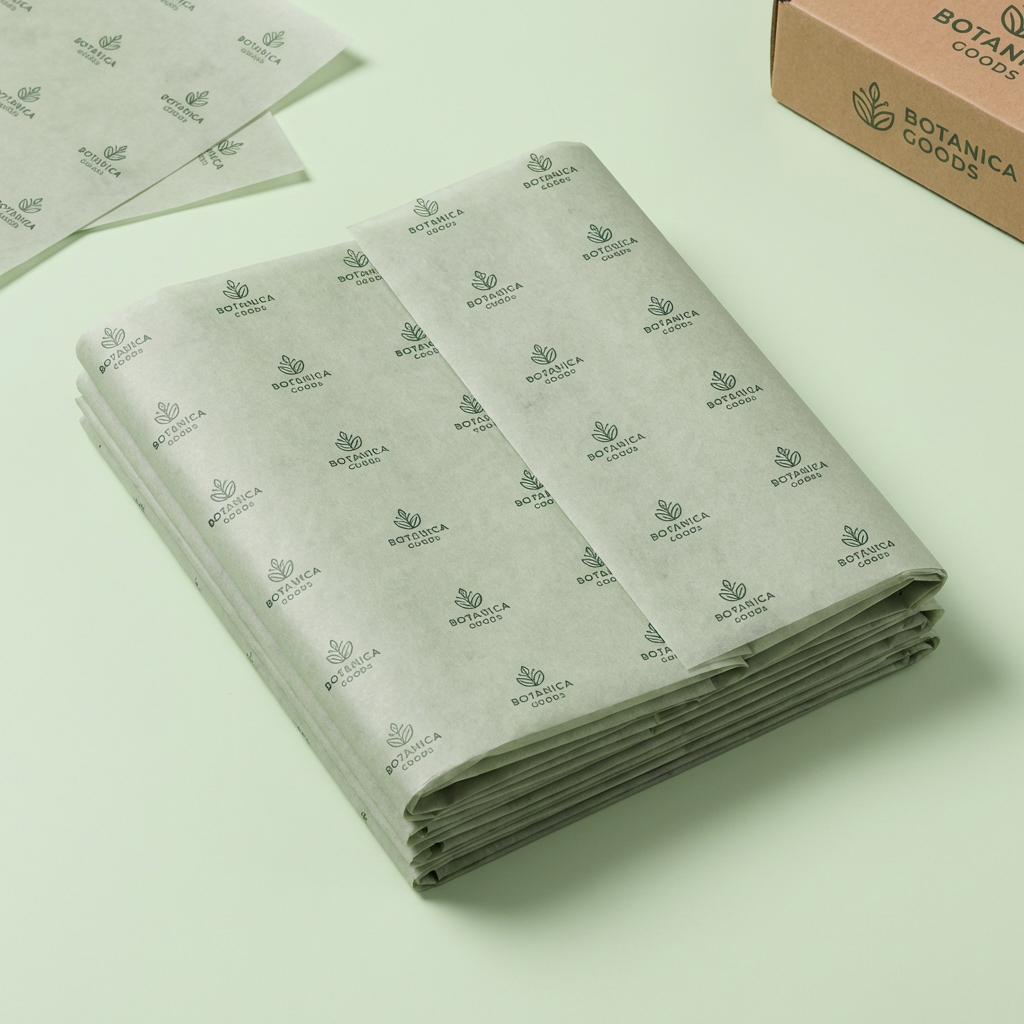
Supplement packaging is full of quiet signals. Tissue is one of the strongest because it is usually the first surface a hand touches. A polished bottle, a smart label, and a good carton can still feel unfinished if the wrap sheet looks thin or lands with sloppy folds. That is the point where vitamin brand tissue paper cost stops being a budgeting question and starts being a brand question. It shapes the feeling of care.
Wellness shoppers tend to notice small details fast. They see whether the paper lies square, whether the logo repeats with discipline, and whether the opening sequence feels planned. Those details affect brand recognition and customer perception more quickly than a loud graphic ever could. Tissue paper is not padding. It belongs to the presentation system, and for many brands it becomes a cue that the company pays attention to cleanliness, order, and finish.
A single-color repeat can look more premium than a busy full-sheet design if the fold, opacity, and proportion are right. A small logo placed with restraint on good stock can feel expensive because it gives the eye room to breathe. A crowded sheet with weak repeat control does the opposite. It looks rushed, and then the pack-out process starts to feel improvised. That is why vitamin brand tissue paper cost should be measured against the finished visual result, not just the line item.
The real question is whether sheet count, print area, and order size match the packaging line and the margin structure. Oversized tissue creates waste on every pack. Undersized tissue forces extra handling, and extra handling has a habit of costing more than people expect. Labor only looks invisible until a fulfillment run slows down. A thoughtful budget treats vitamin brand tissue paper cost as part of throughput, not just material spend.
Supplement brands also carry a heavier trust burden than many lifestyle products. Buyers expect the presentation to match the claim of quality. Crisp tissue, proper sizing, and repeatable print do not prove formulation quality, obviously, but they support the discipline a wellness customer is looking for. That connection matters. It is the difference between a package that feels credible and one that feels like it was assembled in a hurry.
There is another layer too: tissue often gets handled before any other insert. A buyer may not know the paper weight in grams per square meter, but they can absolutely feel whether the sheet fought them or cooperated. That tactile moment is small, almost mundane, yet it sticks. In packaging terms, small moments can drive big opinions.
Product details that shape vitamin brand tissue paper cost
The main factors behind vitamin brand tissue paper cost become easier to read once the product is broken into parts. Basis weight is the first one. Tissue paper usually sits in lighter weights than cartons or labels, yet the difference between a 17gsm sheet and a 22gsm or 28gsm sheet can be meaningful. A lighter sheet may lower unit cost, but it can also reduce opacity and let the contents show through. In packaging, that kind of transparency is rarely neutral.
Surface finish matters too. A smoother sheet tends to print sharper logos and cleaner edges. A more textured paper softens the look, which can be useful for a natural or artisanal brand, though it may sacrifice fine detail in small type. A white bottle inside a translucent or weakly opaque sheet can look unfinished. The same artwork on a more substantial sheet can feel deliberate and polished. That contrast explains why finish shapes vitamin brand tissue paper cost more than many buyers first assume.
Print method is the next major variable. Plain tissue is the simplest route. One-color spot printing, usually a logo or repeated wordmark, often gives the best balance of branding value and price. Multi-color work adds press complexity, tighter registration demands, and more ink usage. Full-coverage artwork sits at the top of the pricing ladder because the press has to carry more of the design burden. None of that is a penalty. It is the normal cost of asking the paper to do more. The chosen print style will affect vitamin brand tissue paper cost directly.
Handling can change the quote too. Tissue has fold memory, which means it remembers how it was packed and stacked. Certain inks change the way sheets sit in a pile. Excessive dusting creates housekeeping issues on the line. Curling edges slow operators down because stacks need to be re-squared before use. Those interruptions sound trivial until they repeat across hundreds or thousands of units. Production teams notice them immediately, even if the invoice does not.
For supplement packaging, the smartest spec often depends on the pack format:
- Bottle sets: A slightly larger sheet can protect corners and keep the presentation neat once the customer opens the box.
- Rigid boxes: A lighter sheet can work well for decoration, while a stronger sheet helps separate components or keep inserts in place.
- Subscription mailers: A repeat pattern should stay legible after folding and survive transit without looking random or cramped.
Format-specific decisions like these keep vitamin brand tissue paper cost under control because they reduce waste. The lowest-price sheet is not always the least expensive option over time. The better choice is the one that fits the pack cleanly, avoids over-trimming, and keeps operators from compensating with extra labor.
Most brands do not overspend on the paper itself; they overspend on vague specs, poor repeat placement, and a sheet size that fights the pack-out process.
If a team wants a useful benchmark, the quote request should start with paper weight, finish, print method, and exact dimensions. That gives suppliers real variables to work with and keeps vitamin brand tissue paper cost tied to manufacturing reality instead of guesswork. A spec that is too loose usually leads to padded pricing, because the supplier has to protect the job against unknowns.
Specifications for custom vitamin brand tissue paper
A quote becomes useful only when the specification is clear. Buyers asking about vitamin brand tissue paper cost need more than a headline number. The sheet size, ink count, and print coverage have to be stated plainly. Without that, the estimate usually carries padding, and comparison shopping gets muddy fast.
The specification list can stay short, but it cannot be vague. Finished sheet size, basis weight, paper color, ink count, print area, and whether the artwork repeats edge to edge should all be confirmed. A repeat pattern needs its cycle length before proofing starts. A centered logo needs a safe zone so the fold does not bury the mark. Every one of those details affects appearance and vitamin brand tissue paper cost at the same time.
What buyers should lock in first
- Finished sheet size: Match the tissue to the carton, mailer, or bottle set so coverage is adequate without creating waste.
- Basis weight: Common choices often sit around 17gsm, 20gsm, 22gsm, or 28gsm depending on feel and opacity.
- Color: White, off-white, kraft-toned, or tinted sheets all change contrast and brand tone.
- Ink count: One-color logo work usually costs less than two- or three-color printing.
- Print coverage: Spot print, repeat pattern, or full-bleed artwork all shift vitamin brand tissue paper cost.
Sheet size deserves a closer look because it affects both presentation and labor. A wrap around a single bottle can stay compact. A subscription mailer or multi-item set needs more overlap so the reveal still feels intentional once the package opens. If the sheet is too small, the pack looks awkward and the product edges show too early. If the sheet is too large, waste increases and the packing step slows down. The right dimension improves appearance and vitamin brand tissue paper cost at the same time.
Artwork setup protects the budget before the press ever starts. A repeat pattern should be checked for seam alignment. A centered logo should be tested in both portrait and landscape folds. Fine lines, tiny type, and delicate graphics can disappear after the sheet is folded or compressed in transit. Proofs need to show the sheet at actual scale, not only as a flat file on a screen. That check prevents expensive rework and keeps vitamin brand tissue paper cost predictable.
Handling specs matter as well. Some brands want acid-free tissue for a cleaner archival feel. Others ask for anti-curl performance because the packing team moves quickly and needs the stack to stay flat. Hand-stacked tissue behaves differently from tissue loaded onto a semi-automated line, and cut accuracy becomes more important as throughput rises. Clear handling requirements lead to cleaner quotes and fewer surprises during production.
Responsible sourcing can also be part of the brief. FSC-certified fiber is a common request for retail programs, and documentation should be requested if the channel expects it. For ship-through checks, many teams look to general testing principles used across the industry. Resources from ISTA help when a brand wants to map how the finished pack will hold up in transit, while FSC standards support paper-side sourcing claims.
There is a practical reason to be this specific: the supplier can only price what the brief makes visible. I have seen projects lose a week because the logo repeat, sheet dimensions, and carton size were all described in loose terms. Nobody enjoyed that delay. The quote improved after the spec did, but the launch calendar was already annoyed.
When the brief is specific, vitamin brand tissue paper cost becomes much easier to manage. The supplier can quote the right paper, the print team can set the correct repeat, and the production run is less likely to stall over avoidable clarifications. That kind of clarity is not flashy, but it saves money in a very unromantic way.
Vitamin brand tissue paper cost: pricing, MOQ, and quote structure
The cleanest way to read vitamin brand tissue paper cost is through three levers: paper spec, print complexity, and quantity. Move any one of them and the unit price changes. Move all three together and the curve can shift more than a buyer expects. A quote should be treated as a bundle of conditions, not a single per-sheet number lifted out of context.
MOQ is where many brands feel the economics first. Lower minimums help with launches, short runs, and design tests, yet they nearly always carry a higher unit cost. Setup time, proofing, and press preparation get spread across fewer sheets. Larger runs let the press stay productive longer, which usually drops the per-sheet price. That is why vitamin brand tissue paper cost is rarely most attractive at the smallest order size unless the order is only a test.
Side-by-side pricing tiers tell a better story than one quote alone. The table below gives a practical view of how tissue options often differ when the order is custom rather than stock. The figures are directional, since sheet size, paper grade, and print coverage all influence the final number, but they are useful for planning.
| Option | Typical use | Relative MOQ | Typical unit cost range | Notes |
|---|---|---|---|---|
| Plain tissue | Low-friction filler or simple wrapping | Lowest | $0.03-$0.08 per sheet | No print setup, but limited branding value |
| Spot print, 1 color | Logo repeat or simple brand mark | Moderate | $0.08-$0.16 per sheet | Often the best balance of look and vitamin brand tissue paper cost |
| Multi-color print | Stronger visual branding and pattern work | Moderate to higher | $0.14-$0.28 per sheet | More setup time, tighter registration needed |
| Full-coverage print | High-impact presentation or all-over artwork | Higher | $0.18-$0.35 per sheet | Ink load, press time, and drying control raise vitamin brand tissue paper cost |
Those ranges are grounded in the reality that tissue paper is still a printed manufactured product. A small run with heavy artwork usually costs more per unit than a larger run with a simple repeat. That is why tiered pricing is worth asking for. A 5,000-sheet quote, a 10,000-sheet quote, and a 25,000-sheet quote tell a much clearer story than a single price ever could. For brands with stable SKUs, that tiering can lower vitamin brand tissue paper cost over time because it shows where volume starts to pay back.
Quote comparison should go beyond the sheet price. Ask whether art adjustment, plate or print setup, proofing, packaging, and freight are included. One supplier may show a lower unit number and then add separate charges later. Another may bundle more into the price and end up cheaper overall. The real comparison is the landed package, not the line item that looks best at first glance. That matters a lot for vitamin brand tissue paper cost because small charges can hide in approvals, shipping, and packing.
Freight deserves its own line of attention. Tissue paper is light, yet it still ships in bulky cartons. Large orders may need palletization. Short launch windows may require faster freight, which can push the total budget higher than expected. Brands with tight retail calendars should account for shipping time and storage space before they approve the order. It is common to see the paper price look fine while the delivered total grows once transport is added. That is still part of vitamin brand tissue paper cost.
A simple rule helps here: if the tissue supports a premium supplement line, ask for at least two versions of the quote. One should reflect the minimum workable MOQ, and one should reflect the reorder volume you are likely to reach. That contrast makes the business case clearer and helps prevent overbuying in the first round. It also shows how quickly vitamin brand tissue paper cost improves as quantity rises.
For buyers comparing suppliers across regions, currency movement and paper availability can change the result more than expected. Two quotes that look close on paper may diverge after freight, import handling, or added finishing steps. I would never compare tissue pricing by unit cost alone. That is a fast way to miss the actual spend.
Process and timeline: from artwork to shipment
A clean production schedule keeps a packaging launch steady. Custom tissue usually starts with a spec review and quote, then moves into artwork checking, proof approval, production, finishing, packing, and shipment. Each step sounds routine. Each one still affects vitamin brand tissue paper cost because time, revision count, and print complexity all influence the final economics.
The artwork stage is where a lot of avoidable problems begin. Files need to be checked for resolution, line weight, repeat logic, and bleed. If the design prints across a large sheet, the repeat has to be positioned so the fold does not cover the logo or create an awkward seam. A lightly tinted sheet can change contrast enough that an artwork file that looked sharp on screen prints faint in the real world. Proofing is not a ceremonial step. It is a cost-control step, and it protects both appearance and vitamin brand tissue paper cost.
For a practical timeline, many repeat-print tissue projects reach production in roughly 12-20 business days after proof approval, depending on order size and queue position. Full-coverage or multi-color jobs usually need more time, especially if the artwork needs tuning. Freight sits outside that window and should be added separately. If the launch date is fixed, the best move is to work backward from the ship date and leave room for approval, transit, and correction cycles. That planning discipline keeps vitamin brand tissue paper cost from turning into a rush-order problem later.
Some projects need a sample before production. That is especially true when a brand is printing a light logo on tinted tissue, using a tight repeat, or trying to match a color-critical identity system. Sampling adds time, yet it can prevent a costly reprint. In packaging, the cheapest mistake is usually the one that never reaches production. The same logic applies to vitamin brand tissue paper cost; it should be measured against the cost of rework, not just the quote on the table.
The timeline also depends on the production queue. A simple design may still wait behind other jobs. A large order may need more drying, cutting, or packing time. That is normal. Buyers should confirm both the production window and the transit window before promising a launch date to sales or operations. Supplement brands often run on seasonal campaigns, reorder thresholds, or retail resets, and tissue paper deserves the same scheduling discipline as any other branded packaging component.
If the program supports retail-ready presentation, the tissue may need to arrive before final assembly. If it supports subscription fulfillment, it has to land in time to avoid a bottleneck on the line. That is where the operational side of vitamin brand tissue paper cost becomes visible. A slightly higher-cost sheet that arrives on time and runs cleanly can be the better business choice.
Teams managing multiple SKUs should keep a reorder calendar and a single spec sheet. Otherwise the repeat pattern, sheet size, and approved proof drift from one order to the next. Brand consistency depends on that discipline, and tissue paper is no exception. A supplier can help here, especially when one brand needs several sizes or product families under a single visual system. Stable specs are one of the easiest ways to keep vitamin brand tissue paper cost from moving around without reason.
Packaging professionals who track transit expectations and performance often refer to resources from packaging.org for broader industry context. Tissue paper is not only about print aesthetics; it belongs to a real packaging system that has to ship, store, and present well. A sheet that looks good in a mockup but fails in operations is still a weak package.
There is also a trust angle here. If a supplier cannot explain the timeline in plain language, they probably do not have the production path fully under control. Buyers should ask who approves artwork, how many proof rounds are included, and what happens if an ink match drifts. That may sound fussy, but it is cheaper than a reprint. Pretty simple, really.
Why choose us for vitamin brand tissue paper
The strongest reason to work with Custom Logo Things on this category is practical: the team understands that vitamin brand tissue paper cost is tied to more than a printed sheet. It is tied to how the tissue will be used, how it will fold, and how the finished package will look after the customer opens it. That kind of packaging awareness saves time because it cuts down the back-and-forth around sheet size, repeat layout, and ink coverage.
Supplement and wellness brands depend on trust. The customer is buying a product that carries a promise about health, consistency, and care. The packaging should reinforce that promise. A clean print, a sensible MOQ, and a straightforward proof approval process do that work quietly. We focus on specification clarity and production discipline rather than inflated claims. The result is fewer surprises in vitamin brand tissue paper cost and fewer headaches during pack-out.
Custom sizing matters as much as print. A tissue sheet for a single jar carton is not the same as one for a multi-item vitamin kit or subscription mailer. Matching the sheet to the format protects presentation and often lowers waste. Better unit cost control follows naturally, along with stronger visual branding. That combination is what most buyers are after when they balance margin against presentation.
When a brand brings multiple artwork versions or weighs different quantities, it helps to work with a supplier that can compare the options instead of pushing a one-size-fits-all answer. That is where Case Studies can help, because they show how different packaging decisions change the finished result. Buyers who want to review practical examples can visit our Case Studies page to see how packaging choices perform across real programs.
Reliable production matters even more when tissue is part of a subscription workflow. Those orders depend on exact timing and steady supply. If tissue arrives late, the shipping schedule slips. If print varies from batch to batch, brand consistency weakens. A clean production process helps avoid both problems, which is why the right supplier can make vitamin brand tissue paper cost easier to manage over time.
Sourcing and responsibility also belong in the conversation. If your brand needs FSC documentation, recycled fiber claims, or a more formal paper trail, those requirements should be discussed during quoting. That is not decorative detail. It is part of building a package that fits retail expectations, internal compliance, and customer trust. When those points are handled early, vitamin brand tissue paper cost becomes easier to approve because the buyer knows exactly what is being purchased.
One more thing: a good supplier should be willing to say no to a spec that will not perform well. If the artwork is too fine for the paper weight, or if the requested sheet size leaves the pack exposed, the honest answer may be to adjust the brief. That is not a sales tactic. It is experience speaking.
Next steps to request an accurate quote
Accurate quotes begin with clear inputs. The most important details are the finished sheet size, quantity, paper color, print colors, artwork file, packaging format, and target in-hand date. Once those are in place, a supplier can build the quote around the real production path instead of guessing. That alone improves the accuracy of vitamin brand tissue paper cost.
It also helps to explain how the tissue will be used. Will it wrap bottles, fill cartons, line a subscription mailer, or act as a branded presentation layer inside a gift set? The use case changes the size, fold, and print placement. A logo that looks perfect on a flat mockup may disappear after the first fold if the repeat pattern is not planned with the package in mind. That detail reaches straight into both presentation and vitamin brand tissue paper cost.
If the design uses a tight repeat, a light logo on tinted tissue, or a full-bleed pattern, ask for a sample or proof before mass production. That is the safest way to protect color, placement, and fold behavior. A proof can show whether the logo reads at a distance, whether the repeat feels too busy, and whether the paper still stacks cleanly after printing. Those checks are worth the time because they help avoid reprint expenses that would inflate vitamin brand tissue paper cost.
It is also smart to request two or three quantity levels. That makes it easier to see where the price starts to improve enough to support a reorder plan. A pilot order may fit a launch. A second volume may lower the per-sheet number enough to support the next campaign. That visibility makes budgeting easier and gives procurement a clearer view of how vitamin brand tissue paper cost behaves over the life of the SKU.
Here is the most practical action path:
- Send the sheet size, artwork, and quantity target.
- Confirm the print style and paper weight.
- Review the quote for setup, proofing, and freight.
- Approve the proof only after the repeat and fold behavior look right.
- Lock the production slot before the packaging schedule tightens.
That process keeps the project under control and helps you make a decision based on real usage, not a mockup photo or a tempting headline price. In the end, vitamin brand tissue paper cost should be the final comparison point after the spec, timeline, and order size all fit the brand’s needs.
For teams buying tissue for the first time, a useful rule is to choose the spec that works on the line first and only then look for savings. A cheaper sheet that wrinkles, curls, or fails in transit is not a bargain. A slightly higher-cost sheet that packs cleanly and supports the reveal is often the better buy. That is the practical answer, not the pretty one.
When the details are defined well, the sheet does its job quietly: it protects the reveal, supports brand consistency, and adds polish without becoming a burden on the budget. That is the kind of packaging value most supplement brands are buying, and it is why vitamin brand tissue paper cost should always be reviewed with the full unboxing and fulfillment picture in mind. The takeaway is simple: lock the spec, confirm the proof, and compare landed cost instead of chasing the lowest sheet price.
FAQs
What affects vitamin brand tissue paper cost the most?
Sheet size, print coverage, and the number of ink colors usually drive vitamin brand tissue paper cost more than anything else. Paper grade and opacity matter too, because a heavier or more opaque sheet can raise the unit price. Smaller orders usually cost more per sheet since setup time is spread across fewer pieces.
Is there a low MOQ for custom vitamin brand tissue paper?
Yes, but the minimum order quantity depends on the print method, sheet size, and paper specification. Lower MOQ programs are useful for launches and test runs, although vitamin brand tissue paper cost is usually higher at that level. If you plan to reorder, ask for tiered pricing so you can see where the price drops as volume rises.
How long does production usually take after approval?
Timing depends on proof approval, artwork complexity, and the current production queue. Simple repeat jobs often move faster than full-coverage or multi-color designs, so vitamin brand tissue paper cost and lead time should be reviewed together. Freight time should also be included if the launch date is fixed.
Can I print a logo on just one part of the tissue sheet?
Yes, spot printing is common and can be a cost-effective option for supplement brands. A limited print area often keeps the sheet cleaner-looking while still strengthening brand recognition. Just make sure the logo placement still works after folding so the mark is visible inside the package.
What information do I need to get an accurate quote?
Provide the finished sheet size, quantity, paper color, print colors, and artwork file. It also helps to explain whether the tissue will wrap bottles, fill cartons, or line mailers, because that affects vitamin brand tissue paper cost and the correct spec. If you have a target delivery date, include that too so the production and transit plan is accurate.


