Soap Brand Tissue Paper cost looks straightforward until the first quote lands in your inbox. A buyer sees a thin sheet, a logo, maybe a repeat pattern, and assumes the math will stay tiny. It usually does not. Tissue is doing several jobs at once: protecting the soap surface, presenting the brand, and making the unboxing feel deliberate instead of rushed.
That is why two quotes can look nearly identical on paper and still land miles apart in the final number. Sheet size, paper grade, print coverage, color count, finish, fold style, packing format, and minimum order quantity all move the price. A supplier might quote one job on a standard tissue run and another on a version that needs heavier ink load or tighter registration. Same product family, very different production reality.
Soap makers notice the value quickly. A branded wrap can make a plain bar feel gift-ready, keep sets tidy, and add polish without forcing the brand into a rigid carton. For small and mid-sized brands, that matters because packaging dollars have to work hard. I have seen a simple tissue layer lift the perceived value of a $9 bar more effectively than a fancier outer label ever could. That part is kinda hard to ignore.
The goal here is practical: break down soap Brand Tissue Paper cost, show what changes the quote, identify the specifications that matter, and explain how to order without creating rework that eats margin. Buyers do not need packaging fluff. They need a number that survives contact with production.
Soap Brand Tissue Paper Cost: Why the First Quote Surprises Buyers
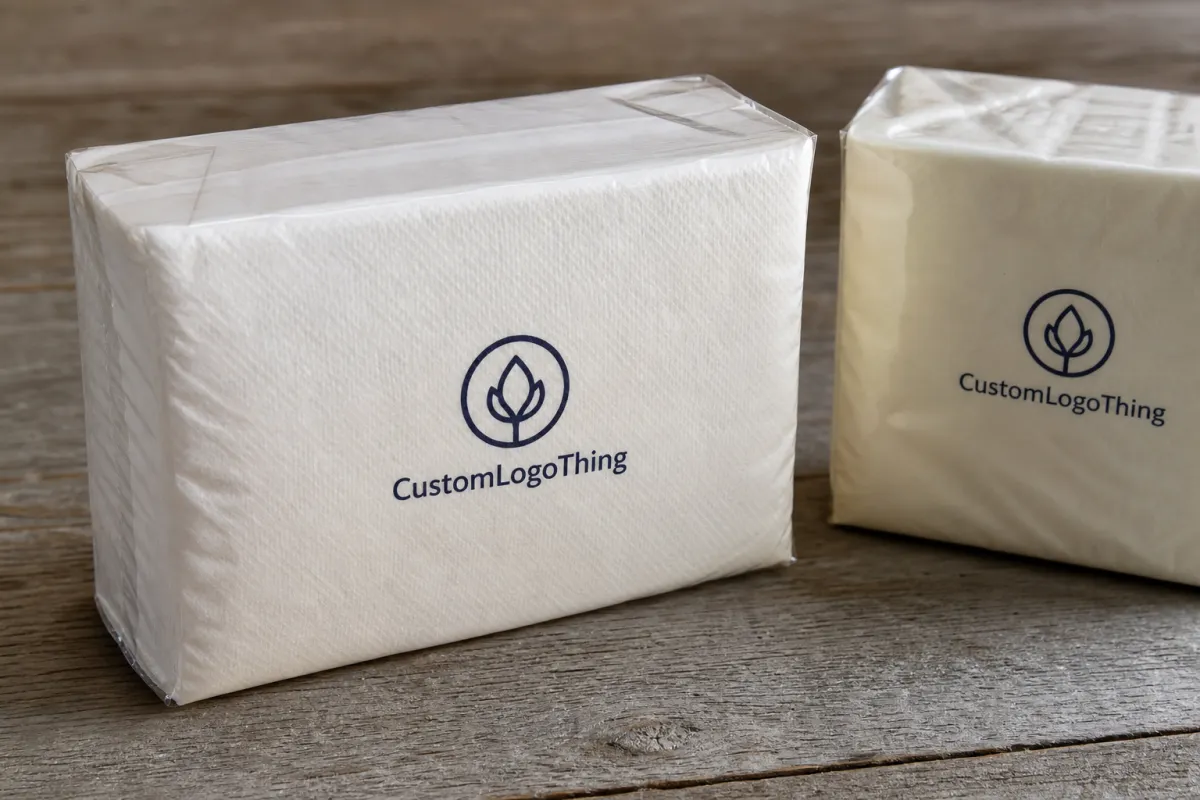
The first reason soap Brand Tissue Paper cost surprises buyers is that tissue may be light, but the work behind it is not. A soap bar is compact, yet the tissue still has to fold cleanly, hold a repeat pattern, print clearly on a delicate substrate, and arrive in a quantity that fits the line. None of that shows up when you are only looking at a mockup.
Many buyers assume the material itself drives the number. It matters, but setup often matters just as much, especially on smaller runs. Artwork prep, proofing, plates or screens, waste allowance, and finishing all sit behind the quote. A simple logo repeat is not the same job as a full-sheet pattern with dense coverage. The press knows the difference, even if the thumbnail image does not.
Presentation affects economics too. Tissue paper does more than guard the soap. It frames it. A crisp branded wrap can sharpen customer perception, make a plain bar feel gift-ready, and reinforce recognition without changing the formula or outer carton. If you are trying to look refined without moving into more expensive packaging structures, tissue is one of the least dramatic ways to do it well.
A quote only tells the truth when the paper grade, sheet size, color count, print coverage, and freight assumptions are all aligned. Shift one variable and soap brand tissue paper cost shifts with it.
From a buyer's perspective, the first quote should answer two questions at once: what the job costs and what assumptions were used to get there. Clear assumptions make soap brand tissue paper cost easier to compare across vendors, especially when one supplier is quoting a simple one-color repeat and another is quoting a fuller sheet with heavier coverage. Same category. Different production load. Different price.
Good buyers ask for detail early. Sheet dimensions, number of print colors, estimated MOQ, packing format, and proofing terms should all be in the first conversation. That information helps you figure out whether the number is high because the product is premium or high because the spec is overbuilt. Those are not the same thing, and the difference can decide whether the order protects margin or slowly burns it away.
Tissue is often sold in tiers rather than one flat price, and that pattern is useful. It shows where the economics improve. A 1,000-sheet run may look expensive on a per-sheet basis, while 5,000 sheets may fall into a much more practical range. Once a brand sees that curve, soap brand tissue paper cost turns into a planning tool instead of a surprise.
In one project I reviewed, the buyer expected the paper itself to be the main cost driver. It wasn't. The biggest difference came from the artwork: a quiet logo repeat versus a dense all-over pattern. The latter was prettier on screen, sure, but the run needed more press attention and more waste allowance. The quote followed the labor, not the mood board.
Soap Brand Tissue Paper Cost: Pricing, MOQ, and Unit Cost
The cleanest way to understand soap brand tissue paper cost is to separate the pieces that build the unit number. Paper grade sits near the foundation. Sheet size follows closely. Print complexity usually climbs to the top of the list. A simple one-color logo repeat on a standard sheet is faster to produce than a full-bleed pattern with several inks and tight registration. That difference shows up quickly in the quote.
MOQ, the minimum order quantity, matters just as much. A larger MOQ spreads setup cost across more sheets, so unit cost drops. A small order does the opposite. That is why short runs can look expensive even when the material itself is ordinary. Ask for tiered pricing so you can see where the break happens. Soap brand tissue paper cost often improves sharply once the order passes a practical production threshold.
The most useful quote is rarely the lowest single number. It is the one that exposes the cost curve. Request pricing at the MOQ, at an intermediate volume, and at a higher volume. That comparison shows whether you are paying mostly for setup or mostly for materials. It also helps with forecasting future runs, which matters if the soap line is seasonal or split across scent families that sell at different speeds.
| Order Tier | Typical Unit Cost | Common MOQ | Best Fit |
|---|---|---|---|
| Starter run | $0.22 - $0.40 per sheet | 500 - 1,000 sheets | Sampling, small boutiques, launch testing |
| Core production run | $0.10 - $0.22 per sheet | 3,000 - 5,000 sheets | Regular retail supply, gift sets, stable SKUs |
| Volume run | $0.05 - $0.14 per sheet | 10,000+ sheets | Established soap lines, seasonal rollouts, multi-SKU programs |
Those figures are planning ranges, not guarantees. Artwork coverage and paper grade can push the final quote up or down. The pattern still holds: as quantity rises, soap brand tissue paper cost per sheet usually falls. Larger brands know this and keep a standard sheet size across multiple scents. That keeps production stable, cuts variables, and protects unit cost.
Several small decisions can keep pricing in a saner range without flattening the brand look. Standard sheet dimensions usually cost less than odd custom sizes because they run more efficiently. A cleaner repeat pattern can reduce press time. Fewer ink colors often mean less setup and less complexity. Balanced coverage, where the design breathes instead of flooding the sheet, can keep the wrap attractive while improving output. None of that erases identity. It simply keeps soap brand tissue paper cost from getting away from the product.
Ask what is not included too. Freight, export handling, proof charges, special folding, outer packaging, and storage cartons may be priced separately. If one supplier bundles those items and another does not, the quotes are not really comparable. A serious sourcing process separates production cost from logistics so the final number is honest.
Use the product's economics as the filter. A luxury soap set sold at a high margin can absorb a higher unit cost than a mass retail bar that needs tighter control. That is the real question. Soap brand tissue paper cost should support the product's margin structure, not strain it.
MOQ is not just a seller preference. It reflects the way tissue production runs, from setup to press calibration to waste allowance. If the order is too small, each sheet absorbs more of those fixed costs. Better volume planning gives a sharper estimate of soap brand tissue paper cost before the order is even placed.
For many brands, the practical buying move is to standardize one sheet size for the whole line and vary only the printed artwork. That kind of discipline can shave waste, simplify storage, and make reorders less annoying. The savings are not flashy, but they add up. Packaging math rarely is, and the people who do it well usually know that.
Product Details: Paper Grade, Print Method, and Finish
Good tissue starts with a sheet that behaves correctly. For soap, the paper needs to be light enough to fold neatly, soft enough to feel refined, and stable enough to hold ink without blotching. In many programs, that points to tissue in the 17 to 28 gsm range, depending on the hand feel and the print coverage. Too flimsy, and it tears during wrapping. Too heavy, and it stops feeling like tissue at all.
Paper grade affects appearance and soap brand tissue paper cost at the same time. A more refined surface can sharpen the logo and improve print clarity, but the material may cost more and require tighter press control. A softer sheet may feel better in the hand, though dense color blocks can print less cleanly on it. That is why paper should be chosen for the real production run, not just the sample on a table that happens to look pretty under studio lights.
Print method matters as well. Flexographic printing and related tissue-friendly press setups are common choices, each with its own strengths. A light logo repeat in one or two colors is usually the least complicated path. More colors, larger coverage, and tighter alignment increase setup time and press attention. That is why soap brand tissue paper cost rises quickly when a design moves from a small brand mark to a full-sheet pattern.
Finish changes the feel before the customer consciously notices it. Brightness, opacity, and paper tone all shape the look. Warm white tissue can make a collection feel natural and artisanal. Bright white can read as cleaner and more clinical. Neither is automatically better. The right choice depends on the visual language the brand wants to carry into the package.
For brands that care about sustainability claims, ask about FSC-certified paper and water-based inks. The FSC system is a widely recognized reference for responsible forest sourcing, and transit discussions often benefit from the ISTA testing framework for package performance. Those references do not replace a supplier quote, but they help a buyer ask sharper questions about material choice and shipment handling.
There is a commercial reason to get this right too. A soap bar sits in the hand, on a shelf, in a bathroom, and sometimes in a gift bag. Tissue is one of the few visible surfaces that repeats the brand mark across all those touchpoints. When the print is crisp and the paper is balanced, soap brand tissue paper cost usually feels justified because the packaging is pulling its weight.
I think a lot of brands underestimate how much finish changes perception. A slightly better paper tone, paired with disciplined coverage, can lift the whole package without changing the soap or the box. That is solid packaging economics: spend where the customer can feel the difference.
One more practical detail: tissue samples can look deceptively ideal in hand because the sample is usually small, flat, and handled carefully. Real production is less polite. The press has to hold registration across long runs, and the paper has to survive folding, stacking, and shipping. A supplier who can speak plainly about those limits is worth listening to.
Specifications That Affect Soap Brand Tissue Paper Cost
The most reliable way to control soap brand tissue paper cost is to lock the specification before the quote goes out. Core items include sheet width and length, print area, color count, tissue thickness, pack count per bundle or carton, and whether the design is centered, repeated, or full coverage. If those details are loose, the quote will be loose too, and loose quotes are difficult to compare.
Sheet size deserves more attention than most buyers give it. A standard dimension usually runs more efficiently because it fits established press and cutting setups. Odd sizes can work, but they often create more waste and more handling. If the goal is to keep soap brand tissue paper cost under control without changing the visible brand look, standardizing the sheet size is often the smartest move.
Coverage affects price directly. A small logo repeat in one corner or across a modest grid usually costs less than a fully printed sheet with a dense background color. Ink usage is only part of the story. Heavier coverage can change drying behavior, registration tolerance, and run speed. Tissue is light and sensitive, so the more demanding the print, the more attention it needs. Soap brand tissue paper cost reflects that extra work.
- Color count: one-color branding is usually simpler than two, three, or four-color artwork.
- Repeat pattern: a clean repeat is easier to run than artwork that changes across the sheet.
- Thickness: heavier tissue can improve handling but may shift material cost.
- Pack format: folded sheets, flat stacks, or retail-ready bundles each create different handling steps.
- Cut tolerance: tighter cuts can raise labor and inspection demands.
Tolerance deserves a mention because tissue is not rigid. Exact registration and exact fold placement are harder to maintain on thin material than on carton board. That does not mean the product is sloppy. It means the artwork should respect the substrate. If the design depends on hairline placement or exact edge-to-edge matching, the supplier may need to adjust the production method, and that can affect soap brand tissue paper cost.
Packaging format changes the economics too. Some buyers want sheets packed flat for easier warehousing. Others want folded sheets for convenience. Some need retail-ready inner bundles with a specific count per pack. Each choice adds a step to the workflow. For that reason, the final figure should separate printing cost from packaging cost if a fair comparison is the goal.
End use should drive the spec. Wrapping individual soap bars in a retail store is a different job from layering tissue inside a gift box or using it as a branded insert in an e-commerce shipment. Those are not interchangeable tasks. A strong sourcing decision is not only about lowering soap brand tissue paper cost; it is about matching the sheet to how the soap is actually sold.
Brands with several scents or seasonal SKUs need consistency as much as they need a good price. If every version uses the same sheet size, paper tone, and print placement, production is easier to repeat. That consistency supports the brand in the market and keeps the quote process simpler the next time you reorder. Reducing avoidable variation is one of the best ways to stabilize soap brand tissue paper cost over time.
Look at where time is being lost in the current packout. Is the tissue too large and being trimmed by hand? Is the sheet too thin and tearing during wrapping? Is the print too dense for the paper grade? Those are not theoretical questions. They affect labor, appearance, and the real delivered value of the order.
One detail brands sometimes miss is that the cheapest spec on paper can become the most expensive on the floor. If staff are trimming or refolding every sheet, labor starts eating the savings. I have seen teams spend more time fixing a cheap sheet than they would have spent buying the better one. That is not efficiency; that is paperwork with a side of annoyance.
Process, Timeline, and Production Steps for Custom Tissue
A clear ordering process keeps soap brand tissue paper cost predictable. The sequence usually starts with an inquiry: send artwork, sheet size, quantity, and any special packaging notes. From there comes the quote, then the proof, then approval, then production, then shipping. If one of those steps is rushed or unclear, the job can slow down or drift in cost.
Proofing is where expensive mistakes get caught. This is the time to confirm logo size, repeat spacing, sheet dimensions, cut lines, and print placement. If the tissue will wrap a bar that folds in a very specific way, the proof should reflect that. A good proof is not just a design check; it is a production check. That stage protects brand consistency and soap brand tissue paper cost because it prevents waste before the press run begins.
A realistic timeline for many custom tissue programs looks like this:
- Artwork review: 1-3 business days if files are clean and vector-based.
- Proof preparation and approval: 2-5 business days depending on revision count.
- Production: often 12-18 business days after approval, depending on quantity and schedule.
- Transit: add several days for domestic shipping or longer for longer-haul freight.
That schedule can tighten when the artwork is ready, the spec is clear, and the buyer responds quickly. It can stretch when the sheet size changes midstream or the print needs revision after proof review. The simplest way to protect soap brand tissue paper cost and timeline together is to make decisions early and keep the approval chain short.
Tissue is handled differently from board or corrugate. It is lighter, more delicate, and more sensitive to finish and ink balance. That is why suppliers often ask for exact artwork files rather than a low-resolution mockup. If the printed repeat has to sit correctly, the file should be prepared at the actual repeat size and final sheet dimensions.
Shipment testing and pack performance matter too. If your tissue ships with finished soap, it may go through more handling than the tissue alone suggests. For broader guidance on shipment performance, the ISTA resources at ISTA are useful context. They help brands think about transit stress, compression, and package integrity, which can matter when tissue is part of a larger packed set.
Rush orders can happen, but they should not be the default assumption. When the quote is built around a compressed schedule, the cost can rise because the factory has to fit the job into an existing production window. That is one more reminder that soap brand tissue paper cost follows the production calendar, not just the material count.
If a launch is on the horizon, give the proof cycle some breathing room. Clean artwork, a defined MOQ, and one decision-maker on the buyer side often move the process faster than any rush fee can. That is the practical route to getting the sheet right the first time.
One thing worth saying plainly: a faster schedule does not automatically mean a better result. It just means fewer chances to catch a problem before ink hits paper. If the artwork is fussy, the safest move is to slow down a beat and approve the proof properly. That small pause can save an entire run.
Why Choose Custom Logo Things for Soap Tissue Paper
Custom Logo Things fits buyers who want packaging advice that respects both the brand side and the manufacturing side. That matters because soap brand tissue paper cost is not just a number to quote; it is a number to manage against paper behavior, print coverage, MOQ, and the way the soap line is sold.
Working with a team that understands packaging details gives you more than a price. It gives you help making the spec production-friendly. That can mean guidance on sheet dimensions, advice on coverage that keeps artwork crisp, and a reality check on whether the current file is ready to print. Those early adjustments often save time later, and time saved usually protects unit cost as well.
Transparency matters too. A strong supplier should separate the key parts of the quote so you can see what is driving the total. If the price changes because the paper grade shifts or the quantity falls below a practical threshold, that should be explained clearly. Buyers do not need sales language. They need a quote they can defend internally. That is especially true for soap brand tissue paper cost, where small spec changes can create larger-than-expected price differences.
For brands managing multiple soap scents, seasonal labels, or limited-run gift sets, consistency can be the hidden value. A dependable production partner helps keep tissue aligned across reorders, so the visual branding stays steady and the customer sees the same presentation from one batch to the next. That consistency supports brand recognition, which is valuable even when the package itself stays simple.
Another reason buyers stay with a supplier is problem prevention. Tissue is a light material, but it still needs careful handling, precise packing, and a clean proof process. A team that understands those constraints can help avoid print surprises, mis-sized sheets, or a design that looks sharp on screen but prints poorly in production. That kind of oversight matters more than a flashy pitch when soap brand tissue paper cost has to fit a real margin.
If you want to compare past packaging approaches, the Case Studies page can show how different spec choices change the result. If you already have sheet dimensions, logo files, and a target quantity, the fastest route is usually to send the details through the contact page so the team can work from the same assumptions.
The value is not only custom printing. It is better decisions at the start of the job. That is what keeps soap brand tissue paper cost useful instead of confusing.
There is a broader trust issue here too. A supplier who can explain why a quote changes is often more valuable than a supplier who merely sounds optimistic. Packaging buyers remember that. The best relationships tend to be built on straight answers, not polished promises.
Next Steps: Get an Accurate Soap Brand Tissue Paper Quote
If you are ready to price soap brand tissue paper cost properly, gather the details before you request the quote. The more complete the brief, the more reliable the number. Start with logo files, preferred sheet size, target quantity, paper feel, print colors, finish preference, and delivery window. If you know whether the tissue will wrap a single bar, sit inside a gift box, or support an e-commerce shipment, include that too.
Then ask for a side-by-side price at different volumes. That one move shows how soap brand tissue paper cost changes as the MOQ shifts, and it helps you decide whether a smaller run now or a larger run later makes more sense. For many brands, the better buying decision becomes visible only after the quote is broken into tiers.
Confirm what the quote includes. Does it cover proofing? Is packaging included? Are freight charges separate? Is the price based on the exact sheet dimensions you requested? Those questions matter because a low number can become a higher total once the missing pieces are added. Comparing complete quotes is the only fair way to judge soap brand tissue paper cost.
- Send vector artwork or a clean logo file.
- State the sheet width and length you want.
- Share the expected quantity and any reorder forecast.
- Note whether you want full coverage or a lighter repeat pattern.
- Ask for proof timing and production lead time in writing.
That checklist looks basic, yet it prevents most of the back-and-forth that slows a job down. It also helps a supplier build a quote around the actual production job instead of a rough guess. When the specifications are tight, soap brand tissue paper cost is easier to plan against, and the approval path usually moves faster.
If the design needs to stay flexible across several soap scents, standardizing the tissue format now and varying only the artwork later can pay off. That approach protects brand consistency, keeps the packaging line simpler, and often improves the unit cost on the next reorder. For a brand with multiple product sizes, that structure matters more than most people expect.
The next step is not another round of theory. It is a clean brief, a few volume scenarios, and a quote that shows the real production assumptions. Do that, and soap brand tissue paper cost stops being a guessing game and becomes a controllable part of the packaging plan.
Frequently Asked Questions
What affects soap brand tissue paper cost the most?
Sheet size, print coverage, and order quantity usually move soap brand tissue paper cost the most. Paper grade and the number of print colors can also raise or lower the quote, especially if the design uses heavy coverage or a tight repeat. On small runs, setup and proofing matter more because they are spread over fewer sheets.
How does MOQ change soap brand tissue paper cost?
A higher MOQ usually lowers the unit cost because setup and production overhead are divided across more sheets. Very small orders often look expensive per sheet even when the material is simple. The best way to understand soap brand tissue paper cost is to request tiered pricing so you can compare the minimum order against larger volumes.
Can I lower soap brand tissue paper cost without changing the brand look?
Yes. A standard sheet size, a simpler repeat pattern, or a lower color count can reduce soap brand tissue paper cost while keeping the brand identity intact. In many cases, ordering a larger quantity is the most effective way to improve unit cost without changing the design direction.
What details are needed for an accurate soap tissue paper quote?
Provide logo artwork, sheet dimensions, estimated quantity, preferred print colors, and whether you want full coverage or a lighter pattern. If you share the target delivery window too, the quote can reflect the real production schedule. Those details make soap brand tissue paper cost easier to compare across suppliers.
How long does custom soap brand tissue paper take to produce?
Timeline depends on proof approval, production volume, and current scheduling. Clean artwork and fast sign-off usually keep the job moving. Shipping time should be added separately so the final delivery date is realistic, and that keeps soap brand tissue paper cost aligned with the actual service you need.
For a soap line, tissue is a small component with a real commercial impact, and the smartest buyers treat it that way. A well-spec'd sheet supports the unboxing experience, reinforces brand recognition, and keeps the package looking disciplined from the first bar to the last reorder. The practical takeaway is simple: lock the sheet size, color count, MOQ, and delivery assumptions before you compare prices, because that is what turns soap brand tissue paper cost from a vague estimate into a number you can actually use.


