Wedding embroidered Beanies Bulk Order Planning is mostly about keeping the order useful after the ceremony. If the hats will be worn, photographed, packed, or handed out as favors, they need to do more than look nice on a mockup. They have to fit, embroider cleanly, arrive on time, and still feel intentional when they show up in the room.
That usually means balancing five variables: beanie style, decoration size, quantity, production window, and packaging. A simple one-color logo on a stock acrylic cuffed beanie can land around $2.50-4.00 per unit at 500 MOQ, while a more presentation-heavy order with woven labels, tissue, and individual polybagging can climb quickly. Miss one detail and the order may still ship, but it can feel unfinished or arrive too late to matter.
Different wedding uses call for different choices. Bridal party gifts can handle slightly more polished artwork, while guest favors and welcome bag items usually work best with simple marks that stay legible at a glance. The safest orders keep the design narrow, the specs clear, and the timeline padded.
If the beanie is going to show up in photos and in guests' hands, proof quality matters as much as price.
Wedding embroidered beanies bulk order planning basics
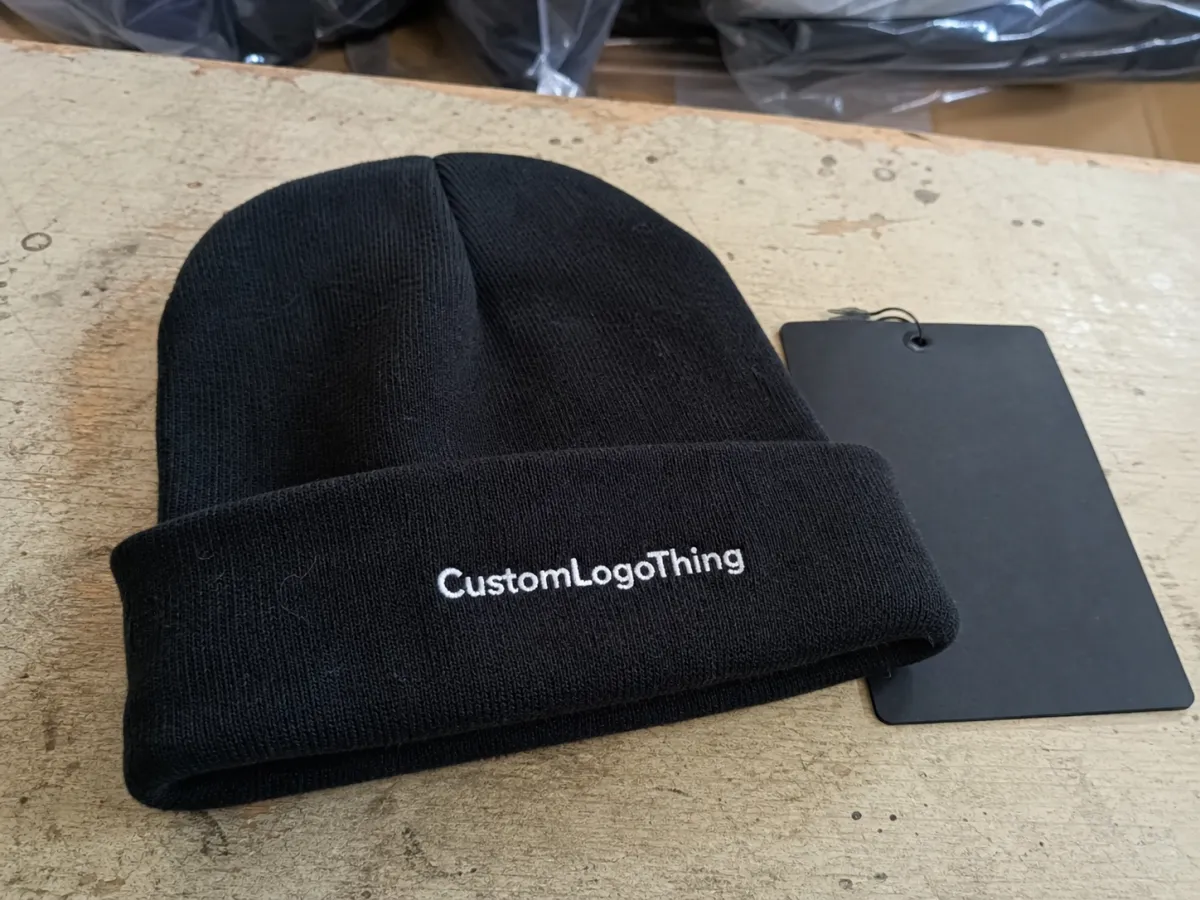
A bulk wedding beanie order is part apparel, part event item. That means the decoration has to read clearly from a distance, but it also needs to look clean close up. Overly detailed artwork often loses clarity once it is stitched into knit, especially on 1x1 rib or looser acrylic knits.
Start by deciding how the beanies will be used. Bridal party gifts can carry initials, a monogram, or a short line of text. Guest favors usually do better with a date, a simple icon, or a short phrase. Welcome bag items often need the smallest artwork because the beanie is only one piece of the package.
Think in three layers: the beanie, the decoration, and the presentation. If any one of those feels improvised, the whole order reads that way. A lower-cost beanie with clean embroidery often looks better than a premium hat with crowded art and rushed packaging.
It also helps to remember that knit structure changes the final look. A hat that seems fine flat on a table can shift once it is worn, which affects where the embroidery lands. Cuff height, stretch, and fabric density all influence whether the artwork stays centered and readable. For most stock styles, a cuff depth of 2 to 3 inches and a medium-gauge knit around 7 to 9 gauge gives the best balance of structure and comfort.
Use a narrow planning frame early:
- Event use: warmth, photos, favors, or gifts
- Design style: initials, monogram, date, icon, or short text
- Finish: folded only, banded, tagged, or boxed
- Delivery window: standard timing or a hard in-hand date
One-size-fits-most is useful, but not magical. Knit beanies stretch, which helps with fit, but it can also distort vertical artwork. A smaller centered mark usually survives wear better than a tall or crowded layout. For adults, a typical one-size beanie usually covers head circumferences around 21.5 to 24.5 inches, but knit density and recovery still matter.
Choose the beanie style and decoration that fit the event
Beanie style changes both the look and the production risk. A cuffed beanie gives embroidery a stable front panel and is the most predictable option. A slouch beanie feels more casual, but the extra drape can make small lettering shift visually. Ribbed knits tend to hold shape well in photos. Fleece-lined versions are warmer, though they can look bulkier and less polished for indoor receptions.
The decoration should match the event instead of trying to carry it. Initials feel formal. A monogram reads classic. A date works for favors if the lettering is large enough. A simple icon, such as a ring, branch, or mountain line, can look refined without crowding the knit.
Long slogans are usually the weakest choice. They look fine in a mockup and awkward on a real hat. Short copy leaves room for cleaner stitch work, which matters because embroidery has limits that print does not. Thin script, hairline strokes, and busy details often need simplification before digitizing. As a rule, text under about 0.2 inch tall is difficult to keep crisp on knit, especially after stretch and wear.
Placement matters as much as artwork. Front cuff placement is usually safest because it stays centered and photographs well. Center-front above the cuff can work if the knit is tall enough. Side placement can feel modern, but it is easier to miss when the hat is worn low.
Small finishing details can help without turning the order into a packaging project. A hang tag, belly band, or folded insert with the event name can make the beanies feel coordinated, especially in welcome bags or boxed gifts. If packaging is important, ask whether the supplier can insert tissue, fold to a set width, and polybag by size or by couple name.
The cleanest decoration plans stay narrow. One thread color is the cheapest. Two is still efficient. Three can work if the artwork is simple. Once the design asks for gradients, tiny text, or multiple layers of detail, the order becomes more fragile and more expensive to correct. Polyester embroidery thread is usually the most practical choice for knit hats because it holds color better than rayon and handles abrasion more reliably.
Specs that protect fit, comfort, and stitch quality
Fabric and construction drive the result more than many buyers expect. Most bulk wedding beanies use acrylic or acrylic-blend knits because they are stable, predictable, and easier to decorate. Common options include 100% acrylic, 80/20 acrylic-wool, acrylic-polyester blends, and increasingly recycled polyester yarns for buyers looking for GRS-backed claims. If the hat needs a softer hand, organic cotton blends are possible, but they usually cost more and are less common for cold-weather beanies.
A typical knit thickness is around 7 to 9 gauge, with a cuff depth of roughly 2 to 3 inches. That gives enough room for embroidery without forcing it into a seam or fold. Heavier fleece-lined constructions can feel more premium, but they may increase bulk at the cuff and make the embroidery zone less predictable.
Fit is a production issue, not just a style choice. A typical one-size beanie usually suits adult head circumferences around 21.5 to 24.5 inches, but stretch recovery and knit density change the feel. Too much stretch can distort the design. Too little can make the hat uncomfortable and less likely to be worn again.
Artwork size needs restraint. Small text under about 0.2 inch tall can blur after digitizing. For most wedding favors, an embroidered area around 2 to 3.5 inches wide is a safer range unless the mark is bold and simple. Larger embroidery can look strong on screen and heavy in real life, especially on dark knit. Most suppliers will digitize the art for a standard 9- or 12-needle computerized embroidery machine, then test placement in a hoop around the same scale used for production.
Backings and stitch density matter too. Clean embroidery on knit caps often depends on what is happening behind the fabric. A medium-weight cut-away backing helps reduce pull-through and keeps the design from sinking into the weave, while a light water-soluble topper can help tame fuzzy yarn surfaces. Too much stitch density makes the area stiff; too little makes the embroidery look thin. A useful proof should show size, placement, thread colors, backing choice, and the stitch approach.
Color affects the result as much as style does. Dark beanies need contrast if the embroidery is supposed to stand out. Heather yarn gives a softer look. Metallic thread may look elegant in photos, but it is less forgiving and often less comfortable against the skin. If the hats will be worn for hours, comfort should outrank novelty.
Shipping and packing deserve a quick check as well. If the beanies are being boxed, bagged, or mailed to multiple addresses, ask how they are packed so they do not arrive crushed or misshapen. Transit testing standards such as ISTA and paper certifications such as FSC can be helpful indicators when packaging is part of the order. For material and compliance checks, ask for OEKO-TEX Standard 100 on yarn or finished goods, GOTS for organic cotton content where relevant, GRS for recycled fibers, and social audit documentation such as WRAP or BSCI if labor compliance matters to your approval process.
Cost, pricing, and MOQ tradeoffs to expect
Pricing usually comes from three parts: the beanie, the embroidery, and the setup. The beanie itself is only one piece of the total. Stitch count, artwork complexity, packaging, and digitizing all affect the quote. Smaller orders cost more per unit because setup is spread across fewer pieces. Larger orders reduce unit cost but increase the upfront spend.
For planning, most suppliers quote custom embroidered beanies in one of three ways: blank hat cost plus decoration, a bundled unit price, or a tiered price that drops at 100, 300, and 500 MOQ. A common sample fee is $20-60 per design, often credited back on the production order. Digitizing is sometimes included, but if it is separate, it usually runs $15-40 depending on logo complexity.
| Option | Typical unit price | Best for | Tradeoff |
|---|---|---|---|
| Stock acrylic cuffed beanie with one-color embroidery | $2.50-$4.00 at 500 MOQ | Simple guest favors and bridal party sets | Lowest cost, but limited decoration depth and fewer finish options |
| Ribbed knit beanie with two-color embroidery and hang tag | $4.75-$7.25 at 300 MOQ | Welcome bags and winter reception gifts | Better presentation, with slightly higher setup and packaging cost |
| Fleece-lined or heavier knit with custom label and boxed presentation | $7.50-$12.00 at 200 MOQ | Bridal party gifts and premium keepsakes | More comfort and perceived value, but higher weight and longer packing time |
| Custom jacquard knit beanie with woven-in artwork | $5.50-$9.50 at 500 MOQ | Branded event merchandise with a knit-first look | Requires more development and color approval before production |
MOQ can shift depending on the decoration method. Stock beanies with embroidery can sometimes start at 50-100 pieces. Fully custom knit styles usually need 200-500 pieces because the yarn setup and knitting program take longer to prepare. If a supplier claims very low MOQ, check whether the price includes the beanie, embroidery, backing, digitizing, and final packing or only the blank hat.
Lead time should also be built into the price conversation. A realistic production window for a straightforward order is often 18-22 business days after art approval and deposit, not counting shipping. If the order includes custom labels, individual boxes, or a knit development step, it can stretch to 25-35 business days. Rush orders are possible, but they usually add cost and reduce room for corrections.
Production steps, lead time, and approval checkpoints
Good production is mostly a sequence of approvals. The supplier should not guess the art, the placement, or the finish. The cleaner the approval chain, the fewer surprises in the final cartons.
A typical process looks like this:
- 1. Artwork intake: send vector art, placement notes, thread color preferences, and target quantity.
- 2. Digitizing: the logo is converted into a stitch file and checked for pull, density, and travel stitches.
- 3. Mockup approval: you review size, placement, thread colors, and any label or packaging notes.
- 4. Pre-production sample: one finished sample is made for fit, stitch clarity, and color review.
- 5. Bulk production: the factory runs the order on embroidery machines, trims, presses, folds, and packs.
- 6. Final inspection and shipping: finished goods are checked, counted, and released for dispatch.
The most useful sample is a real stitched piece, not only a digital proof. If the order is important, ask for a PP sample or a golden sample before bulk production. That sample should confirm thread color, logo size, cuff position, and the handfeel of the knit after embroidery. If the supplier uses a 9- or 12-needle machine, the sample should be made on the same type of machine that will run production.
Inspection checkpoints should be specific. Before sewing or embroidery starts, check yarn shade, beanie measurements, and lot consistency. During production, check first-piece output for logo alignment, stitch density, and thread tension. Before packing, confirm trim quality, loose-thread removal, stain-free surfaces, fold consistency, and quantity count by size or color. Final inspection is often done to AQL 2.5 for major defects, with carton count and random measurement verification.
If the beanies are going into gift boxes or welcome bags, ask for a packing sample too. That helps confirm whether the folded beanie size fits the box or bag dimensions and whether the hang tag or insert card stays visible. For orders with multiple shipping destinations, request carton labels that clearly show event name, color, quantity, and any split shipment details.
For a clean handoff, lock these points before production starts: final artwork file, stitch count target, beanie color, thread colors, label copy, packaging format, target delivery date, and a sign-off record for the sample. That is the fastest way to keep the job moving without backtracking.
How to compare suppliers without chasing the cheapest quote
The cheapest quote is often the most expensive order once corrections, delays, or packaging changes start adding up. A better comparison looks at the whole job: quality controls, sample workflow, certifications, communication speed, and how closely the quote matches the actual spec.
Ask each supplier the same questions. Do they own or directly control embroidery machines, or are they outsourcing the stitching? What thread type do they use, and can they match Pantone references reasonably closely? Do they provide a stitched sample before bulk? Do they support OEKO-TEX Standard 100, GOTS, GRS, WRAP, or BSCI documentation when relevant? A supplier that can answer clearly is usually easier to manage than one that only offers a low number.
Also compare the finishing details. Some factories can only fold and polybag; others can add size stickers, hang tags, individual tissue wraps, and carton-level labeling. If the wedding team needs pieces sorted by role, such as bridesmaids, groomsmen, or guests, ask whether that sorting is built into the packing process or charged as extra labor.
Communication speed matters more than it seems. A supplier that turns around a mockup in 24-48 hours and answers sample comments the same day often saves more time than a cheaper vendor that takes a week to respond. Small orders can tolerate delay; wedding deadlines usually cannot.
One practical way to compare is to score each quote on five items: price, sample clarity, packaging capability, certification support, and lead time. The best supplier is usually not the lowest line item; it is the one that can deliver the look you approved without a long chain of corrections.
What to send for a fast quote and clean order handoff
The more exact your input, the faster the quote and the fewer revisions later. Suppliers quote beanies most accurately when they have the artwork, the quantity range, the color target, and the finish details up front.
Send this package if you want a clean response:
- Artwork file: vector file, ideally AI, EPS, or editable PDF
- Logo notes: exact text, placement, and any elements that can be simplified
- Quantity: target order size plus acceptable range, such as 100, 250, or 500 units
- Beanie spec: cuffed, slouch, ribbed, fleece-lined, or custom knit
- Color reference: Pantone callout or clear photo reference
- Decoration: embroidery only, embroidery plus label, or embroidery plus packaging
- Delivery date: in-hand deadline and shipping destination
If the order needs a premium look, include a reference photo of the style you want, even if it is only for mood and not for copying. It helps align expectations on stitch size, label placement, fold style, and presentation. If sustainability or compliance matters, state whether you need GOTS, OEKO-TEX Standard 100, GRS, WRAP, or BSCI documentation attached to the quote.
It is also smart to define what is not acceptable. For example: no oversized embroidery, no loose packaging, no fuzzy thread, no mixed dye lots, and no substitutions without approval. Those small guardrails save time because they make the approval standard obvious before anyone starts production.
FAQ
What is the safest beanie style for wedding embroidery?
A cuffed acrylic or acrylic-blend beanie is usually the safest because it gives a stable embroidery area, predictable stretch, and a clean front panel.
How much embroidery area should I allow?
For most wedding beanies, plan on 2 to 3.5 inches wide for a front mark. Smaller can work, but tiny text becomes harder to read once stitched into knit.
What is a realistic MOQ for custom embroidered beanies?
Stock beanies with embroidery can start around 50-100 pieces. Custom knit styles usually need 200-500 pieces, depending on the yarn, label, and packaging requirements.
How long does production usually take?
A straightforward order often needs 18-22 business days after sample approval and deposit. Custom knit development, special packaging, or rush timing can add more time.
Which certifications are worth asking for?
For material and safety claims, ask for OEKO-TEX Standard 100. For organic cotton, ask about GOTS. For recycled content, ask about GRS. For social compliance, suppliers often provide WRAP or BSCI audit documentation when available.
What should I approve before bulk production starts?
Approve the artwork size, placement, thread colors, beanie color, backing choice, packaging format, and a physical stitched sample if the order is important or time-sensitive.

