wine club cuffed knit beanies Bulk Order Planning is less about picking a winter accessory and more about controlling a small production program. Cuff height, knit density, logo placement, thread contrast, packing, and delivery timing all affect how the final order looks and what it costs. The best results come from treating the beanie as a spec sheet item, not a casual merch idea.
For wine clubs, the style works because it is useful in several settings. A cuffed knit beanie can support member gifts, tasting-room retail, referral promos, and seasonal events without changing the core product each time. That flexibility matters when the goal is a repeatable item that looks good in hand, in photos, and in cartons.
Buyer tip: The blank price is only part of the story. Decoration, packing, freight, and reorder risk determine the real landed cost.
Wine club cuffed knit beanies bulk order planning tips that protect logo quality
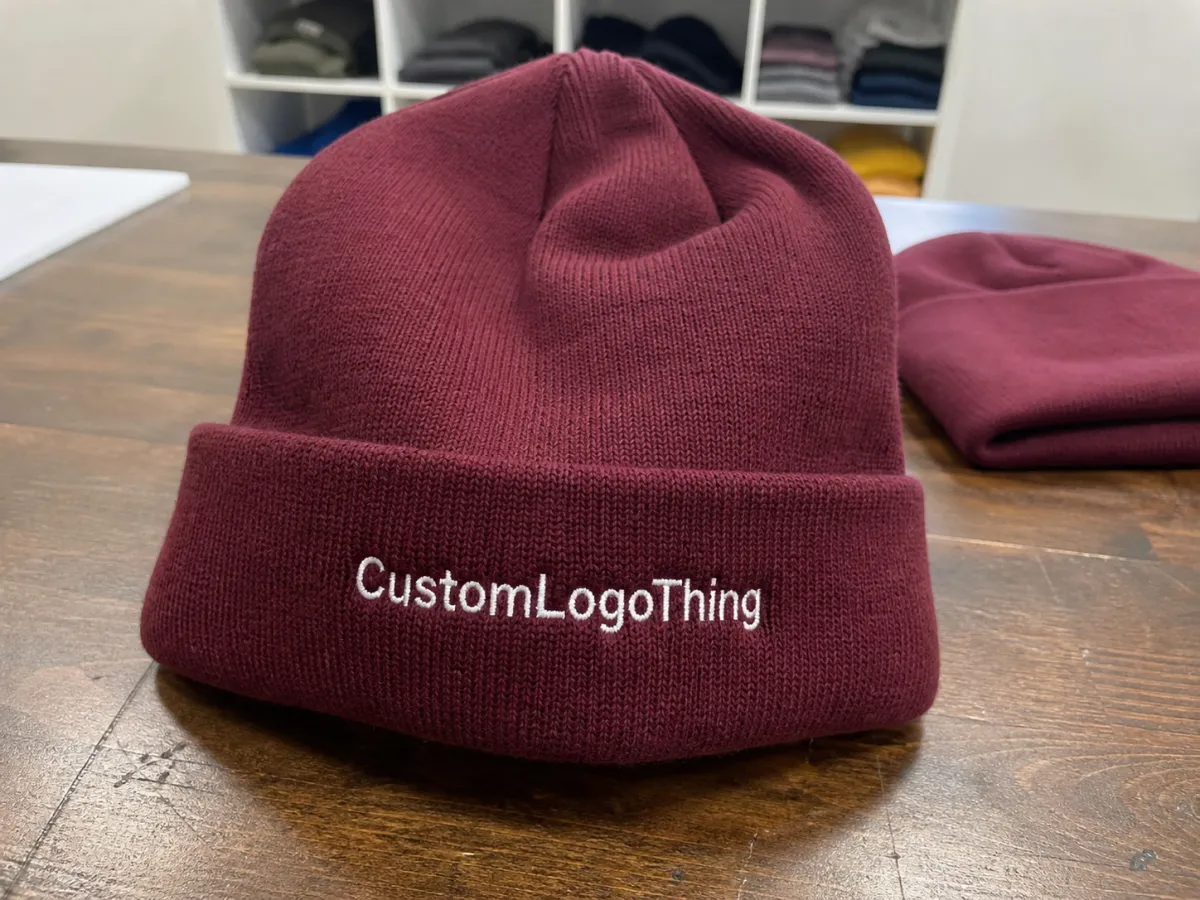
The cuff is what makes this style work for branding. It creates a flatter, more stable decoration zone than a slouch beanie, so embroidery or a patch can sit cleanly and repeat consistently across the order. That matters when the same item has to serve retail, gifting, and member fulfillment without changing the artwork or placement.
Consistency is the main advantage in bulk. One style, one decoration method, one approved placement, and one packout standard reduce proof revisions and avoid surprises on the floor. In this category, repeatability is worth more than novelty because buyers usually need a dependable item they can reorder next season.
Comfort also affects value. If the knit feels scratchy, stretches out quickly, or collapses after a few wears, the logo loses exposure. A better sample will hold its shape, fold back cleanly, and stay presentable after packing. The hat does not need to feel luxury-first, but it should feel solid enough that members keep using it.
Seasonality adds another layer. A winter piece often has to work for gifting, retail, and promo use at the same time, so the design should stay restrained. A loud novelty item may get attention once, but a clean cuffed beanie is more likely to be worn, photographed, and reordered.
There is also a process advantage to fewer variables. One base style and one decoration setup lower the chance of a production or fulfillment mistake. Most orders fail because the process drifted, not because the hat itself was poor. The simpler the program, the easier it is to keep quality and timing under control.
Product details that affect fit, comfort, and logo visibility
Material choice affects both feel and budget. A 100% acrylic knit is still the standard baseline because it is durable, colorfast, and cost-effective. It also handles embroidery and woven patches without adding much complexity. Blends can feel softer, but they usually cost more and may take longer to source. For a large member run, the simpler construction often makes the most sense.
Knit gauge is another detail buyers should not skip. A tighter gauge usually gives a cleaner decoration surface and a more refined look. A looser knit can feel more casual, but it can also blur fine logo details or let the art sink into the texture. The same artwork can look sharp on one base and fuzzy on another, so decoration should be tested on the exact product.
Cuff depth and crown shape affect how the logo reads. If the cuff is too shallow, the mark looks crowded. If it is too tall, the beanie can feel top-heavy. A balanced cuff gives the logo room without making the front look oversized. Buyers often focus on logo size first, but the cuff geometry is what makes the placement feel intentional.
Decoration method should follow the artwork. Embroidery is the safest choice for short names, initials, or simple winery logos because it is durable and crisp. Woven patches work better for detail and can give the piece a more retail-forward finish, though they usually add cost and another step. Woven labels are subtler and fit brands that want a quieter mark. Small type, thin lines, and gradients are the problem areas, so test them at final size before approval.
| Decoration option | Typical use | Common setup impact | Approximate added cost per unit |
|---|---|---|---|
| Embroidery | Simple logos, initials, winery marks | Lower setup, easier repeat orders | $0.80-$2.25 |
| Woven patch | Detailed artwork, stronger retail look | Patch production plus application | $1.25-$3.50 |
| Woven label | Subtle branding, softer presentation | Label sourcing and stitch application | $0.60-$1.75 |
Color choice should be based on contrast and use case, not just preference. Black, charcoal, and navy are reliable because they make light thread stand out and read as polished in winter assortments. Heather gray and oatmeal can broaden appeal, but they may swallow low-contrast logos in dim retail lighting. If the beanies will appear in unboxing photos, strong contrast usually photographs better than tonal branding.
Specs to lock before you place the purchase order
The fastest way to avoid quote confusion is to define the product like a build sheet. Before pricing starts, confirm the yarn blend, knit gauge, finished dimensions, cuff depth, folded height, and whether the fit should be standard or oversized. Two beanies can look similar in photos and still carry very different construction costs.
Artwork details need the same discipline. Send vector files when possible, specify thread colors, and state whether Pantone matching is required. If placement matters, measure it from the cuff edge in inches rather than describing it loosely. Size also needs a number. A 5,000-stitch logo and an 11,000-stitch logo are not interchangeable because they affect sew time, setup, and detail limits.
Packing should be decided before proof approval. Confirm whether each beanie will be folded, polybagged, stickered by tier, or packed loose in master cartons. State whether the order ships to one location or multiple destinations. Split shipments, relabeling, and inserts can look minor on the spec sheet and become major costs on the invoice.
Repeat programs should keep a master sample on file. The approved sample should reflect the yarn color, logo size, fold style, and placement. Knit goods can vary across dye lots, and even a small shift is visible when members compare one season to the next. A program can be technically correct and still feel off if the color drifts.
For packaging and transit planning, practical standards help. General packaging guidance from packaging.org can sharpen packout decisions, while ISTA offers useful expectations for shipping resilience if the beanies are going into kits or gift bundles that will move through more than one hand before arrival.
Pricing, MOQ, and unit-cost drivers to compare
Quote structure matters more than the headline number. A useful comparison should separate the blank hat cost, decoration method, setup fee, packing, freight assumptions, and any special handling. If those are collapsed into one figure, it is hard to tell whether the quote is competitive or simply incomplete.
MOQ changes the math quickly. At lower quantities, setup costs are spread over fewer units, so the price per beanie rises. At moderate quantities, embroidery and patch programs usually become more efficient. A stock cuffed knit beanie with simple embroidery often lands around $3.25-$5.50 per unit at moderate volume, while patch programs and custom packouts cost more. Custom knit builds, premium yarns, and more complex artwork can move the program into a different bracket.
The cleanest way to compare options is to look at the order type, the minimum, and the main price driver.
| Order scenario | Typical MOQ | Typical unit range | What changes the price most |
|---|---|---|---|
| Stock beanie with embroidery | 100-300 pieces | $3.25-$5.50 | Thread count, stitch density, packing |
| Stock beanie with patch | 200-500 pieces | $4.00-$6.75 | Patch detail, application method, setup |
| Custom knit program | 300-1,000+ pieces | $5.50-$9.50 | Yarn colors, pattern complexity, lead time |
Freight can change the quote faster than buyers expect. A single delivery point by ground is usually straightforward. Multiple fulfillment locations, rush air service, and split tier shipments are not. Carton size matters too, because loose packing can increase dimensional weight even if the product is light. If one supplier includes folding, carton labels, and a basic QC check while another bills those separately, the lower unit price may not actually be lower.
Inventory risk also matters. A lower MOQ can help if the club is testing demand, but it can leave the team short if the item performs well. A larger order lowers unit cost but increases the risk of leftover inventory if the color or logo needs to change next season. The right order size balances both sides of that tradeoff.
Production steps and timeline for seasonal launches
The production sequence is usually predictable: brief, quote, proof, sample approval, production, quality check, and shipping. Delays rarely happen in stitching. They happen when the logo is still under review, the placement is not confirmed, or the packaging details change after the order has already been queued. Approvals deserve as much schedule protection as freight.
Stock styles move faster than custom knit programs because the base product already exists. A simple embroidered stock beanie can often turn around in roughly 12-18 business days after proof approval, though volume, factory load, and transit method can move that window. Patch-based programs and fully custom knit styles usually take longer, so a one- or two-week buffer is often the difference between on-time and rushed.
Backward planning is the safest method for seasonal launches. Start with the required arrival date, then subtract freight time, packing time, production time, proofing, and one cushion for corrections. If the order is going into a fulfillment center before members see it, include that step too. That buffer is what keeps a winter program from becoming a late replacement order.
It also helps to separate production time from transit time. A job can finish on schedule and still miss the launch if the ship method is too slow or the cartons are misrouted. In mixed kits, packing efficiency matters almost as much as decoration. A tight, well-labeled carton reduces freight waste and speeds receiving, while loose packout creates extra handling later.
The beanie is small. The logistics around it are not.
What a dependable supplier should handle for you
A dependable supplier should simplify the order without making it vague. Clear spec guidance, realistic lead times, direct proofing, and honest explanations of tradeoffs all matter. If a vendor cannot explain why one decoration method suits your art better than another, the quote may be polished while the execution is not.
Repeat-order discipline is especially important for wine clubs. The second run should match the first in color, logo scale, and packout. Even a small placement shift is visible on a cuffed beanie, and a slight yarn-tone change can stand out when members compare seasons. Consistency builds confidence in a way that a flashy sample never can.
Quality control should be visible in the paperwork and the cartons. Counts need to be checked, carton labels should be readable, and any split by tier or ship date must be documented clearly. A supplier that understands club logistics will catch those details before freight leaves the dock, which is far cheaper than correcting an error after the boxes are in motion.
Tradeoff guidance matters too. If the club wants a softer retail look, a woven label may be smarter than heavy embroidery. If the logo has to stand out in low light, a high-contrast thread color may be the better call. If the order is for a premium tier, the packaging may need to feel more deliberate than a plain polybag. Those decisions are small individually, but together they decide whether the item feels like merchandise or a thoughtful program piece.
If you need a starting point for bulk planning, the Wholesale Programs page is a practical place to compare options, and the FAQ can help sort out common questions about quotes, proofs, and order timing before pricing begins.
Next steps to turn a quote into an order
Start with the facts that affect production: quantity by tier, target delivery date, logo file, preferred beanie colors, decoration method, and any packing notes. If one version goes to members and another goes to retail, say so clearly. Split orders are manageable, but only if the supplier knows the split at the quoting stage.
Then ask for a quote that separates unit price, setup, freight, and minimums. A quote that hides those pieces is harder to compare and easier to misunderstand. The most useful number is the finished cost to get the right item to the right place on time.
Before production begins, review the proof against real-world use. Check logo scale, cuff placement, contrast, and how the beanie will look inside a gift box or on a shelf. Screen images can flatter weak placement. If the logo needs to be read quickly, give it room and contrast rather than crowding more elements into the cuff.
That is the value of wine club cuffed knit Beanies Bulk Order Planning: it turns a winter accessory into a controlled part of the member experience. The decoration stays readable, the costs stay visible, and the delivery window stays realistic. When the spec, the timeline, and the fulfillment plan all match, the order can be repeated without surprise.
How far ahead should a wine club bulk order of cuffed knit beanies be planned?
Begin as soon as the quantity and logo are known, then work backward from the date the product must ship or arrive. Leave room for quote review, proof approval, production, packing, and transit. Custom knit programs and heavily decorated orders need more lead time than a simple stock beanie with standard embroidery.
What decoration works best for cuffed knit beanies in a wine club program?
Embroidery is usually the cleanest choice for a straightforward club logo because it sits well on the cuff and holds up in daily use. Woven patches can better support detailed artwork and a more retail-like finish. Woven labels work when the brand should feel quieter and less promotional.
What drives the unit cost on a wine club cuffed knit beanies bulk order?
Quantity, decoration method, setup fee, packing, freight, and special handling are the main variables. Rush timelines, split shipments, and extra packaging can change the total even when the blank hat looks inexpensive. A complete quote should show landed cost assumptions clearly.
Can we split one beanie order across multiple wine club tiers or colors?
Yes, but split quantities can raise the per-unit price if each color or tier creates its own minimum or setup. Confirm that the decoration placement and finish stay consistent across all versions, and make sure the fulfillment instructions match the intended recipient groups.
What should we include when requesting a quote for bulk beanies?
Provide the quantity, preferred color, logo file, decoration method, target delivery date, and shipping destination. Add packing or kitting notes, since those details affect both price and timeline. Ask the supplier to separate unit cost, setup fees, and freight so the comparison is clean.