Wedding favor kraft paper bags material guide searches usually begin with a visual question and end with a structural one. The bag should look right on a table, but it also has to carry something real: candles, sweets, small jars, folded cards, or a mix of items that do not sit politely in a flat mockup. That is why paper weight, glue, handle style, and bottom construction matter as much as the printed design.
Kraft stays popular because it gives wedding packaging a warm, natural base without turning the favor into a sales display. It works with restrained typography, simple logos, recycled-content claims, and event styles that avoid gloss. White kraft has a cleaner, brighter feel; brown kraft brings more texture and a quieter, handmade look. Neither is automatically better. The right choice depends on how much contrast the artwork needs and how formal the table setting is supposed to feel.
People often assume that a thicker bag is always the safer choice. That is not how these products behave. A bag can feel weak because the seams are sloppy, the handle is underattached, or the base insert is too small. Another bag, with lower paper weight but cleaner converting, can hold up better under the same load. The paper matters, but the build decides whether the bag behaves well once it is filled.
There is also a sustainability angle, though it gets overstated all the time. Kraft is frequently selected because it can be paired with FSC-certified paper, recycled content, and minimal finishing. Those are useful features, but only if the bag still performs. A favor bag that tears near the handle or collapses under a candle is not a good environmental outcome just because the stock sounds responsible on paper.
The most reliable way to approach this category is to start from the actual contents. A bag for macarons or confetti packets has a very different spec from one holding a jar, a candle, and a thank-you note. Once the load is clear, the rest of the decision becomes more predictable.
Wedding Favor Kraft Paper Bags Material Guide: Material Basics
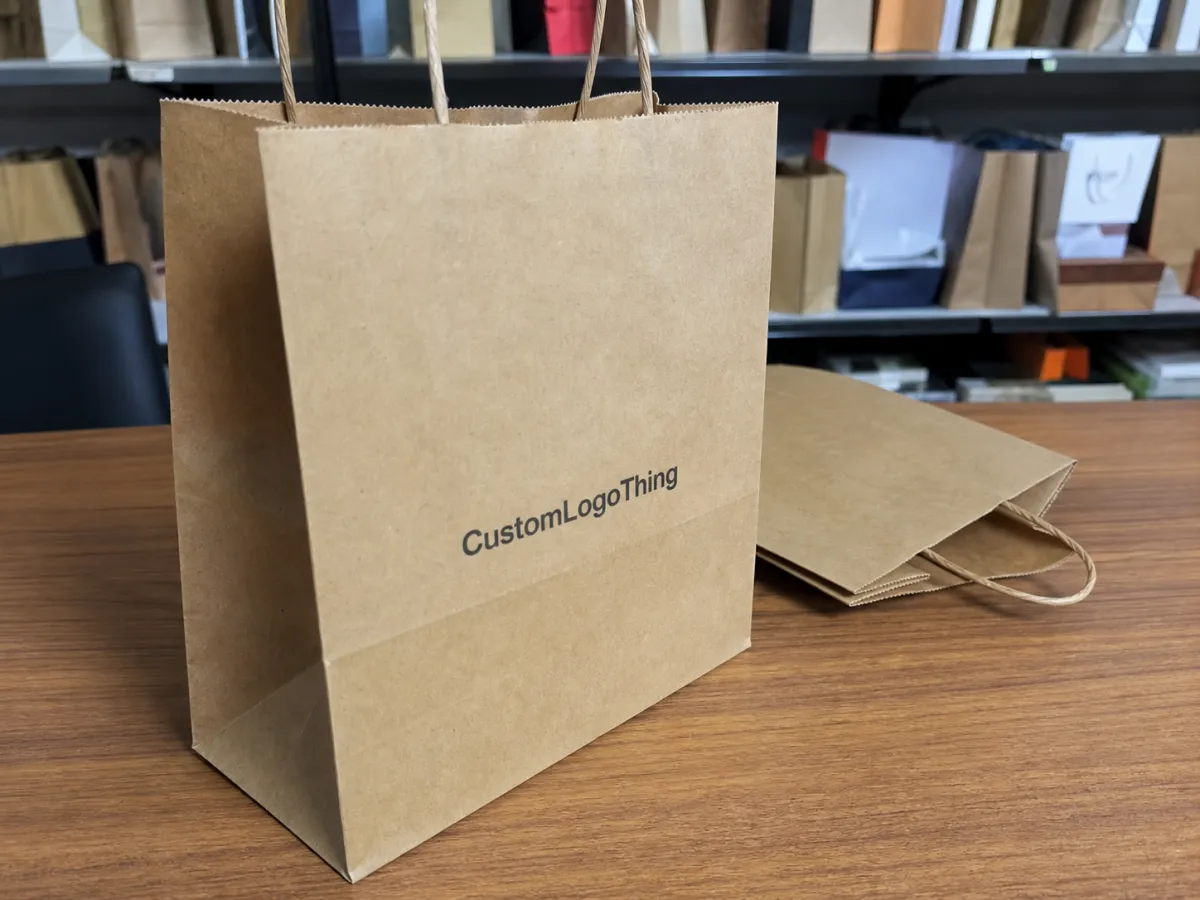
Kraft paper is made to resist tearing and fold cleanly, which is why it converts so well into small retail and event bags. It is not the same thing as corrugated board. Corrugated uses fluted layers for crush protection; kraft bag stock relies on the paper fiber itself, plus the way the bag is cut, folded, glued, and reinforced. For wedding favors, that distinction matters. Guests want a bag that looks refined and feels easy to carry, not something bulky or box-like.
The brown kraft look comes from the unbleached fiber base. It is naturally muted, slightly earthy, and forgiving when the design is simple. White kraft is usually chosen when the buyer wants better color contrast or a cleaner backdrop for delicate artwork. Both options can be recycled or recyclable depending on coatings, inks, and handle materials, but the precise claim needs to be checked against the full build. A paper bag with a plastic-coated finish or non-paper handle does not tell the same story as an all-paper version.
In real specs, small favor bags often start around 120-170 gsm for light contents, while sturdier event bags commonly use 180-250 gsm kraft with a reinforced bottom card. A 150 gsm brown kraft bag might be fine for cookies or tissue-wrapped trinkets, but a 230 gsm white kraft bag with a 250-350 gsm insert is a safer choice for a glass candle or jar. The bag size matters too; a 120 x 80 x 220 mm bag behaves very differently from a 180 x 100 x 250 mm format even if both use the same paper.
Print behavior is different on kraft than on coated stock. Ink sits into the fibers more quickly, so colors often appear warmer and less saturated. Fine lines can soften a little. Small type can lose sharpness if the artwork is too detailed. This is not a defect; it is part of the material behavior. For many wedding projects, the softer print is actually the point, because it keeps the packaging from competing with the florals, table linen, and place settings.
Most suppliers will quote based on flat size, paper gsm, handle type, print coverage, and whether the bag includes a bottom board or top reinforcement. A simple two-color screen print on brown kraft can be very different from a full-bleed CMYK design on white kraft with matte lamination. Those choices change not just the look, but also the machine setup and waste rate during converting.
The practical question is simple: what are you putting inside? A few chocolates need less structure than a candle in a glass jar. A small paper favor can use lighter stock and a modest handle. Heavier pieces need a wider base, stronger adhesive, and better stress distribution near the top. That is why one generic product name rarely tells the whole story.
A good buying habit is to compare sample bags filled with the actual item, not just judge the flat bag on its own. The fold, the standing posture, and the way the gusset opens tell you more than the listing photos ever will. That is where most of the real quality difference shows up.
How the Paper, Glue, and Handles Work Together
A paper bag is a small mechanical system. The outer paper gives the finish, but the gussets control expansion, the bottom insert carries the weight, the adhesive seams hold the shape, and the handle attachment determines whether the bag can be lifted without tearing. If one of those parts is underbuilt, the bag stops feeling premium very quickly.
Paper grain direction matters more than many buyers realize. When the fold direction aligns well with the grain, the bag stands straighter, creases cleaner, and resists that sagging look that shows up after filling. Poor grain direction can create a slight bow in the sidewalls or a base that does not sit square. In production, that is a real issue because a bag only looks elegant if it stands on its own without leaning.
Adhesive is another hidden variable. A clean glue line keeps the side seam tight and the base from separating under load. Sloppy glue application can leave thin spots, squeeze-out, or inconsistent bond strength. Those flaws may not show up in a flat sample, but they become visible the moment the bag is filled and lifted. For event packaging, that is the wrong place to discover a weakness.
Factories commonly use water-based PVA glue for paper seams and hot-melt adhesive for some handle assemblies. For a standard favor bag, a side seam bond strength target of roughly 1.5-2.5 N/cm is often enough if the bag is not carrying dense items, while heavier bags benefit from a reinforced bottom and a stronger handle patch. If the contents are glass or metal, ask for a drop test and a loaded-hold test rather than relying on visual inspection alone.
Handle style changes both presentation and cost. Twisted paper handles are common because they are familiar and economical. Flat paper handles give a more restrained, tailored look. Rope handles usually feel more substantial and are easier on the hand when the favor is heavy, but they add cost and assembly time. Die-cut handles keep the profile clean and minimal, though they are not ideal for weighty contents unless the top area is reinforced.
| Handle style | Feel and presentation | Best use | Typical cost impact |
|---|---|---|---|
| Twisted paper | Practical, familiar, easy to recycle | Light favors, welcome bags, higher-volume orders | Lowest add-on cost |
| Flat paper | Clean, understated, slightly more polished | Midweight gifts, minimalist weddings | Low to moderate |
| Rope | More premium, better hand feel | Heavier favors, guests carrying bags longer | Moderate to higher |
| Die-cut | Streamlined, simple silhouette | Small lightweight items | Depends on top reinforcement |
Printing can also change how the bag behaves. Large ink coverage, dark backgrounds, or special coatings may affect hand feel and crease performance. A design that looks identical on screen can behave differently on kraft because the surface absorbs ink in a less controlled way than coated paper. The spec sheet matters more than the product title.
If the favor has real weight, ask whether the supplier has tested the handle attachment and the base seam under load. For heavier event pieces, that question is more useful than asking for “stronger” paper in the abstract. A bag should be judged against the contents it has to carry, not against a vague retail standard.
Key Specs That Change Strength, Finish, and Feel
The useful specs are the ones that affect how the bag feels in the hand and how it performs once filled. Paper weight is one, but it is not the only one. Dimensions, gusset depth, base width, handle type, reinforcement, and print method all change the outcome in ways that become obvious during packing, not on a catalog page.
Paper weight is usually expressed in grams per square meter or in a comparable factory unit. For light favors, a lighter kraft stock can be enough. A small bag holding tissue, candy, or folded stationery may sit comfortably in the 80-120 gsm range depending on size and construction. Midweight gifts often need more body, and heavier items may move into the 120-170 gsm range or beyond, especially if the bag is expected to stand upright for display. For event bags that need a more premium feel, 180-250 gsm kraft is common, especially when the contents include a candle, a small jar, or a boxed favor.
That said, gsm alone does not tell you how the bag will behave. A 140 gsm bag with a 120 gsm bottom insert and a well-bonded folded gusset can outperform a 170 gsm bag with weak glue and no reinforcement. The practical spec is the full assembly, not the paper number by itself.
Dimensions should be matched to the actual item stack, not just the widest object. For example, a 100 x 60 x 180 mm bag may fit two truffles and a thank-you card, while a 160 x 90 x 240 mm bag is better for a candle plus tissue wrap. If the bag is too shallow, the top opens awkwardly and the handle sits under stress. If it is too deep, the contents disappear and the presentation loses impact on the table.
Finish choices also matter. Uncoated kraft keeps the tactile, natural look and usually stays the easiest to recycle. Matte aqueous coating can help reduce rub-off and give a slightly cleaner print surface. Gloss lamination sharpens print contrast, but it changes the feel and can work against the handmade wedding aesthetic. If the buyer wants recycled content, ask for a paper mill declaration or FSC-certified stock with a clear recycled percentage rather than a vague “eco” claim.
For handle specs, ask for the cord diameter or paper twist thickness, the attachment style, and the reinforcement patch size. A twisted paper handle often uses a 3-5 mm cord bundle, while a rope handle might be 4-6 mm in diameter depending on load. If a cotton cord is used, some buyers ask for GOTS-certified cotton; if the handle is a textile accessory, OEKO-TEX Standard 100 can be relevant for chemical safety. For recycled synthetic accessories, GRS documentation may be requested to verify recycled content.
Inspection checkpoints should include dimensions, color registration, glue alignment, handle pull strength, and bottom burst performance. In practice, many buyers ask for an AQL 2.5 general inspection on appearance and an additional functional test that checks whether the bag can hold the intended load for at least 10-15 minutes without seam creep or handle failure.
Low-volume orders can tolerate simpler specifications, but premium event orders usually need tighter tolerances. A common dimensional tolerance is +/- 2 mm on small bags and +/- 3-5 mm on larger ones, with print position held within about 1-2 mm where artwork must line up with folds or handles. If the artwork is precise, those numbers matter more than the mockup image.
Pricing, MOQ, and Unit Cost Drivers
Pricing for wedding favor kraft paper bags usually moves with size, paper weight, print coverage, handle type, and order volume. As a practical benchmark, simple custom bags at 500 MOQ often land around $2.50-4.00 per unit for small printed favor bags with basic one- or two-color decoration. At 1,000 units, that may drop to roughly $1.20-2.10 per unit, and at 5,000 units or more, a straightforward build can fall into the $0.55-1.10 range depending on the spec.
Die-cuts, foil stamping, embossing, matte lamination, and rope handles all add cost. A foil accent might add $0.12-0.35 per unit, a reinforced bottom board can add $0.08-0.18, and a premium cotton or paper rope handle can add another $0.10-0.40 depending on material and assembly. If the artwork requires multiple setup stages or a full-coverage print, the unit price usually rises because of waste and machine time.
MOQ is often tied to the production method. Digital print can support lower quantities, sometimes 100-300 units, but the per-unit cost is higher. Offset or flexographic production becomes more economical at 500-1,000 units and above. Special finishes may also trigger their own minimums. If you need only 100 bags for a small reception, ask whether the supplier can use a stock die line with variable data printing instead of a fully custom converted run.
Sample costs are another line item buyers should plan for. A plain structural sample may be free or low cost, while a printed pre-production sample is often $30-80 plus freight. Custom tooling, such as a new die line or handle punch, can range from $60-180 for a straightforward favor bag and more if the shape is unusual. Those charges are worth clarifying early, because they affect the true landed cost much more than a headline unit price does.
Lead time also changes the quote. Standard production for a simple custom order is often 18-22 business days after sample approval and deposit. More complex jobs with lamination, foil, or specialty handles may need 25-35 business days, especially if there is a queue for print or die-cutting. If the event date is fixed, build in a cushion for proofing and freight delays.
Shipping method matters too. Small orders are often more economical by air, especially if the cartons are lightweight but the calendar is tight. Larger orders can usually move by sea or truck with a lower landed cost per unit, but the transit time can add 7-35 days depending on route and consolidation. A quote that ignores freight is not a finished quote.
The biggest cost driver is usually not the paper itself; it is the combination of custom artwork, low quantity, and nonstandard hardware. A plain brown kraft bag with a stamped logo can be inexpensive, but the same bag with a custom insert, ribbon tie, and foil edge quickly turns into a specialty item. That is normal, and it is why the final spec should be locked before the purchase order is issued.
Production Steps, Proofing, and Lead Time
Production normally starts with a spec review: finished size, paper gsm, handle type, artwork, quantity, and packaging instructions. A good supplier will ask for the bag flat dimensions, gusset depth, load target, and whether the item must stand upright on a table. If those basics are missing, the first quote is usually only a rough estimate.
After the spec review, the factory prepares a dieline and a print proof. That proof should show exact trim lines, fold positions, handle placement, and any safe area needed for text or logos. For color-critical jobs, ask for a physical sample or a printed proof on the actual stock. Digital previews can help with layout, but they do not fully predict how ink will sit on kraft fibers.
A normal sampling sequence looks like this: structural sample, artwork proof, then pre-production sample with the final paper, ink, and handle. For simpler bags, the sample process may take 3-7 business days. For a more complex favor bag, it is common to need 7-12 business days before the customer sees a final approved sample.
Once approved, production moves through printing, drying, die-cutting, folding, gluing, handle insertion, and final packing. At each stage, QC should check color consistency, paper scuffing, seam alignment, handle symmetry, and carton counts. A practical inspection checklist also includes random pull tests on handles, base load tests, and a measurement check for the finished size against the approved spec.
For load testing, a small favor bag may only need to prove it can hold 1-2 kg comfortably, while a larger welcome bag should be tested nearer 3-5 kg if that is the real content weight. The point is not to overbuild every bag; it is to verify that the chosen build matches the actual use case without unnecessary cost.
Before shipment, a final inspection should confirm that cartons are dry, the printed surfaces are not offset or blocked, and the bag counts per carton are accurate. Buyers often ask for photos of a production lot, carton labels, and random sample measurements before release. If the order is tied to an event date, this is the moment to catch issues, not after the truck leaves.
Certifications should be confirmed at the document stage, not assumed from a product description. FSC can support paper sourcing claims, WRAP or BSCI can support factory social compliance, and if textile components are present, GOTS or OEKO-TEX Standard 100 documentation may be relevant. For recycled synthetic parts, GRS paperwork may be requested. The right certificate depends on the material in the bag, so the documents should match the build exactly.
For a straightforward custom run, the full process from artwork approval to dispatch often sits in the 18-22 business day range. If you need metallic foil, multi-pass printing, or a special handle, plan for a longer window. Event packaging rewards early approval because there is less flexibility once invitations are out and table plans are fixed.
Common Mistakes When Specifying Event Bags
One common mistake is specifying the bag by look alone. A buyer sees a beautiful mockup, approves the color, and forgets to confirm the internal capacity. When the favors arrive, the candles do not fit, the handles pull awkwardly, or the gusset collapses because the bag was sized for something lighter.
Another mistake is underestimating the effect of print coverage. A small logo on brown kraft is easy to produce, but a dark full-bleed design on the same stock can require more ink, more drying time, and tighter control of scuffing. If the artwork has large dark areas, ask for an actual printed sample and a note on whether the finish needs a protective coating.
Buyers also forget to confirm handle attachment style. A handle that is glued only at the surface may be fine for light favors, but not for heavier items. If the bag will carry anything dense, specify whether the handle should be patch reinforced, knotted, stitched, or inserted through a punched hole with backing. That one decision can change both durability and cost.
Another frequent issue is approving a flat mockup without checking grain direction or finished upright posture. A bag can look correct in a digital rendering and still lean once assembled. Ask the supplier for a standing sample or a simple video of the filled bag on a flat surface so you can see whether it sits square.
Some buyers also miss the difference between recyclable and recycled-content claims. A bag may be recyclable in theory but still made from virgin fiber, or it may include recycled content but use a non-paper handle that changes disposal behavior. If sustainability is part of the brief, ask for the exact recycled percentage and the material breakdown, not a generic green label.
Finally, there is the timing problem. Wedding packaging is often ordered late because it feels small compared to invitations or venue decor, but custom bags still need artwork approval, sampling, and production time. If the order date is too close to the event, the buyer usually has to choose between rushing the job or simplifying the spec. Both can be avoided with earlier planning.
Expert Tips and Next Steps for a Quote-Ready Order
The fastest way to get a useful quote is to send a complete spec sheet. Include finished size, paper gsm, color count, handle type, quantity, target load, and any finishing such as foil, embossing, or lamination. If you have the exact item that will go inside, add its dimensions and weight. That single detail often saves a round of back-and-forth.
If the favor is heavier than it looks, ask for a sample with the actual contents inside, not just a blank bag. A bag that works beautifully empty may crease differently once filled with a glass jar or boxed candle. The supplier should be able to advise whether the build needs a larger base, stronger glue, or a reinforced top edge.
When cost matters, start with the simplest build that still meets the load requirement. A 150-180 gsm kraft bag with a clean one-color print and a paper handle may be enough for many weddings. If the bag is being used as a keepsake package rather than a transport bag, a more premium surface or special finish can be justified. The goal is to spend where guests will notice it: on structure, print clarity, and a handle that feels good in the hand.
Ask for a production sample before final approval, especially if the order includes a custom color or a precise logo placement. Small differences in kraft shade, ink density, or handle tone can change the final presentation more than buyers expect. A sample is cheaper than a reprint.
For buyers comparing multiple quotes, look at the full package: unit price, sample charge, tooling, freight, certification paperwork, and lead time. The lowest price is not always the best value if the bag arrives late or requires a second run. A quote-ready order is one that already answers the factory's questions before the factory has to ask them.
If you are still deciding, a practical next step is to choose three things first: the actual contents, the finish level, and the target quantity. Once those are set, the right paper weight, handle, and cost band usually become much easier to define.
FAQ
What paper weight is best for wedding favor kraft paper bags?
Most light favor bags work well around 120-170 gsm, while heavier gift bags often need 180-250 gsm plus a reinforced bottom insert. The real answer depends on what is inside the bag and whether it needs to stand upright for display.
Are kraft paper bags recyclable?
Often yes, but the answer depends on the full build. Uncoated kraft with paper handles is the simplest option. Lamination, heavy foil, plastic windows, or non-paper handles can change the recycling outcome.
Can I get a low MOQ for custom wedding bags?
Yes. Digital or short-run production may start around 100-300 units, though the unit price is usually higher. Standard custom pricing becomes more efficient around 500-1,000 units.
How long does production take?
A straightforward custom order commonly takes 18-22 business days after sample approval. Complex bags with specialty finishes or custom handles can take 25-35 business days or more, depending on the production queue.
What certifications should I ask for?
For paper, FSC is a common request. For factory compliance, WRAP or BSCI are widely used. If the bag includes textile components, GOTS or OEKO-TEX Standard 100 may be relevant. For recycled synthetic accessories, GRS documentation can help verify recycled content.
What should I test before placing the order?
Check the actual filled bag, not just the flat sample. Confirm handle strength, seam alignment, base stability, print quality, and carton counts. If the contents are heavy or fragile, ask for a pull test and a basic load test before approval.

