Wedding Favor Kraft Paper Bags unit cost is usually lower than buyers expect, but only after the spec is stripped back to what the favor actually needs. A small paper bag can do the job better than a box, carton, or tin, and it does not spend money on structure that never gets seen once the guest picks it up.
The quote changes quickly if the bag is oversized, overprinted, or finished like a retail gift item instead of event packaging. That is the first place budgets drift. A favor bag should protect the contents, look intentional on the table, and stay light enough to pack flat. Anything beyond that needs a reason, not just taste.
Most wedding favors are modest objects: cookies, tea sachets, seed packets, soaps, mini candles, or small keepsakes. Those products fit neatly into kraft paper formats, which means less material, less freight volume, and fewer labor steps than rigid packaging. That combination is why the per-piece cost stays manageable, especially in repeat runs.
The challenge is not finding a bag. It is choosing the smallest spec that still survives handling, looks good under venue lighting, and does not force a second round of sampling. The buyers who get the best pricing are usually the ones who treat the bag as part of the favor, not as a separate decoration.
Why small favor bags beat bulky packaging on cost
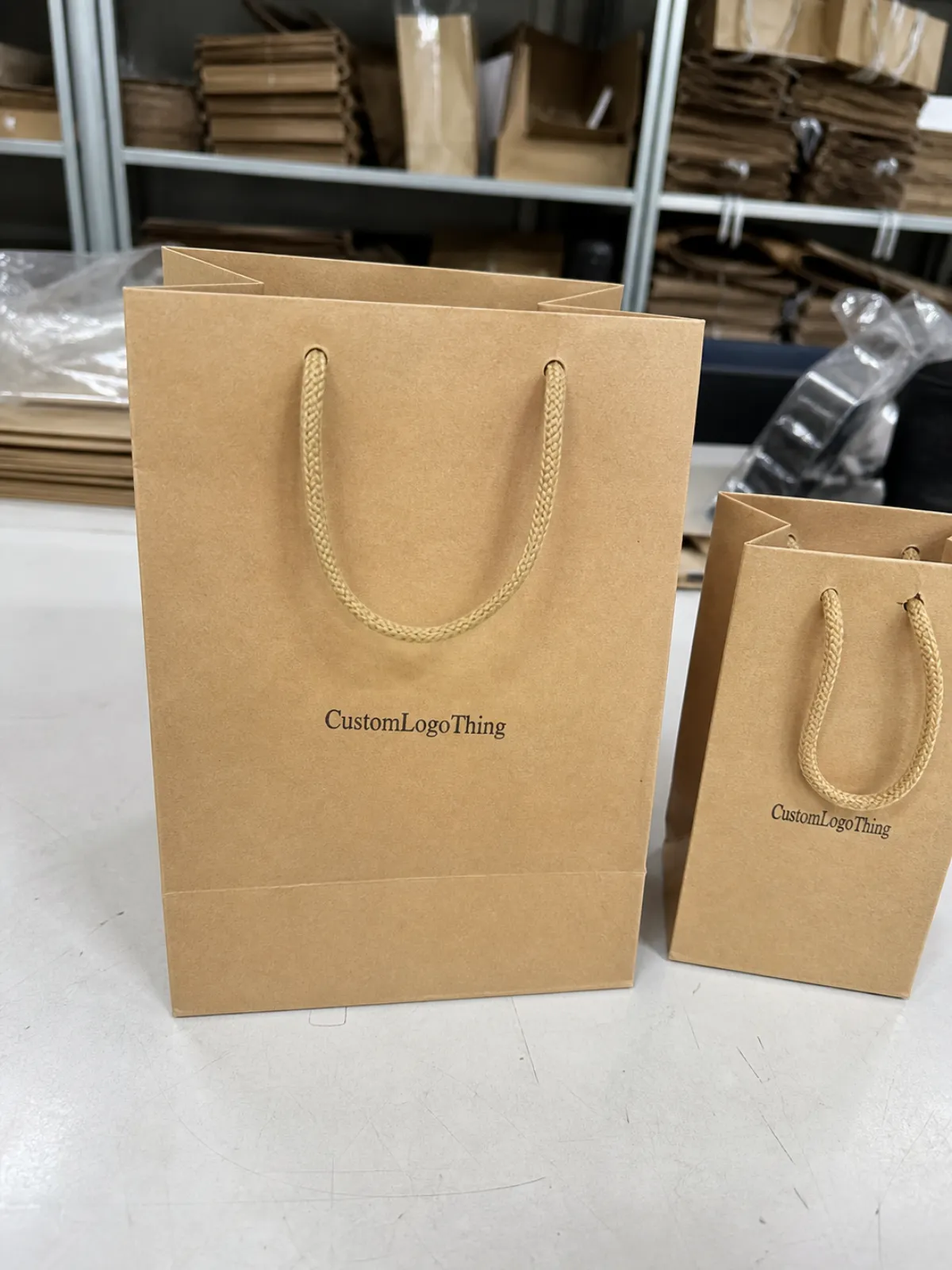
Small favor bags are cheaper because they do less work. That sounds plain, but the comparison often gets muddled. A paper bag and a rigid box may both hold a favor, yet they are built with very different material inputs. A box uses more board, more converting steps, more packing space, and usually more labor. A flat or gusseted kraft bag is faster to produce and easier to pack, which keeps Wedding Favor Kraft Paper Bags unit cost lower than most buyers fear.
There is also the reception-table reality. Wedding favors are usually handed out in one place, not shipped across a supply chain that demands extra crush protection. If the contents are light, a bag is often enough. If they are heavier, a thicker kraft stock or a gusseted shape usually solves the problem without jumping all the way to a rigid carton.
Corrugated cardboard belongs in shipping cartons, not on a dessert table. It is practical for transport and overkill for presentation. That distinction matters because packaging cost is not just paper plus ink. It is the cost of making the package do exactly what the event needs, and nothing more.
Buyer reality check: if the favor weighs a few ounces, do not pay for packaging that behaves like it is protecting a tool kit.
Kraft paper also earns its place because it adapts to different visual styles. It can look rustic, minimal, or surprisingly polished depending on the print and the closure. Plain kraft often supports recycled-content or FSC certified sourcing requests, and those details can be built into the spec without automatically inflating the budget. Claims about biodegradable packaging need a careful read, though. Ink system, coating, and local disposal rules all affect what that claim really means.
Bag styles and finishes that fit wedding favors
The most common formats are flat paper bags, gusseted kraft bags, twist-handle carriers, and no-handle favor bags meant for tabletop gifting. Each one changes the presentation, the usable volume, and the per-piece price. Flat bags are the least material-heavy and usually the cheapest. They fit tea sachets, seed packets, folded cards, and other light inserts without needing much depth.
Gusseted kraft bags are the workhorse. They add side room and a little structure, which helps with cookies, soap bars, and small candle jars. Twist-handle carriers feel more like gift bags and carry better in the hand, but the extra paper and assembly steps raise the price. If the favor will sit at each place setting, a no-handle or flat option is usually cleaner and less expensive. If guests need to carry it away immediately, the handle can be worth the premium.
Brown kraft and white kraft are not interchangeable. Brown kraft gives a natural, earthy look, but colors print darker and less vivid. White kraft improves contrast and makes fine type easier to read, especially under warm indoor lighting. White stock usually costs a bit more, and that difference shows up in both material and print setup. For simple logos, black ink, or deep green artwork, brown kraft often performs well. If the design depends on pale colors, delicate illustration, or tight text, white kraft is the safer option.
Finishing should stay disciplined. Matte stock, one-color print, and a small seal are usually enough for wedding favors. Tissue wrap can add a soft premium note, but it also adds assembly time. Foil stamping, heavy lamination, and layered embellishment look attractive on a sample board and less attractive on a purchase order. The bag only needs enough finish to feel deliberate.
If the favor is light and the table look is supposed to feel restrained, do not overspec the bag just to be safe. A thin bag with the wrong shape is a problem. A heavy bag for a two-bite cookie is wasteful. The useful middle ground is a format that holds the item without collapsing and does not announce its own cost.
Dimensions, paper weight, and print specs to lock in
Quotes go sideways when the sizing is vague. A supplier needs width, gusset, height, handle style if applicable, and the usable print area. Leave one of those out and the estimate either comes back padded or gets revised later. Buyers who send a complete spec usually get a cleaner number and fewer production surprises.
Paper weight matters more than it first appears. A lightweight bag around 70-80gsm can work for very small favors, but it will feel flimsy fast. A more common range for wedding favors sits around 100-120gsm kraft paper for basic bags, with thicker stock used for heavier items or a more premium hand feel. Push the weight too high and the bag becomes sturdier, but the unit price rises and the fold gets stiffer. Go too light and the bag looks tired before the reception starts.
Print choices affect both appearance and price. One-color print is usually the cleanest and least expensive route. Two colors can still be practical, but each extra color adds setup and more room for registration drift. Double-sided print increases the visible area and can make the bag feel more complete, yet it also increases press time and waste. Artwork should stay away from folds and seams, because anything too close to the edge can shift after assembly.
- Measure the finished bag, not just the flat blank.
- Confirm the print window before approving artwork.
- Ask about carton counts if storage or delivery space is tight.
- Check food-contact needs if wrapped sweets or cookies go directly inside.
For buyers who need paper-origin documentation, ask whether the kraft paper is FSC certified and whether recycled content is available. If sustainability is part of the event story, paper claims should be backed by paperwork, not just packaging language. The EPA has a useful overview of paper and paper-products guidance here: EPA paper and paper products. For chain-of-custody or forest stewardship questions, FSC is the right reference point.
What drives wedding favor kraft paper bags unit cost
Wedding favor kraft paper Bags Unit Cost is not one number. It is a stack of small choices. Size, paper weight, print colors, finish, quantity tier, and shipping lane all pull in different directions. Change two or three of them at once and the quote can move more than expected. That is normal. Packaging pricing is not just paper plus ink; it also includes setup, handling, waste allowance, and how efficiently the bags can be packed.
MOQ is the biggest lever. Minimum order quantity looks boring until the order sits below the break point. A small run carries more setup per bag because the fixed costs are spread across fewer pieces. A larger run lowers the per-unit figure because those fixed charges get diluted. That does not mean bigger is always better. It means the buyer should know where the tier changes are before artwork is approved.
| Bag option | Best use | Typical MOQ | Typical unit cost range | Notes |
|---|---|---|---|---|
| Flat no-handle kraft bag | Tea sachets, seed packets, folded cards | 1,000-3,000 | $0.12-$0.22 | Lowest material use, best for simple one-color print |
| Gusseted kraft bag | Cookies, soap bars, mini candle jars | 2,000-5,000 | $0.16-$0.30 | More room and better shape retention |
| Twist-handle carrier | Heavier favors and gift sets | 3,000-5,000 | $0.28-$0.60 | More labor, more material, stronger presentation |
| Printed bag with label or tissue wrap | Premium table presentation | 500-2,000 | Bag cost plus $0.03-$0.10 | Assembly time can matter more than print cost |
Those ranges are not universal. Paper markets move, freight swings, and suppliers price differently depending on tooling, location, and schedule. Still, the bands are useful because they show where the real money sits. A buyer can decide whether to simplify the spec, increase the order size, or accept a premium for a more finished look. The mistake is comparing a plain bag quote against a fully dressed gift bag and treating them as the same purchase.
Other costs deserve attention early: setup, plate or die fees, sample cost, rush fee, cartonizing, and any special packing instruction. Some suppliers fold these into the headline number. Others separate them. Either way, the full landed cost matters more than the first quote line. That is how wedding favor Kraft Paper Bags unit cost stays tied to the actual order instead of a convenient estimate.
Production steps and timeline from proof to shipment
The normal flow is fairly simple: inquiry, quote, artwork check, digital proof, sample approval, production, inspection, packing, and shipment. What slows the schedule is usually not the press itself. It is waiting for a cleaner file, a final dimension, or an approval that should have happened earlier. That is where timelines stretch.
For a straightforward wedding favor bag run, a realistic production window is often 12-15 business days after proof approval. More complex print, heavier finishing, or a first-time sample can push that longer. Rush production is possible in some cases, but only when the spec is simple and the artwork is ready. Rush orders rarely stay cheap because line time gets rearranged, and that cost appears somewhere.
Buyers save time by confirming the bag dimensions, print area, delivery address, and favor weight before production starts. One wrong number is enough to trigger a reproof. One late design tweak can throw off the whole schedule. That matters most when the wedding date is fixed and there is no room for improvisation.
Shipping is part of the planning, too. Bags are light, but poor packing can turn them into expensive cartons of air. Ask how many pieces go into each case, how the cartons are arranged on pallets, and whether the shipment will go by freight, air, or express courier. If the bags travel with other event materials, carton sizes should be coordinated early so storage and receiving do not become an afterthought.
Good packaging timelines are built on one boring habit: confirm the spec before anyone touches a press.
Sample approval and proof checks that prevent expensive fixes
A digital mockup helps, but it is not the final product. Paper tone shifts under different lighting. Print density changes between screens and stock. Fold lines can move a logo a few millimeters left or right. If the favor will sit in front of guests, those differences matter more than most people want to admit.
On a sample, check the color tone, text sharpness, fold alignment, handle strength if there is one, and whether the bag stands correctly once filled. If the artwork sits too close to the edge, widen the margin now. If the bag size feels too loose or too tight around the favor, fix it now. Once production starts, changes cost money. That is not drama. It is how print work behaves.
Common mistakes are predictable: approving the wrong paper color, using artwork built for a box and forcing it onto a bag, or choosing a bag size that only fits the favor if nobody adds tissue, tags, or a sticker seal. Those errors make the final product look less polished and can raise the per-piece cost through rework, waste, or a second sampling round.
A simple checklist keeps the process sane:
- Confirm the exact bag size and material.
- Approve the print layout at final scale.
- Check the paper shade under neutral light.
- Verify the favor fits with any insert or wrap.
- Sign off only after the sample looks right in hand.
That is how you avoid paying twice for the same mistake. Not glamorous. Very effective.
What repeat buyers look for in kraft bag runs
Repeat buyers usually care about the same four things: consistent print, reliable sizing, straightforward communication, and fewer surprises at receiving. Packaging is not a place where people want detective work. If the first run matched the proof and the reorder does too, the supplier has already done half the job well.
The real value is not just the sticker price. It is the landed cost. That includes the bag, the setup, the sample if needed, the freight, and the time spent fixing mistakes. A quote that looks low on paper can turn expensive once the order is packed badly or arrives too late to use. A slightly higher price on a cleaner spec often wins for that reason alone.
Good suppliers also help buyers choose the leanest spec that still reads as wedding-ready. That might mean a smaller print area, a simpler one-color logo, or a modest change in paper weight instead of a full redesign. Those are not flashy recommendations, but they save money where it actually matters. A bag does not need extra flourishes in three places nobody will notice.
Production controls matter here. If the logo position shifts between runs, the presentation looks sloppy. If the bag dimensions drift, the fit changes. That is especially frustrating for planners who need identical packaging across multiple tables or multiple events. Clean reorders are worth something even when they are hard to show in a spreadsheet.
For buyers who care about recycling or certification, a steady supplier relationship also makes documentation easier to track. Whether the request is FSC certified kraft paper, recycled content, or a lower-impact print spec, it is simpler to repeat a good run than to rebuild the entire package every time.
What to send for an accurate quote and next steps
A clean quote starts with five details: bag dimensions, quantity, print colors, paper color, and ship-to location. Add the delivery date if timing matters, because that can change the freight choice or the production slot. If the favor type and weight are already known, include those too. A supplier can quote more accurately when they know whether the bag is holding a cookie, a candle, or a tiny gift set that needs more room.
Decide whether a sample is needed before production. That choice affects both timing and cost. If the event is far enough out, a sample is often worth it. If the schedule is tight and the spec is already proven, production may be the better route. Do not add a sample round just because it feels safer. Safe is good. Wasteful is not.
Compare quotes on the same spec. Same paper. Same print count. Same finish. Same MOQ. That sounds basic, but it is where buyers get misled by cheap-looking numbers. If one quote assumes a flat no-handle kraft bag and another assumes a gusseted bag with a sticker seal, the comparison is useless. Match the spec first, then judge wedding favor kraft paper bags unit cost with a straight face.
Send artwork as a vector file if possible, and confirm brand colors early. That keeps the proof cleaner and reduces back-and-forth. If the budget needs a simple path, the next step is straightforward: Request a Quote with the exact bag spec, then check whether the timeline and price still make sense before approving anything. That is how you avoid buying a problem disguised as packaging.
For a wedding favor, the right bag should look intentional, stay within budget, and arrive on time. If bag size, paper weight, print method, and quantity all line up, the order is probably on the right track. If one of those pieces is fighting the others, the spec needs work before the cost turns into an unnecessary lesson.
How do I calculate wedding favor kraft paper bags unit cost for a small order?
Start with bag size, paper weight, print colors, and finish, then add setup, sample, and shipping to see the true landed cost. Small quantities usually carry a higher wedding favor kraft paper bags unit cost because setup is spread across fewer bags.
What MOQ should I expect for custom wedding favor kraft paper bags?
MOQ depends on the bag style and print method, but buyers should expect lower per-piece pricing once the order moves into a larger tier. Ask for the MOQ before approving artwork so you are not forced into a spec that is too expensive.
Which bag size is best for candles, cookies, or small wedding gifts?
Choose the smallest size that fits the favor without crushing it, then leave room for tissue, tags, or a sticker seal if needed. If the item is heavy or oddly shaped, increase the gusset or paper weight instead of forcing it into a thin bag.
How long does production take after artwork approval?
Production usually starts after proof approval, then moves through printing, drying, inspection, and packing before shipment. Lead time gets longer if artwork changes late or if the order needs a sample first.
What file format works best for printing wedding favor kraft paper bags?
Vector artwork is usually the safest choice because it keeps logos and text sharp at the final print size. Send the logo in the requested format and confirm colors early so the proof matches the intended look.

