What Are Matte Poly Mailers?
Matte poly mailers are lightweight shipping envelopes made from polyethylene film with a non-glossy finish, and they are one of the most practical packaging choices for apparel, soft goods, and e-commerce orders that need to arrive clean, protected, and looking put together.
If you have ever picked up a mailer that felt smooth, a little soft to the touch, and not shiny like a grocery bag, you were probably holding a matte poly mailer. The finish is the first thing people notice, but the real value is in the construction: a durable plastic film that resists moisture, tears, and scuffs while keeping the package light enough to avoid adding much to postage. For brands shipping thousands of orders, that difference starts to matter fast.
I have spent enough time around converting lines and packaging samples to know that the matte look is not just a cosmetic choice. It is usually created with a surface treatment or an additive blended into the film so the outer layer diffuses light instead of reflecting it. That subdued finish can make printed logos read more clearly, hide handling marks better, and give the whole package a cleaner, more premium feel. It is kinda the packaging equivalent of a well-made work shirt: simple, but clearly intentional.
How Matte Poly Mailers Are Made
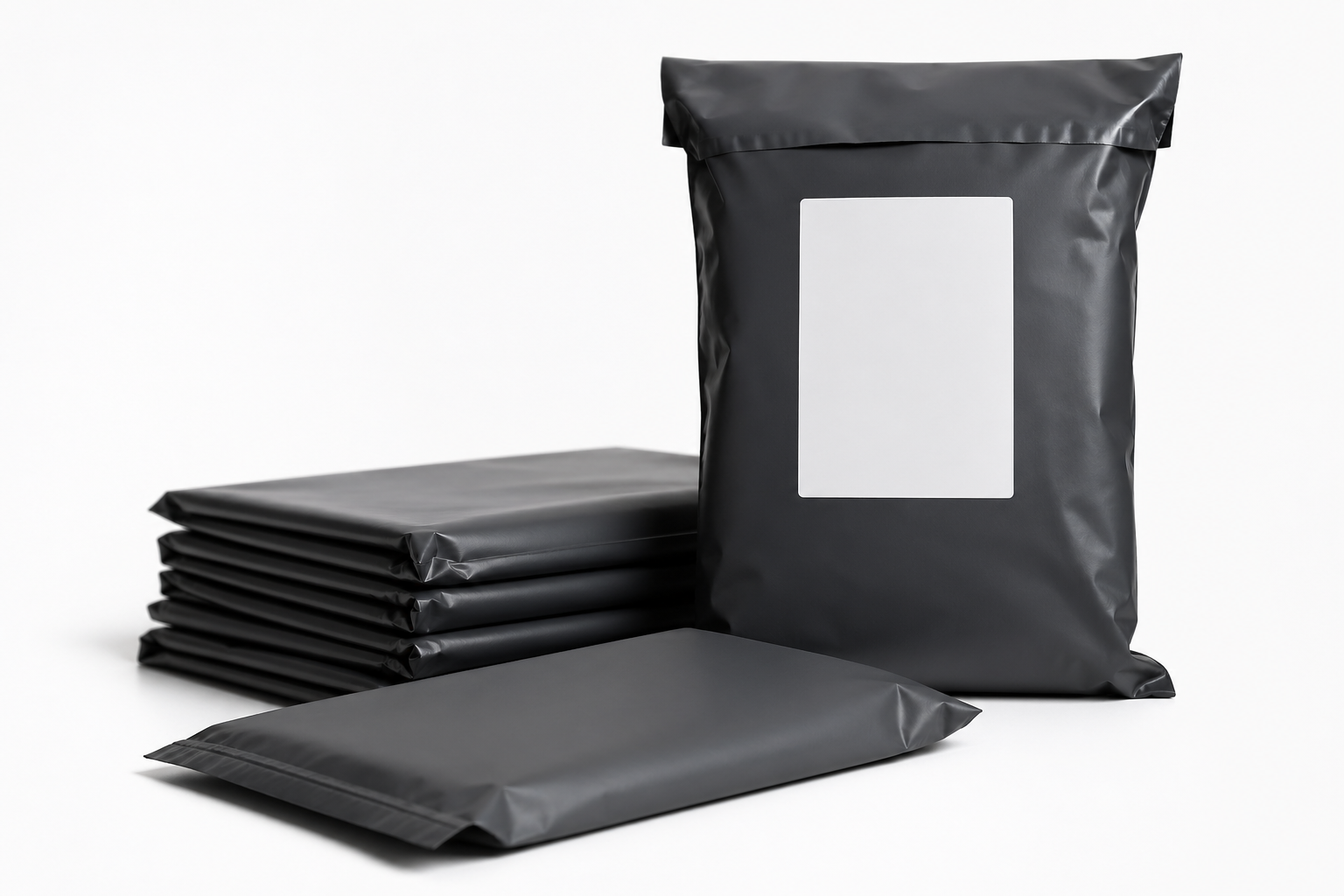
Most matte poly mailers are made from low-density polyethylene, often with a multi-layer co-extruded structure. In plain English, that means manufacturers combine layers of film to balance strength, flexibility, and printability. A matte additive may be blended into the outer layer, or the surface may be treated so it scatters light instead of showing a glossy shine.
The sealing flap is usually fitted with a pressure-sensitive adhesive strip. Once the protective liner is removed, the flap closes shut with a strong bond that is difficult to open cleanly without tearing the bag. That is part of what makes these mailers so popular for shipping clothing, accessories, and other items that do not need rigid box protection.
Not every matte mailer is built the same, though. Thickness, puncture resistance, opacity, and seal strength can vary a lot between suppliers. A mailer made for lightweight tees in a fulfillment center is not going to perform the same way as one designed for bulkier knitwear or catalog inserts, so you really do need to read the specs instead of judging by looks alone.
Why Brands Choose Matte Over Glossy
The answer is partly branding and partly practicality. Glossy mailers can look bright under retail lighting, but they also tend to show fingerprints, scratches, and shipping scuffs more easily. Matte surfaces hide that everyday wear better, which matters if the package is going to pass through several hands before it reaches the customer.
There is also a printing advantage. On a matte surface, black ink, white ink, and most spot colors usually appear more grounded and less reflective. That makes logos and typography easier to read, especially if the design uses fine linework or a minimalist layout. For brands chasing a quieter, more elevated look, matte is often the better fit.
From a packing-floor perspective, matte poly mailers are just easier to live with. They slide less on tables than some glossy films, they photograph better for order documentation, and they are less likely to show every tiny crease from handling. That may sound minor, but in a busy shipping room those little things add up.
What Are Matte Poly Mailers Used For?
They are most common in e-commerce because they are lightweight, flexible, and inexpensive compared with corrugated boxes. Apparel brands use them constantly for T-shirts, leggings, swimwear, socks, and accessories. Subscription boxes sometimes use them too, especially when the contents are soft and do not need rigid corner protection.
They are also useful for return shipments, sample packs, and promotional mailings. If the product can tolerate being bent slightly without damage, a matte poly mailer often makes more sense than a box. That keeps shipping costs lower and cuts down on void fill, which is one of those operational details that quietly improves the margin.
Still, matte poly mailers are not the right answer for everything. Fragile items, sharp-edged products, glass, ceramics, and anything that needs crush protection belong in a stronger structure, usually a box with internal cushioning. The honest answer is that a mailer is a packaging tool, not a universal fix.
Key Features To Look For
If you are trying to Choose the Right matte poly mailer, focus on the specs that affect performance, not just appearance.
- Film thickness: Thicker film usually offers better tear resistance and puncture protection.
- Opacity: A good mailer should conceal the contents so product details do not show through.
- Seal quality: The adhesive strip should close firmly and stay sealed during transit.
- Print surface: A matte exterior generally supports cleaner logo reproduction and better legibility.
- Size range: The mailer should fit the product without leaving too much empty space.
I always tell teams to test with real product samples, not just blank specs on a sheet. A mailer can look perfect on paper and still feel awkward once you try folding a hoodie into it or stacking it in a carton. That field test is where the truth shows up.
Are Matte Poly Mailers Eco-Friendly?
This is where the conversation gets a little more nuanced. Matte poly mailers are typically made from plastic, so they are not compostable in the way paper or fiber-based packaging can be. Some versions use recycled content, and some suppliers offer recyclable polyethylene formats where local recycling programs accept them. Others do not. The category is broad enough that you should never assume environmental performance from the word “matte” alone.
If sustainability is a priority, ask for the resin composition, recycled-content percentage, and end-of-life guidance in writing. A supplier that can explain the film structure, the adhesive, and the print inks with specifics is usually more trustworthy than one offering vague claims. Packaging sustainability is full of good intentions and loose language, and that can get messy pretty quickly.
Matte Poly Mailers Versus Other Options
Compared with glossy poly mailers, matte versions look less reflective and often feel more premium. Compared with paper mailers, they are more resistant to moisture and tears. Compared with corrugated boxes, they use less material and usually cost less to ship. Each option solves a different problem, so the best choice depends on the product, the brand image, and the route the package is going to travel.
For soft goods, matte poly mailers are often the sweet spot. They protect against dirt and rain, keep shipping weight down, and give brands a clean surface for printing. If the shipment is more delicate or higher value, a box may still be the smarter call. Packaging decisions should be driven by the item, not by habit.
Final Takeaway
So, what are matte poly mailers? They are lightweight polyethylene shipping bags with a non-glossy finish, built to protect soft goods while giving brands a cleaner, more polished presentation. They are especially useful for apparel and e-commerce orders, and they work best when you Choose the Right film thickness, seal strength, and print surface for the product you are actually sending out the door.
If you are comparing packaging options for a new product line, start by testing a real sample against the item, the packing workflow, and the shipping lane. That one step will tell you more than a stack of sales claims ever will.