Buyer Fit Snapshot
| Best fit | Branded Unboxing Experience projects where brand print, material claims, artwork control, MOQ, and repeat-order consistency need to be specified before quoting. |
|---|---|
| Quote inputs | Share finished size, material target, print colors, finish, packing count, annual reorder estimate, ship-to region, and any compliance wording. |
| Proofing check | Approve dieline scale, logo placement, barcode or warning zones, color tolerance, closure strength, and carton packing before bulk production. |
| Main risk | Vague material claims, crowded artwork, missing packing details, or unclear freight terms can make a low unit price expensive after revisions. |
Fast answer: Branded Unboxing Experience: Board, Finish, Dieline, and Unit Cost should be specified like a repeatable production item. The safest quote records material, print method, finish, artwork proof, packing count, and reorder notes in one written spec.
Production checks before approval
Compare the actual filled-product size with the drawing, then confirm tolerance on folds, seals, hang holes, label areas, and retail display edges. Reserve space for logos, QR codes, warning copy, and material claims before decorative graphics fill the panel.
Quote comparison points
Review material grade, print process, finish, sampling route, tooling charges, carton quantity, and freight assumptions side by side. A quote is only useful when the supplier can repeat the same color, closure quality, and packing count on the next order.
What is branded unboxing experience?
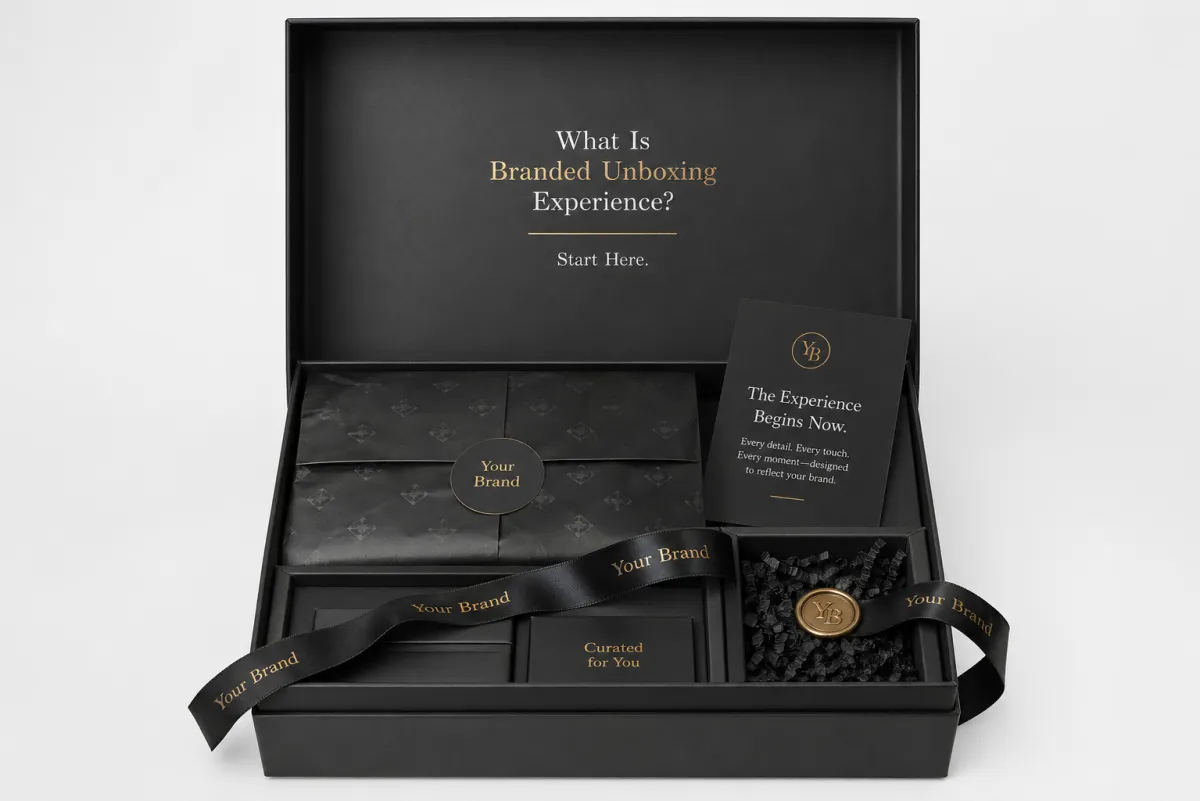
Two products arrive on the same doorstep. Same category. Same price. Same delivery window. One opens with a sense of order, weight, and intent. The other looks like it was packed in a hurry and shipped before anyone checked the fit. That difference is not window dressing. That is what is branded unboxing experience doing real work before the product even gets a chance to speak. If you want real-world examples of this kind of packaging flow, see our Case Studies.
People ask me, what is branded unboxing experience, and the short answer is this: it is the full first-impression sequence from the outside of the parcel to the moment the customer touches the product. Not a logo on a box. Not a sleeve with nicer ink. It is a chain of choices that turns shipping into a brand signal and a customer experience.
Buyers notice that chain fast. Texture, fit, print quality, opening order, insert placement, even the sound of tape tearing can influence the judgment that follows: did this brand plan for me, or did it just pack an order? That is why what is branded unboxing experience belongs to operations as much as design. It sits where packaging, logistics, and brand identity meet.
Good unboxing is not decorative noise. It is operational clarity in a box: easy to open, safe to unpack, and unmistakably yours.
What is branded unboxing experience, in one line
The blunt version is simple: what is branded unboxing experience means shaping every step between doorstep and first touch so the package feels intentional, protects the product, and reinforces the brand. If the outer shell says one thing and the inside says another, customers feel the mismatch immediately.
Most buyers do not judge packaging by glancing once and moving on. They feel the weight in their hands, hear the tape, check how the product sits, and notice whether the insert lifts cleanly or fights them. Those small signals add up. They tell the customer how organized the company is and how much care went into the order.
Why people still confuse branding with decoration
A logo on every surface does not make something branded. If the product rattles, the corners crush, or the opening sequence makes no sense, the experience falls apart fast. For teams buying custom packaging, what is branded unboxing experience is a functional communication system. Every fold, sleeve, note, and insert should have a job. Anything else is noise dressed up as identity.
When two products are similar and one opens with a clearer sequence, that brand often wins retention. Customers rarely say, “the paper stock was nice.” They say, “they thought about what I would go through.” That is customer perception at work, and it tends to stick longer than marketing claims that sound polished but empty.
Many teams want a budget estimate before they know what problem they are solving. The better question is sharper: what part of the process currently makes buyers hesitate, doubt, or feel underwhelmed? In practice, what is branded unboxing experience starts with removing uncertainty. Clean structure beats visual clutter. Loud graphics with weak construction are just expensive confusion.
That is the useful frame here. This is not a museum project. It is a delivery format that helps people recognize your brand, lowers complaints, and stays inside margin. The point is to judge, test, and refine what is branded unboxing experience without pretending every package needs luxury-grade materials. A well-built pack that fits properly and arrives intact will usually beat a flashy one that falls apart.
How Branded Unboxing Experience Works in Practice
The sequence is easier to control than most teams think: outer box, protection, reveal, product presentation, inserts, final impression. Break one step and the whole thing weakens. What is branded unboxing experience is not one beautiful surface; it is the choreography of several practical ones, and the customer reads that choreography in seconds.
The outer layer: shipping box and first signal
The outer box sets the tone before the customer sees the product. It tells them whether your fulfillment process is deliberate or improvised. A box with a snug fit, sensible buffer, and consistent orientation feels controlled. A box that is far too large tells a different story: wasted material, higher freight cost, and a package that starts looking inefficient before it even opens.
A better rule for what is branded unboxing experience is to size the outer packaging to the product plus cushioning, not to choose something oversized because it feels safer. Consistent box formats also speed up packing. That matters more than an extra printed flourish when the order volume rises.
Brand cues can start here with a single strong palette, readable typography, and a predictable opening direction. Too many shades, too much print coverage, and too many competing elements make the box feel busy instead of premium. Clear spacing and disciplined contrast do more for recognition than a crowded surface ever will. Common builds include corrugated mailers in E-flute for lighter goods, B-flute for heavier or more fragile packs, and folded cartons made from roughly 300-400 gsm board when the product does not need a rigid shipper.
Protection and structure: the trust layer
Foam, paper honeycomb, molded pulp, corrugated inserts, tissue, and wraps are not the glamorous part of the story. They are the part that decides whether the product survives the trip. Protection is not an add-on. It is the basis of any honest unboxing strategy.
what is branded unboxing experience fails most often when all the budget goes into appearance and none goes into movement control. If the item slams against the carton wall, the memory of the logo lasts half a second and the damage lasts much longer. Practical protection can be simple: molded pulp cut to shape, a paper wrap that holds weight, or a tray that keeps every part from shifting. A 350 gsm C1S board with matte laminate and a die-cut insert can feel premium without making the pack fragile or expensive to run. For premium kits, rigid greyboard in the 1200-1800 gsm range wrapped with printed paper is common, while litho-laminated cartons can deliver sharper graphics than straight corrugated print.
For fragile skincare bottles, premium apparel, glass containers, or high-value accessories, test shock and compression before production starts. Plenty of packages look luxurious in mockups and fail as soon as they meet real shipping conditions. Use actual checks: shake tests, corner drops from 30-40 cm, compression holds, and transport orientation tests. If your parcels move through conveyor systems, the box needs to handle side load and vibration without collapsing into a bad customer story.
Reveal and message control
The reveal matters because people like anticipation, but only when the sequence has logic. Random reveals feel messy. A clear opening should guide the customer in order: open top, lift the branded layer, touch the product, then encounter the note that explains what happens next. What is branded unboxing experience uses that sequence on purpose.
At this stage, branding can become more tactile: textured paper, embossing, foil accents, or a restrained scent treatment where the category supports it. Scent can work in skincare or spa products and can create problems in food. The reveal should never get in the way of use. If the customer has to puzzle out how to reach the item, the experience reads as friction, not care.
Business type examples: one framework, different execution
What is branded unboxing experience changes by category. Skincare needs calm sequencing, tamper awareness, and skin-safe inserts. Apparel needs wrinkle control and size clarity. Food needs freshness and moisture control. Accessories need crisp presentation and scratch protection. Subscription boxes need repeatability, because the same logic has to work across many SKUs.
Common patterns look like this:
- Skincare: rigid inner tray, branded inner sleeve, ingredient card, and a simple seal strip.
- Apparel: folded garment in a moisture-resistant sleeve, size-locked insert, and a care or welcome card as the first secondary touch.
- Food: moisture-safe barrier pouch inside a rigid or lined outer carton, short allergen notice, easy-open path, and strict orientation control.
- Accessories: strong visual contrast from outer to inner layer, anti-scratch inserts, and a compact brand story card.
- Subscription boxes: stackable mailers, repeatable insert systems, clear assembly instructions, and controlled weight per SKU.
If your packaging feels neutral in the worst way, neither memorable nor annoying, you are probably paying for parts of the system that are not changing retention. A calm, repeatable unboxing sequence often beats a flashy one when the category values trust over spectacle. That is where real customer perception changes.
Key Factors That Shape Cost, Quality, and Perceived Value
what is branded unboxing experience gets priced as if all branding costs the same. It does not. Cost rises from a stack of choices: box type, print coverage, inserts, finishes, dimensions, tooling, and volume tier. The numbers tell a clearer story than mood words ever will.
Big cost drivers and realistic ranges
For a practical reference, custom-branded setups vary widely depending on region, supplier, and order size. On a run of 5,000 units, basic 1-color corrugated mailers may land around $0.45 to $1.00 each, while 4-color printing with heavier board and better finishing can sit around $1.20 to $2.50. Inserts vary just as much: 200-250 gsm printed inserts can add $0.18 to $0.65 each, and molded structural inserts can climb to $0.80 to $2.40.
Premium rigid packaging and special surfaces shift the picture quickly. Soft-touch lamination, spot UV, and embossing can add $0.20 to $1.20 per unit depending on coverage. Better paper grades can improve look and feel, though they usually add 8-20% in raw material cost compared with standard board when bought in smaller lots. Sampling, die setup, and adjustment work can add another $200-$1,200 depending on the complexity of the pack. Short-run digital print is often the fastest route for early launches, while flexographic print is common for corrugated at scale and litho-lamination is common for premium rigid builds.
| Option | Typical MOQ | Unit Cost Range | Best For | Main Trade-off |
|---|---|---|---|---|
| Pre-made mailer + sleeve label | 1,000–10,000 | $0.45–$1.10 | Startups testing repeat demand | Lower customization depth; faster lead time |
| Custom 1-2 color folded carton | 500–8,000 | $0.95–$1.80 | Small to mid launches | Less visual richness; strong design discipline needed |
| Full-color rigid box + structured inner insert | 2,000–15,000 | $1.80–$4.20 | Beauty, premium accessories, gifts | Longer approval cycle and higher waste risk |
| Recyclable paper-based premium pack (FSC-aligned materials) | 1,000–12,000 | $1.10–$3.40 | Eco-positioned categories | Material sourcing and supplier qualification can vary |
| Large mailer with reusable storage feature | 3,000–20,000 | $2.30–$5.00 | High-retention lifestyle products | Higher tooling and fulfillment complexity |
The table points to a simple truth: what is branded unboxing experience is not one magical material. It is a series of touchpoints priced one by one. A strong result can come from a single hero element supported by functional choices everywhere else.
How pricing tradeoffs really work
More customization usually means more cost. Usually, not always. Smarter sizing and simpler print can lower cost while preserving quality. A larger carton may save design time but increase freight. A tightly fitted insert can reduce movement damage and cut return costs. One wrong dimension can erase a slim margin very quickly.
When clients ask whether a change is worth it, the honest answer is margin math. If gross margin sits at 30%, adding $0.80 per order only works if retention, repeat purchase, or review quality offsets the hit. If gross margin is 55%, there is room for another branded moment. If margin is 20%, every $0.20 needs a clear reason to exist.
Packaging.org offers useful guidance on handling and waste practices. Pair that with your own damage reports and return data. The goal is not to spend more for the sake of it. The goal is fewer complaints, fewer returns, and stronger brand consistency. That is what is branded unboxing experience should deliver.
In practical terms, if unit cost rises from $0.90 to $1.20 and your return rate drops from 4.2% to 2.0%, the packaging upgrade may pay for itself within a quarter depending on order value and repeat behavior.
Where to spend first when budget is tight
If the budget is tight, put money in this order:
- Outer box quality and sizing, because that is the first visible judgment.
- Product protection and structural fit, because that is where breakage begins.
- One memorable branded touchpoint: inner card, top-flip message, or reveal panel.
Spending on decorative flourishes before these three usually wastes money. Customers rarely complain that the foil was too subtle. They complain that the bottle cracked or the box arrived crushed.
The quiet advantage is this: perceived value rises when the sequence feels controlled and easy to understand. You can create strong customer perception with a neutral design if the fit is correct and the order is clear. Clean engineering beats visual noise.
If your category supports repeat shipping, launch with what is branded unboxing experience essentials, collect performance data, then add touches that improve retention in a measurable way. That path keeps control over both cost and stock risk.
Balancing quality with customer memory
Small details matter more than most teams expect. Structural fit within 2-3 mm, sharp folds, no torn edges, and readable typography on first sight all change the memory of the open. A package can feel premium with simple materials if the tolerances are tight and the sequence is orderly. Material grade is one ingredient, not the whole recipe.
Skip the unnecessary extras. Ask a sharper question: what is branded unboxing experience adding that customers actually use? If an insert explains returns, care, or next steps, it is useful and can reduce support tickets by 10-25% in some categories.
Brand consistency matters here too. If your social media promises restrained luxury and the box arrives in bright colors with messy type, the mismatch chips away at trust.
Step-by-Step Process and Timeline From Concept to Delivery
Timeline gets underestimated because packaging looks like design work from the outside. It is not just design. It is specification, tooling, approval, sampling, and production sequencing. When teams ask how long what is branded unboxing experience should take, the answer depends on whether the structure is stock or custom and how fast approvals move.
Stage 1: Define intent and constraints
Start with three numbers and one sentence. Number one: exact product dimensions with tolerances. Number two: the shipping profile, whether parcel, regional, or freight. Number three: launch quantity and reorder rhythm. The sentence is the packaging objective: reduce damage, increase recall, or improve shareability.
Weak inputs make timelines expand. Strong inputs keep the work grounded. First-time buyers need clarity more than drama. Giftable products may need narrative and reveal. The category decides more than the mood board does.
Stage 2: Choose structure and artwork direction
This is the point where teams often mix up the order of decisions. Structure comes first. Die line, dimensions, and insert architecture should be set before branding is layered on top. In many categories, the shape and inner fit contribute more to perceived value than a fully saturated print finish. For the first run, keeping print coverage in the 30-50% range leaves room for correction if color drifts.
Choose one primary color system and one supporting color if you can. Too many colors raise proofing risk and often push cost up by 15-30%. One or two fonts, spaced well and sized correctly, can do more for visual branding than a surface covered with ink.
Stage 3: Approvals and sampling
Sampling is not optional. If a team suggests skipping proofs to save time, the time usually comes back later as scrap, damage, or rework. A real sample with actual product dimensions can catch:
- die line errors of 3-8 mm
- print mismatch on the chosen stock
- failure at a fold line
- product movement under shake testing
For custom packaging, a realistic cycle is 2-4 weeks for design, proofing, and two rounds of corrections. A rush run can be 7-14 days when stock structures are used and no new tooling is needed. Larger custom jobs often take six to ten weeks.
Stage 4: Testing and production
Testing is where what is branded unboxing experience becomes concrete. Run at least 10 real-pack simulations with the actual product. If your distribution crosses hot and cold conditions, test both. Check tape adhesion after a 24-hour stack test and run drop tests from standard handling heights.
Then approve production. Expect one to three adjustment rounds if the sample is too tight. Timing problems usually come from unclear dielines and late copy changes. When dimensions or inserts change after die approval, you lose time and machine setup gets more expensive. A bad dieline can ruin a small run fast.
Use this simple planning framework:
- Weeks 1-2: objective, dimensions, and structure shortlist.
- Weeks 2-4: artwork development, material confirmation, internal approvals.
- Weeks 4-6: sample build, durability checks, and revisions.
- Weeks 6-8: production and fulfillment alignment, with a pre-shipment quality checkpoint.
Seasonal campaigns or subscription refreshes can move faster, but only if design is frozen early and the structure is known. Otherwise the team pays for last-minute stress, not quality.
Use standards as a guardrail. For transport confidence, many teams compare material and supply chain practices against FSC guidance where relevant and apply accepted test criteria for their category. what is branded unboxing experience stops being abstract once real parcels are in motion; then it becomes evidence.
For fragile or perishable goods, lock the courier, carton design, and cushioning before artwork is finalized. Pretty print cannot fix a package that turns into a heat sink, a crush zone, or a wet mess in transit.
Common Mistakes That Make Unboxing Feel Cheap
Expensive packaging can still feel flat. Modest packaging can feel sharp. The difference is coherence. what is branded unboxing experience breaks fastest when teams treat the package like a poster instead of a system.
Overbranding and noisy design
Putting a logo everywhere often reads like panic, not polish. Heavy text on every panel makes the first open feel crowded. A clear visual hierarchy looks more expensive, even with fewer inks. In practice, restraint usually helps.
I reviewed a skincare launch that had full-color outer and inner print, but the instructions were set in 6-point text on a dark background. Buyers hated it. Not because the board was cheap. Because the sequence was hard to read. When people cannot navigate the package, visual branding turns into static.
Flimsy material and weak inserts
The cheapest mistake is also the one that costs the most later. A weak insert plus light padding often leads to damaged products, more support tickets, and refund risk. Saving $0.40 on cushioning means nothing if returns rise by 3%. Fragile items need repeatable structure, not random filler. If the product moves, the brand starts slipping down-market in the customer’s mind.
In one subscription trial, a team replaced a molded pulp insert with loose shredded paper because the photos still looked clean. In practice, 18% of boxes shifted during transit. That is the kind of scenario where what is branded unboxing experience fails because the logistics do not match the design.
Inconsistent messaging and random extras
Premium-looking packaging with random freebies can damage trust faster than plain packaging ever could. If the insert says one thing and the campaign language says another, customers notice. Brand consistency has to cover logo use, tone, support copy, and calls to action.
Random extras are another trap. Stickers, coupons, or trinkets only work if they connect to the customer journey. If they do not help with use, loyalty, or guidance, they feel like clutter from the warehouse floor.
Ignoring fulfillment efficiency
Packaging that takes 50 seconds to assemble instead of 12 can wreck labor cost when the order count climbs. At 300+ daily orders, that gap becomes painful. If packing slows down, teams improvise, consistency slips, and the customer experience starts varying from box to box. It may still photograph well and still fail in the real workflow.
Skipping real shipping simulation
The mistake hidden under the others is testing only by eye. You need weight, drop, and motion. Before launch, run a small checklist: two courier profiles, one rough handling scenario, one stack test, one humidity check for sensitive products. That is where what is branded unboxing experience gets verified. Without it, decisions are guesses wearing packaging language.
If the team keeps saying, “It looks good in mockups,” pack the real product, seal it, and leave it boxed for five days. Truth arrives faster than taste.
Expert Tips to Improve Impact Without Overspending
What is branded unboxing experience should not eat through budget faster than it creates value. The move is not style for its own sake. It is choosing one strong moment and refusing to scatter attention across weak ones.
Pick one hero moment
Buyers rarely need every side of the box to shout. One hero moment is usually enough: a textured opening flap, a reveal card that lifts cleanly, or an insert that presents the product at the right time. That is where memory forms, and it keeps the rest of the pack simple.
When people ask for practical upgrades, I usually point to one of these:
- Branded inner flap with hand-finished edge tape
- Insert tray that locks product orientation
- Message card with usage and brand story in the first 10 seconds
Each one is affordable enough to scale and strong enough to support what is branded unboxing experience in most categories.
Use the inner box as your stage
When budgets are tight, the inside can do more than the outside. A plain exterior with a well-designed interior often feels surprisingly premium. Use inner prints, subtle patterns, and a welcome note tied to practical support: how to use it, how to return it, how to care for it. That note can reduce confusion and cut support volume.
For repeat shipping categories, this pays off quickly. When buyers receive one reliable, guided sequence again and again, brand recognition grows and returns often fall. Strong brand recognition is a profit driver, not a design trend.
Design for reuse and shareability, but stay efficient
If the pack is likely to stay in the customer’s space, include one practical reusable element: a storage sleeve, a fold-flat box, or a branded pouch. Avoid complicated hardware that adds cost, hurts recycling, or increases damage risk. Decorative hinges and elaborate closures look fancy in concept and fail at scale. A fold-flat structure with minimal hardware usually wins on cost and durability.
For social sharing, think about a moment people want to show, not a box that tries too hard to be picture-perfect. One clear visual anchor and a clean reveal often outperform a fully covered surface.
Cut real costs without cutting experience
Cost cuts that usually work:
- Use two standard carton sizes across most SKUs.
- Limit print to one or two corporate colors where possible.
- Choose nested packaging that fits standard transport bins.
- Select dielines your fulfillment staff can fold consistently.
Reducing complexity often reveals the real margin. Better line speed, fewer packing errors, and a cleaner final experience usually arrive together.
Use a clear upgrade framework
Before you add anything, score each option against your economics:
- Margin buffer: how much can you spend per order and still hold target gross margin?
- Customer value: will this reduce support tickets, increase repeat purchase, or raise AOV?
- Product risk: does the category need extra protection?
- Operational fit: can fulfillment run this without slowing down?
If two scores are weak, skip the upgrade. If margin and product risk are both strong, prototype it. That is the split between emotional packaging and profitable packaging.
For most launches, the fastest gains come from what is branded unboxing experience upgrades that improve confidence and reduce friction, not from surface-level decoration that only looks good in photos.
Actionable Next Steps for Your First Branded Unboxing Experience
Enough theory. Move in one week with this sequence:
Step 1: Audit your current pack
Open three recent deliveries from your own operation. Score each stage: outer fit, protection, reveal quality, message clarity, and final brand memory. Weakest stage first. Do not redesign everything at once. Fix the part that creates the most friction.
Run the review with 5-20 real orders, not polished mockups. Ask one direct question: did the opening feel intentional? If the answer is uncertain, simplify the sequence.
Step 2: Gather specs before asking for quotes
Do not send vague RFQs and expect clean pricing. Send four essentials:
- Exact product dimensions (L×W×H, with handling variation)
- Shipping method and zone weight assumptions
- Expected monthly or seasonal order volume
- Brand assets in print-safe format, including logo color codes
Without those details, suppliers guess. With them, the quote becomes more accurate and the timeline makes more sense.
Step 3: Test samples, then compare the full order math
Ask for at least two samples per option. One should match your exact production board or paper. One can be a lighter version if budget is tight. Then compare the full economics, not just the sample on the desk.
Track three outcomes: repeat purchases, packaging complaints, and damaged goods. If the packaging looks better but hurts margins and leaves retention flat, stop there and simplify. what is branded unboxing experience should earn its place with numbers, not with photos alone. For more examples of what changed the most in real launches, review the Case Studies.
Step 4: Roll out in controlled layers
Do not launch every enhancement at once. Start with the outer box and one insert. Run that version for 2-4 weeks. Measure breakage and support volume. Add one more high-touch element only if the data supports it. That keeps the budget honest and the team sane.
Step 5: Build, test, measure, refine
This is the only durable path. what is branded unboxing experience is not a one-off campaign. It is a cycle: design, ship, measure, adjust. Use customer feedback, courier feedback, and fulfillment timing as equal inputs. If the loop improves retention and lowers returns, keep iterating.
Hold one internal benchmark: packaging changes should support business goals within a full order cycle. If the goal is repeat purchase, watch repeat order ratio after 30 and 60 days. If the goal is fewer support issues, track the reason codes in the first two weeks after rollout. If you need more reference points before making your first spec sheet, browse our case studies for packaging patterns that translate well into production.
Conclusion: What Is Branded Unboxing Experience? A System Not a Surface
The direct answer is this: what is branded unboxing experience means building an opening sequence that aligns brand consistency, product protection, and customer expectation in the first 60 seconds. If the outer package feels considered, the product is safe, and the message is readable, the brand has already done more than many competitors.
What is branded unboxing experience is not automatically expensive. It becomes expensive when teams skip process and pay for visuals they cannot defend. Start with structure, then add identity. Add the hero moment only when the economics justify it. Keep the story in every fold, but let the sequence do the hard work.
Handled well, the result is straightforward: fewer returns, fewer complaints, and a stronger brand identity in the customer’s hands. Keep it simple, keep it testable, and keep asking whether each element improves function, memory, or trust. That is the path to Packaging That Feels Premium without turning into costly chaos.
The practical takeaway is simple: pick one weak touchpoint, fix it, and validate the change with real parcels before you spend on anything decorative. If the box travels well and the opening feels intentional, you are already most of the way there.
What is branded unboxing experience in simple terms?
It is the full first-impression journey a customer gets when opening your package, from the shipping box to the product reveal and first use moment. Structure, message, and protection all work together in one sequence.
Packages that work well feel deliberate, not random. The customer should notice the brand quickly and understand how to use the product without guessing.
How much does a branded unboxing experience cost per order?
There is no single price. Cost depends on box style, print coverage, inserts, materials, finishes, and volume. A simple branded setup can stay modest, while a fully custom system with special finishes and complex structure costs more per unit.
The real question is value: if lower damage and better repeat behavior offset the added cost, the packaging is a sensible investment rather than pure decoration.
How long does it take to create a branded unboxing experience?
Basic programs move faster when stock packaging and simple branding are used. Custom systems take longer because they need proofs, samples, and production setup. A practical baseline for many launches is around 4-8 weeks from concept lock to first shipment.
For launches and seasonal campaigns, start early and freeze the specs before approvals begin.
What packaging elements matter most in a branded unboxing experience?
The outer box, protection structure, and reveal sequence usually carry the most weight. They shape the first 15 seconds, and that is where perceived quality gets set.
Strong typography, clear visual branding, and a proper fit usually beat overprinting every panel. One memorable branded moment usually beats five weak graphics.
How do I know if branded unboxing experience is working?
Track repeat purchase rate, packaging complaint tickets, damages, social mentions, and the language people use in reviews. If customers describe the opening as thoughtful and complaint volume drops, the system is working.
If retention is flat, margins are under pressure, or fulfillment is getting messy, the packaging is probably overdesigned and underbuilt. Simplify, then rebuild around utility.