Buyer Fit Snapshot
| Best fit | Rigid Box Packaging projects where brand print, material claims, artwork control, MOQ, and repeat-order consistency need to be specified before quoting. |
|---|---|
| Quote inputs | Share finished size, material target, print colors, finish, packing count, annual reorder estimate, ship-to region, and any compliance wording. |
| Proofing check | Approve dieline scale, logo placement, barcode or warning zones, color tolerance, closure strength, and carton packing before bulk production. |
| Main risk | Vague material claims, crowded artwork, missing packing details, or unclear freight terms can make a low unit price expensive after revisions. |
Fast answer: Rigid Box Packaging: Buyer Fit Matrix should be specified like a repeatable production item. The safest quote records material, print method, finish, artwork proof, packing count, and reorder notes in one written spec.
Production checks before approval
Compare the actual filled-product size with the drawing, then confirm tolerance on folds, seals, hang holes, label areas, and retail display edges. Reserve space for logos, QR codes, warning copy, and material claims before decorative graphics fill the panel.
Quote comparison points
Review material grade, print process, finish, sampling route, tooling charges, carton quantity, and freight assumptions side by side. A quote is only useful when the supplier can repeat the same color, closure quality, and packing count on the next order.
What is rigid box packaging? It is the difference between a package that just contains a product and one that announces value before the lid moves a millimeter. Structure does most of the talking. Tight tolerances do the rest. Add disciplined finishing, and the box starts to feel more expensive than the material list suggests. That is why what is rigid box packaging matters so much for products that are giftable, premium, or meant to be seen.
From a buyer's side, what is rigid box packaging usually leads to a more practical question: when does a set-up box outperform a folding carton, and what does that choice cost in budget, space, and speed? There is no universal answer. A rigid box can lift perceived value sharply, yet it also occupies more warehouse volume, needs more hand labor, and asks for stricter planning. For some packaging programs, those tradeoffs make sense. For others, they are a poor fit, plain and simple.
Brands tend to choose rigid packaging when the box has to protect the product and stage it at the same time. Luxury retail, cosmetics, electronics, spirits, jewelry, apparel accessories, and premium ecommerce kits all lean that way. In those categories, the outer package is not background noise. It is part of the product story. It shapes package branding, turns opening into a small ritual, and lowers the odds that the item arrives crushed, marred, or sliding around inside.
The sections that follow unpack what is rigid box packaging, how it is built, what drives price, how the timeline usually unfolds, and where teams make expensive mistakes. If you are comparing formats, Custom Packaging Products is a useful place to see how rigid builds stack up against other Custom Printed Boxes and retail packaging options.
What Is Rigid Box Packaging?
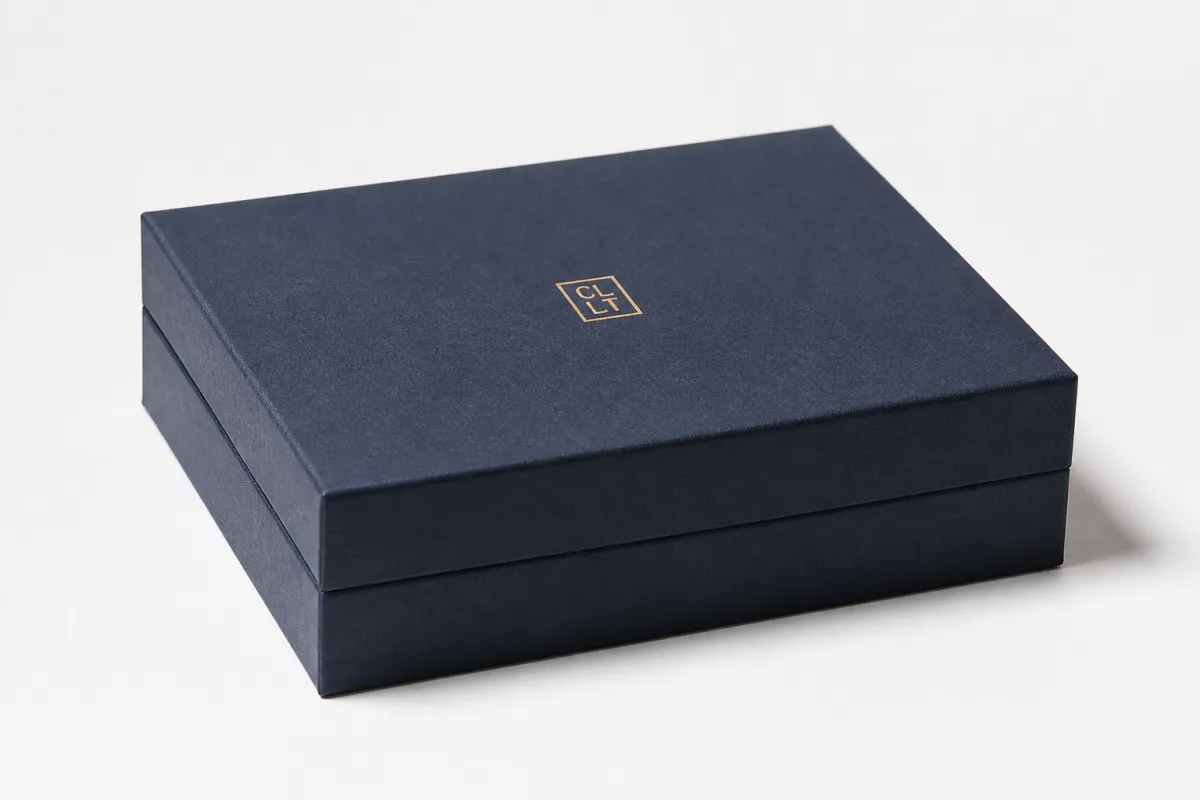
What is rigid box packaging in practical terms? It is a set-up box made from thick chipboard or paperboard, then wrapped in printed paper, specialty paper, or decorative film. Unlike a folding carton, it ships and stores in its finished three-dimensional shape. That one design choice changes the economics, the feel, the protection, and the assembly path.
The board is usually much thicker than what appears in standard product packaging. Common thicknesses run around 1.5 mm to 3 mm, and larger or more demanding boxes may go thicker still. The wrap layer can be printed art paper, textured stock, kraft paper, soft-touch laminated paper, metallic paper, or specialty textured wraps. The finished box feels dense in the hand, stable on a shelf, and deliberate in a way thinner packaging rarely does.
A premium feel is often blamed on luxury materials alone. That is only half the story. A well-built rigid box can feel expensive with moderate-cost wrap material because the corners are crisp, the seams are controlled, and the closure has the right resistance. The mechanics matter. That is one reason what is rigid box packaging sits at the intersection of packaging design and material selection rather than living in either one alone.
The format shows up most often in luxury retail, gift sets, cosmetics, jewelry, electronics, candles, premium stationery, spirits, and curated ecommerce kits. In those spaces, the box does more than hold a product. It frames the first impression. It also supports retail packaging goals by making the item easier to display, easier to gift, and harder to mistake for something ordinary.
There are clear reasons brands keep returning to this format. A rigid box usually delivers:
- Stronger presentation on shelf and in unboxing videos.
- Better protection against crushing and edge damage.
- Higher perceived value that supports premium pricing.
- A more memorable opening through lift-off lids, magnetic closures, or a reveal built into the insert.
- A better fit for branded packaging when the outer box carries much of the message.
The contrast with folding cartons is blunt. Folding cartons are light, flat-packed, and efficient. They work hard for the money. Rigid box packaging, by contrast, is built for presence. That makes it a stronger choice when packaging is part of the promise rather than a disposable shell around the product.
The shortest accurate answer to what is rigid box packaging is this: it is a premium, set-up box construction that exchanges lower unit efficiency for better structure, better presentation, and a more memorable customer experience.
How Rigid Box Packaging Works
To understand what is rigid box packaging, the structure has to come into focus. A typical build has three core parts: a rigid board shell, a wrapped exterior, and an optional insert system that holds the product in place. The shell creates stiffness. The wrap supplies branding and finish. The insert controls movement and fit.
Several formats show up again and again. Setup boxes are straightforward and rectangular. Lid-and-base styles use separate top and bottom pieces. Shoulder boxes create a subtle reveal because the inner tray sits lower than the outer walls. Telescoping boxes use an overlapping lid that slides over the base. Magnetic closure boxes add a hidden closure point that gives the box a clean, crisp snap. Each format changes the feel of what is rigid box packaging in a physical, noticeable way.
The build usually starts with board cutting and scoring, then moves to wrapping, gluing, forming, and insert installation. After that, the box may receive foil stamping, embossing, debossing, spot UV, ribbon pulls, or custom closures. When the specification is tight, the box opens with predictable resistance and closes with a neat fit. When the specification is loose, the whole thing feels off immediately.
That is where box architecture earns its keep. A lid that is too tight annoys the customer. A lid that is too loose feels cheap. An insert that sits too shallow lets the product rattle. An insert that sits too deep hides the item and weakens the reveal. These are not small details. They are the line between packaging that supports the product and packaging that works against it.
Production also matters. Rigid packaging is usually more labor-intensive than folding cartons because the box is built piece by piece. The process often involves die cutting the board, wrapping the exterior, pressing corners, aligning seams, and hand-fitting inserts. That extra labor explains part of the price. It also explains why the result can feel so polished when the work is done well.
Brands use rigid boxes for higher-value items for a simple reason: the box plays two jobs at once. It protects the product and sells the product. That dual role is where the format earns its place. If the item is fragile, collectible, premium, or gift-oriented, rigid box packaging can carry more of the workload with fewer compromises.
If a team is comparing packaging formats for a launch, function should come before decoration. Deep embossing, soft-touch wrap, and metallic foil all have their place. None of them matter much if the box does not fit the product, protect it in transit, or survive handling. Good what is rigid box packaging decisions start with structure and work outward from there.
Rigid Box Packaging Cost, Pricing, and MOQ
What is rigid box packaging worth? The answer depends on size, board thickness, wrap material, print coverage, insert design, and finishing details. Buyers often fixate on unit price. That reaction is understandable and incomplete. A box that costs more per unit can still improve conversion, reduce damage, and raise perceived value enough to justify the spend, especially in premium retail packaging.
The major cost drivers are easy to isolate:
- Box size, because larger boxes consume more board and wrap.
- Board thickness, because thicker chipboard increases material and forming cost.
- Wrap material, because specialty papers and laminated finishes cost more than plain art paper.
- Print complexity, especially full-bleed art, multiple colors, or strict brand matching.
- Insert type, including paperboard, EVA foam, molded pulp, or velvet-lined trays.
- Decorative finishes, such as foil, embossing, debossing, spot UV, and magnets.
At moderate volumes, rigid boxes can cost several times more than folding cartons, but the comparison is not fair unless the assembly path is also compared. Folding cartons ship flat and are built later. Rigid box packaging ships assembled, uses more board, and usually demands more hand labor. The real question is not whether the unit price is higher. It is whether the finished box strengthens the economics of the product beside it.
Here is a straightforward comparison:
| Format | Typical Structure | Relative Unit Cost | Best Use | Notes |
|---|---|---|---|---|
| Rigid box packaging | Thick board shell, wrapped exterior, optional insert | Higher | Premium retail, gifts, luxury, electronics | Best for presentation, protection, and perceived value |
| Folding carton | Light paperboard, shipped flat, assembled on pack line | Lower | High-volume consumer goods | Efficient for scale, but less structural and less premium |
| Mailer box | Corrugated or paperboard shipper with tuck closure | Medium | Ecommerce, subscription, direct-to-consumer | Useful for transit, but not always ideal for shelf presentation |
MOQ changes the equation too. Smaller runs carry a higher unit cost because setup, die cutting, wrapping, and labor are spread across fewer boxes. Larger orders reduce the per-unit share of those fixed steps. A buyer may see a quote for 500 units that feels steep, then another for 5,000 units that drops sharply. That pattern is normal in what is rigid box packaging pricing.
Hidden line items are where projects often drift. Prototype fees, die or plate charges, specialty coating setup, freight, warehouse storage, and sample revisions all matter. A base unit quote alone can hide 15% to 30% of the total project cost. Some suppliers bundle more than others, which makes line-by-line comparison more useful than comparing a single headline number.
If pricing is on the table, ask for these details before comparing suppliers:
- Exact dimensions of the product and box.
- Quantity per order and expected reorder volume.
- Board thickness and wrap material.
- Insert type and fit requirement.
- Finish details, including foil, embossing, and coating.
- Prototype, tooling, freight, and storage charges.
What is rigid box packaging most expensive for? Usually not the board. Cost rises because precision takes time, and time turns into labor. That is the real explanation behind premium box pricing. The closer the package has to sit to the product, the more attention every step needs.
A rigid box is rarely expensive because of the material alone. It costs more because the structure, the wrap, and the finishing all have to land cleanly at the same time.
Rigid Box Packaging Process and Timeline
Once a team understands what is rigid box packaging, timing becomes the next question. How long does the process take? The honest answer depends on sampling, revision cycles, material sourcing, order quantity, and the complexity of the box. A simple build can move quickly. A custom program with inserts, specialty wraps, and several finish passes will move more slowly.
The process usually starts with a design brief. That brief should include product dimensions, product weight, closure preference, finish direction, quantity, target budget, and the role the box needs to play in the sale. A good supplier will turn that brief into a dieline or structural proposal. This is where packaging design starts affecting cost in visible ways, because a 2 mm change in depth or a shifted lid style can alter fit, freight, and material usage.
Sampling is the point where problems get exposed. A prototype lets the buyer judge the closure, the insert depth, the artwork alignment, and the way the product sits inside the box. If the goal is a reveal moment, this is the place to test it. If the product shifts even slightly, the issue should surface here, not after the full run is already in motion.
From there, production moves through board cutting, wrap printing, die cutting, wrapping, assembly, insert fabrication, quality inspection, and final packing. A clean run may take roughly 12 to 15 business days after proof approval for a relatively simple project, although custom inserts, premium finishes, or complicated closure systems can stretch that window. Transit time then adds another layer. The schedule only works when the brand accounts for it early.
It also helps to compare rigid packaging development with transit standards. If the box will ship through ecommerce channels, teams often test the pack-out against distribution conditions. The ISTA testing framework gives useful reference points for vibration, drop, and compression thinking. Not every box needs the same testing load, but fragile products do not get a pass. A box that looks elegant on a table and fails in a parcel lane is not doing its job.
Lead time tends to stretch for a few familiar reasons:
- Custom inserts need extra fit confirmation.
- Premium wraps may come from a narrower supplier base.
- Special closures, such as magnets or ribbon pulls, add assembly steps.
- Artwork revisions can reset approvals if print matching changes late.
- Multiple finish effects usually require more setup and inspection.
Rushing what is rigid box packaging almost always raises cost or damages quality. Compressed schedules can create color drift, weak corner wraps, loose inserts, or emergency substitutions in paper stock. A project that looks manageable in a spreadsheet can turn stubborn fast if the launch date is fixed before the box spec is stable.
One more point deserves attention. If the box sits inside a larger branded packaging system, build the timeline around the whole system, not the rigid box alone. Inserts, mailers, cartons, and shipper packs all need to line up. That is the difference between a coherent product packaging program and a pile of separate parts.
Common Mistakes When Specifying Rigid Box Packaging
Once people understand what is rigid box packaging, they often make the same error: they start with appearance and check fit later. That order should be reversed. A beautiful box that rattles, pinches, or ships badly is still a problem. The point of rigid packaging is to combine presentation with structure, not choose between them.
Vague specifications cause trouble first. A supplier cannot quote accurately if the dimensions are fuzzy, the product weight is missing, the closure style is undefined, or the insert requirement is left open. Finish details matter too. A note that says "premium black box" does not tell anyone whether the wrap is matte black art paper, soft-touch laminated black paper, or a specialty textured stock. Those are different builds with different costs and different lead times.
Storage and freight are often ignored until the invoices arrive. Rigid boxes ship assembled. That means they occupy more warehouse space than flat-packed alternatives. A pallet of rigid box packaging can represent a very different storage burden from a pallet of folding cartons. Teams focused only on per-unit cost can miss the downstream handling cost entirely.
There is also a habit of stacking on every premium finish at once. Foil, embossing, soft-touch, spot UV, and specialty wraps all add polish. They also add setup time and money. Not every product needs all of them. Sometimes one clean structural decision does more than three decorative treatments. That is especially true when the target is understated luxury rather than visual noise.
One rule I return to often is simple: choose the finish that supports the product, not the finish that merely looks expensive on a proof. A soft-touch laminate may fit cosmetics. Foil can suit a holiday gift set. A natural kraft wrap may serve a sustainability-led brand better than a glossy black surface ever could. The right answer depends on the product, the retail channel, and the customer's expectation.
Companies also wait too long to think about MOQ. They fall in love with the concept, approve the mockup, and only then discover the minimum order is far higher than expected. That problem is avoidable. MOQ should be discussed before artwork is finalized, not after. The same is true for timeline. If a launch date is fixed, the box schedule has to be built backward from that date, not guessed at the end.
For brands sourcing other formats alongside rigid packaging, comparing the whole system through Custom Packaging Products helps expose where premium structure matters, where lighter packaging is enough, and where money can be saved without weakening the customer experience.
One more issue gets ignored more often than it should: unrealistic product fit assumptions. A sample may hold the product perfectly when the item is new, but caps, sleeves, cords, and accessories change the equation quickly. What is rigid box packaging supposed to do in that case? Protect the whole contents, not just the main object. The insert should reflect the real pack-out, not a simplified version of it.
The most expensive mistake is not choosing the wrong paper. It is building the wrong box.
Expert Tips for Better Rigid Box Packaging Decisions
If you are evaluating what is rigid box packaging for a launch, start with the actual product. Not a placeholder. Not a rough sketch. The real item. Fit is too important to leave to imagination, especially when the package includes an insert, a lid reveal, or a magnetic closure. A box can look perfect on screen and still fail once the product is inside it.
Optimizing dimensions early saves money in several places at once. A few millimeters can change board usage, insert geometry, freight efficiency, and shelf presence. A box that is slightly too large may need more wrap material and a deeper insert. A box that is slightly too small may force a redesign of the tray. This is where careful packaging design matters more than decorative finish.
Supplier comparison should go beyond unit price. Ask how samples are handled, how changes are communicated, how color consistency is maintained, and how fit problems are solved when the first proof misses the mark. The cheapest quote is not always the lowest-risk quote. For premium retail packaging, consistency often matters more than shaving a few cents off each unit.
When budgets get tight, protect structure and fit before chasing every decorative effect. A well-built box with a clean wrap and a smart insert usually performs better than an overdecorated box with poor tolerances. That is especially true for branded packaging programs where the product needs to feel reliable rather than flashy for its own sake.
Sustainability works best as a design decision, not a slogan. Paper-based structures are often easier to recover than mixed-material builds. If the design can avoid unnecessary foam or heavy lamination, better still. For paper sourcing, the Forest Stewardship Council remains a strong reference point for responsible fiber sourcing. If a program needs to think about recovery, reuse, or end-of-life handling, the EPA's packaging waste resources are worth a look as well. The goal is to make the box easier to understand and handle after use, not just easier to market.
The customer journey deserves equal attention. A rigid box can create an excellent first reveal, but it should also be practical to open, close, store, and reuse. Many people keep these boxes for gift storage, accessory storage, or product display. That is a quiet advantage of rigid box packaging. It stays in the customer's environment longer than a disposable carton, which means package branding keeps working after the sale.
Here is the trade-off framework I recommend:
- If the product is premium, make the box feel premium.
- If the product is fragile, make the structure protective first.
- If the product is giftable, make the reveal feel intentional.
- If the product margin is tight, keep the build efficient and avoid unnecessary extras.
That sounds simple because it is. Simplicity saves money. It also keeps what is rigid box packaging tied to business goals instead of trend chasing. Good packaging is rarely about doing the most. It is about doing the right things in the right order.
Next Steps for Specifying Rigid Box Packaging
After the definitions and comparisons, the practical question remains: what should a brand do next? If you are still deciding whether what is rigid box packaging fits the project, start with a one-page brief. Keep it short, but make it specific. Include product dimensions, product weight, order quantity, target budget, finish preferences, closure style, insert needs, and any transit concerns. That gives a supplier something real to price.
Then gather two or three physical samples or exact product measurements before requesting quotes. Samples reduce guesswork. They also surface details that measurements alone often miss, like a protruding cap, a fragile edge, or an accessory that changes insertion depth. The better the reference product, the better the box will be.
When quotes come back, compare them as a package, not as a single number. Ask what is included in the base price. Look for insert costs, finish costs, prototype costs, freight, and setup charges. This is the step many teams skip and later regret. A quote that looks higher at first may be more complete and easier to manage overall.
If the project is tied to a launch date, ask for a clear sample path. How many proof rounds are included? How long does a revision usually take? What happens if artwork changes? Those answers matter just as much as the material spec. In premium product packaging, schedule discipline is part of quality.
It also helps to define success in plain language. Is the box meant to improve retail presentation, reduce transit damage, raise unboxing appeal, or support a higher price point? Once the purpose is clear, the structure becomes easier to spec. That is the real advantage of asking what is rigid box packaging early instead of late. You give the project a job.
For brands building a full packaging system, use this stage to align rigid boxes with other custom printed boxes, inserts, and shipping materials. A consistent system feels stronger than a stack of separate decisions. If you need a broader starting point, review Custom Packaging Products and compare how each format supports your product mix and budget.
My direct takeaway is simple: what is rigid box packaging is the premium, set-up box format that makes the most sense when presentation, protection, and perceived value all matter at the same time. If those three things are central to the sale, rigid packaging is often worth the extra spend. If they are not, a lighter format may be the better business decision.
FAQ
What is rigid box packaging best used for?
It works best for premium, giftable, or high-margin products where presentation changes perceived value. Common examples include cosmetics, jewelry, electronics, spirits, apparel accessories, and curated gift sets. It also fits products that need protection plus a stronger unboxing experience. In those cases, what is rigid box packaging really means a package that supports both sales and handling.
How is rigid box packaging different from folding cartons?
Rigid boxes use thicker board and arrive assembled, while folding cartons ship flat and are made from lighter paperboard. Rigid packaging usually feels more premium and offers better structure and protection. Folding cartons cost less and move faster for many projects, but they do not create the same shelf impact. That difference sits at the center of what is rigid box packaging and why brands choose it.
What affects rigid box packaging cost the most?
Box size, board thickness, and wrap material are usually the biggest cost drivers. Complex inserts, special finishes, and print requirements can raise the price quickly. Order volume matters because tooling and setup costs spread out more efficiently at higher quantities. That is why what is rigid box packaging costs can vary so much from one quote to the next.
How long does rigid box packaging production usually take?
Timeline depends on sampling, approval rounds, material sourcing, and order quantity. Custom finishes, inserts, and specialty wraps usually add time compared with simpler builds. A rushed schedule can increase cost or trigger quality issues, so lead time should be confirmed early. Understanding what is rigid box packaging also means understanding that the sample stage often controls the calendar.
Can rigid box packaging be recycled or reused?
Many rigid boxes are paper-based and can be easier to recycle when they use fewer mixed materials. Magnets, foam, and laminated finishes can make recycling more complicated. Reusable boxes are often valuable for gifting, storage, or premium brand keepsakes. In practice, what is rigid box packaging should be judged partly on how it behaves after the first use, not just on the day it is opened.

