Buyer Fit Snapshot
| Best fit | Wholesale Boxes with Void Fill for Safer Shipping Protection projects where brand print, material claims, artwork control, MOQ, and repeat-order consistency need to be specified before quoting. |
|---|---|
| Quote inputs | Share finished size, material target, print colors, finish, packing count, annual reorder estimate, ship-to region, and any compliance wording. |
| Proofing check | Approve dieline scale, logo placement, barcode or warning zones, color tolerance, closure strength, and carton packing before bulk production. |
| Main risk | Vague material claims, crowded artwork, missing packing details, or unclear freight terms can make a low unit price expensive after revisions. |
Fast answer: Wholesale Boxes with Void Fill for Safer Shipping Protection should be specified like a repeatable production item. The safest quote records material, print method, finish, artwork proof, packing count, and reorder notes in one written spec.
Production checks before approval
Compare the actual filled-product size with the drawing, then confirm tolerance on folds, seals, hang holes, label areas, and retail display edges. Reserve space for logos, QR codes, warning copy, and material claims before decorative graphics fill the panel.
Quote comparison points
Review material grade, print process, finish, sampling route, tooling charges, carton quantity, and freight assumptions side by side. A quote is only useful when the supplier can repeat the same color, closure quality, and packing count on the next order.
Wholesale Boxes with Void Fill for Safer Shipping Protection
A carton can look solid on the outside and still fail the moment the product inside starts moving. The board may hold. The tape may hold. The contents, though, turn into a pendulum the second there is room to slide, tip, or gather speed in transit. I have watched that happen in a fulfillment audit where the box passed a visual check but failed the drop test because the item had enough room to pick up momentum before impact. That is the practical case for wholesale boxes with void fill: they center the product, absorb the smaller impacts that add up, and reduce the hidden motion that causes claims, replacements, and those unpleasant customer emails nobody enjoys reading.
For retailers, distributors, and subscription shippers, wholesale boxes with void fill are not a decorative packaging upgrade. They are a way to make the box behave like a controlled system instead of a loose container with a label on it. The good ones do a few jobs at once: keep the item from rattling, protect corners, reduce cube waste, and make packouts easier to repeat. That last part gets overlooked more often than it should. A package that is easy to assemble correctly is worth more than one that only looks cheap on the invoice.
Buyers usually feel the savings in three places at once. Packouts get more consistent. Freight cube gets easier to control. Damage rates stop jumping every time the order mix changes. The details matter more than the sales language. A properly sized carton does part of the job. The filler handles the rest, keeping the product suspended rather than free to slam into one wall when the carton is dropped, stacked, or tossed down a conveyor. If the product is fragile, irregular, or packed in mixed kits, wholesale boxes with void fill can turn a messy operation into one that is easier to repeat, easier to audit, and easier to scale.
Practical rule: if the product can move, the carton is still unfinished. Good wholesale boxes with void fill stop motion before it becomes damage.
There is also a quieter cost hiding in oversized cartons. A box that feels roomy at the packing table often looks harmless, so it gets chosen too often. Then the bills show up elsewhere: higher dimensional weight, more filler consumed, more tape used, and more chances for the item to shift. Wholesale boxes with void fill push the packing logic in the opposite direction. Right-size the carton. Fill the remaining space with the right material. Reduce the amount of motion the package can build in transit. That approach tends to save money in ways that are not obvious on the first quote.
Quality control becomes easier once the size and filler are fixed. Packouts repeat. Errors stand out. A carton that suddenly needs more paper than usual can point to a product that drifted out of tolerance. A stronger board may be the real fix. In that sense, wholesale boxes with void fill are not just shipping materials. They become a measuring tool, the kind that makes problems visible before they turn into returns.
The packaging industry has long relied on recognized testing standards to separate something that merely looks adequate from something that can survive transit. If your operation ships fragile goods or palletized inventory, ISTA distribution testing and ASTM compression or burst testing are useful references. The ISTA testing standards help define how a package performs under real transport conditions, while FSC-certified fiber matters when sustainability is part of the brief. Wholesale boxes with void fill should be evaluated against both performance and sourcing requirements, not one or the other. FSC certification speaks to responsible fiber sourcing; it does not replace performance testing, and that distinction matters.
Wholesale boxes with void fill: why empty space costs money
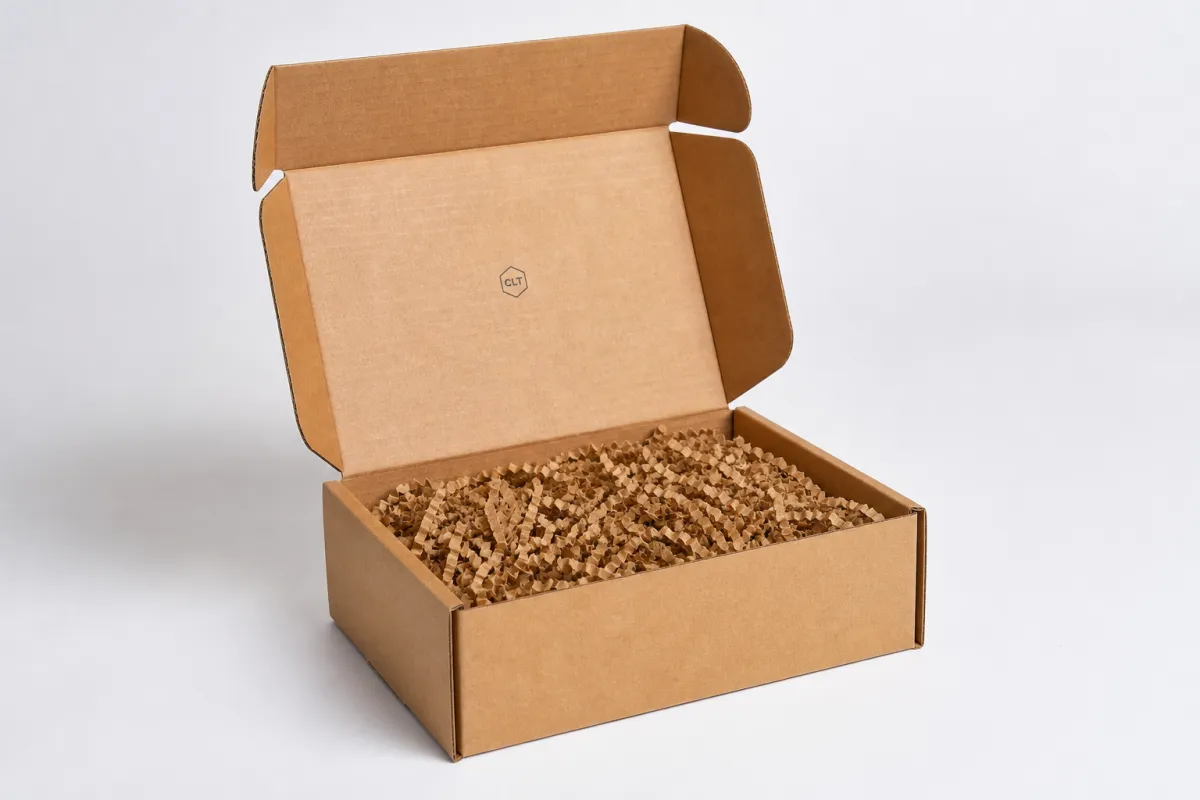
Empty space inside a carton is not dead air. It is motion waiting to happen. Every inch of unused room changes the way a package responds to impact. A box may pass a compression check and still fail in the real world because the product inside picked up speed before it hit the wall. That is the core reason wholesale boxes with void fill matter. The corrugated shell protects against puncture and crushing. The filler keeps the contents from becoming a moving target.
Oversized cartons create a second problem that buyers often underestimate. The larger box feels easier at the packing table, so it gets chosen more often. Then the costs show up later: more dimensional weight, more filler, more tape, and a greater chance that the item shifts enough to get damaged. On one mid-size packing line I reviewed, a single inch of extra headspace changed the amount of paper fill needed enough to affect both labor time and material usage in a way the team noticed by the end of the week. Not glamorous, but very real.
The labor side is just as real. Packing teams slow down when every order needs a guess. One shipment is too tall, another too wide, and somebody reaches for more paper because the box feels empty. Wholesale boxes with void fill shrink that improvisation. The carton dimensions stay predictable. The filler volume becomes easier to estimate. Closure happens faster because the packer knows what the finished box should feel like. Across thousands of orders, that kind of consistency changes the rhythm of the whole operation.
Cost control is part of the story, too. A right-sized box reduces wasted cube. The correct filler lowers claims and replacement shipments. Those savings often beat a simple oversized shipper, even when the oversized option looks cheaper on the purchase order. Freight does not care about intentions. It cares about dimensions, weight, and the way the package behaves under stress. Wholesale boxes with void fill help the package do less work while it is being handled, sorted, loaded, and delivered.
There is one honest caveat. Not every product needs aggressive void fill. If an item already sits inside a molded insert, a tight retail tray, or a custom-fit suspension system, adding more filler can create cost without adding protection. The right answer is the one that keeps the product stable with the least waste, not the one that simply uses the most material. That kind of restraint is part of good packaging, even if it sounds a little less exciting on a sales sheet.
One more practical point: quality control becomes easier once the size and filler are fixed. Packouts repeat. Errors stand out. A carton that suddenly needs more paper than usual can point to a product that drifted out of tolerance. A stronger board may be the real fix. In that sense, wholesale boxes with void fill are not just a shipping material. They become a measuring tool, the kind that makes problems visible before they turn into returns.
Product details: wholesale boxes with void fill options
Wholesale boxes with void fill are not a single product category. They are a family of choices, and the right one depends on the item, the handling path, and the warehouse workflow. Regular slotted cartons remain the workhorse because they are familiar, economical, and easy to source in many sizes. Mailer-style boxes fit better when presentation matters and the pack needs to look tidy when it reaches the customer. Heavy-duty corrugated shippers make more sense for dense items, multi-pack kits, and freight that will see stacking pressure before it opens.
Strength matters as much as style. Void fill can stop a product from moving, but it cannot rescue a carton that collapses too easily. That is why buyers should look at flute type, board grade, and edge strength as a set. A single-wall carton may be enough for light goods with paper-based void fill. Double-wall construction makes more sense for heavier components, sharp-edged parts, or shipments that travel through parcel networks with rough handling. Wholesale boxes with void fill work best when the filler and the board are chosen together, not in isolation.
Kraft paper and paper cushions
Kraft paper remains the simplest void fill because it dispenses quickly, stores easily, and adapts to a wide range of product shapes. Crumpled paper works particularly well for irregular items and mixed-SKU kits because it can wedge into corners and hold the item near the center of the carton. Paper cushions and paper pillows add more spring and a cleaner visual finish, which matters when the box is opened by a customer rather than a dock worker. For many wholesale boxes with void fill programs, paper becomes the default because it balances protection, price, and customer perception without forcing the warehouse to change its rhythm. In plain terms, it just works, which is why so many operations keep coming back to it.
Air pillows and molded pulp
Air pillows appeal to teams that care about weight and cube. They are light, compact in storage, and fast to dispense. They are not the answer for every product. Sharp edges, dense parts, and cartons that will sit under stack pressure need more than air pockets to stay stable. Molded pulp carries more structure. It can support corners, hold shape inside the carton, and create a more controlled packout when the filler needs to act like an insert rather than a loose cushion. In the right application, wholesale boxes with void fill use molded pulp to make the whole package feel deliberate.
| Void Fill Option | Best Use Case | Typical Strength | Approx. Cost Impact | Notes |
|---|---|---|---|---|
| Kraft paper | General shipping, mixed products, retail orders | Good centering and moderate cushion | Low to moderate | Easy to source, widely recyclable, and familiar to most packing teams |
| Paper cushions | Fragile goods, premium unboxing, repeat packouts | Moderate cushion with cleaner presentation | Moderate | Works well in wholesale boxes with void fill that need speed and a tidy finish |
| Air pillows | Lightweight goods, cube-sensitive freight | Good for void removal, lighter cushioning | Low on freight weight, variable on equipment | Best when speed and storage volume matter |
| Molded pulp | Rigid items, corner protection, branded presentation | High structure and shape retention | Moderate to higher | Useful where the filler must stay in place during handling |
The final choice usually comes down to workflow. E-commerce teams want fast dispensing and easy recycling. Wholesale distribution teams care about pallet density, stacking, and how the shipper opens at the destination. Kitting operations want a filler that does not slow the line or leave debris behind. Wholesale boxes with void fill can fit all three, but the box dimensions, closure style, and filler type need to match the pace of the operation. A packaging system that fights the workflow will eventually lose to it.
Branding can sit on top of the functional spec instead of replacing it. Single-color print is often the smartest first move because it keeps setup simple while still making the carton recognizable. A consistent logo placement, steady panel layout, and controlled print area all help wholesale boxes with void fill present well without adding unnecessary handling steps. If you are comparing sourcing paths, our Wholesale Programs page is a useful starting point, and our Custom Packaging Products page shows the kinds of formats that can be adapted to different shipping needs.
Specifications to confirm before ordering wholesale boxes with void fill
Measure the product first. Then measure it again. Buyers often start with the outside dimensions of a sample carton when they should be recording the actual item size and the clearance needed for the filler. Length, width, and depth each affect packout behavior. A half-inch of extra space on one axis can change the amount of filler required enough to alter cost and stability. With wholesale boxes with void fill, tolerance matters because products are rarely identical from batch to batch. Some variation is normal. Too much slack is not.
Weight comes next. A light cosmetics set and a dense hardware kit can fit into similar-looking cartons, yet they ask very different things from the board. Ask for ECT, burst strength, and board thickness if the shipment will be stacked or moved in palletized freight. A carton that performs well in parcel shipping may need a stronger spec for storage, distribution, or repeated handling. Wholesale boxes with void fill should be sized to the heaviest realistic load, not the average one.
Closure style deserves its own line in the spec sheet. Some warehouses use hand-applied tape and standard tape widths. Others need adhesive compatibility for automated equipment. Some want tuck-lock cartons because they open fast and look tidy. If staples are off the table for safety or presentation reasons, say that early. The filler and the closure method affect each other more than buyers expect. A carton packed too tightly with paper can resist top-panel closure in a way that changes sealing time and tape usage.
Product and transit conditions
Surface protection requirements should be written down clearly. Glass, coated metal, printed cartons, and finished wood all react differently to movement and abrasion. Sharp edges may need corner support. Moisture-sensitive products may need liners or an inner bag before they go into wholesale boxes with void fill. Temperature swings matter as well, especially for shipments that move from cold storage into warm routes or humid docks. A filler that behaves well in a dry warehouse can compress differently once humidity changes during staging or transit.
Destination handling changes the ideal packout, too. A carton headed to a retail backroom is not the same as one going to a distributor dock or straight to the end customer. Repacked wholesale shipments often need a stronger outer box and a filler that is easy to remove and reuse. Direct-to-consumer shipments usually benefit from a cleaner presentation because the customer sees the inside of the box first. Wholesale boxes with void fill should be chosen with the full route in mind, not just the first mile.
- Inside dimensions: exact length, width, and depth with any acceptable tolerance.
- Weight per unit: average and maximum product weight.
- Pack count: one item, multi-pack, or assorted kit.
- Board spec: ECT, burst strength, flute type, and wall construction.
- Fill preference: paper, air, molded pulp, or a hybrid approach.
- Branding: print color, logo placement, and approved artwork file format.
- Compliance: recyclable, FSC, plastic-free, or retailer-specific requirements.
That list becomes even more useful when multiple people touch the order. Procurement may want a quote. Operations may care about the packout. Marketing may care about the print. Clear inputs reduce revision cycles, limit quoting mistakes, and make it easier to compare wholesale boxes with void fill across suppliers. Good specs produce cleaner quotes. Clean quotes produce better first-pass samples. The process gets less chaotic almost immediately.
Cost, pricing, and MOQ for wholesale boxes with void fill
Price depends on a stack of variables, not one clean number. Carton size is the obvious one because more board means more material and more freight. Board grade follows close behind, then print complexity, filler type, and quantity. A plain stock carton with kraft fill lives in one price band. A custom-printed carton with a specialty filler sits in another. Wholesale boxes with void fill should always be priced as a package system, because the lowest carton price does not always produce the lowest landed cost once freight, damage risk, and labor are included.
MOQ, or minimum order quantity, follows the same logic. Stock cartons can usually be ordered in lower quantities. Custom sizes and printed runs need higher volume to cover setup and tooling. Filler choice can affect MOQ too if it involves custom converting, special dimensions, or a branded dispenser format. For wholesale boxes with void fill, buyers should ask for pricing at multiple volume breaks. Unit cost often falls in visible steps once the order gets large enough to absorb setup work.
Total landed cost is the number that matters. Freight. Pallet count. Storage space. Packing speed. Return claims. All of it belongs in the comparison. A carton that saves two seconds per pack can become the smarter option in a high-volume warehouse even if the purchase price is higher. A box that trims dimensional weight may also lower shipping costs enough to offset a more expensive filler. Wholesale boxes with void fill earn their keep in those small gains that compound over time.
Price comparison by volume
The ranges below are illustrative rather than quoted offers, but they help frame the buying conversation. Exact pricing shifts with structure, print, board choice, and filler selection. A simple stock order usually stays near the low end. A custom spec with heavier board and branded fill moves upward from there.
| Order Tier | Typical Carton Type | Typical Void Fill | Approx. Unit Range | What Drives the Price |
|---|---|---|---|---|
| 1,000 units | Stock RSC | Kraft paper | $0.55-$1.10 | Lower volume, standard sizes, basic fill |
| 3,000 units | Custom size RSC | Paper cushions | $0.42-$0.88 | Custom tooling, moderate print, more efficient board use |
| 5,000 units | Mailer or heavy-duty shipper | Air pillows or hybrid fill | $0.30-$0.72 | Better scale, improved freight efficiency, repeatable packout |
| 10,000+ units | Standardized custom spec | Paper or molded pulp | $0.18-$0.55 | Volume leverage, fewer setup costs per unit, stable forecasting |
Paper-based fill and air-based fill solve the same problem from different angles. Paper tends to control load better and usually fits well with a recycled-fiber story. Air pillows save cube and weight, which can matter if storage space is tight or the product is extremely light. Molded pulp adds structure and a more controlled finish. The right choice depends on product fragility, labor needs, and the experience you want the box to create when it is opened. Wholesale boxes with void fill should be judged on that full set of tradeoffs, not just the unit price.
Buying teams get a better picture when they ask for side-by-side quotes at two or three volume tiers. That shows where the scale breaks are and whether the better board, cleaner print, or more controlled filler is worth the added cost. It also helps forecast inventory more accurately. In many operations, wholesale boxes with void fill pay back through fewer claims and more stable packouts long before the cheapest option would have saved a penny on the invoice.
Process and timeline for wholesale boxes with void fill
The ordering flow is straightforward, but every step affects the next one. It begins with specs: product dimensions, weight, pack count, destination, and filler preference. The supplier then confirms the box style, board grade, and any print requirements. If artwork is involved, proofs get reviewed before production starts. Wholesale boxes with void fill move faster when those choices are made early because the supplier can build the right carton and the right filler from the outset instead of patching the order later.
Samples are worth the time for anything fragile, irregular, or high-value. A prototype lets the buyer check fit, fill volume, stacking behavior, and how the carton opens once tape is applied. It also shows whether the filler actually holds the product in place. Small issues are cheaper to find on a sample than in a finished production run. Wholesale boxes with void fill are easier to approve once the real packout has been tested on the real line by the people who will use it.
Typical production stages
Most jobs follow a familiar sequence: material sourcing, corrugating or converting, printing, die-cutting or cutting, bundling, and pallet build. Stock cartons move faster because the structure already exists. Custom cartons take longer because tooling, artwork review, and sample approval have to happen first. Filler can also affect timing, especially when it is a special paper format, molded component, or dispenser system that needs separate sourcing and assembly.
A planning window often looks like this:
- Quote and spec review: 1-3 business days, depending on file readiness.
- Sample or prototype approval: 3-7 business days for many custom projects.
- Manufacturing: often 10-20 business days after approval, depending on volume and complexity.
- Freight transit: add the shipping lane time, which may be a few days for regional moves or longer for cross-country freight.
That schedule can tighten or stretch based on several things. Custom tooling adds time. Peak season adds time. Specialty fillers add time. Stock orders usually move faster than made-to-spec projects. Wholesale boxes with void fill should include a buffer when inventory matters, because even a well-run production cycle can be slowed by raw material availability or freight delays.
Clear communication prevents most of the friction. If the product changes size during the year, say so. If the carton must fit a pallet pattern, say so. If the buyer needs plastic-free materials or recycled content targets, say so before the quote is locked. The better the brief, the better the recommendation. That is how wholesale boxes with void fill stay tied to the real shipment instead of a theoretical one.
Why choose us for wholesale boxes with void fill
At Custom Logo Things, the goal is not to sell a carton and disappear. The goal is to match the box construction and the void fill to the product so the package performs in the warehouse, on the truck, and at the receiving dock. That means practical guidance instead of polished fluff. If a lighter board is enough, we say so. If a stronger corrugated spec or a different filler is the better buy, we say that too. Wholesale boxes with void fill are too important to treat as a one-size-fits-all order.
Consistency is where the value shows up. Wholesale buyers need cartons that repeat cleanly from run to run, with reliable inside dimensions and predictable board performance. They also need filler that behaves the same way every time, so packers are not forced to guess how much material to use. That matters even more for recurring shipments, subscription packs, and fulfillment operations where speed and accuracy are tied together. Wholesale boxes with void fill should make the line calmer, not more complicated.
Handling matters as well. Boxes that are easy to erect, easy to fill, and easy to seal save time across every shift. A good design should stack well on pallets, open cleanly at the receiving end, and store without wasting dock space. If the team is trying to keep the line moving, fewer surprises mean fewer workarounds. That is the kind of practical fit we look for when recommending wholesale boxes with void fill.
Buyer reality: the right packaging lowers damage, supports speed, and keeps the packout repeatable. If it only does one of those things, the spec is still incomplete.
Communication matters as much as materials. We keep the path clear from quote to sample to shipment so buyers know what happens next and what information is still missing. If you are comparing formats for a new line, our Custom Packaging Products page is a good place to review the options, and our Wholesale Programs page can help frame volume planning before the order goes in. That keeps wholesale boxes with void fill grounded in the real use case instead of in a sales pitch.
Next steps for ordering wholesale boxes with void fill
The fastest route is to document the product and the shipment together. Measure the item. Note the weight. Choose the filler you want. Decide whether the main goal is damage reduction, branding, or labor efficiency. Then send a simple spec sheet with carton dimensions, quantity range, shipping destination, and any recycling or compliance requirement that changes material choice. With those basics in hand, wholesale boxes with void fill can be quoted accurately and compared on something better than guesswork.
If the product is fragile, irregular, or packed in mixed assortments, start with a sample run or a pilot order. That gives the packing team time to test real fill volume and see how the carton performs on the actual line. A pilot often saves money because it catches fit problems before they spread across a larger order. Wholesale boxes with void fill are best approved after the packout has been handled by the people who will use it every day.
It helps to compare two or three configurations side by side. One may use a lighter box with more filler. Another may use a stronger box with less filler. A third may split the difference. That comparison makes the tradeoffs visible: protection, cost, line speed, pallet efficiency, and customer presentation. Wholesale boxes with void fill are rarely decided by one variable alone, and the best option is usually the one that balances the whole system well enough to keep the operation steady.
The most practical takeaway is simple: lock the product dimensions, maximum weight, route, and void-fill preference Before You Order, then test one real sample on the actual packing line. If the item still shifts after a drop or squeeze test, change the board or the filler before you scale up. That one step saves a lot of guesswork, and honestly, it keeps the whole program from drifting into expensive fixes later.
FAQ
What products work best in wholesale boxes with void fill?
Fragile, rigid, or slightly irregular products benefit the most because the filler keeps items from shifting and protects corners during transit. Common fits include cosmetics, parts kits, glass containers, small appliances, and subscription items that need a clean, stable packout. Wholesale boxes with void fill are especially useful when the product has a hard surface that can chip or a shape that leaves open space around it.
Which void fill is best for wholesale boxes with void fill orders?
Paper-based void fill is a strong choice when recyclability, cushion, and load control matter, while air pillows are useful when weight and cube efficiency are priorities. The best option depends on product fragility, warehouse speed, and whether the buyer wants a premium unboxing feel or a lower-cost protective layer. For many wholesale boxes with void fill programs, paper wins on control, and air wins on storage efficiency.
How do I choose the right box size for wholesale boxes with void fill?
Measure the product first, then allow just enough clearance for the chosen filler so the item stays centered without too much empty space. A smaller, right-sized carton usually lowers filler use, cuts freight cube, and improves protection compared with an oversized box. The goal with wholesale boxes with void fill is not to create room; it is to eliminate movement while keeping the packout efficient.
What is a typical MOQ for wholesale boxes with void fill?
MOQ depends on whether the box is stock or custom, the print requirements, and the filler type, but custom runs usually need more volume than plain cartons. For buying decisions, compare MOQ against storage space, forecasted usage, and the savings from lower damage rates and repeatable packouts. Wholesale boxes with void fill often become more attractive as volume rises because the per-unit economics improve.
How can wholesale boxes with void fill reduce shipping costs?
Right-sizing the carton can cut dimensional weight, while the correct filler reduces product movement and lowers the risk of returns and replacements. The best savings usually come from matching board strength, box size, and filler volume to the actual product instead of overpacking every shipment. In many operations, wholesale boxes with void fill reduce cost because they improve freight efficiency and damage performance at the same time.
Wholesale boxes with void fill are worth the attention because they solve several problems at once: less motion, better protection, cleaner packouts, and more predictable shipping costs. The real trick is to match the carton, the filler, and the route before the order is scaled. Do that, and the package behaves the way a serious shipping program should: quietly, consistently, and without drama.


