Buyer Fit Snapshot
| Best fit | Wholesale Kraft Bags With Handles for Shipping Needs projects where brand print, material claims, artwork control, MOQ, and repeat-order consistency need to be specified before quoting. |
|---|---|
| Quote inputs | Share finished size, material target, print colors, finish, packing count, annual reorder estimate, ship-to region, and any compliance wording. |
| Proofing check | Approve dieline scale, logo placement, barcode or warning zones, color tolerance, closure strength, and carton packing before bulk production. |
| Main risk | Vague material claims, crowded artwork, missing packing details, or unclear freight terms can make a low unit price expensive after revisions. |
Fast answer: Wholesale Kraft Bags With Handles for Shipping Needs should be specified like a repeatable production item. The safest quote records material, print method, finish, artwork proof, packing count, and reorder notes in one written spec.
Production checks before approval
Compare the actual filled-product size with the drawing, then confirm tolerance on folds, seals, hang holes, label areas, and retail display edges. Reserve space for logos, QR codes, warning copy, and material claims before decorative graphics fill the panel.
Quote comparison points
Review material grade, print process, finish, sampling route, tooling charges, carton quantity, and freight assumptions side by side. A quote is only useful when the supplier can repeat the same color, closure quality, and packing count on the next order.
Wholesale kraft bags with handles solve a very specific problem: you need packaging that is quick to pack, easy to carry, and still looks intentional when it reaches a customer. The bag body usually survives. The handle attachment, the paper weight, and the way the bag gets filled are the parts that fail first.
For buyers, these bags sit in a practical middle ground. They cost less and move faster than rigid cartons, but they still give the order a finished look. That matters if you ship apparel, sample kits, cosmetics, event materials, or lightweight retail goods. Nobody calls a kraft bag glamorous. It still beats tossing a product into whatever box was closest to the tape gun.
A paper bag is part of the packing system, not decoration. If the handle tears, the whole order looks cheap, even when the print is clean.
The real job is matching paper, handle, size, and order volume to the way the bag will be used. Buyers skip that step all the time, then act surprised when the quote looks fine but the bag does not survive the first real shipment. Spec first. Quote second. Anything else is guesswork dressed up as procurement.
If your team ships orders that move from warehouse shelf to customer handoff without a secondary shipper, the details matter even more. The bag has to carry weight, survive a short but rough trip, and still arrive looking like someone planned it.
Why Wholesale Kraft Bags With Handles Work in Shipping
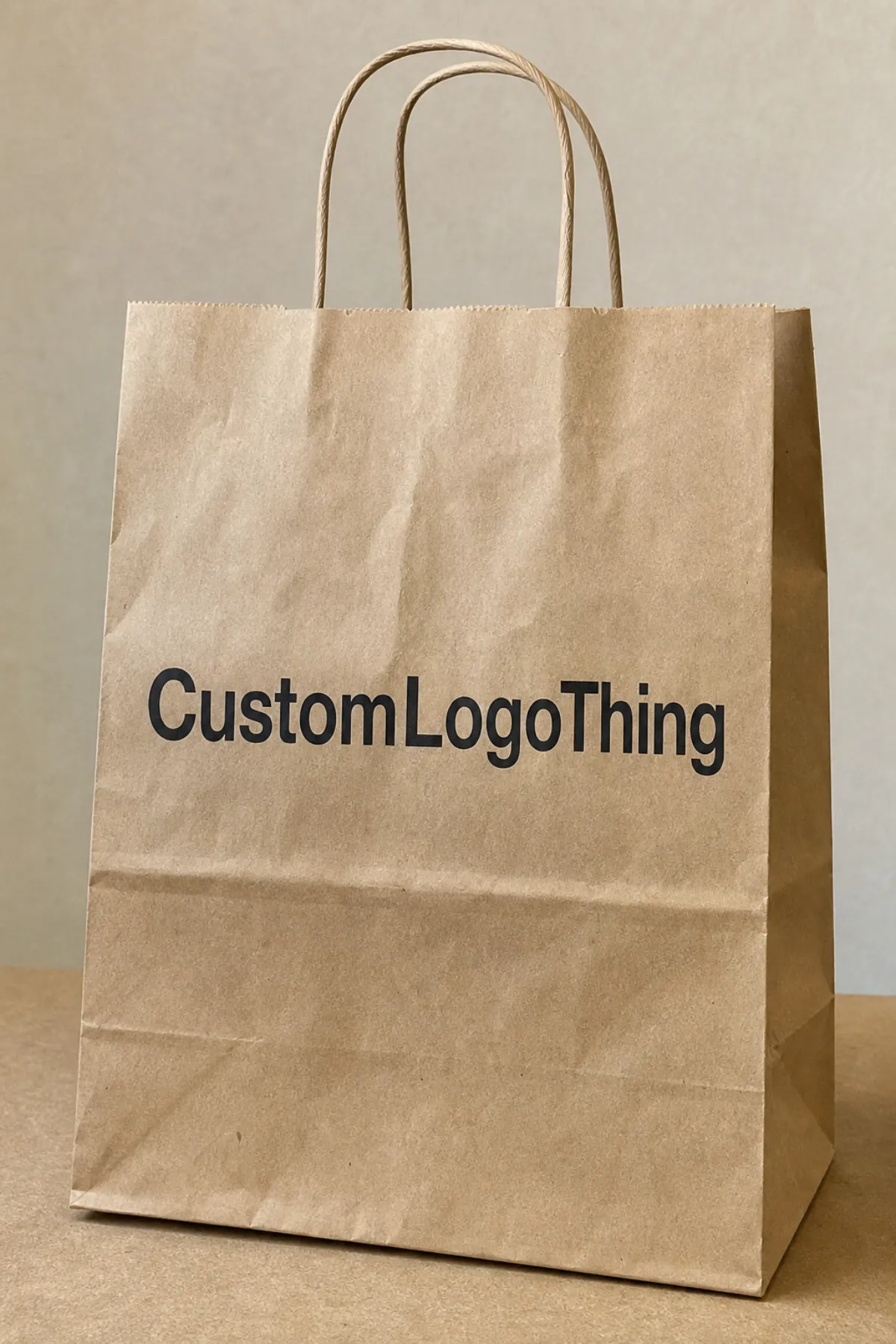
Shipping teams want packaging that behaves the same way every time. Wholesale kraft bags with handles do that well. They fold flat, fill fast, store without eating shelf space, and present a cleaner look than a bare shipping sack. A tidy kraft bag still gives the customer a proper handoff. That counts.
The weak spots are easy to predict. Handles get glued too lightly. Side seams split under pressure. The bag gets stuffed past its limit and the top mouth never closes properly. None of that is mysterious. It is just bad matching between the bag and the job. A clean mockup does not stop a handle from ripping in a parking lot.
These bags work especially well for:
- Apparel shipments such as folded tees, scarves, and lightweight accessories
- Gift sets and curated retail bundles where presentation matters
- Cosmetics and personal care items packed with inserts or tissue
- Event kits, welcome packs, and trade show handouts
- Sample packs and product launches that need a tidy, branded carry option
- Light retail goods that need a reusable handoff package
They are not the right answer for everything. Sharp edges, heavy contents, odd shapes, and leak-prone items belong in a carton or a more protective build. A pretty bag does not make a fragile product safer. It just makes the failure look more polished.
The sweet spot is simple: lower cost, fast branding, decent perceived value, and a format that does not slow the packing line. For a lot of brands, that combination works better than plain cartons for customer-facing orders, especially when the package goes straight into the buyer’s hands instead of disappearing into a courier box.
If you already buy through our Wholesale Programs, the same logic applies there too: the best packaging is the one that fits the job, not the one that sounds impressive in a sales email.
Product Details: Paper, Handles, and Reinforcement
Start with the paper. Kraft is not one material with one personality. Brown kraft, white kraft, and recycled kraft each bring their own tradeoffs in print quality, cost, and presentation.
Brown kraft is the practical default. It hides scuffs better, has a natural look, and usually costs less than white stock. Brands that want a clean, earthy presentation without paying extra for fuss usually land here. The tradeoff is straightforward: light colors and fine detail can print a little duller, so artwork may need testing before anyone locks the order.
White kraft gives brighter print and a cleaner retail feel. It works better for logos with higher contrast or more color in the artwork. It also shows dirt more easily. That sounds minor until the bags sit on a warehouse floor, in a delivery lane, and in the hands of people who are not gentle with them. White looks sharp. White also keeps receipts for every fingerprint.
Recycled kraft suits brands that care about sourcing or want to signal lower-waste packaging choices. It can be a strong fit for eco-minded buyers, but the surface finish may be less uniform. If the logo is small or the artwork depends on exact color matching, test the stock first and save yourself the argument later.
Handle style matters just as much. A lot of orders go sideways here because buyers under-spec the handle and then expect the bag to carry more than it should. Three common options show up over and over:
- Twisted paper handles - usually the strongest all-around option for most retail and light shipping uses. They balance strength, cost, and a neat look.
- Flat paper handles - usually lower cost and fine for lighter loads, but not a great pick if the bag gets overpacked or reused often.
- Rope or reinforced handles - better for heavier loads, premium presentation, or bags that need a more comfortable grip during repeated carry.
Reinforcement is the detail buyers should ask about directly. A handle glued to weak paper is still a weak handle. Good construction usually includes some mix of a reinforced handle patch, a stronger mouth fold, and a base that does not bow under load. If the bottom seam is sloppy, the bag flexes in ugly ways. If the handle patch is too small, the handles start tearing long before the rest of the bag looks tired.
Finish choices change the buying decision too. Matte finishes feel calmer and more premium in many retail settings. Gloss can make colors pop, but it also tends to show scratches and fingerprints. Lamination adds moisture resistance and scuff protection, then adds cost and can complicate recyclability. A simple print on uncoated kraft is often the sensible route for shipping-focused buyers because it avoids paying for decoration the customer will barely notice.
Industry guidance from groups like the International Safe Transit Association is useful because it pushes buyers to think about real distribution stress instead of just sample-table aesthetics. If your bags travel inside a master carton, ask how the bag-carton combination behaves under drop, compression, and vibration. Pretty still has to survive the route.
For brands with sourcing requirements, paper can often be specified as FSC-certified stock. That does not magically make the bag sustainable, but it does give procurement teams cleaner documentation for responsible sourcing claims. If that paper trail matters, ask for it before approval, not after the order is already moving.
Specifications That Matter for Wholesale Orders
Bag size comes first, and it should be based on the packed product, not the bare item. Measure width, gusset, and height after inserts, tissue, sample cards, or protective wrap are included. A bag that fits the product on its own may be too tight once the real ship-ready contents go in. Tight fill puts stress on the handles and makes the bag look stuffed. That is not premium. That is a warning sign.
The main dimensions buyers should track are simple:
- Width - the front panel measurement
- Gusset - the side depth that controls capacity
- Height - the usable vertical space
- Handle drop - the distance from the top edge to the handle midpoint
- Internal fill space - the real room left once the product is inside
Paper weight matters, but only as part of the full build. A heavier gsm number does not rescue a weak handle patch, and it does not fix a bag that is the wrong shape for the contents. For many retail and shipping uses, paper in the 150-250gsm range is common. Heavier builds, often around 250-350gsm, can make sense for larger bags, premium branding, or repeated carry, though they increase cost and can add bulk in storage and freight.
Load expectations need to match the use case. A lightweight apparel bag may be fine at a few pounds of contents. A reinforced carry bag for denser items may need a stronger build and a wider handle patch. Do not guess. Test the actual contents with one sample, then push it a little farther to see where the stress starts. That tells you more than a spec sheet written by someone who has never packed anything.
Print specs affect ordering too. If the logo sits too close to the edge, it can get trimmed. If the safe zone gets ignored, text can disappear into the fold. If the artwork uses multiple colors, setup time and cost climb. None of that is a trick. It is just how production works.
Before you approve artwork, confirm:
- Logo placement and exact size
- Single-side or double-side coverage
- Number of print colors
- Bleed area and safe zone
- Whether the bag has a matte, gloss, or uncoated finish
Manufacturing tolerances matter too. A warehouse does not care that the mockup looked perfect. Warehouse teams care that carton counts match, folded bags fit the shelf, and dimensions stay consistent from one batch to the next. Ask about tolerance ranges on width, gusset, and height. Small shifts are normal. Big ones turn a tidy process into a mess.
Here is a practical comparison for buyers who want the tradeoffs in one place:
| Bag Type | Typical Paper Weight | Handle Style | Common MOQ | Typical Unit Price | Best Use |
|---|---|---|---|---|---|
| Brown kraft, uncoated | 150-200gsm | Flat or twisted paper | 1,000-3,000 pcs | $0.22-$0.42 | Light retail, samples, simple branded handoff |
| Brown kraft, reinforced | 200-250gsm | Twisted paper with patch | 3,000-5,000 pcs | $0.32-$0.58 | Apparel, event kits, moderate carry loads |
| White kraft, printed | 200-300gsm | Twisted paper or rope | 3,000-5,000 pcs | $0.40-$0.75 | Retail presentation, sharper logo printing |
| Recycled kraft, heavier build | 250-350gsm | Reinforced paper or rope | 5,000+ pcs | $0.48-$0.82 | Eco-positioned brands, stronger carry needs |
| Laminated premium bag | 250-350gsm | Rope or reinforced | 5,000+ pcs | $0.55-$0.95 | Gift sets, premium retail, higher visual impact |
These ranges are directional, not a promise. Size, print coverage, reinforcement, and freight method can move the number quickly. A buyer comparing two quotes without checking gsm, handle build, and print setup is comparing apples to a tire iron.
Cost, Pricing, MOQ, and Quote Factors
Price usually comes down to six things: size, paper weight, handle style, print colors, reinforcement, and order quantity. That list does not change because somebody wants a nicer number on the quote. It changes because material and labor change.
Bag size affects board usage and cutting efficiency. Larger bags use more paper, and odd sizes can waste more sheet stock. Paper weight affects material cost and stiffness. Handle style affects parts and assembly time. Print colors add setup and production complexity. Reinforcement uses more material and adds steps. Quantity spreads setup costs across more units, which usually lowers the per-bag price.
MOQ is not a trap. It is a cost structure. Small orders cost more per unit because the setup work still has to happen, whether the order is 500 bags or 5,000. Larger orders lower unit cost, but they also tie up cash and warehouse space. That tradeoff matters, especially for seasonal brands or multiple SKUs that each want their own packaging.
Good buyers ask for an apples-to-apples quote. The quote should show:
- Exact dimensions
- Paper weight and stock type
- Handle construction
- Print coverage and color count
- Reinforcement details
- Tooling or plate costs
- Sample charges
- Freight method and destination terms
- Lead time from approval to dispatch
Hidden costs are not always hidden. They are just ignored until somebody gets annoyed. Plate or setup fees can be modest on a larger run and painful on a tiny one. Sample charges are often credited later, but not always. Freight can swing landed cost more than people expect, especially when the bags are bulky. Carton sizing matters too because oversized cartons increase shipping expense and make pallet staging awkward.
A useful rule: if two quotes are a few cents apart, do not assume they are equivalent. One may use thinner paper, fewer reinforcement steps, a different handle, or looser print standards. Cheap can be smart. Cheap can also be fake cheap.
Buyers who need recurring volume should think in tiers. One run may cover a launch. A second run may cover the next replenishment. A larger annual forecast may justify better pricing once the artwork and sizing are stable. If your team is planning across multiple packaging lines, our Wholesale Programs page is the fastest way to compare how those volume breaks work in practice.
Freight deserves its own conversation because it changes both landed cost and timing. A bag that looks inexpensive ex-factory can become less attractive once packed into cartons, loaded onto pallets, and moved across a long shipping lane. Compare unit cost and landed cost side by side. One tells you the factory price. The other tells you what actually reaches the warehouse.
A sensible buying range for Custom Kraft Bags is rarely the lowest price on the page. It is the price point where the bag survives the job, the art prints cleanly, and the order quantity does not bury your storage plan.
Process, Timeline, and Lead Time From Proof to Delivery
The best orders move in a predictable sequence. Skip steps and the project slows down. The usual path looks like this:
- Inquiry and basic product brief
- Spec confirmation: size, paper, handle, print, quantity
- Quotation with unit cost and tooling details
- Artwork review and layout check
- Sample or digital proof approval
- Production scheduling
- Manufacturing, inspection, and packing
- Cartonizing, palletizing, and shipment
Timing depends on how clean the brief is. If the buyer has final artwork, exact dimensions, and a realistic quantity, proofing may take just a few business days. If the artwork is still changing, or the handle style keeps shifting, the timeline gets longer. That is not the factory moving slowly. That is the order still being decided.
Production usually takes somewhere from one to several weeks after proof approval, depending on order size and factory load. Smaller, simple runs may move faster. Larger or more customized orders take longer because printing, gluing, curing, folding, and packing all need time. If someone promises a rush timeline without seeing the spec, be careful. Speed costs money, and somebody is paying for it somewhere.
Common delay points are boring, which is exactly why they keep happening:
- Artwork that is not print-ready
- Color changes after the proof is issued
- Unclear size or handle requirements
- Waiting too long to approve samples
- Unconfirmed ship-to details or delivery windows
Rush production can make sense if a launch date or event date is fixed and the order is simple. It makes less sense if the buyer has not locked the artwork or is still choosing stock color. Fast production cannot fix indecision. It only turns indecision into a more expensive headache.
Shipping teams should also confirm the pack-out before production begins. Ask how many bags go into each carton, what the carton dimensions are, whether the cartons are palletized, and whether the final delivery is by parcel, LTL, or full truckload. Those details affect freight cost and warehouse handling more than many buyers expect.
For parcel-heavy distribution, it helps to think like a test lab. Will the bag collapse? Will handles crease in carton storage? Will the outer cartons hold up on the route? Standards-based thinking from groups like ISTA helps because it keeps the decision tied to transit conditions instead of wishful thinking.
Why Choose Us for Wholesale Kraft Bags With Handles
The short answer is predictability. Wholesale buyers do not need poetry. They need a bag that matches the spec, prints cleanly, and arrives on time in the quantity they ordered. That is the job.
Our focus is factory-direct pricing with fewer moving parts and fewer surprises. That matters because the cheapest-looking quote can hide sloppy specs, weak handle construction, or a print process that does not match the artwork. Buyers should be paying for the bag, not for a guessing game.
Consistency is the real selling point. One batch should look like the next batch. Handle spacing should stay the same. The paper should feel the same. The print should sit in the same place. If you are ordering for a chain, a subscription program, or a recurring retail line, consistency is not a bonus. It is the difference between a controlled rollout and a pile of avoidable problems.
Support matters too. A useful packaging partner should help with the boring but expensive details: pre-production checks, artwork guidance, sample review, and order tracking. Those steps cut down the risk of a run that looks perfect on a render and disappoints in the warehouse. They also help shipping teams plan receiving, shelf space, and replenishment without last-minute drama.
For brands with changing demand, flexibility helps. A practical supplier can handle pilot runs, scale-up orders, and multiple sizes without forcing everything into one oversized production template. That means you can test a smaller quantity, measure demand, and then lock the larger run once the spec is proven. Smart buying usually looks a little dull. That is often a good sign.
We also pay attention to logistics reliability. If a bag is easy to make but hard to pack, that is still a problem. If cartons are awkward, if pallet counts are inconsistent, or if the packing list does not match the purchase order, the warehouse will notice. They always do. Better to catch those issues before production starts.
Brands comparing suppliers should also ask for sourcing documentation if their procurement team cares about it. FSC paper, repeatable quality control, and clear packaging specs make a real difference when the order gets reviewed internally. Fancy language does not. Clean paperwork does.
If your team needs a repeatable order structure, our Wholesale Programs page is the place to start. It is built for buyers who want a practical route from spec to order without hand-holding they do not need and without shortcuts they will regret later.
Next Steps: Order the Right Batch Without Guesswork
Before you request quotes, build a one-page spec sheet. Keep it simple. The best order briefs remove uncertainty. They do not try to impress anybody.
Your spec sheet should include:
- Bag size: width, gusset, height
- Handle style: flat, twisted, or reinforced
- Paper type: brown kraft, white kraft, or recycled kraft
- Paper weight: target gsm range
- Print details: logo size, colors, and coverage
- Quantity: target order and any repeat forecast
- Delivery location: warehouse or final ship point
Ask for samples or a reference build before placing a larger order, especially if the bags will move through shipping channels rather than sit pretty on a shelf. One sample with the real contents will show handle stress, fill pressure, and whether the mouth closes cleanly. That is worth more than guessing from a render.
Compare at least two or three quotes using the same spec. If the specs differ, the quotes are not actually competing. That is where many buyers waste time. They think they are comparing prices, but they are really comparing different materials, different handles, and different packing assumptions. No wonder the numbers do not line up.
Also confirm carton count, pack-out, and replenishment needs before approval. If the first shipment lands at the wrong time or in the wrong format, the warehouse takes the hit. If the cartons are too heavy or too bulky, moving them around gets inefficient. Small details become large costs once the order is on the floor.
Wholesale kraft bags with handles work best when the spec is clear and the use case is honest. Match the paper weight to the load, choose the handle construction based on real carry pressure, and size the bag for the packed product rather than the empty item. Once that is set, request a quote and move the order forward with fewer surprises and a much better shot at a clean first delivery.
FAQ
What size wholesale kraft bags with handles should I order for shipping?
Start with the packed product dimensions, not the empty item size. Inserts, tissue, retail cards, and small shifts in product shape all take up space. Leave enough room for a clean fill so the handles are not stressed by overstuffing or a tight mouth opening. The fastest way to avoid a bad order is to test one sample with the actual ship-ready contents before you place the full run.
Which handle style is best for wholesale kraft bags with handles?
Twisted paper handles are usually the best all-around choice for most retail and light shipping uses because they balance strength, appearance, and cost. Flat paper handles are often the lower-cost option when the load is modest. Reinforced rope or heavier handle builds make sense when the bag will carry more weight or needs a more premium look. If the bag will be carried repeatedly, test the handle under a real load instead of trusting a catalog description.
How do I compare pricing for wholesale kraft bags with handles?
Compare the same bag size, same paper weight, same handle type, and same print setup before judging the price. Check whether the quote includes tooling, samples, freight, and carton packing, because those extras change the real landed cost. Unit cost by quantity break is useful too, since a larger order may lower price but increase storage and cash flow pressure. A cheap quote is only cheap if the spec is truly the same.
What MOQ is typical for wholesale kraft bags with handles?
MOQ depends on size, print complexity, and handle construction, but custom runs often start in the low thousands rather than a few hundred. Smaller quantities are possible on some builds, but the unit price usually climbs fast when setup costs are spread across fewer bags. If you are unsure, ask for a sample run or a staged order plan so you can test demand before scaling up.
How long is the production lead time for wholesale kraft bags with handles?
Artwork proofing is often the first checkpoint and can take a few business days if revisions are needed. Production commonly runs from about one to several weeks depending on order size, customization, and factory workload. Freight time is separate from production, so always ask for both the manufacturing lead time and the shipping window. If someone gives you one number without separating production from transit, ask again.
Bottom line: lock the bag size, handle style, paper weight, and print setup before you ask for pricing, then approve a sample with the real contents. That one step catches most failure points early and keeps wholesale kraft bags with handles from becoming an expensive warehouse lesson.


