Buyer Fit Snapshot
| Best fit | Custom Kraft Bags for Boutiques projects where brand print, material claims, artwork control, MOQ, and repeat-order consistency need to be specified before quoting. |
|---|---|
| Quote inputs | Share finished size, material target, print colors, finish, packing count, annual reorder estimate, ship-to region, and any compliance wording. |
| Proofing check | Approve dieline scale, logo placement, barcode or warning zones, color tolerance, closure strength, and carton packing before bulk production. |
| Main risk | Vague material claims, crowded artwork, missing packing details, or unclear freight terms can make a low unit price expensive after revisions. |
Fast answer: Custom Kraft Bags for Boutiques: Design, Cost, and Fit should be specified like a repeatable production item. The safest quote records material, print method, finish, artwork proof, packing count, and reorder notes in one written spec.
Production checks before approval
Compare the actual filled-product size with the drawing, then confirm tolerance on folds, seals, hang holes, label areas, and retail display edges. Reserve space for logos, QR codes, warning copy, and material claims before decorative graphics fill the panel.
Quote comparison points
Review material grade, print process, finish, sampling route, tooling charges, carton quantity, and freight assumptions side by side. A quote is only useful when the supplier can repeat the same color, closure quality, and packing count on the next order.
Custom Kraft Bags for Boutiques: Design, Cost, and Fit
Custom Kraft Bags for boutiques do more than carry a purchase from the counter to the door. They travel into parking lots, ride in car seats, and sometimes end up in a mirror selfie or on a kitchen table before the product itself gets unpacked. That makes the bag a small but persistent brand surface. A flimsy paper sack disappears fast. A well-built kraft bag with the right logo size, handle style, and proportions keeps representing the store after the receipt has been folded away.
What Custom Kraft Bags for Boutiques Really Do
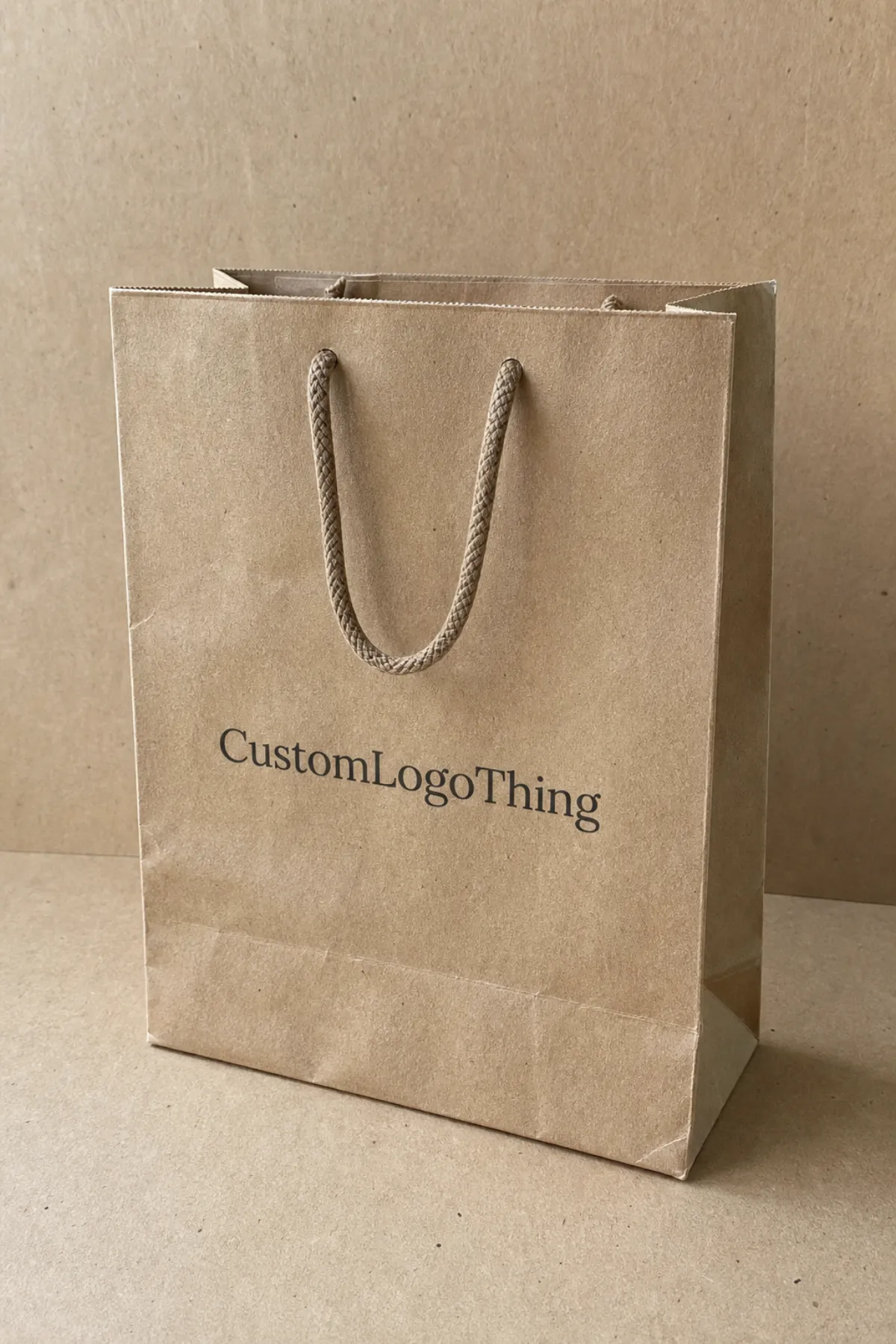
At checkout, the bag is part of the sale. It is also part of the memory. A shopper may not remember the exact price of a scarf, but they remember a handle that cut into the hand or a bag that sagged under a candle jar. That is why Custom Kraft Bags for boutiques matter so much in retail packaging: they move the product, and they also signal the standard the store is trying to keep.
In practical terms, a kraft bag is a paper carrier made from kraft stock, usually with a gusseted body, a reinforced top edge, and some kind of handle. The structure can be plain or polished, but the job stays the same. It has to carry the item, look right in the customer’s hand, and support the brand without turning into a billboard. Boutiques that sell apparel, jewelry, candles, skincare, gifts, accessories, or specialty goods often choose kraft because it sits in a useful middle ground: natural texture on one side, premium presentation on the other.
That middle ground explains why kraft keeps winning. Brown kraft suggests warmth and material honesty. White kraft gives graphics more breathing room. Recycled kraft can support a sustainability story, while virgin kraft often prints a little sharper and looks more uniform. None of those options is automatically better. The right one depends on the weight of the item, the mood of the store, and the customer experience the boutique wants to create.
The difference between plain and custom-printed matters more than many buyers expect. A blank kraft bag does its job, but it does not add much to the store’s visual language. Put a restrained logo on it, size it correctly, and choose a handle that suits the merchandise, and the bag starts to feel like part of the boutique itself. It stops reading as disposable packaging and starts acting like a deliberate retail object.
A good bag should feel like the boutique kept talking after the customer left the counter. If it still looks clean in a car photo or on a kitchen table, the packaging has done more than carry weight.
Appearance is only half the equation. Store traffic, product weight, daily volume, shelf space, and reorder timing all shape the right choice. A bag used for a silk camisole faces very different demands than one holding a boxed candle or three folded garments. Packaging decisions get better when those details are on the table early. The right size and construction can save money, reduce waste, and keep the checkout line moving during a rush.
How Custom Kraft Bags for Boutiques Are Made and Printed
Paper selection sets the tone. Virgin kraft usually has longer, more consistent fibers and a smoother surface, which helps with print clarity. Recycled kraft can look more organic and support a low-waste story, though the surface often shows more variation. Coated kraft can improve ink performance, and heavier paper grades add stiffness plus tear resistance. For a boutique owner, that is the point where a bag stops being a generic supply item and starts becoming controlled retail packaging.
Construction matters just as much as print. Side gussets determine how much the bag expands. The bottom style controls how weight settles. Reinforced tops and bottoms help when a customer drops in a candle jar, a pair of shoes, or several folded items at once. Handle attachment deserves the same attention. Twisted paper handles are common and cost-conscious. Rope handles bring a more elevated feel. Die-cut handles create a clean profile, though they are not right for every load.
Printing method changes the look and the budget. Flexographic printing works well for larger runs and straightforward artwork. It is efficient when the design is simple and the quantity is high. Offset printing delivers very crisp detail and richer image reproduction, which helps when the boutique uses a more intricate logo or pattern. Digital printing suits shorter runs or test orders, especially if the store wants to sample a new style before committing to a larger production run.
Kraft paper brings its own visual rules. Brown or off-white stock changes how color behaves. White ink can look striking on brown kraft, but it needs the right density and press setup. Black ink often reads clean and gives the bag an editorial edge. Two-color layouts usually age better than heavy full-coverage designs because they stay readable even if registration shifts slightly from sheet to sheet. Many strong examples of custom printed bags and boxes rely on restraint rather than trying to cover every inch with decoration.
Finishing details shape the final impression. Matte coatings reduce glare and make the bag feel calmer. Hot foil adds shine and works best when used sparingly. Embossing gives a logo tactile lift, though it usually makes more sense on heavier stock. Handle choice, embossing, and print coverage all change how the bag feels at checkout. A boutique bag that is simple, sturdy, and accurately printed often reads more premium than one that tries too hard.
For stores ordering other retail materials too, the bag should be treated as one member of a family, not a separate purchase. A bag that coordinates with tissue, inserts, labels, or Custom Packaging Products creates a more deliberate customer experience. If the logo, paper tone, and print style speak the same visual language, the brand looks organized before the shopper even reaches the door.
Sustainability details deserve a close look. If the goal is paper from responsible forestry, look for FSC certification or equivalent supply-chain documentation. If the bags are being packed into outer cartons or shipped through a longer distribution path, it can also help to understand how durability testing is approached by groups such as ISTA. Not every bag order needs formal transit testing, but those standards give buyers a better vocabulary for asking informed questions.
Cost, Pricing, and MOQ for Custom Kraft Bags for Boutiques
Price is rarely one number. It is the sum of several choices: paper weight, bag size, handle type, number of print colors, ink coverage, finishing, and quantity. Two quotes can look similar and still hide a meaningful difference. One may use heavier paper with reinforced handles, while the other is built for lighter items and lower visual impact. Comparing custom kraft bags for boutiques means checking every line, not just the total at the bottom of the page.
Quantity usually has the biggest effect on unit price. Setup costs spread across more units as the order grows, so 5,000 bags almost always cost less per bag than 1,000 bags built to the same spec. That is why minimum order quantity, or MOQ, matters so much in custom packaging. A lower MOQ helps a new boutique test a design. The trade-off is a higher unit price. A larger MOQ can improve the rate, but it also uses more cash and storage space.
As a directional reference, smaller Printed Kraft Bags often land somewhere around $0.35 to $1.10 per unit for modest quantities. Larger runs with simple artwork can fall lower depending on size and construction. Heavier bags, rope handles, foil accents, or more elaborate coverage push the unit price upward. Those are guideposts, not promises. Paper market swings, freight, and factory setup can move the final figure. Even so, the range helps buyers understand where the money goes.
| Bag Style | Typical Use | Approx. Unit Cost at Mid-Size Run | Notes |
|---|---|---|---|
| Twisted paper handle kraft bag | Apparel, accessories, gift shops | $0.28-$0.55 | Economical, easy to stack, good for simple one-color print |
| Rope handle kraft bag | Higher-end boutiques, boxed gifts, candles | $0.55-$1.20 | More premium hand feel, usually stronger visual presentation |
| Die-cut handle kraft bag | Light items, promotional use, event bags | $0.20-$0.45 | Clean look, but handle strength depends on reinforcement |
| Heavy-duty reinforced kraft bag | Multi-item purchases, boxed goods, candles | $0.65-$1.50 | Better for weight, often worth it for premium retail packaging |
Those figures help, but hidden costs matter too. Plate charges, tooling, art prep, sample fees, shipment packaging, and freight can appear differently from one supplier to the next. Some quotes include delivery to one warehouse; others are factory-only pricing. If a buyer does not ask about shipping early, the landed cost can arrive higher than expected. Proofing changes are worth confirming as well. One proof cycle may be included, while extra revisions can quietly become a budget line of their own.
Fair comparison starts by lining up the same bag size, the same paper weight, the same handle type, the same print method, and the same finish. Small changes can make a bag feel more expensive or less durable. A thinner paper bag with a clean logo might look elegant, but if it fails when someone buys a candle and a scarf in the same transaction, the cheaper quote was not the better value. Packaging should be judged by how it performs on the floor, not only by what the purchase order says.
For boutique owners watching margins, the better question is usually not "What is the cheapest bag?" It is "What bag gives the best value at the register?" Value means the bag fits the product, prints cleanly, stacks neatly behind the counter, and supports the brand in a way customers can feel. That is the point where retail packaging starts paying back its cost.
Production Steps, Timeline, and Lead Time for Boutique Orders
Most order problems start with the schedule. A good production flow usually looks like this: request specifications, confirm size and construction, review artwork, approve a proof, produce the bags, then package and ship them. Each stage can move quickly if the information is clear. It can stall just as quickly if the boutique is still debating logo placement, handle color, or whether the bag should fit one item or a bundled set.
The biggest delays are often avoidable. Late artwork revisions are one. Vague sizing is another. If the supplier has to guess whether the boutique sells folded sweaters, jewelry boxes, or candles, the sample may come back close but not quite right. Waiting too long to approve a proof creates a different bottleneck, especially when the launch date is fixed. Even a one-day delay at the proof stage can push the rest of the calendar when the production line is already busy.
Lead time depends on print method, quantity, and finishing. A straightforward bag with one or two colors and standard handles can move faster than a bag with foil, embossing, or special assembly. For planning, many boutiques should expect roughly 12 to 25 business days after proof approval, then add shipping time on top of that. Rush work is possible in some cases, but it usually costs more and leaves less room for quality checks.
Seasonality changes everything. Holiday sales, spring launches, bridal events, and store openings all put pressure on packaging schedules. A boutique that waits until inventory is already low is gambling with sell-through. It is better to work backward from the need date and then add room for proofing, freight delays, and reorders. That buffer can be the difference between a calm launch and a line of customers waiting while staff searches for a substitute.
A reorder calendar helps more than most buyers expect. If the boutique burns through 2,000 bags in six weeks during peak season, the next order should land before the last box is opened. That sounds simple because it is. It keeps operations steady and protects the brand look. A good bag should never become a last-minute fix for an unplanned packaging gap.
Step-by-Step Guide to Ordering the Right Bags
Start with the product mix, not the artwork. What actually goes into the bag? One ring box is one thing. A folded sweater, tissue, and a candle is another. If the boutique sells a range of items, identify the most common transaction and size the bag to that. The right bag gives the product room without swallowing it, and it leaves space for tissue, inserts, and handles that do not crush the top of the merchandise.
Measure the widest and tallest products next. Leave enough room so the contents can settle without straining seams. That extra space matters more than people think. Too little room makes checkout awkward and can damage presentation. Too much room wastes material and pushes the bag into a shape that feels oversized for the purchase. Good product packaging sits in the middle zone where the item fits cleanly and the bag still feels intentional.
After sizing, choose paper and handle style. If the boutique sells heavier items or wants a more elevated feel, a heavier kraft stock with a rope handle may be the better fit. If the store moves high volume and needs a straightforward carrier, twisted paper handles are the practical choice. If the boutique is aiming for a cleaner, more minimal look, a die-cut handle can work well as long as the load is light and the reinforcement is right.
Artwork is where packaging design gets messy when it does not need to. On kraft paper, simple usually wins. A clear logo hierarchy, enough contrast, and some breathing room around the mark all help. Tiny type, thin lines, and pale colors can disappear on brown stock. If the boutique wants an editorial tone, one strong logo on the front panel and a discreet web address on the side often does more than a crowded pattern ever could.
Before approving the order, ask for a sample or proof and check both visual and physical performance. Hold the bag by the handle. Put in the actual product. Fold it the way staff will fold it at the counter. If possible, look at it under the store’s own lighting. A bag that photographs well but feels awkward in use is not a win. The goal is a finished item that works on the floor, in the stockroom, and in the customer’s hand.
If you need a wider mix of materials while choosing the final spec, it can help to review packaging options for retail packaging before locking dimensions. Boutiques that carry both apparel and gift items often end up using one bag family across several purchase types, which makes reordering simpler and keeps branding more consistent.
Common Mistakes Boutiques Make With Custom Kraft Bags
The first mistake is guessing on size. Many buyers estimate by eye and end up with a bag that is too tight, too tall, or too wide for the actual purchase. Bags that are too small create friction at checkout and can tear when staff try to seat the product. Bags that are too large look wasteful and usually cost more than necessary. A few careful measurements on the front end avoid a lot of frustration later.
The second mistake is overworking the artwork. Kraft paper is not the best surface for delicate line art, tiny script, or low-contrast color. Those details often soften or vanish, especially on brown kraft. The cleaner solution is usually stronger: a more deliberate logo lockup, fewer ink colors, and more spacing. Many of the best retail packaging systems use restraint because they read faster in the hand and in photos.
The third mistake is ordering too few bags. Boutique owners often underestimate seasonal spikes, special events, or the reality that bags get damaged during packing and receiving. When inventory runs short, the fallback options may be a rush order, a mismatched print batch, or a plain substitute that breaks the visual system at the counter. That is a margin problem as much as a branding problem.
The fourth mistake is focusing on print while ignoring structure. Handle strength, paper thickness, bottom reinforcement, and seam quality all matter. A candle in a box puts a very different strain on a bag than a lightweight scarf. Even if the logo is perfect, the bag still has to carry the merchandise without sagging or splitting. In real use, structure is part of the design.
The fifth mistake is approving a proof without testing it in a real workflow. On screen, a bag can look balanced. In hand, it may be too narrow, too deep, or too stiff for the staff’s routine. The register team should be able to load the bag quickly, fold it neatly, and hand it over without thinking twice. If that does not happen, the packaging is slowing the sale instead of supporting it.
There is one more issue worth naming: bags and other materials should work together. If the store uses ribbon, tissue, stickers, or custom printed boxes, the kraft bag should match that family of materials in tone and finish. The result is stronger package branding, and the customer experiences the store as organized rather than improvised.
Expert Tips and Next Steps for a Better Order
Keep the first design simple. A clean logo, strong proportions, and one or two carefully chosen colors usually hold up better over time than a crowded layout. That does not mean the bag should feel plain. It means the bag should be legible, sturdy, and aligned with the boutique’s merchandise. In practice, the most successful custom kraft bags for boutiques are often the ones that look calm and intentional rather than overloaded.
If the boutique is changing size, paper grade, or print method, order a small test quantity or a sample run first. That is especially useful when the bag will carry heavier products or when the store is moving from a plain carrier to a more premium presentation. A test run gives the team a chance to judge feel, strength, color density, and counter performance before committing to a larger quantity. It costs time, but it can save money later.
Build a reorder buffer into inventory planning. Holiday traffic, gift seasons, pop-ups, trunk shows, and special promotions can burn through bags faster than expected. A boutique that waits until the last box is open is already late. The safer habit is to place the next order while stock is still comfortable, especially if the bags are a core part of the brand look.
A one-page packaging spec sheet helps more than most owners realize. Include exact dimensions, paper type, handle style, artwork file notes, approved color references, and any special requirements such as reinforced bottoms or matte finish. That document makes reorders easier and reduces the chance that a new buyer or staff member changes a key detail by accident. Consistency matters in retail packaging because customers notice when the bag suddenly looks different from one visit to the next.
If you are still narrowing down the spec, compare the bag program against the rest of the packaging mix. Maybe the boutique needs kraft bags, tissue, inserts, and labels all in the same visual family. Maybe the bag should stay simple because the product already arrives in ornate packaging. The right answer depends on the store’s mix, but the decision should be deliberate rather than automatic. If you want to review other Custom Packaging Products while you plan the order, that can make the whole system more coherent.
Here is the most practical action plan: measure the most common purchases, shortlist two bag sizes, request a proof, confirm MOQ and lead time, then place the order with enough cushion to absorb sales spikes. Done well, custom kraft bags for boutiques become more than a container. They become part of the selling environment, part of the customer’s memory, and part of the brand’s daily presence in the neighborhood.
Frequently Asked Questions
What paper weight is best for custom kraft bags for boutiques?
Heavier paper grades suit candles, boxed goods, or bundled apparel because they hold shape and resist tearing under uneven loads. Lighter kraft can work well for small accessories or lower-weight items when presentation matters more than load-bearing strength. If the bag will carry products with sharp corners, ask for a sample and check how the seams and bottom fold respond under pressure.
How many custom kraft bags for boutiques should I order first?
Base the first order on normal weekly sales, then add extra units for seasonal peaks, damaged bags, and unexpected promotions. A new design should have enough quantity to test customer response, but not so much that the boutique gets stuck with a look it does not want to repeat. If volume varies widely, a smaller first run with a clear reorder plan is usually safer than chasing the lowest unit price on a huge order.
Are custom kraft bags for boutiques recyclable?
Most plain kraft bags are recyclable when they are clean and free of heavy coatings or mixed materials. Foil, plastic lamination, specialty adhesives, and some handle constructions can change that picture. The simplest finish that still supports the brand is often the best choice when recyclability is part of the purchasing goal.
How long does it take to produce custom kraft bags for boutiques?
Timing depends on size, quantity, print method, and how quickly artwork is approved. A straightforward run may move within a few weeks after proof approval, while more complex decoration or special handles can take longer. Shipping and seasonal demand should also be built into the schedule so the bags arrive before inventory gets tight.
What artwork files work best for custom kraft bags for boutiques?
Vector artwork is usually the best starting point because it keeps logos sharp at any size. High-contrast graphics tend to print more clearly on kraft paper than thin, low-contrast details. It also helps to provide exact color references and any size limits up front, since that shortens the proofing cycle and reduces back-and-forth.

