A clothing bag gets judged twice: at checkout and again on the sidewalk. If it tears, curls, or looks flimsy, the purchase feels smaller than it was five minutes earlier. Staff notice it too, because a weak bag adds re-bagging, delays, and unnecessary friction.
That is why kraft paper shopping bag decisions should be treated as a performance choice, not just an invoice line. The right bag carries folded apparel without collapsing, presents the brand cleanly, and keeps the register moving. The wrong one looks inexpensive once and expensive for the rest of the season.
Why Kraft Bags Reduce Damage, Waste, and Complaints
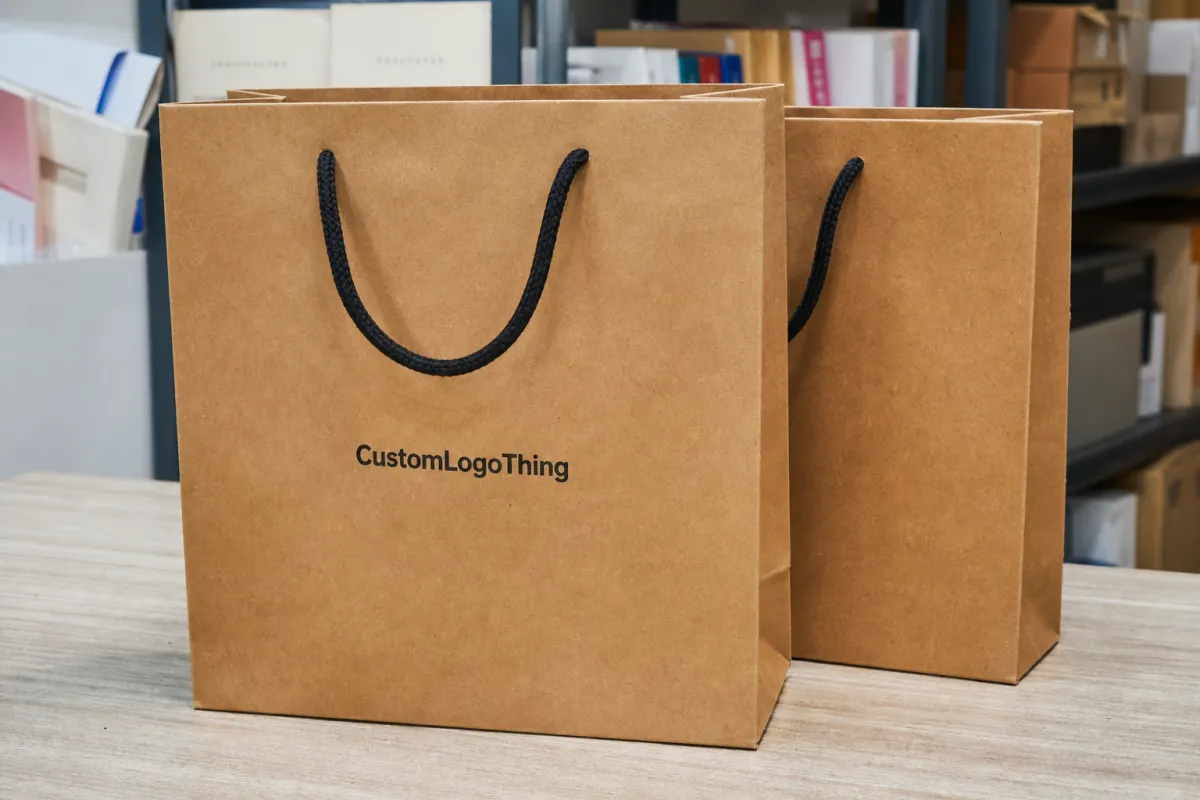
A bag can look cheap and still cost more. If the base bows out, the handles pull loose, or the gusset is too narrow for a bundled purchase, the store pays for it in staff time, replacements, and customer complaints. That friction shows up at the register, where people remember it.
Kraft paper handles the basics well. It stacks neatly, prints clearly, and feels more intentional than thin plastic. For folded tees, scarves, accessories, and gift sets, a well-made kraft bag creates a cleaner carryout and a calmer checkout station. Compared with a carton, it also saves counter space and avoids tape, folding, and extra handling.
The sustainability story needs some care. Kraft bags made with recycled fiber can support a better materials plan than conventional plastic carryout bags. FSC certified paper and simple inks help, but coatings, heavy lamination, and oversized print coverage change the equation. Not every brown bag is automatically the greener choice.
The cheapest bag is usually the one that gets replaced first.
For clothing retailers, the real goal is simple: pick a bag that looks right, carries right, and arrives in the right quantity without wasting labor. That is the frame for buying well, not the flashiest spec.
Bag Styles, Handles, and Print Options for Apparel
Most clothing stores use one of three bag styles: flat-handle kraft bags, twisted-handle kraft bags, or no-handle takeaway bags for very light purchases. Flat-handle bags are usually the least expensive. Twisted-handle bags feel more polished and are common in boutiques that want the carryout to look finished. No-handle bags work for tiny items, but they are a poor fit for multi-item apparel orders.
Brown kraft has a natural, low-gloss look that hides small scuffs better. White kraft gives stronger contrast for logos and cleaner-looking print, especially for minimalist branding or pale color palettes. A store selling denim, casualwear, or earth-toned pieces often looks more coherent in brown. A brand built around crisp visuals usually prints better on white.
Printing should stay disciplined. A single-color logo is often the cleanest and most cost-efficient option. Spot color works if the mark depends on one strong accent. Full-panel coverage can look dramatic in proofs and underwhelming in daily use, especially if the bag is handled, folded, and stacked. Matte or gloss lamination can upgrade appearance, but it changes the material feel and can weaken a recycled-paper message.
The details buyers miss are usually the ones that show up later: gusset depth, top fold, bottom reinforcement, and where the handle is bonded. A bag can look excellent on a flat proof and still fail if the base is narrow or the handles are attached too close to the top edge. That is why a sample matters more than a spec sheet full of confident adjectives.
For a neutral packaging reference, the industry resources at packaging.org can help you sanity-check structures and material language Before You Order.
Sizes, Paper Weights, and Load Capacity
Size is where many buyers overthink and still miss the point. Start with the biggest common basket order, then work backward. Small bags cover accessories, socks, jewelry, or a single folded tee. Medium bags fit standard folded apparel, lightweight sweaters, and mixed purchases. Large bags handle bulkier bundles, shoe boxes, or seasonal gift orders.
Paper weight matters more than many catalogs admit. A handsome bag made from weak stock still fails if the customer stuffs in a sweatshirt and denim. For retail use, many buyers stay in the 100 gsm to 180 gsm range, depending on bag size, handle style, and whether the base is reinforced. Heavier stock improves stiffness and load handling, but it also raises unit cost and can make the bag feel less flexible at the register.
Handle style changes real-world capacity. Twisted handles usually spread load better than thin flat handles. A board insert or bottom pad helps the bag sit flatter, especially when the contents include boxed accessories or shoes. For heavier folded pieces, ask for an actual carry test, not a vague promise. Standards such as ISTA drop-test logic and paper strength references from ASTM are useful guardrails when a supplier knows packaging beyond catalog language.
A simple sizing method works better than guesswork: match the bag to the biggest common purchase, then add one larger size if holiday bundles or launch events regularly push order volume upward. A store that mostly sells tees and scarves does not need oversized bags. A store moving coats and boots does.
Test samples with real products: sweaters, jeans, scarves, shoe cartons, and a packed gift set. If the bag survives that mix without stretching the handles or bowing at the base, the spec is close enough to discuss seriously.
| Bag Style | Best Use | Typical MOQ | Typical Unit Range | Notes |
|---|---|---|---|---|
| Flat-handle brown kraft | Accessories, single garments, light carryouts | 1,000-3,000 | $0.18-$0.30 | Lower cost, simpler look, good for basic branding |
| Twisted-handle white kraft | Folded apparel, boutique purchases, gift bundles | 1,000-5,000 | $0.22-$0.38 | Stronger presentation, better logo contrast |
| Reinforced large kraft | Heavy apparel bundles, shoes, seasonal orders | 2,000-5,000 | $0.34-$0.62 | Higher material cost, but fewer handling failures |
The point is not to buy the heaviest bag available. The point is to buy the lightest bag that still carries the actual store order without drama.
Kraft Paper Shopping Bags Wholesale Pricing, MOQ, and Unit Cost
Pricing is usually driven by five things: size, paper thickness, handle type, print complexity, and whether the bag needs custom tooling or a standard structure. Change all five and the quote moves quickly. Keep the spec tight and the comparison becomes easier.
For a typical custom run, unit pricing usually falls as quantity rises. Smaller orders often land around $0.30-$0.60 per bag, depending on structure and print. Larger orders can move lower if the same dieline, stock, and print setup are repeated. Setup fees commonly run from about $45 to $150 or more, with print colors and production method pushing that number upward. On smaller orders, setup and freight can matter almost as much as the unit cost.
MOQ is the part buyers should read twice. Lower minimums help when testing a new logo, a different handle style, or a fresh size. Larger MOQs reduce the per-bag price, but they also tie up cash and storage space. Ask whether the minimum applies per size, per color, or per total order. Suppliers do not always spell that out clearly, and the quote can change fast once the assumption is exposed.
Use the same checklist for every quote:
- Size, paper weight, and handle type
- Print colors and print coverage
- Sample charges and artwork prep
- Freight, taxes, and packaging configuration
- Whether the bag is FSC certified or made with recycled materials
Do not chase the lowest number without checking handle bond, print registration, and base reinforcement. A cheap bag that fails in the store is not a bargain.
Production Steps, Proofing, and Turnaround
Good production starts before the press runs. The workflow should be dull in the best possible way: artwork review, dieline confirmation, sample or proof approval, bulk production, inspection, and shipment. If any one of those steps is fuzzy, the problems show up later as rework, color drift, or a size mismatch that someone notices after the order has already left.
The usual delay points are predictable. Missing logo files slow artwork prep. Unclear Pantone targets create avoidable color arguments. Changing bag size after proofing adds more back-and-forth than most buyers expect. Last-minute handle swaps can reset the timeline because they affect bonding, materials, and sometimes the die line itself.
For straightforward custom logo bags, sample approval and bulk production are separate windows. A sample often takes several business days. Bulk production commonly lands in the 12-15 business day range after proof approval for simple jobs. More complex print work, special finishes, or larger orders can stretch longer. Transit time is its own piece, and that is where many schedules quietly slip.
Stock-style Bags With Logo printing usually move faster than fully custom constructions. Fewer variables mean fewer chances to stall. If a seasonal refill or launch date matters, ask which parts of the spec are fixed and which can stay standard. Small simplifications can save days without changing the look enough for a customer to notice.
Quality control should not be a mystery. A decent supplier checks print alignment, glue points, handle strength, color consistency, and count accuracy before shipment. If they cannot explain that process plainly, they are probably not the right fit for a retail schedule.
Production note: if a supplier cannot tell you the sample timeline, the bulk timeline, and the shipping window separately, the quote is incomplete.
What Makes a Reliable Wholesale Supplier for Clothing Retail
A fast quote is not the same thing as a reliable supplier. A seller can send pricing in ten minutes and still miss the spec, miss the color, or miss the delivery window. For clothing stores, the real test is whether the supplier can hold the bag spec consistently across reorders and seasonal changes.
Ask for material samples, prior retail work, production capacity, and a written spec sheet. Those four things reveal more than a polished sales pitch ever will. If the supplier can explain why one kraft stock suits a boutique better than another, or why a twisted handle costs more than a flat one, you are dealing with someone who understands the product rather than just the quote form.
Communication quality matters because packaging orders rarely fail on one giant issue. They fail through small misses: a logo file that was never clarified, a reorder that was assumed to match an old color, a shipping date that was never confirmed. That is where the difference shows up between a basic seller and a real wholesale partner.
For clothing stores, the useful service points are straightforward:
- Clear reprint support for repeat orders
- Consistent color matching across runs
- Retail-ready packaging that arrives clean and counted
- Reasonable response time when a seasonal refill is urgent
If you want a standards reference for shipment durability, the ISTA site is useful for testing logic. It will not choose a bag for you, but it does remind buyers that a package has to survive transit, not just a product mockup.
The best suppliers also separate pricing into parts. Setup, unit cost, freight, and optional upgrades should not be buried in one opaque number. That kind of clarity is easier to audit and much easier to reorder.
Comparison Checklist Before You Order
Before requesting quotes, gather three things: preferred size, estimated quantity, and logo artwork in a usable format. If handle type and paper color are already fixed, include those too. The faster the supplier understands the use case, the faster the quote becomes useful.
Order samples first if the store is changing bag size, handle style, or print layout. Samples are cheap compared with a full run that arrives wrong. Compare them against actual products from the sales floor, not against a ruler on a desk. That is where the real problems show up: a coat that barely fits, a shirt stack that shifts, or a boxed accessory that tilts the bag out of balance.
A simple comparison method keeps the decision sane. Put price, MOQ, lead time, print method, and shipping terms side by side. Then check whether the bag is FSC certified, whether recycled materials or post-consumer waste content are available, and whether the supplier can confirm the finish without hand-waving. If you need a paper sourcing reference point, FSC is a practical place to start.
Move from sample review to production once the bag fits the product, the price fits the margin, and the timeline fits your replenishment cycle. That is the point many buyers skip.
What affects kraft paper shopping bag pricing for clothing stores the most?
Size, paper weight, handle type, and print complexity usually drive the biggest price changes. Setup fees and shipping can matter just as much as unit cost on smaller orders. The best quote is the one that matches your actual retail use, not the cheapest bare-bones spec.
What MOQ should a clothing store expect for wholesale kraft paper bags?
MOQ depends on whether the bag is stock, lightly customized, or fully custom. Lower MOQs help with test runs, but larger orders usually reduce the per-bag price. Ask whether the minimum applies per size, per print color, or per total order.
Are kraft paper shopping bags strong enough for folded clothing and shoes?
Yes, if the paper weight, handle, and bottom reinforcement match the load. Folded apparel is usually easy; shoe boxes and heavier bundles need a more careful spec. Test the bag with real store items before placing a large order.
How long does production usually take for custom wholesale kraft bags?
Sampling, artwork approval, and bulk production are separate steps, so ask for each timeline. Simple print jobs move faster than full custom bags with multiple colors or special finishes. Transit time can be the hidden delay, so confirm production and shipping windows separately.
What print style works best for clothing store branding on kraft bags?
Single-color logo printing is often the cleanest and most cost-efficient option. If the brand relies on bold visuals, check color contrast carefully on brown kraft. Keep the design readable from a distance; a bag is walking advertising, not a gallery piece.

