If you are comparing printed small retail paper Bags with Logo quote options, start with the bag itself rather than the artwork. The logo matters, sure. But in retail, the bag is never just packaging. It moves through the street, gets tucked into a tote, sits on a car seat, and sometimes ends up in a photo or a repost. That is a lot of brand mileage for something that may have cost only a few cents to make.
Small paper bags are especially tricky because they sit right at the intersection of presentation and utility. They have to feel neat at checkout, hold up long enough to survive the walk home, and still protect margin. A bag that looks elegant online but collapses in the hand is not a win. I have seen plenty of buyers learn that the hard way, usually after a rushed seasonal order and a box of flimsy stock that looked better in a mockup than in real life.
The smartest printed small retail paper Bags with Logo quote is the one that reflects how the bag will actually be used. A boutique gift bag has a different job from a cosmetic pouch or a small bakery takeaway bag. If the quote does not account for weight, footprint, handle style, print coverage, and delivery timing, the price may be misleading even if the number looks attractive.
Printed Small Retail Paper Bags With Logo: Why They Matter at Checkout
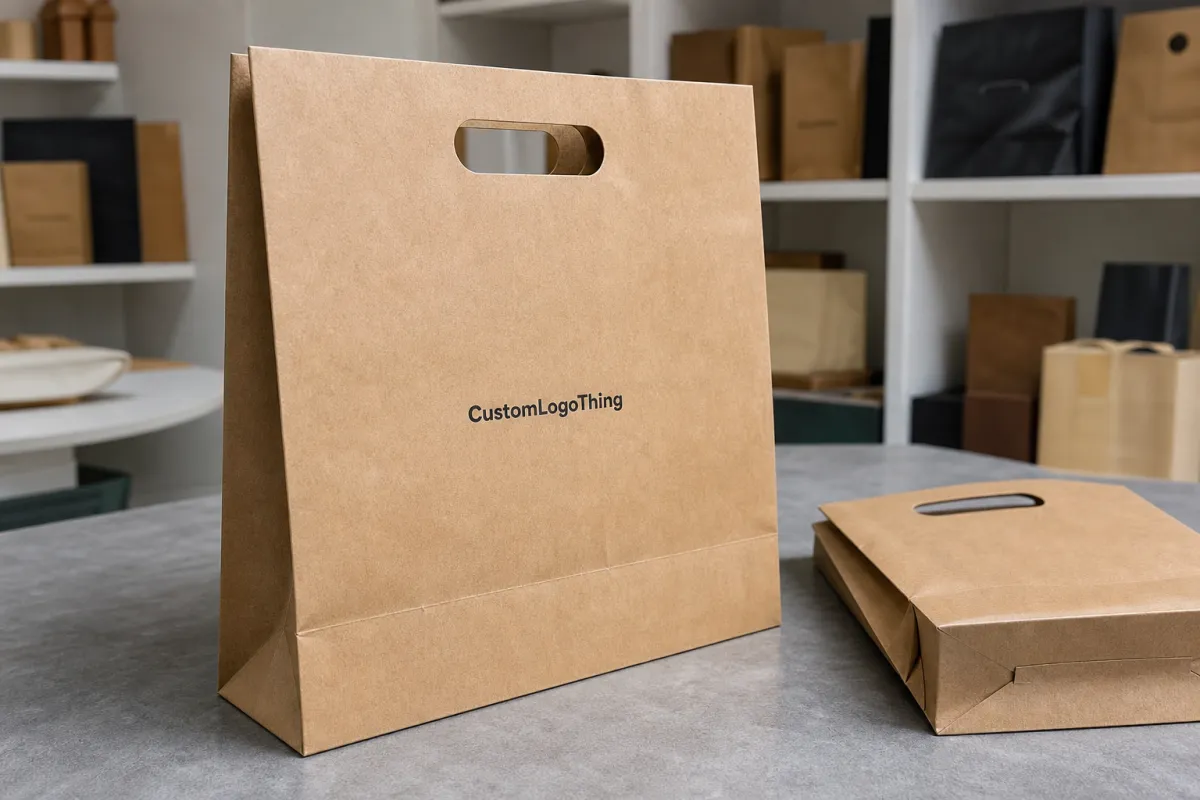
Checkout packaging is one of the few brand assets that leaves the store and keeps working after the sale. A candle tin, folded scarf, jewelry box, or compact skincare set may stay inside the bag for minutes. The bag itself can travel much farther. It rides through a mall, into a taxi, across an office floor, and sometimes into social media. That makes a printed Small Retail Paper Bags with logo quote more than a procurement exercise. It is a branding decision disguised as packaging.
Retailers often underestimate how quickly a small bag changes perceived value. Clean construction, straight folds, a logo that sits where the eye expects it, and a handle that does not feel like an afterthought can make a modest purchase feel considered. Thin stock, poor gluing, or awkward proportions do the opposite. They make the brand feel smaller than it is.
There is also a practical reason these bags matter. A good bag protects the product from scratches, keeps pieces together, and lowers the odds of replacement or damage claims. That is not glamorous, but it matters. The strongest packaging programs are rarely built on decoration alone. They are built on repeatable handling, predictable production, and a clear spec that printers can actually follow.
"A retail bag has to do two jobs at once: carry the product and carry the brand. If it fails either one, the quote was too optimistic."
The commercial logic is simple. A small paper bag costs far less than most forms of advertising, yet it can produce repeated impressions with every reuse. For boutiques, beauty counters, stationery shops, gift stores, and pop-up sellers, that matters a lot. Customers do not usually separate the bag from the purchase. They remember the whole exchange. And yes, that memory can be kinda unfair: a cheap-feeling bag can drag down a strong product, while a solid one can make a small order feel premium.
That is why a serious supplier should ask about use case before quoting. If the bag is for a lightweight accessory, an economical structure may be enough. If it needs to carry a boxed candle or stacked cosmetic jars, the base and handle need more attention. The best printed Small Retail Paper Bags with logo quote protects both the margin and the brand image.
Printed Small Retail Paper Bags With Logo: Styles, Sizes, and Finishes
Small retail paper bags are not one product. They are several structures doing different jobs. Buyers asking for a printed small retail paper Bags with Logo quote usually compare four common formats first: SOS paper bags, flat-handle bags, twisted-handle bags, and rope-handle bags. Each one sends a different signal, and each one behaves differently in production and on the sales floor.
SOS bags are the plainspoken choice. They are good for light retail items, inserts, and quick-service packaging. They stack well, cost less, and keep the order simple. Flat-handle bags sit a step up in comfort and are often used where price sensitivity is high but customers still need a handle. Twisted-handle bags are the reliable middle ground for boutiques and gift retail. Rope-handle versions are usually reserved for higher-value products because the bag itself starts acting like part of the premium experience.
Paper choice shifts the tone immediately. Kraft stock signals practicality and a more natural presentation. White kraft gives print more contrast and keeps logos crisp. Coated paper supports brighter color and sharper detail, especially for brands with bold palettes or fine typography. Recycled stock can be a good fit for sustainability claims, but it should not be treated as a shortcut to strength. Recycled content is not a guarantee of load performance, and buyers need to ask for the right gsm and construction, not just the eco label.
Finish matters more than many teams expect. Matte feels restrained and contemporary. Gloss makes colors pop but also shows creases and handling marks more quickly. Uncoated stock feels tactile and honest, which suits artisan brands and heritage retailers. A premium finish is not always the answer either; sometimes a modest bag with clean print and strong structure communicates confidence better than a shiny one that is trying too hard.
Logo placement should be practical first. Centered front print is the cleanest solution for most small bags. Repeat patterns work for brands with strong identity systems. Side-gusset branding can be useful if the bag will be seen from the angle of movement. A one-color logo often looks sharper than an overcomplicated layout, and it usually keeps setup more efficient. A bag is not a billboard. It has to read quickly, in motion, and at arm’s length.
Size is where a lot of buyers get tripped up. A small retail bag still needs enough room for the product to sit naturally without bulging or folding the top edge awkwardly. A bag that is technically large enough can still look wrong if the proportions fight the contents. I have seen jewelry brands order a width that was fine, but the height left the handle too close to the product box. The result looked cramped, even though the measurements were “correct” on paper.
Brand fit closes the loop. Apparel bags tend to need a wider opening and a handle that can tolerate repeated carrying. Cosmetics and jewelry usually benefit from compact, polished formats. Stationery and gift brands often do well with simple kraft or white kraft stock. Candle sellers should pay special attention to the base because glass jars and rigid boxes are less forgiving than they appear. The right quote starts with the product, not the logo file.
Materials, Measurements, and Print Specifications
Size and structure determine whether the bag feels tailored or awkward. The most useful way to specify a bag is to measure the actual product footprint, then add enough tolerance for packaging, folds, and hand clearance. Width, gusset, and height all matter. A shallow item needs different proportions than a tall box. A bag can be “big enough” and still be wrong if the contents tip, crease, or scrape the sides.
The technical side of a printed small retail paper Bags with Logo quote is not difficult, but accuracy matters. Paper weight, usually listed in gsm or stock description, affects rigidity and carry performance. Handle attachment affects load tolerance. Bottom reinforcement matters for boxed goods and glass. If the product is fragile, assume nothing. Ask for the bag to be specified for the load, not guessed at from a photo.
Artwork causes more delays than pricing usually does. Suppliers typically want vector files, clear Pantone or CMYK references, bleed, and a safe zone away from folds, handles, and cut lines. A low-resolution PNG may be fine for early discussion, but it is not production-ready. If you want fewer revisions later, send an AI, EPS, or clean PDF file. That one step saves time and avoids the weird back-and-forth that can turn a simple order into a minor headache.
Here is the core information to gather before asking for a quote:
- Dimensions: exact width, gusset, and height in mm or inches.
- Stock: kraft, white kraft, coated paper, or recycled paper, plus gsm if known.
- Handle: flat, twisted, rope, or no-handle SOS style.
- Print: one color, two color, full color, or spot Pantone.
- Finish: matte, gloss, uncoated, or specialty coating.
- Delivery: postcode, target date, and whether split shipment is acceptable.
There are also a few operational questions worth settling early. If the bag will be used near food or in takeaway settings, check whether the supplier can support the intended use requirements. If sustainability claims matter to the brand, ask whether the stock can support FSC certification or another verified paper trail. For broader packaging quality context, ISTA testing standards can be useful when the product is fragile or moves through several handling points. For paper sourcing and forest stewardship, FSC remains one of the better-known references.
The most reliable quotes are the ones built on concrete specs. Vague requests lead to vague numbers. A strong printed small retail paper Bags with Logo quote should clearly state the dimensions, paper type, handle construction, print method, and delivery destination. Anything less is just a rough guess with a letterhead on it.
Pricing, MOQ, and Quote Drivers
Paper bag pricing comes from several moving parts, and each one can shift the final number. Quantity is the biggest driver. Paper stock follows close behind. Print coverage matters. Handle type matters. Finish matters. Shipping destination matters. Buyers who understand that mix can usually improve the quote without weakening the bag.
MOQ affects unit cost because setup, press time, cutting, folding, gluing, and packing are spread across the run. Small orders can still make sense, but the cost per bag rises fast as volume falls. That is not a pricing trick. It is production math. A 1,000-piece run can cost far more per unit than a 5,000-piece run, even if the finished bag looks nearly identical to the customer walking out of the store.
For buyers comparing printed small retail paper Bags with Logo quote options, the first task is making sure the quotes are actually comparable. Same dimensions. Same stock. Same handle. Same number of colors. Same carton count. Same delivery terms. If one supplier is quoting a twisted-handle bag and another is quoting rope handles, the numbers are not competing on equal ground. They are describing different products.
| Bag Option | Best Use | Typical Strength | Relative Cost | Buyer Note |
|---|---|---|---|---|
| SOS paper bag | Light retail items, inserts, quick service counters | Light to medium | Lowest | Good for volume, limited premium feel |
| Flat-handle bag | Budget-conscious retail and takeaway | Medium | Low | Useful when comfort matters less than cost |
| Twisted-handle bag | Boutiques, gift shops, cosmetics, general retail | Medium to strong | Medium | Common balance of price, strength, and presentation |
| Rope-handle bag | Premium retail and higher-ticket purchases | Strong | Highest | Best when the bag itself should signal value |
Hidden charges can move the total more than buyers expect. Setup fees, plate costs, sample charges, freight, rush production, and extra transit packaging often appear separately. A quote that looks lean on page one can land well above budget once those items are added. That is why landed cost matters more than factory price alone. I have seen a “cheaper” option end up more expensive simply because the freight and sample terms were buried in fine print.
If margin is the pressure point, simplify before you cut quality. One fewer print color can save more than a tiny reduction in paper grade. A cleaner artwork layout can reduce prepress time. A standard size may cost less than a custom shape. In many cases, the smartest move is to keep the bag strong and recognizable, then trim complexity where it does not change the customer’s impression.
Comparing packaging quotes is a bit like comparing tailored jackets. The price gap means very little if one sleeve is longer, the lining is different, and the fabric weight is not the same. The same idea applies here: clear specs produce cleaner pricing, and a solid printed small retail Paper Bags with Logo quote should let you see exactly what is driving the cost.
Process, Timeline, and Production Steps
A clean order process saves time, especially when the bag is custom-sized. Start with a spec sheet, not a vague request for “something nice.” The best workflow is straightforward: send the dimensions, quantity, paper preference, handle choice, and artwork file; receive a detailed quote; review the proof; confirm the final specifications; then release production only after the key points are locked.
Production has more steps than many buyers expect. Paper has to be prepared. Printing has to be set. Sheets or rolls are cut and formed. Bags are folded and glued. Handles are attached. Quality checks catch print shifts, weak bonding, or misalignment. Cartons are then packed and moved into shipment. Each stage can be efficient, but none of them should be rushed blindly.
Lead time depends on how complete the order is. Simple jobs with final artwork and standard structures often move faster than custom formats or premium finishes. Larger quantities, special coatings, or unusual handle assemblies usually extend the schedule. If a supplier promises a delivery date without asking whether the artwork is final, that is a warning sign. Quote timing and production timing are not the same thing.
Most delays come from a few familiar sources:
- Artwork changes after the proof has already been reviewed.
- Color targets that were not specified clearly.
- Bag size revisions after production planning begins.
- Missing shipping details or an incomplete delivery address.
- Approval being delayed while several people debate minor design details.
Samples are worth the time when the bag has to feel right in the hand. A physical sample can reveal whether the size fits the product, whether the handle feels strong enough, and whether the print density matches the brand expectation. If time is tight, start with a digital mockup, then move to a sample if the specs are still under discussion. That is safer than approving a full run from a screen image alone.
Rush orders can work, but speed is not always the best deal. Seasonal launches, large events, and restocks often benefit from a normal schedule rather than a compressed one. Paying extra to save a few days makes sense only when the timeline is fixed and the packaging is tied to a date that cannot move. A good supplier will tell you when the premium is justified and when it is not.
Anyone evaluating a printed small retail paper bags with logo quote should care as much about process control as price. Clear approvals, realistic timing, and transparent spec control usually matter more than a slightly lower number on the first line of the quote.
Why Choose Us and What to Send for Your Quote
A strong supplier relationship begins with clarity. You should see direct pricing, sample options, clear specs, and an approval process that does not bury the important details. If a quote is vague, the project usually stays vague until something breaks. That is costly when the bags are tied to a launch, event, or seasonal promotion.
Reliability matters more than a low headline price. A quote that excludes freight, proofing, or setup can look attractive until the extras arrive. By then, the total may exceed a more transparent offer that looked higher at first glance. Buyers who ask for a complete printed small retail paper bags with logo quote usually make a better comparison because they can evaluate landed cost, not just unit cost.
If you want the quickest response, send the full spec pack in one message:
- Bag size: exact width, gusset, and height.
- Quantity: target order size and any likely repeat volume.
- Paper stock: kraft, white kraft, coated, or recycled.
- Handle type: flat, twisted, rope, or SOS.
- Print details: number of colors, Pantone references, or CMYK.
- Artwork: vector file or clean PDF, plus any brand guidelines.
- Delivery: postcode, timeline, and whether you need split shipments.
If you are still comparing options, ask for two or three quote variants instead of one generic number. Compare a standard twisted-handle version, a premium rope-handle version, and a simplified one-color version. That will show you where the money goes and where savings are possible. It also makes the trade-offs visible instead of hiding them in a single line item.
A practical buyer always connects the bag choice back to margin, shelf appeal, and repeat impressions. If a better structure reduces damage and improves customer perception, it can be worth more than the price gap on the invoice. The cleanest path is simple: lock the size, stock, handle, print colors, and delivery point before comparing suppliers, and then judge the printed small retail paper bags with logo quote on landed cost, not on the first number you see.
How do I compare a printed small retail paper bags with logo quote from different suppliers?
Match the same size, paper weight, handle type, print colors, and finish before looking at price. Check whether setup, freight, samples, and packaging are included or listed separately. Ask for a unit price at your actual order quantity so the quote reflects your real landed cost.
What details do I need for an accurate printed small retail paper bags with logo quote?
Send the exact bag dimensions, desired quantity, and preferred paper stock. Include your logo file, number of print colors, and any finish or handle preference. Add the delivery postcode and target date so the quote includes realistic shipping and lead time.
What MOQ is typical for small retail paper bags with logo printing?
MOQ depends on bag size, print complexity, and the production method used. Smaller quantities are possible, but unit cost usually rises as MOQ drops. If you are testing a new design, ask for the lowest viable run and compare it with the cost at a slightly higher quantity.
How long does production usually take after artwork approval?
Simple orders move faster once the proof is approved and materials are confirmed. Custom sizes, premium finishes, and larger quantities extend the schedule. Ask the supplier to separate proof time, production time, and shipping time so the delivery date is clear.
Can I get a sample before placing a bulk order?
Yes, and it is often the best way to confirm size, handle strength, and print appearance. A sample helps catch artwork, color, and fit issues before full production starts. If time is tight, ask for a digital mockup first and then a physical sample if the specs are still in play.

